

Corporate E-learning Market Report 2026
Global Outlook – By Technology (Learning Management System (LMS), Online E-learning, Mobile E-learning, Virtual Classroom, Rapid E-learning, Other Technologies), By Deployment (Cloud-Based, On-premises), By Organization Size (Small And Medium-Sized Enterprises, Large Enterprises), By Provider (Instructor Led And Text Based, Outsourced) – Market Size, Trends, Strategies, and Forecast to 2030
Corporate E-learning Market Overview
• Corporate E-learning market size has reached to $526.81 billion in 2025 • Expected to grow to $1229.07 billion in 2030 at a compound annual growth rate (CAGR) of 18.5% • Growth Driver: Remote Work Culture Fuels Expansion Of The Corporate E-Learning Market • Market Trend: Emerging Technology Trends Shaping the Future of Digital Workforce Training • North America was the largest region in 2025 and Asia-Pacific is the fastest growing region.Market Gains By 2030 – Top Opportunities By Segment
Market Gain identifies the most promising market opportunities by highlighting the segments or products expected to generate the highest incremental revenue growth over the next five years.
What Is Covered Under Corporate E-learning Market?
Corporate e-learning refers to the use of digital resources to deliver learning and training to employees within an organization. It allows organizations to provide personalized and flexible training to their employees, irrespective of their location and time zone, enabling them to learn virtually anywhere and anytime. The main types of technologies included in corporate e-learning are learning management systems (LMS), online e-learning, mobile e-learning, virtual classrooms, rapid e-learning, and others. A learning management system (LMS) refers to a software application or web-based technology designed for the administration, documentation, tracking, reporting, automation, and delivery of educational courses or training programs. These can be deployed in the cloud and on-premises and are used in different organizational sizes, including small and medium-sized enterprises and large enterprises. Various providers involved are instructor-led and text-based, and outsourced.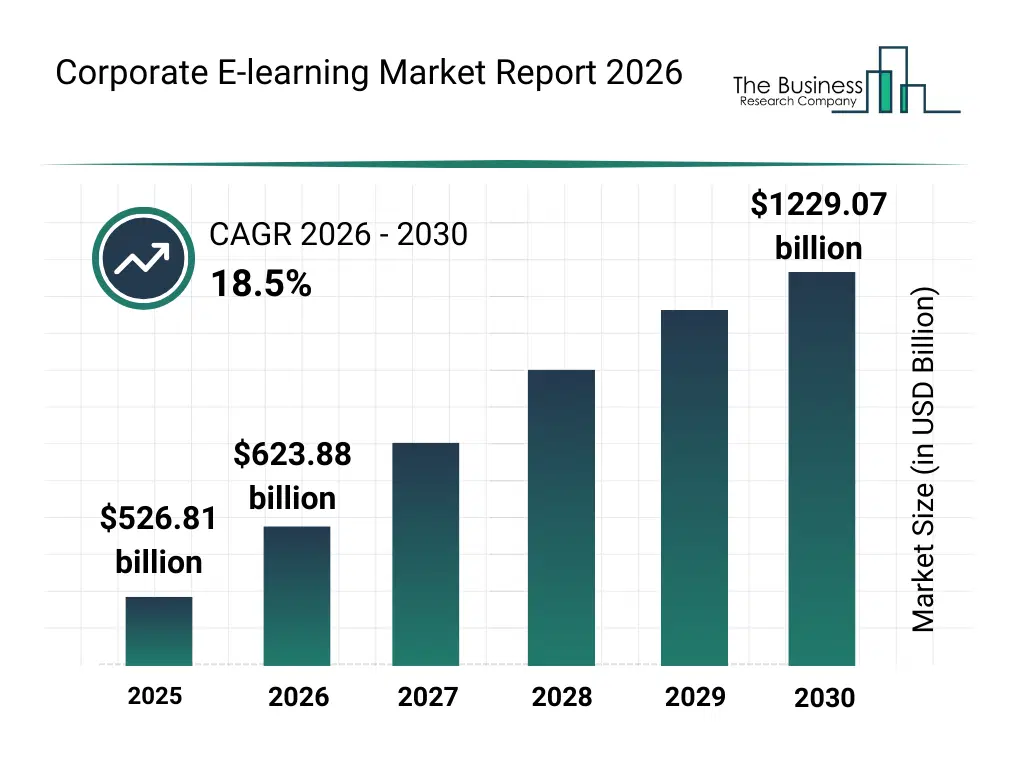
What Is The Corporate E-learning Market Size and Share 2026?
The corporate e-learning market size has grown rapidly in recent years. It will grow from $526.81 billion in 2025 to $623.88 billion in 2026 at a compound annual growth rate (CAGR) of 18.4%. The growth in the historic period can be attributed to expansion of digital workforce training initiatives, rising demand for standardized employee skill development, adoption of online training platforms, growth of global enterprises, increased focus on employee productivity.What Is The Corporate E-learning Market Growth Forecast?
The corporate e-learning market size is expected to see rapid growth in the next few years. It will grow to $1229.07 billion in 2030 at a compound annual growth rate (CAGR) of 18.5%. The growth in the forecast period can be attributed to improving adoption of AI-driven adaptive learning, rising demand for immersive training technologies, expansion of remote workforce enablement, growing focus on reskilling and upskilling programs, increasing investments in scalable learning platforms. Major trends in the forecast period include increasing adoption of personalized digital learning platforms, rising integration of ai-based learning analytics, growing use of microlearning and mobile training modules, expansion of immersive virtual training content, enhanced focus on continuous skill development.
Global Corporate E-learning Market Segmentation
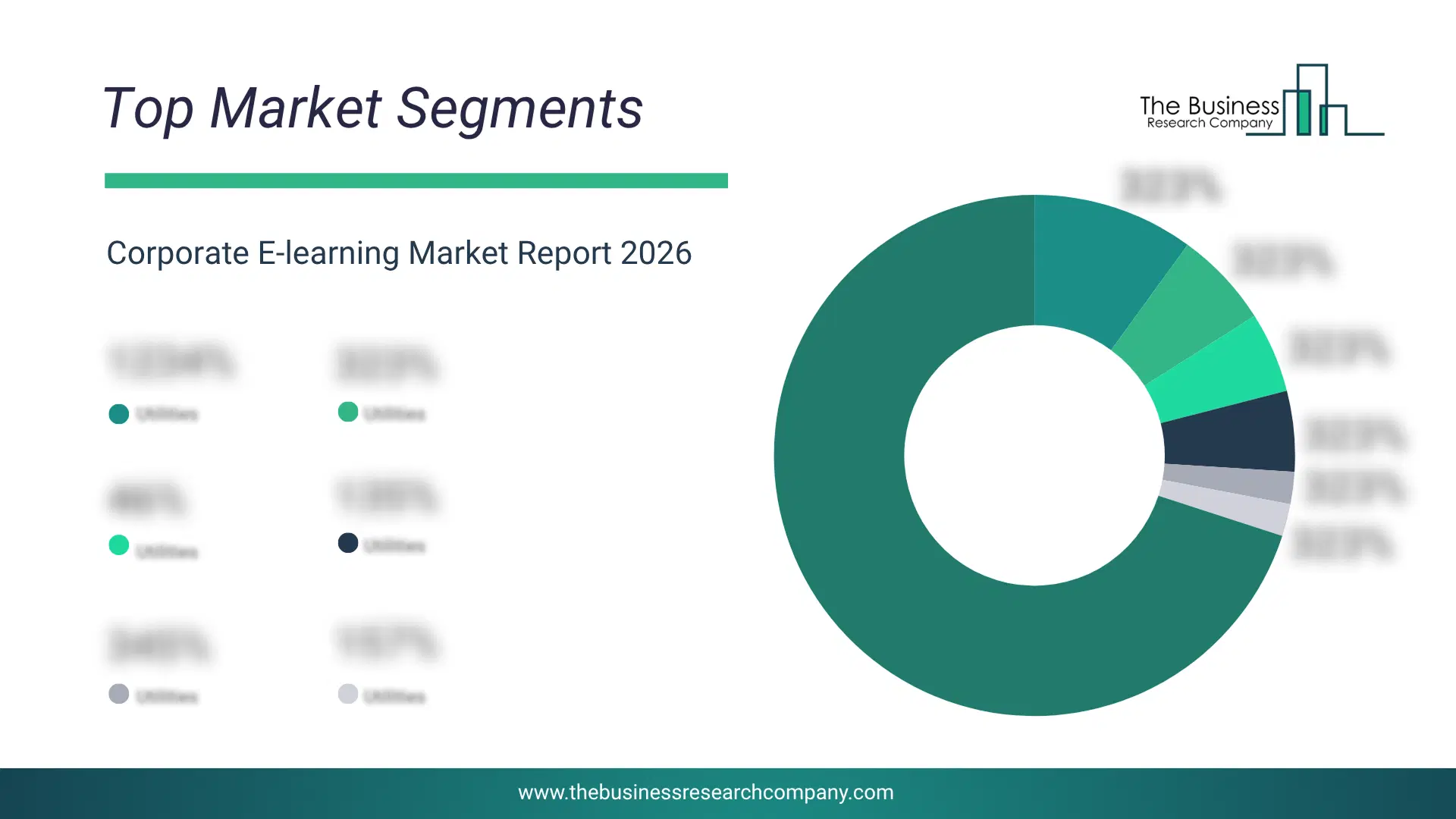
1) By Technology: Learning Management System (LMS), Online E-learning, Mobile E-learning, Virtual Classroom, Rapid E-learning, Other Technologies 2) By Deployment: Cloud-Based, On-premises 3) By Organization Size: Small And Medium-Sized Enterprises, Large Enterprises 4) By Provider: Instructor Led And Text Based, Outsourced Subsegments: 1) By Learning Management System (LMS): Cloud-Based LMS, On-Premises LMS, Open-Source LMS, Corporate LMS Platforms 2) By Online E-Learning: Instructor-Led Online Training, Self-Paced Online Courses, Webinars And Virtual Workshops 3) By Mobile E-Learning: Mobile Apps For E-Learning, Mobile-Optimized Content, Microlearning Via Mobile Devices 4) By Virtual Classroom: Video Conferencing Tools, Real-Time Collaboration Platforms, Virtual Training Rooms 5) By Rapid E-Learning: Authoring Tools For Quick Content Creation, Template-Based Learning Modules, Adaptive Learning Solutions 6) By Other Technologies: Gamification in E-Learning, Augmented Reality (AR) Or Virtual Reality (VR), Artificial Intelligence (AI) and Machine Learning (ML) in Learning, Social Learning Platforms The top segments in the corporate e-learning market will be: • Online E-learning will reach $114 Billion by 2030. • Learning Management System (LMS) will reach $112.43 Billion by 2030. • Mobile E-learning will reach $65.54 Billion by 2030. • Virtual Classroom will reach $50.02 Billion by 2030. • Rapid E-learning will reach $40.82 Billion by 2030.What Is The Driver Of The Corporate E-learning Market?
The rise in remote work culture is expected to propel the growth of the corporate e-learning market going forward. Remote work culture is the shift in organizational norms and practices that allow employees to work outside of a traditional office setting, often from their homes or other remote locations. The remote work culture is on the rise due to the advancements in digital technology, the desire for flexibility, and the need for business continuity. Corporate e-learning facilitates a remote work culture by providing accessible and flexible training solutions, ensuring continuous skill development and knowledge acquisition for dispersed employees. For instance, in February 2023, according to the Office for National Statistics, a UK-based non-ministerial department, between April 27 and May 8, 2022, when the recommendation to work from home was lifted in Great Britain, approximately 38% of employed adults stated that they had worked remotely. In the latest period, from January 25 to February 5, 2023, about 40% of working adults mentioned having worked from home at least once in the past seven days. Therefore, the rise in remote work culture is driving the growth of the corporate e-learning industry.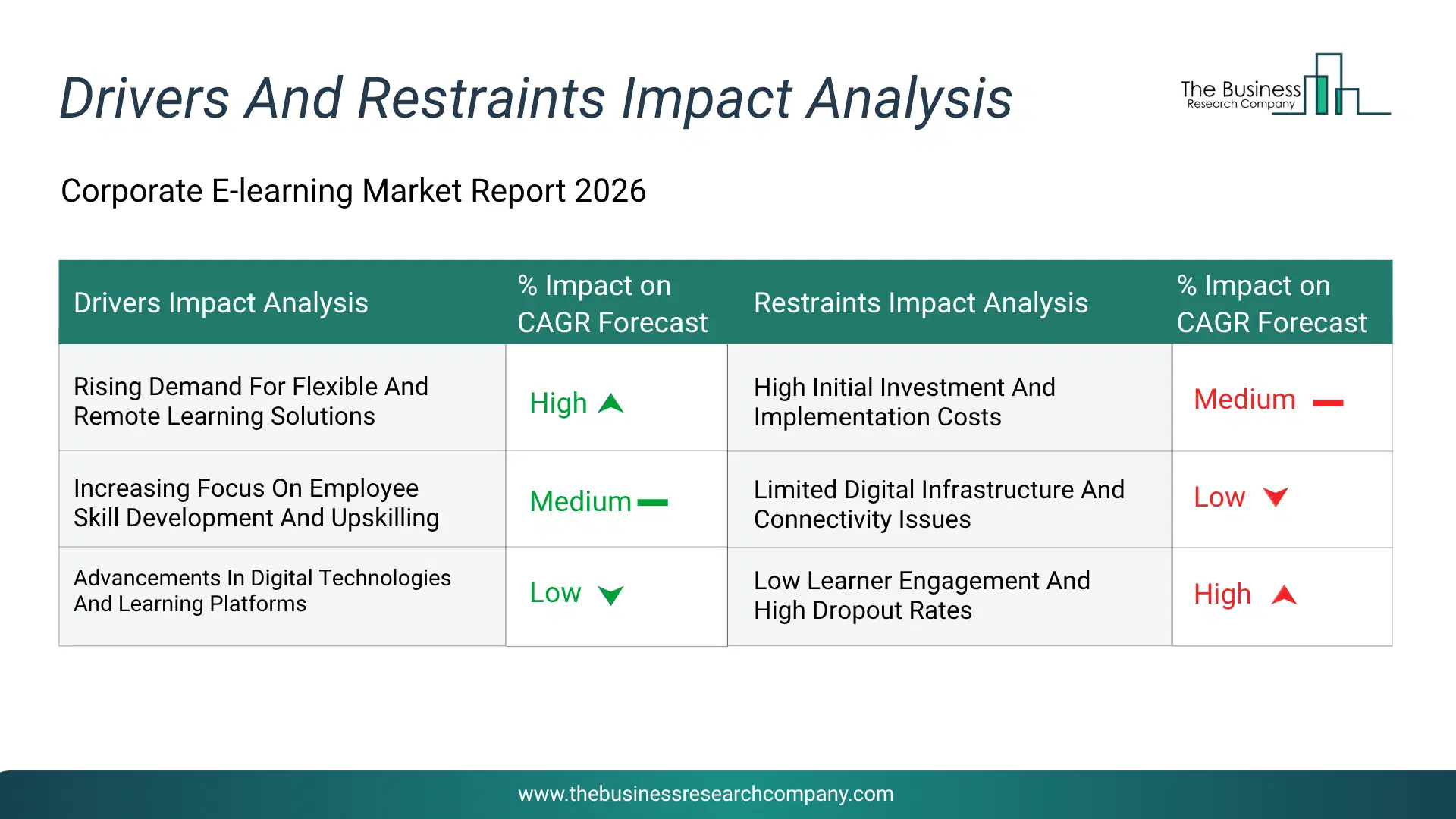
Infographic Chart Showing Key Market Drivers Analysis And Restraints For Corporate E-Learning Market
The chart presents an impact analysis of key drivers and restraints, quantifying their relative influence on the market's growth rate and helping assess the balance between growth enablers and limiting factors. This chart offers a high-level perspective; the full report contains more detailed insights.
How Will The Drivers Impact Growth In The Global Corporate E-learning Market?
• Rising Demand For Flexible And Remote Learning Solutions (High) – During the forecast period, the rising demand for flexible and remote learning solutions is expected to become a key growth driver for the corporate e-learning market by 2030. Organizations are increasingly adopting flexible training formats that enable employees to access learning content anytime and anywhere, aligning with evolving hybrid and distributed work environments. This shift supports improved employee participation, learning continuity, and productivity without disrupting business operations. Companies are also prioritizing scalable digital learning solutions that can be deployed across geographically dispersed teams with minimal infrastructure constraints. As workforce mobility and remote operations continue to expand, demand for flexible e-learning delivery models is accelerating market growth. • Increasing Focus On Employee Skill Development And Upskilling (Medium) – During the forecast period, the increasing focus on employee skill development and upskilling is expected to emerge as a major factor driving the expansion of the corporate e-learning market by 2030. Enterprises are placing greater emphasis on enhancing workforce capabilities to keep pace with rapidly changing business requirements and technological advancements. Continuous learning initiatives are being integrated into organizational strategies to address skill gaps, improve employee performance, and strengthen talent retention. Companies are also investing in structured training programs that align with career progression pathways and evolving job roles. This growing emphasis on workforce competency development is accelerating the adoption of corporate e-learning solutions. • Advancements In Digital Technologies And Learning Platforms (Low) – During the forecast period, the advancements in digital technologies and learning platforms are expected to act as a key growth catalyst for the corporate e-learning market by 2030. Emerging technologies such as artificial intelligence, data analytics, and immersive learning tools are enhancing the effectiveness and engagement levels of digital training programs. These technologies enable personalized learning experiences, adaptive content delivery, and real-time performance tracking, improving overall learning outcomes. Organizations are also leveraging advanced platforms to integrate multimedia content, gamification, and collaborative learning features. As innovation in digital learning ecosystems continues to accelerate, enterprises are increasingly adopting next-generation e-learning solutions.How Will The Restraints Impact Growth In The Global Corporate E-learning Market?
• High Initial Investment And Implementation Costs (High) – During the forecast period, high initial investment and implementation costs act as a major restraint on the corporate e-learning market as organizations must allocate significant budgets for platform development, content creation, and system integration. Small and medium-sized enterprises often find it difficult to afford advanced learning management systems and customized training modules. Additional expenses related to software licensing, cloud infrastructure, and maintenance further increase the financial burden. Organizations may also incur costs for training employees to use these platforms effectively. This financial barrier slows adoption, particularly in cost-sensitive regions and industries. Companies may delay or limit their investment in digital learning solutions due to uncertain returns. As a result, high upfront costs restrict the overall growth potential of the market. • Limited Digital Infrastructure And Connectivity Issues (Medium) – During the forecast period, limited digital infrastructure and connectivity issues restrain the corporate e-learning market, especially in developing and remote regions where stable internet access is not always available. Effective e-learning depends heavily on reliable broadband connectivity and access to digital devices. In areas with poor infrastructure, employees face difficulties in accessing training materials, leading to inconsistent learning experiences. This limits the scalability of e-learning programs for geographically dispersed workforces. Organizations operating in such regions may prefer traditional training methods due to these challenges. Additionally, bandwidth limitations can affect the quality of multimedia-rich learning content. Consequently, inadequate infrastructure hampers widespread adoption and slows market expansion. • Low Learner Engagement And High Dropout Rates (Low) – During the forecast period, low learner engagement and high dropout rates present a significant challenge to the corporate e-learning market as employees may struggle to stay motivated in self-paced digital environments. Unlike traditional classroom training, e-learning often lacks direct interaction, which can reduce accountability and participation. Employees may deprioritize online courses due to workload pressures or lack of supervision. Poorly designed content and lack of interactivity further contribute to disengagement. High dropout rates reduce the effectiveness of training programs and limit return on investment for organizations. This can discourage companies from fully adopting e-learning solutions. Therefore, maintaining engagement remains a critical barrier to sustained market growth.Key Players In The Global Corporate E-learning Market
Major companies operating in the corporate e-learning market are The International Business Machines Corporation, Oracle Corporation, SAP SE, Adobe Inc., LinkedIn Corporation, Cornerstone OnDemand Inc., Blackboard Inc., Learning Technologies Group plc, Skillsoft Corporation, Cegos Group, Docebo Inc., D2L Corporation, SumTotal Systems LLC, IgniteTech, HIVE Blockchain Technologies Ltd., Coveo Solutions Inc., Learning Pool Limited, CrossKnowledge Group, Kallidus Ltd., Media Zoo, Mind Tools, iSpring Solutions Inc., GeoMetrix Data Systems Inc., CERTPOINT Systems, Moodle Pty Ltd.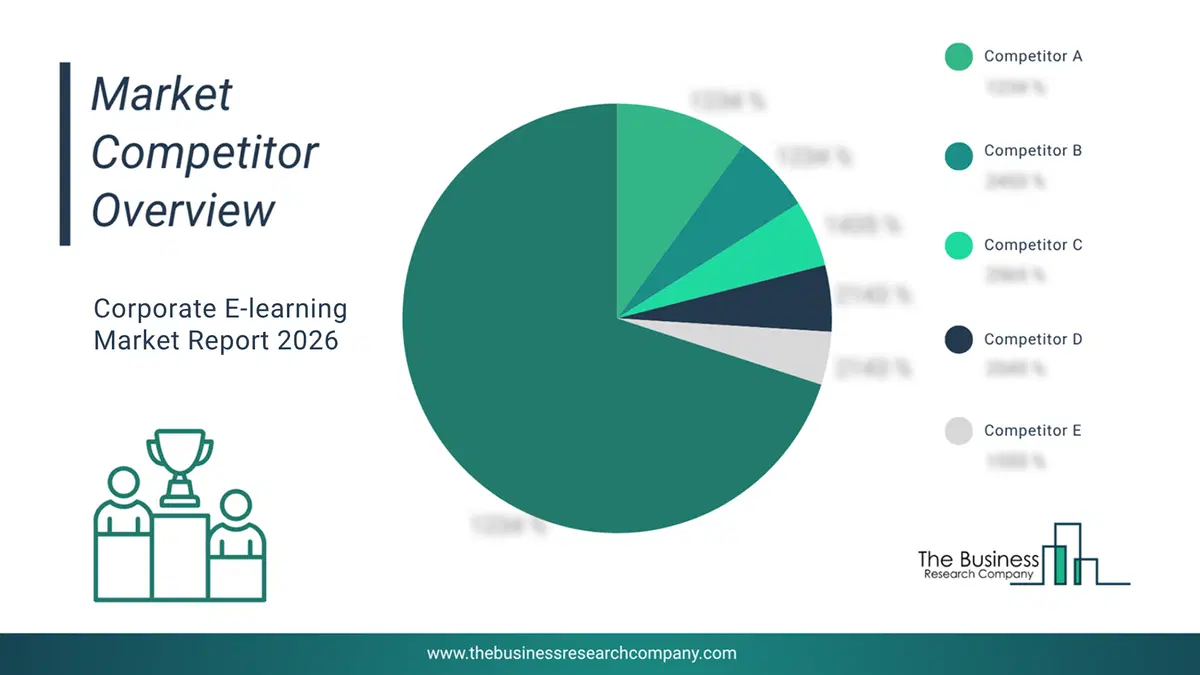
This chart is for illustrative purposes; the full report includes a detailed competitor analysis and comprehensive overview of the top 10 companies in the market.
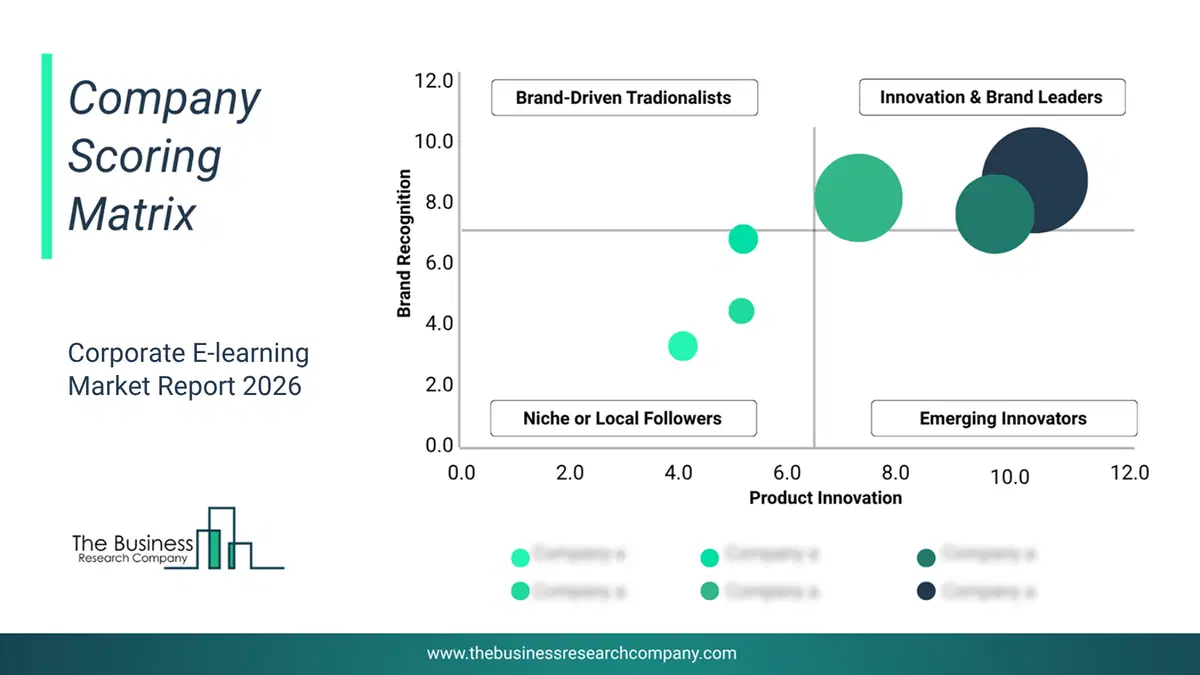
This chart maps companies by product innovation and brand strength, with bubble size indicating relative revenue, helping identify market leaders, challengers, and niche players. This is an illustrative chart; the full report provides a complete and accurate competitive analysis.
Global Corporate E-learning Market Trends and Insights
Major companies operating in the corporate e learning market are focusing on developing advanced solutions such as AI powered authoring technology to enhance training efficiency and workforce development. AI powered authoring technology uses automated content creation capabilities to help organizations build customized training materials quickly which supports faster onboarding and improved employee performance. For instance, in August 2025 Paradiso Solutions Corporation a US-based e-learning technology company launched Paradiso Free LMS featuring an AI powered e learning authoring tool that enables businesses to create and manage engaging training content. The launch offers support for up to one hundred users and provides full access to core LMS features that help small and medium teams streamline learning activities. The platform includes an extensive course catalog that delivers professional and certification ready content designed to improve workforce skills. It also offers advanced analytics and reporting that enable organizations to monitor performance and make informed decisions. The mobile ready design ensures access to training anytime on iOS and Android and the system supports custom learning paths along with gamification and certifications that increase engagement and strengthen employee development.What Are Latest Mergers And Acquisitions In The Corporate E-learning Market?
In March 2023, Omniplex Learning, a UK-based software company, acquired Good e-Learning for an undisclosed amount. The acquisition is expected to enhance Omniplex Learning's strategy to enhance its digital learning solutions and strengthen its market position. Good e-Learning is a UK-based online training provider that specializes in providing information technology (IT) and digital transformation training to corporate employees.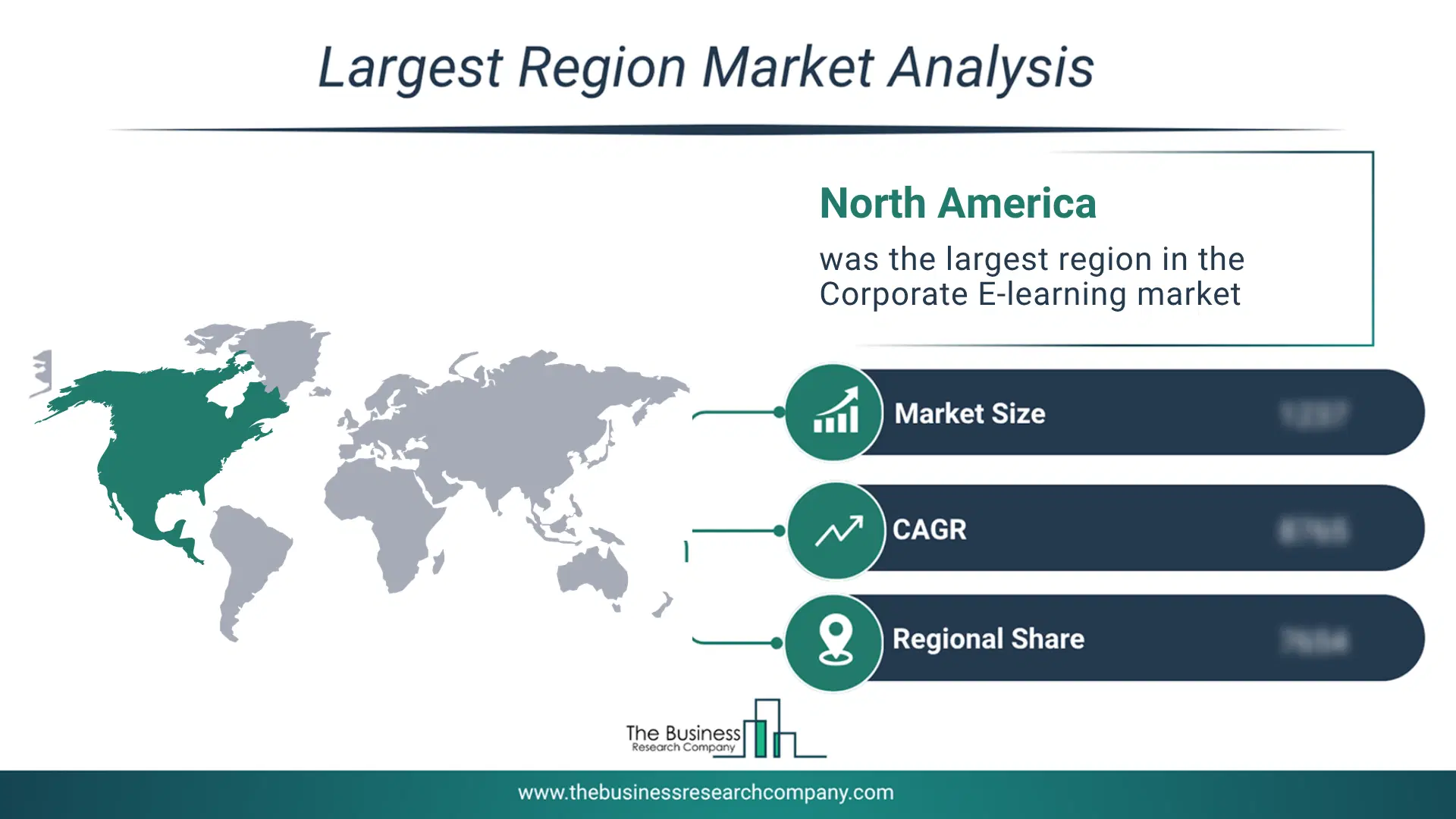
Regional Insights
North America was the largest region in the corporate e-learning market in 2025. Asia-Pacific is expected to be the fastest-growing region in the forecast period. The regions covered in this market report are Asia-Pacific, South East Asia, Western Europe, Eastern Europe, North America, South America, Middle East, Africa. The countries covered in this market report are Australia, Brazil, China, France, Germany, India, Indonesia, Japan, Taiwan, Russia, South Korea, UK, USA, Canada, Italy, Spain.What Defines the Corporate E-learning Market?
The corporate e-learning market includes revenues earned by entities by providing services such as mobile learning solutions, customized course design, content development, assessment, and evaluation. The market value includes the value of related goods sold by the service provider or included within the service offering. Only goods and services traded between entities or sold to end consumers are included.How is Market Value Defined and Measured?
The market value is defined as the revenues that enterprises gain from the sale of goods and/or services within the specified market and geography through sales, grants, or donations in terms of the currency (in USD unless otherwise specified). The revenues for a specified geography are consumption values that are revenues generated by organizations in the specified geography within the market, irrespective of where they are produced. It does not include revenues from resales along the supply chain, either further along the supply chain or as part of other products.
This chart presents market attractiveness based on a quantitative evaluation of growth, competition, strategic alignment, and risk, offering a clear view of opportunity areas for decision-making. This chart is for illustrative purposes; the full report contains the complete analysis.

This chart highlights the Total Addressable Market (TAM) by estimating the maximum revenue opportunity using an assumption-driven approach, supporting strategic planning and opportunity sizing across markets. The chart is illustrative; the full report provides a more comprehensive analysis.
What Key Data and Analysis Are Included in the Corporate E-learning Market Report 2026?
The corporate e-learning market research report is one of a series of new reports from The Business Research Company that provides market statistics, including industry global market size, regional shares, competitors with the market share, detailed market segments, market trends and opportunities, and any further data you may need to thrive in the corporate e-learning industry. The market research report delivers a complete perspective of everything you need, with an in-depth analysis of the current and future state of the industry.Corporate E-learning Market Report Forecast Analysis
| Report Attribute | Details |
|---|---|
| Market Size Value In 2026 | $623.88 billion |
| Revenue Forecast In 2030 | $1229.07 billion |
| Growth Rate | CAGR of 18.4% from 2026 to 2030 |
| Base Year For Estimation | 2025 |
| Actual Estimates/Historical Data | 2020-2025 |
| Forecast Period | 2026 - 2030 |
| Market Representation | Revenue in USD Billion and CAGR from 2026 to 2030 |
| Segments Covered | Technology, Deployment, Organization Size, Provider |
| Regional Scope | Asia-Pacific, Western Europe, Eastern Europe, North America, South America, Middle East, Africa |
| Country Scope | The countries covered in the report are Australia, Brazil, China, France, Germany, India, Indonesia, Japan, Taiwan, Russia, South Korea, UK, USA, Canada, Italy, Spain. |
| Key Companies Profiled | The International Business Machines Corporation, Oracle Corporation, SAP SE, Adobe Inc., LinkedIn Corporation, Cornerstone OnDemand Inc., Blackboard Inc., Learning Technologies Group plc, Skillsoft Corporation, Cegos Group, Docebo Inc., D2L Corporation, SumTotal Systems LLC, IgniteTech, HIVE Blockchain Technologies Ltd., Coveo Solutions Inc., Learning Pool Limited, CrossKnowledge Group, Kallidus Ltd., Media Zoo, Mind Tools, iSpring Solutions Inc., GeoMetrix Data Systems Inc., CERTPOINT Systems, Moodle Pty Ltd. |
| Customization Scope | Request for Customization |
| Pricing And Purchase Options | Explore Purchase Options |