
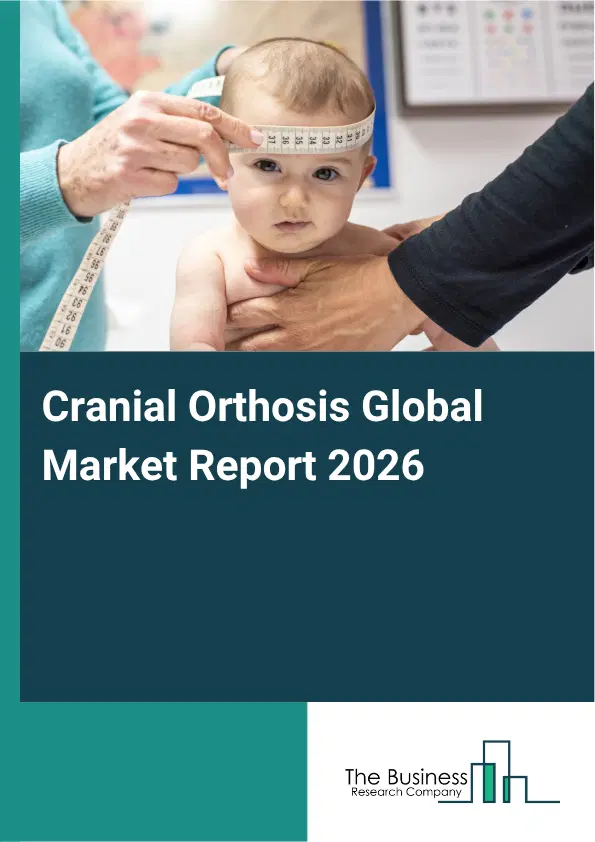
Cranial Orthosis Market Report 2026
Global Outlook – By Product (Cranial Remolding Helmets, Custom Cranial Orthoses), By Material (Thermoplastic, Foam, Composite Materials, Other Materials), By Age Group (Three To Six Months, Six To Twelve Months, Above Twelve Months), By Indication (Positional Plagiocephaly, Brachycephaly, Scaphocephaly, Craniosynostosis Post Surgical Helmet Therapy, Other Cranial Deformities), By End User (Hospitals, Orthotic And Prosthetic Clinics, Pediatric Clinics, Rehabilitation Centers, Specialty Craniofacial Centers) – Market Size, Trends, Strategies, and Forecast to 2030
Cranial Orthosis Market Report 2026 Market Overview
• Cranial Orthosis Market Report 2026 market size has reached to $0.28 billion in 2025 • Expected to grow to $0.4 billion in 2030 at a compound annual growth rate (CAGR) of 7.3% • Growth Driver: Rising Incidence Of Positional Cranial Deformities In Infants Fueling The Growth Of The Market Due To Increasing Need For Corrective Orthotic Treatment • Market Trend: Advancements In 3D Scanning And Digital Design Technologies For Precision Cranial Orthosis Customization • Asia-Pacific was the largest region and fastest growing region.What Is Covered Under Cranial Orthosis Market?
Cranial orthosis are custom-molded, lightweight helmet braces designed for infants to correct cranial asymmetries and deformities such as positional plagiocephaly, brachycephaly, or scaphocephaly. Worn continuously during a crucial period of rapid brain and skull development (typically between 4 and 12 months of age), these devices apply gentle external constraints to prominent areas while allowing unrestricted skull growth into flattened regions, promoting symmetrical cranial development. The main products of cranial orthosis include cranial remolding helmets and custom cranial orthoses. Cranial remolding helmets refer to custom-fitted orthopedic devices designed to gently guide skull growth and correct cranial shape abnormalities in infants during early developmental stages. These products are manufactured using thermoplastic, foam, composite materials, and other materials and are available for age groups including three to six months, six to twelve months, and above twelve months. They are indicated for positional plagiocephaly, brachycephaly, scaphocephaly, craniosynostosis post surgical helmet therapy, and other cranial deformities and are utilized by end users including hospitals, orthotic and prosthetic clinics, pediatric clinics, rehabilitation centers, and specialty craniofacial centers.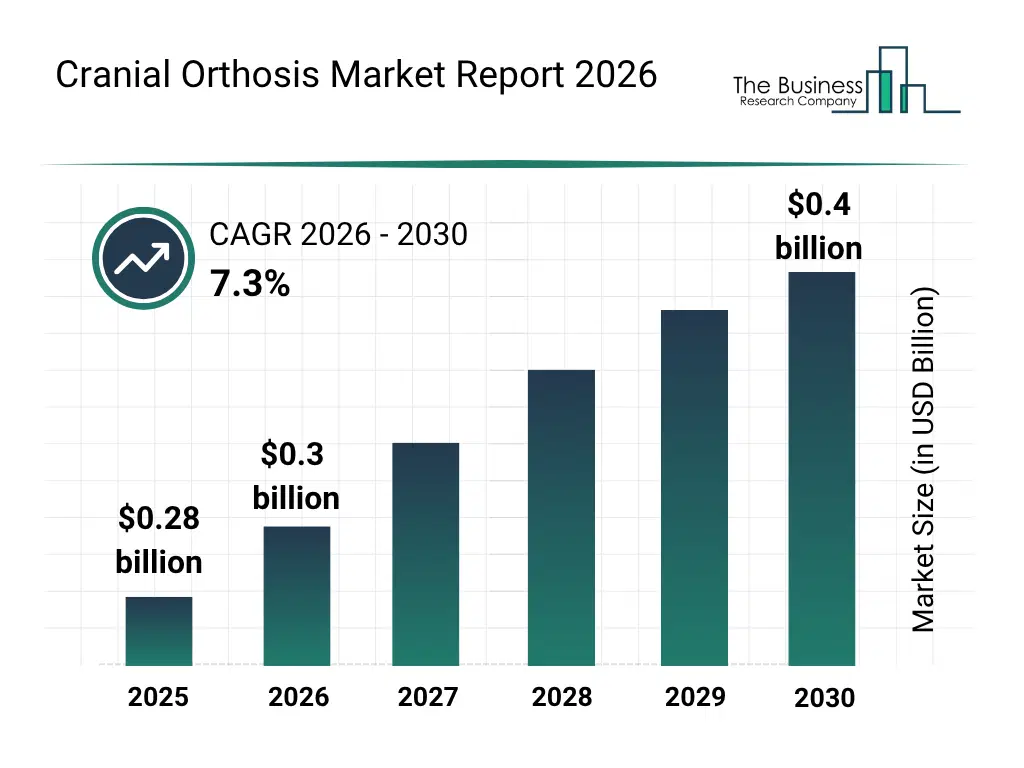
What Is The Cranial Orthosis Market Size and Share 2026?
The cranial orthosis market size has grown strongly in recent years. It will grow from $0.28 billion in 2025 to $0.3 billion in 2026 at a compound annual growth rate (CAGR) of 7.0%. The growth in the historic period can be attributed to increasing prevalence of positional cranial deformities among infants, rising awareness about early cranial asymmetry diagnosis, growing adoption of non-invasive cranial correction therapies, expanding availability of pediatric orthopedic care services, increasing acceptance of customized cranial orthotic treatments.What Is The Cranial Orthosis Market Growth Forecast?
The cranial orthosis market size is expected to see strong growth in the next few years. It will grow to $0.4 billion in 2030 at a compound annual growth rate (CAGR) of 7.3%. The growth in the forecast period can be attributed to rising demand for digitally customized cranial orthoses, increasing adoption of advanced cranial measurement technologies, growing preference for patient-specific infant healthcare solutions, expanding pediatric rehabilitation infrastructure, increasing focus on improving treatment outcomes and infant comfort. Major trends in the forecast period include increasing adoption of 3d scanning technology for customized cranial orthosis development, growing preference for lightweight and breathable cranial orthotic designs for infants, rising demand for early diagnosis and intervention of infant cranial deformities, increasing focus on improved comfort and wear compliance in cranial helmet therapy, growing availability of personalized cranial correction solutions through specialized care centers.
Global Cranial Orthosis Market Segmentation
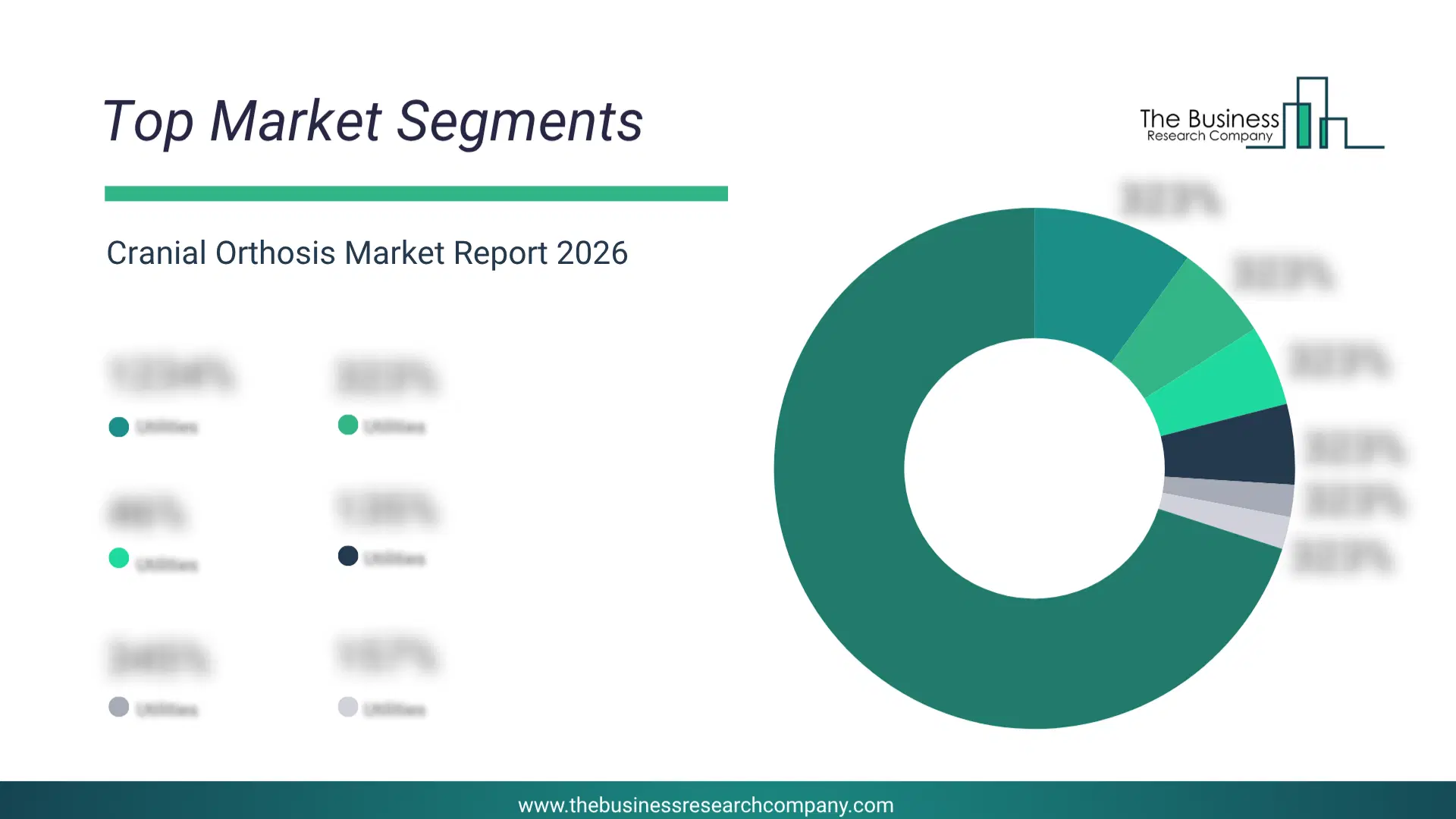
1) By Product: Cranial Remolding Helmets, Custom Cranial Orthoses 2) By Material: Thermoplastic, Foam, Composite Materials, Other Materials 3) By Age Group: Three To Six Months, Six To Twelve Months, Above Twelve Months 4) By Indication: Positional Plagiocephaly, Brachycephaly, Scaphocephaly, Craniosynostosis Post Surgical Helmet Therapy, Other Cranial Deformities 5) By End User: Hospitals, Orthotic And Prosthetic Clinics, Pediatric Clinics, Rehabilitation Centers, Specialty Craniofacial Centers Subsegments: 1) By Cranial Remolding Helmets: Passive Cranial Remolding Helmets, Active Adjustment Cranial Remolding Helmets, Ventilated Cranial Remolding Helmets 2) By Custom Cranial Orthoses: Three Dimensional Scanned Custom Orthoses, Computer Aided Designed Custom Orthoses, Post Surgical Custom Cranial OrthosesWhat Is The Driver Of The Cranial Orthosis Market?
The rising incidence of positional cranial deformities in infants is expected to propel the growth of the cranial orthosis market going forward. Cranial deformities in infants refers to the growing occurrence of abnormal head shapes caused by sustained external pressure on an infant’s developing skull. The incidence increases as preterm birth raises infants’ susceptibility to skull deformation due to softer cranial bones and prolonged positioning. Cranial orthoses provide corrective treatment by applying controlled pressure and guiding skull growth toward a more symmetrical head shape. Rising incidence of positional cranial deformities in infants therefore increases the number of infants who may need clinical evaluation and orthotic intervention. For instance, in July 2024, according to JAMA Pediatrics, a US-based peer-reviewed medical journal published by the American Medical Association, the incidence of positional plagiocephaly and brachycephaly (PPB) was 11.8% among preterm infants compared with 5.3% among term infants, indicating that preterm infants were more than twice as likely to develop PPB. Therefore, the rising incidence of positional cranial deformities in infants is driving the growth of the cranial orthosis industry.Key Players In The Global Cranial Orthosis Market
Major companies operating in the cranial orthosis market report are Cranial Technologies Inc., Orthomerica Products Inc., Boston Orthotics & Prosthetics LLC, Spinal Technology Inc., Wright & Filippis Inc., Momentum Health Technologies, Prosthetic & Orthotic Associates Inc., Armac Inc., INVENT Medical Group s.r.o., Headstart4Babies Limited, Rodin 4D SAS, Ability Prosthetics & Orthotics Inc., EastPoint Prosthetics & Orthotics Inc., Orthotic Care Services LLC, Boundless Biomechanical Bracing, Technology in Motion Ltd., KTWO Healthcare Pvt. Ltd., Chin and Partners, Gillette Children's Specialty Healthcare, Cranial Therapy Centers LLC.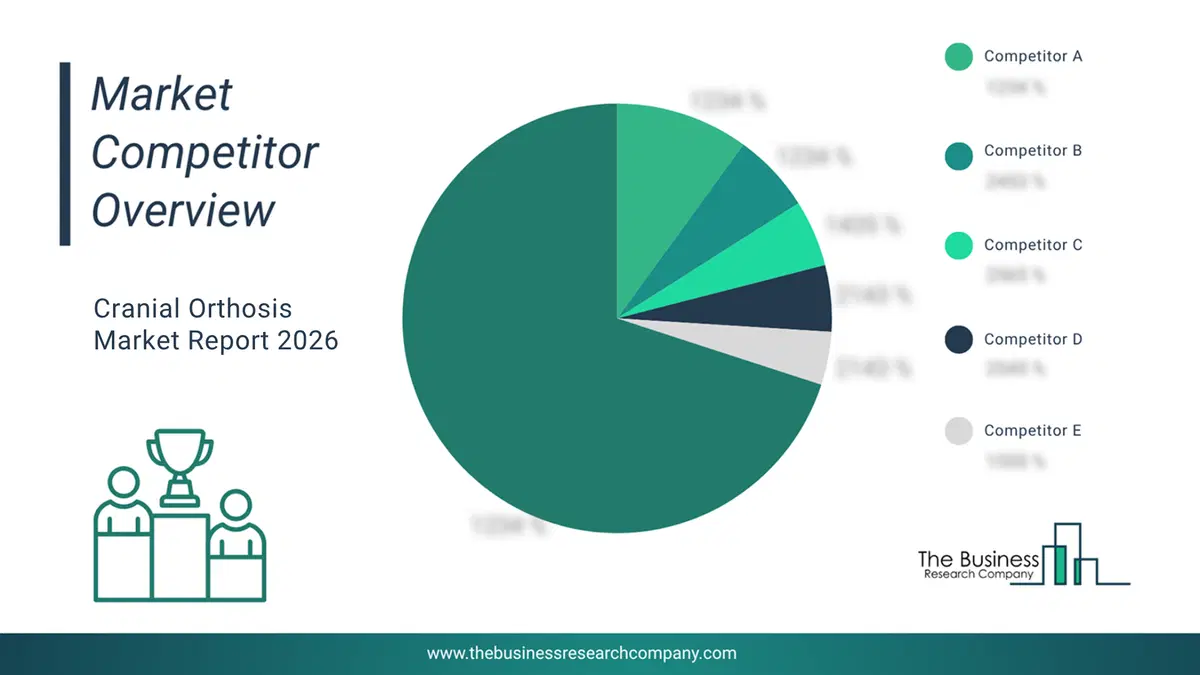
This chart is for illustrative purposes; the full report includes a detailed competitor analysis and comprehensive overview of the top 10 companies in the market.
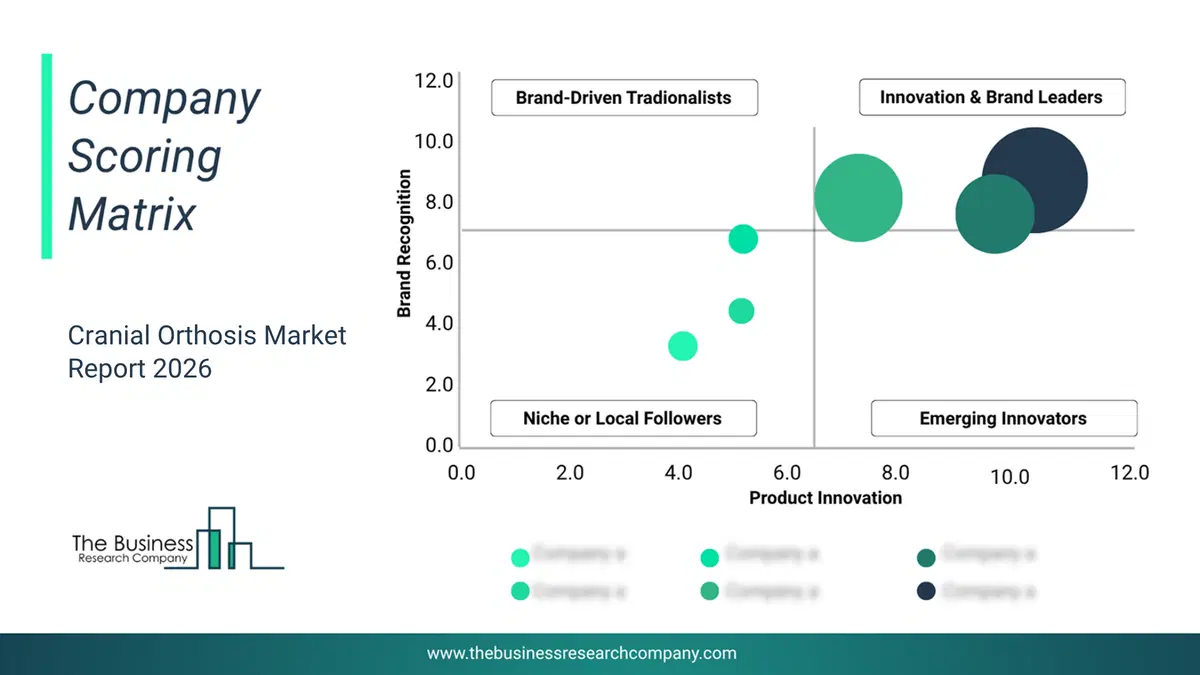
This chart maps companies by product innovation and brand strength, with bubble size indicating relative revenue, helping identify market leaders, challengers, and niche players. This is an illustrative chart; the full report provides a complete and accurate competitive analysis.
Global Cranial Orthosis Market Trends and Insights
Major companies operating in the cranial orthosis market are focusing on integrating advanced 3D scanning and digital design technologies to improve the precision and customization of cranial remolding orthoses. 3D scanning and digital design technologies use three-dimensional imaging to accurately capture an infant's head shape and computer-aided design (CAD) software to create customized cranial orthoses, enabling improved fit, treatment accuracy, and manufacturing efficiency. For instance, in March 2024, Orthomerica Products Inc., a US-based manufacturer of custom orthotic devices, received U.S. FDA 510(k) clearance for an updated STARband 3D cranial orthosis incorporating additional scanning technologies. The updated system enhances digital customization capabilities, enabling more precise design and fabrication of patient-specific cranial remolding helmets for infants with cranial asymmetries.What Are Latest Mergers And Acquisitions In The Cranial Orthosis Market?
In January 2024, OrthoPediatrics Corp. a US-based bio-science company acquired Boston Orthotics & Prosthetics for $22 million. With this acquisition, OrthoPediatrics Corp. aims to expand its pediatric specialty bracing portfolio, strengthen its position in the cranial orthosis market, broaden its non-surgical treatment offerings for infants with cranial deformities, and enhance its ability to provide comprehensive pediatric orthopedic and orthotic solutions through the addition of Boston Orthotics & Prosthetics' cranial remolding technologies. Boston Orthotics & Prosthetics is a US-based pediatric orthotics company that designs and manufactures cranial orthoses.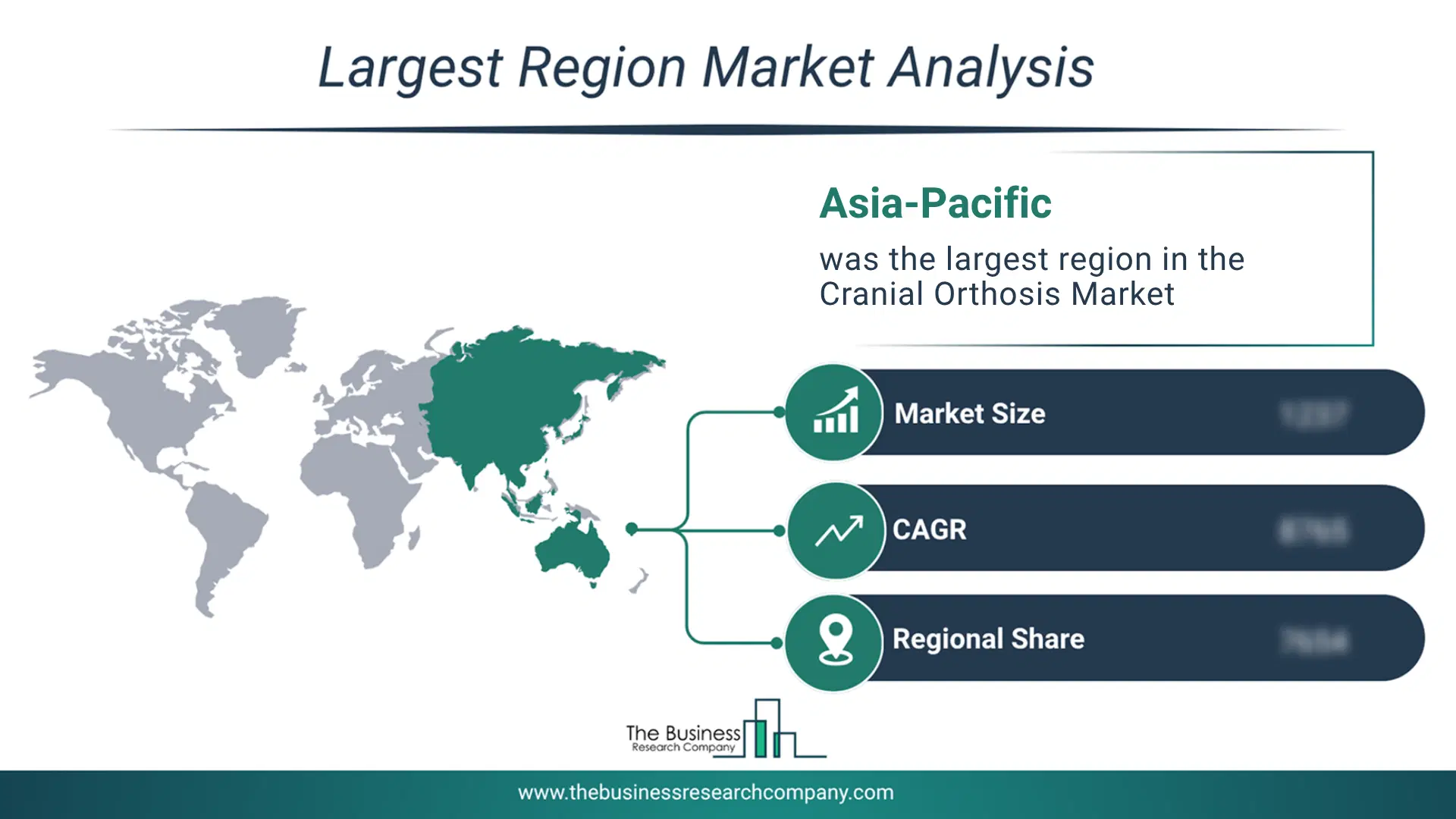
Regional Outlook
Asia-Pacific was the largest region in the cranial orthosis market in 2025. Asia-Pacific is expected to be the fastest-growing region in the forecast period. The regions covered in this market report are Asia-Pacific, South East Asia, Western Europe, Eastern Europe, North America, South America, Middle East, Africa. The countries covered in this market report are Australia, Brazil, China, France, Germany, India, Indonesia, Japan, Taiwan, Russia, South Korea, UK, USA, Canada, Italy, Spain.What Defines the Cranial Orthosis Market?
The cranial orthosis market consists of sales of cranial remolding helmets and custom cranial orthoses. Values in this market are ‘factory gate’ values, that is the value of goods sold by the manufacturers or creators of the goods, whether to other entities (including downstream manufacturers, wholesalers, distributors and retailers) or directly to end customers. The value of goods in this market includes related services sold by the creators of the goods.How is Market Value Defined and Measured?
The market value is defined as the revenues that enterprises gain from the sale of goods and/or services within the specified market and geography through sales, grants, or donations in terms of the currency (in USD unless otherwise specified). The revenues for a specified geography are consumption values that are revenues generated by organizations in the specified geography within the market, irrespective of where they are produced. It does not include revenues from resales along the supply chain, either further along the supply chain or as part of other products.
This chart presents market attractiveness based on a quantitative evaluation of growth, competition, strategic alignment, and risk, offering a clear view of opportunity areas for decision-making. This chart is for illustrative purposes; the full report contains the complete analysis.

This chart highlights the Total Addressable Market (TAM) by estimating the maximum revenue opportunity using an assumption-driven approach, supporting strategic planning and opportunity sizing across markets. The chart is illustrative; the full report provides a more comprehensive analysis.
What Key Data and Analysis Are Included in the Cranial Orthosis Market Report 2026?
The cranial orthosis market research report is one of a series of new reports from The Business Research Company that provides market statistics, including industry global market size, regional shares, competitors with the market share, detailed market segments, market trends and opportunities, and any further data you may need to thrive in the cranial orthosis industry. The market research report delivers a complete perspective of everything you need, with an in-depth analysis of the current and future state of the industry.Cranial Orthosis Market Report Forecast Analysis
| Report Attribute | Details |
|---|---|
| Market Size Value In 2026 | $0.3 billion |
| Revenue Forecast In 2030 | $0.4 billion |
| Growth Rate | CAGR of 7.3% from 2026 to 2030 |
| Base Year For Estimation | 2025 |
| Actual Estimates/Historical Data | 2020-2025 |
| Forecast Period | 2026 - 2030 |
| Market Representation | Revenue in USD Billion and CAGR from 2026 to 2030 |
| Segments Covered | Product, Material, Age Group, Indication, End User |
| Regional Scope | Asia-Pacific, Western Europe, Eastern Europe, North America, South America, Middle East, Africa |
| Country Scope | The countries covered in the report are Australia, Brazil, China, France, Germany, India, Indonesia, Japan, Taiwan, Russia, South Korea, UK, USA, Canada, Italy, Spain. |
| Key Companies Profiled | Cranial Technologies Inc., Orthomerica Products Inc., Boston Orthotics & Prosthetics LLC, Spinal Technology Inc., Wright & Filippis Inc., Momentum Health Technologies, Prosthetic & Orthotic Associates Inc., Armac Inc., INVENT Medical Group s.r.o., Headstart4Babies Limited, Rodin 4D SAS, Ability Prosthetics & Orthotics Inc., EastPoint Prosthetics & Orthotics Inc., Orthotic Care Services LLC, Boundless Biomechanical Bracing, Technology in Motion Ltd., KTWO Healthcare Pvt. Ltd., Chin and Partners, Gillette Children's Specialty Healthcare, Cranial Therapy Centers LLC. |
| Customization Scope | Request for Customization |
| Pricing And Purchase Options | Explore Purchase Options |