
Crisis Management Software Market Report 2026
Global Outlook – By Component (Solutions, Services), By Deployment Mode (Cloud, On-Premise), By Organization Size (Small And Medium-Sized Enterprises (SMEs), Large Enterprises), By Application (Business Continuity, Risk Assessment And Analysis, Emergency Notification System, Training And Simulation, Family Reunification, Other Applications), By Vertical (Government And Defense, Healthcare, Information Technology (IT) And Telecommunication, Banking, Financial Services And Insurance (BFSI), Energy And Utility, Education, Other Verticals) – Market Size, Trends, Strategies, and Forecast to 2030
Crisis Management Software Market Overview
• Crisis Management Software market size has reached to $9.54 billion in 2025 • Expected to grow to $12.78 billion in 2030 at a compound annual growth rate (CAGR) of 6% • Growth Driver: Rising Frequency Of Natural Disasters Fuels Growth Of Crisis Management Software Market • Market Trend: The Emergence Of AI-Powered Incident Assistants • North America was the largest region in 2025 and Asia-Pacific is the fastest growing region.Market Gains By 2030 – Top Opportunities By Segment
Market Gain identifies the most promising market opportunities by highlighting the segments or products expected to generate the highest incremental revenue growth over the next five years.
What Is Covered Under Crisis Management Software Market?
Crisis management software is a specialized set of tools and applications designed to assist organizations in planning, coordinating, and executing effective responses to various crises, emergencies, or disruptions. This software streamlines communication, resource allocation, and decision-making during emergencies, enhancing organizations' ability to respond to and recover from crises effectively. The main components of crisis management software include solutions and services. A solution within crisis management software acts as a modular component, optimizing incident response, communication, and decision-making processes to bolster overall system functionality during emergencies. The deployment modes include cloud, on-premise for organization sizes such as small and medium-sized enterprises (SMEs), and large enterprises. The applications include business continuity, risk assessment and analysis, emergency notification systems, training and simulation, family reunification, others used by verticals such as government and defense, healthcare, information technology (IT) and telecommunication, banking, financial services, and insurance (BFSI), energy and utility, education, and other verticals.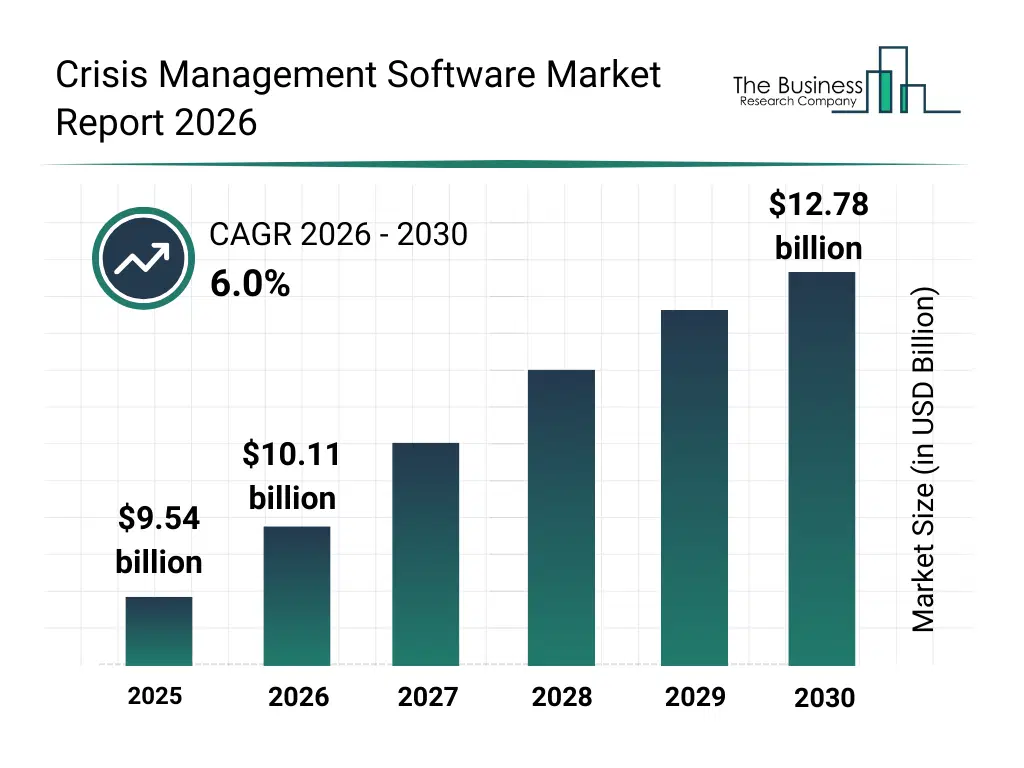
What Is The Crisis Management Software Market Size and Share 2026?
The crisis management software market size has grown strongly in recent years. It will grow from $9.54 billion in 2025 to $10.11 billion in 2026 at a compound annual growth rate (CAGR) of 5.9%. The growth in the historic period can be attributed to growing need for effective crisis response, increasing frequency of natural and man-made disasters, rising regulatory requirements for emergency preparedness, adoption of enterprise risk management practices, reliance on manual crisis management methods.What Is The Crisis Management Software Market Growth Forecast?
The crisis management software market size is expected to see strong growth in the next few years. It will grow to $12.78 billion in 2030 at a compound annual growth rate (CAGR) of 6.0%. The growth in the forecast period can be attributed to integration of AI for predictive risk analysis, expansion of cloud-based crisis management platforms, increasing focus on employee and stakeholder safety, adoption in smes and large enterprises, integration with it and telecom infrastructure for real-time alerts. Major trends in the forecast period include real-time incident management, automated emergency notifications, business continuity planning, crisis communication platforms, risk assessment and simulation tools.
Global Crisis Management Software Market Segmentation
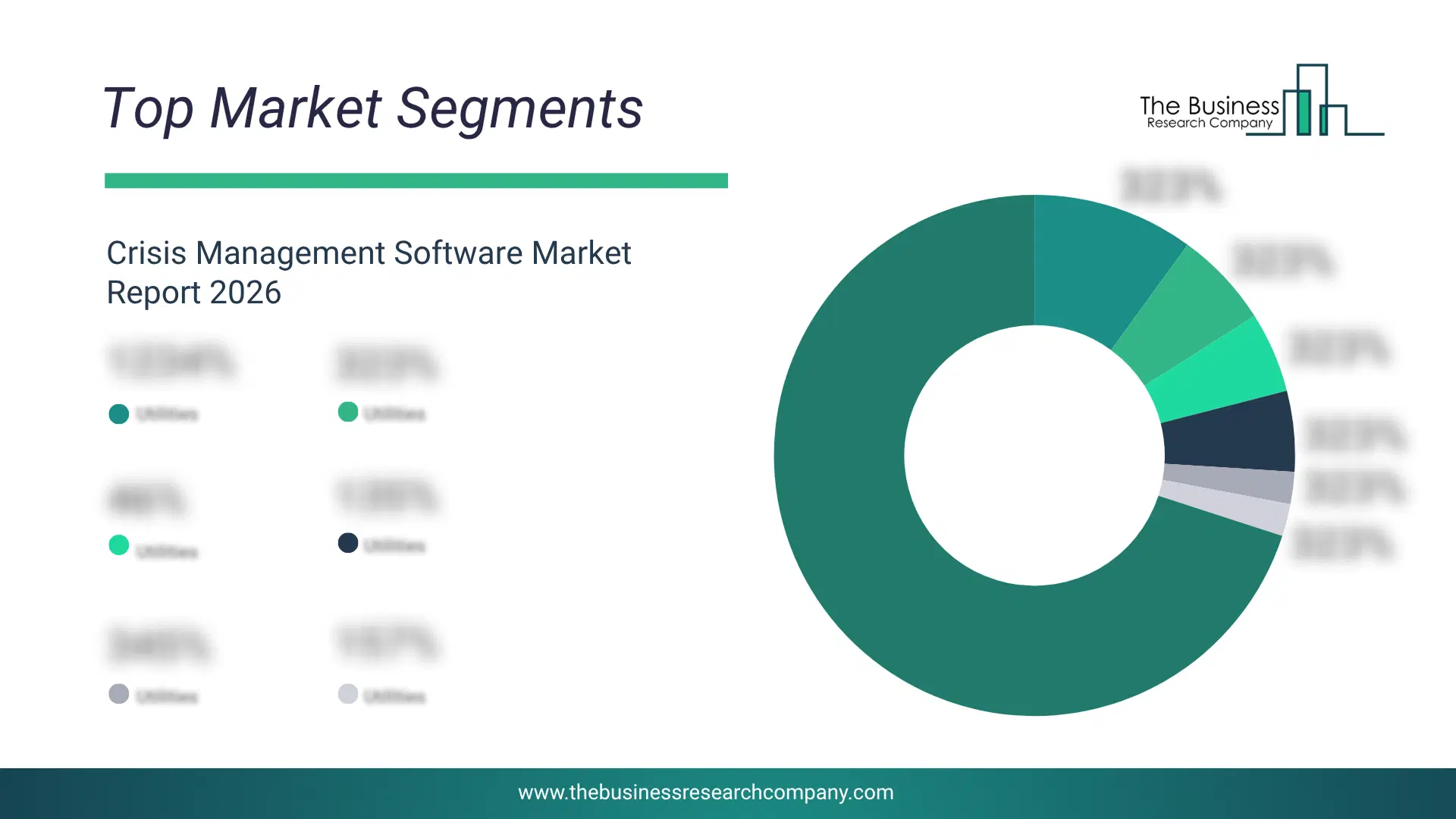
1) By Component: Solutions, Services 2) By Deployment Mode: Cloud, On-Premise 3) By Organization Size: Small And Medium-Sized Enterprises (SMEs), Large Enterprises 4) By Application: Business Continuity, Risk Assessment And Analysis, Emergency Notification System, Training And Simulation, Family Reunification, Other Applications 5) By Vertical: Government And Defense, Healthcare, Information Technology (IT) And Telecommunication, Banking, Financial Services And Insurance (BFSI), Energy And Utility, Education, Other Verticals Subsegments: 1) By Solutions: Incident Management Software, Risk Assessment Tools, Communication And Collaboration Platforms, Emergency Response Software, Business Continuity Planning Solutions, Crisis Communication Systems, Situation Awareness Tools 2) By Services: Consulting Services, Training And Education Services, Implementation And Integration Services, Support And Maintenance Services, Managed Services The top segments in the crisis management software market will be: • Solutions will reach $7.54 Billion by 2030. • Services will reach $5.18 Billion by 2030.What Is The Driver Of The Crisis Management Software Market?
Growing occurrences of natural disasters are expected to propel the growth of the crisis management software market going forward. Natural disasters are catastrophic events that can cause widespread destruction, loss of life, and significant disruption to everyday life. Human activities, including deforestation, land-use changes, and altering natural ecosystems, can increase susceptibility to certain natural disasters. Crisis management software expedites communication, streamlines emergency operations, and enhances decision-making, facilitating effective response strategies and mitigating the impact on affected regions. For instance, in January 2024, according to a report published by the National Centers for Environmental Information (NCEI), a US-based government agency, there were 28 confirmed weather and climate disaster events in the United States, each causing losses exceeding $1 billion. These events included one drought, four floods, 19 severe storms, two tropical cyclones, one wildfire, and one winter storm. Furthermore, in March 2022, according to the report published by the Fair Tech Institute Singapore-based not-for-profit organization, the yearly occurrence of natural disasters could rise by 37% between 2025 and 2029. Therefore, the growing occurrence of natural disasters drives the growth of the crisis management software industry.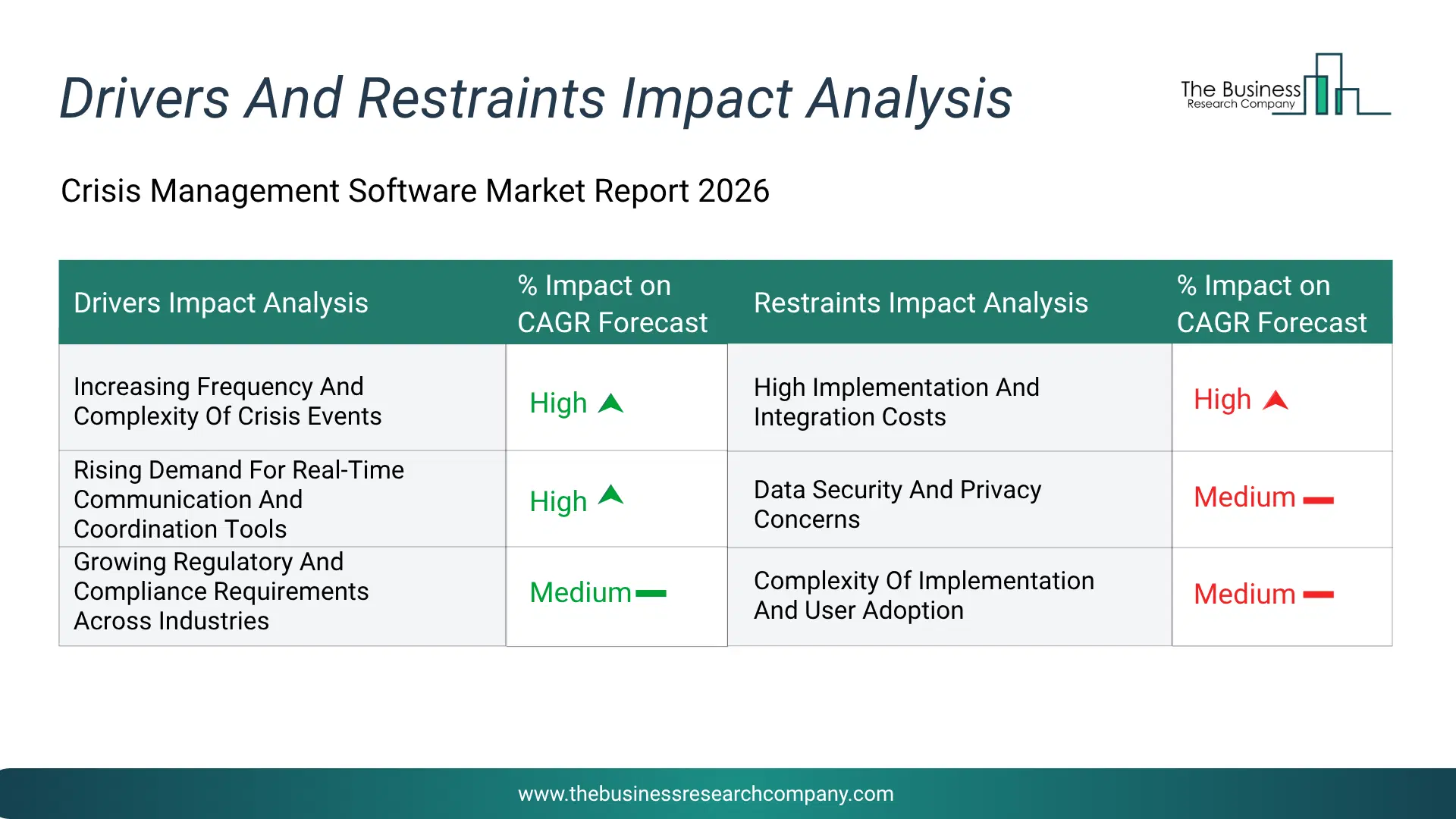
Infographic Chart Showing Key Market Drivers Analysis And Restraints For Crisis Management Software Market
The chart presents an impact analysis of key drivers and restraints, quantifying their relative influence on the market's growth rate and helping assess the balance between growth enablers and limiting factors. This chart offers a high-level perspective; the full report contains more detailed insights.
How Will The Drivers Impact Growth In The Global Crisis Management Software Market?
• Increasing Frequency And Complexity Of Crisis Events (High) – During the forecast period, the increasing frequency and complexity of crisis events is expected to become a key growth driver for the crisis management software market by 2030. Organizations are facing a broader range of disruptions, including cyberattacks, natural disasters, supply chain interruptions, and operational failures that require structured response mechanisms. Businesses are increasingly adopting dedicated crisis management platforms to improve visibility, accelerate decision-making, and minimize disruption during critical incidents. The growing need to maintain operational stability and protect organizational assets is encouraging greater investment in crisis preparedness technologies. • Rising Demand For Real-Time Communication And Coordination Tools (High) – During the forecast period, the rising demand for real-time communication and coordination tools is expected to emerge as a major factor driving the expansion of the crisis management software market by 2030. Organizations require immediate information sharing and coordinated response capabilities to effectively manage incidents involving employees, customers, and external stakeholders. Advanced crisis management solutions provide centralized communication channels, automated alerts, and collaborative workflows that enhance response efficiency. The growing importance of rapid information dissemination during emergencies is accelerating adoption across both public and private sectors. • Growing Regulatory And Compliance Requirements Across Industries (Medium) – During the forecast period, the growing regulatory and compliance requirements across industries is expected to act as a key growth catalyst for the crisis management software market by 2030. Regulatory bodies are increasingly mandating comprehensive risk management, incident reporting, and business continuity practices across critical sectors. Organizations are deploying crisis management software to strengthen compliance readiness, maintain audit trails, and ensure standardized response procedures. The need to demonstrate preparedness and meet evolving governance standards is creating sustained demand for advanced crisis response solutions.How Will The Restraints Impact Growth In The Global Crisis Management Software Market?
• High Implementation And Integration Costs (High) – During the forecast period, the adoption of crisis management software often requires substantial upfront investment in system deployment, customization, and integration with existing IT infrastructure. Many organizations, especially small and mid-sized enterprises, find it difficult to justify these costs relative to uncertain return on investment. This directly restricts market growth, as the defined offerings such as incident tracking, communication systems, and analytics tools—require seamless integration to deliver value. Additionally, ongoing maintenance and upgrade expenses further increase the total cost of ownership. As a result, cost sensitivity limits widespread adoption across budget-constrained segments. • Data Security And Privacy Concerns (High) – During the forecast period, the crisis management software handles sensitive organizational data, including operational details, emergency protocols, and communication records, raising concerns around data breaches and misuse. Organizations may hesitate to adopt such platforms, particularly cloud-based solutions, due to risks associated with unauthorized access and regulatory non-compliance. This acts as a restraint within the defined market, as trust is critical for solutions involving real-time communication and incident reporting. Any perceived vulnerability can delay procurement decisions or limit deployment scope. Consequently, security concerns continue to slow adoption in highly regulated and risk-averse industries. • Complexity Of Implementation And User Adoption (Medium) – During the forecast period, the effectiveness of crisis management software depends on proper configuration, employee training, and integration into existing workflows, which can be complex and time-consuming. Organizations may face challenges in aligning the software with their specific emergency response protocols and operational structures. This complexity acts as a barrier, as the defined services such as resource management and coordination—require consistent and accurate usage to deliver benefits. Resistance to change among staff and lack of technical expertise can further hinder implementation. Therefore, operational complexity reduces adoption speed and limits full-scale utilization of these solutions.Key Players In The Global Crisis Management Software Market
Major companies operating in the crisis management software market are Lockheed Martin Corporation; International Business Machines Corporation; Honeywell International Inc.; Motorola Solutions; Blackboard Inc.; Everbridge Inc.; AlertMedia; OnSolve; xMatters Inc.; Resolver; ARCOS LLC; Agility Recovery; LogicGate; Eccentex Corporation; LiveSafe Inc.; Juvare LLC; The Response Group Inc.; CrisisGo Inc.; RockDove Solutions; Crisis Management Solutions Inc.; Regroup Mass Notification; Crisis Track; Bryghtpath LLC; RiskWatch International; Assurance Software; Rave Mobile Safety; Noggin; MissionMode Solutions Inc.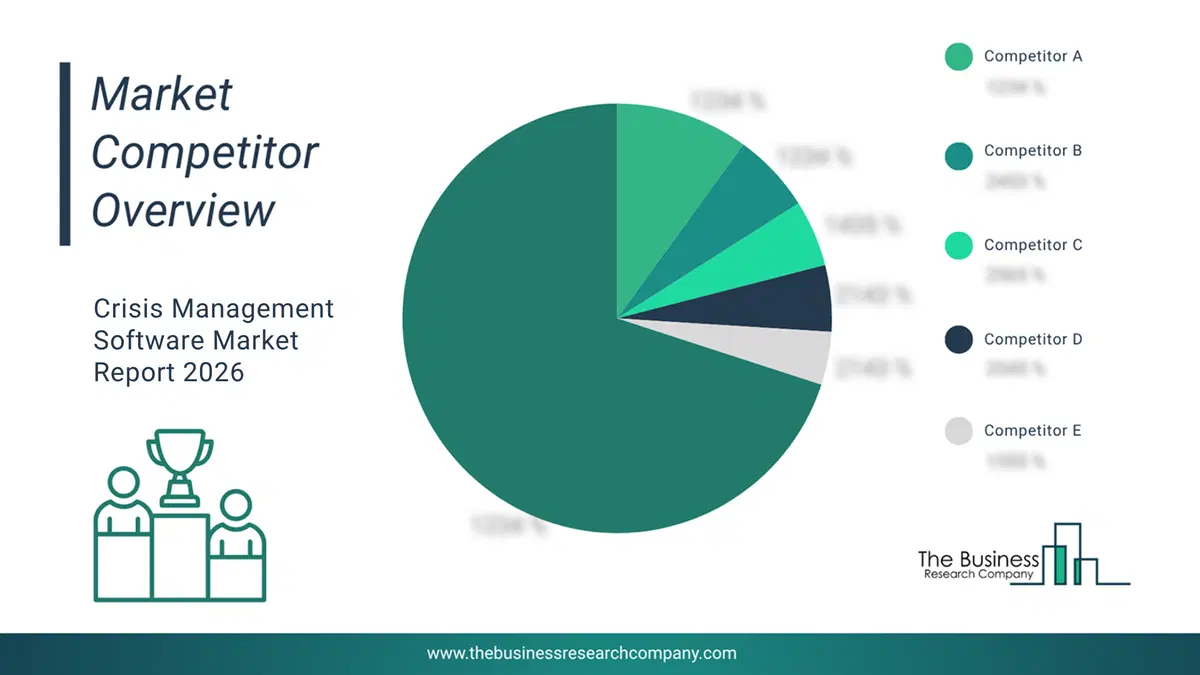
This chart is for illustrative purposes; the full report includes a detailed competitor analysis and comprehensive overview of the top 10 companies in the market.
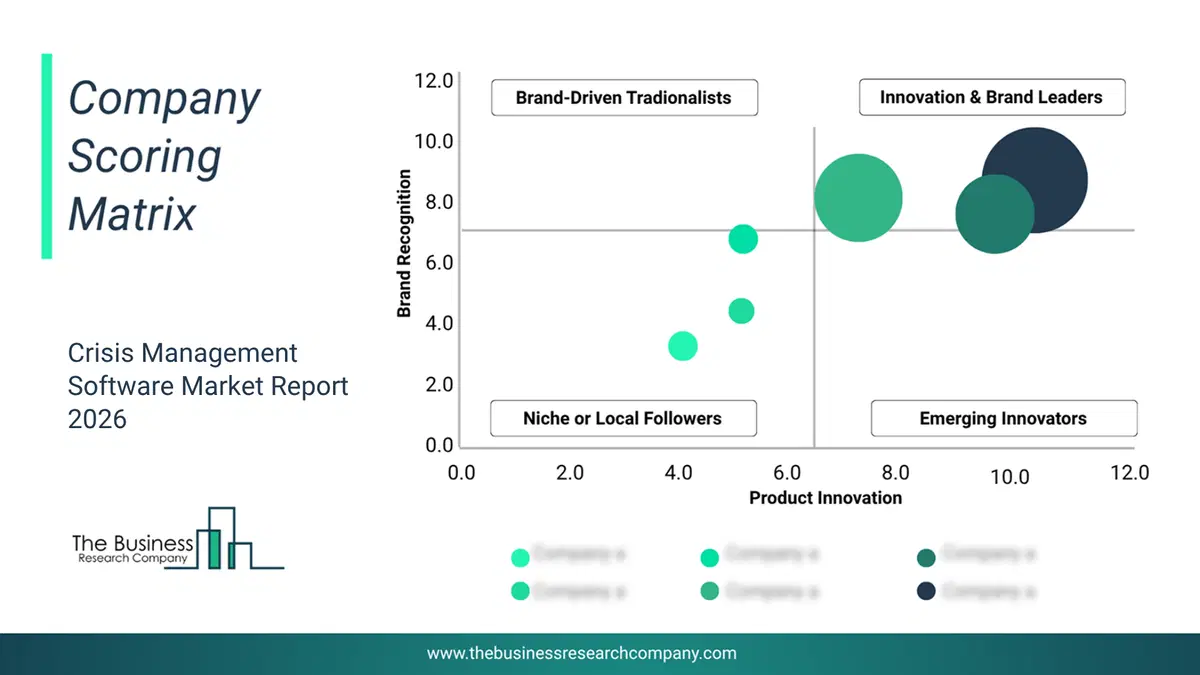
This chart maps companies by product innovation and brand strength, with bubble size indicating relative revenue, helping identify market leaders, challengers, and niche players. This is an illustrative chart; the full report provides a complete and accurate competitive analysis.
Global Crisis Management Software Market Trends and Insights
Major companies operating in the crisis management software market are increasing their focus on developing advanced solutions, such as AI-powered incident assistants, to gain a competitive edge in the market. This solution utilizes artificial intelligence algorithms and capabilities to assist in managing and responding to various incidents or emergencies. For instance, in February 2024, Blameless, a US-based software company, launched an AI-powered Incident Assistant feature. This feature is a transformative tool within the Blameless platform that provides immediate clarity on the status of incidents by condensing thousands of lines of communication into a concise overview in less than a second. It uses AI to automatically generate incident summaries that are easy, instant, and up-to-date, revolutionizing the approach to briefing responders and keeping non-technical stakeholders informed. Additionally, Blameless ensures privacy and compliance by keeping all incident data within its customers' enterprise accounts.What Are Latest Mergers And Acquisitions In The Crisis Management Software Market?
In July 2024, Thoma Bravo LLC, a US-based software investment firm, acquired Everbridge for approximately US $1.8 billion. With this acquisition, Thoma Bravo aims to strengthen and grow Everbridge’s platform, enabling deeper product innovation and leveraging its risk‑management and safety‑software expertise to drive long-term growth. Everbridge Inc. is a US-based technology company that specializes in providing crisis management software.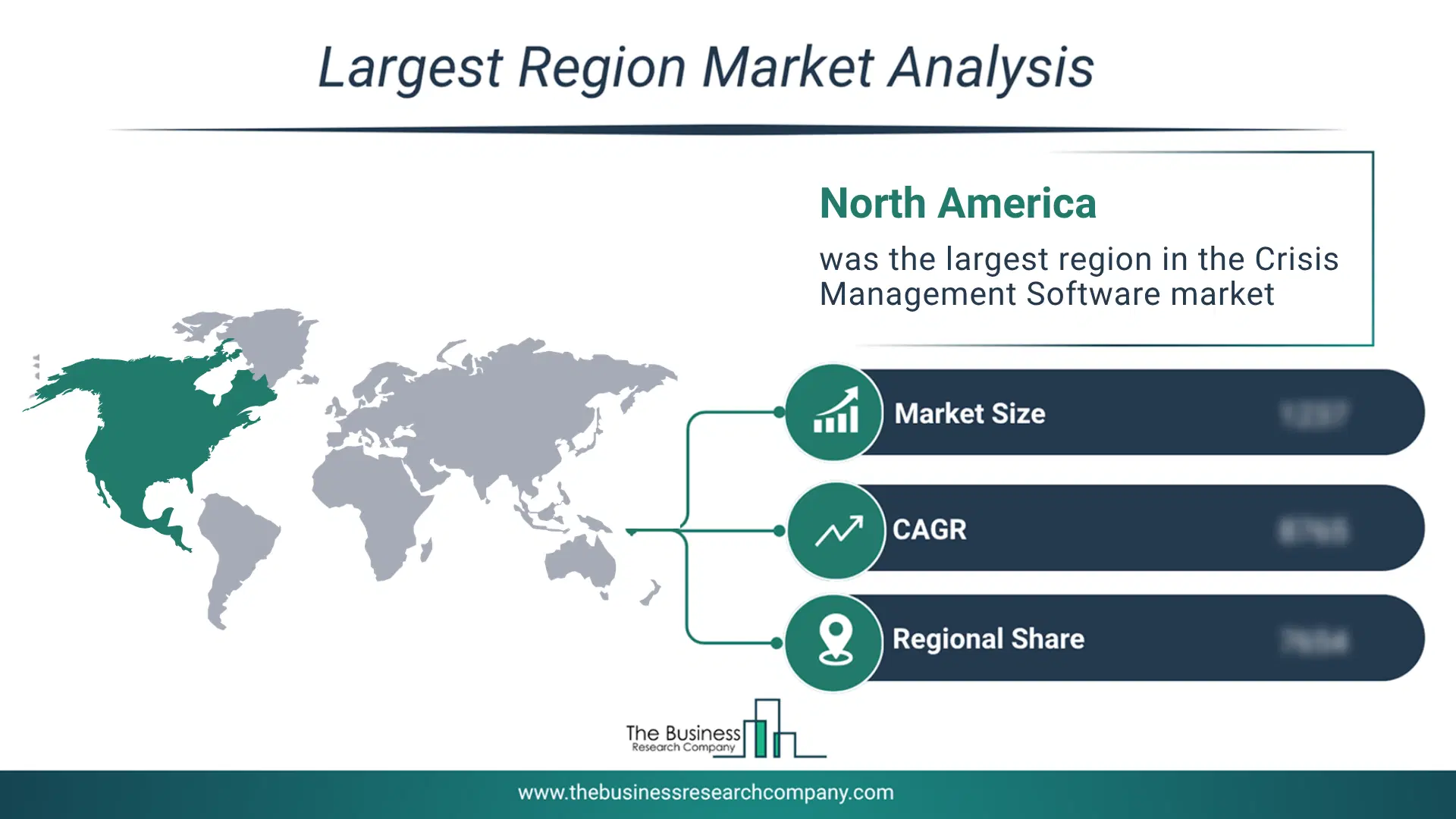
Regional Insights
North America was the largest region in the crisis management software market in 2025. Asia-Pacific is expected to be the fastest-growing region in the forecast period. The regions covered in this market report are Asia-Pacific, South East Asia, Western Europe, Eastern Europe, North America, South America, Middle East, Africa. The countries covered in this market report are Australia, Brazil, China, France, Germany, India, Indonesia, Japan, Taiwan, Russia, South Korea, UK, USA, Canada, Italy, SpainWhat Defines the Crisis Management Software Market?
The crisis management software market consists of revenues earned by entities by providing services such as resource management, emergency planning, documentation, and incident reporting and tracking. The market value includes the value of related goods sold by the service provider or included within the service offering. The crisis management software market also includes sales of incident tracking systems, emergency notification systems, and data analytics and visualization tools. Values in this market are ‘factory gate’ values, that is the value of goods sold by the manufacturers or creators of the goods, whether to other entities (including downstream manufacturers, wholesalers, distributors and retailers) or directly to end customers. The value of goods in this market includes related services sold by the creators of the goods.How is Market Value Defined and Measured?
The market value is defined as the revenues that enterprises gain from the sale of goods and/or services within the specified market and geography through sales, grants, or donations in terms of the currency (in USD unless otherwise specified). The revenues for a specified geography are consumption values that are revenues generated by organizations in the specified geography within the market, irrespective of where they are produced. It does not include revenues from resales along the supply chain, either further along the supply chain or as part of other products.
This chart presents market attractiveness based on a quantitative evaluation of growth, competition, strategic alignment, and risk, offering a clear view of opportunity areas for decision-making. This chart is for illustrative purposes; the full report contains the complete analysis.

This chart highlights the Total Addressable Market (TAM) by estimating the maximum revenue opportunity using an assumption-driven approach, supporting strategic planning and opportunity sizing across markets. The chart is illustrative; the full report provides a more comprehensive analysis.
What Key Data and Analysis Are Included in the Crisis Management Software Market Report 2026?
The crisis management software market research report is one of a series of new reports from The Business Research Company that provides market statistics, including industry global market size, regional shares, competitors with the market share, detailed market segments, market trends and opportunities, and any further data you may need to thrive in the crisis management software industry. The market research report delivers a complete perspective of everything you need, with an in-depth analysis of the current and future state of the industry.Crisis Management Software Market Report Forecast Analysis
| Report Attribute | Details |
|---|---|
| Market Size Value In 2026 | $10.11 billion |
| Revenue Forecast In 2030 | $12.78 billion |
| Growth Rate | CAGR of 5.9% from 2026 to 2030 |
| Base Year For Estimation | 2025 |
| Actual Estimates/Historical Data | 2020-2025 |
| Forecast Period | 2026 - 2030 |
| Market Representation | Revenue in USD Billion and CAGR from 2026 to 2030 |
| Segments Covered | Component, Deployment Mode, Organization Size, Application, Vertical |
| Regional Scope | Asia-Pacific, Western Europe, Eastern Europe, North America, South America, Middle East, Africa |
| Country Scope | The countries covered in the report are Australia, Brazil, China, France, Germany, India, Indonesia, Japan, Taiwan, Russia, South Korea, UK, USA, Canada, Italy, Spain. |
| Key Companies Profiled | Lockheed Martin Corporation; International Business Machines Corporation; Honeywell International Inc.; Motorola Solutions; Blackboard Inc.; Everbridge Inc.; AlertMedia; OnSolve; xMatters Inc.; Resolver; ARCOS LLC; Agility Recovery; LogicGate; Eccentex Corporation; LiveSafe Inc.; Juvare LLC; The Response Group Inc.; CrisisGo Inc.; RockDove Solutions; Crisis Management Solutions Inc.; Regroup Mass Notification; Crisis Track; Bryghtpath LLC; RiskWatch International; Assurance Software; Rave Mobile Safety; Noggin; MissionMode Solutions Inc. |
| Customization Scope | Request for Customization |
| Pricing And Purchase Options | Explore Purchase Options |