
Cross Laminated Timber Market Report 2026
Global Outlook – By Product Type (3-Ply CLT Panels, 5-Ply CLT Panels, 7-Ply and Above CLT Panels), By Application (Walls, Floors, Roofs), By End-Use Sector (Residential, Commercial, Institutional, Industrial, Other End-Use Sectors) – Market Size, Trends, Strategies, and Forecast to 2030
Cross Laminated Timber Market Overview
• Cross Laminated Timber market size has reached to $1.9 billion in 2025 • Expected to grow to $4.38 billion in 2030 at a compound annual growth rate (CAGR) of 18.1% • Growth Driver: Rising Construction Activities Drives The Cross-Laminated Timber Market • Market Trend: Innovation In Cross Laminated Timber Production Facilities To Meet Growing Demand For Sustainability • Europe was the largest region in 2025 and Asia-Pacific is the fastest growing region.Market Gains By 2030 – Top Opportunities By Segment
Market Gain identifies the most promising market opportunities by highlighting the segments or products expected to generate the highest incremental revenue growth over the next five years.
What Is Covered Under Cross Laminated Timber Market?
Cross-laminated timber is a type of engineered wood material composed of layers of kiln-dried dimension lumber positioned at sharp angles to one another and glued together to form structural panels. It is used in both load-bearing and non-load-bearing structures, walls, floors, and roofs. The panel obtains good structural strength in both directions by bonding it in different angles. The main types of cross-laminated timber are adhesive bonded, and mechanically fastened. Adhesive bond refers to the process of joining two surfaces together, usually with the creation of a smooth bond. The various applications involved are residential, institutional, Commercial, and other applications, which includes various end-users such as structural and non-structural.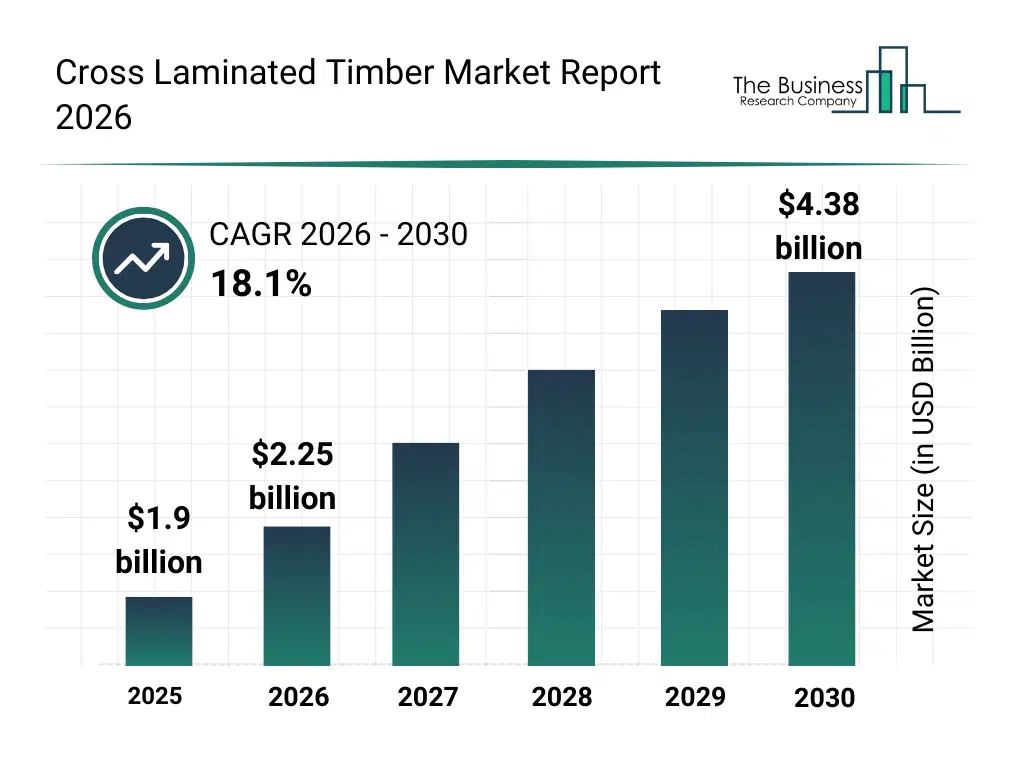
What Is The Cross Laminated Timber Market Size and Share 2026?
The cross laminated timber market size has grown rapidly in recent years. It will grow from $1.9 billion in 2025 to $2.25 billion in 2026 at a compound annual growth rate (CAGR) of 18.5%. The growth in the historic period can be attributed to growth in sustainable building practices, early adoption of engineered wood systems, expansion of prefabricated construction methods, availability of certified timber resources, rising acceptance of timber in structural applications.What Is The Cross Laminated Timber Market Growth Forecast?
The cross laminated timber market size is expected to see rapid growth in the next few years. It will grow to $4.38 billion in 2030 at a compound annual growth rate (CAGR) of 18.1%. The growth in the forecast period can be attributed to increasing investments in low-carbon construction, rising adoption of tall timber buildings, expansion of off-site construction models, growing regulatory support for mass timber, technological advancements in engineered wood products. Major trends in the forecast period include increasing adoption of mass timber construction, rising use of clt in multi-story buildings, growing demand for prefabricated structural panels, expansion of hybrid timber-concrete structures, enhanced focus on structural fire performance.
Global Cross Laminated Timber Market Segmentation
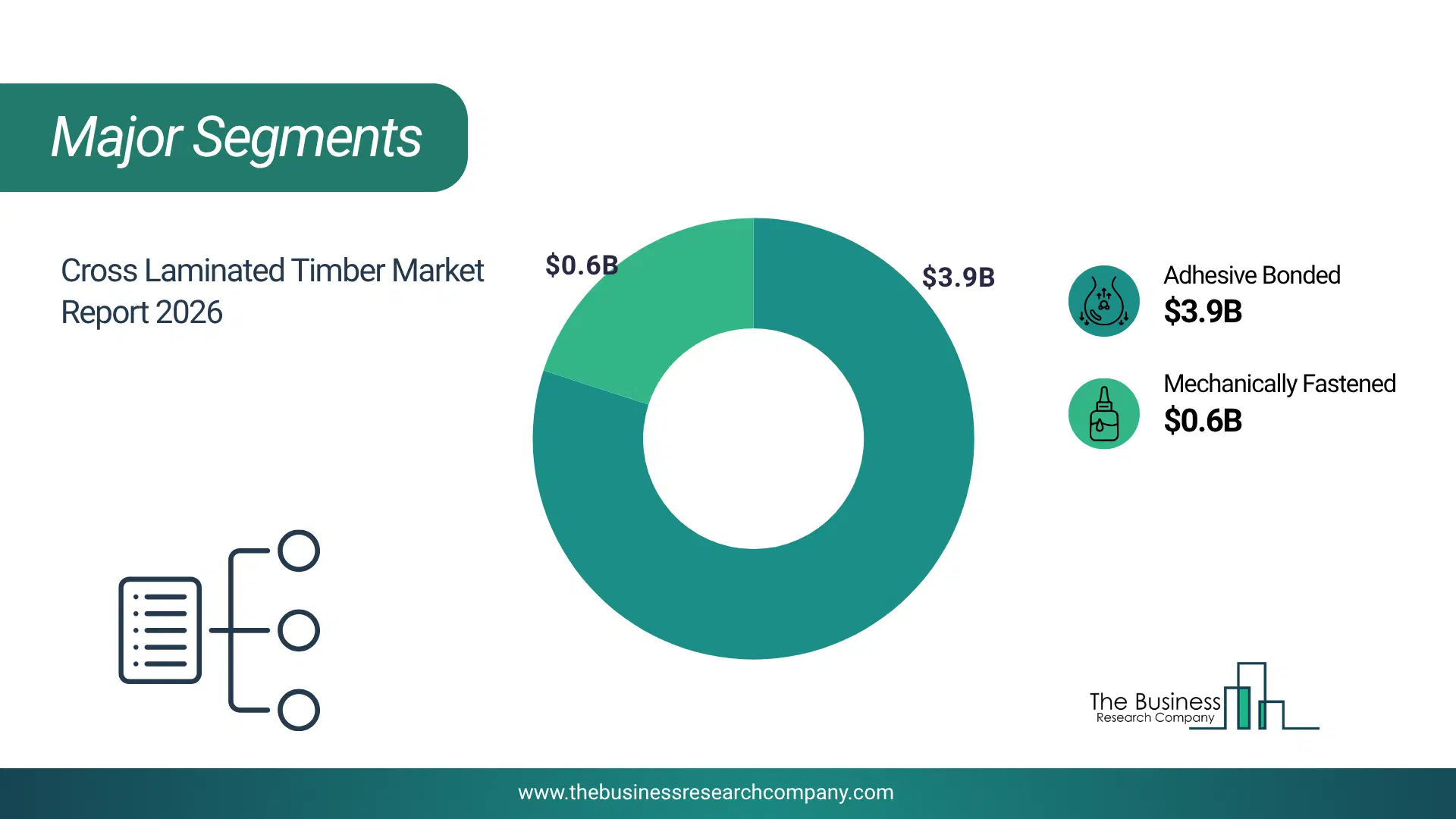
1) By Product Type: 3-Ply CLT Panels, 5-Ply CLT Panels, 7-Ply and Above CLT Panels 2) By Application: Walls, Floors, Roofs 3) By End-Use Sector: Residential, Commercial, Institutional, Industrial, Other End-Use Sectors Subsegments: 1) By 3-Ply CLT Panels: Lightweight Structural Panels, Interior Wall Panels, Low-Rise Residential Panels 2) By 5-Ply CLT Panels: Medium-Load Structural Panels, Floor and Roof Panels, Mid-Rise Building Panels 3) By 7-Ply and Above CLT Panels: Heavy-Load Structural Panels, Long-Span Floor Panels, High-Rise and Commercial Structural Panels The top segments in the cross laminated timber market will be: • Adhesive Bonded will reach $3.88 billion by 2030. • Mechanically Fastened will reach $0.5 billion by 2030.What Is The Driver Of The Cross Laminated Timber Market?
The increase in construction activities is expected to propel the growth of the cross-laminated timber market going forward. Construction activity refers to any activity associated with construction at a site. Timber is used in the construction of doors, windows, cabinets, cupboards, shelves, tables, and railings, among other things, which increases the use of cross-laminated timber in construction activities. For instance, in June 2023, Construction Digital, a UK-based company that connects all construction brands published that the construction industry in the UK is projected to grow by 12% in 2024, followed by a further increase of 3% in 2025. Therefore, an increase in construction activities is expected to drive the growth of the cross laminated timber industry.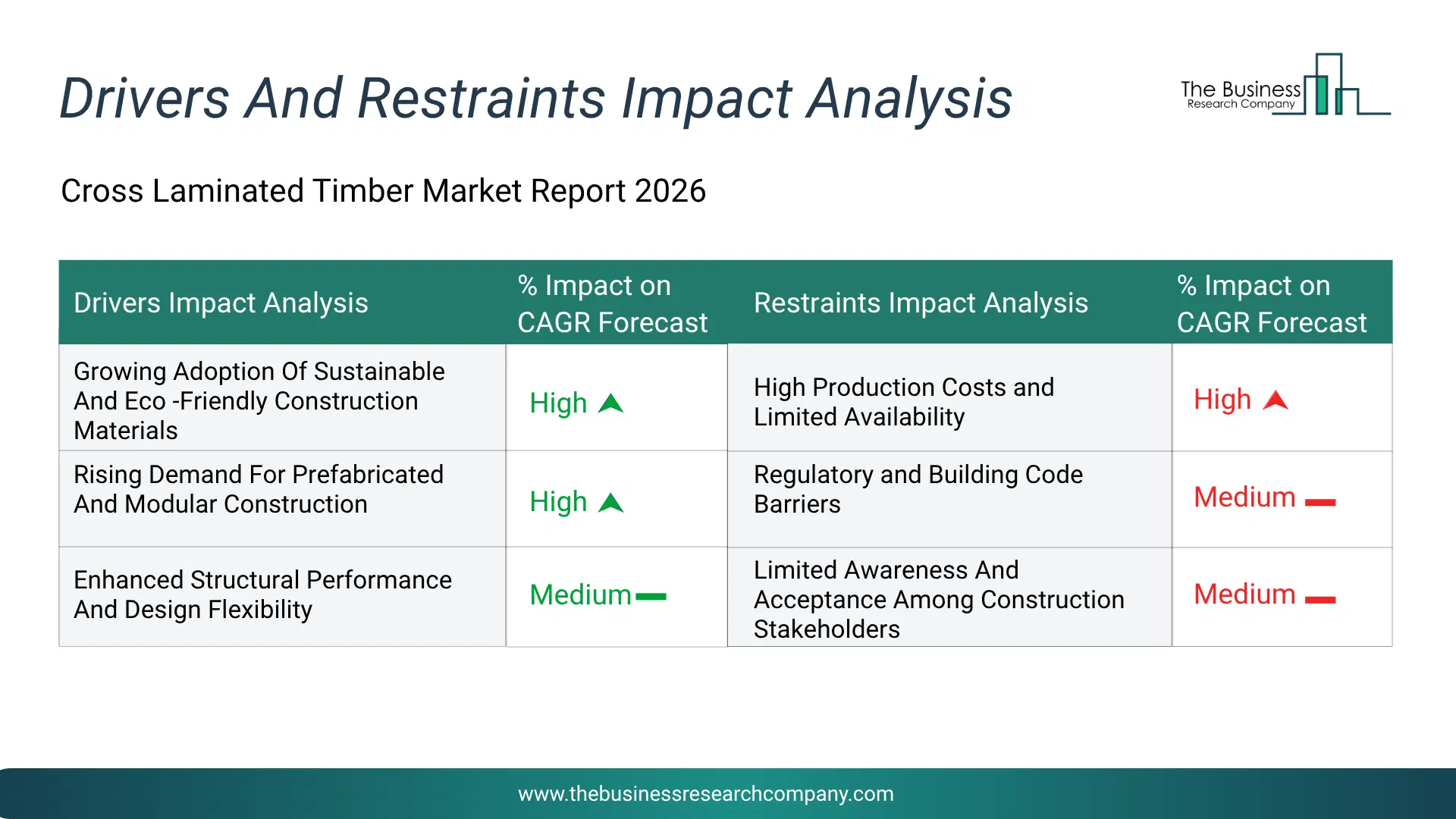
Infographic Chart Showing Key Market Drivers Analysis And Restraints For Cross Laminated Timber Market
The chart presents an impact analysis of key drivers and restraints, quantifying their relative influence on the market's growth rate and helping assess the balance between growth enablers and limiting factors. This chart offers a high-level perspective; the full report contains more detailed insights.
How Will The Drivers Impact Growth In The Global Cross Laminated Timber Market?
• Growing Adoption Of Sustainable And Eco -Friendly Construction Materials (High) – During the forecast period, the growing adoption of sustainable and eco -friendly construction materials is expected to become a key growth driver for the cross laminated timber market by 2030. Increasing awareness about environmental sustainability and the carbon footprint of conventional construction materials is driving the adoption of cross laminated timber in the construction industry. Clt is a renewable, eco -friendly alternative to steel and concrete, offering significant reductions in greenhouse gas emissions during both production and building lifecycle. Architects, engineers, and developers are increasingly specifying clt for residential, commercial, and public infrastructure projects due to its low environmental impact, recyclability, and renewable sourcing. Governments and green building certification programs, such as leed and breeam, are further promoting sustainable construction practices, making clt a preferred material in modern construction projects. • Rising Demand For Prefabricated And Modular Construction (High) – During the forecast period, the rising demand for prefabricated and modular construction is expected to emerge as a major factor driving the expansion of the cross laminated timber market by 2030. Cross laminated timber is highly compatible with prefabricated and modular construction techniques, which are gaining popularity due to their efficiency, speed, and cost-effectiveness. Clt panels can be manufactured off-site with precision and then assembled quickly at construction sites, reducing labor requirements, construction timelines, and on-site waste. The use of clt in modular buildings, multi-story residential complexes, and commercial structures is increasing as developers seek faster project completion while maintaining structural integrity. Additionally, the lightweight yet strong nature of clt allows for easier transportation and installation, which is particularly beneficial in urban areas with space constraints. • Enhanced Structural Performance And Design Flexibility (Medium) – During the forecast period, the enhanced structural performance and design flexibility is expected to act as a key growth catalyst for the cross laminated timber market by 2030. Clt offers superior structural performance, including high strength-to-weight ratio, dimensional stability, and fire resistance compared to traditional timber products. Its versatility allows architects and designers to experiment with complex geometries, large spans, and multi-story timber constructions without compromising safety or durability. The aesthetic appeal of exposed timber and natural finishes is also encouraging the use of clt in modern architectural designs. Structural engineers are increasingly integrating clt into innovative building designs, including office towers, public spaces, and cultural landmarks. These structural and design advantages act as a strong growth driver for the clt market, making it an attractive choice for both functional and visually appealing construction projects.How Will The Restraints Impact Growth In The Global Cross Laminated Timber Market?
• High Production Costs and Limited Availability (High) – During the forecast period, the despite its advantages, cross laminated timber production involves specialized manufacturing processes, including precise lamination, kiln drying, and panel pressing, which increase production costs compared to conventional timber. Additionally, the limited availability of certified raw timber and advanced manufacturing facilities in certain regions constrains widespread adoption. These factors can make clt less economically viable for cost-sensitive construction projects, particularly in developing markets. High production costs and supply constraints act as significant restraints on the rapid growth of the clt market, slowing adoption despite its structural and environmental benefits. • Regulatory and Building Code Barriers (Medium) – During the forecast period, the the clt adoption is also affected by varying building codes, standards, and regulatory approvals across different countries and regions. Some regions have strict construction codes that favor traditional concrete and steel structures, limiting the use of timber in multi-story or high-rise buildings. Approval processes for clt-based designs can be time-consuming, requiring additional testing and certification to meet fire safety, structural integrity, and environmental standards. These regulatory hurdles act as a restraint, particularly in emerging markets where awareness and acceptance of modern engineered timber solutions are still growing. • Limited Awareness And Acceptance Among Construction Stakeholders (Medium) – During the forecast period, the despite its sustainability benefits, clt remains relatively unfamiliar to many architects, developers, contractors, and building owners in several regions. Traditional construction materials such as concrete and steel continue to dominate industry practices. Lack of experience with clt can create hesitation regarding structural performance and project feasibility. This slows adoption and limits market growth opportunities.Key Players In The Global Cross Laminated Timber Market
Major companies operating in the cross laminated timber market are Mayr-Melnhof Holz Holding AG, Stora Enso Oyj, Binderholz GmbH, KLH Massivholz GmbH, Structurlam Mass Timber Corporation, XLam Limited, Smartlam NA, HASSLACHER Gruppe, Schilliger Holz AG, Eugen Decker Holzindustrie KG, Ante Group, Meiken Lamwood Corporation, Nordic Structures, DRJ Wood Innovations, Zueblin Timber GmbH, Holz100, Lignotrend Produktions GmbH, Massiv Lustenau GmbH, Freres Lumber Co Inc, Crosslam Australia Pty Ltd, Stora Enso Building Solutions AB, Pfeifer Group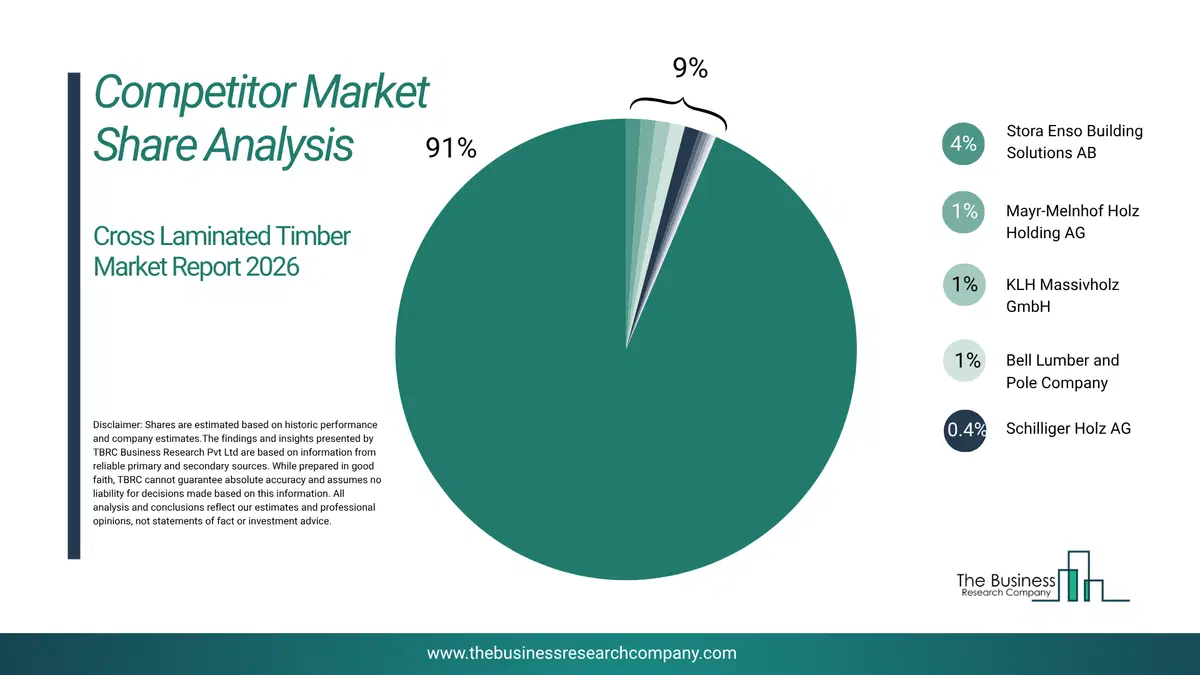
This chart is for illustrative purposes; the full report includes a detailed competitor analysis and comprehensive overview of the top 10 companies in the market.
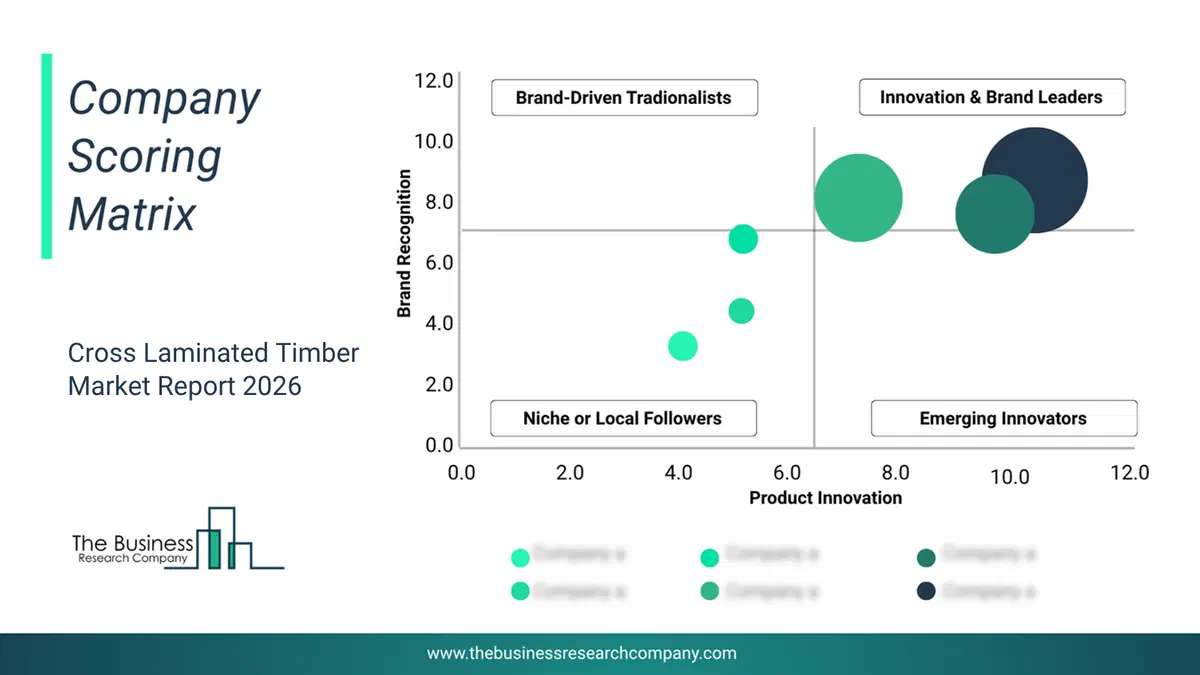
This chart maps companies by product innovation and brand strength, with bubble size indicating relative revenue, helping identify market leaders, challengers, and niche players. This is an illustrative chart; the full report provides a complete and accurate competitive analysis.
Global Cross Laminated Timber Market Trends and Insights
Major companies operating in the cross laminated timber (CLT) market are focusing on developing innovative solutions, such as advanced CLT manufacturing facilities, to provide sustainable, high-strength, and prefabricated building materials. CLT manufacturing facilities refer to specialized plants where cross-laminated timber (CLT) panels are produced by layering and gluing timber boards at right angles, ensuring strong, durable, and sustainable building materials for construction projects. For instance, in March 2024, Timberlab, a US-based manufacturer of engineered wood products, announced the opening of a new CLT facility in Oregon. The facility is designed to increase production capacity of CLT panels, support eco-friendly construction practices, and cater to the needs of commercial and residential construction; key features include automated panel production, precise lamination technology, and scalable output, with applications in mid- to high-rise buildings, modular construction, and sustainable architecture, providing benefits such as reduced construction time, lower carbon footprint, and high structural performance.What Are Latest Mergers And Acquisitions In The Cross Laminated Timber Market?
In June 2023, Mercer International Inc., a US-based manufacturing company, acquired Structurlam Mass Timber Corporation for an undisclosed amount. With this acquisition, Mercer International Inc., aims to expand its operations and strengthen its presence in the mass timber market across North America. Structurlam Mass Timber Corporation is a Canada-based manufacturing company that specializes in providing engineered mass timber products for commercial, residential, and institutional construction projects.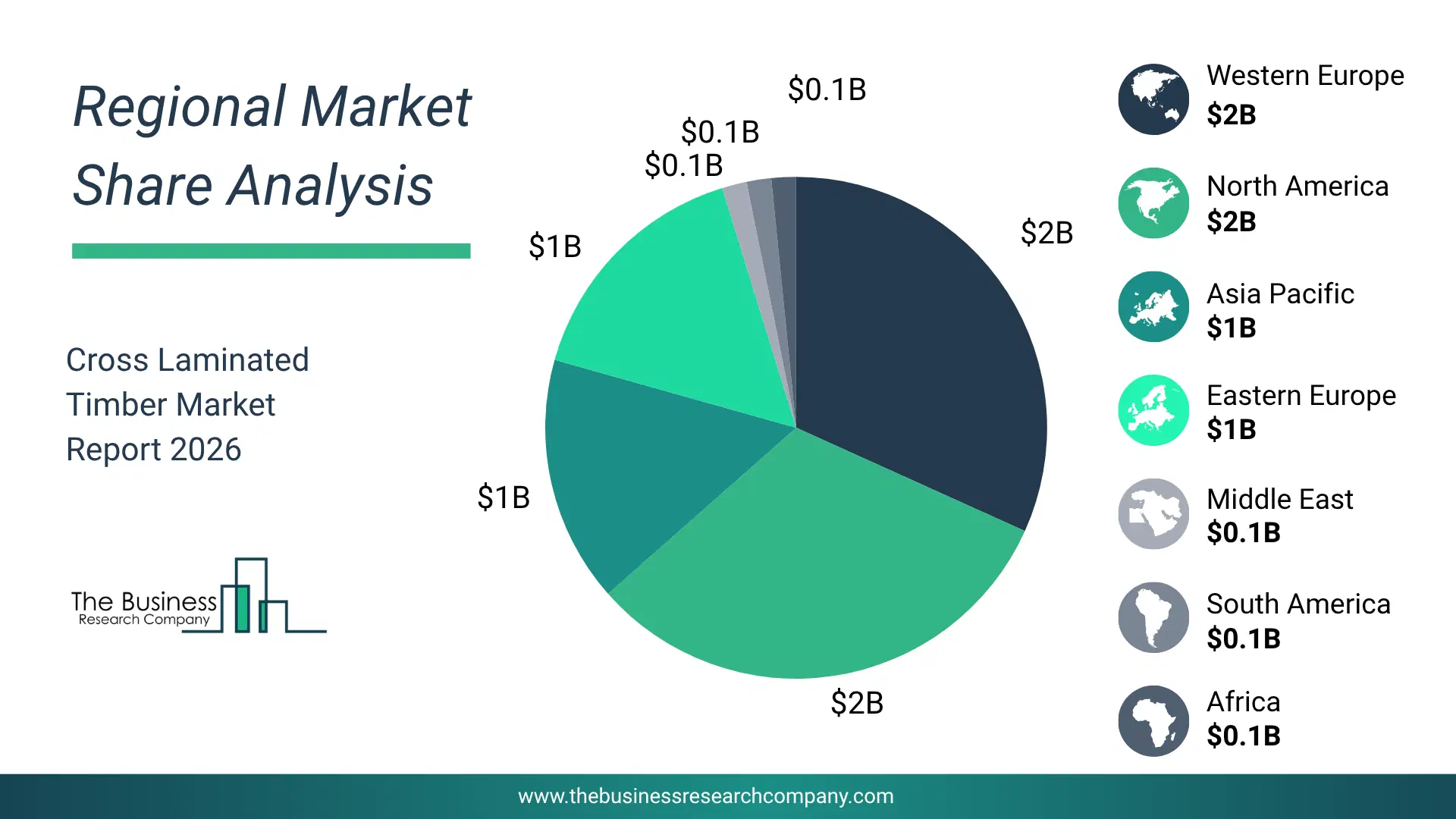
Regional Outlook
Europe was the largest region in the cross laminated timber market in 2025. Asia-Pacific is expected to be the fastest-growing region in the cross-laminated timber market report forecast period. The regions covered in this market report are Asia-Pacific, South East Asia, Western Europe, Eastern Europe, North America, South America, Middle East, Africa. The countries covered in this market report are Australia, Brazil, China, France, Germany, India, Indonesia, Japan, Taiwan, Russia, South Korea, UK, USA, Canada, Italy, Spain.What Defines the Cross Laminated Timber Market?
The cross laminated timber market consists of sales of laminations, adhesives, and lamination joints, sawn, glued, and layered wood. Values in this market are ‘factory gate’ values, that is the value of goods sold by the manufacturers or creators of the goods, whether to other entities (including downstream manufacturers, wholesalers, distributors, and retailers) or directly to end customers. The value of goods in this market includes related services sold by the creators of the goods.How is Market Value Defined and Measured?
The market value is defined as the revenues that enterprises gain from the sale of goods and/or services within the specified market and geography through sales, grants, or donations in terms of the currency (in USD unless otherwise specified). The revenues for a specified geography are consumption values that are revenues generated by organizations in the specified geography within the market, irrespective of where they are produced. It does not include revenues from resales along the supply chain, either further along the supply chain or as part of other products.
This chart presents market attractiveness based on a quantitative evaluation of growth, competition, strategic alignment, and risk, offering a clear view of opportunity areas for decision-making. This chart is for illustrative purposes; the full report contains the complete analysis.

This chart highlights the Total Addressable Market (TAM) by estimating the maximum revenue opportunity using an assumption-driven approach, supporting strategic planning and opportunity sizing across markets. The chart is illustrative; the full report provides a more comprehensive analysis.
What Key Data and Analysis Are Included in the Cross Laminated Timber Market Report 2026?
The cross laminated timber market research report is one of a series of new reports from The Business Research Company that provides market statistics, including Market Report 2026?global market size, regional shares, competitors with the market share, detailed market segments, market trends and opportunities, and any further data you may need to thrive in the cross laminated timber Market Report 2026? The market research report delivers a complete perspective of everything you need, with an in-depth analysis of the current and future state of the Market Report 2026?Cross Laminated Timber Market Report Forecast Analysis
| Report Attribute | Details |
|---|---|
| Market Size Value In 2026 | $2.25 billion |
| Revenue Forecast In 2030 | $4.38 billion |
| Growth Rate | CAGR of 18.1% from 2026 to 2030 |
| Base Year For Estimation | 2025 |
| Actual Estimates/Historical Data | 2020-2025 |
| Forecast Period | 2026 - 2030 |
| Market Representation | Revenue in USD Billion and CAGR from 2026 to 2030 |
| Segments Covered | Product Type, Application, End-Use Sector |
| Regional Scope | Asia-Pacific, Western Europe, Eastern Europe, North America, South America, Middle East, Africa |
| Country Scope | The countries covered in the report are Australia, Brazil, China, France, Germany, India, ... |
| Key Companies Profiled | Mayr-Melnhof Holz Holding AG, Stora Enso Oyj, Binderholz GmbH, KLH Massivholz GmbH, Structurlam Mass Timber Corporation, XLam Limited, Smartlam NA, HASSLACHER Gruppe, Schilliger Holz AG, Eugen Decker Holzindustrie KG, Ante Group, Meiken Lamwood Corporation, Nordic Structures, DRJ Wood Innovations, Zueblin Timber GmbH, Holz100, Lignotrend Produktions GmbH, Massiv Lustenau GmbH, Freres Lumber Co Inc, Crosslam Australia Pty Ltd, Stora Enso Building Solutions AB, Pfeifer Group |
| Customization Scope | Request for Customization |
| Pricing And Purchase Options | Explore Purchase Options |