
Cryopreservation Tanks For Genetics Market Report 2026
Global Outlook – By Product Type (Stainless Steel Tanks, Aluminum Tanks, Composite Material Tanks), By Capacity (Small, Medium, Large), By Distribution Channel (Direct Sales, Distributors, Online Sales), By Application (Animal Genetics, Plant Genetics, Human Genetics, Microbial Genetics, Other Applications), By End User (Biobanks, Research Laboratories, In Vitro Fertilization Centers, Pharmaceutical And Biotechnology Companies, Other End Users) – Market Size, Trends, Strategies, and Forecast to 2030
Cryopreservation Tanks For Genetics Market Overview
• Cryopreservation Tanks For Genetics market size has reached to $2.55 billion in 2025 • Expected to grow to $4.05 billion in 2030 at a compound annual growth rate (CAGR) of 9.6% • Growth Driver: The Increasing Demand For Personalized Medicine Is Fueling The Market Growth Due To Advancements In Genomics • Market Trend: Advancements In High-Efficiency Cryogenic Freezer Systems For Long-Term Genetic Material Preservation • North America was the largest region in 2025 and Asia-Pacific is the fastest growing region.What Is Covered Under Cryopreservation Tanks For Genetics Market?
Cryopreservation tanks for genetics are specialized storage containers designed to preserve genetic materials such as sperm, eggs, embryos, stem cells, deoxyribonucleic acid samples, and other biological specimens at ultra-low temperatures, typically using liquid nitrogen. These tanks maintain long-term viability and integrity of genetic resources, supporting applications in genetic research, biobanking, assisted reproduction, livestock breeding, and biodiversity conservation. The main product types of cryopreservation tanks for genetics include stainless steel tanks, aluminum tanks, and composite material tanks. Stainless steel tanks refer to cryogenic storage vessels designed to preserve genetic materials such as cells, tissues, embryos, and biological samples at ultra-low temperatures using liquid nitrogen while ensuring long-term sample integrity. These tanks are available in small, medium, and large capacities and are distributed through direct sales, distributors, and online sales channels. They find application in animal genetics, plant genetics, human genetics, microbial genetics, and others, serving end users including biobanks, research laboratories, in vitro fertilization centers, pharmaceutical and biotechnology companies, and others.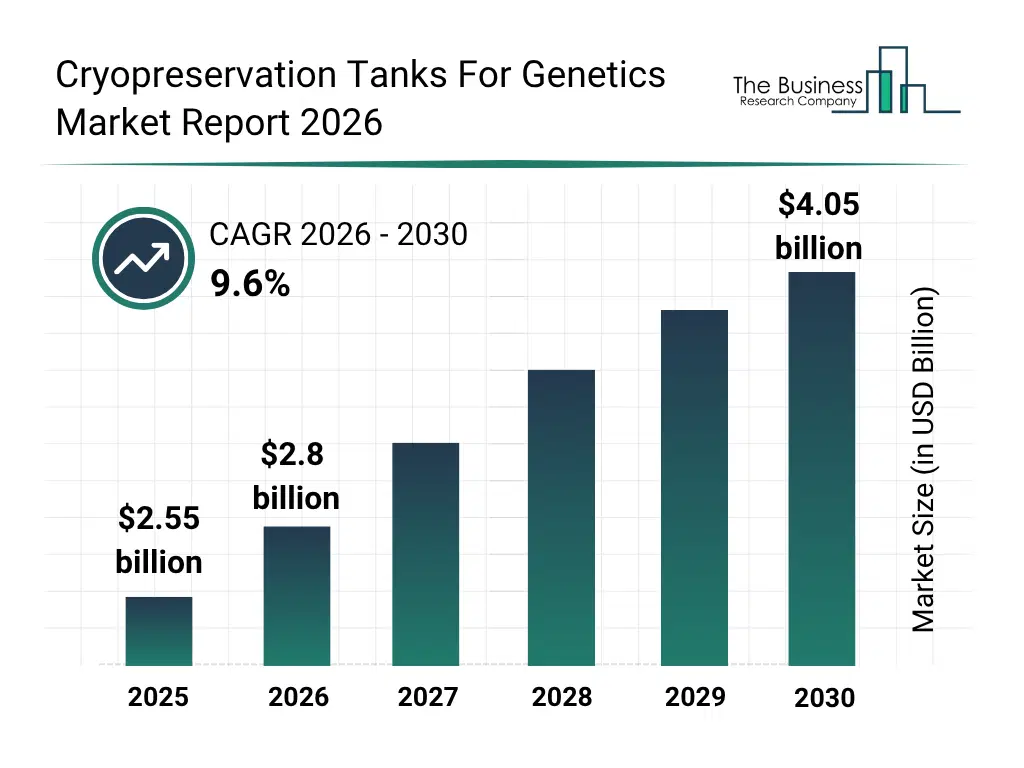
What Is The Cryopreservation Tanks For Genetics Market Size and Share 2026?
The cryopreservation tanks for genetics market size has grown rapidly in recent years. It will grow from $2.55 billion in 2025 to $2.8 billion in 2026 at a compound annual growth rate (CAGR) of 10.1%. The growth in the historic period can be attributed to increasing use of assisted reproductive technologies, expansion of biobanking facilities, growing livestock breeding programs, rising investment in genetic research, increasing demand for long-term biological sample storage.What Is The Cryopreservation Tanks For Genetics Market Growth Forecast?
The cryopreservation tanks for genetics market size is expected to see strong growth in the next few years. It will grow to $4.05 billion in 2030 at a compound annual growth rate (CAGR) of 9.6%. The growth in the forecast period can be attributed to growing biodiversity conservation initiatives, rising adoption of precision medicine, increasing stem cell research activities, expanding pharmaceutical and biotechnology research, higher demand for advanced genetic preservation solutions. Major trends in the forecast period include growing demand for long-term genetic material preservation, rising expansion of biobanking infrastructure, increasing adoption of cryopreservation in assisted reproduction, higher demand for livestock genetic resource conservation, expansion of biodiversity preservation programs.
Global Cryopreservation Tanks For Genetics Market Segmentation
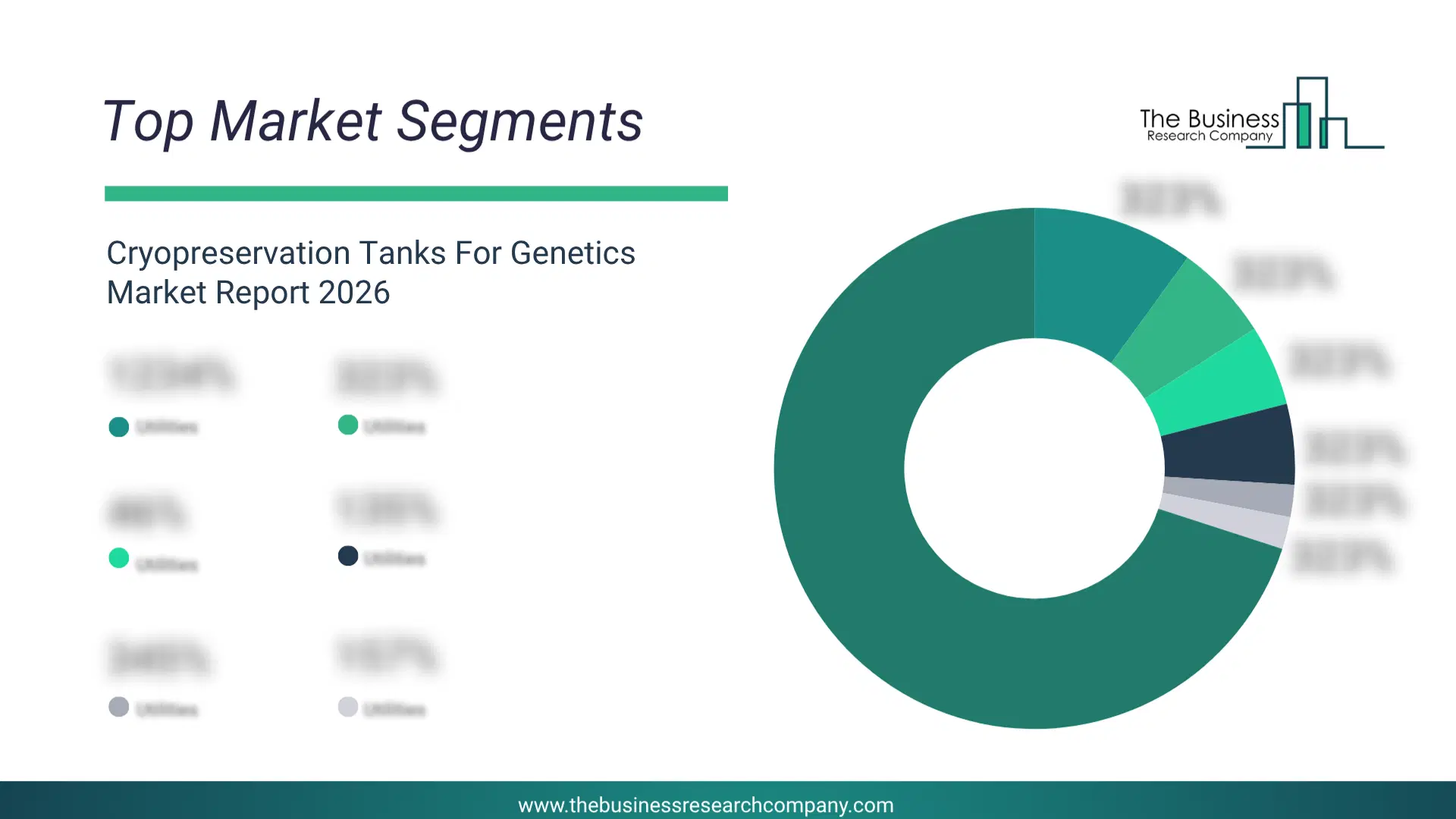
1) By Product Type: Stainless Steel Tanks, Aluminum Tanks, Composite Material Tanks 2) By Capacity: Small, Medium, Large 3) By Distribution Channel: Direct Sales, Distributors, Online Sales 4) By Application: Animal Genetics, Plant Genetics, Human Genetics, Microbial Genetics, Other Applications 5) By End User: Biobanks, Research Laboratories, In Vitro Fertilization Centers, Pharmaceutical And Biotechnology Companies, Other End Users Subsegments: 1) By Stainless Steel Tanks: Liquid Nitrogen Storage Tanks, Vapor Phase Storage Tanks, Transport Storage Tanks, High Capacity Storage Tanks 2) By Aluminum Tanks: Liquid Nitrogen Storage Tanks, Vapor Phase Storage Tanks, Portable Storage Tanks, Medium Capacity Storage Tanks 3) By Composite Material Tanks: Lightweight Storage Tanks, Insulated Storage Tanks, Transport Storage Tanks, High Durability Storage TanksWhat Is The Driver Of The Cryopreservation Tanks For Genetics Market?
The increasing demand for personalized medicine is expected to propel the growth of the cryopreservation tanks for genetics market going forward. Personalized medicine refers to a medical approach that tailors disease prevention, diagnosis, and treatment based on an individual’s genetic profile, lifestyle, and environmental factors to improve clinical outcomes. The demand for personalized medicine is increasing due to the growing prevalence of chronic and complex diseases that require targeted therapies and precise diagnostic approaches. Cryopreservation tanks for genetics enables long-term preservation of high-quality genetic material (such as gametes, embryos, and cells), thereby supporting precise genetic matching, advanced biomarker analysis, and biobanking systems that collectively strengthen the development and scalability of personalized medicine. For instance, in February 2024, according to the Personalized Medicine Coalition, a US-based non-profit organization, in 2023, the FDA approved 16 new personalized therapies for patients with rare diseases, marking a substantial rise from the six approvals recorded in 2022. Therefore, the increasing demand for personalized medicine is driving the growth of cryopreservation tanks for genetics industry.Key Players In The Global Cryopreservation Tanks For Genetics Market
Major companies operating in the cryopreservation tanks for genetics market are Thermo Fisher Scientific Inc., Air Water Inc., PHC Holdings Corporation, Qingdao Haier Biomedical Co. Ltd., INOX India Limited, MVE Biological Solutions, IC Biomedical, Planer PLC, Cryofab Inc., Custom Biogenic Systems, Antech Group Inc., Statebourne Cryogenics Ltd., ASKION GmbH, Cryo Scientific Systems Pvt. Ltd., Cryo Solutions Corporation, Day-Impex Ltd.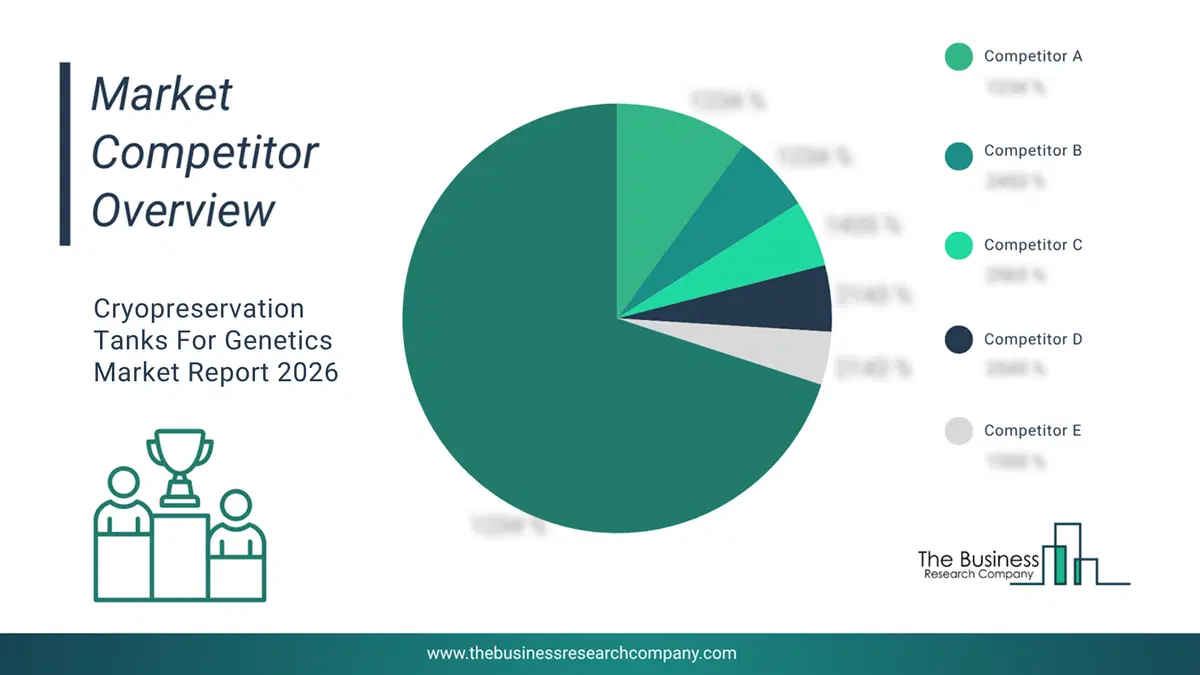
This chart is for illustrative purposes; the full report includes a detailed competitor analysis and comprehensive overview of the top 10 companies in the market.
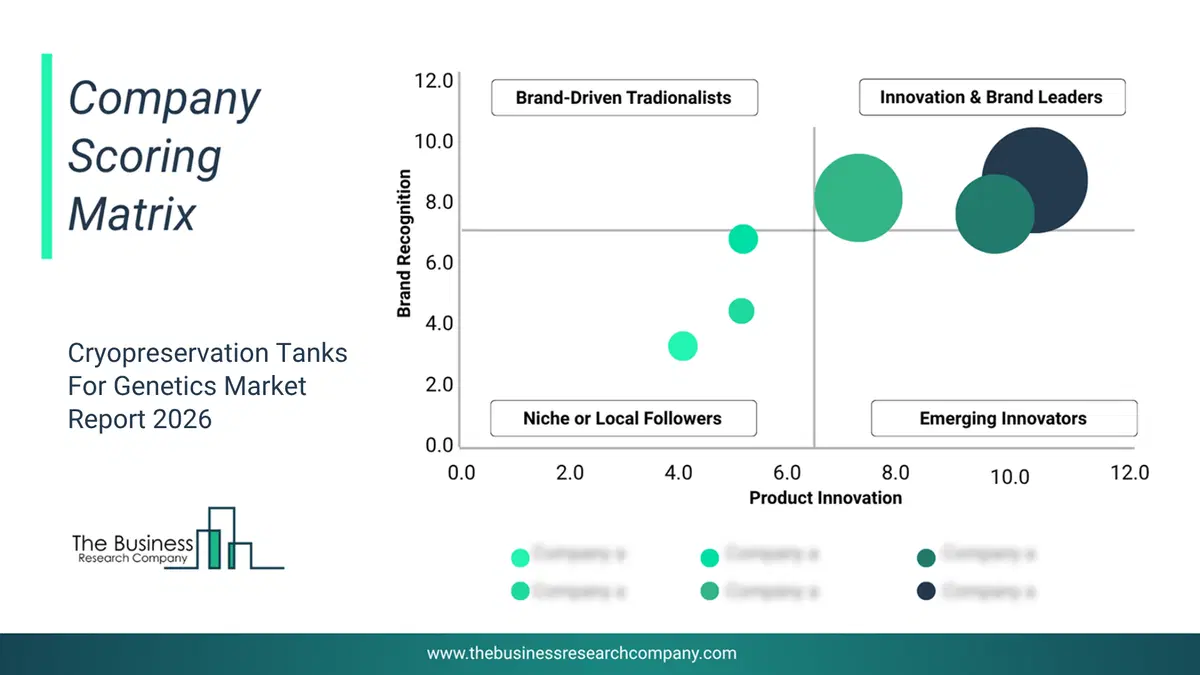
This chart maps companies by product innovation and brand strength, with bubble size indicating relative revenue, helping identify market leaders, challengers, and niche players. This is an illustrative chart; the full report provides a complete and accurate competitive analysis.
Global Cryopreservation Tanks For Genetics Market Trends and Insights
Major companies operating in the cryopreservation tanks for genetics market are focusing on developing innovative solutions, such as high-efficiency cryogenic freezer systems, to enhance long-term preservation of genetic materials, improve sample integrity, and optimize storage capacity in fertility clinics, biorepositories, and clinical laboratories. High-efficiency cryogenic freezer systems are advanced storage units designed to maintain ultra-low temperatures around -190°C, enabling safe long-term preservation of sensitive biological samples such as reproductive cells, genetic material, and clinical specimens while improving storage density, ergonomics, and inventory management compared to conventional liquid nitrogen storage tanks. For instance, in March 2025, Cryoport Inc., a US-based manufacturing company, launched the High-Efficiency 800 C cryogenic freezer as part of its next-generation HE Series. The system is designed to store over 22,000 half-cc straws while maintaining ultra-cold temperatures for optimal biological preservation. Additionally, it incorporates ergonomic design improvements for easier sample handling and is compatible with SUC-1 inventory management systems, enabling efficient identification, organization, and retrieval of stored genetic materials.What Are Latest Mergers And Acquisitions In The Cryopreservation Tanks For Genetics Market?
In October 2025, Chester Zoo, a UK-based wildlife conservation charity, partnered with Toronto Zoo and Dublin Zoo to advance wildlife cryobanking by sharing best practices, enhancing cryopreservation techniques across species, and coordinating regional and international biobanking efforts. Through this partnership, the zoos aim to preserve the genetic diversity of threatened wildlife and support future breeding and species-survival programmes. Dublin Zoo is an Ireland-based conservation charity, and Toronto Zoo is a Canada-based zoological and conservation organisation that provides wildlife conservation, scientific research, animal care, and biodiversity preservation programmes.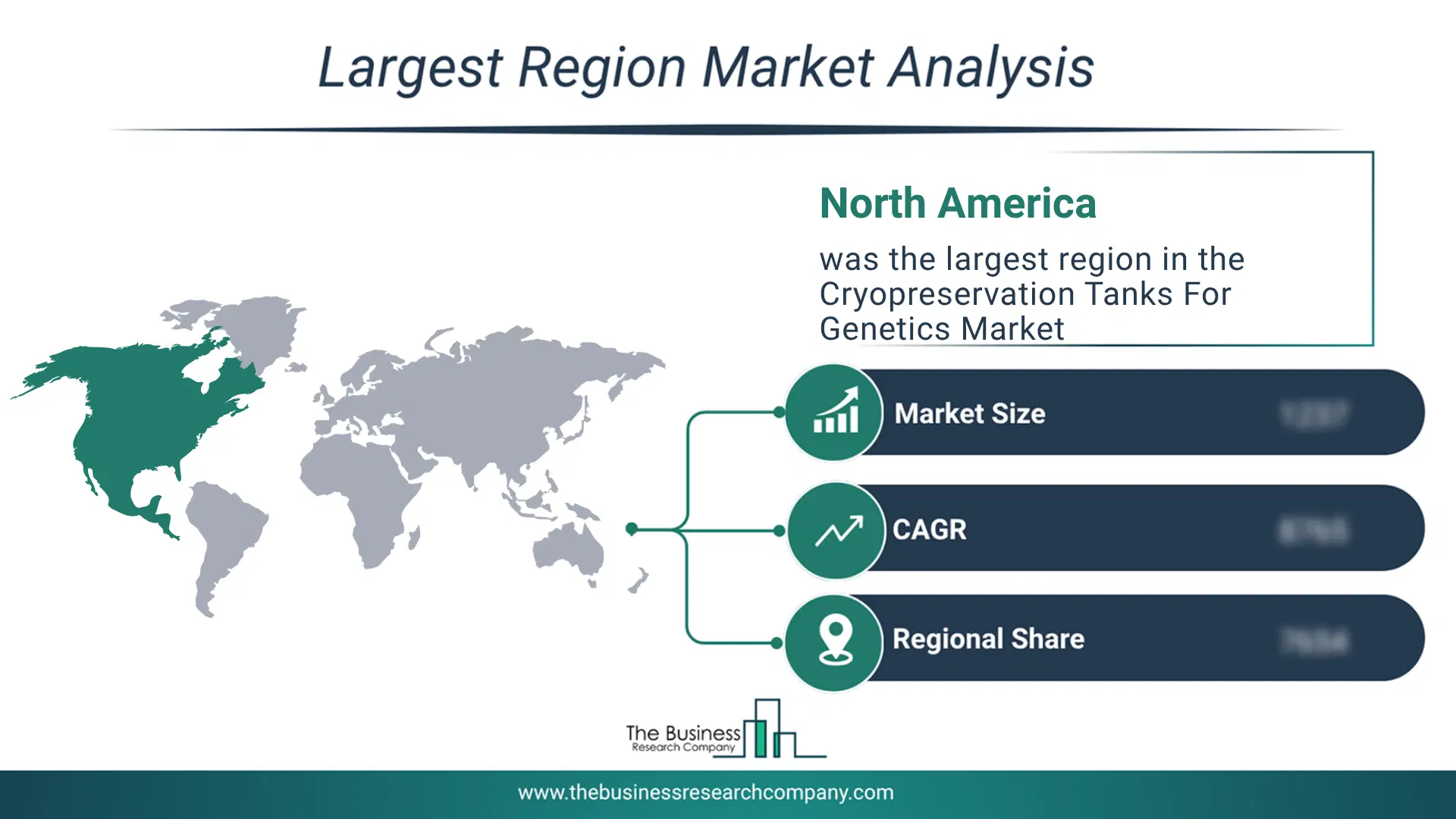
Regional Insights
North America was the largest region in the cryopreservation tanks for genetics market in 2025. Asia-Pacific is expected to be the fastest-growing region in the forecast period. The regions covered in this market report are Asia-Pacific, South East Asia, Western Europe, Eastern Europe, North America, South America, Middle East, Africa. The countries covered in this market report are Australia, Brazil, China, France, Germany, India, Indonesia, Japan, Taiwan, Russia, South Korea, UK, USA, Canada, Italy, Spain.What Defines the Cryopreservation Tanks For Genetics Market?
The cryopreservation tanks for genetics market consists of sales of liquid nitrogen storage dewars, vapor-phase cryogenic storage tanks, automated cryogenic biobanking systems, and cryogenic sample storage racks and canisters. Values in this market are ‘factory gate’ values, that is, the value of goods sold by the manufacturers or creators of the goods, whether to other entities (including downstream manufacturers, wholesalers, distributors, and retailers) or directly to end customers. The value of goods in this market includes related services sold by the creators of the goods.How is Market Value Defined and Measured?
The market value is defined as the revenues that enterprises gain from the sale of goods and/or services within the specified market and geography through sales, grants, or donations in terms of the currency (in USD unless otherwise specified). The revenues for a specified geography are consumption values that are revenues generated by organizations in the specified geography within the market, irrespective of where they are produced. It does not include revenues from resales along the supply chain, either further along the supply chain or as part of other products.
This chart presents market attractiveness based on a quantitative evaluation of growth, competition, strategic alignment, and risk, offering a clear view of opportunity areas for decision-making. This chart is for illustrative purposes; the full report contains the complete analysis.

This chart highlights the Total Addressable Market (TAM) by estimating the maximum revenue opportunity using an assumption-driven approach, supporting strategic planning and opportunity sizing across markets. The chart is illustrative; the full report provides a more comprehensive analysis.
What Key Data and Analysis Are Included in the Cryopreservation Tanks For Genetics Market Report 2026?
The cryopreservation tanks for genetics market research report is one of a series of new reports from The Business Research Company that provides market statistics, including industry global market size, regional shares, competitors with the market share, detailed market segments, market trends and opportunities, and any further data you may need to thrive in the cryopreservation tanks for genetics industry. The market research report delivers a complete perspective of everything you need, with an in-depth analysis of the current and future state of the industry.Cryopreservation Tanks For Genetics Market Report Forecast Analysis
| Report Attribute | Details |
|---|---|
| Market Size Value In 2026 | $2.8 billion |
| Revenue Forecast In 2030 | $4.05 billion |
| Growth Rate | CAGR of 9.6% from 2026 to 2030 |
| Base Year For Estimation | 2025 |
| Actual Estimates/Historical Data | 2020-2025 |
| Forecast Period | 2026 - 2030 |
| Market Representation | Revenue in USD Billion and CAGR from 2026 to 2030 |
| Segments Covered | Product Type, Capacity, Distribution Channel, Application, End User |
| Regional Scope | Asia-Pacific, Western Europe, Eastern Europe, North America, South America, Middle East, Africa |
| Country Scope | The countries covered in the report are Australia, Brazil, China, France, Germany, India, Indonesia, Japan, Taiwan, Russia, South Korea, UK, USA, Canada, Italy, Spain. |
| Key Companies Profiled | Thermo Fisher Scientific Inc., Air Water Inc., PHC Holdings Corporation, Qingdao Haier Biomedical Co. Ltd., INOX India Limited, MVE Biological Solutions, IC Biomedical, Planer PLC, Cryofab Inc., Custom Biogenic Systems, Antech Group Inc., Statebourne Cryogenics Ltd., ASKION GmbH, Cryo Scientific Systems Pvt. Ltd., Cryo Solutions Corporation, Day-Impex Ltd. |
| Customization Scope | Request for Customization |
| Pricing And Purchase Options | Explore Purchase Options |