
Cylinder Deactivation System Market Report 2026
Global Outlook – By Component (Valve Solenoid, Engine Control Unit), By Actuation Method (Overhead Camshaft Design, Pushrod Design), By End-User (Passenger Cars, Light Commercial Vehicles) – Market Size, Trends, Strategies, and Forecast to 2030
Cylinder Deactivation System Market Overview
• Cylinder Deactivation System market size has reached to $3.86 billion in 2025 • Expected to grow to $4.88 billion in 2030 at a compound annual growth rate (CAGR) of 4.7% • Growth Driver: Impact Of Rising Vehicle Production On The Cylinder Deactivation System Market • Market Trend: Advancements In Cylinder Deactivation Technology Driving Efficiency And Emissions Reduction In Heavy-Duty Engines • North America was the largest region in 2025.What Is Covered Under Cylinder Deactivation System Market?
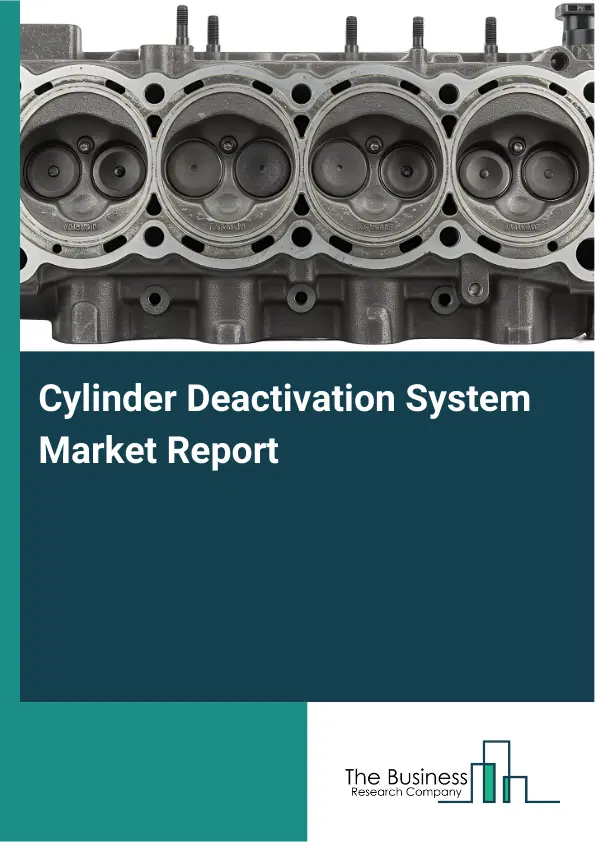
A cylinder deactivation system is a technology used in internal combustion engines to improve fuel efficiency and reduce emissions. It works by temporarily shutting down some of the engine's cylinders under light-load conditions, such as during highway cruising or when the vehicle is coasting. A cylinder deactivation system enhances fuel economy and reduces environmental impact without compromising the engine's performance when full power is needed. The main components of a cylinder deactivation system are the valve solenoid, engine control unit, and electronic throttle control. A valve solenoid is an electromechanical component that controls the flow of fluids or gases in a system by opening or closing valves. The various actuation methods include overhead camshaft design, and pushrod design that are used by various end-users such as passenger cars, and light commercial vehicles.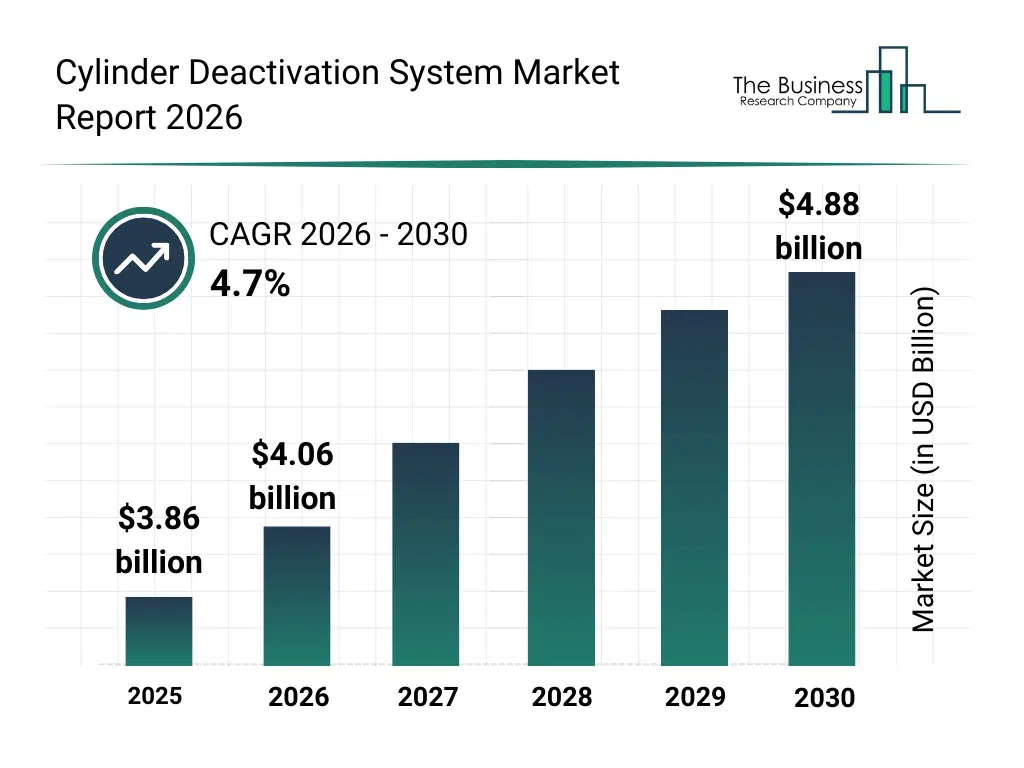
What Is The Cylinder Deactivation System Market Size and Share 2026?
The cylinder deactivation system market size has grown strongly in recent years. It will grow from $3.86 billion in 2025 to $4.06 billion in 2026 at a compound annual growth rate (CAGR) of 5.1%. The growth in the historic period can be attributed to emission regulation enforcement, demand for fuel-efficient vehicles, internal combustion engine optimization, automotive technology evolution, OEM adoption of efficiency systems.What Is The Cylinder Deactivation System Market Growth Forecast?
The cylinder deactivation system market size is expected to see steady growth in the next few years. It will grow to $4.88 billion in 2030 at a compound annual growth rate (CAGR) of 4.7%. The growth in the forecast period can be attributed to stricter emission norms, hybrid vehicle growth, advanced engine management systems, real-time engine monitoring, sustainability-driven vehicle design. Major trends in the forecast period include integration with engine downsizing strategies, adoption in high-end vehicles, expansion of smart engine controls, focus on fuel economy improvement, compatibility with hybrid powertrains.
Global Cylinder Deactivation System Market Segmentation
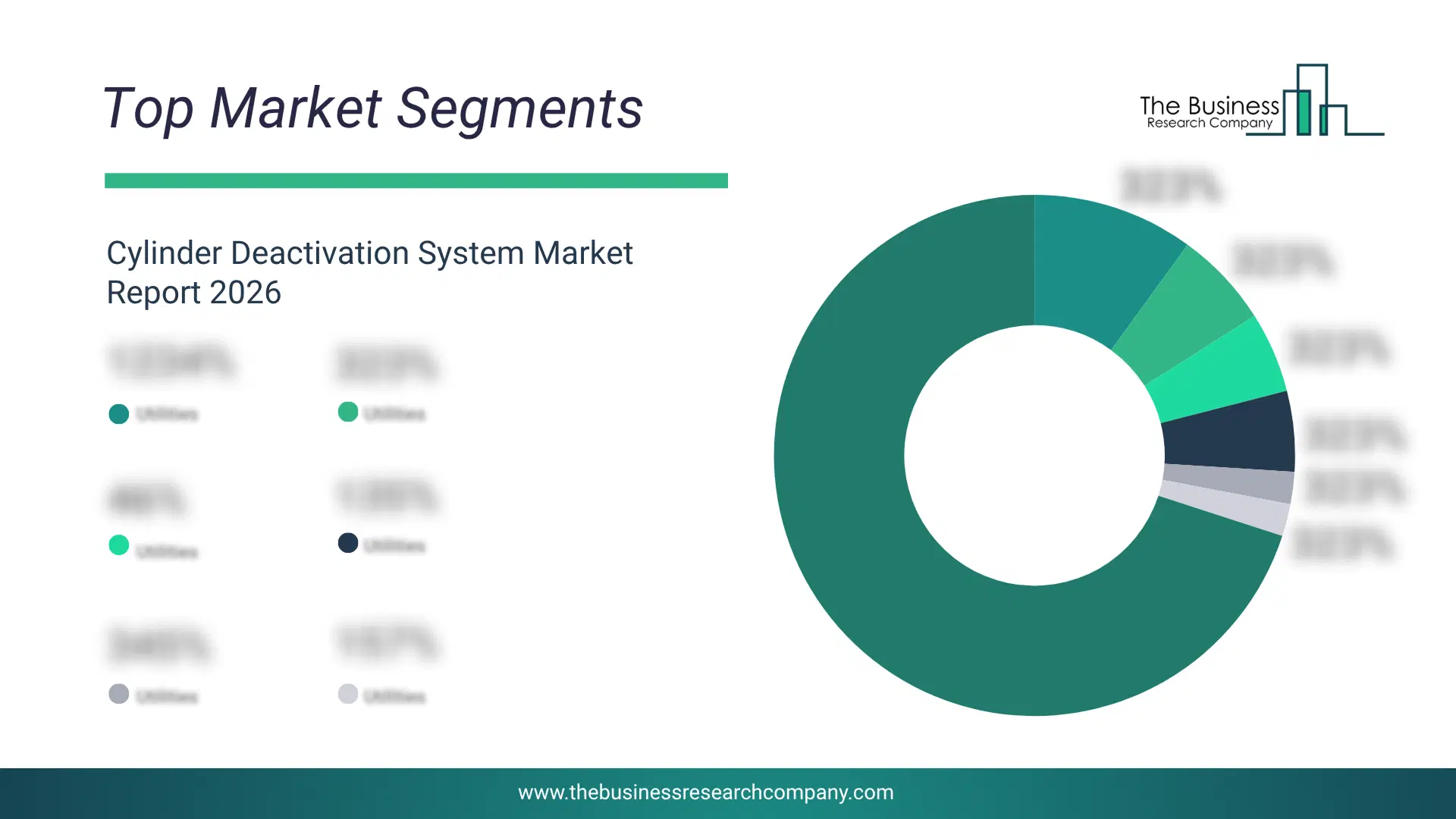
1) By Component: Valve Solenoid, Engine Control Unit 2) By Actuation Method: Overhead Camshaft Design, Pushrod Design 3) By End-User: Passenger Cars, Light Commercial Vehicles Subsegments: 1) By Valve Solenoid: Hydraulic Valve Solenoids, Electromagnetic Valve Solenoids 2) By Engine Control Unit (ECU): Standalone ECUs, Integrated ECUs, Custom Engine Control ModulesWhat Are The Drivers Of The Cylinder Deactivation System Market?
The increasing vehicle production is expected to propel the growth of the cylinder deactivation system going forward. Vehicle production is a complex, multi-faceted process that involves numerous industries and technologies, requiring coordination and precision to ensure the production of reliable and safe vehicles. The demand for vehicles is due to economic growth and urbanization, increasing globalization and market expansion, infrastructure development, and cultural and social influences. Cylinder deactivation systems are integrated into vehicle production to enhance fuel efficiency and reduce emissions by integrating cylinder deactivation systems into vehicle production, manufacturers create engines that deliver better fuel efficiency and lower emissions without compromising power and performance when needed. For instance, in May 2023, according to the Global Association of European Automobile Manufactures (ACEA), a Belgium-based government organization, around 85.4 million vehicles were produced worldwide, an increase of 3% compared to 2024. Therefore, rising vehicle production drives the cylinder deactivation system industry. The increasing adoption of hybrid electric vehicle is expected to propel the growth of the cylinder deactivation system going forward. A hybrid electric vehicle (HEV) is a car that uses both an internal combustion engine and an electric motor to improve fuel efficiency and reduce emissions. Hybrid electric vehicles are rising due to growing demand for better fuel efficiency and lower emissions compared to conventional gasoline vehicles. Cylinder deactivation systems in hybrid electric vehicles shut down selected engine cylinders during low-load conditions to reduce fuel consumption and improve overall efficiency. For instance, in August 2024, according to the Energy Information Administration (EIA), a US-based government agency, reported that hybrid vehicles made up 8.6% of all light-duty vehicle sales in the first quarter of 2024, rising to 9.6% in the second quarter of the year. Therefore, increasing adoption of hybrid electric vehicle is driving the growth of cylinder deactivation system industry.Key Players In The Global Cylinder Deactivation System Market
Major companies operating in the cylinder deactivation system market report include Toyota Motor Corporation, Volkswagen AG, Ford Motor Company, Bayerische Motoren Werke AG, Audi AG, Chrysler, Continental AG, Robert Bosch GmbH, DENSO Corporation, ZF Group, Hitachi Ltd., Mitsubishi Electric Corporation, Aisin Group, BorgWarner Inc., Eaton Corporation, Tenneco Inc., Hilite International Inc., Delphi Technologies, Tula Technology Inc., Hyundai KEFICO Corporation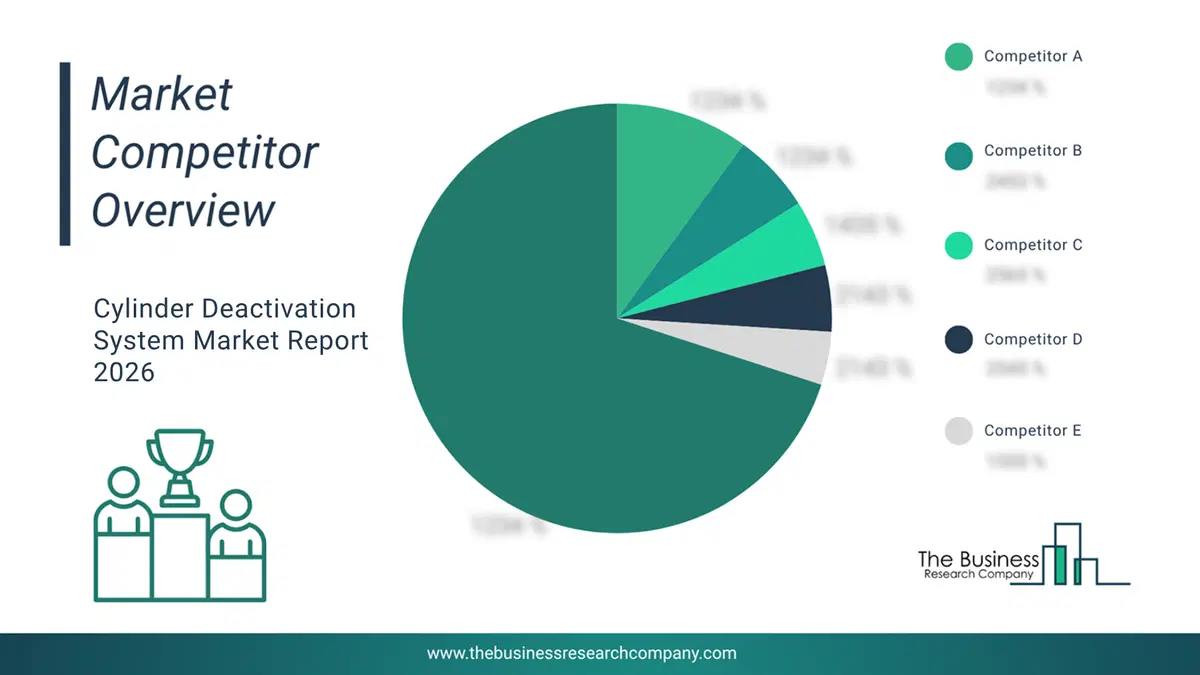
This chart is for illustrative purposes; the full report includes a detailed competitor analysis and comprehensive overview of the top 10 companies in the market.
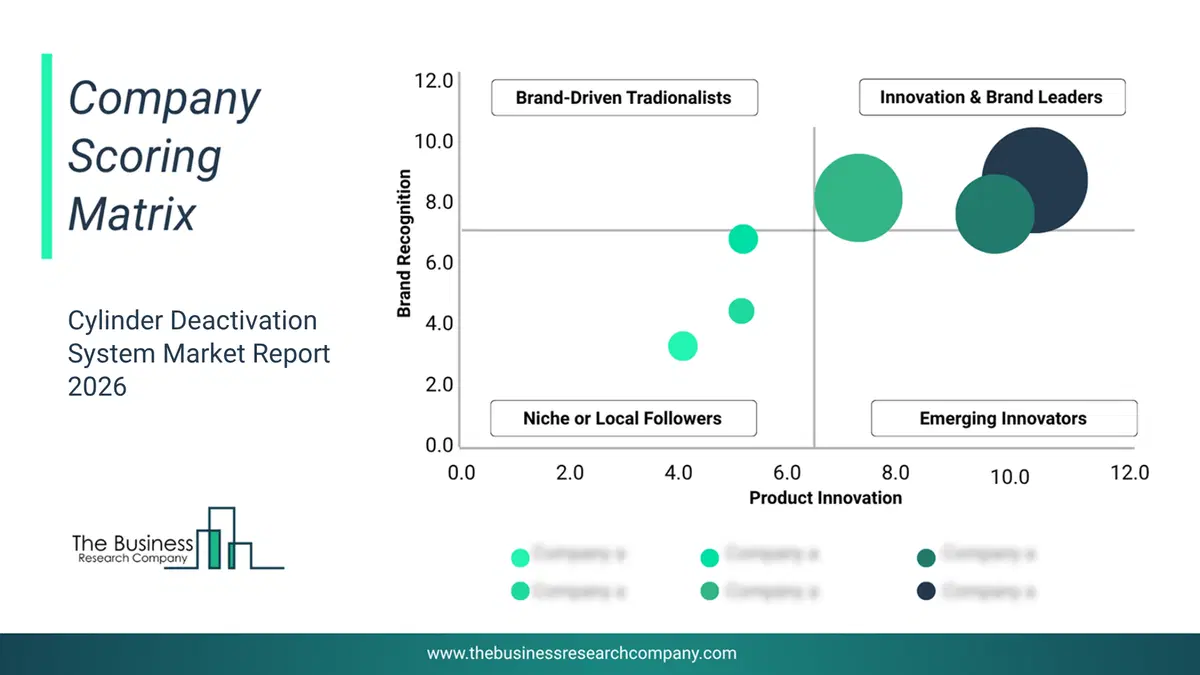
This chart maps companies by product innovation and brand strength, with bubble size indicating relative revenue, helping identify market leaders, challengers, and niche players. This is an illustrative chart; the full report provides a complete and accurate competitive analysis.
Global Cylinder Deactivation System Market Trends and Insights
Major companies operating in the cylinder deactivation system market are focusing on adapting cylinder deactivation (CDA) technology for heavy duty diesel engines, such as modular variable valve actuation CDA, to gain a competitive advantage. For instance, in July 2024, Cummins Valvetrain Technologies, a US-based technology company, announced that the latest on-road evaluations of its Jacobs Cylinder Deactivation (CDA) technology, confirming measurable fuel-efficiency and emissions benefits for heavy-duty trucks. In standardized SAE J1321 tests, CDA delivered a 2.76% fuel-saving on highway routes and 2% on distribution routes using fully loaded comparison vehicles. The system improves efficiency by shutting down select cylinders under low-load conditions, reducing parasitic losses and maintaining higher exhaust temperatures for better after-treatment performance. CDA also enhances braking through integration with the Jake Brake® system. Designed to support tightening EPA 27 and Euro 7 regulations, the technology is currently progressing across multiple engine development programs.
Regional Outlook
North America was the largest region in the cylinder deactivation system market in 2025. The regions covered in this market report include Asia-Pacific, South East Asia, Western Europe, Eastern Europe, North America, South America, Middle East, Africa. The countries covered in this market report include Australia, Brazil, China, France, Germany, India, Indonesia, Japan, Taiwan, Russia, South Korea, UK, USA, Canada, Italy, SpainWhat Defines the Cylinder Deactivation System Market?
The cylinder deactivation system market consists of sales of hydraulic lifters, electromagnetic valves, and active control valves. Values in this market are ‘factory gate’ values, that is the value of goods sold by the manufacturers or creators of the goods, whether to other entities (including downstream manufacturers, wholesalers, distributors, and retailers) or directly to end customers. The value of goods in this market includes related services sold by the creators of the goods.How is Market Value Defined and Measured?
The market value is defined as the revenues that enterprises gain from the sale of goods and/or services within the specified market and geography through sales, grants, or donations in terms of the currency (in USD unless otherwise specified). The revenues for a specified geography are consumption values that are revenues generated by organizations in the specified geography within the market, irrespective of where they are produced. It does not include revenues from resales along the supply chain, either further along the supply chain or as part of other products.
This chart presents market attractiveness based on a quantitative evaluation of growth, competition, strategic alignment, and risk, offering a clear view of opportunity areas for decision-making. This chart is for illustrative purposes; the full report contains the complete analysis.

This chart highlights the Total Addressable Market (TAM) by estimating the maximum revenue opportunity using an assumption-driven approach, supporting strategic planning and opportunity sizing across markets. The chart is illustrative; the full report provides a more comprehensive analysis.
What Key Data and Analysis Are Included in the Cylinder Deactivation System Market Report 2026?
The cylinder deactivation system market research report is one of a series of new reports from The Business Research Company that provides market statistics, including industry global market size, regional shares, competitors with the market share, detailed market segments, market trends and opportunities, and any further data you may need to thrive in the cylinder deactivation system industry. The market research report delivers a complete perspective of everything you need, with an in-depth analysis of the current and future state of the industry.Cylinder Deactivation System Market Report Forecast Analysis
| Report Attribute | Details |
|---|---|
| Market Size Value In 2026 | $4.06 billion |
| Revenue Forecast In 2030 | $4.88 billion |
| Growth Rate | CAGR of 5.1% from 2026 to 2030 |
| Base Year For Estimation | 2025 |
| Actual Estimates/Historical Data | 2020-2025 |
| Forecast Period | 2026 - 2030 - 2030 |
| Market Representation | Revenue in USD Billion and CAGR from 2026 to 2030 |
| Segments Covered | Component, Actuation Method, End-User |
| Regional Scope | Asia-Pacific, Western Europe, Eastern Europe, North America, South America, Middle East, Africa |
| Country Scope | The countries covered in the report are Australia, Brazil, China, France, Germany, India, Indonesia, Japan, Taiwan, Russia, South Korea, UK, USA, Canada, Italy, Spain. |
| Key Companies Profiled | Toyota Motor Corporation, Volkswagen AG, Ford Motor Company, Bayerische Motoren Werke AG, Audi AG, Chrysler, Continental AG, Robert Bosch GmbH, DENSO Corporation, ZF Group, Hitachi Ltd., Mitsubishi Electric Corporation, Aisin Group, BorgWarner Inc., Eaton Corporation, Tenneco Inc., Hilite International Inc., Delphi Technologies, Tula Technology Inc., Hyundai KEFICO Corporation |
| Customization Scope | Request for Customization |
| Pricing And Purchase Options | Explore Purchase Options |