
Data Ethics Management for Financial Services Market Report 2026
Global Outlook – By Component (Software, Services, Platforms), By Deployment Mode (On-Prmises, Cloud), By Organization Size (Large Enterprises, Small And Medium Enterprises), By Application (Risk Management, Compliance Management, Data Governance, Customer Analytics, Other Applications), By End-User (Banks, Insurance Companies, Investment Firms, FinTech Companies, Other End-Users) – Market Size, Trends, Strategies, and Forecast to 2030
Data Ethics Management for Financial Services Market Overview
• Data Ethics Management for Financial Services market size has reached to $2.92 billion in 2025 • Expected to grow to $7.95 billion in 2030 at a compound annual growth rate (CAGR) of 22.1% • Growth Driver: The Growing Preference For Digital Banking Is Fueling The Growth Of The Market Due To Rising Online And Mobile Adoption • Market Trend: Advanced Technology Infrastructure Powering Data Ethics Management In Financial Services • North America was the largest region in 2025 and Asia-Pacific is the fastest growing region.What Is Covered Under Data Ethics Management for Financial Services Market?
Data ethics management for financial services is the policies, controls, and practices that guide how banks, insurers, and fintechs collect, use, share, and retain data and design, deploy, and monitor analytics and artificial intelligence. Its purpose is to ensure privacy, fairness, transparency, and accountability in data-driven decisions, comply with regulations, and sustain customer trust. The main components of data ethics management for financial services comprise software, services, and platforms. Software refers to the digital tools and applications designed to help financial institutions ensure responsible data usage, privacy protection, and ethical decision-making in data-driven operations. These solutions are deployed through on-premises and cloud models, and serve organizations of all sizes, including large enterprises and small and medium enterprises (SMEs), across multiple applications such as risk management, compliance management, data governance, customer analytics, and other related areas. The key end users include banks, insurance companies, investment firms, fintech companies, and others.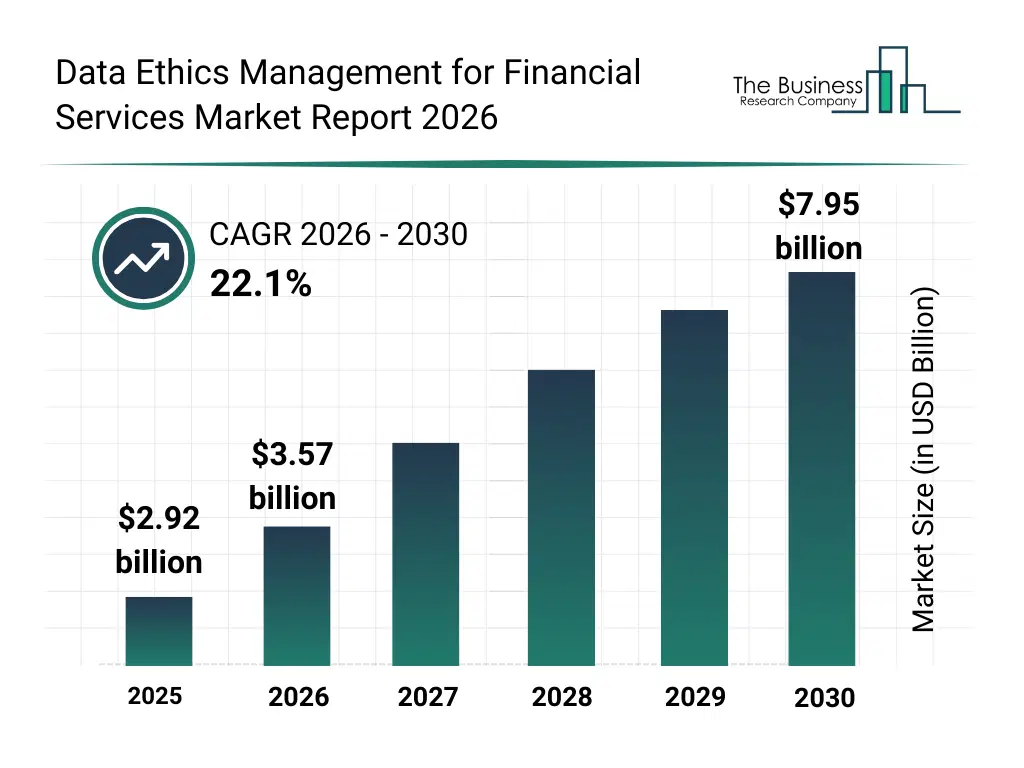
What Is The Data Ethics Management for Financial Services Market Size and Share 2026?
The data ethics management for financial services market size has grown exponentially in recent years. It will grow from $2.92 billion in 2025 to $3.57 billion in 2026 at a compound annual growth rate (CAGR) of 22.4%. The growth in the historic period can be attributed to increasing use of customer data in financial services, rising regulatory scrutiny on data usage, expansion of digital banking platforms, early adoption of analytics-driven decision systems, growth of fintech ecosystems.What Is The Data Ethics Management for Financial Services Market Growth Forecast?
The data ethics management for financial services market size is expected to see exponential growth in the next few years. It will grow to $7.95 billion in 2030 at a compound annual growth rate (CAGR) of 22.1%. The growth in the forecast period can be attributed to increasing deployment of AI-driven financial services, rising enforcement of global data protection regulations, growing emphasis on algorithmic fairness, expansion of cloud-based governance platforms, increasing customer expectations for data transparency. Major trends in the forecast period include expansion of ai model governance frameworks, increasing adoption of consent and preference management tools, growing focus on explainable and transparent analytics, rising demand for continuous data ethics monitoring, integration of ethics controls into risk and compliance workflows.
Global Data Ethics Management for Financial Services Market Segmentation
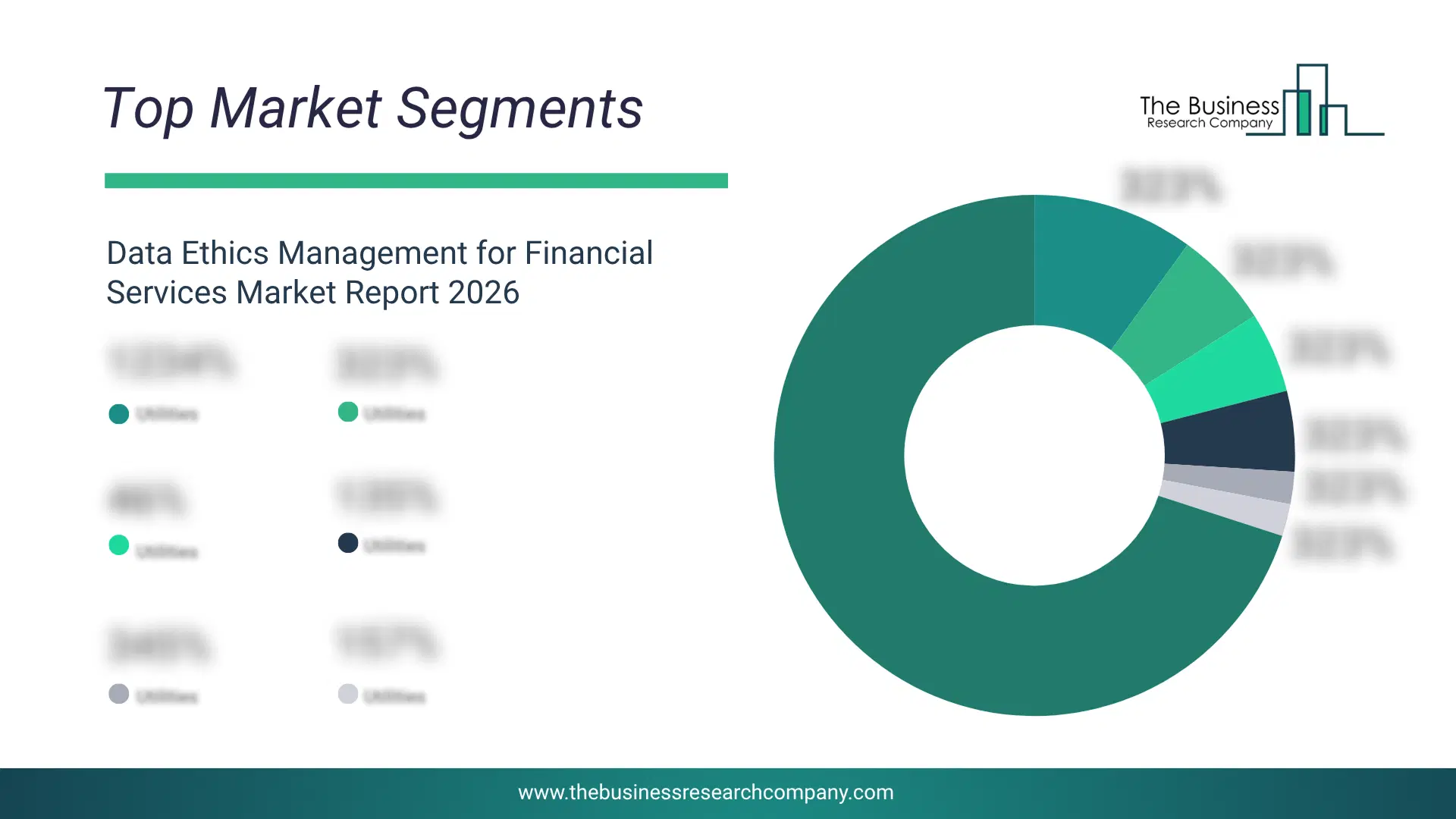
1) By Component: Software, Services, Platforms 2) By Deployment Mode: On-Prmises, Cloud 3) By Organization Size: Large Enterprises, Small And Medium Enterprises 4) By Application: Risk Management, Compliance Management, Data Governance, Customer Analytics, Other Applications 5) By End-User: Banks, Insurance Companies, Investment Firms, FinTech Companies, Other End-Users Subsegments: 1) By Software: Consent And Preference Management Software, Data Governance Policy Management Software, Data Lineage And Provenance Software, Model Explainability And Transparency Software, Privacy Impact Assessment Workflow Software 2) By Services: Regulatory Advisory Services, Implementation And Integration Services, Managed Governance Services, Audit And Assurance Services, Training And Education Services, Data Protection Impact Assessment Services 3) By Platforms: Data Governance And Catalog Platform, Consent And Preference Orchestration Platform, Identity And Access Management Platform, Privacy Enhancing Computation Platform, Data Security Posture Management Platform, Model Governance And Validation PlatformWhat Is The Driver Of The Data Ethics Management for Financial Services Market?
The growing preference for digital banking is expected to propel the growth of the data ethics management for financial services market going forward. Digital banking refers to the delivery of banking services and financial transactions through digital platforms, enabling customers to access, manage, and perform banking activities electronically without the need for physical branch visits. Digital banking is driven by convenience, as it allows customers to access financial services anytime and anywhere through digital platforms, eliminating the need for physical branch visits. Data ethics management for financial services helps digital banking by ensuring that customer data is handled transparently, securely, and responsibly, thereby building trust and confidence in digital financial platforms. For instance, in July 2024, UK Finance, a UK-based trade association for the banking and financial services sector, reported that in 2023, digital banking adoption in the United Kingdom increased, with 62% of adults using online banking and 60% using mobile banking, showing a clear shift toward digital financial services. Contactless payments grew to 18.3 billion, up 7% from 17.0 billion in 2022, representing 38% of all payments. This includes payments via physical cards and cards on mobile devices or wearables, highlighting the rising preference for convenient, digital-first payment methods. Therefore, the growing preference for digital banking is driving the data ethics management for financial services industry.Key Players In The Global Data Ethics Management for Financial Services Market
Major companies operating in the data ethics management for financial services market are Google LLC, Microsoft Corporation, Deloitte Touche Tohmatsu Limited, Accenture plc, IBM Corporation, PwC (PricewaterhouseCoopers), Oracle Corporation, Ernst & Young LLP, KPMG International, Tata Consultancy Services (TCS), Capgemini SE, Cognizant Technology Solutions, Infosys Limited, Experian plc, Equifax Inc., TransUnion LLC, SAS Institute Inc., Palantir Technologies Inc., Fair Isaac Corporation, Mu Sigma Inc.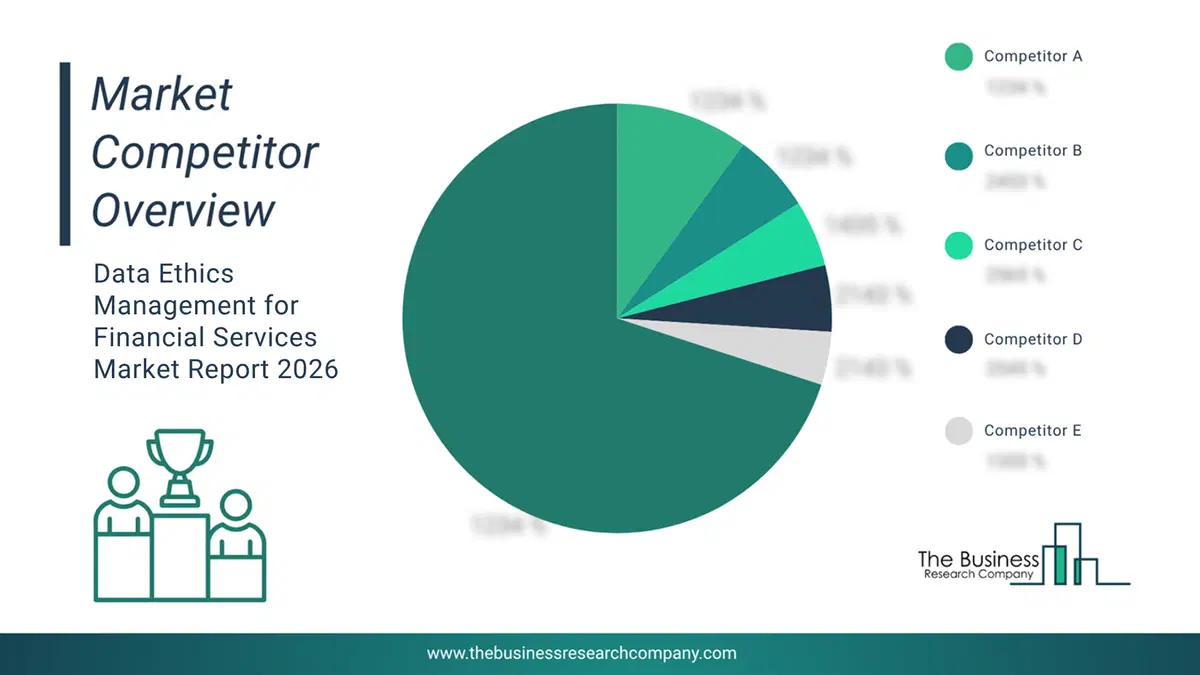
This chart is for illustrative purposes; the full report includes a detailed competitor analysis and comprehensive overview of the top 10 companies in the market.
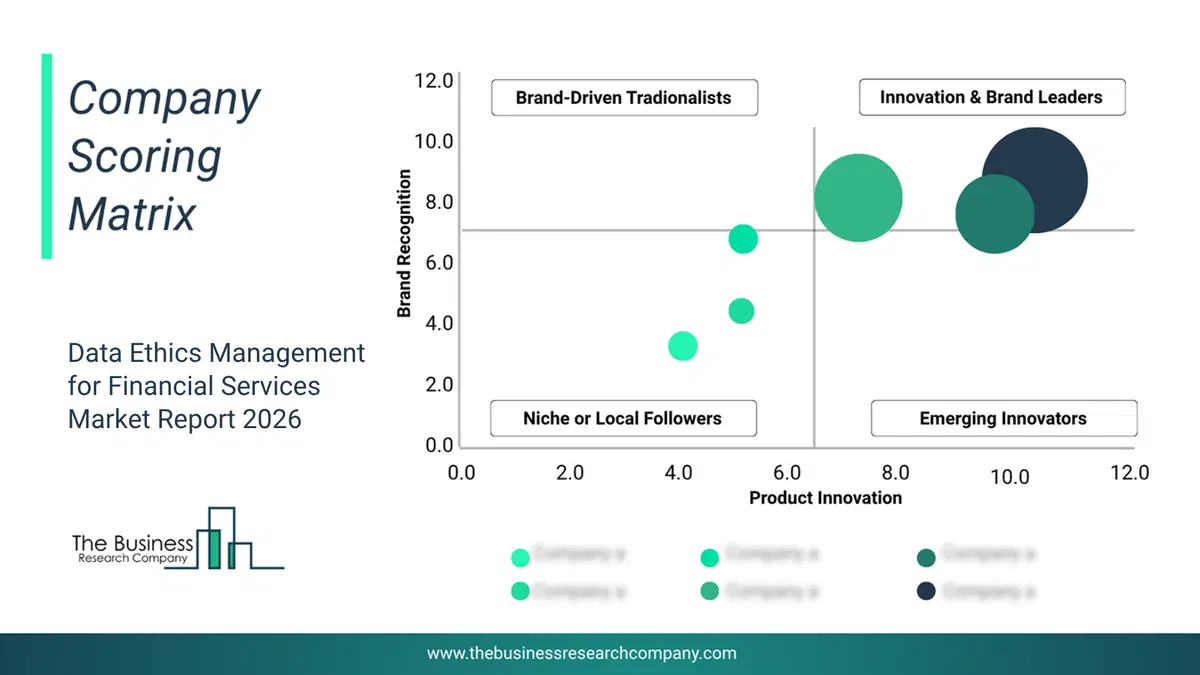
This chart maps companies by product innovation and brand strength, with bubble size indicating relative revenue, helping identify market leaders, challengers, and niche players. This is an illustrative chart; the full report provides a complete and accurate competitive analysis.
Global Data Ethics Management for Financial Services Market Trends and Insights
Major companies operating in the data ethics management market for financial services are increasingly investing in advanced technology infrastructures, such as open-source common controls for artificial intelligence (AI) services, to standardize governance, automate compliance, and scale responsible AI across hybrid and multi-cloud environments. These open-source common controls are technology-neutral and cloud-agnostic templates, often implemented as regulation-as-code, embedding security, auditability, and risk mitigation throughout the AI lifecycle. This enables financial institutions to demonstrate compliance consistently and efficiently. For instance, in June 2025, Fintech Open Source Foundation (FINOS), a US-based non-profit, membership-based organization, launched the Common Controls for AI Services initiative in collaboration with banks and cloud providers. The initiative delivers standardized, open controls tailored to the financial services sector, offering real-time validation for secure AI deployment. By harmonizing governance across institutions and vendors, it reduces duplication, accelerates regulatory alignment, and establishes a unified open standard that enhances consistency, transparency, and trust in the use of AI within financial institutions.What Are Latest Mergers And Acquisitions In The Data Ethics Management for Financial Services Market?
In July 2023, Informatica, a US-based enterprise cloud data management company, acquired Privitar for an undisclosed amount. With this acquisition, Informatica seeks to embed Privitar’s policy-driven privacy, de-identification, dynamic masking, and governed data-access capabilities into its broader data management portfolio so that institutions can enable protected self-service analytics, enforce purpose limitation and lawful processing at scale, and maintain auditable, accountable use of sensitive information across complex, hybrid technology estates. Privitar is a UK-based data access management and privacy software company.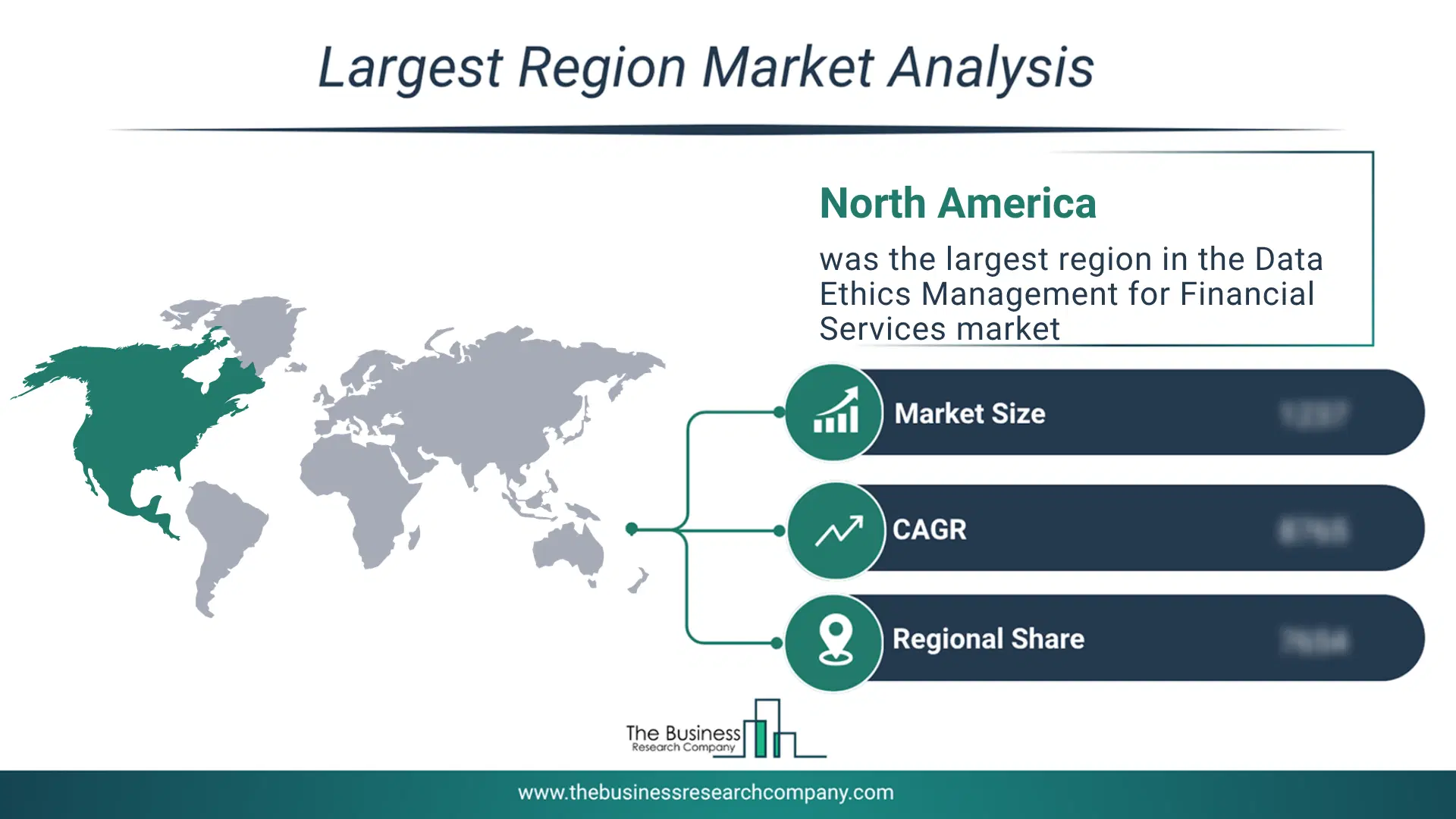
Regional Outlook
North America was the largest region in the data ethics management for financial services market in 2025. Asia-Pacific is expected to be the fastest-growing region in the forecast period. The regions covered in this market report are Asia-Pacific, South East Asia, Western Europe, Eastern Europe, North America, South America, Middle East, Africa. The countries covered in this market report are Australia, Brazil, China, France, Germany, India, Indonesia, Japan, Taiwan, Russia, South Korea, UK, USA, Canada, Italy, Spain.What Defines the Data Ethics Management for Financial Services Market?
The data ethics management for financial services market includes revenues earned by entities by providing services such as ethical data governance framework design, algorithmic impact assessment and model fairness audit, consent data rights and purpose management program setup, regulatory compliance mapping and readiness, and staff training and culture change. The market value includes the value of related goods sold by the service provider or included within the service offering. Only goods and services traded between entities or sold to end consumers are included.How is Market Value Defined and Measured?
The market value is defined as the revenues that enterprises gain from the sale of goods and/or services within the specified market and geography through sales, grants, or donations in terms of the currency (in USD unless otherwise specified). The revenues for a specified geography are consumption values that are revenues generated by organizations in the specified geography within the market, irrespective of where they are produced. It does not include revenues from resales along the supply chain, either further along the supply chain or as part of other products.
This chart presents market attractiveness based on a quantitative evaluation of growth, competition, strategic alignment, and risk, offering a clear view of opportunity areas for decision-making. This chart is for illustrative purposes; the full report contains the complete analysis.

This chart highlights the Total Addressable Market (TAM) by estimating the maximum revenue opportunity using an assumption-driven approach, supporting strategic planning and opportunity sizing across markets. The chart is illustrative; the full report provides a more comprehensive analysis.
What Key Data and Analysis Are Included in the Data Ethics Management for Financial Services Market Report 2026?
The data ethics management for financial services market research report is one of a series of new reports from The Business Research Company that provides market statistics, including Market Report 2026?global market size, regional shares, competitors with the market share, detailed market segments, market trends and opportunities, and any further data you may need to thrive in the data ethics management for financial services Market Report 2026? The market research report delivers a complete perspective of everything you need, with an in-depth analysis of the current and future state of the Market Report 2026?Data Ethics Management for Financial Services Market Report Forecast Analysis
| Report Attribute | Details |
|---|---|
| Market Size Value In 2026 | $3.57 billion |
| Revenue Forecast In 2030 | $7.95 billion |
| Growth Rate | CAGR of 22.4% from 2026 to 2030 |
| Base Year For Estimation | 2025 |
| Actual Estimates/Historical Data | 2020-2025 |
| Forecast Period | 2026 - 2030 |
| Market Representation | Revenue in USD Billion and CAGR from 2026 to 2030 |
| Segments Covered | Component, Deployment Mode, Organization Size, Application, End-User |
| Regional Scope | Asia-Pacific, Western Europe, Eastern Europe, North America, South America, Middle East, Africa |
| Country Scope | The countries covered in the report are Australia, Brazil, China, France, Germany, India, Indonesia, Japan, Taiwan, Russia, South Korea, UK, USA, Canada, Italy, Spain. |
| Key Companies Profiled | Google LLC, Microsoft Corporation, Deloitte Touche Tohmatsu Limited, Accenture plc, IBM Corporation, PwC (PricewaterhouseCoopers), Oracle Corporation, Ernst & Young LLP, KPMG International, Tata Consultancy Services (TCS), Capgemini SE, Cognizant Technology Solutions, Infosys Limited, Experian plc, Equifax Inc., TransUnion LLC, SAS Institute Inc., Palantir Technologies Inc., Fair Isaac Corporation, Mu Sigma Inc. |
| Customization Scope | Request for Customization |
| Pricing And Purchase Options | Explore Purchase Options |