
Data Fabric Market Report 2026
Global Outlook – By Type (Disk-Based Data Fabric, In-Memory Data Fabric), By Component (Software, Service), By Application (Fraud Detection And Security Management, Customer Experience Management, Governance, Risk, And Compliance Management, Sales And Marketing Management, Business Process Management), By End User (Banking, Financial Services, And Insurance (BFSI), Information Technology (IT) And Telecom, Retail, Healthcare And Pharmaceuticals, Manufacturing, Government) – Market Size, Trends, Strategies, and Forecast to 2030
Data Fabric Market Overview
• Data Fabric market size has reached to $3.42 billion in 2025 • Expected to grow to $10.43 billion in 2030 at a compound annual growth rate (CAGR) of 24.9% • Growth Driver: Unstructured Data Demand Drives The Data Fabric Market Growth • Market Trend: Technological Advancements Reshaping The Data Fabric Market • North America was the largest region in 2025 and Asia-Pacific is the fastest growing region.Market Gains By 2030 – Top Opportunities By Segment
Market Gain identifies the most promising market opportunities by highlighting the segments or products expected to generate the highest incremental revenue growth over the next five years.
What Is Covered Under Data Fabric Market?
Data fabric refers to a set of data services that handle data using a network-based architecture instead of point-to-point connections. It is a powerful architecture, which monitors and manages the data and applications, regardless of location. Data fabric is used for data management, which helps to integrate data from various sources and analyze it seamlessly in one place. It is widely used by organizations to provide a comprehensive view of business and customers across an organization through disparate data sets in real-time and historical, and finally processes automatically in an efficient way. The main types of data fabric are disk-based data fabric and in-memory data fabric. Secured, managed, and governed data are some of the benefits of a disk-based data fabric. Additionally, it provides data access anytime applications demand it, it also provides the flexibility to transfer data and applications, lowering the cost of ownership and ensuring data compliance. It has components such as software and services that are applied in fraud detection and security management, customer experience management, governance, risk, and compliance management, sales, and marketing management, and business process management. There are various end-users such as banking, financial services, and insurance (BFSI), information technology (IT) and telecom, retail, healthcare and pharmaceuticals, manufacturing, and government.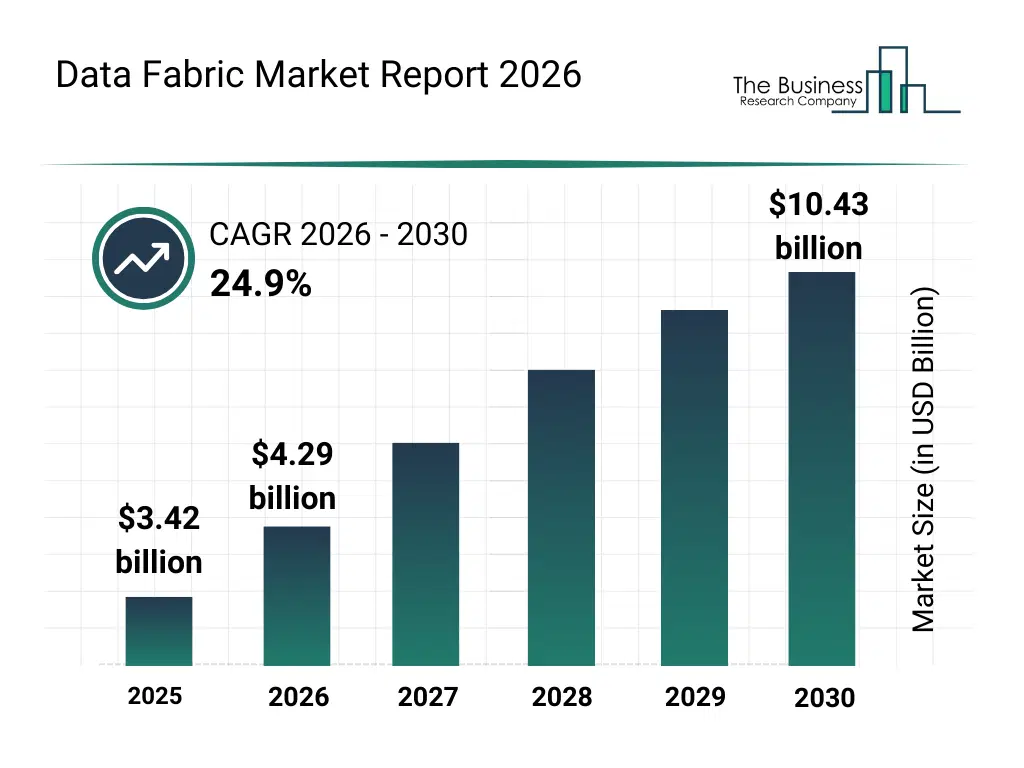
What Is The Data Fabric Market Size and Share 2026?
The data fabric market size has grown exponentially in recent years. It will grow from $3.42 billion in 2025 to $4.29 billion in 2026 at a compound annual growth rate (CAGR) of 25.2%. The growth in the historic period can be attributed to growth of enterprise data volumes, increasing adoption of cloud computing, rising demand for centralized data visibility, early implementation of data virtualization, expansion of enterprise analytics use cases.What Is The Data Fabric Market Growth Forecast?
The data fabric market size is expected to see exponential growth in the next few years. It will grow to $10.43 billion in 2030 at a compound annual growth rate (CAGR) of 24.9%. The growth in the forecast period can be attributed to expansion of ai-driven data management, growing adoption of real-time analytics platforms, rising investments in cloud-native architectures, increasing demand for cross-platform data integration, stronger focus on data governance automation. Major trends in the forecast period include increasing adoption of unified data architecture platforms, rising demand for real-time data integration, growing use of in-memory data fabric solutions, expansion of multi-cloud data management, enhanced focus on automated data governance.
Global Data Fabric Market Segmentation
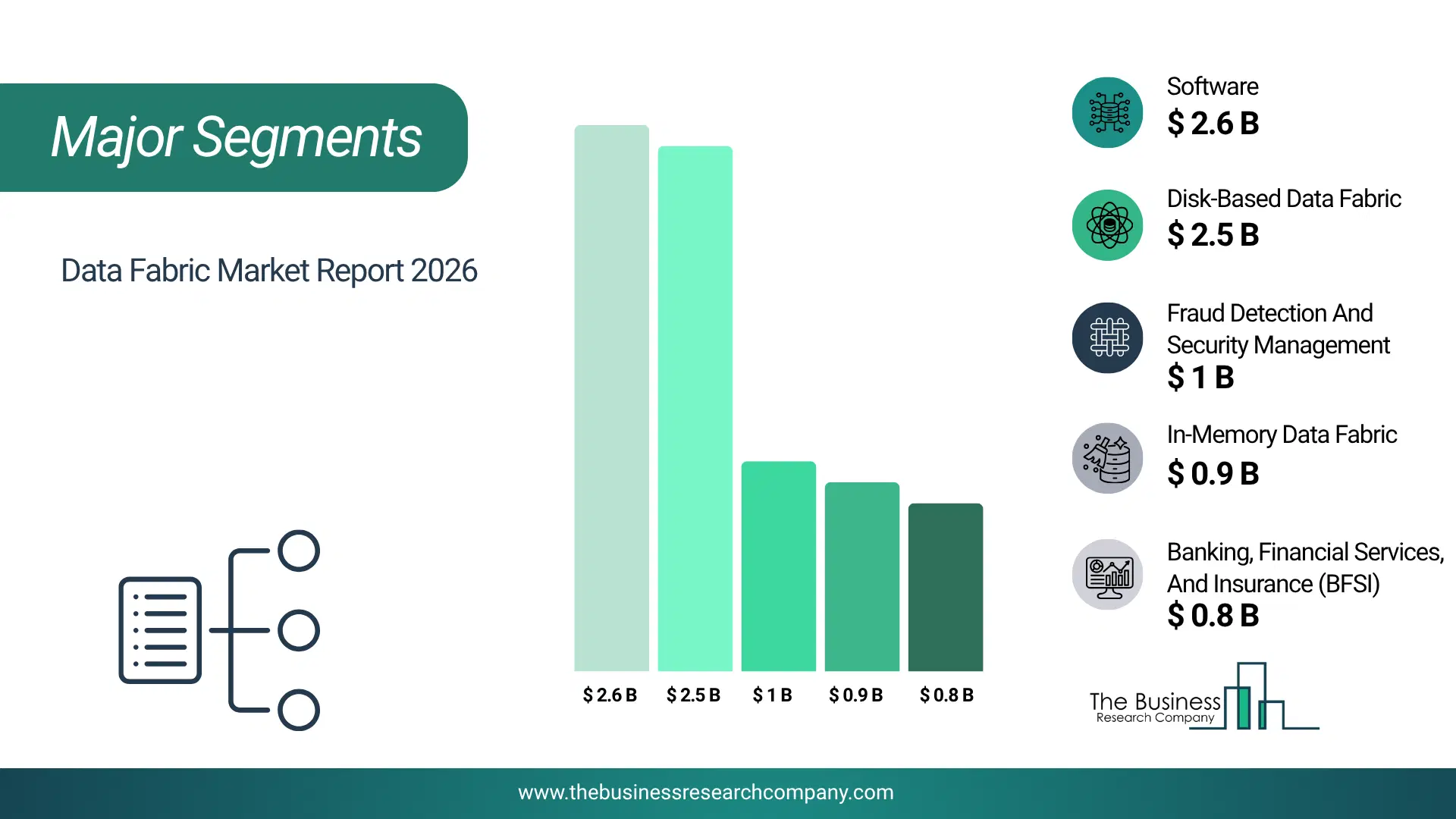
1) By Type: Disk-Based Data Fabric, In-Memory Data Fabric 2) By Component: Software, Service 3) By Application: Fraud Detection And Security Management, Customer Experience Management, Governance, Risk, And Compliance Management, Sales And Marketing Management, Business Process Management 4) By End User: Banking, Financial Services, And Insurance (BFSI), Information Technology (IT) And Telecom, Retail, Healthcare And Pharmaceuticals, Manufacturing, Government Subsegments: 1) By Disk-Based Data Fabric: Traditional Disk Storage Solutions, Hybrid Disk Storage Solutions 2) By In-Memory Data Fabric: In-Memory Computing Solutions, Real-Time Data Processing Solutions The top segments in the data fabric market will be: • Software will reach $2627.24 Million by 2025. • Disk-Based Data Fabric will reach $2521.25 Million by 2025. • Fraud Detection And Security Management will reach $1041.76 Million by 2025. • In-Memory Data Fabric will reach $901.14 Million by 2025. • Banking, Financial Services, And Insurance (BFSI) will reach $885.65 Million by 2025.What Is The Driver Of The Data Fabric Market?
The rising demand for unstructured data is expected to propel the growth of the data fabric market going forward. Unstructured data refers to information that does not have a predefined data model or needs to be organized in a predefined manner, making it more challenging to analyze and requiring specialized tools and techniques for processing and extracting. Data fabric solutions use unstructured data for real-time data processing, analytics, data aggregation, and data integration. For instance, in September 2023, according to Komprise, a US-based provider of unstructured data management surveys, organizations managing more than 10 PB of data grew from 27% in 2022 to 32% in 2023, a 19% increase. Therefore, the rising demand for unstructured data is driving the growth of the data fabric industry.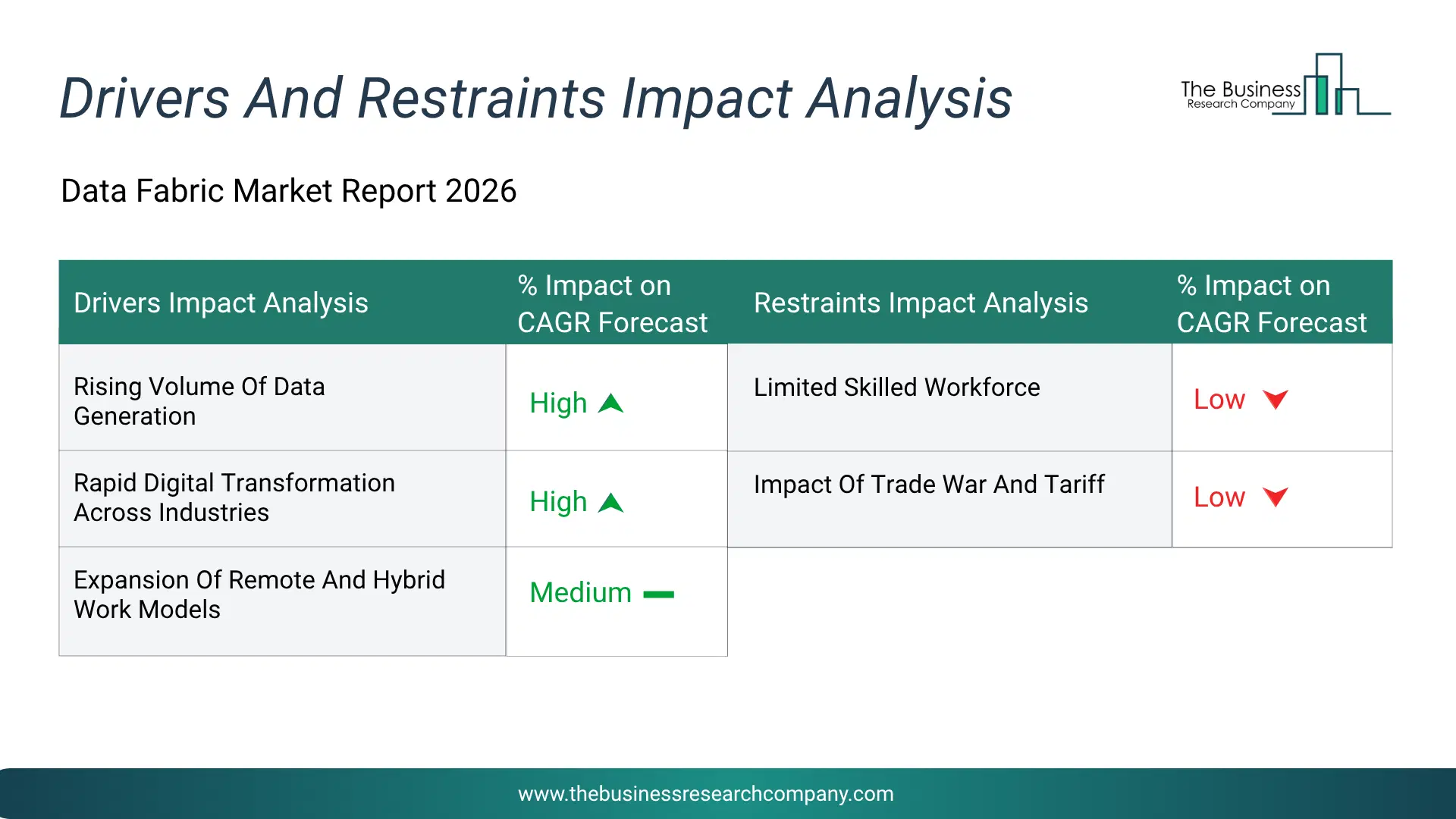
Infographic Chart Showing Key Market Drivers Analysis And Restraints For Data Fabric Market
The chart presents an impact analysis of key drivers and restraints, quantifying their relative influence on the market's growth rate and helping assess the balance between growth enablers and limiting factors. This chart offers a high-level perspective; the full report contains more detailed insights.
How Will The Drivers Impact Growth In The Global Data Fabric Market?
• Rising Volume Of Data Generation (High) – The rising volume of data generation is expected to drive the data fabric market, as organizations require unified data management across cloud and on-premises environments. Data fabric enables seamless data integration, real-time analytics and AI-driven insights while supporting scalable and efficient data infrastructure. • Rapid Digital Transformation Across Industries (High) – The rapid digital transformation across industries will emerge as a major factor driving the expansion of the data fabric market by 2030. As organizations digitize operations, customer interactions and supply chains, they generate massive volumes of structured and unstructured data. Data fabric architecture enables real-time integration and management of this data across hybrid environments, including cloud, edge and legacy systems, improving visibility and operational efficiency. By providing a unified data layer, it simplifies access, enhances governance and supports the growing complexity of digital ecosystems. Moreover, it ensures high-quality, connected and real-time data is available to fuel AI and analytics, empowering faster, data-driven decision-making across the enterprise. Consequently, the rapid digital transformation across industries capabilities is projected to contributing to a 2.0% annual growth in the market. • Expansion Of Remote And Hybrid Work Models (Medium) – The expansion of remote and hybrid work models within digital manufacturing processes will serve as a key growth catalyst for the data fabric market by 2030. With the rise of remote and hybrid workforces, organizations require seamless access to data across multiple locations, devices and platforms. Data fabric ensures consistent and unified access to enterprise data stored in cloud, on-premises, or edge environments, enabling smoother collaboration and faster decision-making. The shift to hybrid work has also increased data silos due to disparate tools and platforms used across teams, but data fabric eliminates these barriers by creating a connected, integrated data environment. Additionally, as businesses embrace flexible work models, data fabric provides a scalable and adaptive architecture that supports dynamic IT requirements without the need for major infrastructure overhauls. Therefore, this expansion of remote and hybrid work models across digital manufacturing operations is projected to supporting to a 1.5% annual growth in the market. • Favorable Government Initiatives (Medium) – The favorable government initiatives will become a significant driver contributing to the growth of the data fabric market by 2030. Governments globally are accelerating digital transformation through programs, to drive modernization of public sector data infrastructure, fueling demand for data fabric solutions that can efficiently unify and manage dispersed data assets. Simultaneously, investments in smart city projects—featuring extensive IoT deployments for traffic, surveillance and utilities—require real-time data processing, where data fabric plays a pivotal role. Additionally, open data and interoperability mandates compel public sector organizations to ensure seamless data sharing and compliance. Data fabric enables this by supporting metadata management, cross-platform integration and standardized access across departments. Consequently, the favorable government initiatives strategies is projected to contributing to a 1.0% annual growth in the market.How Will The Restraints Impact Growth In The Global Data Fabric Market?
• High Implementation Costs (High) – High Implementation Costs will restrict the growth of the Data Fabric market during the forecast period. Data fabric implementation involves significant costs for software, hardware, integration, and migration of existing data systems. The high total cost of ownership creates barriers for smaller organizations with limited IT budgets. Cost constraints may lead to delayed implementation and reduced adoption of data fabric solutions. • Limited Skilled Workforce (Medium) – Limited Skilled Workforce will restrict the growth of the Data Fabric market during the forecast period. Data fabric implementation requires specialized skills in data architecture, integration, and governance. The shortage of qualified professionals with data fabric expertise limits implementation capacity. Skill gaps can lead to project delays and reduced effectiveness of data fabric initiatives, affecting market growth. • Impact Of Trade War And Tariff (Medium) – Impact Of Trade War And Tariff will restrict the growth of the Data Fabric market during the forecast period. Data fabric technologies rely on global supply chains for hardware, software, and professional services. Trade tariffs and restrictions can increase costs and affect technology availability. Trade barriers may also impact international data flows and collaboration, limiting the effectiveness of data fabric solutions.Key Players In The Global Data Fabric Market
Major companies operating in the data fabric market are IBM Corporation; Oracle Corporation; SAP SE; Informatica Inc.; Denodo Technologies Inc.; Software AG; TIBCO Software Inc.; Teradata Corporation; Cloudera Inc.; Starburst Data Inc.; Stardog Union Inc.; K2View LLC; Precisely Holdings LLC; Nexla Inc.; Atlan Pte Ltd; data.world Inc.; Hitachi Vantara LLC; NetApp Inc.; Hewlett Packard Enterprise Company; Dell Technologies Inc.; Nutanix Inc.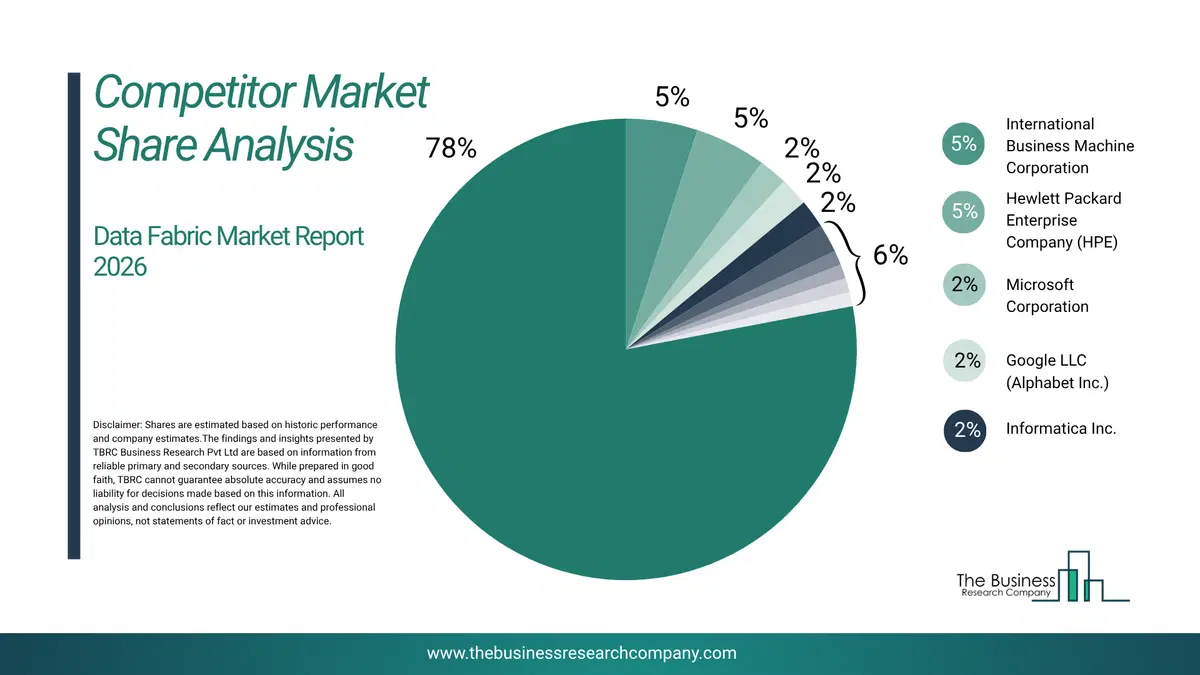
This chart is for illustrative purposes; the full report includes a detailed competitor analysis and comprehensive overview of the top 10 companies in the market.
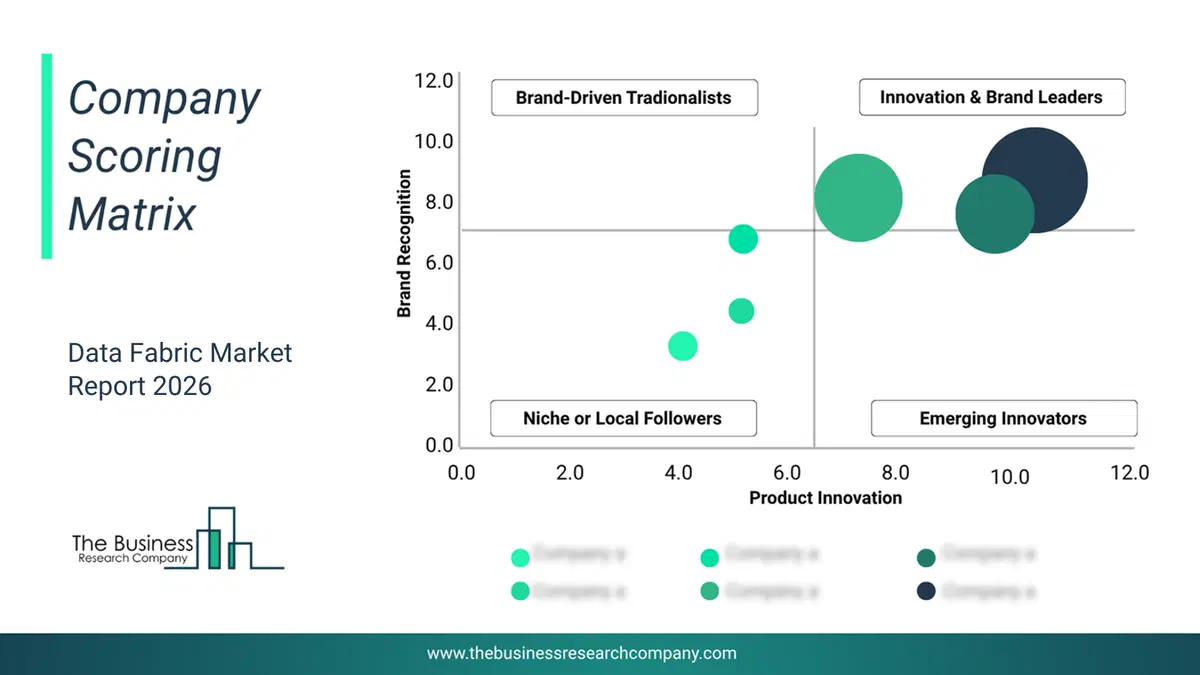
This chart maps companies by product innovation and brand strength, with bubble size indicating relative revenue, helping identify market leaders, challengers, and niche players. This is an illustrative chart; the full report provides a complete and accurate competitive analysis.
Global Data Fabric Market Trends and Insights
Major companies operating in the data fabric market are increasingly focusing on technological advancements to deliver more unified, efficient, and intelligent data solutions. These innovations aim to enhance data accessibility, streamline analytics, and improve decision-making across organizations. For instance, in May 2023, Microsoft, a US-based software company, introduced Microsoft Fabric, an end-to-end analytics platform designed to consolidate a wide range of data management and analytical requirements into a single integrated solution. The platform unifies multiple workloads including data integration, data science, business intelligence, and real-time analytics powered by AI. With more than 150 connectors supporting diverse data sources, Microsoft Fabric enables seamless data transformation and visualization, significantly improving organizational data efficiency and usability.What Are Latest Mergers And Acquisitions In The Data Fabric Market?
In April 2024, Altair Engineering Inc., a US-based provider of analytics, AI, high-performance computing (HPC) software, and cloud solutions, acquired Cambridge Semantics Inc. for an undisclosed amount. Through this acquisition, Altair Engineering Inc. aims to enhance its enterprise data management and analytics capabilities by integrating Cambridge Semantics Inc.’s graph-powered data fabric technology, enabling a unified view of structured and unstructured data. Cambridge Semantics Inc. is a US-based provider of a modern data fabric platform and knowledge-graph technology that unifies complex enterprise data into a single, simplified view.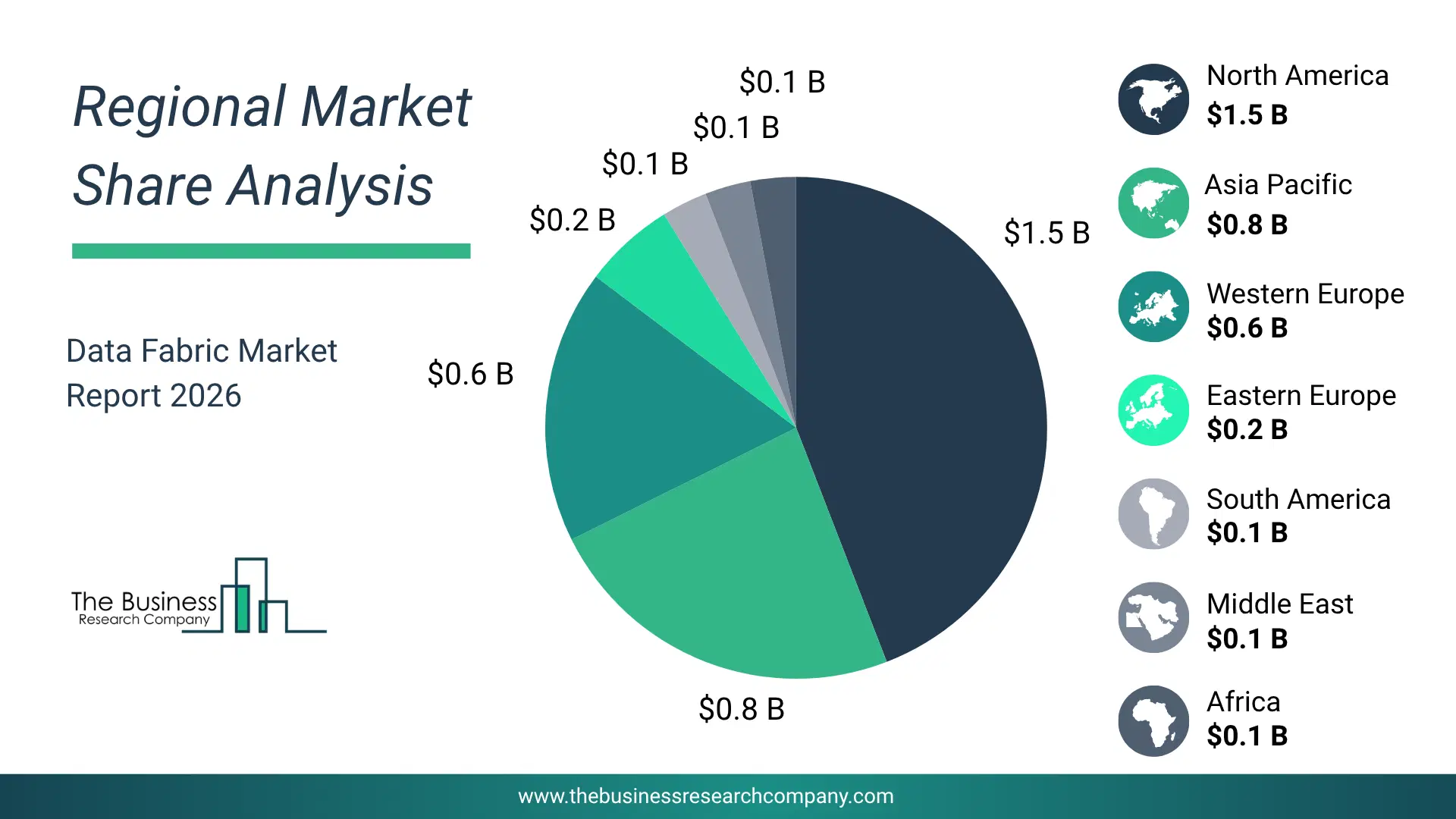
Regional Insights
North America was the largest region in the data fabric market in 2025.Asia-Pacific is expected to be the fastest-growing region in the forecast period. The regions covered in this market report are Asia-Pacific, South East Asia, Western Europe, Eastern Europe, North America, South America, Middle East, Africa. The countries covered in this market report are Australia, Brazil, China, France, Germany, India, Indonesia, Japan, Taiwan, Russia, South Korea, UK, USA, Canada, Italy, SpainWhat Defines the Data Fabric Market?
The data fabric market includes revenues earned by entities by providing services such as augmented data catalog, persistence layer, knowledge graph, insights and recommendations engine. The market value includes the value of related goods sold by the service provider or included within the service offering. Only goods and services traded between entities or sold to end consumers are included.How is Market Value Defined and Measured?
The market value is defined as the revenues that enterprises gain from the sale of goods and/or services within the specified market and geography through sales, grants, or donations in terms of the currency (in USD unless otherwise specified). The revenues for a specified geography are consumption values that are revenues generated by organizations in the specified geography within the market, irrespective of where they are produced. It does not include revenues from resales along the supply chain, either further along the supply chain or as part of other products.
This chart presents market attractiveness based on a quantitative evaluation of growth, competition, strategic alignment, and risk, offering a clear view of opportunity areas for decision-making. This chart is for illustrative purposes; the full report contains the complete analysis.

This chart highlights the Total Addressable Market (TAM) by estimating the maximum revenue opportunity using an assumption-driven approach, supporting strategic planning and opportunity sizing across markets. The chart is illustrative; the full report provides a more comprehensive analysis.
What Key Data and Analysis Are Included in the Data Fabric Market Report 2026?
The data fabric market research report is one of a series of new reports from The Business Research Company that provides market statistics, including industry global market size, regional shares, competitors with the market share, detailed market segments, market trends and opportunities, and any further data you may need to thrive in the data fabric industry. The market research report delivers a complete perspective of everything you need, with an in-depth analysis of the current and future state of the industry.Data Fabric Market Report Forecast Analysis
| Report Attribute | Details |
|---|---|
| Market Size Value In 2026 | $4.29 billion |
| Revenue Forecast In 2030 | $10.43 billion |
| Growth Rate | CAGR of 25.2% from 2026 to 2030 |
| Base Year For Estimation | 2025 |
| Actual Estimates/Historical Data | 2020-2025 |
| Forecast Period | 2026 - 2030 |
| Market Representation | Revenue in USD Billion and CAGR from 2026 to 2030 |
| Segments Covered | Type, Component, Application, End User |
| Regional Scope | Asia-Pacific, Western Europe, Eastern Europe, North America, South America, Middle East, Africa |
| Country Scope | The countries covered in the report are Australia, Brazil, China, France, Germany, India, Indonesia, Japan, Taiwan, Russia, South Korea, UK, USA, Canada, Italy, Spain. |
| Key Companies Profiled | IBM Corporation; Oracle Corporation; SAP SE; Informatica Inc.; Denodo Technologies Inc.; Software AG; TIBCO Software Inc.; Teradata Corporation; Cloudera Inc.; Starburst Data Inc.; Stardog Union Inc.; K2View LLC; Precisely Holdings LLC; Nexla Inc.; Atlan Pte Ltd; data.world Inc.; Hitachi Vantara LLC; NetApp Inc.; Hewlett Packard Enterprise Company; Dell Technologies Inc.; Nutanix Inc. |
| Customization Scope | Request for Customization |
| Pricing And Purchase Options | Explore Purchase Options |