
Data Tokenization Market Report 2026
Global Outlook – By Component (Solutions, Services), By Deployment Mode (On-Premises, Cloud), By Organization Size (Large Enterprises, Small And Medium Enterprises), By Application (Payment Security, User Authentication, Compliance Management, Data Processing, Other Applications), By End User (Banking, Financial Services, And Insurance (BFSI), Healthcare, Retail, Information Technology And Telecommunications, Government, Other End-Users) – Market Size, Trends, Strategies, and Forecast to 2030
Data Tokenization Market Overview
• Data Tokenization market size has reached to $3.63 billion in 2025 • Expected to grow to $9.19 billion in 2030 at a compound annual growth rate (CAGR) of 20.4% • Growth Driver: Rising Incidence Of Data Breaches And Cyberattacks Fueling The Growth Of The Market Due To Increased Data Security Risks • Market Trend: Advancements In Data De-identification Techniques For Enhanced Security And Regulatory Compliance • North America was the largest region in 2025 and Asia-Pacific is the fastest growing region.Market Gains By 2030 – Top Opportunities By Segment
Market Gain identifies the most promising market opportunities by highlighting the segments or products expected to generate the highest incremental revenue growth over the next five years.
What Is Covered Under Data Tokenization Market?
Data tokenization refers to a security process that replaces sensitive data with non-sensitive tokens that preserve the format but have no exploitable value. It allows organizations to store and process data securely without exposing the original information. This technique is widely used in industries like banking, healthcare, and retail to protect personal and payment data while meeting compliance standards. The main components of data tokenization are solutions and services. Solutions refer to software platforms that protect sensitive data by replacing it with non-sensitive tokens while preserving usability for processing and analysis. These solutions are deployed through on-premises and cloud deployment modes, and are designed for organizations of different sizes, including large enterprises and small and medium enterprises. They are used across various applications, such as payment security, user authentication, compliance management, data processing, and other applications, and cater to multiple end-users, including banking, financial services, and insurance (BFSI), healthcare, retail, information technology and telecommunications, government, and other end-users.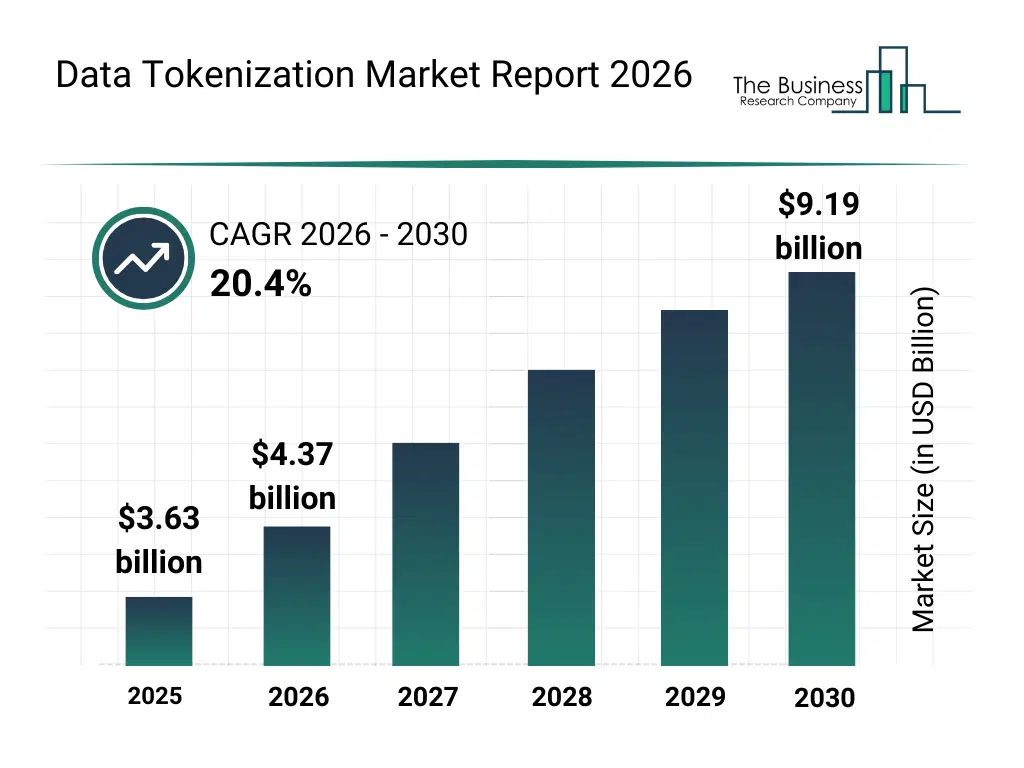
What Is The Data Tokenization Market Size and Share 2026?
The data tokenization market size has grown exponentially in recent years. It will grow from $3.63 billion in 2025 to $4.37 billion in 2026 at a compound annual growth rate (CAGR) of 20.2%. The growth in the historic period can be attributed to payment security mandates, early encryption adoption, data breach incidents, PCI compliance needs, cloud migration.What Is The Data Tokenization Market Growth Forecast?
The data tokenization market size is expected to see exponential growth in the next few years. It will grow to $9.19 billion in 2030 at a compound annual growth rate (CAGR) of 20.4%. The growth in the forecast period can be attributed to expansion of digital payments, stricter privacy laws, tokenization in analytics, zero trust architectures, cloud security demand. Major trends in the forecast period include vaultless tokenization adoption, cloud-native tokenization platforms, format-preserving data protection, application-level token security, compliance-driven token management.
Global Data Tokenization Market Segmentation
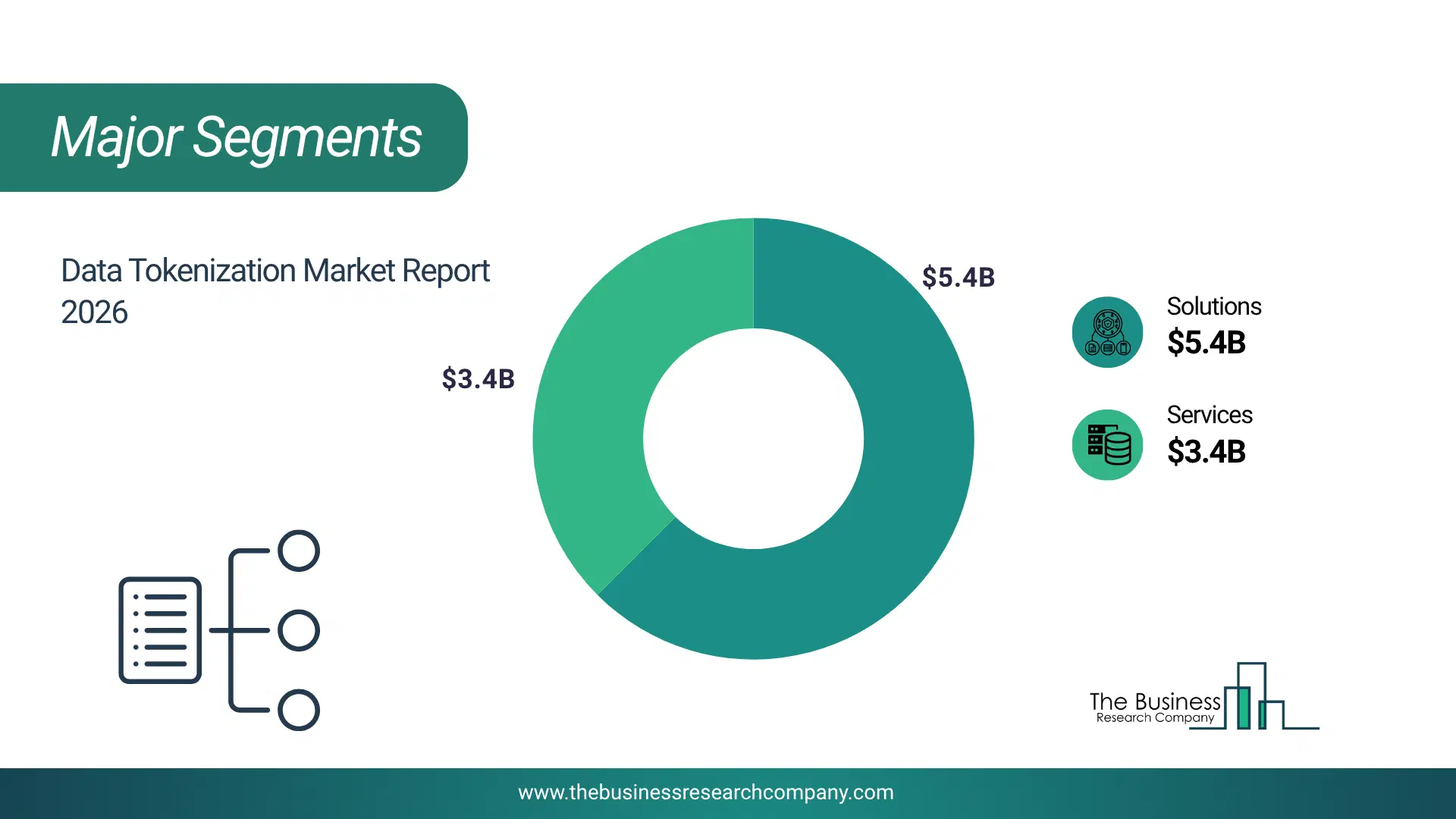
1) By Component: Solutions, Services 2) By Deployment Mode: On-Premises, Cloud 3) By Organization Size: Large Enterprises, Small And Medium Enterprises 4) By Application: Payment Security, User Authentication, Compliance Management, Data Processing, Other Applications 5) By End User: Banking, Financial Services, And Insurance (BFSI), Healthcare, Retail, Information Technology And Telecommunications, Government, Other End-Users Subsegments: 1) By Solutions: Data Protection, Sensitive Information Masking, Application-Level Tokenization, Database Encryption Replacement 2) By Services: Implementation Support, Integration Services, Consulting Services, Managed Support The top segments in the data tokenization market will be: • Solutions will reach $5.32 billion by 2030. • Services will reach $3.39 billion by 2030.What Is The Driver Of The Data Tokenization Market?
The growing volume of data breaches and cyberattacks is expected to propel the growth of the data tokenization market going forward. Data breaches and cyberattacks refer to unauthorized access to digital systems and information that results in the exposure, theft, or misuse of sensitive data across industries. Data breaches and cyberattacks are increasing due to the rapid expansion of digital systems and interconnected networks, which creates a larger and more complex attack surface for malicious actors to exploit. Data tokenization helps mitigate data breaches and cyberattacks by replacing sensitive information with non-exploitable tokens, significantly reducing the value of compromised data and limiting attackers’ ability to misuse stolen information. For instance, in October 2024, according to the Office of the Australian Information Commissioner, an Australia-based government agency, data breach notifications reached 1,113 in 2024, representing a 25% increase from 893 incidents reported in 2023 and marking the highest annual total since the notifiable data breaches scheme began. Therefore, the growing volume of data breaches and cyberattacks is driving the growth of the data tokenization industry.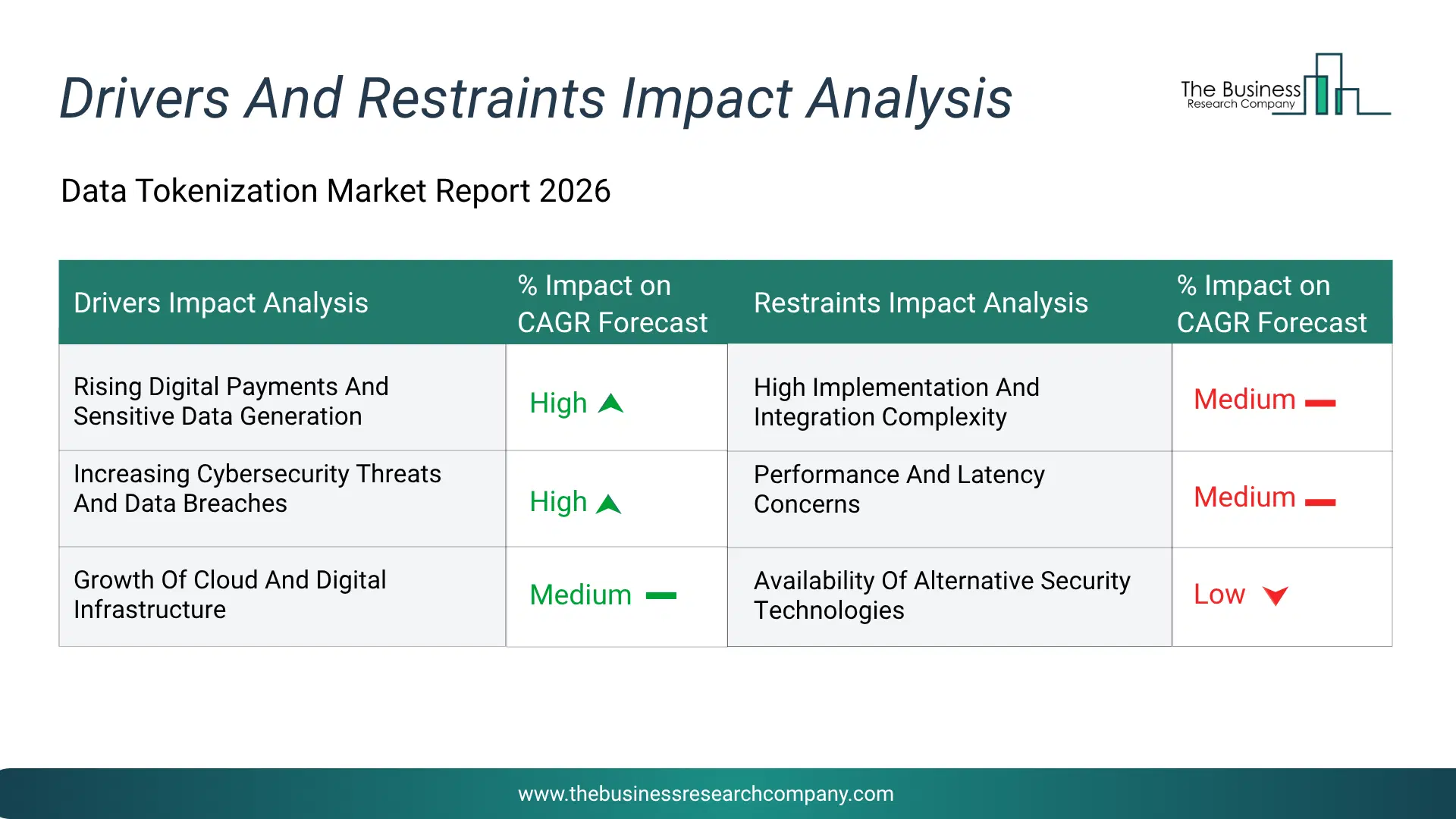
Infographic Chart Showing Key Market Drivers Analysis And Restraints For Data Tokenization Market
The chart presents an impact analysis of key drivers and restraints, quantifying their relative influence on the market's growth rate and helping assess the balance between growth enablers and limiting factors. This chart offers a high-level perspective; the full report contains more detailed insights.
How Will The Drivers Impact Growth In The Global Data Tokenization Market?
• Rising Digital Payments And Sensitive Data Generation (High) – During the forecast period, the rising digital payments and sensitive data generation is expected to become a key growth driver for the data tokenization market by 2030. The increasing use of online transactions, mobile wallets, and e -commerce platforms is generating large volumes of sensitive financial and personal data that require secure handling. Tokenization helps replace sensitive information with non -sensitive tokens, reducing the risk of data exposure and fraud. Enterprises are increasingly deploying tokenization to secure payment data and customer information. • Increasing Cybersecurity Threats And Data Breaches (High) – During the forecast period, the increasing cybersecurity threats and data breaches is expected to emerge as a major factor driving the expansion of the data tokenization market by 2030. Organizations across industries are facing a surge in sophisticated cyberattacks targeting sensitive data, leading to financial losses and reputational damage. Tokenization provides an effective method to minimize data exposure by ensuring that actual data is not stored or transmitted in its original form. Companies are therefore investing in advanced tokenization solutions as part of their cybersecurity strategies. • Growth Of Cloud And Digital Infrastructure (Medium) – During the forecast period, the growth of cloud and digital infrastructure is expected to act as a key growth catalyst for the data tokenization market by 2030. The increasing adoption of cloud computing, digital platforms, and remote data access is expanding the need for secure data protection mechanisms. Tokenization solutions are being integrated with cloud environments to ensure secure storage and processing of sensitive information across distributed systems. Enterprises are also leveraging tokenization to comply with data privacy regulations in cloud-based operations.How Will The Restraints Impact Growth In The Global Data Tokenization Market?
• High Implementation And Integration Complexity (Medium) – During the forecast period, the data tokenization solutions must be embedded across multiple layers of an organization’s it ecosystem, including databases, payment gateways, applications, and cloud environments. This integration is not straightforward because tokenization changes how sensitive data is stored, accessed, and processed. Enterprises often need to redesign workflows, ensure compatibility with legacy systems, and maintain data integrity while replacing real data with tokens. The need for specialized expertise in deployment, customization, and testing increases both time and cost. Additionally, integration services must ensure that tokenized data can still be used effectively for analytics, reporting, and operations without exposing sensitive information. These complexities can delay implementation timelines and discourage smaller organizations from adoption. As a result, even though tokenization provides strong security benefits, the operational burden associated with implementation and integration acts as a significant restraint on market growth. • Performance And Latency Concerns (Medium) – During the forecast period, the tokenization systems, particularly those using centralized token vaults, require additional processing steps whenever sensitive data is accessed or replaced. Each transaction may involve token generation, lookup, or de-tokenization, which can introduce latency into systems that require real-time or near real-time performance, such as payment processing or high-frequency transactions. In high-volume environments, these delays can accumulate and impact overall system efficiency, user experience, and transaction speed. Organizations must invest in optimized infrastructure or advanced tokenization techniques to minimize these effects, which adds to operational costs. Concerns about maintaining performance standards while implementing tokenization can lead enterprises to hesitate, especially in industries where speed is critical. Therefore, perceived or actual performance trade-offs act as a barrier to wider adoption. • Availability Of Alternative Security Technologies (Low) – During the forecast period, the organizations have multiple options for protecting sensitive data, including encryption, data masking, and format-preserving encryption. These alternatives are often already integrated into existing security frameworks and may be perceived as easier or more cost-effective to implement compared to tokenization. In some use cases, encryption can provide sufficient protection without requiring major changes to data architecture, making it a preferred choice. Additionally, organizations may adopt a layered security approach where tokenization is not prioritized or is partially replaced by other technologies. This competition reduces the exclusive demand for tokenization solutions and services. As a result, despite its advantages in minimizing data exposure, the presence of well-established alternative technologies limits the growth potential of the data tokenization market.Key Players In The Global Data Tokenization Market
Major companies operating in the data tokenization market are Amazon Web Services Inc., Google LLC, Microsoft Corporation, Dell Technologies Inc., Broadcom Inc., IBM Corporation, Hewlett Packard Enterprise Company, Thales Group, Fiserv Inc., Atos SE, Adyen N.V., Marqeta Inc., Lookout Inc., Protegrity Inc., K2view Ltd., Fortanix Inc., Very Good Security Inc., Sequent Software Inc., Prime Factors Inc., Euronet Worldwide Inc.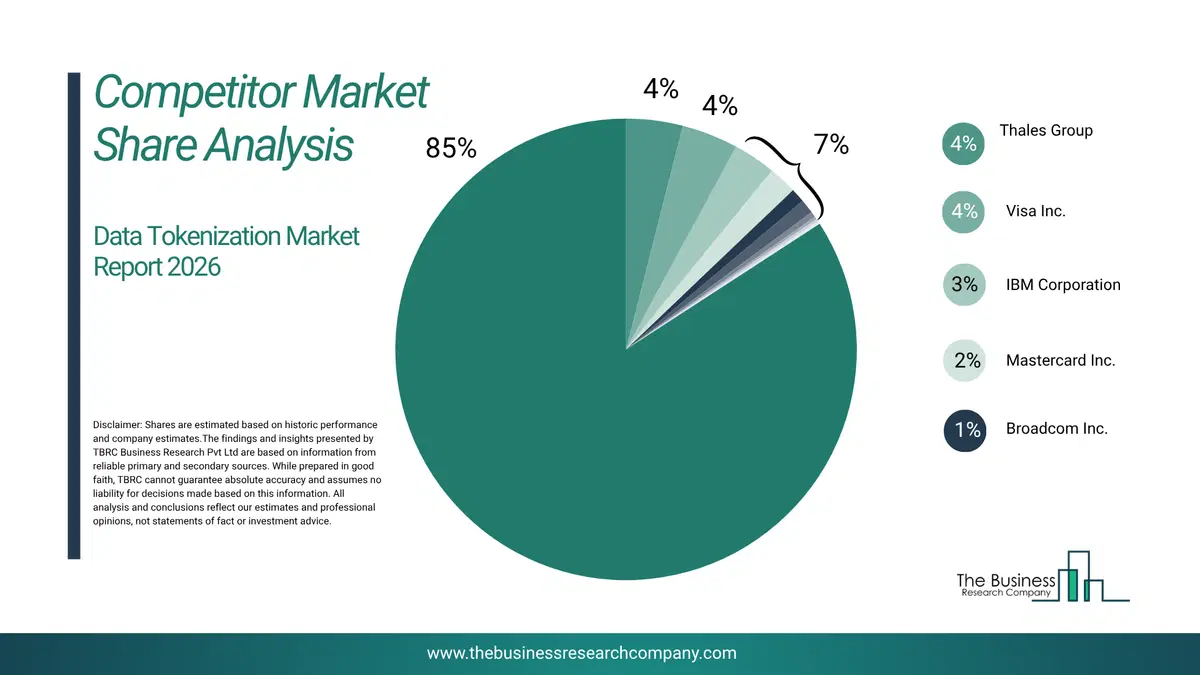
This chart is for illustrative purposes; the full report includes a detailed competitor analysis and comprehensive overview of the top 10 companies in the market.
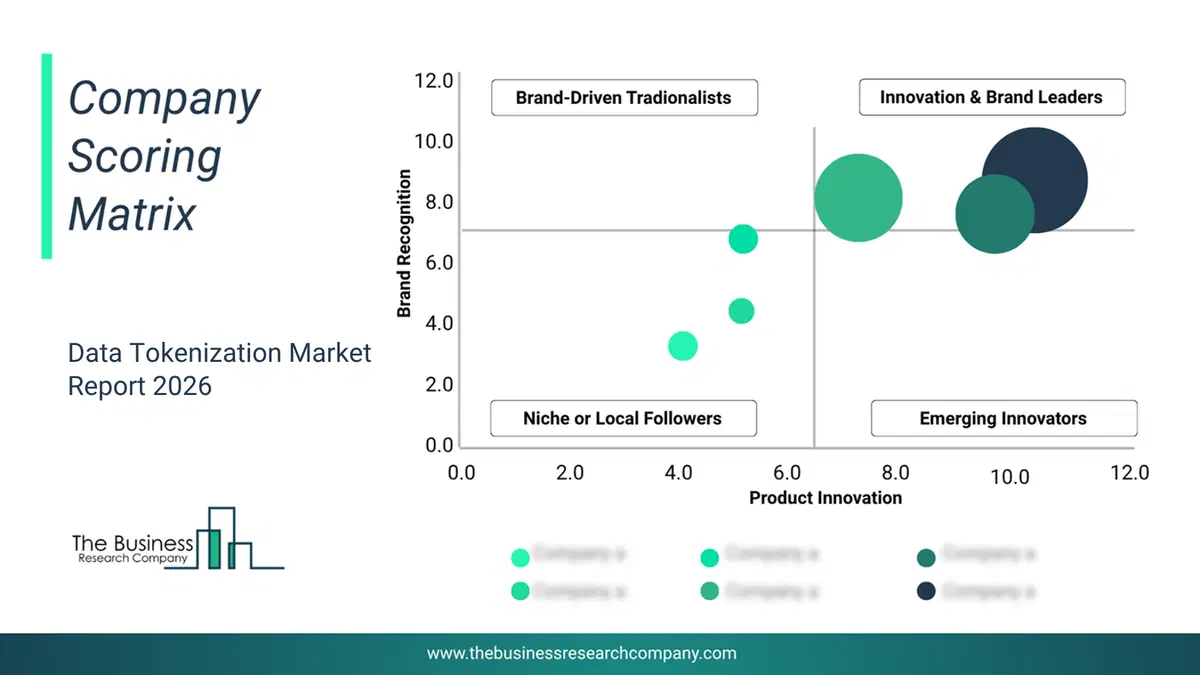
This chart maps companies by product innovation and brand strength, with bubble size indicating relative revenue, helping identify market leaders, challengers, and niche players. This is an illustrative chart; the full report provides a complete and accurate competitive analysis.
Global Data Tokenization Market Trends and Insights
Major companies operating in the data tokenization market are focusing on developing advanced solutions, such as data de-identification techniques, to reduce the risk of data breaches, protect sensitive information, and ensure regulatory compliance across cloud environments. Data de-identification techniques refer to security approaches that mask, tokenize, or encrypt sensitive data so it cannot be directly linked to individuals, while still allowing authorized use for analytics and operations. For instance, in July 2023, Fortanix Inc., a US-based multi-cloud data security company, launched a data masking and tokenization solution as an extension of its Data Security Manager (DSM) platform. The solution provides format-preserving tokenization and dynamic data masking, enabling organizations to secure sensitive fields while maintaining data usability for analytics, testing, and application workflows. Built on Fortanix’s confidential computing and key-management architecture, it ensures strong encryption, secure key isolation, and policy-based access controls, while simplifying deployment and scalability through a fully managed SaaS model. This approach allows enterprises to reduce data exposure, support regulatory compliance, and protect against breaches without complex infrastructure management.What Are Latest Mergers And Acquisitions In The Data Tokenization Market?
In December 2023, The Depository Trust & Clearing Corporation, a US-based financial company, acquired Securrency Inc. for approximately $51.1 million. Through this acquisition, DTCC aims to strengthen its digital asset capabilities and accelerate development of enterprise digital asset infrastructure that supports tokenized assets and next-generation financial market solutions. Securrency Inc. is a US-based company that specializes in providing institutional grade blockchain and tokenization platforms for trading, settlement, and servicing of digital assets and tokenized securities.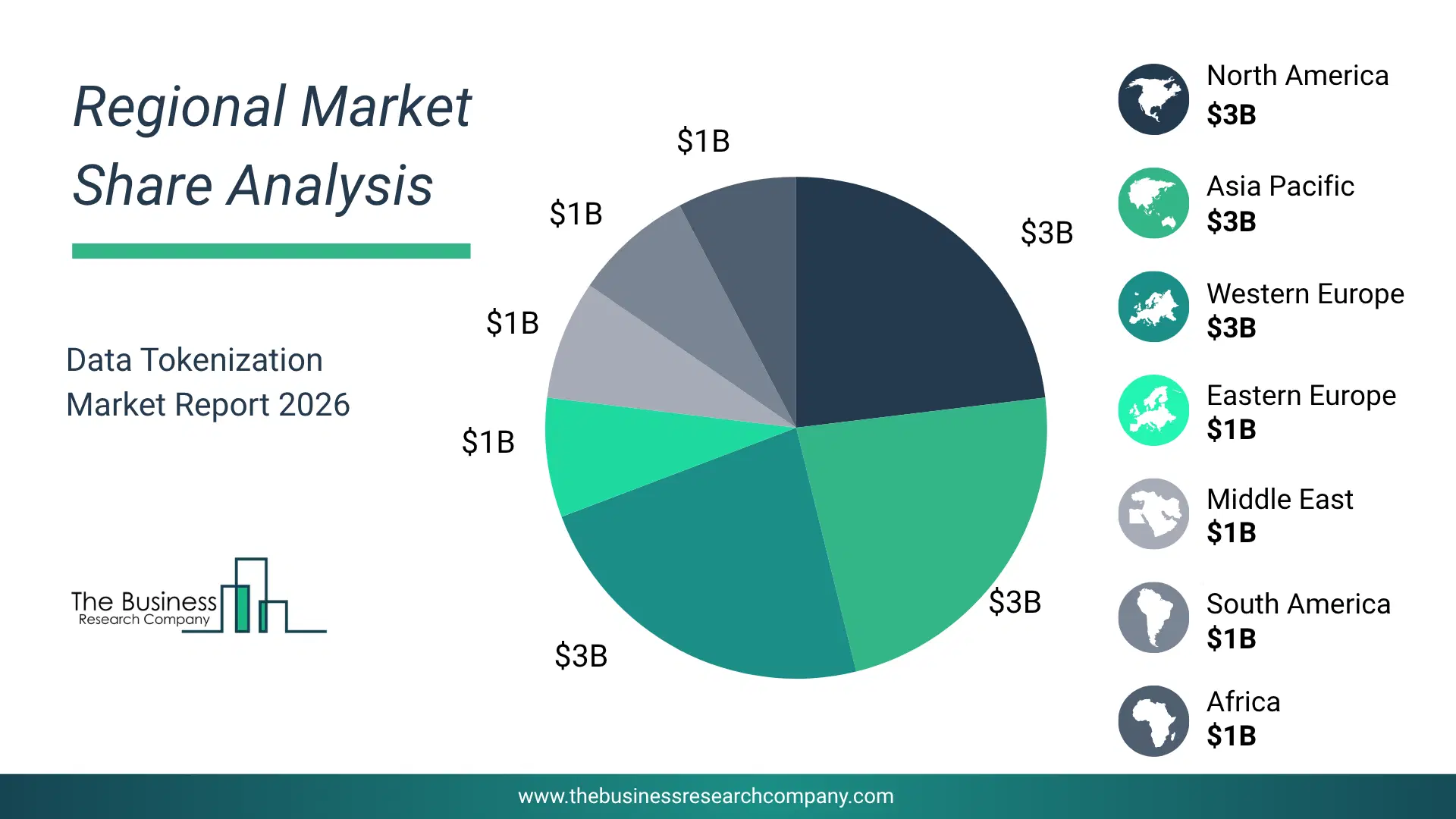
Regional Outlook
North America was the largest region in the data tokenization market in 2025. Asia-Pacific is expected to be the fastest-growing region in the forecast period. The regions covered in this market report are Asia-Pacific, South East Asia, Western Europe, Eastern Europe, North America, South America, Middle East, Africa. The countries covered in this market report are Australia, Brazil, China, France, Germany, India, Indonesia, Japan, Taiwan, Russia, South Korea, UK, USA, Canada, Italy, Spain.What Defines the Data Tokenization Market?
The data tokenization market consists of revenues earned by entities by providing services such as implementation services, integration services, managed security services, and support and maintenance services. The market value includes the value of related goods sold by the service provider or included within the service offering. The data tokenization market also includes sales of vault-based tokenization solutions, cryptographic tokenization tools, token generation & mapping engines, and tokenization platforms. Values in this market are ‘factory gate’ values, that is, the value of goods sold by the manufacturers or creators of the goods, whether to other entities (including downstream manufacturers, wholesalers, distributors, and retailers) or directly to end customers. The value of goods in this market includes related services sold by the creators of the goods.How is Market Value Defined and Measured?
The market value is defined as the revenues that enterprises gain from the sale of goods and/or services within the specified market and geography through sales, grants, or donations in terms of the currency (in USD unless otherwise specified). The revenues for a specified geography are consumption values that are revenues generated by organizations in the specified geography within the market, irrespective of where they are produced. It does not include revenues from resales along the supply chain, either further along the supply chain or as part of other products.
This chart presents market attractiveness based on a quantitative evaluation of growth, competition, strategic alignment, and risk, offering a clear view of opportunity areas for decision-making. This chart is for illustrative purposes; the full report contains the complete analysis.

This chart highlights the Total Addressable Market (TAM) by estimating the maximum revenue opportunity using an assumption-driven approach, supporting strategic planning and opportunity sizing across markets. The chart is illustrative; the full report provides a more comprehensive analysis.
What Key Data and Analysis Are Included in the Data Tokenization Market Report 2026?
The data tokenization market research report is one of a series of new reports from The Business Research Company that provides market statistics, including industry global market size, regional shares, competitors with the market share, detailed market segments, market trends and opportunities, and any further data you may need to thrive in the data tokenization industry. The market research report delivers a complete perspective of everything you need, with an in-depth analysis of the current and future state of the industry.Data Tokenization Market Report Forecast Analysis
| Report Attribute | Details |
|---|---|
| Market Size Value In 2026 | $4.37 billion |
| Revenue Forecast In 2030 | $9.19 billion |
| Growth Rate | CAGR of 20.4% from 2026 to 2030 |
| Base Year For Estimation | 2025 |
| Actual Estimates/Historical Data | 2020-2025 |
| Forecast Period | 2026 - 2030 |
| Market Representation | Revenue in USD Billion and CAGR from 2026 to 2030 |
| Segments Covered | Component, Deployment Mode, Organization Size, Application, End User |
| Regional Scope | Asia-Pacific, Western Europe, Eastern Europe, North America, South America, Middle East, Africa |
| Country Scope | The countries covered in the report are Australia, Brazil, China, France, Germany, India, ... |
| Key Companies Profiled | Amazon Web Services Inc., Google LLC, Microsoft Corporation, Dell Technologies Inc., Broadcom Inc., IBM Corporation, Hewlett Packard Enterprise Company, Thales Group, Fiserv Inc., Atos SE, Adyen N.V., Marqeta Inc., Lookout Inc., Protegrity Inc., K2view Ltd., Fortanix Inc., Very Good Security Inc., Sequent Software Inc., Prime Factors Inc., Euronet Worldwide Inc. |
| Customization Scope | Request for Customization |
| Pricing And Purchase Options | Explore Purchase Options |