
Decentralized Finance Market Report 2026
Global Outlook – By Component (Blockchain Technology, Decentralized Applications (dApps), Smart Contracts), By Protocol Type (Lending & Borrowing Protocols, Decentralized Exchanges (DEXs), Stablecoin Protocols, Yield Farming & Liquidity Mining Platforms, Insurance Protocols), By Application (Assets Tokenization, Compliance And Identity, Marketplaces And Liquidity, Payments, Data And Analytics, Decentralized Exchanges, Prediction Industry, Stablecoins, Other Applications) – Market Size, Trends, Strategies, and Forecast to 2030
Decentralized Finance Market Overview
• Decentralized Finance market size has reached to $42.56 billion in 2025 • Expected to grow to $256.4 billion in 2030 at a compound annual growth rate (CAGR) of 43.3% • Growth Driver: Geopolitical Tensions Fuel Growth In Decentralized Finance And Derivatives Markets • Market Trend: Technological Advancements Driving Innovation In Decentralized Finance (DEFI) Market • North America was the largest region in 2025 and Asia-Pacific is the fastest growing region.Market Gains By 2030 – Top Opportunities By Segment
Market Gain identifies the most promising market opportunities by highlighting the segments or products expected to generate the highest incremental revenue growth over the next five years.
What Is Covered Under Decentralized Finance Market?
Decentralized finance (DeFi) refers to a category of financial systems and applications that operate on blockchain technology and aim to provide open, transparent, and decentralized financial services without the need for intermediaries such as banks or financial institutions. The main components of decentralized finance are blockchain technology, decentralized applications (apps), and smart contracts. Blockchain technology refers to a decentralized, distributed, and transparent digital ledger that securely records transactions across a network of computers. These are used in various applications such as asset tokenization, compliance and identity, marketplaces and liquidity, payments, data and analytics, decentralized exchanges, the prediction industry, stablecoins, and others.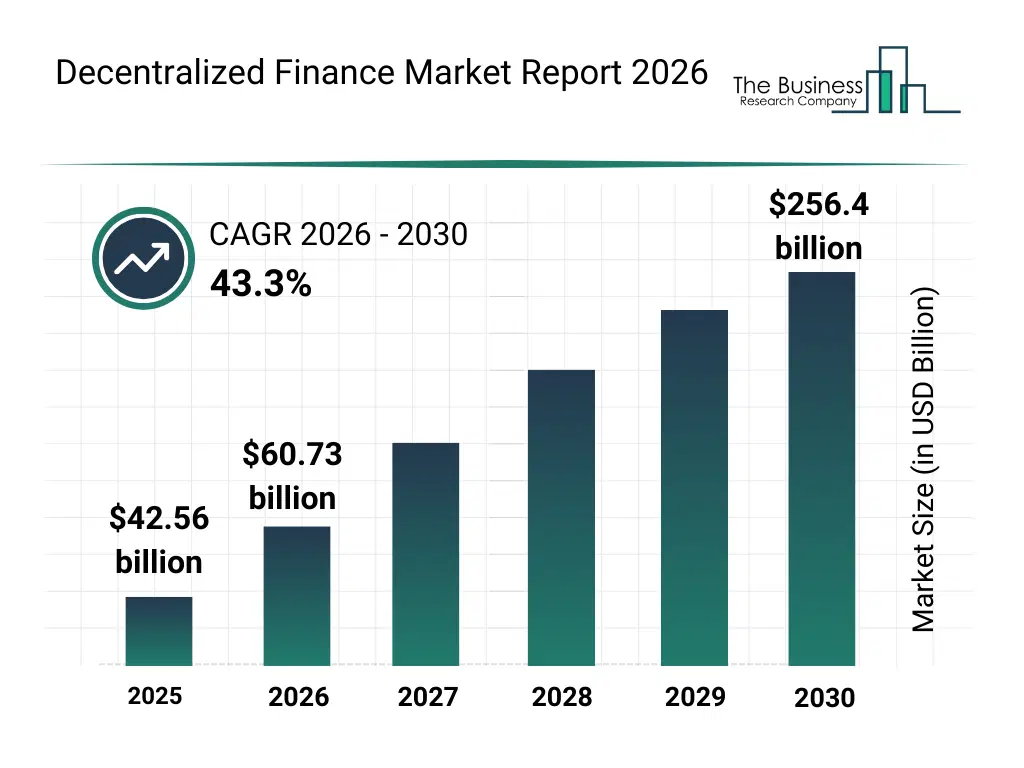
What Is The Decentralized Finance Market Size and Share 2026?
The decentralized finance market size has grown exponentially in recent years. It will grow from $42.56 billion in 2025 to $60.73 billion in 2026 at a compound annual growth rate (CAGR) of 42.7%. The growth in the historic period can be attributed to growth of blockchain technology adoption, early development of decentralized applications, rising interest in peer-to-peer finance, expansion of crypto asset usage, evolution of smart contract standards.What Is The Decentralized Finance Market Growth Forecast?
The decentralized finance market size is expected to see exponential growth in the next few years. It will grow to $256.4 billion in 2030 at a compound annual growth rate (CAGR) of 43.3%. The growth in the forecast period can be attributed to increasing institutional participation in defi ecosystems, rising focus on regulatory-compliant defi frameworks, expansion of scalable layer 2 solutions, growing demand for decentralized identity and compliance tools, increasing innovation in asset tokenization. Major trends in the forecast period include increasing adoption of decentralized lending platforms, rising use of smart contract-based financial services, growing expansion of decentralized exchanges, enhanced focus on liquidity and yield optimization, expansion of cross-chain defi solutions.
Global Decentralized Finance Market Segmentation
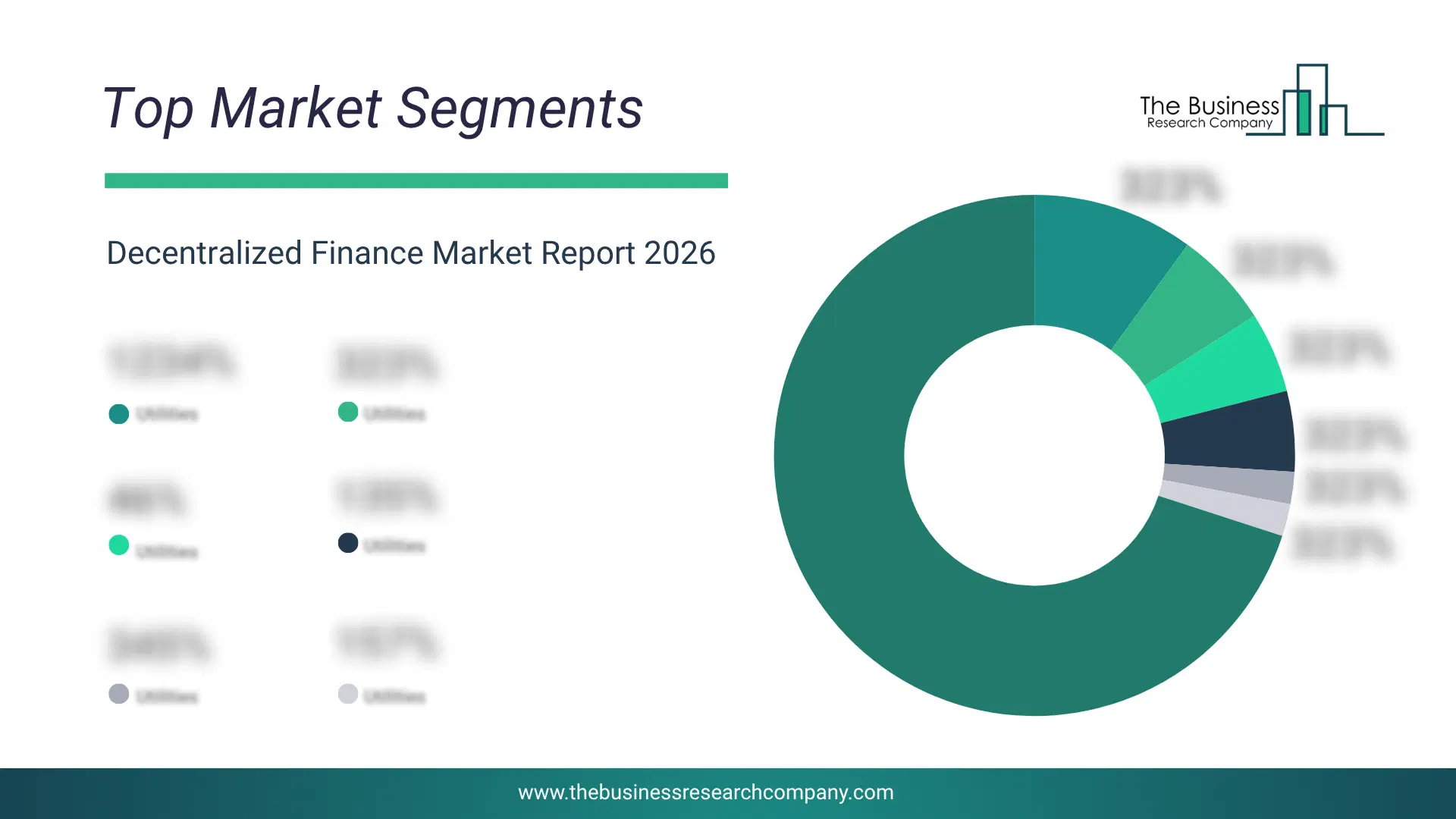
1) By Component: Blockchain Technology, Decentralized Applications (dApps), Smart Contracts 2) By Protocol Type: Lending & Borrowing Protocols, Decentralized Exchanges (DEXs), Stablecoin Protocols, Yield Farming & Liquidity Mining Platforms, Insurance Protocols 3) By Application: Assets Tokenization, Compliance And Identity, Marketplaces And Liquidity, Payments, Data And Analytics, Decentralized Exchanges, Prediction Industry, Stablecoins, Other Applications Subsegments: 1) By Blockchain Technology: Public Blockchains, Private Blockchains, Hybrid Blockchains, Layer 1 And Layer 2 Solutions 2) By Decentralized Applications: DeFi Lending Platforms, Decentralized Exchanges (DEXs), Yield Farming Platforms, Stablecoins, Asset Management dApps 3) By Smart Contracts: Token Standards, Automated Market Makers (AMMs), Governance Contracts, Escrow Contracts, Multi-signature Wallets The top segments in the decentralized finance market will be: • Blockchain Technology will reach $98.86 Billion by 2030. • Decentralized Applications (dApps) will reach $89.84 Billion by 2030. • Smart Contracts will reach $50.21 Billion by 2030.What Is The Driver Of The Decentralized Finance Market?
The increase in geopolitical tensions is expected to propel the growth of decentralized finance (DeFi) market going forward. Geopolitical tensions refer to political conflicts, rivalries, or disputes among nations or regions, often related to issues such as territory, resources, power, or ideology. Geopolitical tensions contribute to a lack of trust in traditional financial systems, prompting individuals to seek alternative solutions in the decentralized and borderless nature of DeFi platforms. Capital flight, currency depreciation, and hyperinflation in certain regions drive users to decentralize cryptocurrencies and stablecoins offered by DeFi. For instance, in August 2024, according to the World Economic Forum, a Switzerland-based international organization, geopolitical tensions are viewed as the primary risk to global economic growth in the coming year by 83% of respondents, surpassing concerns about high inflation and monetary tightening, which were cited by 73%. Looking ahead to the next decade, 86% of participants identify increasing geopolitical fragmentation and protectionism as the most significant long-term threat. Therefore, the increase in geopolitical tensions is driving the growth of the derivatives and commodities brokerage market.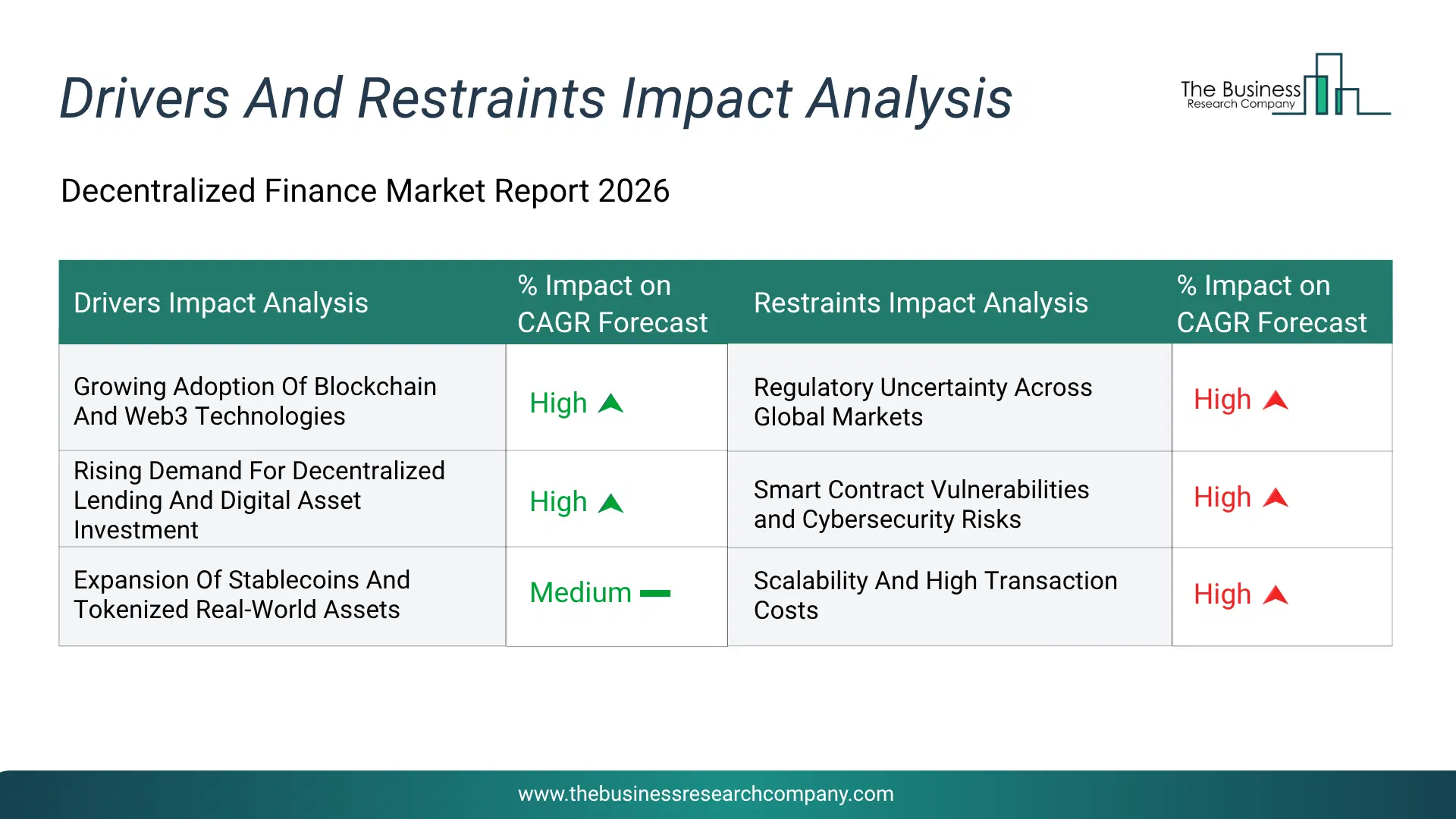
Infographic Chart Showing Key Market Drivers Analysis And Restraints For Decentralized Finance Market
The chart presents an impact analysis of key drivers and restraints, quantifying their relative influence on the market's growth rate and helping assess the balance between growth enablers and limiting factors. This chart offers a high-level perspective; the full report contains more detailed insights.
How Will The Drivers Impact Growth In The Global Decentralized Finance Market?
• Growing Adoption Of Blockchain And Web3 Technologies (High) – During the forecast period, the growing adoption of blockchain and web3 technologies is expected to become a key growth driver for the decentralized finance market by 2030. Enterprises and developers are increasingly deploying decentralized infrastructure to enable transparent, secure, and programmable financial services. Continuous advancements in Layer-2 scaling solutions, cross-chain interoperability, and blockchain performance are improving transaction efficiency while reducing network congestion. These innovations are making decentralized financial platforms more scalable and accessible for a broader range of users and applications. • Rising Demand For Decentralized Lending And Digital Asset Investment (High) – During the forecast period, the rising demand for decentralized lending and digital asset investment is expected to emerge as a major factor driving the expansion of the decentralized finance market by 2030. Investors and businesses are increasingly utilizing decentralized protocols to access lending, borrowing, staking, and digital asset investment opportunities without depending on traditional financial intermediaries. The growing availability of innovative financial products and broader participation from institutional investors are strengthening liquidity across decentralized ecosystems. Expanding access to borderless financial services is further supporting long-term market development. • Expansion Of Stablecoins And Tokenized Real-World Assets (Medium) – During the forecast period, the expansion of stablecoins and tokenized real-world assets is expected to act as a key growth catalyst for the decentralized finance market by 2030. Stablecoins are increasingly supporting efficient digital payments and settlements, while tokenization is enabling broader access to traditionally illiquid assets through fractional ownership models. Financial institutions and asset managers are accelerating the adoption of blockchain-based issuance and settlement frameworks to improve liquidity and operational efficiency. The growing commercialization of tokenized financial products is expected to strengthen decentralized financial ecosystems worldwide.How Will The Restraints Impact Growth In The Global Decentralized Finance Market?
• Regulatory Uncertainty Across Global Markets (High) – During the forecast period, the decentralized nature of DeFi presents significant regulatory challenges related to compliance, taxation, consumer protection, and anti-money laundering requirements. Regulations differ considerably across countries, creating uncertainty for developers, investors, and service providers. Frequent policy changes may delay product launches and limit cross-border operations. Compliance costs are increasing as governments introduce new digital asset regulations. These factors can slow market expansion and institutional participation. • Smart Contract Vulnerabilities and Cybersecurity Risks (High) – During the forecast period, the DeFi platforms rely heavily on smart contracts, which may contain coding errors or security vulnerabilities. Exploitation of these weaknesses can result in financial losses through hacks, protocol exploits, or malicious attacks. As DeFi ecosystems continue to grow, they remain attractive targets for cybercriminals. Security audits and risk management practices are improving but cannot eliminate all technical risks. Concerns regarding platform security continue to affect user confidence and enterprise adoption. • Scalability And High Transaction Costs (Medium) – During the forecast period, scalability and high transaction costs can act as a significant restraint on the decentralized finance (DeFi) market because many blockchain networks experience congestion during periods of high transaction activity. Increased network usage can lead to slower transaction processing times and higher gas fees, making DeFi applications less cost-effective for users conducting frequent or low-value transactions. These limitations can reduce the efficiency of decentralized exchanges, lending platforms, and payment applications while negatively affecting the overall user experience. Although Layer-2 scaling solutions and next-generation blockchain protocols are improving network performance, widespread implementation remains ongoing. Consequently, scalability challenges and high transaction costs can discourage user participation, limit mainstream adoption, and restrain the growth of the decentralized finance market.Key Players In The Global Decentralized Finance Market
Major companies operating in the decentralized finance market are MakerDAO, Aave, Compound, Uniswap, SushiSwap, Curve Finance, Balancer, Bancor, Synthetix, Yearn Finance, PancakeSwap, dYdX, GMX, Lido, Rocket Pool, Convex Finance, Frax Finance, Liquity, Oasis, Instadapp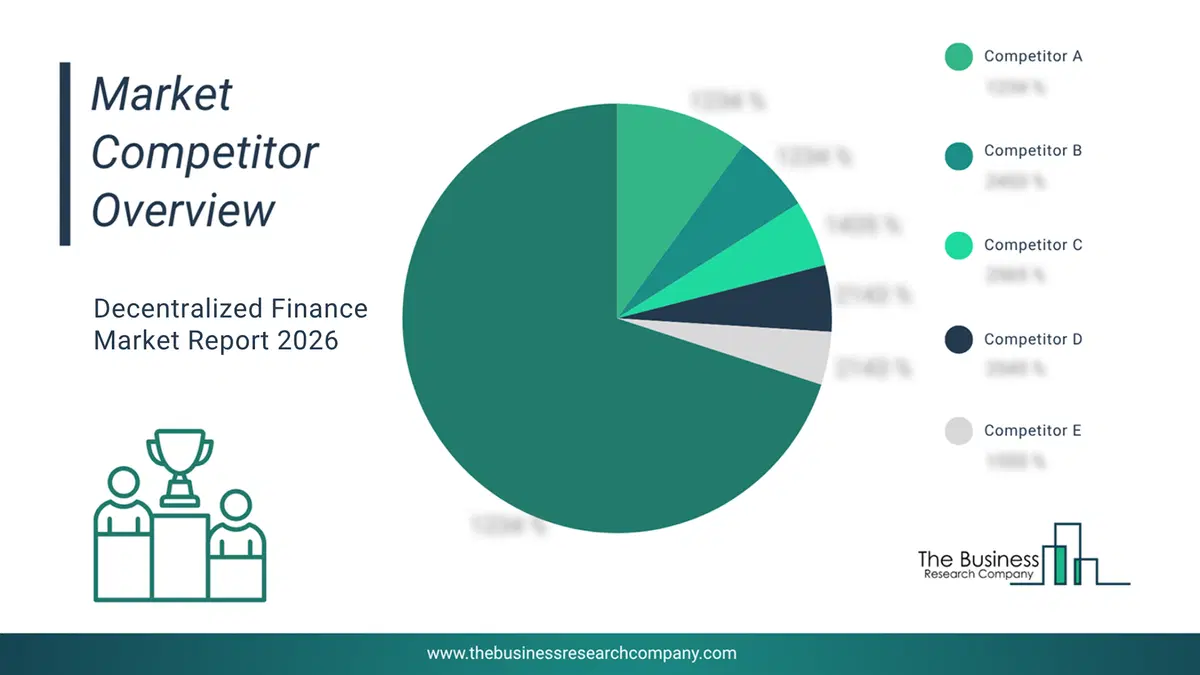
This chart is for illustrative purposes; the full report includes a detailed competitor analysis and comprehensive overview of the top 10 companies in the market.
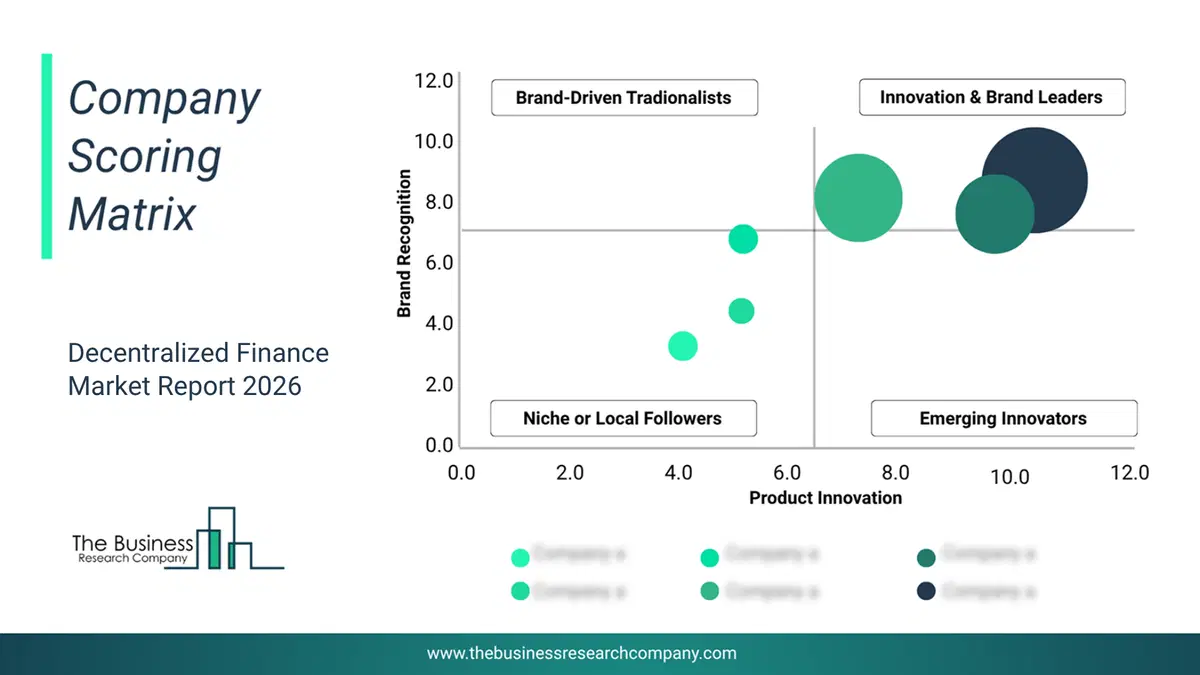
This chart maps companies by product innovation and brand strength, with bubble size indicating relative revenue, helping identify market leaders, challengers, and niche players. This is an illustrative chart; the full report provides a complete and accurate competitive analysis.
Global Decentralized Finance Market Trends and Insights
Major companies operating in the decentralized finance (DeFi) market are focusing on developing innovative products such as platforms with advanced asset swapping features to enhance trading efficiency and expand cryptocurrency access. Platforms with advanced asset swapping features are designed to facilitate seamless trading and swapping of digital assets across a wide range of cryptocurrencies, helping users execute transactions quickly, efficiently, and with greater flexibility. For instance, in January 2023, Bitget, a Seychelles-based cryptocurrency exchange platform, introduced a new feature called MegaSwap on its DeFi platform. MegaSwap is designed to facilitate the trading and swapping of digital assets for over 10,000 cryptocurrencies on the decentralized finance (DeFi) platform. The introduction of MegaSwap by Bitget offers users a convenient and efficient way to trade and swap digital assets on its DeFi platform, giving them access to a wide range of cryptocurrencies for their trading needs.What Are Latest Mergers And Acquisitions In The Decentralized Finance Market?
In February 2023, Lukka Tech, a US-based institutional crypto asset data, and data management provider acquired Venato for an undisclosed amount. With this acquisition, Lukka has access to an intelligent framework to tag and identify DeFi transactions with innovative profit and loss tracking, and aggregate features for blockchain transactions and can provide further clarity to its DeFi data sets, enabling more advanced risk processes supporting its current data collection and reporting capabilities. Venato is a US-based company that provides services including web3 development, and decentralized finance development, enabling the business to track profit and loss and to search and aggregate blockchain transactions.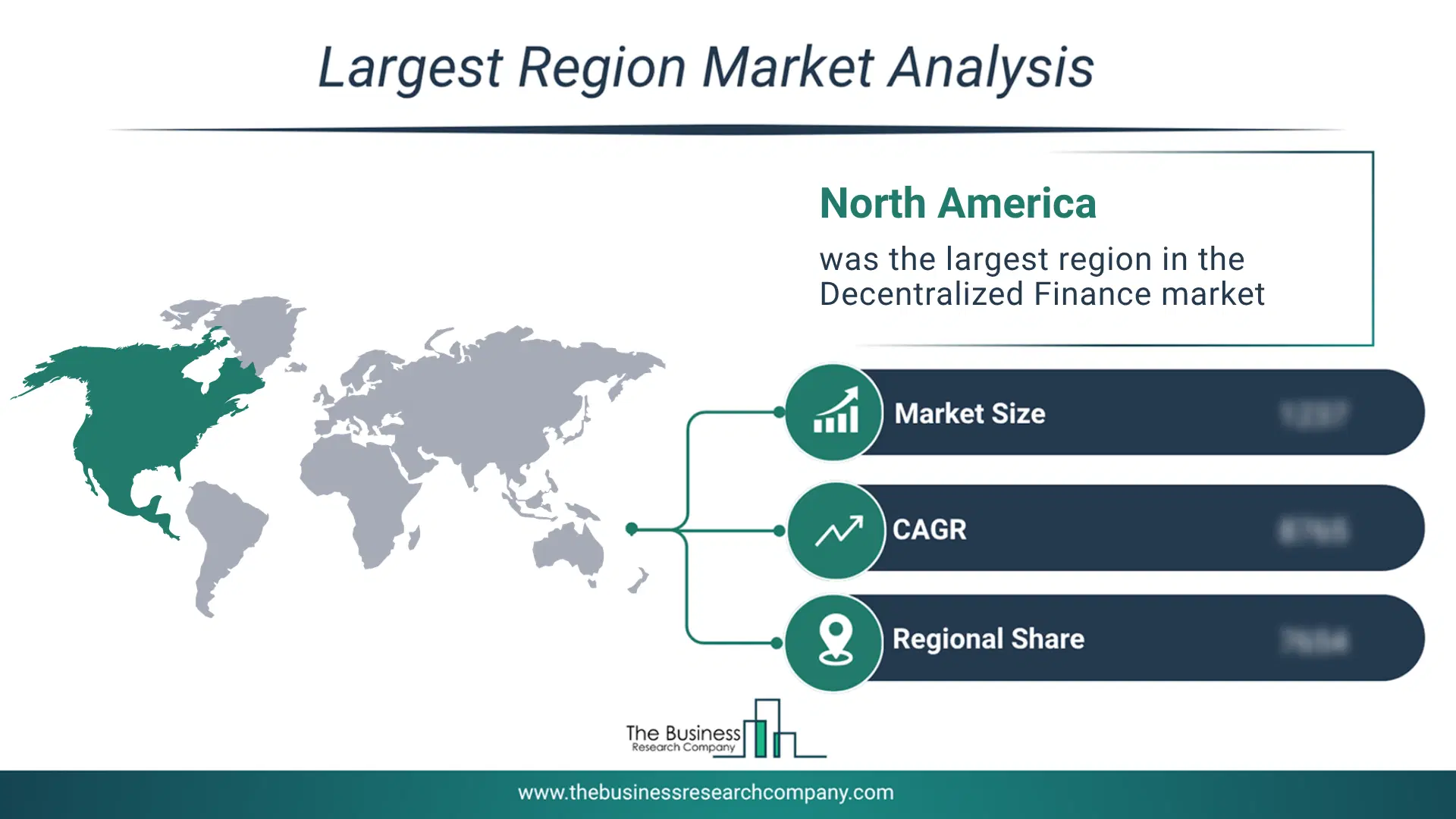
Regional Outlook
North America was the largest region in the decentralized finance market in 2025. Asia-Pacific is expected to be the fastest-growing region in the global decentralized finance market during the forecast period. The regions covered in this market report are Asia-Pacific, South East Asia, Western Europe, Eastern Europe, North America, South America, Middle East, Africa. The countries covered in this market report are Australia, Brazil, China, France, Germany, India, Indonesia, Japan, Taiwan, Russia, South Korea, UK, USA, Canada, Italy, Spain.What Defines the Decentralized Finance Market?
The decentralized finance market includes revenues earned by entities by decentralized lending and borrowing, yield farming and liquidity mining, decentralized insurance, decentralized identity, decentralized savings and investments, decentralized payment systems, and decentralized asset management. The market value includes the value of related goods sold by the service provider or included within the service offering. Only goods and services traded between entities or sold to end consumers are included.How is Market Value Defined and Measured?
The market value is defined as the revenues that enterprises gain from the sale of goods and/or services within the specified market and geography through sales, grants, or donations in terms of the currency (in USD unless otherwise specified). The revenues for a specified geography are consumption values that are revenues generated by organizations in the specified geography within the market, irrespective of where they are produced. It does not include revenues from resales along the supply chain, either further along the supply chain or as part of other products.
This chart presents market attractiveness based on a quantitative evaluation of growth, competition, strategic alignment, and risk, offering a clear view of opportunity areas for decision-making. This chart is for illustrative purposes; the full report contains the complete analysis.

This chart highlights the Total Addressable Market (TAM) by estimating the maximum revenue opportunity using an assumption-driven approach, supporting strategic planning and opportunity sizing across markets. The chart is illustrative; the full report provides a more comprehensive analysis.
What Key Data and Analysis Are Included in the Decentralized Finance Market Report 2026?
The decentralized finance market research report is one of a series of new reports from The Business Research Company that provides market statistics, including Market Report 2026?global market size, regional shares, competitors with the market share, detailed market segments, market trends and opportunities, and any further data you may need to thrive in the decentralized finance Market Report 2026? The market research report delivers a complete perspective of everything you need, with an in-depth analysis of the current and future state of the Market Report 2026?Decentralized Finance Market Report Forecast Analysis
| Report Attribute | Details |
|---|---|
| Market Size Value In 2026 | $60.73 billion |
| Revenue Forecast In 2030 | $256.4 billion |
| Growth Rate | CAGR of 42.7% from 2026 to 2030 |
| Base Year For Estimation | 2025 |
| Actual Estimates/Historical Data | 2020-2025 |
| Forecast Period | 2026 - 2030 |
| Market Representation | Revenue in USD Billion and CAGR from 2026 to 2030 |
| Segments Covered | Component, Protocol Type, Application |
| Regional Scope | Asia-Pacific, Western Europe, Eastern Europe, North America, South America, Middle East, Africa |
| Country Scope | The countries covered in the report are Australia, Brazil, China, France, Germany, India, ... |
| Key Companies Profiled | MakerDAO, Aave, Compound, Uniswap, SushiSwap, Curve Finance, Balancer, Bancor, Synthetix, Yearn Finance, PancakeSwap, dYdX, GMX, Lido, Rocket Pool, Convex Finance, Frax Finance, Liquity, Oasis, Instadapp |
| Customization Scope | Request for Customization |
| Pricing And Purchase Options | Explore Purchase Options |