
Decentralized Identity Market Report 2026
Global Outlook – By Type (Biometrics, Non-Biometrics), By Enterprise Size (Large Enterprises, Small And Medium Enterprises), By Vertical (Banking, Financial Services, And Insurance (BFSI), Government, Healthcare And Life Sciences, Telecom And Information Technology (IT), Retail And E-commerce, Transport And Logistics, Real Estate, Media And Entertainment, Travel And Hospitality, Other Verticals) – Market Size, Trends, Strategies, and Forecast to 2030
Decentralized Identity Market Overview
• Decentralized Identity market size has reached to $2.56 billion in 2025 • Expected to grow to $48.31 billion in 2030 at a compound annual growth rate (CAGR) of 79.8% • Growth Driver: Rise In Thefts And Fraud Driving The Growth Of The Market Due To Growing Need For Secure And User-Controlled Identity Solutions • Market Trend: Leading Companies Drive Innovation In Decentralized Identity To Boost User Privacy And Security • North America was the largest region in 2025 and Asia-Pacific is the fastest growing region.Market Gains By 2030 – Top Opportunities By Segment
Market Gain identifies the most promising market opportunities by highlighting the segments or products expected to generate the highest incremental revenue growth over the next five years.
What Is Covered Under Decentralized Identity Market?
Decentralized identity refers to a digital identity management model where individuals or entities control their own identity information using distributed ledger technologies such as blockchain. It utilizes blockchain technology to give individuals full control over their personal data by enabling them to create, manage, and share their digital identities securely without relying on a central authority. The main types of decentralized identity are biometrics and non-biometrics. Biometrics refers to the measurement and analysis of unique physical or behavioral characteristics of a person, such as fingerprints, face, or voice, to verify their identity. These are used for various enterprises, including large enterprises and small and medium enterprises. The various verticals include banking, financial services, and insurance (BFSI), government, healthcare and life sciences, telecom and information technology (IT), retail and e-commerce, transport and logistics, real estate, media and entertainment, travel and hospitality and others and are used by various end users such as individuals and enterprises.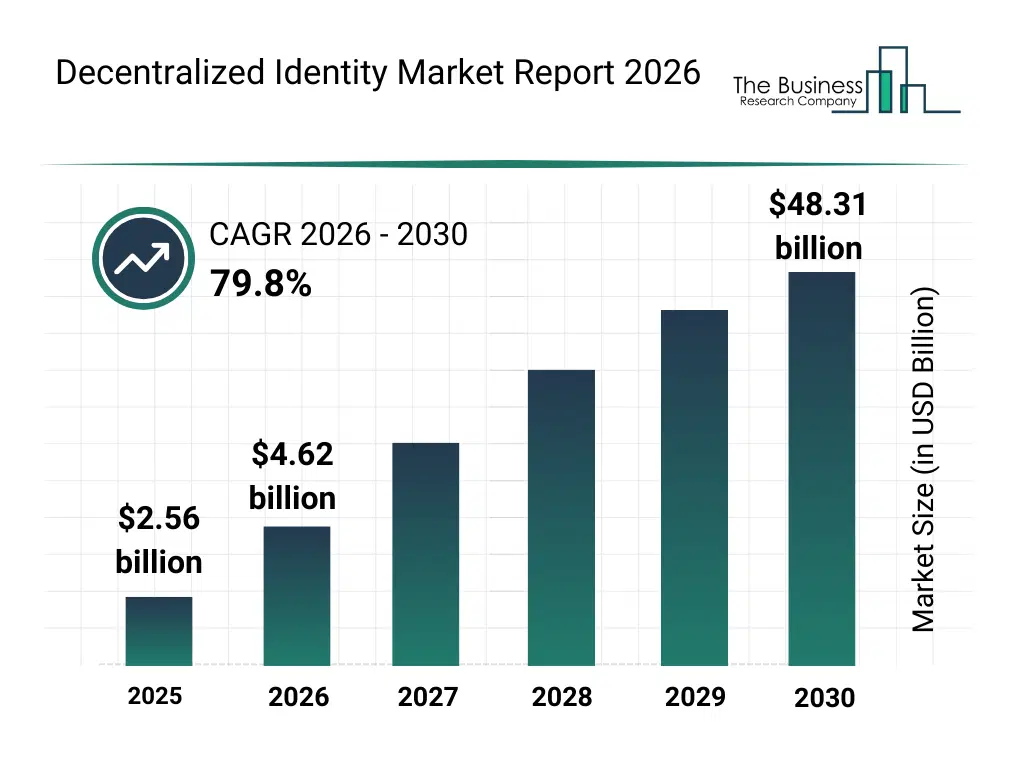
What Is The Decentralized Identity Market Size and Share 2026?
The decentralized identity market size has grown exponentially in recent years. It will grow from $2.56 billion in 2025 to $4.62 billion in 2026 at a compound annual growth rate (CAGR) of 80.2%. The growth in the historic period can be attributed to increasing digital transformation across industries, rising incidents of identity fraud, early adoption of blockchain technologies, growth of online authentication needs, expansion of digital service ecosystems.What Is The Decentralized Identity Market Growth Forecast?
The decentralized identity market size is expected to see exponential growth in the next few years. It will grow to $48.31 billion in 2030 at a compound annual growth rate (CAGR) of 79.8%. The growth in the forecast period can be attributed to increasing regulatory support for decentralized identity frameworks, rising demand for privacy-preserving authentication, expansion of digital identity use cases across sectors, growing integration with digital wallets, increasing enterprise adoption of zero-trust security models. Major trends in the forecast period include increasing adoption of blockchain-based identity platforms, rising use of verifiable credentials, growing integration of biometrics in digital identity, expansion of self-sovereign identity models, enhanced focus on data privacy and user control.
Global Decentralized Identity Market Segmentation
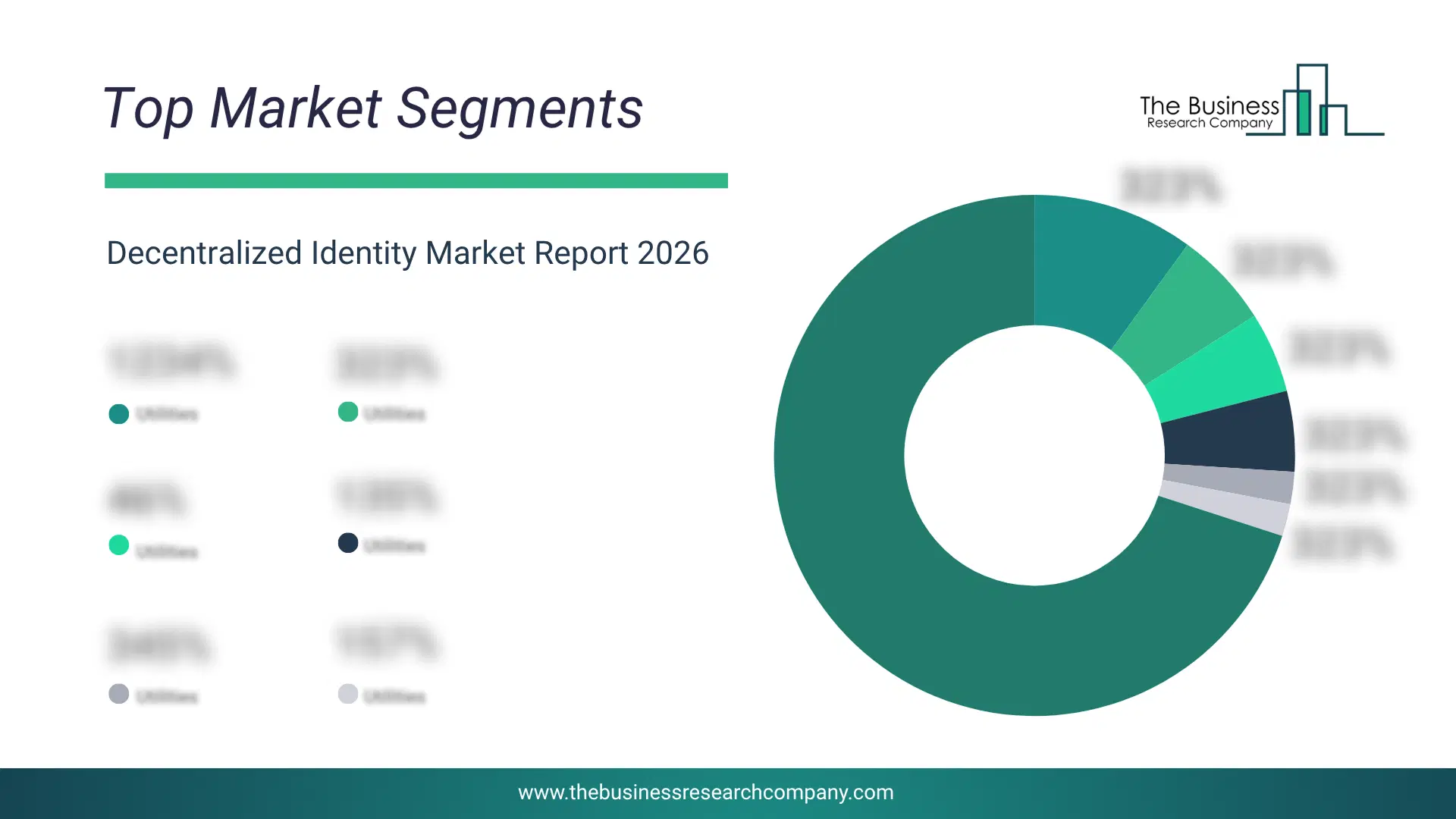
1) By Type: Biometrics, Non-Biometrics 2) By Enterprise Size: Large Enterprises, Small And Medium Enterprises 3) By Vertical: Banking, Financial Services, And Insurance (BFSI), Government, Healthcare And Life Sciences, Telecom And Information Technology (IT), Retail And E-commerce, Transport And Logistics, Real Estate, Media And Entertainment, Travel And Hospitality, Other Verticals Subsegments: 1) By Biometrics: Fingerprint Recognition, Facial Recognition, Iris Recognition, Voice Recognition, Palm Vein Recognition 2) By Non-Biometrics: Smart Cards, Decentralized Identifiers (DIDs), Verifiable Credentials, Digital Wallets, Blockchain-based Identity Platforms The top segments in the decentralized identity market will be: • Biometrics will reach $24.22 Billion by 2030. • Non-Biometrics will reach $6.99 Billion by 2030.What Is The Driver Of The Decentralized Identity Market?
The increasing thefts and fraudulent incidents are expected to drive the growth of the decentralized identity market. Thefts and fraudulent incidents refer to events or cases involving stealing (thefts) and deceitful or dishonest acts (fraud) intended to gain something unlawfully, such as money or property. Thefts and fraudulent incidents are rising primarily due to increasing digital connectivity, which provides more opportunities for cybercriminals to exploit personal and financial data. Decentralized identity helps prevent theft and fraudulent incidents by giving individuals control over their personal data, reducing reliance on vulnerable centralized databases.For instance, in March 2025, according to the Federal Trade Commission, a US-based government agency, consumers reported losing more than $12.5 billion to fraud in 2024, which represents a 25% increase over the prior year. Therefore, the increasing thefts and fraudulent incidents are driving the growth of the decentralized identity industry.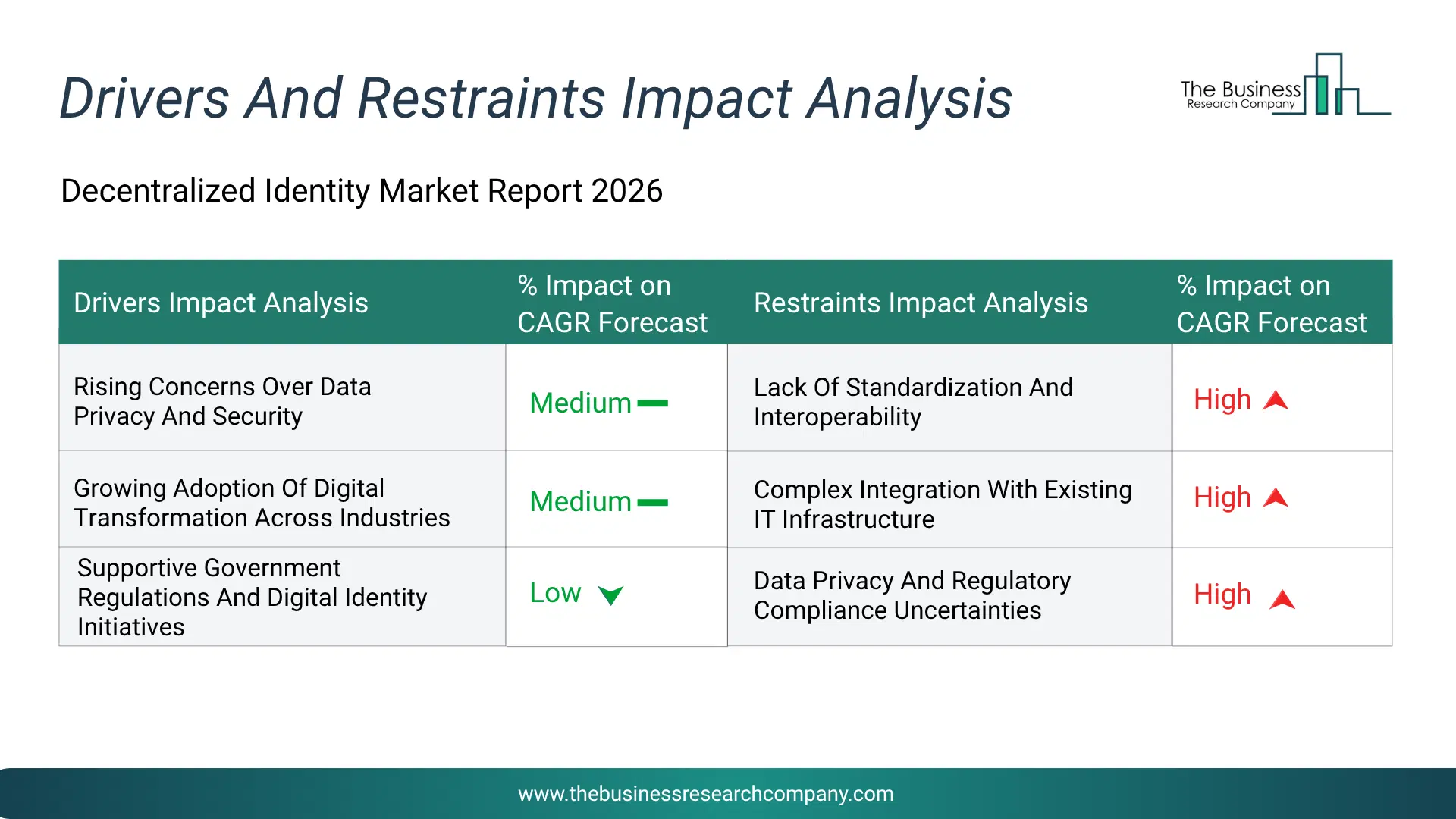
Infographic Chart Showing Key Market Drivers Analysis And Restraints For Decentralized Identity Market
The chart presents an impact analysis of key drivers and restraints, quantifying their relative influence on the market's growth rate and helping assess the balance between growth enablers and limiting factors. This chart offers a high-level perspective; the full report contains more detailed insights.
How Will The Drivers Impact Growth In The Global Decentralized Identity Market?
• Rising Concerns Over Data Privacy And Security (Medium) – During the forecast period, rising concerns over data privacy and security are expected to become a key growth driver for the decentralized identity market by 2030. Organizations and consumers are increasingly moving away from centralized identity systems due to the growing frequency of cyberattacks, identity theft, and unauthorized data access. Decentralized identity enables individuals to securely manage and selectively share personal information while reducing dependence on centralized databases. Enterprises are also adopting decentralized identity frameworks to strengthen trust, improve authentication processes, and safeguard sensitive information across digital ecosystems. This shift toward privacy-centric identity management is reinforcing steady market expansion. • Growing Adoption Of Digital Transformation Across Industries (Medium) – During the forecast period, the growing adoption of digital transformation across industries is expected to emerge as a major factor driving the expansion of the decentralized identity market by 2030. Organizations are increasingly digitizing customer engagement, employee access, and business operations, creating greater demand for trusted digital identity solutions. Decentralized identity platforms enable seamless onboarding, secure credential verification, and efficient access management across cloud-based environments. The expanding use of digital services across banking, healthcare, retail, and government is further accelerating enterprise deployment of decentralized identity technologies. • Supportive Government Regulations And Digital Identity Initiatives (Low) – During the forecast period, supportive government regulations and digital identity initiatives are expected to act as a key growth catalyst for the decentralized identity market by 2030. Governments are introducing digital identity programs and regulatory frameworks that promote secure identity verification, trusted electronic credentials, and privacy-focused data management. Regulatory initiatives encouraging interoperability and secure digital interactions are accelerating enterprise adoption of decentralized identity solutions. Public sector investments in digital identity infrastructure are also fostering broader implementation across financial services, healthcare, education, and citizen services.How Will The Restraints Impact Growth In The Global Decentralized Identity Market?
• Lack Of Standardization And Interoperability (Medium) – During the forecast period, the lack of standardization and interoperability acts as a major challenge for the decentralized identity market because different platforms and identity frameworks often operate using separate protocols and technical architectures. This limits seamless communication and credential sharing between organizations, applications, and regions. Enterprises face difficulties integrating decentralized identity systems with existing digital infrastructure and cross-platform ecosystems. The absence of universally accepted standards also slows large-scale deployment and reduces user trust in interoperability across networks. As a result, organizations may delay adoption due to concerns regarding compatibility, scalability, and long-term implementation efficiency. • Complex Integration With Existing IT Infrastructure (Medium) – During the forecast period, the complex integration with existing IT infrastructure acts as a major restraint for the decentralized identity market because many organizations still rely on legacy identity management systems that are not designed to support decentralized frameworks. Integrating blockchain-based identity platforms with traditional databases, authentication tools, and enterprise applications often requires significant customization and technical expertise. Businesses may also face compatibility issues between decentralized protocols and existing cybersecurity architectures. The migration process can increase operational complexity, implementation time, and deployment costs for enterprises. These challenges discourage small and medium-sized organizations from adopting decentralized identity solutions at a large scale. • Data Privacy And Regulatory Compliance Uncertainties (Low) – During the forecast period, the data privacy and regulatory compliance uncertainties are expected to restrain the growth of the decentralized identity market. Decentralized identity solutions must comply with evolving data protection regulations while enabling users to maintain control over their digital identities across multiple jurisdictions. Differences in regional privacy laws, identity verification requirements, and digital governance frameworks create challenges for organizations deploying decentralized identity platforms at scale. Enterprises must ensure that identity credentials, authentication processes, and personal data management align with regulations such as GDPR and other national data protection laws without compromising the decentralized architecture. In addition, the absence of consistent legal recognition for decentralized digital identities in many countries creates uncertainty regarding regulatory acceptance and cross-border interoperability. Organizations are often required to invest in additional compliance mechanisms, governance frameworks, and legal assessments, increasing implementation complexity and operational costs. These regulatory uncertainties can delay enterprise adoption and limit the widespread commercialization of decentralized identity solutions. Consequently, data privacy and regulatory compliance uncertainties remain a significant restraint on the growth of the decentralized identity market.Key Players In The Global Decentralized Identity Market
Major companies operating in the decentralized identity market are Microsoft Corporation, Accenture plc, Wipro Limited, Dragonchain Inc., Persistent Systems Limited, Avast Software s.r.o., Gataca AG, Ping Identity Corporation, Affinity Inc., SoluLab Inc., 1Kosmos Inc., Civic Technologies Inc., Serto Inc., Validated ID S.L., Nuggets Labs Inc., Finema Co. Ltd., Datarella GmbH, SecureKey Technologies, IDEX Biometrics ASA, KILT Protocol GmbH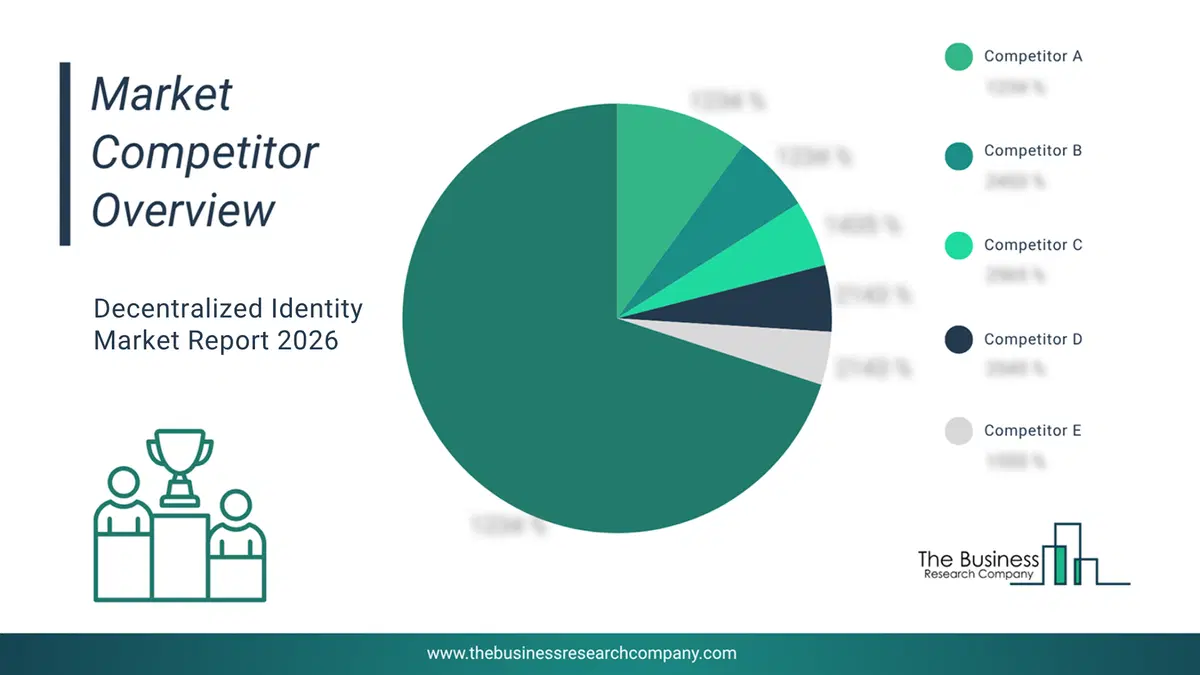
This chart is for illustrative purposes; the full report includes a detailed competitor analysis and comprehensive overview of the top 10 companies in the market.
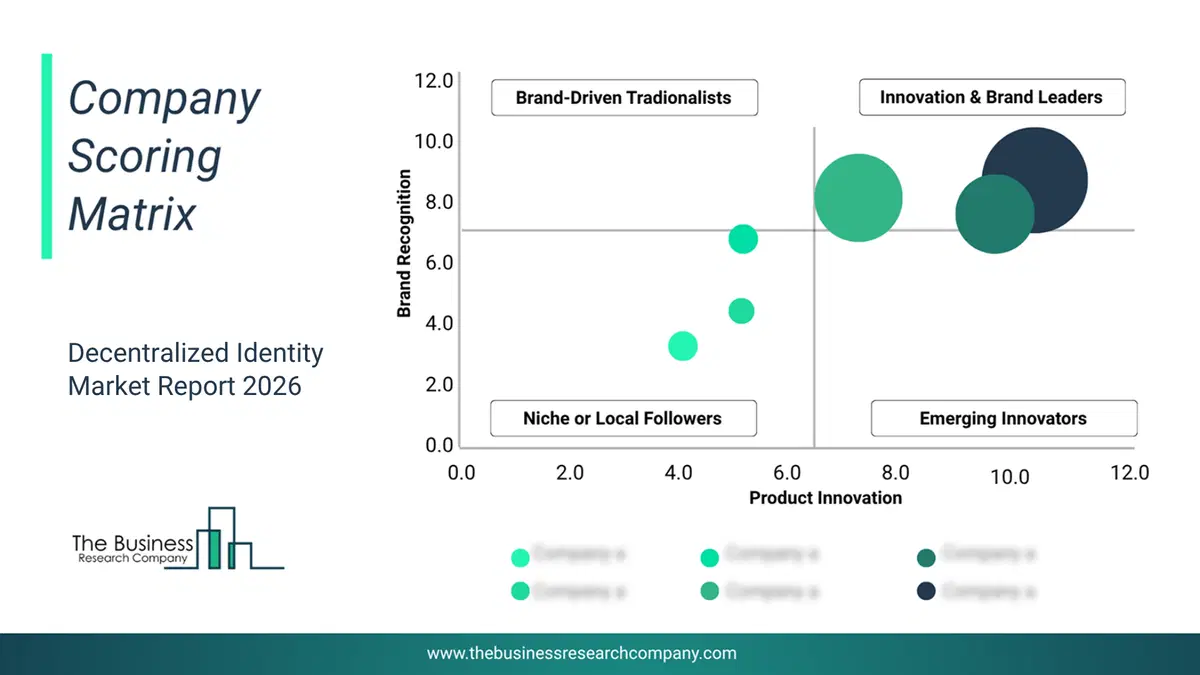
This chart maps companies by product innovation and brand strength, with bubble size indicating relative revenue, helping identify market leaders, challengers, and niche players. This is an illustrative chart; the full report provides a complete and accurate competitive analysis.
Global Decentralized Identity Market Trends and Insights
Major companies operating in the decentralized identity market are focusing on developing innovative solutions, such as decentralized identity management platforms, to enhance user control, security, and privacy, enabling individuals to manage their digital identities independently while reducing reliance on centralized systems. Decentralized identity management platforms are digital systems that enable individuals and organizations to create, manage, and verify identities without relying on a central authority. For instance, in March 2023, Ping Identity Corporation, a US-based software company, launched a new Decentralized Identity Management Solution to provide users greater control over their digital identities and enhance data privacy. This solution empowers users to verify their identities using digital credentials stored on their personal devices, without the need for a centralized identity provider. The launch aims to improve user privacy, reduce identity fraud, and enable more seamless and secure digital interactions across industries such as finance, healthcare, and government services.What Are Latest Mergers And Acquisitions In The Decentralized Identity Market?
In November 2024, Aware Inc a US-based provider of biometric identity and authentication solutions, partnered with Finema, to promote biometrics-based digital identity solutions across the Asia-Pacific region. Through this collaboration, the companies aim to integrate multiple biometric modalities including face, voice, and fingerprint recognition with decentralized digital identity platforms to enable secure, fraud-resistant authentication for enterprises, financial institutions, and government agencies. Finema Co.Ltd. a Thailand-based digital identity technology company.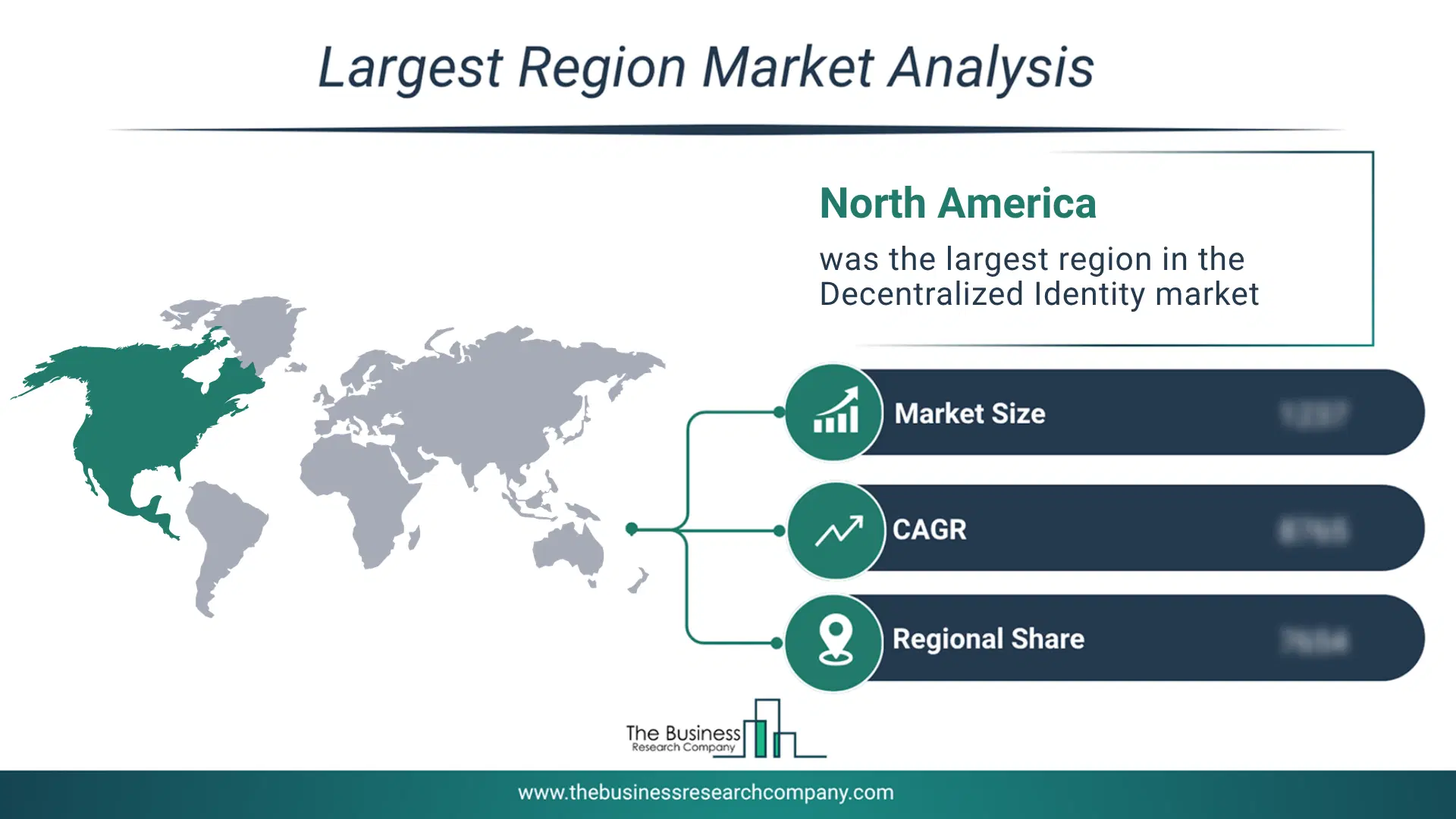
Regional Outlook
North America was the largest region in the decentralized identity market in 2025. Asia-Pacific is expected to be the fastest-growing region in the forecast period. The regions covered in this market report are Asia-Pacific, South East Asia, Western Europe, Eastern Europe, North America, South America, Middle East, Africa. The countries covered in this market report are Australia, Brazil, China, France, Germany, India, Indonesia, Japan, Taiwan, Russia, South Korea, UK, USA, Canada, Italy, Spain.What Defines the Decentralized Identity Market?
The decentralized identity market consists of revenues earned by entities by providing services such as identity verification, secure credential management, blockchain-based identity solutions, user authentication, and data privacy management. The market value includes the value of related goods sold by the service provider or included within the service offering. The decentralized identity market also includes sales of digital identity wallets, biometric authentication devices, decentralized identifiers (DIDs), identity management software, and secure access control solutions. Values in this market are ‘factory gate’ values, that is, the value of goods sold by the manufacturers or creators of the goods, whether to other entities (including downstream manufacturers, wholesalers, distributors, and retailers) or directly to end customers. The value of goods in this market includes related services sold by the creators of the goods.How is Market Value Defined and Measured?
The market value is defined as the revenues that enterprises gain from the sale of goods and/or services within the specified market and geography through sales, grants, or donations in terms of the currency (in USD unless otherwise specified). The revenues for a specified geography are consumption values that are revenues generated by organizations in the specified geography within the market, irrespective of where they are produced. It does not include revenues from resales along the supply chain, either further along the supply chain or as part of other products.
This chart presents market attractiveness based on a quantitative evaluation of growth, competition, strategic alignment, and risk, offering a clear view of opportunity areas for decision-making. This chart is for illustrative purposes; the full report contains the complete analysis.

This chart highlights the Total Addressable Market (TAM) by estimating the maximum revenue opportunity using an assumption-driven approach, supporting strategic planning and opportunity sizing across markets. The chart is illustrative; the full report provides a more comprehensive analysis.
What Key Data and Analysis Are Included in the Decentralized Identity Market Report 2026?
The decentralized identity market research report is one of a series of new reports from The Business Research Company that provides market statistics, including Market Report 2026?global market size, regional shares, competitors with the market share, detailed market segments, market trends and opportunities, and any further data you may need to thrive in the decentralized identity Market Report 2026? The market research report delivers a complete perspective of everything you need, with an in-depth analysis of the current and future state of the Market Report 2026?Decentralized Identity Market Report Forecast Analysis
| Report Attribute | Details |
|---|---|
| Market Size Value In 2026 | $4.62 billion |
| Revenue Forecast In 2030 | $48.31 billion |
| Growth Rate | CAGR of 80.2% from 2026 to 2030 |
| Base Year For Estimation | 2025 |
| Actual Estimates/Historical Data | 2020-2025 |
| Forecast Period | 2026 - 2030 |
| Market Representation | Revenue in USD Billion and CAGR from 2026 to 2030 |
| Segments Covered | Type, Enterprise Size, Vertical |
| Regional Scope | Asia-Pacific, Western Europe, Eastern Europe, North America, South America, Middle East, Africa |
| Country Scope | The countries covered in the report are Australia, Brazil, China, France, Germany, India, Indonesia, Japan, Taiwan, Russia, South Korea, UK, USA, Canada, Italy, Spain. |
| Key Companies Profiled | Microsoft Corporation, Accenture plc, Wipro Limited, Dragonchain Inc., Persistent Systems Limited, Avast Software s.r.o., Gataca AG, Ping Identity Corporation, Affinity Inc., SoluLab Inc., 1Kosmos Inc., Civic Technologies Inc., Serto Inc., Validated ID S.L., Nuggets Labs Inc., Finema Co. Ltd., Datarella GmbH, SecureKey Technologies, IDEX Biometrics ASA, KILT Protocol GmbH |
| Customization Scope | Request for Customization |
| Pricing And Purchase Options | Explore Purchase Options |