

Defibrillators Market Report 2026
Global Outlook – By Product Type (Implantable Cardioverter Defibrillators, External Defibrillators, Wearable Cardioverter Defibrillators, Automated External Defibrillators), By Technology (Biphasic Waveform Technology, Monophasic Waveform Technology, Connected Or Smart Internet Of Things Systems), By Distribution Channel (Direct Sales, Retail And Electronic Commerce), By Application (Ventricular Tachycardia And Ventricular Fibrillation, Sudden Cardiac Arrest, Cardiac Resynchronization Therapy, Atrial Fibrillation, Bradycardia), By End User (Hospitals And Clinics, Pre Hospital Emergency Care, Public Access Market, Home Care Settings, Alternative Care Settings, Pre Hospital Care Systems) – Market Size, Trends, Strategies, and Forecast to 2030
Defibrillators Market Overview
• Defibrillators market size has reached to $10.99 billion in 2025 • Expected to grow to $15.5 billion in 2030 at a compound annual growth rate (CAGR) of 7% • Growth Driver: The Rising Incidence Of Cardiovascular Diseases Is Fueling Market Growth Due To Growing Need For Emergency Cardiac Care • Market Trend: Next-Generation Extravascular ICD Innovation Reduces Invasive Risks While Enhancing Cardiac Care • North America was the largest region in 2025 and Asia-Pacific is the fastest growing region.What Is Covered Under Defibrillators Market?
Defibrillators are medical devices designed to deliver a controlled electrical shock to the heart to help restore normal cardiac rhythm during serious cardiac emergencies. They integrate monitoring, sensing, and energy delivery technologies to assess cardiac activity and provide rapid therapeutic intervention when required. These devices play a critical role in emergency and critical care by supporting timely cardiac rhythm management and improving patient outcomes. The main product types of defibrillators include implantable cardioverter defibrillators, external defibrillators, wearable cardioverter defibrillators, and automated external defibrillators. Implantable cardioverter defibrillators refer to implantable medical devices that continuously monitor heart rhythm and automatically deliver electrical therapy to correct life-threatening cardiac arrhythmias. These devices utilize technologies such as biphasic waveform technology, monophasic waveform technology, and connected or smart internet of things systems and are distributed through direct sales and retail and electronic commerce channels. The various applications involved are ventricular tachycardia and ventricular fibrillation, sudden cardiac arrest, cardiac resynchronization therapy, atrial fibrillation, and bradycardia, and they are used by several end users such as hospitals and clinics, pre hospital emergency care, public access market, home care settings, alternative care settings, and pre hospital care systems.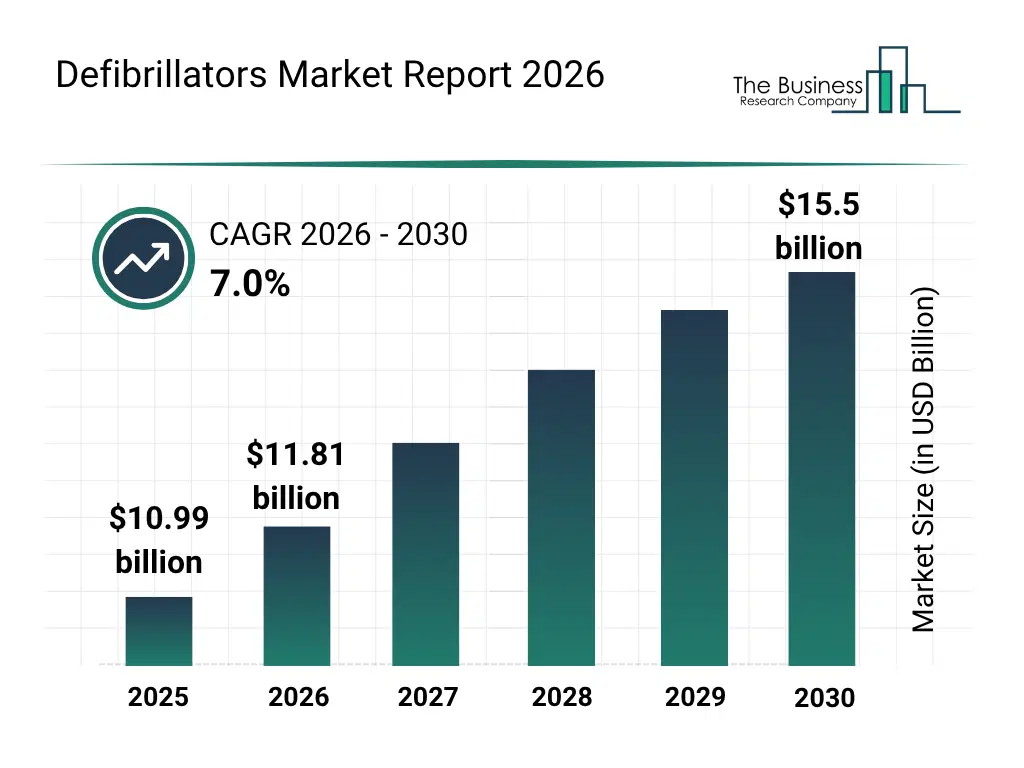
What Is The Defibrillators Market Size and Share 2026?
The defibrillators market size has grown strongly in recent years. It will grow from $10.99 billion in 2025 to $11.81 billion in 2026 at a compound annual growth rate (CAGR) of 7.5%. The growth in the historic period can be attributed to increasing prevalence of cardiovascular diseases, rising demand for emergency cardiac care equipment, growing adoption of automated external defibrillators, increasing healthcare infrastructure development, rising awareness about sudden cardiac arrest management.What Is The Defibrillators Market Growth Forecast?
The defibrillators market size is expected to see strong growth in the next few years. It will grow to $15.5 billion in 2030 at a compound annual growth rate (CAGR) of 7.0%.The growth in the forecast period can be attributed to increasing adoption of connected defibrillator technologies, growing demand for home based cardiac care solutions, rising integration of AI based cardiac monitoring, increasing healthcare digitization initiatives, growing focus on advanced portable cardiac devices. Major trends in the forecast period include increasing development of advanced cardiac rhythm monitoring technologies, growing adoption of portable and wearable defibrillation devices, rising integration of real time patient monitoring capabilities, increasing focus on improved defibrillator battery efficiency and performance, growing demand for automated emergency cardiac care solutions.
Global Defibrillators Market Segmentation
2) By Technology: Biphasic Waveform Technology, Monophasic Waveform Technology, Connected Or Smart Internet Of Things Systems 3) By Distribution Channel: Direct Sales, Retail And Electronic Commerce 4) By Application: Ventricular Tachycardia And Ventricular Fibrillation, Sudden Cardiac Arrest, Cardiac Resynchronization Therapy, Atrial Fibrillation, Bradycardia 5) By End User: Hospitals And Clinics, Pre Hospital Emergency Care, Public Access Market, Home Care Settings, Alternative Care Settings, Pre Hospital Care Systems Subsegments: 1) By Implantable Cardioverter Defibrillators: Transvenous Implantable Cardioverter Defibrillators, Subcutaneous Implantable Cardioverter Defibrillators, Single Chamber Implantable Cardioverter Defibrillators, Dual Chamber Implantable Cardioverter Defibrillators 2) By External Defibrillators: Manual External Defibrillators, Manual Automated External Defibrillators, Biphasic External Defibrillators 3) By Wearable Cardioverter Defibrillators: Wearable Cardioverter Defibrillator Vests, Wearable Cardiac Monitoring Defibrillator Systems, Portable Wearable Defibrillation Devices 4) By Automated External Defibrillators: Semi Automated External Defibrillators, Fully Automated External Defibrillators, Public Access Automated External Defibrillators, Professional Use Automated External DefibrillatorsWhat Is The Driver Of The Defibrillators Market?
The rising incidence of cardiovascular diseases is expected to propel the growth of the defibrillators market going forward. Cardiovascular diseases are disorders of the heart and blood vessels that include coronary artery disease, heart failure, arrhythmias, and stroke, and they remain a leading cause of mortality worldwide. The incidence of cardiovascular diseases is due to population aging, which has led to a growing number of individuals at risk of heart disease and stroke. Defibrillators are essential in the management of cardiovascular diseases, enabling rapid treatment of sudden cardiac arrest and severe cardiac rhythm abnormalities, thereby improving survival outcomes and reducing cardiovascular mortality. For instance, in August 2025, according to the report published by the National Center for Biotechnology Information (NCBI), a division of the US-based National Library of Medicine (NLM), cardiovascular disease prevalence is projected to rise by 90.0% between 2025 and 2050, with crude mortality increasing by 73.4% and crude disability-adjusted life years (DALYs) by 54.7%, while total deaths are expected to grow from 20.5 million in 2025 to 35.6 million by 2050. Therefore, the rising incidence of cardiovascular diseases is driving the growth of the defibrillators industry.Key Players In The Global Defibrillators Market
Major companies operating in the defibrillators market are Abbott Laboratories, Medtronic plc, Stryker Corporation, GE HealthCare Technologies Inc., Koninklijke Philips N.V., Boston Scientific Corporation, ZOLL Medical Corporation, Shenzhen Mindray Bio-Medical Electronics Co. Ltd., Biotronik SE & Co. KG, Nihon Kohden Corporation, MicroPort Scientific Corporation, Schiller AG, EDAN Instruments Inc., Comen Medical Instruments Co. Ltd., Biolight Meditech Co. Ltd., Shenzhen Biocare Bio-Medical Equipment Co. Ltd., Bexen Cardio S.L., AMI Italia S.p.A., Yuwell Medical Co. Ltd.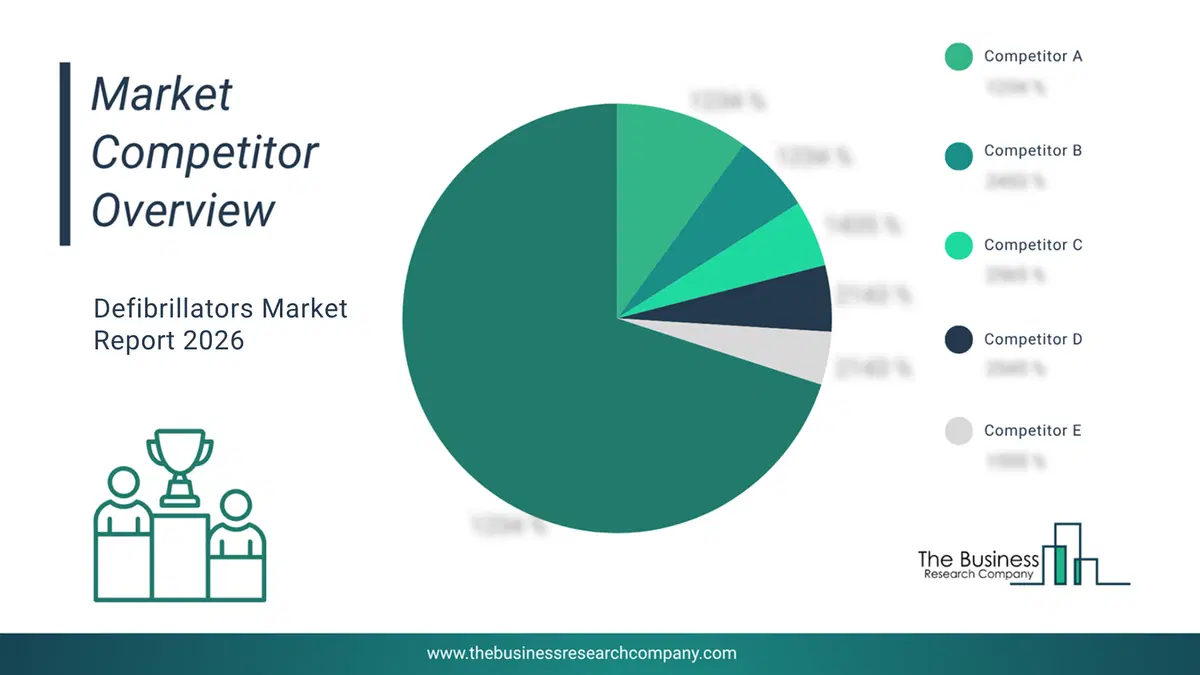
This chart is for illustrative purposes; the full report includes a detailed competitor analysis and comprehensive overview of the top 10 companies in the market.
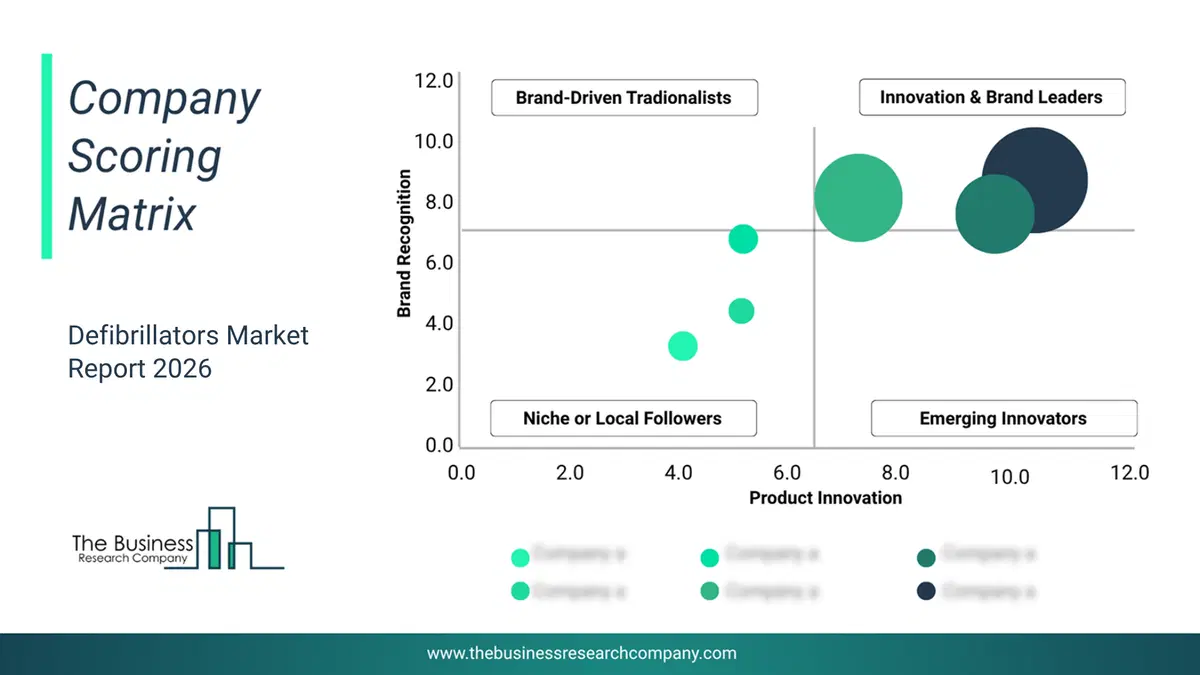
This chart maps companies by product innovation and brand strength, with bubble size indicating relative revenue, helping identify market leaders, challengers, and niche players. This is an illustrative chart; the full report provides a complete and accurate competitive analysis.
Global Defibrillators Market Trends and Insights
Major companies operating in the defibrillators market are focusing on developing advanced products, such as extravascular implantable cardioverter defibrillator (EV-ICD) systems to improve arrhythmia management, reduce procedure-related complications, and enhance patient quality of life. Extravascular implantable cardioverter defibrillator systems are advanced cardiac rhythm management devices that deliver life-saving defibrillation and pacing therapies without placing leads inside the heart or blood vessels, thereby minimizing risks associated with transvenous lead implantation. For instance, in March 2025, Medtronic plc, an Ireland-based medical technology company, launched the Aurora EV-ICD MRI device and Epsila EV MRI Lead in Japan for the treatment of life-threatening ventricular arrhythmias. The system features a novel lead placement beneath the sternum, enabling extravascular implantation while providing antitachycardia pacing (ATP), temporary backup pacing for bradycardia, and up to 40 joules of defibrillation energy. It also offers MRI compatibility, a projected battery life of 11.7 years, and proprietary sensing algorithms designed to reduce inappropriate shocks. This innovation reflects the growing emphasis on less invasive defibrillation technologies that combine advanced therapeutic capabilities with improved patient safety and long-term clinical outcomes.What Are Latest Mergers And Acquisitions In The Defibrillators Market?
In April 2023, Nordic Capital, a Sweden-based private equity investment firm, acquired a majority stake in Corpuls GmbH for an undisclosed amount. Through this acquisition, Nordic Capital aimed to support corpuls’ global expansion, accelerate innovation in emergency medical technology, and strengthen its position in the external defibrillator and patient monitoring market. Corpuls GmbH is a Germany-based medical technology company that specializes in providing portable defibrillators.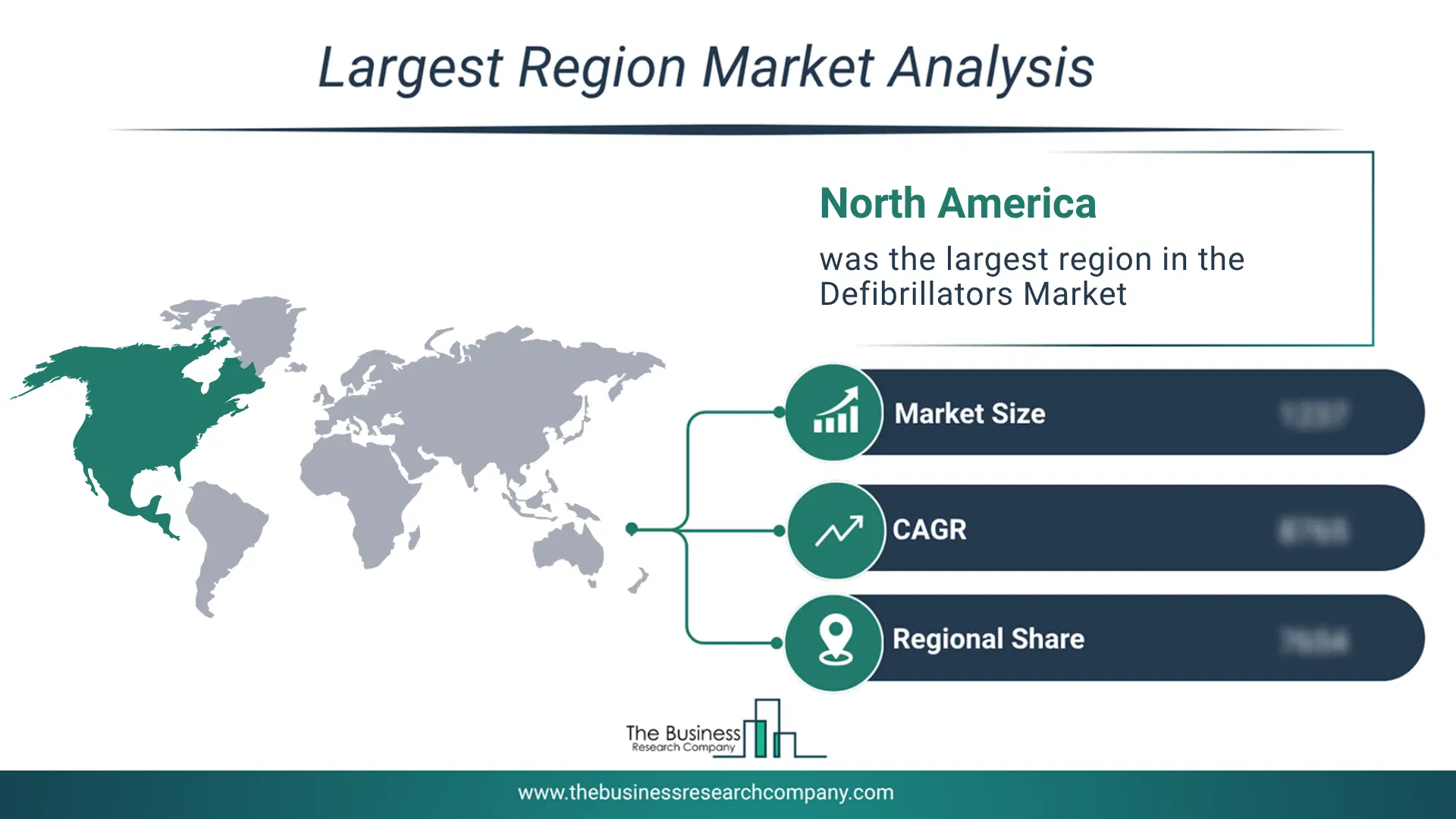
Regional Outlook/Insights
North America was the largest region in the defibrillators market in 2025. Asia-Pacific is expected to be the fastest-growing region in the forecast period. The regions covered in this market report are Asia-Pacific, South East Asia, Western Europe, Eastern Europe, North America, South America, Middle East, Africa. The countries covered in this market report are Australia, Brazil, China, France, Germany, India, Indonesia, Japan, Taiwan, Russia, South Korea, UK, USA, Canada, Italy, Spain.What Defines the Defibrillators Market?
The defibrillators market consists of sales of manual defibrillators, advanced life support defibrillators, biphasic defibrillators, monophasic defibrillators, cardiac monitoring and defibrillation systems, defibrillator electrodes, paddles, batteries, cables, charging units, data management modules, and other defibrillator-related products. Values in this market are ‘factory gate’ values, that is, the value of goods sold by the manufacturers or creators of the goods, whether to other entities (including downstream manufacturers, wholesalers, distributors, and retailers) or directly to end customers. The value of goods in this market includes related services sold by the creators of the goods.How is Market Value Defined and Measured?
The market value is defined as the revenues that enterprises gain from the sale of goods and/or services within the specified market and geography through sales, grants, or donations in terms of the currency (in USD unless otherwise specified). The revenues for a specified geography are consumption values that are revenues generated by organizations in the specified geography within the market, irrespective of where they are produced. It does not include revenues from resales along the supply chain, either further along the supply chain or as part of other products.
This chart presents market attractiveness based on a quantitative evaluation of growth, competition, strategic alignment, and risk, offering a clear view of opportunity areas for decision-making. This chart is for illustrative purposes; the full report contains the complete analysis.

This chart highlights the Total Addressable Market (TAM) by estimating the maximum revenue opportunity using an assumption-driven approach, supporting strategic planning and opportunity sizing across markets. The chart is illustrative; the full report provides a more comprehensive analysis.
What Key Data and Analysis Are Included in the Defibrillators Market Report 2026?
The defibrillators market research report is one of a series of new reports from The Business Research Company that provides defibrillators market statistics, including defibrillators industry global market size, regional shares, competitors with a defibrillators market share, detailed defibrillators market segments, market trends and opportunities, and any further data you may need to thrive in the defibrillators industry. This defibrillators market research report delivers a complete perspective of everything you need, with an in-depth analysis of the current and future scenario of the industry.Defibrillators Market Report Forecast Analysis
| Report Attribute | Details |
|---|---|
| Market Size Value In 2026 | $11.81 billion |
| Revenue Forecast In 2030 | $15.5 billion |
| Growth Rate | CAGR of 7% from 2026 to 2030 |
| Base Year For Estimation | 2025 |
| Actual Estimates/Historical Data | 2020-2025 |
| Forecast Period | 2026 - 2030 |
| Market Representation | Revenue in USD Billion and CAGR from 2026 to 2030 |
| Segments Covered | Product Type, Technology, Distribution Channel, Application, End User |
| Regional Scope | Asia-Pacific, Western Europe, Eastern Europe, North America, South America, Middle East, Africa |
| Country Scope | The countries covered in the report are Australia, Brazil, China, France, Germany, India, Indonesia, Japan, Taiwan, Russia, South Korea, UK, USA, Canada, Italy, Spain. |
| Key Companies Profiled | Abbott Laboratories, Medtronic plc, Stryker Corporation, GE HealthCare Technologies Inc., Koninklijke Philips N.V., Boston Scientific Corporation, ZOLL Medical Corporation, Shenzhen Mindray Bio-Medical Electronics Co. Ltd., Biotronik SE & Co. KG, Nihon Kohden Corporation, MicroPort Scientific Corporation, Schiller AG, EDAN Instruments Inc., Comen Medical Instruments Co. Ltd., Biolight Meditech Co. Ltd., Shenzhen Biocare Bio-Medical Equipment Co. Ltd., Bexen Cardio S.L., AMI Italia S.p.A., Yuwell Medical Co. Ltd. |
| Customization Scope | Request for Customization |
| Pricing And Purchase Options | Explore Purchase Options |