
Dental Orthotic Devices Market Report 2026
Global Outlook – By Type (Anterior Repositioning Dental Orthotic Devices, Anterior Bite Plane Dental Orthotic Devices, Posterior Bite Plane Dental Orthotic Devices, Other Types), By Material (Metal, Plastic, Carbon Fiber, Rubber, Composite Materials), By Application (Orthodontics, Temporomandibular Joint (TMJ) Disorders, Post-Surgical Rehabilitation, Accident Recovery, General Orthopedic Treatment), By Distribution Channel (Online Stores, Offline Stores), By End-User (Dental Clinics, Hospitals, Orthopedic Centers, Home Care Settings, Specialized Rehabilitation Centers) – Market Size, Trends, Strategies, and Forecast to 2030
Dental Orthotic Devices Market Overview
• Dental Orthotic Devices market size has reached to $5.23 billion in 2025 • Expected to grow to $9.15 billion in 2030 at a compound annual growth rate (CAGR) of 11.8% • Growth Driver: Rising Number Of Dental Procedures Fuelling The Growth Of The Market Due To Increasing Demand For Supportive And Post-Treatment Oral Appliances • Market Trend: Innovative 3D-Printed Mandibular Advancement Devices Transforming Sleep Apnea Treatment • North America was the largest region in 2025 and Asia-Pacific is the fastest growing region.What Is Covered Under Dental Orthotic Devices Market?
Dental orthotic devices are specially designed, custom-fitted oral appliances intended to support, realign, or stabilize the jaw and bite, often used in the treatment of various dental and musculoskeletal conditions such as bruxism and improving bite function. These devices help reduce pain, prevent dental damage, and enhance overall oral health. The main types of dental orthotic devices are anterior repositioning dental orthotic devices, anterior bite plane dental orthotic devices, posterior bite plane dental orthotic devices, and others. Anterior repositioning dental orthotic devices refer to appliances designed to reposition the lower jaw forward, often used to alleviate temporomandibular joint discomfort and improve jaw alignment. The different materials used include metal, plastic, carbon fibre, rubber, and composite materials and are widely applied in orthodontics, temporomandibular joint (TMJ) disorders, post-surgical rehabilitation, accident recovery, and general orthopaedic treatment. These devices are distributed through various channels, including online stores and offline stores, serving end-users such as dental clinics, hospitals, orthopaedic centres, home care settings, and specialized rehabilitation centres.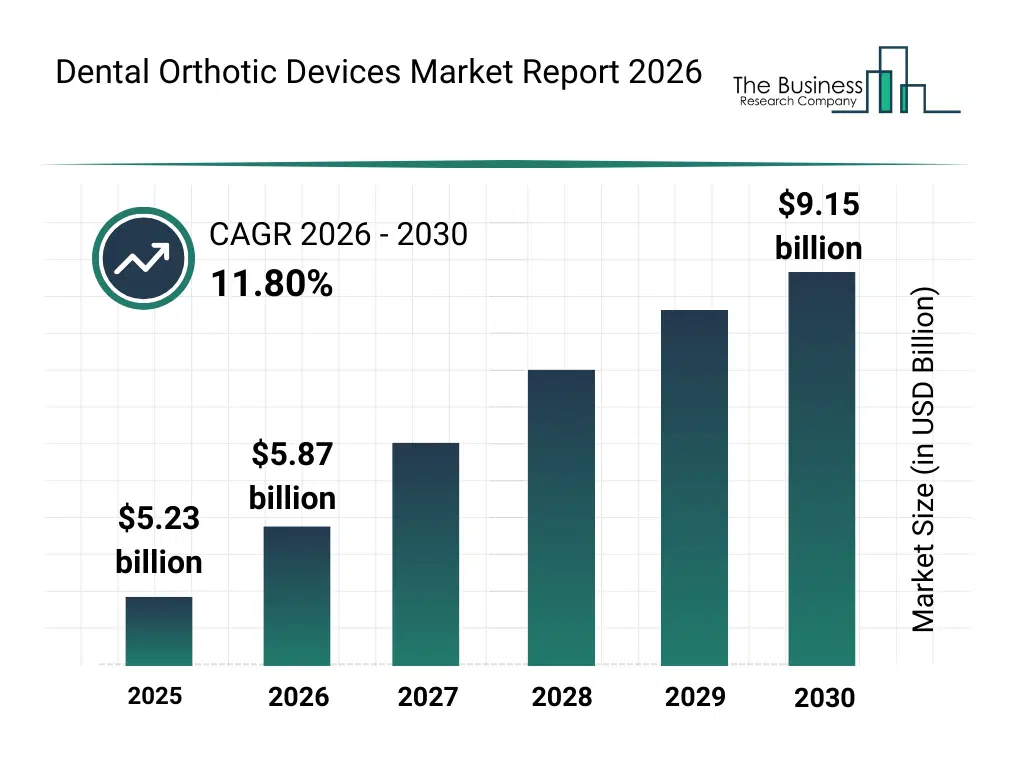
What Is The Dental Orthotic Devices Market Size and Share 2026?
The dental orthotic devices market size has grown rapidly in recent years. It will grow from $5.23 billion in 2025 to $5.87 billion in 2026 at a compound annual growth rate (CAGR) of 12.1%. The growth in the historic period can be attributed to limited availability of custom dental orthotic solutions, reliance on traditional materials like metal and acrylic, growing awareness of tmj and bite-related disorders, expansion of dental clinics and orthopedic centers, increasing post-surgical rehabilitation demand.What Is The Dental Orthotic Devices Market Growth Forecast?
The dental orthotic devices market size is expected to see rapid growth in the next few years. It will grow to $9.15 billion in 2030 at a compound annual growth rate (CAGR) of 11.8%. The growth in the forecast period can be attributed to adoption of 3D printing and digital impression technologies, rising dental and orthopedic healthcare expenditure, growth in home care and specialized rehabilitation centers, increasing patient preference for personalized oral appliances, development of advanced composite and carbon fiber materials. Major trends in the forecast period include rising demand for custom-fitted dental orthotic devices, increasing adoption of biocompatible and durable materials, expansion in tmj disorder and orthopedic treatment applications, growth in home care and specialized rehabilitation use, integration of advanced manufacturing techniques for customization.
Global Dental Orthotic Devices Market Segmentation
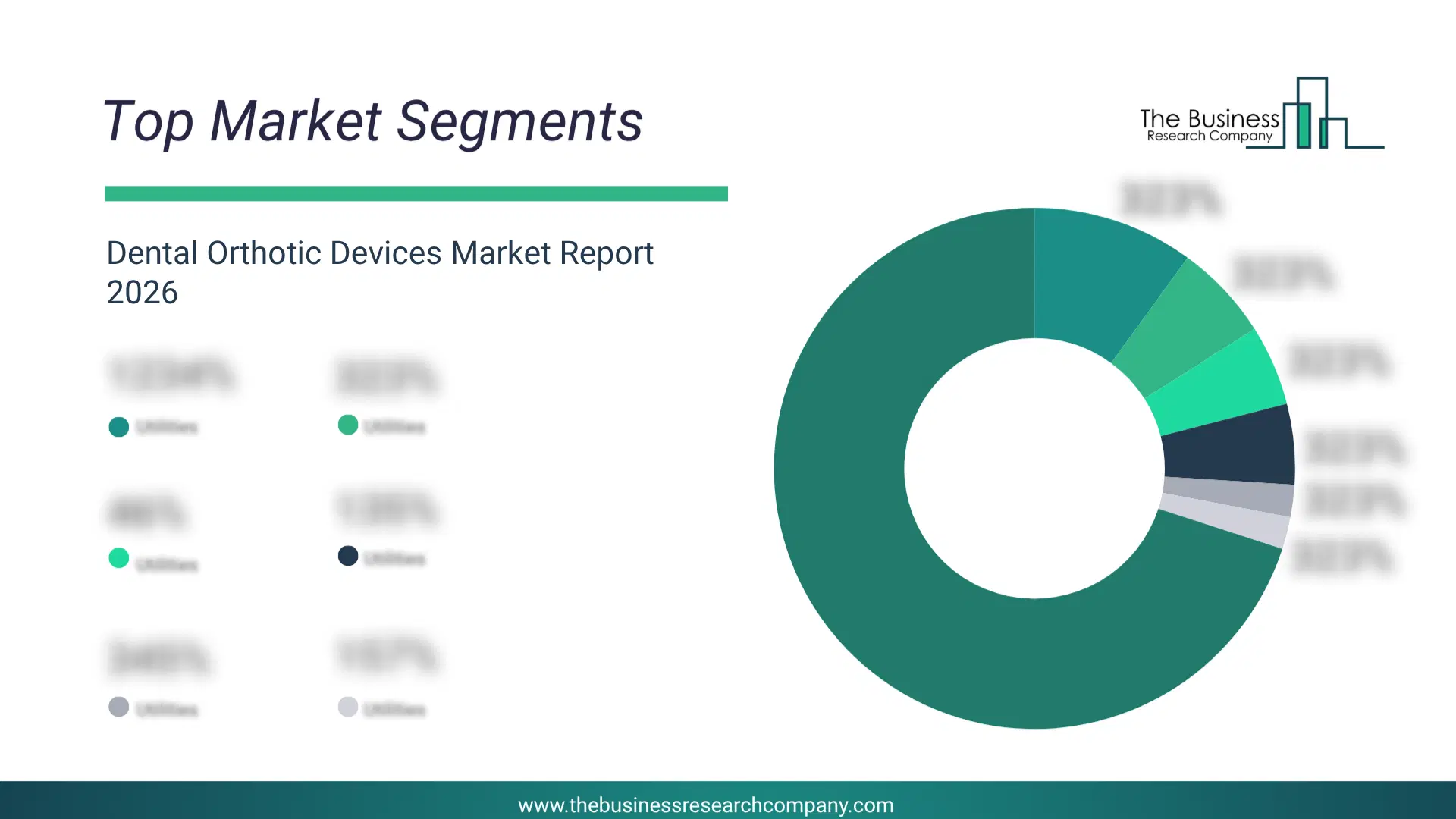
1) By Type: Anterior Repositioning Dental Orthotic Devices, Anterior Bite Plane Dental Orthotic Devices, Posterior Bite Plane Dental Orthotic Devices, Other Types 2) By Material: Metal, Plastic, Carbon Fiber, Rubber, Composite Materials 3) By Application: Orthodontics, Temporomandibular Joint (TMJ) Disorders, Post-Surgical Rehabilitation, Accident Recovery, General Orthopedic Treatment 4) By Distribution Channel: Online Stores, Offline Stores 5) By End-User: Dental Clinics, Hospitals, Orthopedic Centers, Home Care Settings, Specialized Rehabilitation Centers Subsegments: 1) By Anterior Repositioning Dental Orthotic Devices: Mandibular Advancement Devices, Temporomandibular Joint (TMJ) Repositioning Splints, Dual-Laminate Repositioning Appliances 2) By Anterior Bite Plane Dental Orthotic Devices: Hard Acrylic Bite Planes, Soft Bite Planes, Maxillary Anterior Deprogrammers 3) By Posterior Bite Plane Dental Orthotic Devices: Maxillary Posterior Bite Blocks, Mandibular Posterior Bite Blocks, Full-Arch Posterior Splints 4) By Other Types: Palatal Orthotic Devices, Occlusal Stabilization Splints, Custom Night GuardsWhat Is The Driver Of The Dental Orthotic Devices Market?
The rising number of dental procedures is expected to propel the growth of the dental orthotic devices market going forward. Dental procedures refer to the various treatments and interventions performed by dental professionals to maintain or improve the health, appearance, and function of the teeth and gums. The rise in dental procedures is largely due to greater awareness of oral health, prompting more individuals to seek regular check-ups and preventive treatments. Dental orthotic devices aid in dental procedures by providing customized support for jaw stabilization and bite alignment, making them essential for treating conditions such as TMJ disorders and bruxism. They improve procedural outcomes by reducing strain on oral structures, enhancing patient comfort, and improving long-term dental health. For instance, in January 2024, according to Uniqa Dental, an Israel-based dental solutions provider, approximately 5.5 million dental implants were placed in the United States in 2023, representing a 10% increase from 2022. Therefore, the rising number of dental procedures is driving the growth of the dental orthotic devices industry.Key Players In The Global Dental Orthotic Devices Market
Major companies operating in the dental orthotic devices market are Dentsply Sirona Inc., Align Technology Inc., Straumann Holding AG, Glidewell, Ivoclar Vivadent AG, Ormco Corporation, Angelalign Technology Inc., ClearCorrect LLC, American Orthodontics Corporation, Byte Inc., TP Orthodontics Inc., Great Lakes Dental Technologies Inc., SCHEU-DENTAL GmbH, FORESTADENT Bernhard Förster GmbH, G&H Orthodontics Inc, ProSomnus Sleep Technologies, Vivos Therapeutics Inc., Smartee Denti-Technology Co. Ltd., Candid Care Co, Panthera Dental, Dynaflex Company LLC, Geniova Technologies S.L, Institut Straumann AG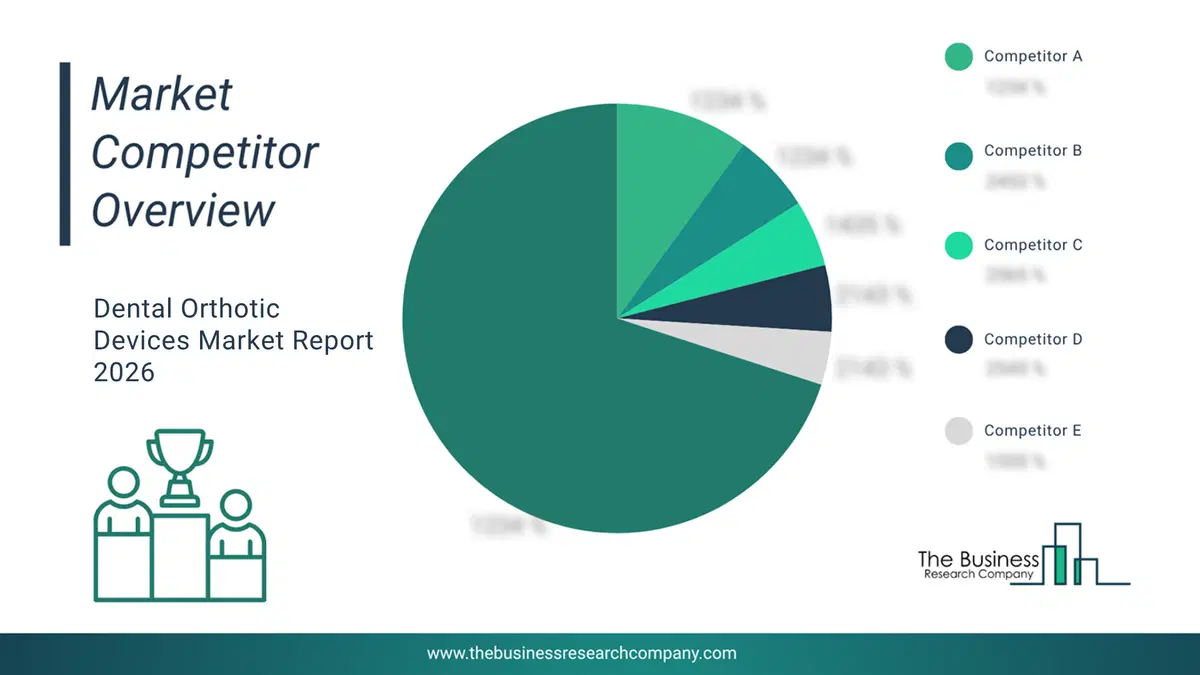
This chart is for illustrative purposes; the full report includes a detailed competitor analysis and comprehensive overview of the top 10 companies in the market.
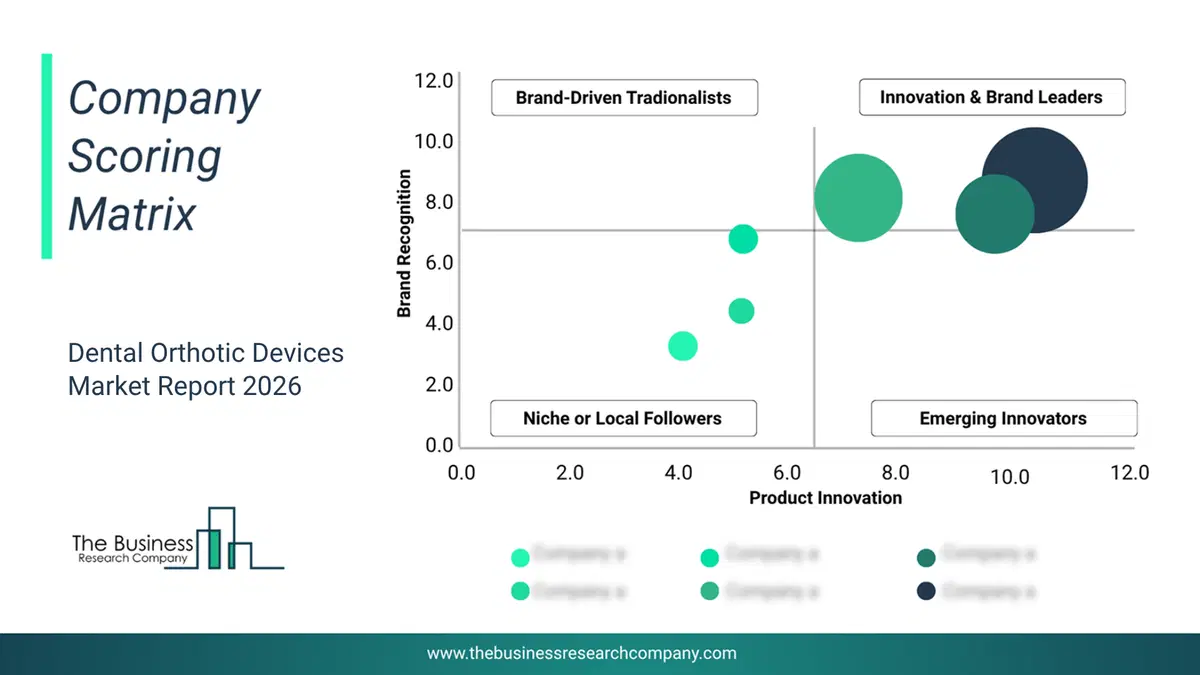
This chart maps companies by product innovation and brand strength, with bubble size indicating relative revenue, helping identify market leaders, challengers, and niche players. This is an illustrative chart; the full report provides a complete and accurate competitive analysis.
Global Dental Orthotic Devices Market Trends and Insights
Major companies operating in the dental orthotic devices market are focusing on developing technologically advanced products, such as 3D-printed mandibular advancement devices, to enhance treatment precision, improve patient comfort, and reduce manufacturing time. 3D-printed mandibular advancement devices refer to custom oral appliances created using 3D printing technology that reposition the lower jaw forward to keep the airway open during sleep, primarily for treating obstructive sleep apnea and snoring. For instance, in May 2024, Glidewell, a US-based dental company, launched the Silent Nite 3D Sleep Appliance, a digitally designed, 3D-printed mandibular advancement device aimed at reducing snoring and treating mild to moderate obstructive sleep apnea in adults. The appliance is custom-fit using advanced 3D printing technology, crafted from durable light-cured resin for enhanced precision and patient comfort. It gently shifts the lower jaw forward during sleep to help keep the airway open, utilizing adjustable and replaceable nylon connectors that allow fine-tuning in 0.5 mm increments over a 10 mm range.What Are Latest Mergers And Acquisitions In The Dental Orthotic Devices Market?
In March 2023, Vivos Therapeutics Inc., a US-based medical technology company, acquired product rights and patents from Advanced Facialdontics LLC for an undisclosed amount. With this acquisition, Vivos Therapeutics aims to expand its portfolio with innovative dental devices for temporomandibular joint dysfunction (TMD) and bruxism, reaching more patients and entering new, high-margin markets. Advanced Facialdontics is a U.S.-based company specializing in custom dental orthotic devices for managing bruxism and improving bite alignment.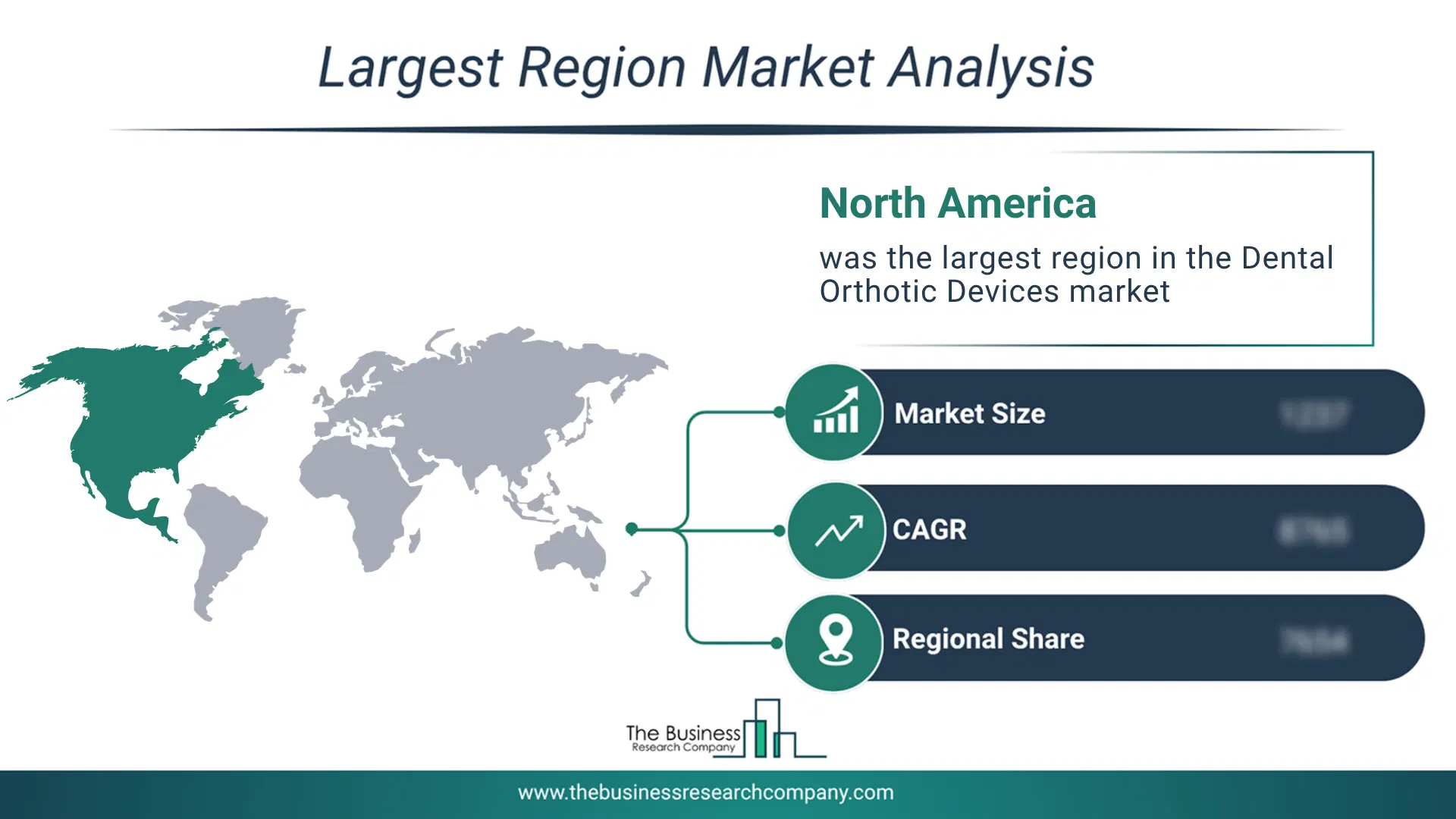
Regional Outlook
North America was the largest region in the dental orthotic devices market in 2025. Asia-Pacific is expected to be the fastest-growing region in the forecast period. The regions covered in this market report are Asia-Pacific, South East Asia, Western Europe, Eastern Europe, North America, South America, Middle East, Africa. The countries covered in this market report are Australia, Brazil, China, France, Germany, India, Indonesia, Japan, Taiwan, Russia, South Korea, UK, USA, Canada, Italy, SpainWhat Defines the Dental Orthotic Devices Market?
The dental orthotic devices market consists of sales of mandibular advancement devices, occlusal splints, night guards, palatal expanders, bite plates, occlusal appliances, and other custom-fitted oral devices. Values in this market are ‘factory gate’ values, that is, the value of goods sold by the manufacturers or creators of the goods, whether to other entities (including downstream manufacturers, wholesalers, distributors, and retailers) or directly to end customers. The value of goods in this market includes related services sold by the creators of the goods.How is Market Value Defined and Measured?
The market value is defined as the revenues that enterprises gain from the sale of goods and/or services within the specified market and geography through sales, grants, or donations in terms of the currency (in USD unless otherwise specified). The revenues for a specified geography are consumption values that are revenues generated by organizations in the specified geography within the market, irrespective of where they are produced. It does not include revenues from resales along the supply chain, either further along the supply chain or as part of other products.
This chart presents market attractiveness based on a quantitative evaluation of growth, competition, strategic alignment, and risk, offering a clear view of opportunity areas for decision-making. This chart is for illustrative purposes; the full report contains the complete analysis.

This chart highlights the Total Addressable Market (TAM) by estimating the maximum revenue opportunity using an assumption-driven approach, supporting strategic planning and opportunity sizing across markets. The chart is illustrative; the full report provides a more comprehensive analysis.
What Key Data and Analysis Are Included in the Dental Orthotic Devices Market Report 2026?
The dental orthotic devices market research report is one of a series of new reports from The Business Research Company that provides market statistics, including industry global market size, regional shares, competitors with the market share, detailed market segments, market trends and opportunities, and any further data you may need to thrive in the dental orthotic devices industry. The market research report delivers a complete perspective of everything you need, with an in-depth analysis of the current and future state of the industry.Dental Orthotic Devices Market Report Forecast Analysis
| Report Attribute | Details |
|---|---|
| Market Size Value In 2026 | $5.87 billion |
| Revenue Forecast In 2030 | $9.15 billion |
| Growth Rate | CAGR of 11.8% from 2026 to 2030 |
| Base Year For Estimation | 2025 |
| Actual Estimates/Historical Data | 2020-2025 |
| Forecast Period | 2026 - 2030 |
| Market Representation | Revenue in USD Billion and CAGR from 2026 to 2030 |
| Segments Covered | Type, Material, Application, Distribution Channel, End-User |
| Regional Scope | Asia-Pacific, Western Europe, Eastern Europe, North America, South America, Middle East, Africa |
| Country Scope | The countries covered in the report are Australia, Brazil, China, France, Germany, India, Indonesia, Japan, Taiwan, Russia, South Korea, UK, USA, Canada, Italy, Spain. |
| Key Companies Profiled | Dentsply Sirona Inc., Align Technology Inc., Straumann Holding AG, Glidewell, Ivoclar Vivadent AG, Ormco Corporation, Angelalign Technology Inc., ClearCorrect LLC, American Orthodontics Corporation, Byte Inc., TP Orthodontics Inc., Great Lakes Dental Technologies Inc., SCHEU-DENTAL GmbH, FORESTADENT Bernhard Förster GmbH, G&H Orthodontics Inc, ProSomnus Sleep Technologies, Vivos Therapeutics Inc., Smartee Denti-Technology Co. Ltd., Candid Care Co, Panthera Dental, Dynaflex Company LLC, Geniova Technologies S.L, Institut Straumann AG |
| Customization Scope | Request for Customization |
| Pricing And Purchase Options | Explore Purchase Options |