
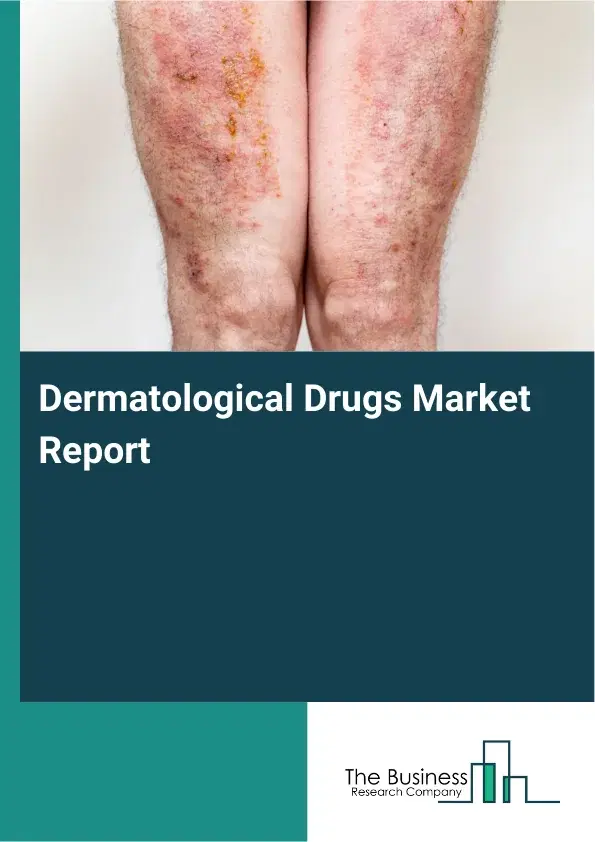
Dermatological Drugs Market Report 2026
Global Outlook – By Drug Class (Corticosteroids, Retinoids, Antibiotics, Antifungals, Calcineurin Inhibitors, Other Drug Classes), By Administration (Topical Administration, Oral Administration, Parenteral Administration), By Indication (Acne, Psoriasis, Rosacea, Alopecia, Other Indications), By Distribution Channel (Hospital Pharmacies, Retail Pharmacies, Other Distribution Channels) - Market Size, Trends, Strategies, and Forecast to 2030
Dermatological Drugs Market Overview
• Dermatological Drugs market size has reached to $21.98 billion in 2025 • Expected to grow to $34.31 billion in 2030 at a compound annual growth rate (CAGR) of 9.3% • Growth Driver: Growing Demand For Cosmetic Dermatology Driving Industry Expansion • Market Trend: Advancements In Biologic Treatments For Dermatological Conditions • North America was the largest region in 2025 and Asia-Pacific is the fastest growing region.What Is Covered Under Dermatological Drugs Market?
Dermatological drugs refer to medications designed to treat conditions affecting the skin, hair, and nails by reducing inflammation, controlling infections, or managing symptoms such as itching and redness. These drugs play a crucial role in dermatology by addressing both common and severe skin disorders, improving patient comfort and quality of life. The main drug classes in the dermatological drugs are corticosteroids, retinoids, antibiotics, antifungals, calcineurin inhibitors, and others. Corticosteroids refer to a class of steroid hormones that reduce inflammation and suppress immune system activity by mimicking the effects of cortisol, a natural hormone produced by the adrenal glands. The various routes of administration include topical administration, oral administration, and parenteral administration, and several indications include acne, psoriasis, rosacea, alopecia, and others. The different distribution channels encompass hospital pharmacies, retail pharmacies, and others.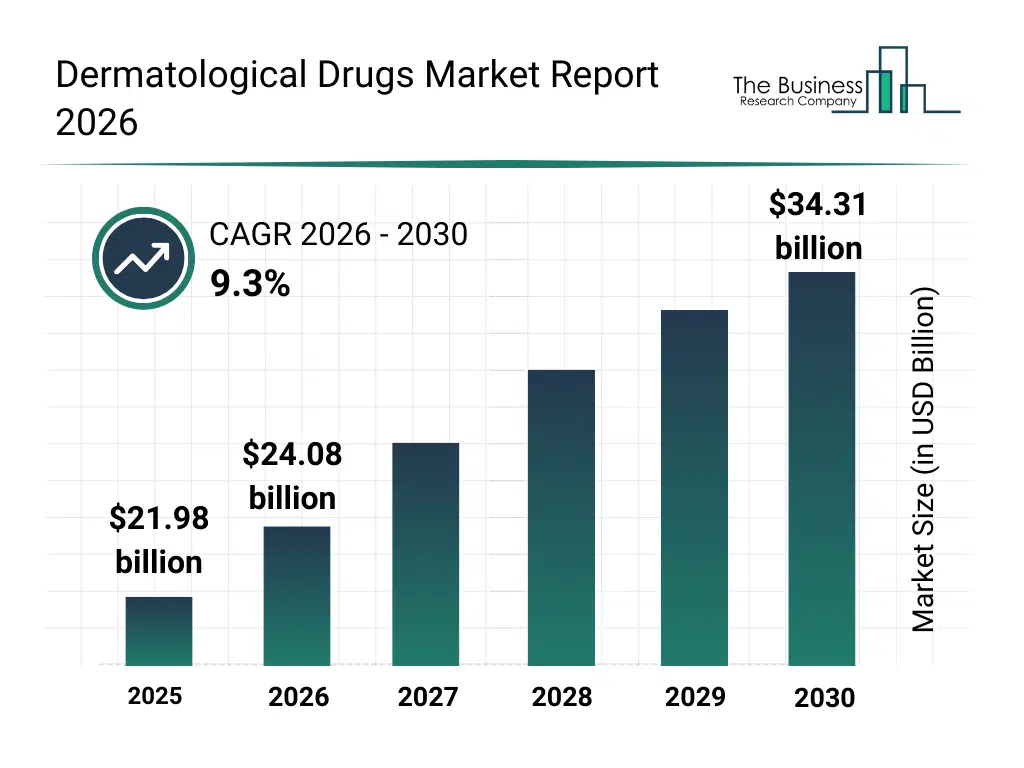
What Is The Dermatological Drugs Market Size and Share 2026?
The dermatological drugs market size has grown strongly in recent years. It will grow from $21.98 billion in 2025 to $24.08 billion in 2026 at a compound annual growth rate (CAGR) of 9.6%. The growth in the historic period can be attributed to high prevalence of skin disorders, reliance on topical steroids, hospital-based dermatology, growing cosmetic awareness, aging population.What Is The Dermatological Drugs Market Growth Forecast?
The dermatological drugs market size is expected to see strong growth in the next few years. It will grow to $34.31 billion in 2030 at a compound annual growth rate (CAGR) of 9.3%. The growth in the forecast period can be attributed to advancements in biologics, growth of personalized dermatology, increasing chronic skin disease burden, expanding dermatology clinics, innovation in formulations. Major trends in the forecast period include rising use of biologic dermatology drugs, growth of targeted skin therapies, expansion of topical treatment options, increased focus on chronic skin conditions, growth of prescription dermatology.
Global Dermatological Drugs Market Segmentation
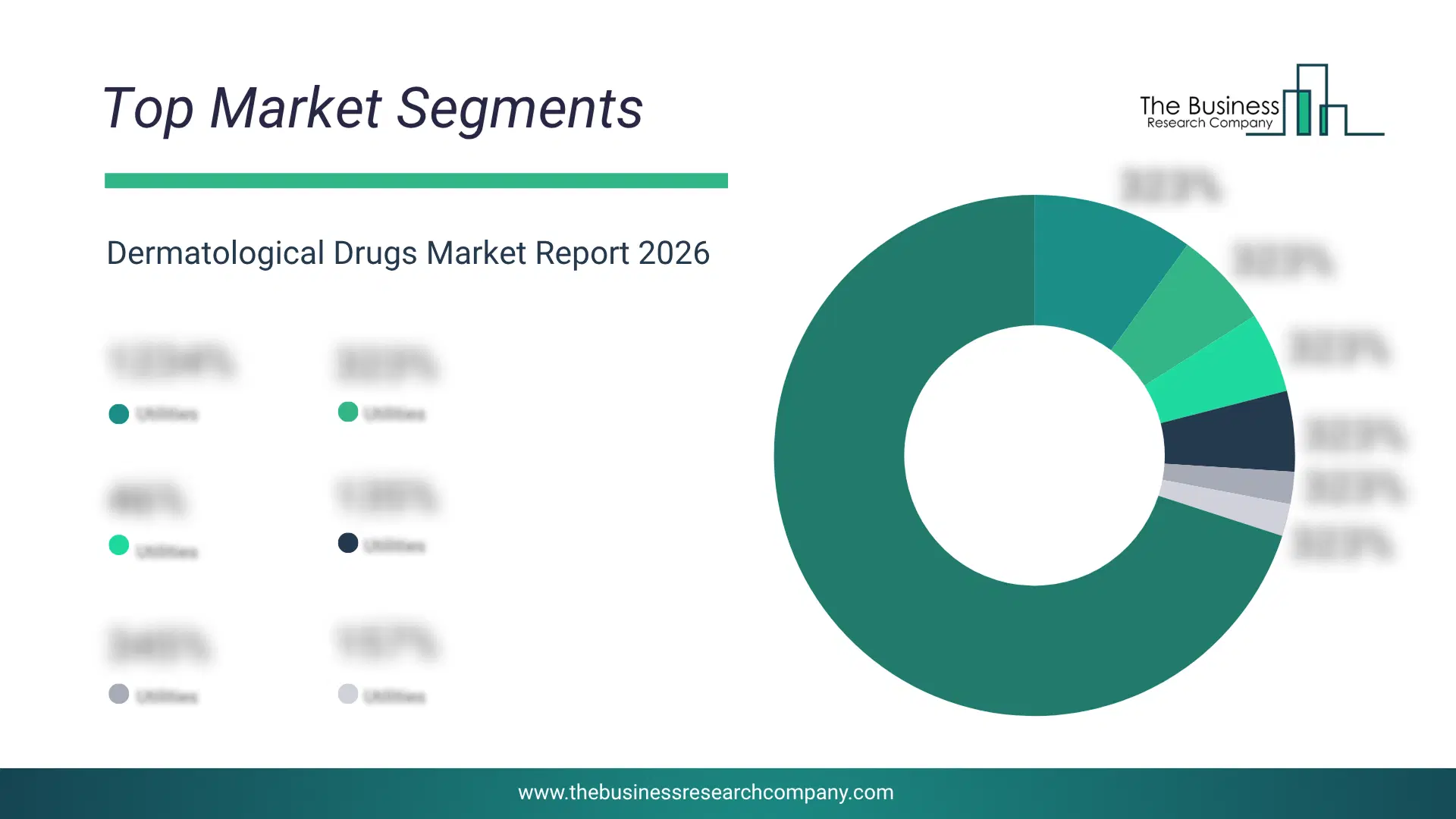
1) By Drug Class: Corticosteroids, Retinoids, Antibiotics, Antifungals, Calcineurin Inhibitors, Other Drug Classes 2) By Administration: Topical Administration, Oral Administration, Parenteral Administration 3) By Indication: Acne, Psoriasis, Rosacea, Alopecia, Other Indications 4) By Distribution Channel: Hospital Pharmacies, Retail Pharmacies, Other Distribution Channels Subsegments: 1) By Corticosteroids: Topical Corticosteroids, Oral Corticosteroids, Injectable Corticosteroids 2) By Retinoids: Topical Retinoids, Oral Retinoids 3) By Antibiotics: Topical Antibiotics, Oral Antibiotics 4) By Antifungals: Topical Antifungals, Oral Antifungals 5) By Calcineurin Inhibitors: Topical Calcineurin Inhibitors, Systemic Calcineurin Inhibitors 6) By Other Drug Classes: Biologics, JAK Inhibitors, Antihistamines, Photodynamic Therapy AgentsWhat Is The Driver Of The Dermatological Drugs Market?
The rising demand for cosmetic dermatology procedures is expected to propel the growth of the dermatological drugs market going forward. Cosmetic dermatology is a specialized branch of dermatology that focuses on enhancing a person's appearance through various non-surgical treatments and procedures. The demand for cosmetic dermatology is on the rise due to increasing consumer awareness of aesthetic treatments, advancements in skincare technology, and a growing preference for non-invasive procedures to enhance appearance and combat aging. The growing demand for cosmetic dermatology procedures, such as anti-aging and skin rejuvenation treatments, is driving the development of advanced dermatological drugs that offer safe, effective, and minimally invasive solutions. For instance, in June 2024, according to the International Society of Aesthetic Plastic Surgery (ISAPS), a global nonprofit scientific organization representing board-certified plastic surgeons, total surgical and non-surgical aesthetic procedures increased by 3.4% in 2023, reaching 34.9 million globally, up from the previous year. Therefore, the rising cosmetic dermatology procedures is driving the growth of the dermatological drugs industry.Key Players In The Global Dermatological Drugs Market
Major companies operating in the dermatological drugs market are Pfizer Inc., Johnson & Johnson Services Inc., AbbVie Inc., Bayer AG, AstraZeneca plc, Novartis AG, GlaxoSmithKline Plc, Eli Lilly and Company, Amgen Inc., Bausch Health Companies Inc., Organon International, Galderma, Incyte Corporation, Glenmark Pharmaceuticals Ltd., Mayne Pharma Group Limited, Dermavant Sciences Inc., Taro Pharmaceutical Industries Ltd., Biofrontera AG, Almirall SA, UCB SA, LEO Pharma A/S, Dermira Inc.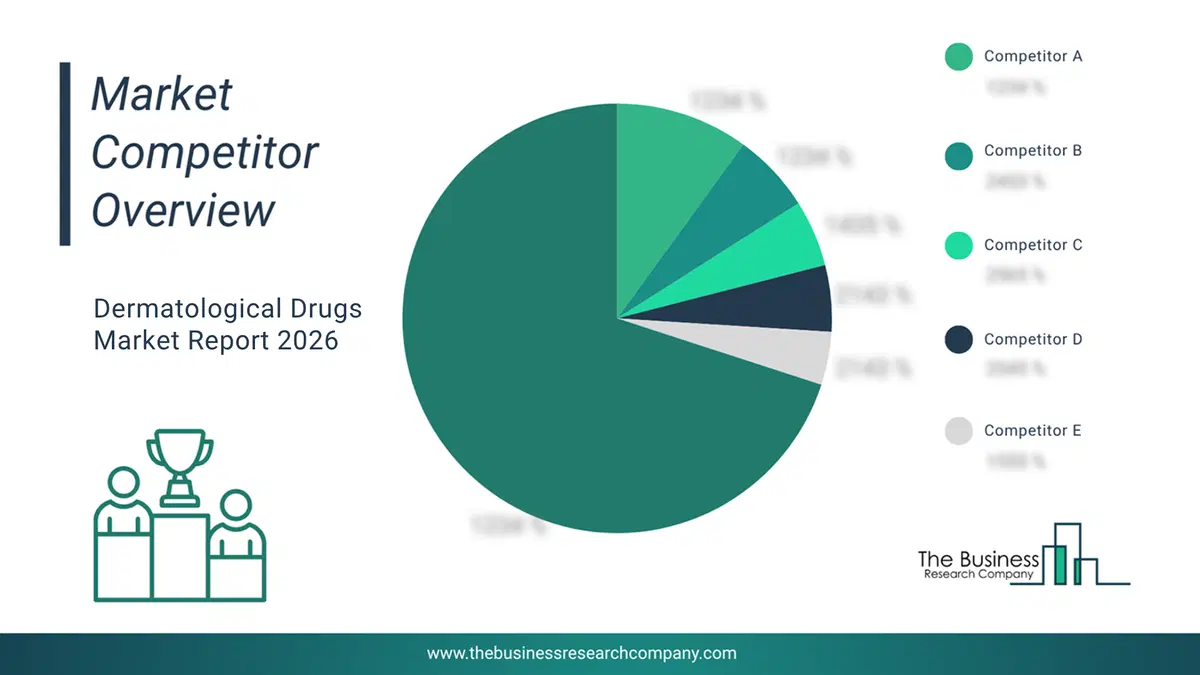
This chart is for illustrative purposes; the full report includes a detailed competitor analysis and comprehensive overview of the top 10 companies in the market.
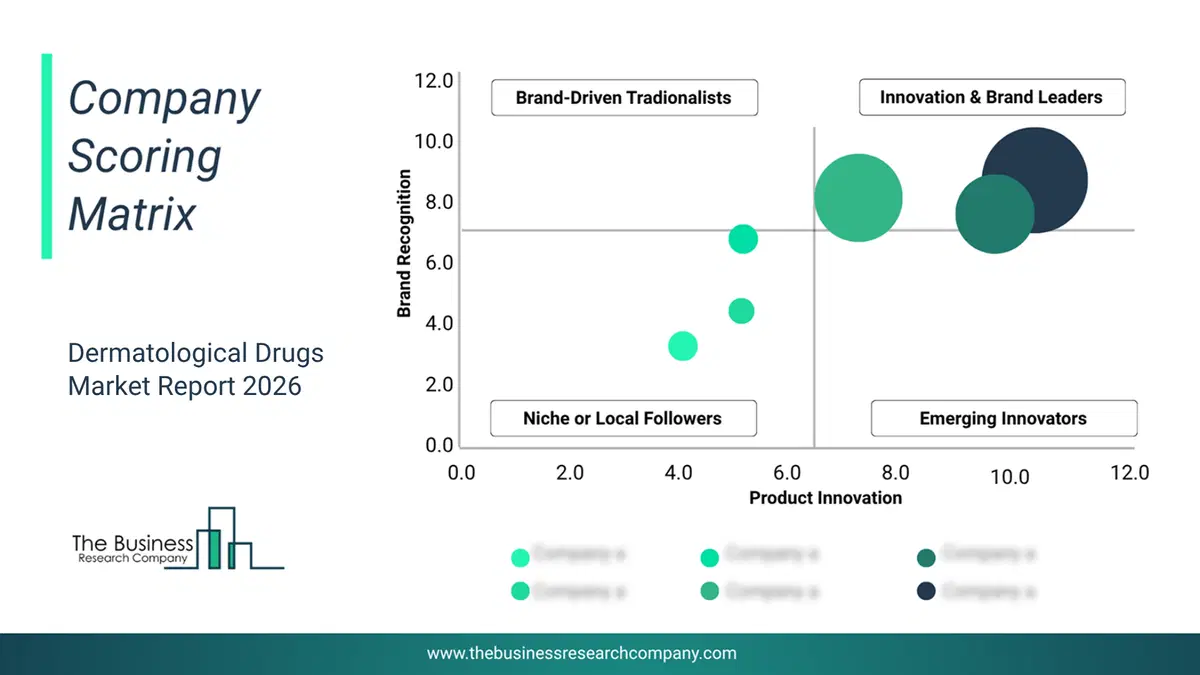
This chart maps companies by product innovation and brand strength, with bubble size indicating relative revenue, helping identify market leaders, challengers, and niche players. This is an illustrative chart; the full report provides a complete and accurate competitive analysis.
Global Dermatological Drugs Market Trends and Insights
Major companies operating in the dermatological drugs market are prioritizing the development of biologic treatments to address chronic skin conditions such as psoriasis, atopic dermatitis, and hidradenitis suppurativa. Biologics target specific immune pathways, offering more effective and long-lasting relief compared to traditional therapies. For instance, in September 2024, Eli Lilly and Company, a US-based pharmaceutical company, received approval for Ebglyss (lebrikizumab), a targeted interleukin-13 (IL-13) inhibitor, for treating moderate-to-severe atopic dermatitis in adults and children aged 12 and older. This approval marks a significant advancement by offering a new biologic treatment option for patients who have not achieved adequate symptom control with topical therapies. Addressing the need for more effective treatments, Ebglyss aims to improve patients’ quality of life by reducing severe itching and skin inflammation associated with moderate-to-severe atopic dermatitis.What Are Latest Mergers And Acquisitions In The Dermatological Drugs Market?
In September 2024, Organon, a US-based pharmaceutical company, acquired Dermavant Sciences Ltd. for $1.2 billion. With this acquisition, Organon includes Dermavant's flagship product, VTAMA (tapinarof) cream, 1%, a non-steroidal topical therapy approved by the US Food and Drug Administration (FDA) for the treatment of mild, moderate, and severe plaque psoriasis in adults. Dermavant Sciences Ltd. is a US-based immunodermatological company specializing in the development and commercialization of innovative dermatology drugs.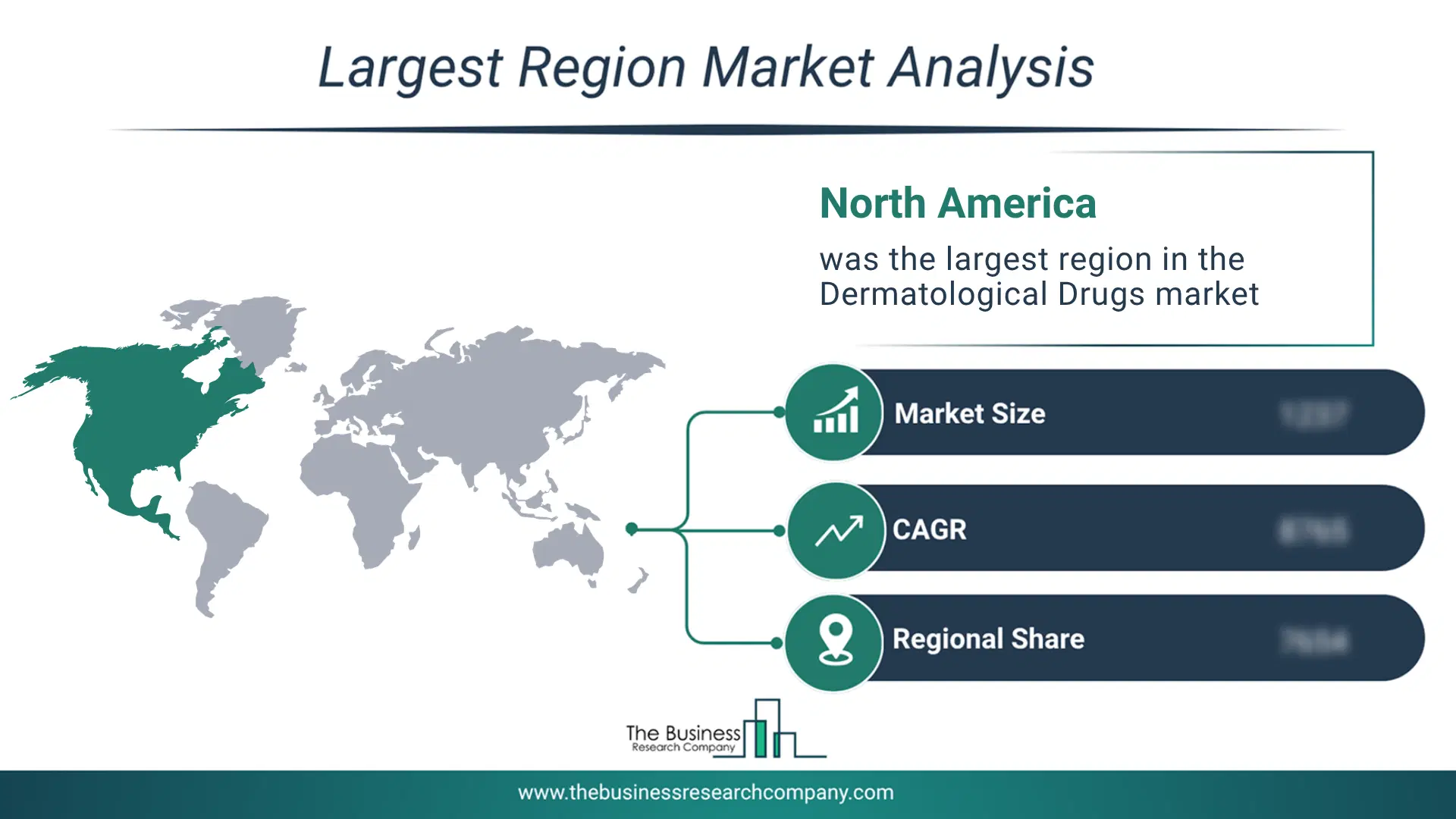
Regional Outlook
North America was the largest region in the dermatological drugs market in 2025. Asia-Pacific is expected to be the fastest-growing region in the forecast period. The regions covered in this market report are Asia-Pacific, South East Asia, Western Europe, Eastern Europe, North America, South America, Middle East, Africa. The countries covered in this market report are Australia, Brazil, China, France, Germany, India, Indonesia, Japan, Taiwan, Russia, South Korea, UK, USA, Canada, Italy, Spain.What Defines the Dermatological Drugs Market?
The dermatological drugs market consists of sales of creams, ointments, gels, and lotions. Values in this market are ‘factory gate’ values, that is the value of goods sold by the manufacturers or creators of the goods, whether to other entities (including downstream manufacturers, wholesalers, distributors and retailers) or directly to end customers. The value of goods in this market includes related services sold by the creators of the goods.How is Market Value Defined and Measured?
The market value is defined as the revenues that enterprises gain from the sale of goods and/or services within the specified market and geography through sales, grants, or donations in terms of the currency (in USD unless otherwise specified). The revenues for a specified geography are consumption values that are revenues generated by organizations in the specified geography within the market, irrespective of where they are produced. It does not include revenues from resales along the supply chain, either further along the supply chain or as part of other products.
This chart presents market attractiveness based on a quantitative evaluation of growth, competition, strategic alignment, and risk, offering a clear view of opportunity areas for decision-making. This chart is for illustrative purposes; the full report contains the complete analysis.

This chart highlights the Total Addressable Market (TAM) by estimating the maximum revenue opportunity using an assumption-driven approach, supporting strategic planning and opportunity sizing across markets. The chart is illustrative; the full report provides a more comprehensive analysis.
What Key Data and Analysis Are Included in the Dermatological Drugs Market Report 2026?
The dermatological drugs market research report is one of a series of new reports from The Business Research Company that provides market statistics, including industry global market size, regional shares, competitors with the market share, detailed market segments, market trends and opportunities, and any further data you may need to thrive in the dermatological drugs industry. The market research report delivers a complete perspective of everything you need, with an in-depth analysis of the current and future state of the industry.Dermatological Drugs Market Report Forecast Analysis
| Report Attribute | Details |
|---|---|
| Market Size Value In 2026 | $24.08 billion |
| Revenue Forecast In 2030 | $34.31 billion |
| Growth Rate | CAGR of 9.3% from 2026 to 2030 |
| Base Year For Estimation | 2025 |
| Actual Estimates/Historical Data | 2020-2025 |
| Forecast Period | 2026 - 2030 |
| Market Representation | Revenue in USD Billion and CAGR from 2026 to 2030 |
| Segments Covered | Drug Class, Administration, Indication, Distribution Channel |
| Regional Scope | Asia-Pacific, Western Europe, Eastern Europe, North America, South America, Middle East, Africa |
| Country Scope | The countries covered in the report are Australia, Brazil, China, France, Germany, India, Indonesia, Japan, Taiwan, Russia, South Korea, UK, USA, Canada, Italy, Spain |
| Key Companies Profiled | Pfizer Inc., Johnson & Johnson Services Inc., AbbVie Inc., Bayer AG, AstraZeneca plc, Novartis AG, GlaxoSmithKline Plc, Eli Lilly and Company, Amgen Inc., Bausch Health Companies Inc., Organon International, Galderma, Incyte Corporation, Glenmark Pharmaceuticals Ltd., Mayne Pharma Group Limited, Dermavant Sciences Inc., Taro Pharmaceutical Industries Ltd., Biofrontera AG, Almirall SA, UCB SA, LEO Pharma A/S, Dermira Inc. |
| Customization Scope | Request for Customization |
| Pricing And Purchase Options | Explore Purchase Options |