
Diagnostic Enzyme Market Report 2026
Global Outlook – By Product Type (Carbohydrases, Polymerases And Nucleases, Protease, Other Product Types), By Source (Animals, Microorganisms, Plants), By Application (Biocatalysts, Diagnostics, Pharmaceuticals, Research & Biotechnology) – Market Size, Trends, Strategies, and Forecast to 2030
Diagnostic Enzyme Market Overview
• Diagnostic Enzyme market size has reached to $4.49 billion in 2025 • Expected to grow to $6.39 billion in 2030 at a compound annual growth rate (CAGR) of 7.7% • Growth Driver: Rising Prevalence Of Chronic Diseases In Diagnostic enzymes Market • Market Trend: Emerging Technological Advancements and Product Innovations • North America was the largest region in 2025 and Middle East is the fastest growing region.What Is Covered Under Diagnostic Enzyme Market?
Diagnostic enzymes refer to the enzymes that are employed directly or as part of an assay system to determine the presence or absence of a variety of compounds, and they are used to detect, diagnose, or predict the development of disease conditions. These enzymes are used in diagnosis because of their substrate selectivity and quantified activity when other proteins are present. The main types of products in the diagnostic enzymes market are carbohydrates, polymerases, nucleases, proteases, and others. Any of a class of enzymes (such as amylase) that promotes carbohydrate breakdown or ssynthesis is referred to as a carbohydrase (such as a disaccharide). The different sources include animals, microorganisms, and plants and are used in biocatalysts, diagnostics, pharmaceuticals, research, and biotechnology.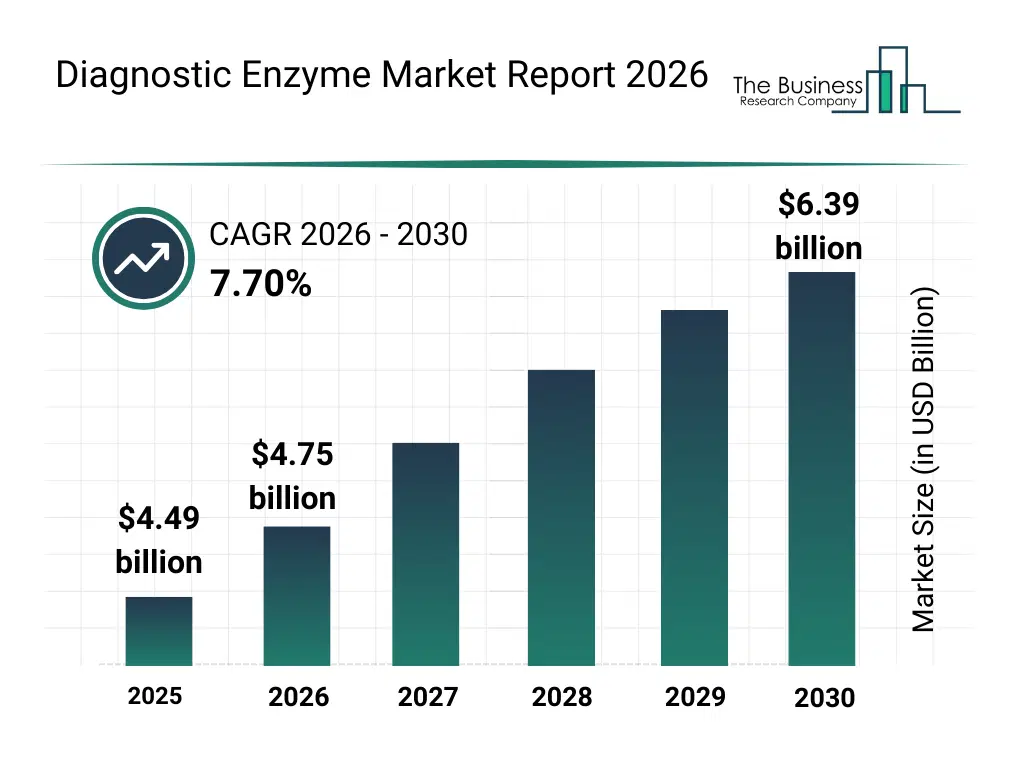
What Is The Diagnostic Enzyme Market Size and Share 2026?
The diagnostic enzyme market size has grown strongly in recent years. It will grow from $4.49 billion in 2025 to $4.75 billion in 2026 at a compound annual growth rate (CAGR) of 5.7%. The growth in the historic period can be attributed to limited availability of high-purity diagnostic enzymes, reliance on traditional assay methods, increasing prevalence of chronic diseases, growing biotechnology and research initiatives, rising awareness of enzyme-based diagnostics.What Is The Diagnostic Enzyme Market Growth Forecast?
The diagnostic enzyme market size is expected to see strong growth in the next few years. It will grow to $6.39 billion in 2030 at a compound annual growth rate (CAGR) of 7.7%. The growth in the forecast period can be attributed to development of advanced enzyme engineering techniques, integration of diagnostics with digital health platforms, rising adoption of point-of-care testing, expansion of pharmaceutical and biotech R&D, increasing government and private funding for diagnostic innovations. Major trends in the forecast period include rising adoption of enzyme-based diagnostic kits, growth in personalized medicine and biomarker detection, expansion of research and biotechnology applications, increasing demand for high-specificity and sensitive enzymes, integration of enzyme diagnostics in point-of-care testing.
Global Diagnostic Enzyme Market Segmentation
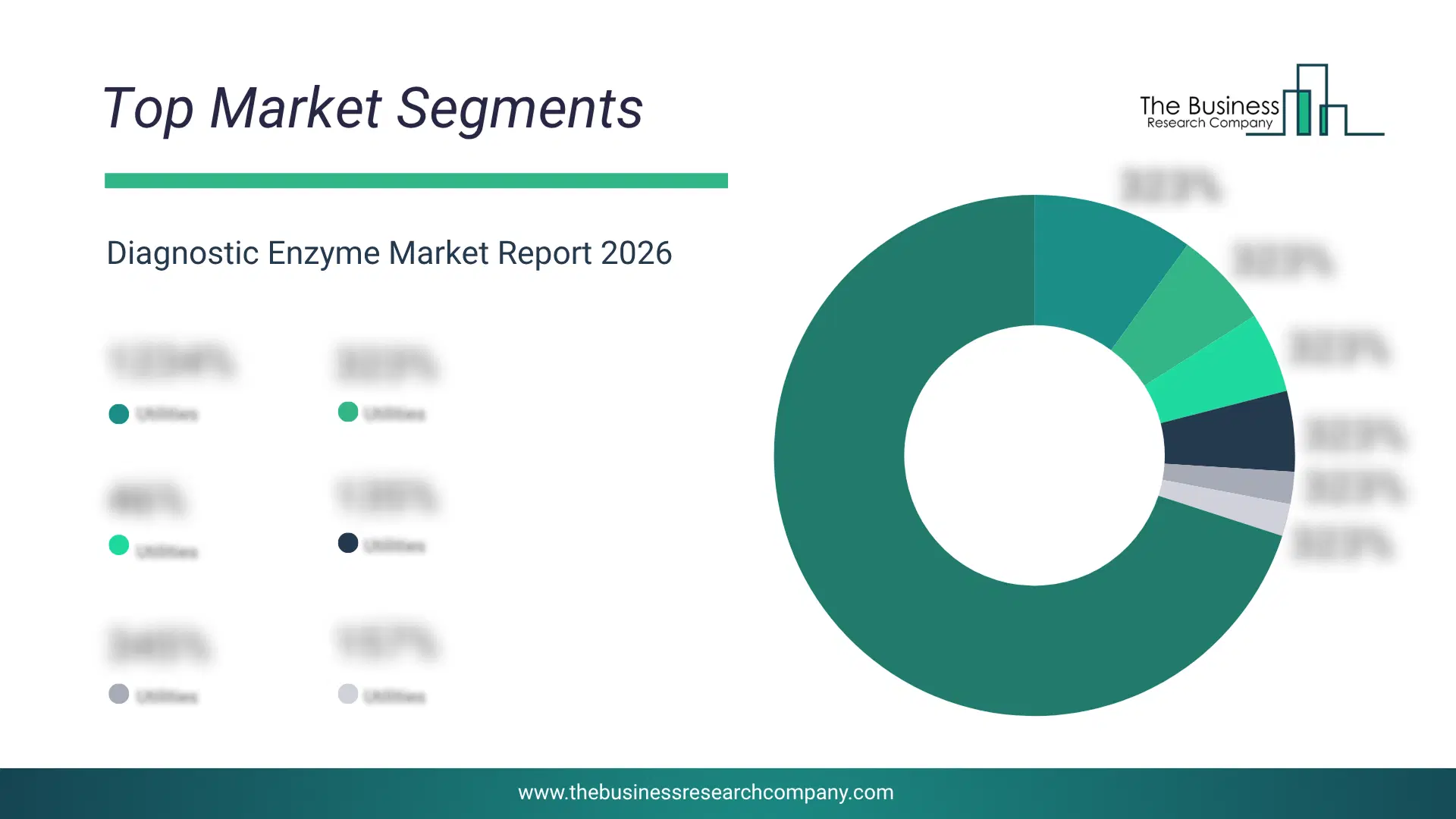
1) By Product Type: Carbohydrases, Polymerases And Nucleases, Protease, Other Product Types 2) By Source: Animals, Microorganisms, Plants 3) By Application: Biocatalysts, Diagnostics, Pharmaceuticals, Research & Biotechnology Subsegments: 1) By Carbohydrases: Amylases, Cellulases, Lactases, Glucosidases 2) By Polymerases And Nucleases: DNA Polymerases, RNA Polymerases, Restriction Endonucleases, Exonucleases 3) By Protease: Serine Proteases, Cysteine Proteases, Metalloproteases, Aspartic Proteases 4) By Other Product Types: Oxidoreductases, Transferases, Lyases, HydrolasesWhat Is The Driver Of The Diagnostic Enzyme Market?
The rising prevalence of chronic diseases is anticipated to propel the growth of the diagnostic enzymes market going forward. Chronic disease refers to long-lasting health conditions that persist over three months or more. diagnosis and monitoring of various chronic diseases and medical conditions. Diagnostic enzymes are used for the diagnosis and monitoring of various chronic diseases and medical conditions, helping healthcare providers assess disease severity, monitor treatment effectiveness, and adjust treatment plans as needed. For instance, in January 2023, according to the National Library of Medicine, a US-based agency, the number of people in the US aged 50 and older with at least one chronic condition would increase by 99.5%, from 71.522 million to 142.66 million by 2050. Therefore, the rising prevalence of chronic diseases drives the growth of the diagnostic enzymes industry.Key Players In The Global Diagnostic Enzyme Market
Major companies operating in the diagnostic enzyme market are Sanofi S.A., Advanced Enzymes Technologies, Aldevron LLC, Amano Enzymes Inc., Codexis Inc., EKF Diagnostic, Kaneka Eurogentec, Roche Holding AG, Sekisui Diagnostics LLC, Thermo Fisher Scientific Inc., Charles River Laboratories, Biocatalysts, Merck & Co. Inc., Chr. Hansen, Kerry Group, Dyadic International, Creative Enzymes, Pfizer Inc., Eli Lilly and Company, Bristol-Myers Squibb Company, GlaxoSmithKline plc, Johnson & Johnson, AbbVie Inc., Amgen Inc., Biogen Inc., Gilead Sciences Inc., Regeneron Pharmaceuticals Inc.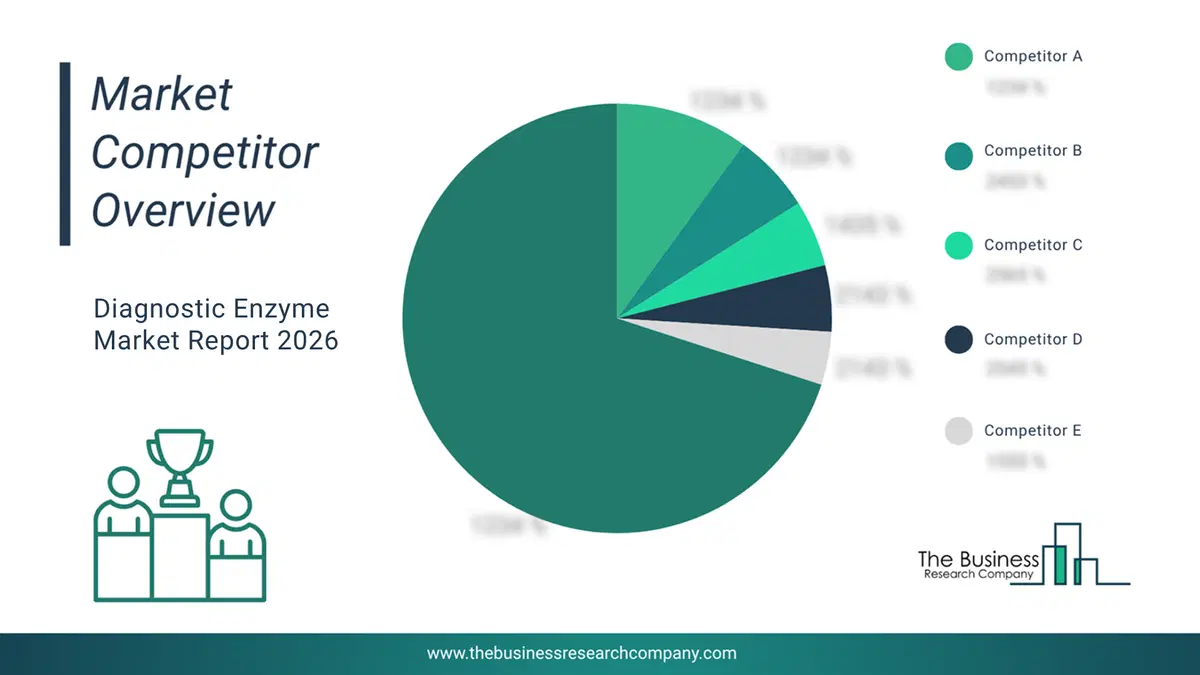
This chart is for illustrative purposes; the full report includes a detailed competitor analysis and comprehensive overview of the top 10 companies in the market.
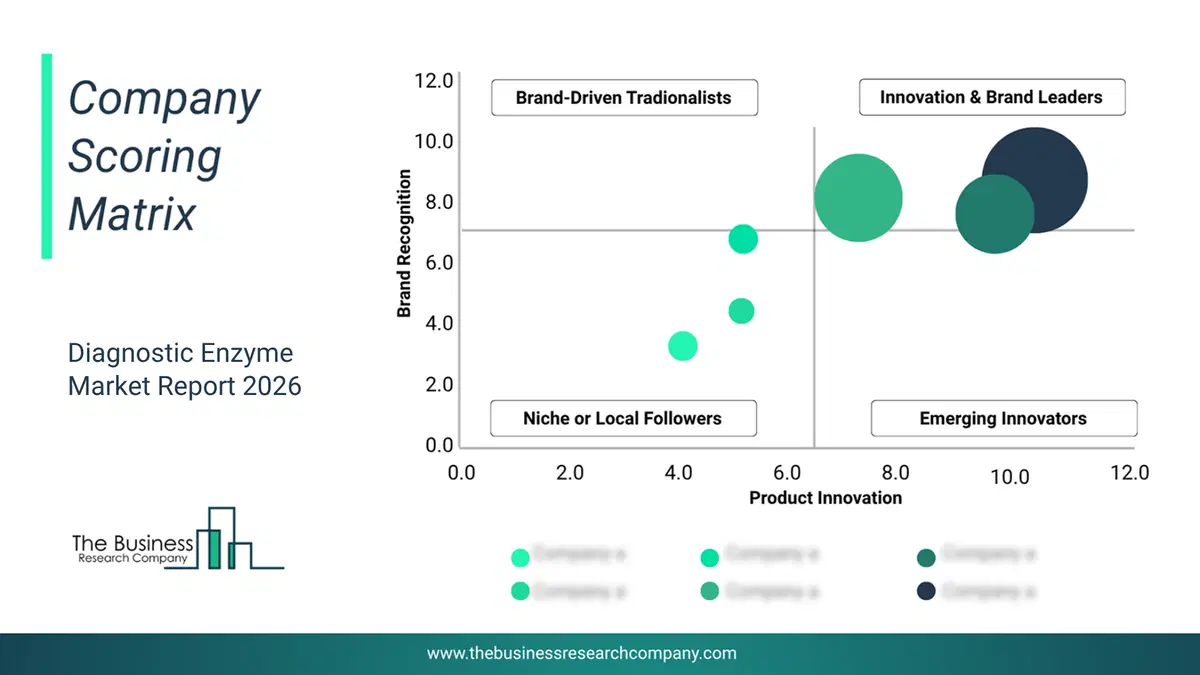
This chart maps companies by product innovation and brand strength, with bubble size indicating relative revenue, helping identify market leaders, challengers, and niche players. This is an illustrative chart; the full report provides a complete and accurate competitive analysis.
Global Diagnostic Enzyme Market Trends and Insights
Major companies operating in the diagnostic enzyme market are focusing on technological advancements, such as digital PCR platforms, to meet the rising demand for highly sensitive and absolute quantitation in clinical diagnostics, especially in oncology and infectious disease testing. Digital PCR (dPCR) is a method that partitions a sample into thousands of nanoliter-scale reactions, allowing absolute quantification of target nucleic acids without relying on standard curves unlike traditional quantitative PCR (qPCR), which estimates concentrations based on reference standards and can be less precise, especially at low target abundance. For instance, in September 2024, QIAGEN N.V., a Germany-based biotechnology company, launched the QIAcuityDx Digital PCR System, a clinical-grade dPCR instrument. This system integrates partitioning, thermocycling, and imaging in a single walk-away device, enabling absolute quantification of DNA and RNA for applications such as minimally invasive liquid biopsies in cancer monitoring. Its key features include IVDR certification in Europe, 510(k) exemption in the U.S., user-friendly software, and flexible scheduling, while supporting companion-diagnostic development via its GeneGlobe platform. The QIAcuityDx enhances precision and lab efficiency by reducing hands-on time and delivering reproducible results even for low-abundance targets.What Are Latest Mergers And Acquisitions In The Diagnostic Enzyme Market?
In January 2023, SD Biosensor Inc., a South Korea-based provider of in vitro diagnostics platforms and rapid test systems, along with SJL SERVICES PRIVATE LIMITED Partners, acquired Meridian Bioscience Inc. for $1.53 billion. With this acquisition, SD Biosensor aimed to accelerate its entry into the U.S. IVD market by leveraging Meridian’s established regulatory presence and distribution network. Meridian Bioscience Inc., a US-based provider of diagnostic testing solutions and life-science raw materials.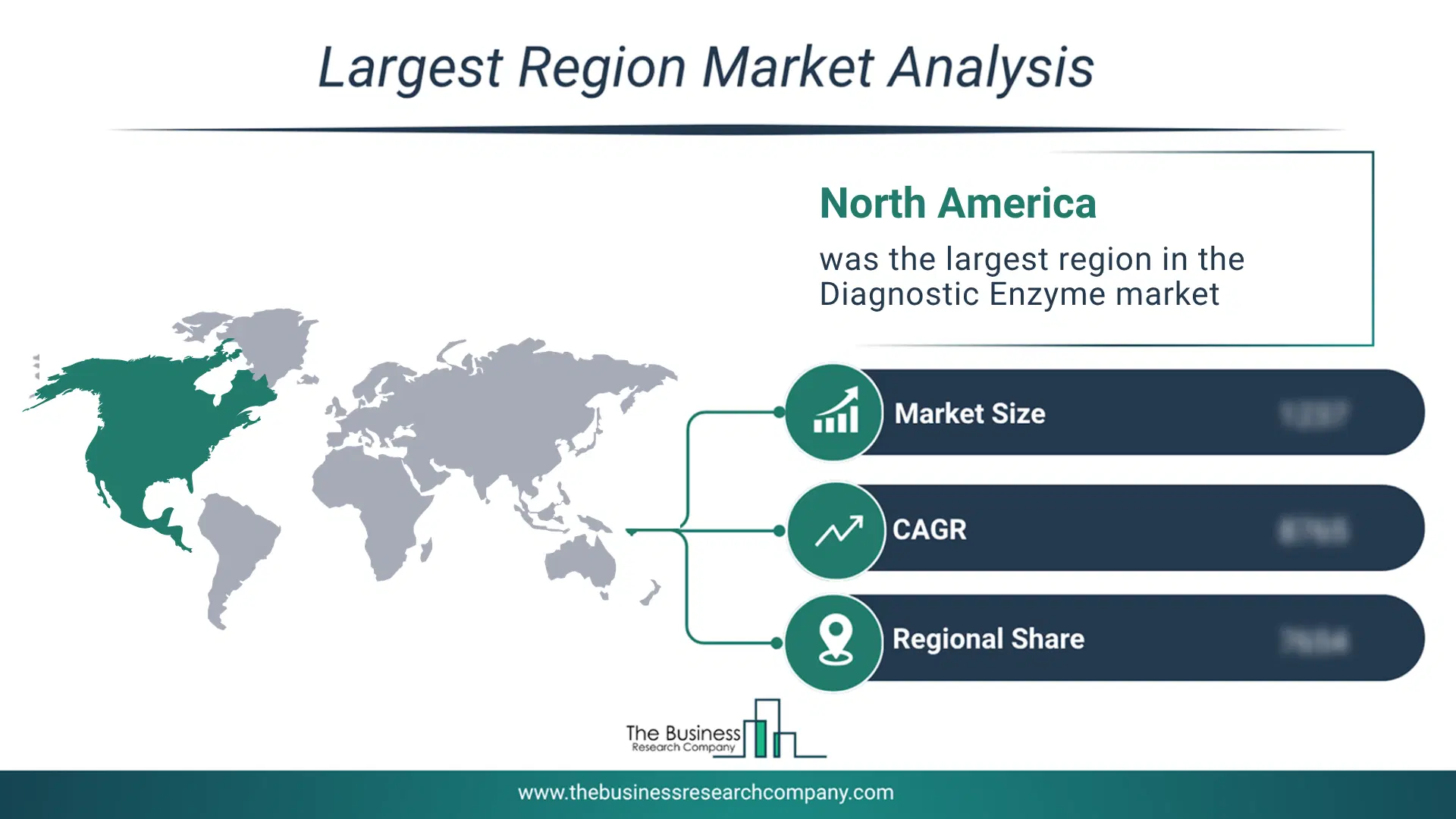
Regional Insights
North America was the largest region in the enzymes market in 2025. Middle East is expected to be the fastest-growing region in the diagnostic enzyme market report during the forecast period. The regions covered in this market report are Asia-Pacific, South East Asia, Western Europe, Eastern Europe, North America, South America, Middle East, Africa. The countries covered in this market report are Australia, Brazil, China, France, Germany, India, Indonesia, Japan, Taiwan, Russia, South Korea, UK, USA, Canada, Italy, Spain.What Defines the Diagnostic Enzyme Market?
The diagnostic enzymes market consists of sales of acid phosphatase, alanine aminotransferase, cholinesterase, and aspartate aminotransferase. Values in this market are factory gate values, that is the value of goods sold by the manufacturers or creators of the goods, whether to other entities (including downstream manufacturers, wholesalers, distributors and retailers) or directly to end customers. The value of goods in the diagnostic enzymes market includes related services sold by the creators of the goods.How is Market Value Defined and Measured?
The market value is defined as the revenues that enterprises gain from the sale of goods and/or services within the specified market and geography through sales, grants, or donations in terms of the currency (in USD unless otherwise specified). The revenues for a specified geography are consumption values that are revenues generated by organizations in the specified geography within the market, irrespective of where they are produced. It does not include revenues from resales along the supply chain, either further along the supply chain or as part of other products.
This chart presents market attractiveness based on a quantitative evaluation of growth, competition, strategic alignment, and risk, offering a clear view of opportunity areas for decision-making. This chart is for illustrative purposes; the full report contains the complete analysis.

This chart highlights the Total Addressable Market (TAM) by estimating the maximum revenue opportunity using an assumption-driven approach, supporting strategic planning and opportunity sizing across markets. The chart is illustrative; the full report provides a more comprehensive analysis.
What Key Data and Analysis Are Included in the Diagnostic Enzyme Market Report 2026?
The diagnostic enzyme market research report is one of a series of new reports from The Business Research Company that provides market statistics, including industry global market size, regional shares, competitors with the market share, detailed market segments, market trends and opportunities, and any further data you may need to thrive in the diagnostic enzyme industry. The market research report delivers a complete perspective of everything you need, with an in-depth analysis of the current and future state of the industry.Diagnostic Enzyme Market Report Forecast Analysis
| Report Attribute | Details |
|---|---|
| Market Size Value In 2026 | $4.75 billion |
| Revenue Forecast In 2030 | $6.39 billion |
| Growth Rate | CAGR of 5.7% from 2026 to 2030 |
| Base Year For Estimation | 2025 |
| Actual Estimates/Historical Data | 2020-2025 |
| Forecast Period | 2026 - 2030 |
| Market Representation | Revenue in USD Billion and CAGR from 2026 to 2030 |
| Segments Covered | Product Type, Source, Application |
| Regional Scope | Asia-Pacific, Western Europe, Eastern Europe, North America, South America, Middle East, Africa |
| Country Scope | The countries covered in the report are Australia, Brazil, China, France, Germany, India, Indonesia, Japan, Taiwan, Russia, South Korea, UK, USA, Canada, Italy, Spain. |
| Key Companies Profiled | Sanofi S.A., Advanced Enzymes Technologies, Aldevron LLC, Amano Enzymes Inc., Codexis Inc., EKF Diagnostic, Kaneka Eurogentec, Roche Holding AG, Sekisui Diagnostics LLC, Thermo Fisher Scientific Inc., Charles River Laboratories, Biocatalysts, Merck & Co. Inc., Chr. Hansen, Kerry Group, Dyadic International, Creative Enzymes, Pfizer Inc., Eli Lilly and Company, Bristol-Myers Squibb Company, GlaxoSmithKline plc, Johnson & Johnson, AbbVie Inc., Amgen Inc., Biogen Inc., Gilead Sciences Inc., Regeneron Pharmaceuticals Inc. |
| Customization Scope | Request for Customization |
| Pricing And Purchase Options | Explore Purchase Options |