
Diagnostic Wearable Medical Devices Market Report 2026
Global Outlook – By Type (Vital Signs Monitor, Sleep And Activity Monitor, Fetal And Obstetric Monitoring, Neuro Monitoring, Electrocardiogram Monitors), By Channel (Online, Pharmacies, Hypermarkets), By Application (Sports And Fitness, Remote Patient Monitoring, Home Healthcare) – Market Size, Trends, Strategies, and Forecast to 2030
Diagnostic Wearable Medical Devices Market Overview
• Diagnostic Wearable Medical Devices market size has reached to $8.09 billion in 2025 • Expected to grow to $15.01 billion in 2030 at a compound annual growth rate (CAGR) of 13.1% • Growth Driver: Rising Prevalence Of Chronic Diseases Fuels Growth In Diagnostic Wearable Medical Devices Market • Market Trend: Next-Gen Glucose Monitoring Wearable Devices For Diabetes Management • North America was the largest region in 2025.What Is Covered Under Diagnostic Wearable Medical Devices Market?
Diagnostic wearable medical devices are electronic devices worn on the body that monitor and collect health data to assess and diagnose medical conditions. They are used for continuously tracking vital signs, detecting abnormalities, and providing real-time health insights to support early diagnosis and personalized treatment. The main types of diagnostic wearable medical devices include vital signs monitors, sleep and activity monitors, fetal and obstetric monitoring devices, neuro monitoring devices, and electrocardiogram monitors. Vital signs monitor tracks essential health indicators such as heart rate, blood pressure, and oxygen levels. These devices are often used in hospitals and at home to monitor patients' overall health and detect any critical changes in their vital signs. The various distribution channels include online platforms, pharmacies, and hypermarkets and are used in several applications such as sports and fitness, remote patient monitoring, and home healthcare.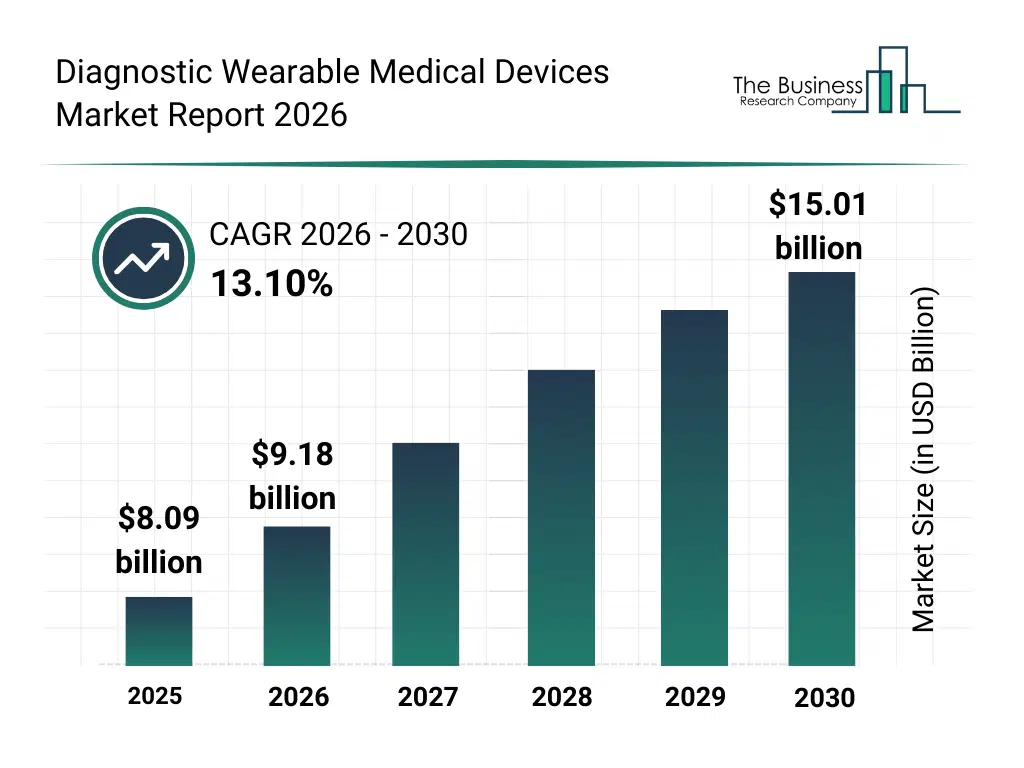
What Is The Diagnostic Wearable Medical Devices Market Size and Share 2026?
The diagnostic wearable medical devices market size has grown rapidly in recent years. It will grow from $8.09 billion in 2025 to $9.18 billion in 2026 at a compound annual growth rate (CAGR) of 13.4%. The growth in the historic period can be attributed to limited availability of wearable medical devices, high cost of early devices, reliance on traditional monitoring methods, growing awareness of health and fitness tracking, limited integration with mobile apps.What Is The Diagnostic Wearable Medical Devices Market Growth Forecast?
The diagnostic wearable medical devices market size is expected to see rapid growth in the next few years. It will grow to $15.01 billion in 2030 at a compound annual growth rate (CAGR) of 13.1%. The growth in the forecast period can be attributed to technological advancements in sensors and wearable electronics, rising demand for remote patient monitoring, growing adoption of home healthcare solutions, integration with ai and cloud platforms, expansion of wearable use in fetal and neuro monitoring. Major trends in the forecast period include rising adoption of remote patient monitoring, increasing use of wearables in sports and fitness, growth in home healthcare monitoring, integration with mobile health applications, enhanced focus on continuous and real-time health tracking.
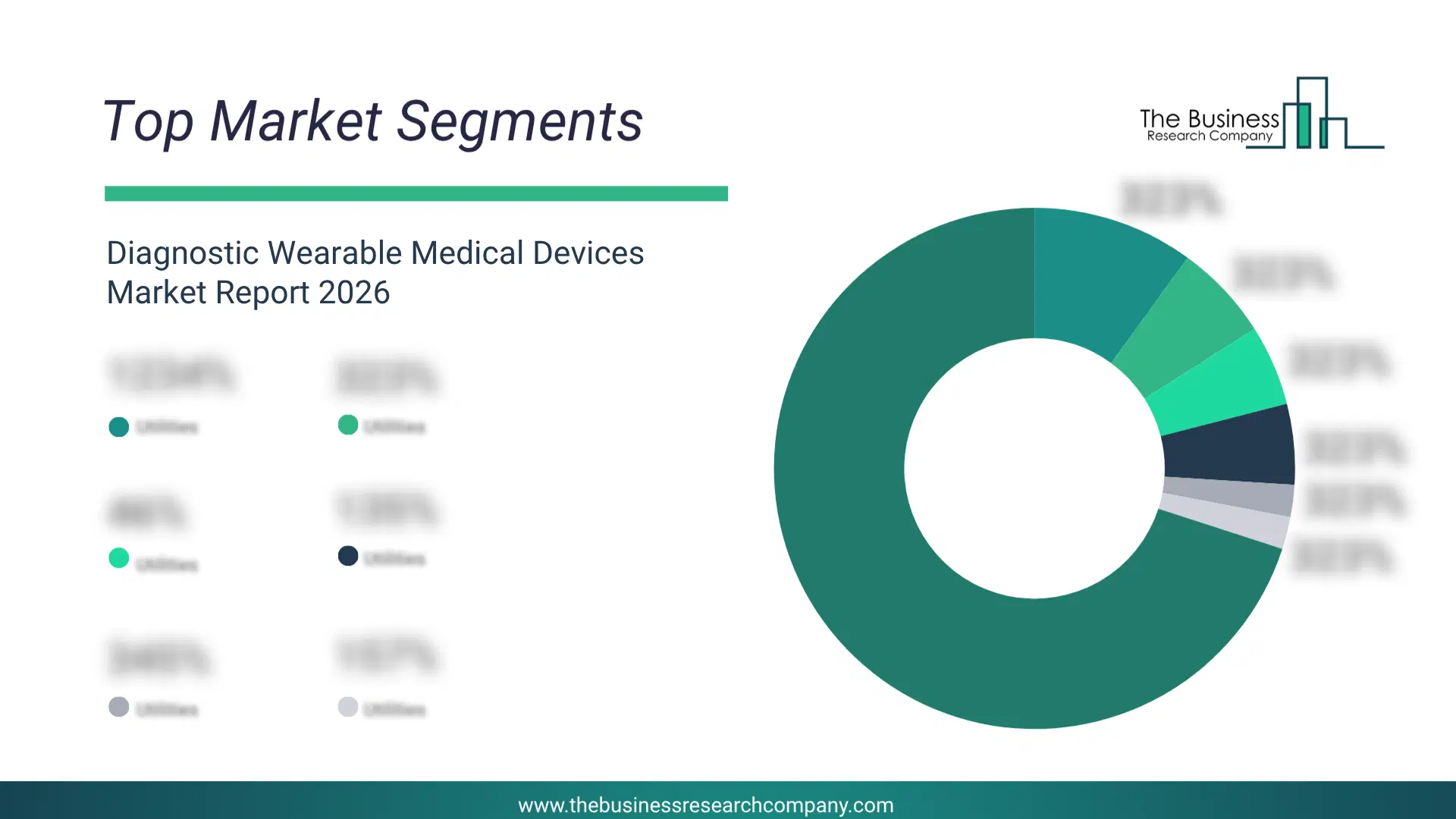
Global Diagnostic Wearable Medical Devices Market Segmentation
1) By Type: Vital Signs Monitor, Sleep And Activity Monitor, Fetal And Obstetric Monitoring, Neuro Monitoring, Electrocardiogram Monitors 2) By Channel: Online, Pharmacies, Hypermarkets 3) By Application: Sports And Fitness, Remote Patient Monitoring, Home Healthcare Subsegments: 1) By Vital Signs Monitor: Heart Rate Monitor, Blood Pressure Monitor, Temperature Monitor, Respiratory Rate Monitor, Blood Oxygen Saturation (Spo2) Monitor 2) By Sleep And Activity Monitor: Sleep Apnea Monitor, Wearable Sleep Trackers, Physical Activity And Fitness Trackers, Step Counters And Pedometers, Sleep Pattern Monitoring Devices 3) By Fetal And Obstetric Monitoring: Fetal Heart Rate Monitor, Maternal Contraction Monitors, Wearable Pregnancy Monitoring Devices, Non-Invasive Fetal Monitoring Devices 4) By Neuro Monitoring: Wearable EEG Monitors, Brain Activity Monitors, Seizure Monitoring Devices, Wearable Neurostimulation Devices 5) By Electrocardiogram Monitors: Portable ECG Monitors, Wearable ECG Patches, Real-Time ECG Monitoring Devices, Continuous ECG Monitoring WearablesWhat Is The Driver Of The Diagnostic Wearable Medical Devices Market?
The increasing prevalence of chronic diseases is expected to propel the growth of the diagnostic wearable medical devices market going forward. Chronic diseases refer to long-lasting health conditions that develop gradually, persist over an extended period, and often require ongoing medical attention and management. The prevalence of chronic diseases is due to a combination of factors, including aging populations, sedentary lifestyles, poor dietary habits, rising obesity rates, and the increasing prevalence of risk factors such as smoking and excessive alcohol consumption. Diagnostic wearable medical devices are increasingly used to manage chronic diseases by monitoring vital signs and other health metrics, providing real-time data that helps patients and healthcare providers better manage conditions. For instance, in April 2025, according to the Centers for Disease Control and Prevention (CDC), a US-based federal agency, in 2023, approximately 194 million U.S. adults, or 76.4%, reported having at least one chronic condition. The prevalence was 59.5% among young adults, 78.4% among midlife adults, and 93.0% among older adults. Therefore, the increasing prevalence of chronic diseases drives the growth of the diagnostic wearable medical devices industry.Key Players In The Global Diagnostic Wearable Medical Devices Market
Major companies operating in the diagnostic wearable medical devices market are Apple Inc., Google LLC, Samsung Electronics Co. Ltd., Huawei Technologies Co. Ltd., F. Hoffmann-La Roche Ltd., Abbott Laboratories, Medtronic plc, Koninklijke Philips NV, GE Healthcare, OMRON Corporation, Garmin Ltd., Drägerwerk AG & Co. KGaA, Molex LLC, ResMed Inc., Dexcom Inc., Boyd Corporation, Masimo Corporation, AliveCor Inc., VitalConnect Inc., BTS Bioengineering Corp., Cleveland Medical Devices Inc., Meril Life Sciences Pvt. Ltd., Activinsights Ltd., Murata Vios Inc.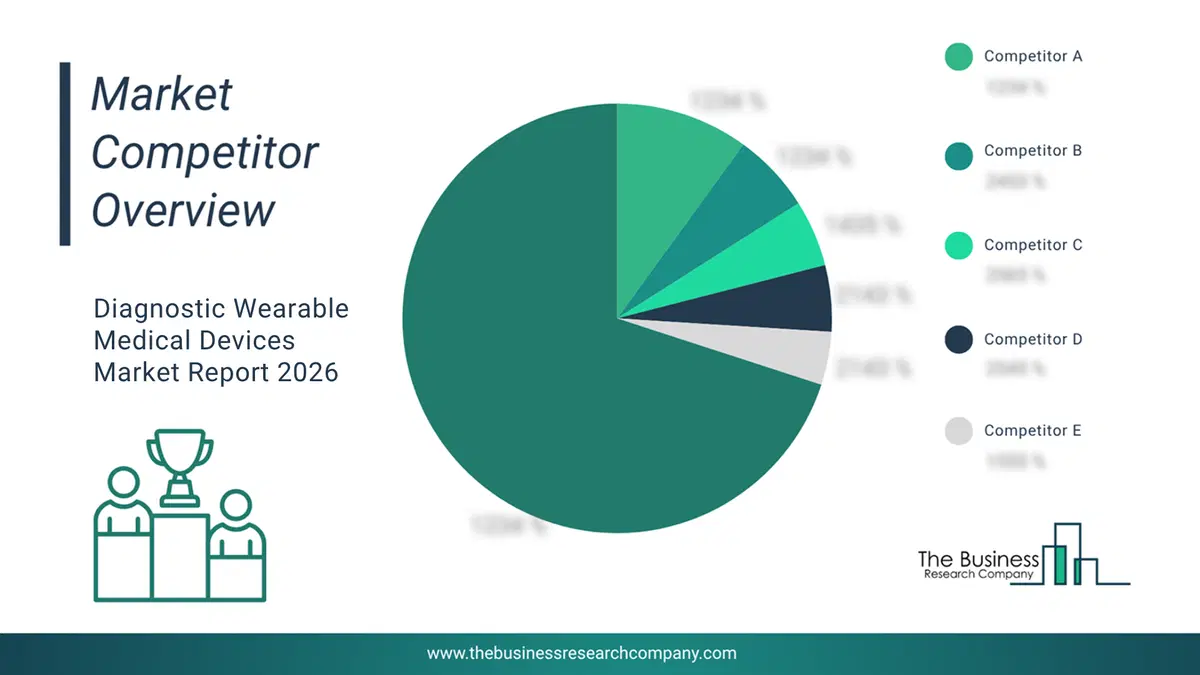
This chart is for illustrative purposes; the full report includes a detailed competitor analysis and comprehensive overview of the top 10 companies in the market.
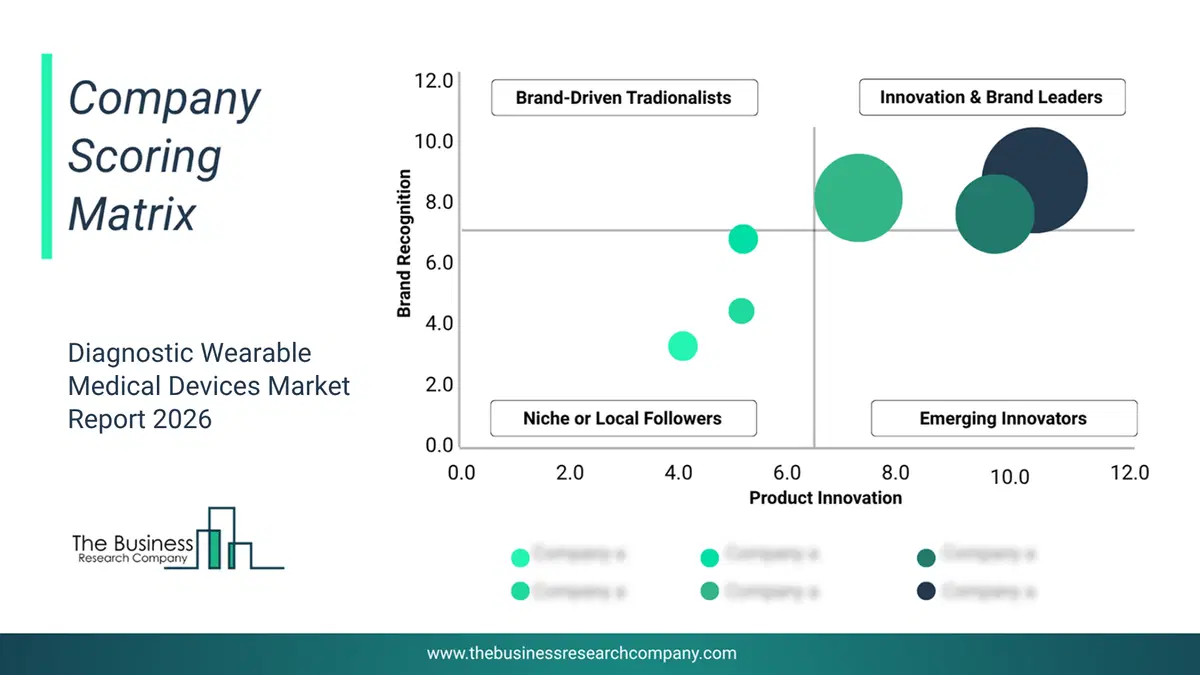
This chart maps companies by product innovation and brand strength, with bubble size indicating relative revenue, helping identify market leaders, challengers, and niche players. This is an illustrative chart; the full report provides a complete and accurate competitive analysis.
Global Diagnostic Wearable Medical Devices Market Trends and Insights
Major companies operating in the diagnostic wearable medical devices market are focused on developing innovative solutions, such as glucose monitoring systems, to enhance accuracy, user experience, and the management of chronic conditions such as diabetes. Glucose monitoring systems are medical devices that measure and track blood glucose levels, helping individuals, particularly those with diabetes, manage their condition through real-time data and insights. For instance, in February 2023, Dexcom Inc., a US-based manufacturer of continuous glucose monitoring systems, introduced the next-generation Dexcom G7 CGM System for Medicare beneficiaries. The next-generation Dexcom G7 CGM System is uniquely designed with a smaller, more discreet profile and a faster warm-up time. It combines the sensor and transmitter into a single unit, enhancing ease of use and accuracy with an overall mean absolute relative difference (MARD) of 8.2%. It offers customizable alerts, longer wear duration, and seamless integration with other diabetes management devices and digital health platforms, exemplifying advancements in diagnostic wearable continuous glucose monitoring devices.What Are Latest Mergers And Acquisitions In The Diagnostic Wearable Medical Devices Market?
In January 2024, Boston Scientific, a US-based a global medical technology company, announced an agreement to acquire Axonics, Inc. for an undisclosed amount. With this acquisition, the primary aim is to enhance Boston Scientific's urology portfolio by integrating Axonics' innovative devices designed to treat urinary and bowel dysfunction, particularly through sacral neuromodulation (SNM) therapies. Axonics, Inc. is a US-based medical technology company.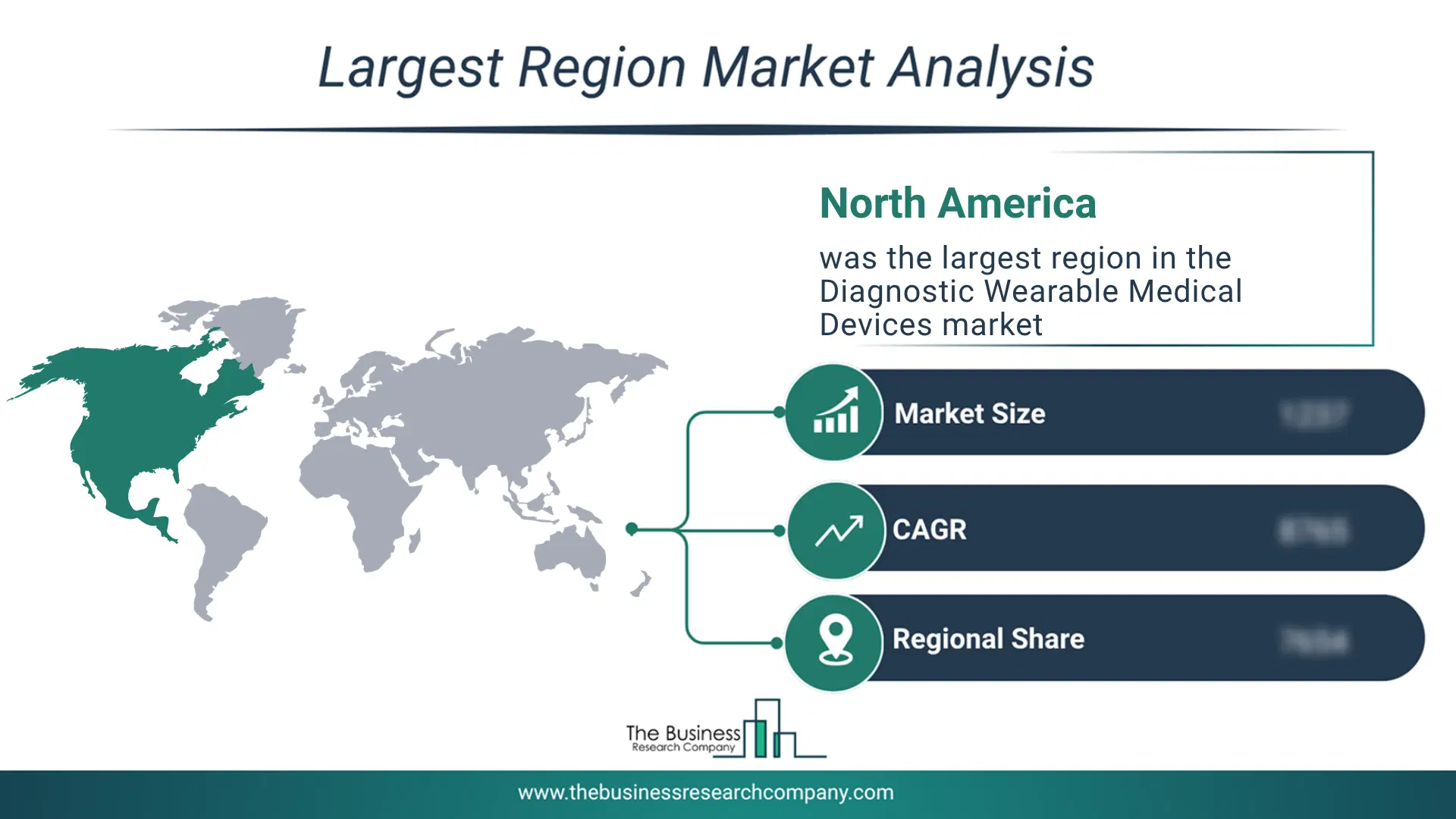
Regional Outlook
North America was the largest region in the diagnostic wearable medical devices market in 2025. The regions covered in this market report are Asia-Pacific, South East Asia, Western Europe, Eastern Europe, North America, South America, Middle East, Africa. The countries covered in this market report are Australia, Brazil, China, France, Germany, India, Indonesia, Japan, Taiwan, Russia, South Korea, UK, USA, Canada, Italy, SpainWhat Defines the Diagnostic Wearable Medical Devices Market?
The diagnostic wearable medical devices market consists of sales of fitness trackers, smartwatches, heart rate monitors, and blood glucose monitors. Values in this market are ‘factory gate’ values, that is the value of goods sold by the manufacturers or creators of the goods, whether to other entities (including downstream manufacturers, wholesalers, distributors and retailers) or directly to end customers. The value of goods in this market includes related services sold by the creators of the goods.How is Market Value Defined and Measured?
The market value is defined as the revenues that enterprises gain from the sale of goods and/or services within the specified market and geography through sales, grants, or donations in terms of the currency (in USD unless otherwise specified). The revenues for a specified geography are consumption values that are revenues generated by organizations in the specified geography within the market, irrespective of where they are produced. It does not include revenues from resales along the supply chain, either further along the supply chain or as part of other products.
This chart presents market attractiveness based on a quantitative evaluation of growth, competition, strategic alignment, and risk, offering a clear view of opportunity areas for decision-making. This chart is for illustrative purposes; the full report contains the complete analysis.

This chart highlights the Total Addressable Market (TAM) by estimating the maximum revenue opportunity using an assumption-driven approach, supporting strategic planning and opportunity sizing across markets. The chart is illustrative; the full report provides a more comprehensive analysis.
What Key Data and Analysis Are Included in the Diagnostic Wearable Medical Devices Market Report 2026?
The diagnostic wearable medical devices market research report is one of a series of new reports from The Business Research Company that provides market statistics, including industry global market size, regional shares, competitors with the market share, detailed market segments, market trends and opportunities, and any further data you may need to thrive in the diagnostic wearable medical devices industry. The market research report delivers a complete perspective of everything you need, with an in-depth analysis of the current and future state of the industry.Diagnostic Wearable Medical Devices Market Report Forecast Analysis
| Report Attribute | Details |
|---|---|
| Market Size Value In 2026 | $9.18 billion |
| Revenue Forecast In 2030 | $15.01 billion |
| Growth Rate | CAGR of 13.1% from 2026 to 2030 |
| Base Year For Estimation | 2025 |
| Actual Estimates/Historical Data | 2020-2025 |
| Forecast Period | 2026 - 2030 |
| Market Representation | Revenue in USD Billion and CAGR from 2026 to 2030 |
| Segments Covered | Type, Channel, Application |
| Regional Scope | Asia-Pacific, Western Europe, Eastern Europe, North America, South America, Middle East, Africa |
| Country Scope | The countries covered in the report are Australia, Brazil, China, France, Germany, India, Indonesia, Japan, Taiwan, Russia, South Korea, UK, USA, Canada, Italy, Spain. |
| Key Companies Profiled | Apple Inc., Google LLC, Samsung Electronics Co. Ltd., Huawei Technologies Co. Ltd., F. Hoffmann-La Roche Ltd., Abbott Laboratories, Medtronic plc, Koninklijke Philips NV, GE Healthcare, OMRON Corporation, Garmin Ltd., Drägerwerk AG & Co. KGaA, Molex LLC, ResMed Inc., Dexcom Inc., Boyd Corporation, Masimo Corporation, AliveCor Inc., VitalConnect Inc., BTS Bioengineering Corp., Cleveland Medical Devices Inc., Meril Life Sciences Pvt. Ltd., Activinsights Ltd., Murata Vios Inc. |
| Customization Scope | Request for Customization |
| Pricing And Purchase Options | Explore Purchase Options |