

Difficult-to-Express Proteins Market Report 2026
Global Outlook – By Protein (Proteases, Kinases, Membrane Proteins, Other Proteins), By Expression Of Difficult Proteins (Disulfide-bonded Protein Expression, Membrane Protein Expression, Toxic Protein Expression, Target Protein Insolubility), By Technology (Cell-free Protein Synthesis, Prokaryotic Expression Systems, Small Ubiquitin-like Modifier (SUMO) Fusion System, Gene Fusion Systems, Other Technologies), By Application (Drug Discovery, Protein Purification, Protein Therapeutics, Disease Diagnostics And Monitoring, Other Applications) - Market Size, Trends, Strategies, and Forecast to 2030
Difficult-to-Express Proteins Market Overview
• Difficult-to-Express Proteins market size has reached to $5.2 billion in 2025 • Expected to grow to $8.99 billion in 2030 at a compound annual growth rate (CAGR) of 11.6% • Growth Driver: Rising Demand For Biopharmaceuticals Driving The Growth Of The Market Due To Increased Adoption Of Biologics And Advanced Therapies • Market Trend: Evozyne's Breakthrough AI Model Paves The Way For Innovation In The Difficult-To-Express Protein Market • North America was the largest region in 2025 and Asia-Pacific is the fastest growing region.What Is Covered Under Difficult-to-Express Proteins Market?
Difficult-to-express proteins refer to proteins that are challenging to produce in large quantities or with high yield using standard protein expression systems in heterologous expression systems. These proteins are used in research studies to explore protein folding and stability, generate innovative therapeutics, and conduct biochemical studies of drugs. The main types of difficult-to-express proteins are proteases, kinases, membrane proteins, and others. Proteases refer to an enzyme that catalyzes the breakdown of peptide bonds found in proteins, and these proteins serve as essential tools in peptide research due to their proficiency in breaking down proteins into smaller peptide fragments, facilitating simultaneous mass spectrometry analysis and decoding and treatment of inflammation, sepsis, digestive disorders, cystic fibrosis, retinal disorders, and other diseases. The various expressions of difficult proteins include disulfide-bonded protein expression, membrane protein expression, toxic protein expression, and target protein insolubility using different technologies such as cell-free protein synthesis, prokaryotic expression systems, small ubiquitin-like modifier (SUMO) fusion systems, gene fusion systems, and others. These are applied in drug discovery, protein purification, protein therapeutics, disease diagnostics and monitoring, and others.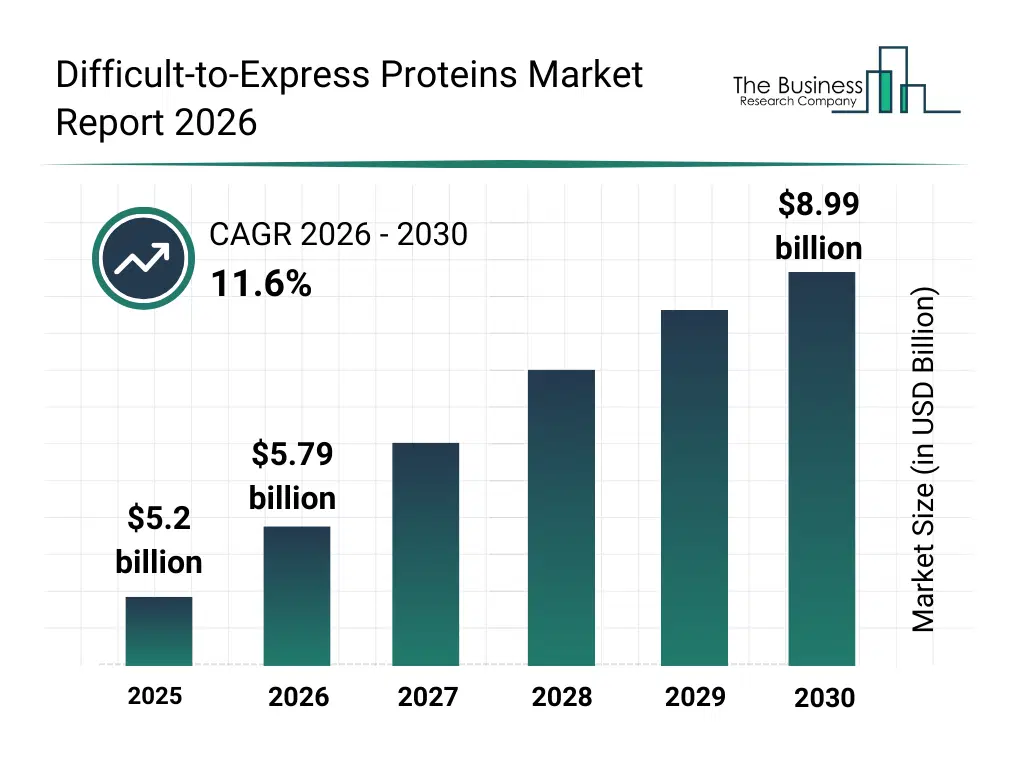
What Is The Difficult-to-Express Proteins Market Size and Share 2026?
The difficult-to-express proteins market size has grown rapidly in recent years. It will grow from $5.2 billion in 2025 to $5.79 billion in 2026 at a compound annual growth rate (CAGR) of 11.3%. The growth in the historic period can be attributed to growth in biologics research, limitations of traditional expression systems, academic protein research expansion, demand for membrane proteins, biotech funding growth.What Is The Difficult-to-Express Proteins Market Growth Forecast?
The difficult-to-express proteins market size is expected to see rapid growth in the next few years. It will grow to $8.99 billion in 2030 at a compound annual growth rate (CAGR) of 11.6%. The growth in the forecast period can be attributed to growth of protein therapeutics, innovation in expression technologies, demand for structural biology studies, increased pharma outsourcing, precision medicine research expansion. Major trends in the forecast period include increasing demand for complex protein expression, expansion of cell-free protein synthesis, growing use of fusion and tag technologies, rising application in drug discovery, adoption of advanced expression systems.
Global Difficult-to-Express Proteins Market Segmentation
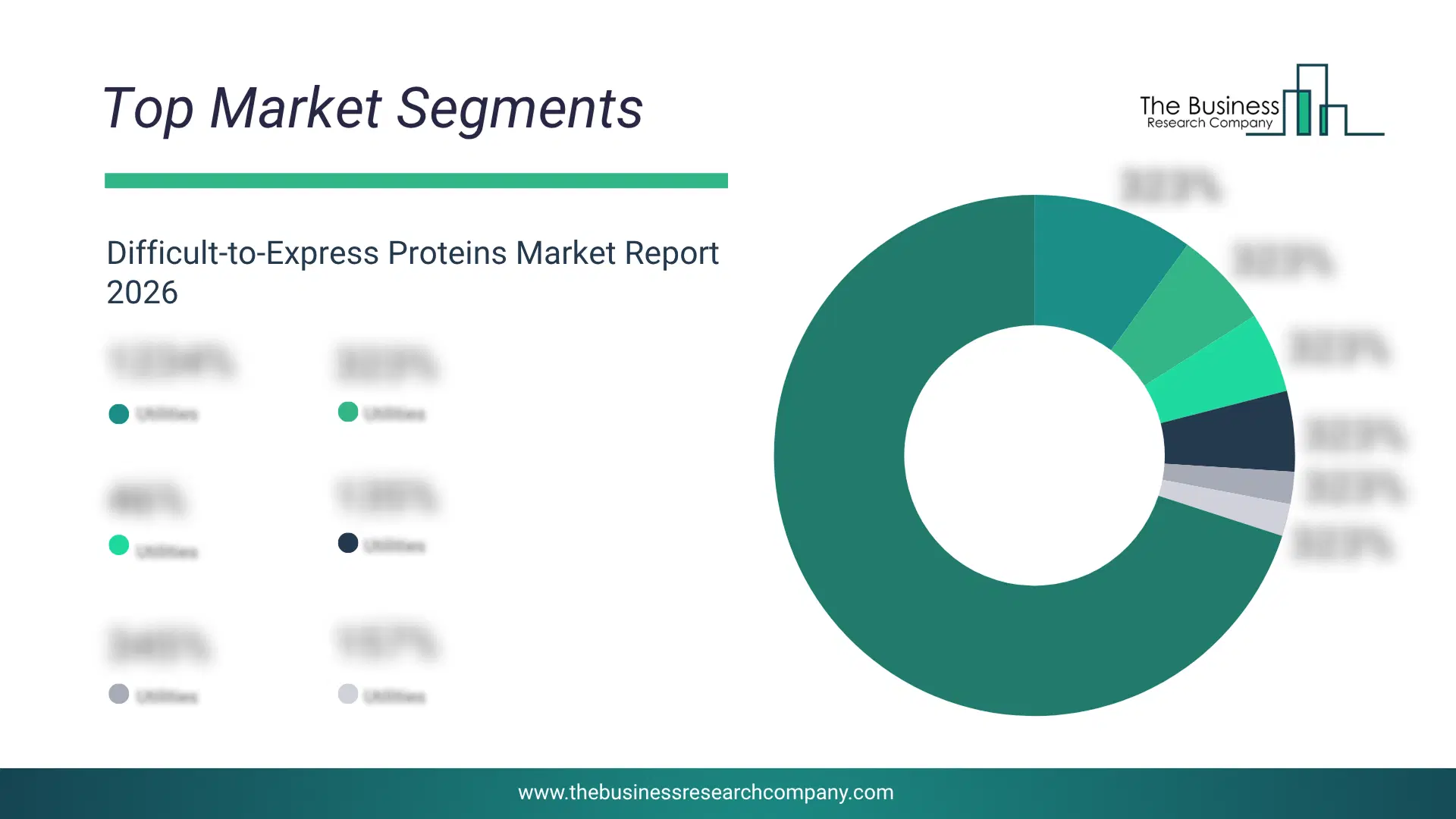
1) By Protein: Proteases, Kinases, Membrane Proteins, Other Proteins 2) By Expression Of Difficult Proteins: Disulfide-bonded Protein Expression, Membrane Protein Expression, Toxic Protein Expression, Target Protein Insolubility 3) By Technology: Cell-free Protein Synthesis, Prokaryotic Expression Systems, Small Ubiquitin-like Modifier (SUMO) Fusion System, Gene Fusion Systems, Other Technologies 4) By Application: Drug Discovery, Protein Purification, Protein Therapeutics, Disease Diagnostics And Monitoring, Other Applications Subsegments: 1) By Proteases: Serine Proteases, Cysteine Proteases, Aspartic Proteases, Metalloproteases 2) By Kinases: Receptor Tyrosine Kinases, Serine Or Threonine Kinases, Cyclin-Dependent Kinases 3) By Membrane Proteins: G-Protein Coupled Receptors (GPCRs), Ion Channels, Transporters 4) By Other Proteins: Transcription Factors, Structural Proteins, EnzymesWhat Is The Driver Of The Difficult-to-Express Proteins Market?
The increasing demand for biopharmaceuticals is expected to propel the growth of the difficult to express proteins market going forward. Here, the driver factor refers to the growing global reliance on biologics, therapeutic proteins, and advanced biopharma modalities to treat a wide range of diseases. This demand is increasing because more patients and healthcare systems are shifting toward precision medicine and biologics over traditional small-molecule drugs. The difficult to express proteins market supports this trend by enabling the production of complex proteins (such as multi-domain proteins, antibody fragments, fusion proteins, and post-translationally modified proteins) required for these advanced therapies. For instance, in July 2025, according to Sartorius, a Germany-based international life science technology company, sales of biopharmaceutical drugs rose by about 9% to reach USD 458 billion in 2024, up from the previous year, accounting for 41% of the total pharmaceutical market compared with 40% in 2023. Therefore, the increasing demand for biopharmaceuticals is driving the growth of the difficult to express proteins market.Key Players In The Global Difficult-to-Express Proteins Market
Major companies operating in the difficult-to-express proteins market are Thermo Fisher Scientific Inc., Merck KGaA, Lonza Group Ltd, Catalent Inc., Sartorius AG, Charles River Laboratories International Inc., Bio-Rad Laboratories Inc., Samsung Biologics Co. Ltd., Bio-Techne Corp., GenScript Biotech Corporation, Ajinomoto Bio-Pharma Services, Novasep Holding SAS, Rentschler Biopharma SE, BioLegend Inc., Codexis Inc., Enzo Biochem Inc., Sino Biological Inc., Horizon Discovery Ltd., Creative Biolabs Inc., OriGene Technologies Inc., Celonic AG, Cube Biotech GmbH, Lucigen Corporation, Batavia Biosciences Inc., Cytovance Biologics Inc., Alloy Therapeutics Inc., Aragen Bioscience Inc., Selexis SA, LifeSensors Inc., Bionova Scientific Inc.
This chart is for illustrative purposes; the full report includes a detailed competitor analysis and comprehensive overview of the top 10 companies in the market.
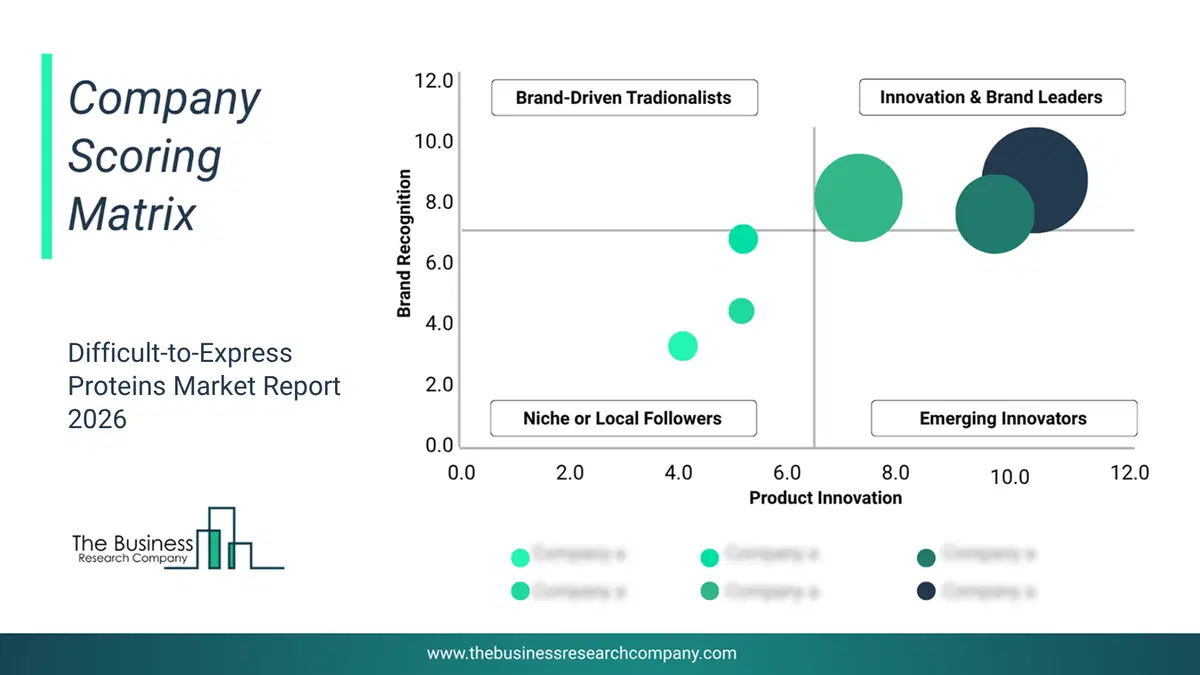
This chart maps companies by product innovation and brand strength, with bubble size indicating relative revenue, helping identify market leaders, challengers, and niche players. This is an illustrative chart; the full report provides a complete and accurate competitive analysis.
Global Difficult-to-Express Proteins Market Trends and Insights
The development of innovative technologies is a key trend gaining popularity in the difficult-to-express protein market. Major companies operating in the difficult-to-express protein market are focused on developing innovative technologies to sustain their position in the market. For instance, in January 2023, Evozyne, a US-based biotechnology company, developed an innovative AI model called Protein Transformer Variational AutoEncoder to design therapeutic proteins. This technique creates a framework for effectively training and deploying big language models for biology. The end resultant model is an innovative take on deep learning that brings up new possibilities for the data-driven design of engineered proteins with designed functionality.What Are Latest Mergers And Acquisitions In The Difficult-to-Express Proteins Market?
In July 2023, Biovian, a Finland-based contract development and manufacturing organization (CDMO) specializing in biopharmaceuticals, invested of over $53.249 million (€50 million) to expand its manufacturing facility in Turku. With this investment, the company aims to increase production capacity and flexibility to support the development and commercial-scale manufacturing of biologics, viral vectors, and microbial proteins. The expansion will add a new 6,400-square-meter facility, featuring advanced equipment and dedicated cleanroom areas for bulk drug substances and final drug product manufacture, enabling larger-scale viral vector and microbial protein projects.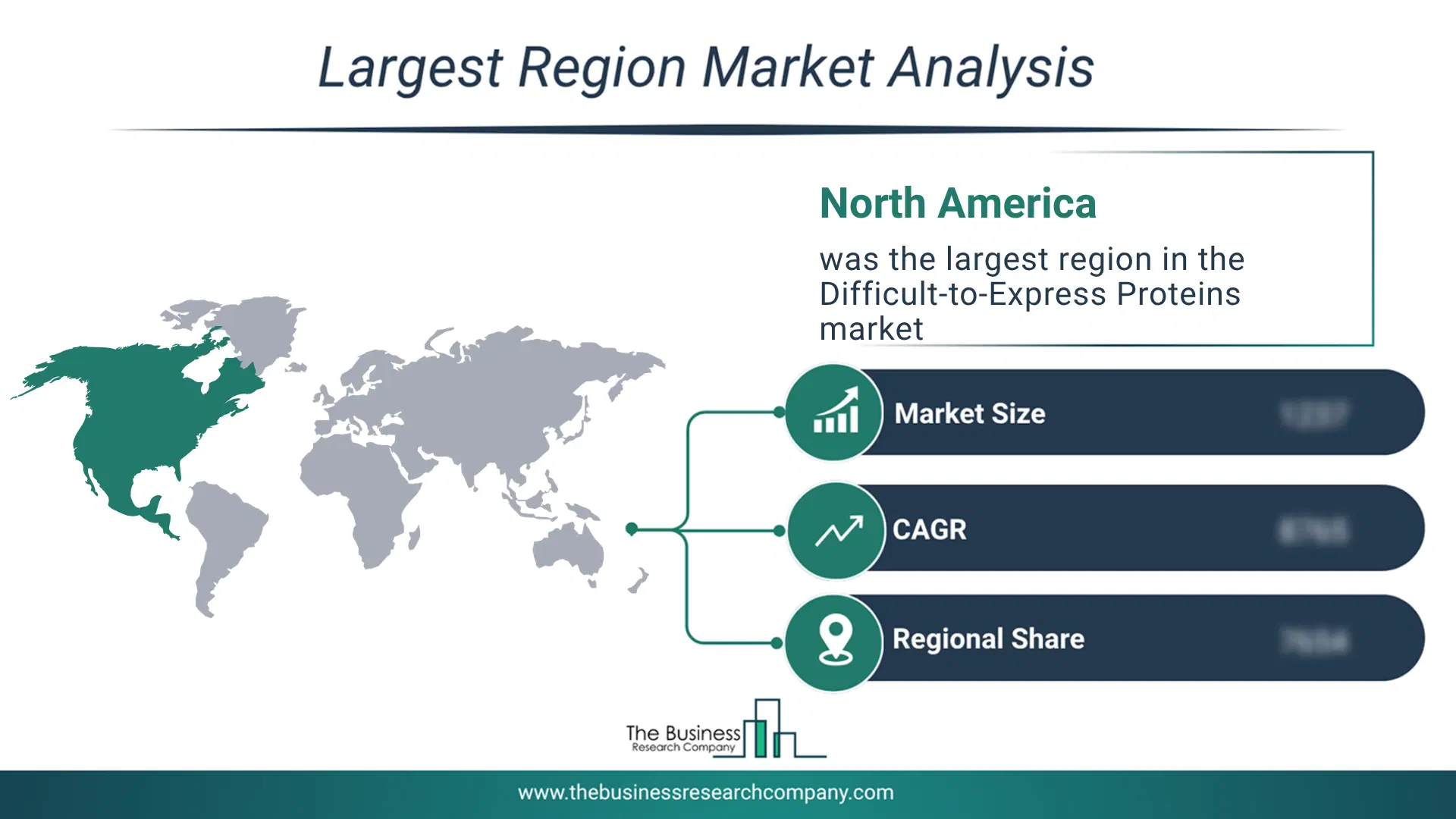
Regional Outlook
North America was the largest region in the difficult-to-express proteins market in 2025. Asia-Pacific is expected to be the fastest-growing region in the forecast period. The regions covered in this market report are Asia-Pacific, South East Asia, Western Europe, Eastern Europe, North America, South America, Middle East, Africa. The countries covered in this market report are Australia, Brazil, China, France, Germany, India, Indonesia, Japan, Taiwan, Russia, South Korea, UK, USA, Canada, Italy, Spain.What Defines the Difficult-to-Express Proteins Market?
The difficult-to-express proteins market consists of revenues earned by entities by providing code optimization, fusion tags, post-translational modification, inducible expression systems, and co-expression chaperones. The market value includes the value of related goods sold by the service provider or included within the service offering. The difficult-to-express protein market also includes the sales of toxoids, antibody fragments, multi-domain proteins, and post-translational modified proteins. Values in this market are ‘factory gate’ values, that is, the value of goods sold by the manufacturers or creators of the goods, whether to other entities (including downstream manufacturers, wholesalers, distributors, and retailers) or directly to end customers. The value of goods in this market includes related services sold by the creators of the goods.How is Market Value Defined and Measured?
The market value is defined as the revenues that enterprises gain from the sale of goods and/or services within the specified market and geography through sales, grants, or donations in terms of the currency (in USD unless otherwise specified). The revenues for a specified geography are consumption values that are revenues generated by organizations in the specified geography within the market, irrespective of where they are produced. It does not include revenues from resales along the supply chain, either further along the supply chain or as part of other products.
This chart presents market attractiveness based on a quantitative evaluation of growth, competition, strategic alignment, and risk, offering a clear view of opportunity areas for decision-making. This chart is for illustrative purposes; the full report contains the complete analysis.

This chart highlights the Total Addressable Market (TAM) by estimating the maximum revenue opportunity using an assumption-driven approach, supporting strategic planning and opportunity sizing across markets. The chart is illustrative; the full report provides a more comprehensive analysis.
What Key Data and Analysis Are Included in the Difficult-to-Express Proteins Market Report 2026?
The difficult-to-express proteins market research report is one of a series of new reports from The Business Research Company that provides market statistics, including industry global market size, regional shares, competitors with the market share, detailed market segments, market trends and opportunities, and any further data you may need to thrive in the difficult-to-express proteins industry. The market research report delivers a complete perspective of everything you need, with an in-depth analysis of the current and future state of the industry.Difficult-to-Express Proteins Market Report Forecast Analysis
| Report Attribute | Details |
|---|---|
| Market Size Value In 2026 | $5.79 billion |
| Revenue Forecast In 2030 | $8.99 billion |
| Growth Rate | CAGR of 11.6% from 2026 to 2030 |
| Base Year For Estimation | 2025 |
| Actual Estimates/Historical Data | 2020-2025 |
| Forecast Period | 2026 - 2030 |
| Market Representation | Revenue in USD Billion and CAGR from 2026 to 2030 |
| Segments Covered | Protein, Expression Of Difficult Proteins, Technology, Application |
| Regional Scope | Asia-Pacific, Western Europe, Eastern Europe, North America, South America, Middle East, Africa |
| Country Scope | The countries covered in the report are Australia, Brazil, China, France, Germany, India, Indonesia, Japan, Taiwan, Russia, South Korea, UK, USA, Canada, Italy, Spain |
| Key Companies Profiled | Thermo Fisher Scientific Inc., Merck KGaA, Lonza Group Ltd, Catalent Inc., Sartorius AG, Charles River Laboratories International Inc., Bio-Rad Laboratories Inc., Samsung Biologics Co. Ltd., Bio-Techne Corp., GenScript Biotech Corporation, Ajinomoto Bio-Pharma Services, Novasep Holding SAS, Rentschler Biopharma SE, BioLegend Inc., Codexis Inc., Enzo Biochem Inc., Sino Biological Inc., Horizon Discovery Ltd., Creative Biolabs Inc., OriGene Technologies Inc., Celonic AG, Cube Biotech GmbH, Lucigen Corporation, Batavia Biosciences Inc., Cytovance Biologics Inc., Alloy Therapeutics Inc., Aragen Bioscience Inc., Selexis SA, LifeSensors Inc., Bionova Scientific Inc. |
| Customization Scope | Request for Customization |
| Pricing And Purchase Options | Explore Purchase Options |