

Digital Cell Morphology System Market Report 2026
Global Outlook – By Product Type (Cell Imaging Systems, Cell Analysis Systems, Accessories And Consumables), By Technology (Microscopy, Flow Cytometry, Image Processing Software), By Distribution Channel (Direct Sales, Distributors, Online Sales), By Application (Hematology, Oncology, Infectious Diseases, Other Applications), By End-User (Academic And Research Institutes, Hospitals And Clinical Laboratories, Biotechnology And Pharmaceutical Companies) – Market Size, Trends, Strategies, and Forecast to 2030
Digital Cell Morphology System Market Overview
• Digital Cell Morphology System market size has reached to $2.1 billion in 2025 • Expected to grow to $3.49 billion in 2030 at a compound annual growth rate (CAGR) of 10.6% • Growth Driver: Rising Prevalence Of Hematological Disorders Fueling The Growth Of The Market Due To Increasing Diagnostic Demand • Market Trend: Advancing Diagnostics With AI-Driven Image Analyzer • North America was the largest region in 2025 and Asia-Pacific is the fastest growing region.What Is Covered Under Digital Cell Morphology System Market?
A digital cell morphology system is an advanced laboratory diagnostic tool that captures, analyzes, and stores high-resolution digital images of blood and body fluid cells. It automates the microscopic review process, enabling accurate cell identification and classification. Its primary purpose is to improve diagnostic efficiency, standardize results, and support the timely detection of hematological disorders. The main product types of digital cell morphology system are cell imaging systems, cell analysis systems, and accessories and consumables. Cell imaging systems are devices that capture high-resolution digital images of cells using microscopes and cameras, often enhanced with AI for automated analysis. The various technologies utilized include microscopy, flow cytometry, and image processing software, and are distributed through direct sales, distributors, and online sales channels. These systems are applied in hematology, oncology, infectious diseases, and others, serving end users such as academic and research institutes, hospitals and clinical laboratories, and biotechnology and pharmaceutical companies.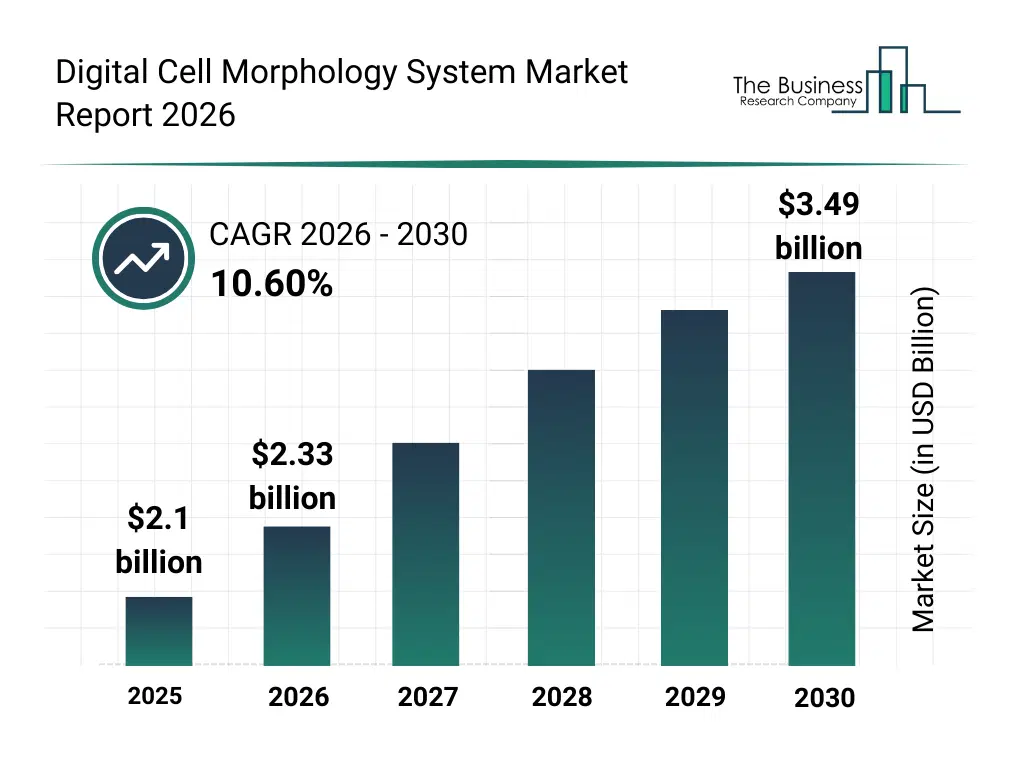
What Is The Digital Cell Morphology System Market Size and Share 2026?
The digital cell morphology system market size has grown rapidly in recent years. It will grow from $2.1 billion in 2025 to $2.33 billion in 2026 at a compound annual growth rate (CAGR) of 11.0%. The growth in the historic period can be attributed to manual microscopic analysis dependence, growing demand for accurate hematology diagnostics, limited digital imaging adoption, expansion of academic and research institutes, rising prevalence of hematological disorders.What Is The Digital Cell Morphology System Market Growth Forecast?
The digital cell morphology system market size is expected to see rapid growth in the next few years. It will grow to $3.49 billion in 2030 at a compound annual growth rate (CAGR) of 10.6%. The growth in the forecast period can be attributed to advancements in image processing software, increasing adoption of flow cytometry and automated analyzers, rising investment in biotechnology and pharmaceutical R&D, integration of ai-driven diagnostic tools, growing telemedicine and remote laboratory solutions. Major trends in the forecast period include increasing adoption of automated cell imaging and analysis systems, rising use of high-content screening for hematology and oncology, growth in laboratory efficiency and standardization of results, expansion of consumables and reagents market for digital morphology, integration of remote diagnostics and telepathology solutions.
Global Digital Cell Morphology System Market Segmentation
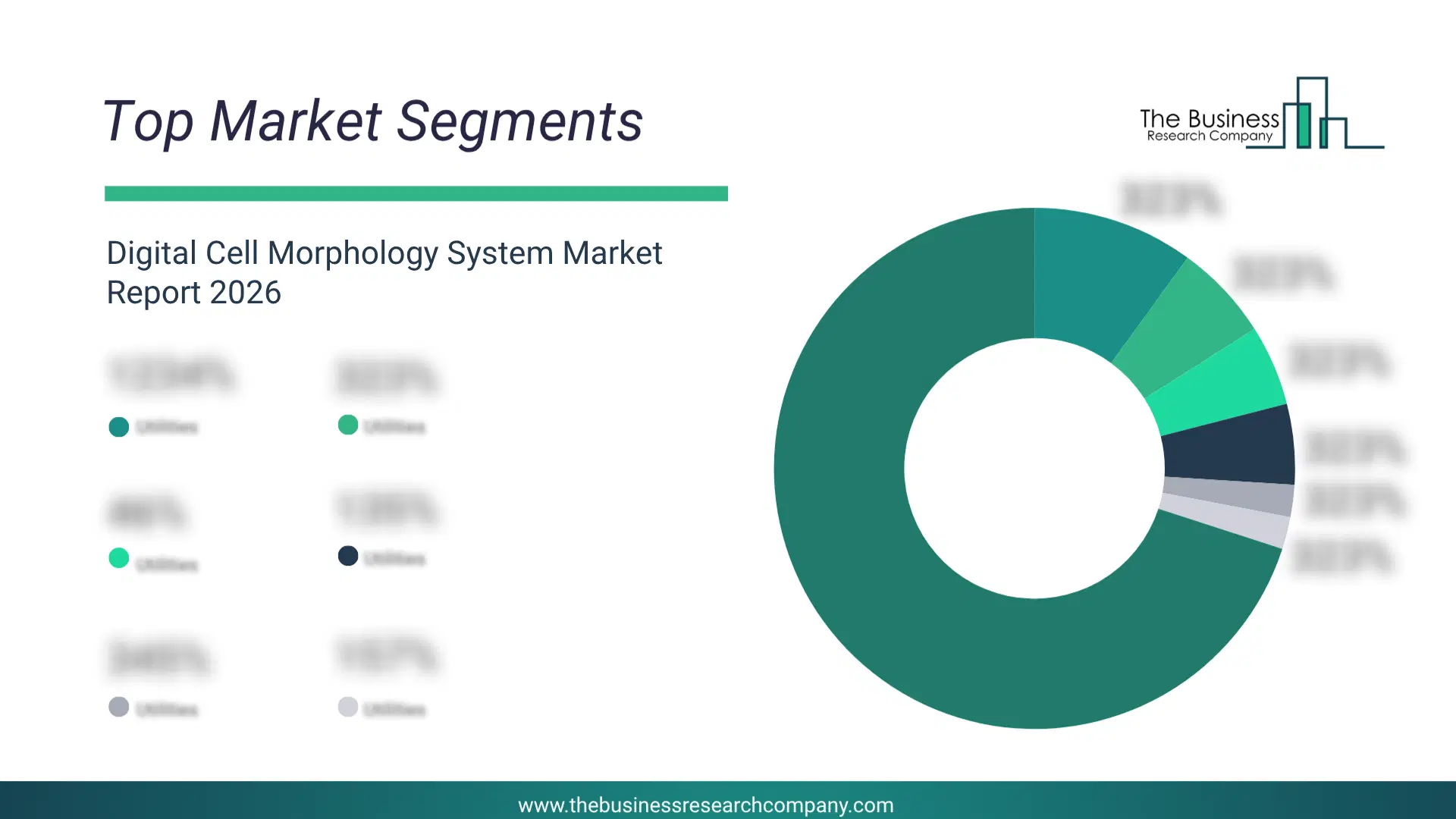
1) By Product Type: Cell Imaging Systems, Cell Analysis Systems, Accessories And Consumables 2) By Technology: Microscopy, Flow Cytometry, Image Processing Software 3) By Distribution Channel: Direct Sales, Distributors, Online Sales 4) By Application: Hematology, Oncology, Infectious Diseases, Other Applications 5) By End-User: Academic And Research Institutes, Hospitals And Clinical Laboratories, Biotechnology And Pharmaceutical Companies Subsegments: 1) By Cell Imaging Systems: Digital Microscopes, Fluorescence Microscopes, Full-Field Digital Imaging Systems, Automated Slide Scanners, High-Content Screening Systems 2) By Cell Analysis Systems: Flow Cytometers, Hematology Analyzers, Morphology Analyzers, Spectrophotometers, Cell Counters 3) By Accessories And Consumables: Reagents and Stains, Sample Preparation Kits, Slides and Cover Slips, Imaging Plates, Cell FixativesWhat Is The Driver Of The Digital Cell Morphology System Market?
The increasing prevalence of hematological disorders is expected to propel the growth of the digital cell morphology system market going forward. Hematological disorders are medical conditions affecting the blood, bone marrow, and lymphatic system, including anemia, leukemia, and clotting disorders. The prevalence of hematological disorders is rising due to the increasing prevalence of chronic diseases, which directly impact blood health and require ongoing monitoring. Digital cell morphology systems aid in hematological disorder diagnosis by providing precise and automated blood cell image analysis, enabling accurate classification. They enhance laboratory efficiency through reduced manual review, improved consistency, and faster clinical decision-making. For instance, in October 2025, according to the World Federation of Hemophilia (WFH), a Canada-based non-profit organization, their Annual Global Survey 2024 reported a 6% increase in global identification of people with hemophilia, a 6% rise in identified von Willebrand disease cases, and a 9% increase in other inherited bleeding disorders, along with a 9% increase in the number of women and girls with bleeding disorders. Therefore, the increasing prevalence of hematological disorders is driving the growth of the digital cell morphology system industry.Key Players In The Global Digital Cell Morphology System Market
Major companies operating in the digital cell morphology system market are F. Hoffmann-La Roche AG, Thermo Fisher Scientific Inc., Abbott Laboratories, Danaher Corporation, Merck KGaA, Siemens Healthineers AG, Becton Dickinson and Company, Agilent Technologies Inc., Mindray Medical International Limited, Nikon Corporation, IDEXX Laboratories Inc., Sysmex Corporation, Bio-Rad Laboratories Inc., Horiba ABX SAS, Leica Microsystems GmbH, Medica Corporation, Scopio Labs Ltd., MetaSystems Hard & Software GmbH, West Medica Produktions- und Handels-GmbH, ZhiWei Information & Technology Co. Ltd.
This chart is for illustrative purposes; the full report includes a detailed competitor analysis and comprehensive overview of the top 10 companies in the market.
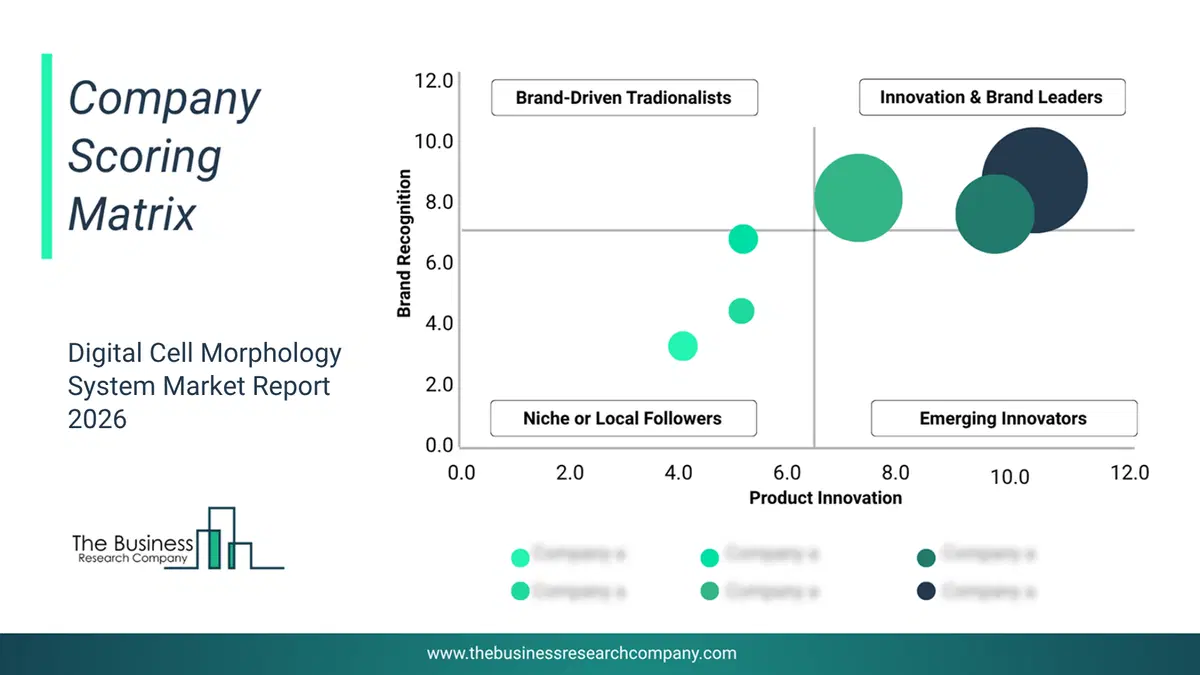
This chart maps companies by product innovation and brand strength, with bubble size indicating relative revenue, helping identify market leaders, challengers, and niche players. This is an illustrative chart; the full report provides a complete and accurate competitive analysis.
Global Digital Cell Morphology System Market Trends and Insights
Major companies operating in the digital cell morphology system market are focusing on developing technologically advanced products, such as AI-driven image analyzers, to improve diagnostic speed and accuracy. AI-driven image analyzers are tools that use artificial intelligence to automatically interpret and extract insights from digital images, improving speed, accuracy, and consistency in analysis. For instance, in July 2025, Scopio Labs Ltd., an Israel-based medical equipment manufacturing company, launched the complete blood morphology (CBM) analyzer, an automated AI-driven image analyzer for peripheral blood smear review. The CBM analyzer leverages full-field imaging technology to autonomously process and evaluate up to 10 times more cells than conventional methods. It also offers potential for developing new morphology-based biomarkers and diagnostic panels, enabling earlier disease detection and real-time patient monitoring. This innovation addresses key challenges such as global shortages of trained laboratory technologists, variability in manual interpretations, and rising diagnostic demand.What Are Latest Mergers And Acquisitions In The Digital Cell Morphology System Market?
In August 2025, AB Science S.A., a France-based healthcare technology company, partnered with Scopio Lab Inc. to expand access to AI-powered digital blood-cell analysis. With this partnership, AB Science S.A. aims to expand its digital pathology and diagnostic capabilities by integrating Scopio’s AI-powered microscopy and imaging solutions, enhancing laboratory efficiency, accuracy, and remote diagnostics. Scopio Labs Inc. is a US-based technology company, specializes in AI-enabled digital microscopy platforms for hematology, cytology, and other clinical laboratory applications.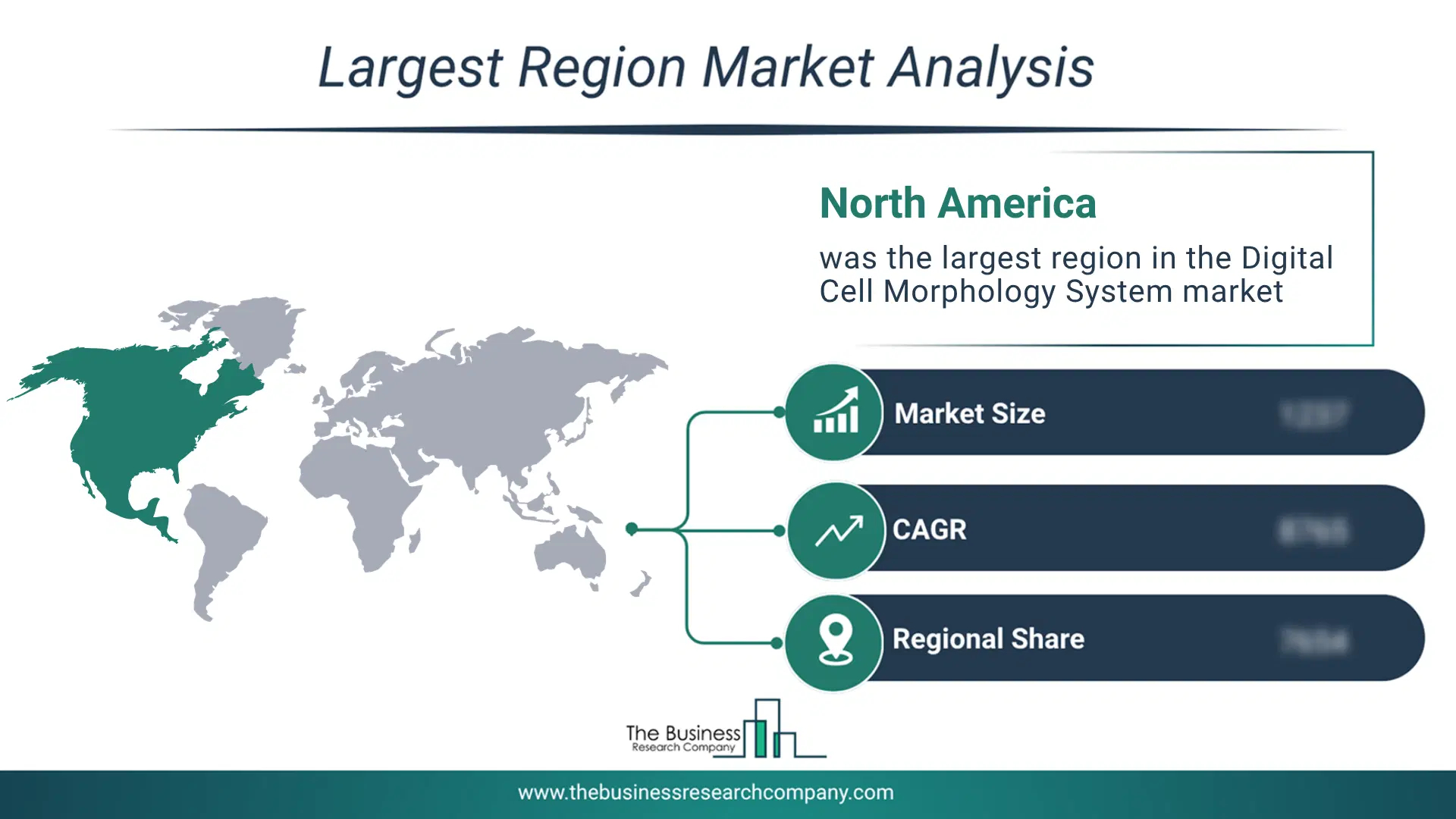
Regional Outlook
North America was the largest region in the digital cell morphology system market in 2025. Asia-Pacific is expected to be the fastest-growing region in the forecast period. The regions covered in this market report are Asia-Pacific, South East Asia, Western Europe, Eastern Europe, North America, South America, Middle East, Africa. The countries covered in this market report are Australia, Brazil, China, France, Germany, India, Indonesia, Japan, Taiwan, Russia, South Korea, UK, USA, Canada, Italy, SpainWhat Defines the Digital Cell Morphology System Market?
The digital cell morphology system market consists of revenues earned by entities by providing services such as digital imaging and analysis of blood and cellular samples, automated cell counting and classification, remote diagnostic consultations, and software integration for laboratory information systems. The market value includes the value of related goods sold by the service provider or included within the service offering. The digital cell morphology system market also includes sales of automated hematology analyzers, microscopy imaging software, sample preparation kits, data management and analysis platforms, and related hardware components. Values in this market are ‘factory gate’ values, that is the value of goods sold by the manufacturers or creators of the goods, whether to other entities (including downstream manufacturers, wholesalers, distributors and retailers) or directly to end customers. The value of goods in this market includes related services sold by the creators of the goods.How is Market Value Defined and Measured?
The market value is defined as the revenues that enterprises gain from the sale of goods and/or services within the specified market and geography through sales, grants, or donations in terms of the currency (in USD unless otherwise specified). The revenues for a specified geography are consumption values that are revenues generated by organizations in the specified geography within the market, irrespective of where they are produced. It does not include revenues from resales along the supply chain, either further along the supply chain or as part of other products.
This chart presents market attractiveness based on a quantitative evaluation of growth, competition, strategic alignment, and risk, offering a clear view of opportunity areas for decision-making. This chart is for illustrative purposes; the full report contains the complete analysis.

This chart highlights the Total Addressable Market (TAM) by estimating the maximum revenue opportunity using an assumption-driven approach, supporting strategic planning and opportunity sizing across markets. The chart is illustrative; the full report provides a more comprehensive analysis.
What Key Data and Analysis Are Included in the Digital Cell Morphology System Market Report 2026?
The digital cell morphology system market research report is one of a series of new reports from The Business Research Company that provides market statistics, including industry global market size, regional shares, competitors with the market share, detailed market segments, market trends and opportunities, and any further data you may need to thrive in the digital cell morphology system industry. The market research report delivers a complete perspective of everything you need, with an in-depth analysis of the current and future state of the industry.Digital Cell Morphology System Market Report Forecast Analysis
| Report Attribute | Details |
|---|---|
| Market Size Value In 2026 | $2.33 billion |
| Revenue Forecast In 2030 | $3.49 billion |
| Growth Rate | CAGR of 10.6% from 2026 to 2030 |
| Base Year For Estimation | 2025 |
| Actual Estimates/Historical Data | 2020-2025 |
| Forecast Period | 2026 - 2030 |
| Market Representation | Revenue in USD Billion and CAGR from 2026 to 2030 |
| Segments Covered | Product Type, Technology, Distribution Channel, Application, End-User |
| Regional Scope | Asia-Pacific, Western Europe, Eastern Europe, North America, South America, Middle East, Africa |
| Country Scope | The countries covered in the report are Australia, Brazil, China, France, Germany, India, Indonesia, Japan, Taiwan, Russia, South Korea, UK, USA, Canada, Italy, Spain. |
| Key Companies Profiled | F. Hoffmann-La Roche AG, Thermo Fisher Scientific Inc., Abbott Laboratories, Danaher Corporation, Merck KGaA, Siemens Healthineers AG, Becton Dickinson and Company, Agilent Technologies Inc., Mindray Medical International Limited, Nikon Corporation, IDEXX Laboratories Inc., Sysmex Corporation, Bio-Rad Laboratories Inc., Horiba ABX SAS, Leica Microsystems GmbH, Medica Corporation, Scopio Labs Ltd., MetaSystems Hard & Software GmbH, West Medica Produktions- und Handels-GmbH, ZhiWei Information & Technology Co. Ltd. |
| Customization Scope | Request for Customization |
| Pricing And Purchase Options | Explore Purchase Options |