
Digital Circular Economy Market Report 2026
Global Outlook – By Offering (Software, Services), By Technology (Blockchain And Distributed Ledger Technology, Internet Of Things (IoT), Artificial Intelligence (AI) And Machine Learning (ML), Virtual Reality (VR) And Augmented Reality (AR), Virtual Reality (VR)-Based Training, Cloud Computing, Other Technologies), By Application (Supply Chain And Material Tracking, Resource Optimization And Efficiency, Digital Resale And Reuse, Circular Waste Management And Recycling, Smart Material Selection And Testing, Other Applications), By End User (Consumer Electronics, Information Technology (IT) And Telecom, Automotive, Manufacturing, Construction And Building, Other End Users) – Market Size, Trends, Strategies, and Forecast to 2030
Digital Circular Economy Market Overview
• Digital Circular Economy market size has reached to $3.72 billion in 2025 • Expected to grow to $12.77 billion in 2030 at a compound annual growth rate (CAGR) of 27.9% • Growth Driver: E-Waste Awareness Surge Accelerating Growth in the Digital Circular Economy Market • Market Trend: Strategic Partnership Drive Circular Economy With Sustainability Control Tower • Europe was the largest region in 2025 and Asia-Pacific is the fastest growing region.Market Gains By 2030 – Top Opportunities By Segment
Market Gain identifies the most promising market opportunities by highlighting the segments or products expected to generate the highest incremental revenue growth over the next five years.
What Is Covered Under Digital Circular Economy Market?
Digital circular economy refers to an economic model that integrates digital technologies to enhance resource efficiency, minimize waste, and promote the reuse and recycling of products. It builds on the principles of a circular economy, where resource use is minimized through reduction and refusal, and material value is maximized through reuse and recycling. The digital circular economy focuses on reducing the amount of electronic waste (e-waste) generated by encouraging product repair, reuse, and recycling, preventing harmful disposal practices and conserving natural resources. The main offerings in the digital circular economy market are software and services. Software in the digital circular economy market includes applications and platforms designed to facilitate the implementation of circular economy practices. The various technologies include blockchain and distributed ledger technology, internet of things (IoT), artificial intelligence (AI) and machine learning (ML), virtual reality (VR) and augmented reality (AR), virtual reality (VR)-based training, cloud computing, and others, which are applied into supply chain and material tracking, resource optimization and efficiency, digital resale and reuse, reverse logistics and remanufacturing, circular economy reporting and compliance, circular waste management and recycling, smart material selection and testing, and others. The different end users encompass consumer electronics, information technology (IT) and telecom, automotive, manufacturing, construction and building, and others.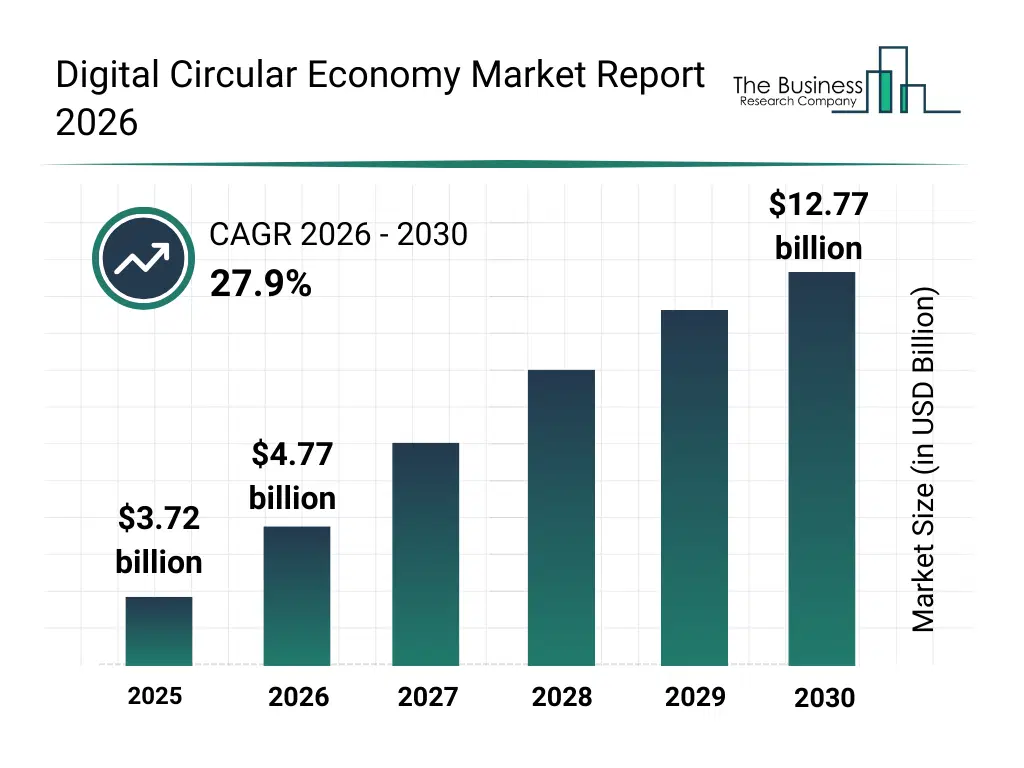
What Is The Digital Circular Economy Market Size and Share 2026?
The digital circular economy market size has grown exponentially in recent years. It will grow from $3.72 billion in 2025 to $4.77 billion in 2026 at a compound annual growth rate (CAGR) of 28.2%. The growth in the historic period can be attributed to growing e-waste generation, early adoption of resource tracking tools, rising sustainability awareness, implementation of circular economy practices by enterprises, increasing government regulations on waste management.What Is The Digital Circular Economy Market Growth Forecast?
The digital circular economy market size is expected to see exponential growth in the next few years. It will grow to $12.77 billion in 2030 at a compound annual growth rate (CAGR) of 27.9%. The growth in the forecast period can be attributed to integration of AI and ml in circular economy solutions, adoption of blockchain for material tracking, growth of consulting and implementation services, expansion of digital resale and reuse platforms, development of smart material selection and testing tools. Major trends in the forecast period include resource tracking and optimization, circular economy management platforms, reverse logistics and remanufacturing solutions, digital resale and reuse platforms, waste management and recycling software.
Global Digital Circular Economy Market Segmentation
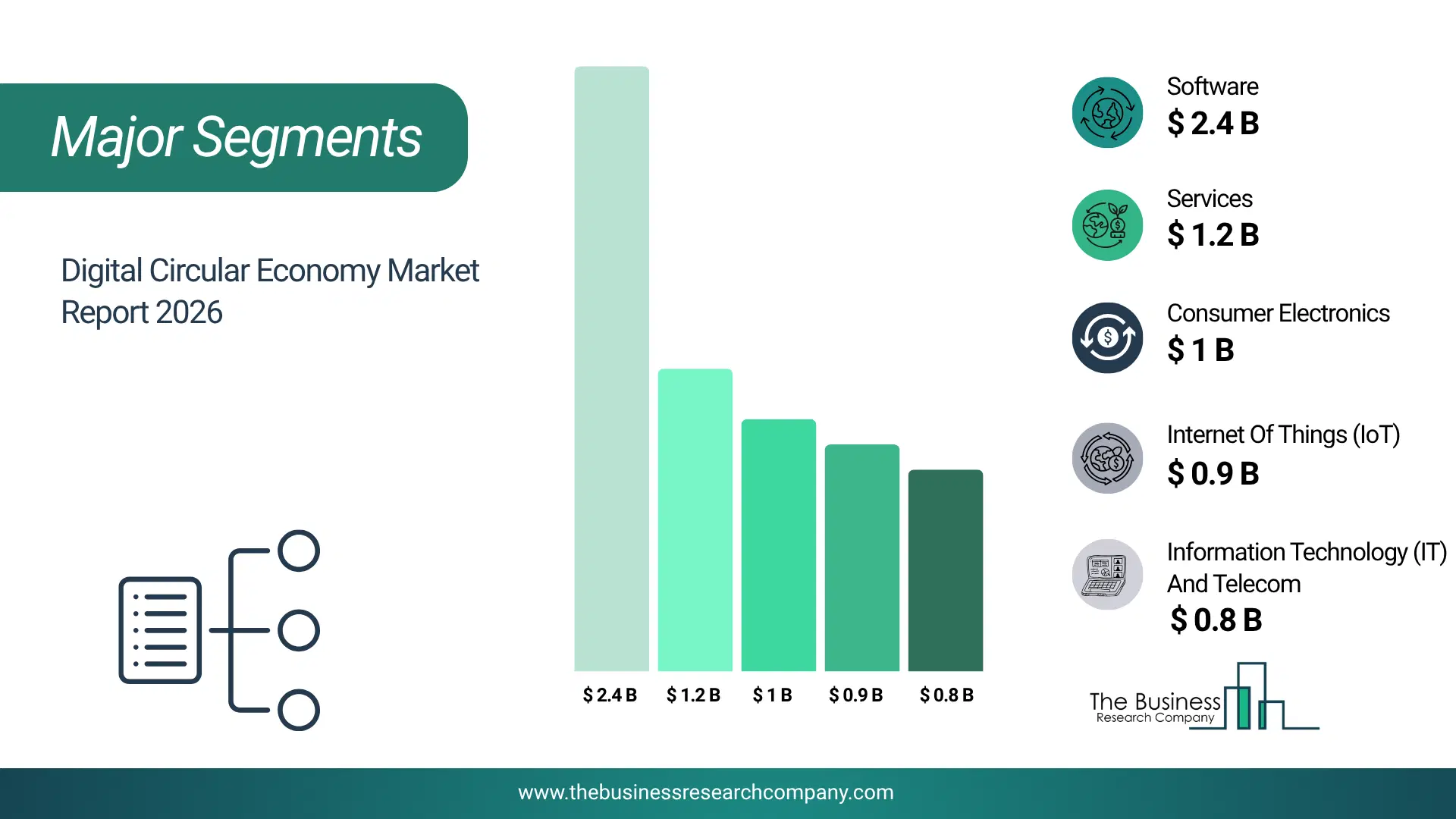
1) By Offering: Software, Services 2) By Technology: Blockchain And Distributed Ledger Technology, Internet Of Things (IoT), Artificial Intelligence (AI) And Machine Learning (ML), Virtual Reality (VR) And Augmented Reality (AR), Virtual Reality (VR)-Based Training, Cloud Computing, Other Technologies 3) By Application: Supply Chain And Material Tracking, Resource Optimization And Efficiency, Digital Resale And Reuse, Reverse Logistics And Remanufacturing, Circular Economy Reporting And Compliance, Circular Waste Management And Recycling, Smart Material Selection And Testing, Other Applications 4) By End User: Consumer Electronics, Information Technology (IT) And Telecom, Automotive, Manufacturing, Construction And Building, Other End Users Subsegments: 1) By Software: Circular Economy Management Platforms, Resource Tracking Software, Waste Management and Recycling Software, Product Lifecycle Management (PLM) Tools 2) By Services: Consulting Services, Implementation Services, Data Analytics and Reporting Services, Maintenance and Support Services The top segments in the digital circular economy market will be: • Software will reach $2401.27 Million by 2025. • Services will reach $1214.62 Million by 2025. • Consumer Electronics will reach $1029.51 Million by 2025. • Internet Of Things (IoT) will reach $931.4 Million by 2025. • Information Technology (IT) And Telecom will reach $818.02 Million by 2025.What Is The Driver Of The Digital Circular Economy Market?
The surge in e-waste awareness is expected to propel the growth of the digital circular economy market going forward. E-waste refers to discarded electrical or electronic devices, such as computers, smartphones, and appliances, that are no longer in use or have reached the end of their lifecycle. The awareness of e-waste regarding is growing due to environmental concerns and increased public education efforts highlighting the harmful effects of improper electronic waste disposal. The digital circular economy aims to mitigate e-waste by promoting the repair, reuse, and recycling of electronics, thereby minimizing waste and conserving resources. For instance, in March 2024, according to the Global E-Waste Monitor 2024 from the United Nations Institute for Training and Research, a Switzerland-based United Nations agency, the report emphasizes that if countries could raise their e-waste collection and recycling rates to 60% by 2030, the resulting benefits such as reducing human health risks would surpass costs by over US $38 billion. Therefore, the surge in E-waste awareness is driving the growth of the digital circular economy industry.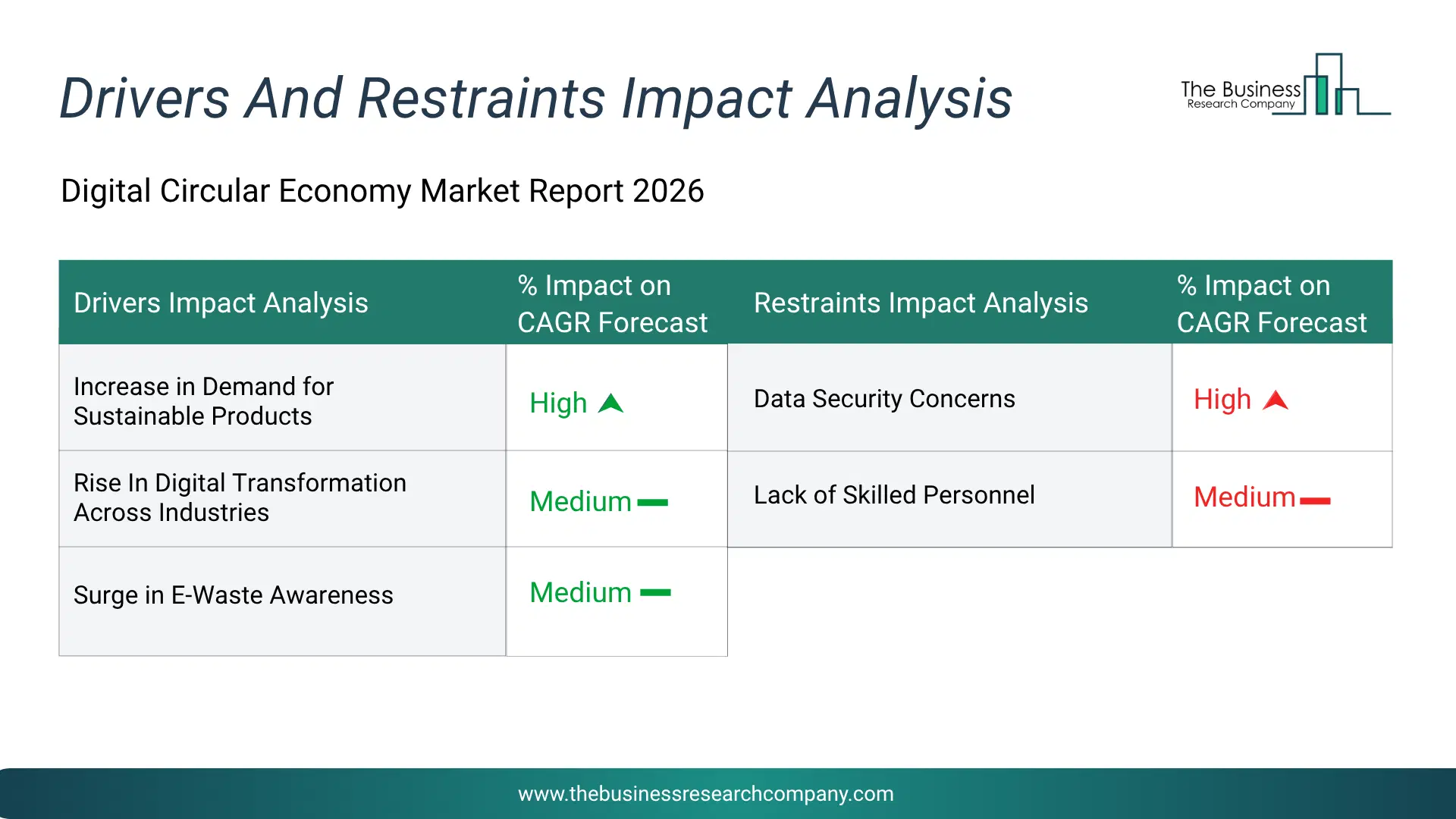
Infographic Chart Showing Key Market Drivers Analysis And Restraints For Digital Circular Economy Market
The chart presents an impact analysis of key drivers and restraints, quantifying their relative influence on the market's growth rate and helping assess the balance between growth enablers and limiting factors. This chart offers a high-level perspective; the full report contains more detailed insights.
How Will The Drivers Impact Growth In The Global Digital Circular Economy Market?
• Increase in Demand for Sustainable Products (High) – The increasing emphasis on demand for sustainable products will become a key driver of growth in the digital circular economy market by 2030. As demand for sustainable products continues to grow, businesses are increasingly adopting digital tools to enhance resource management. These digital solutions enable organizations to optimize raw material usage, minimize waste and track supply chains, focusing on reducing environmental impact. As a result, the growing deployment of demand for sustainable products is anticipated to contributing to a 2.0% annual growth in the market. • Rise In Digital Transformation Across Industries (Medium) – The growing focus on digital transformation across industries will emerge as a major factor driving the expansion of the digital circular economy market by 2030. Digital tools enable organizations to more accurately track and report their sustainability initiatives. Increasing regulatory pressures and corporate sustainability commitments are driving the adoption of digital platforms for tracking materials and optimizing circular supply chains. As industries prioritize digital solutions for resource efficiency, the demand for digital circular economy initiatives will continue to grow. Consequently, the accelerating adoption of digital transformation across industries capabilities is projected to contributing to a 1.50% annual growth in the market. • Surge in E-Waste Awareness (Medium) – The expanding integration of e-waste awareness processes will serve as a key growth catalyst for the digital circular economy market by 2030. The growing awareness of e-waste is driving the digital circular economy by fostering recycling, sustainable production practices and responsible consumption. As environmental impact awareness increases, the demand for solutions that align with circular economy principles is expected to continue to grow. Therefore, this growing integration of e-waste awareness operations is projected to supporting to a 1.0% annual growth in the market. • Increasing Adoption of AI, IoT and Blockchain (Low) – The increasing emphasis on AI, IoT And blockchain will become a significant driver contributing to the growth of the digital circular economy market by 2030. The growing integration of AI, IoT and blockchain is significantly driving the expansion of the digital circular economy by improving resource management efficiency, enabling real-time data monitoring and enhancing transparency within supply chains. AI and IoT work to streamline operations, while blockchain facilitates secure and decentralized transactions, promoting the reuse, recycling and sustainable utilization of resources. Collectively, these technologies are fostering more sustainable business models and accelerating the transition to a circular economy. Consequently, the rising adoption of AI, IoT And blockchain strategies is projected to contributing to a 0.50% annual growth in the market.How Will The Restraints Impact Growth In The Global Digital Circular Economy Market?
• Data Security Concerns (High) – Data Security Concerns will restrict the growth of the Digital Circular Economy market during the forecast period. Digital circular economy platforms collect and process data on product lifecycles, material flows, and supply chains. The sensitive nature of this data creates concerns about security, privacy, and intellectual property protection. Data security concerns may limit the willingness of organizations to share data and participate in digital circular economy ecosystems, slowing market development. • Lack of Skilled Personnel (Medium) – Lack of Skilled Personnel will restrict the growth of the Digital Circular Economy market during the forecast period. The implementation of digital circular economy solutions requires specialized skills in data analytics, IoT, blockchain, and sustainability management. The shortage of professionals with these interdisciplinary skills limits the capacity of organizations to adopt digital circular economy solutions. This skill gap can lead to implementation challenges and reduced effectiveness of circular economy initiatives, affecting market growth.Key Players In The Global Digital Circular Economy Market
Major companies operating in the digital circular economy market are Apple Inc., Samsung Electronics Co. Ltd., Microsoft Corporation, Dell Technologies Inc., Bosch GmbH, Hitachi Ltd., Siemens AG, Sony Group Corporation, Lenovo Group Limited, General Electric Company, International Business Machines Corporation, Panasonic Holdings Corporation, LG Corporation, Cisco Systems Inc., Oracle Corporation, Schneider Electric SE, Honeywell International Inc., Fujitsu Limited, SAP SE, Mitsubishi Electric Corporation, ABB Ltd., Hewlett Packard Enterprise Company, Nokia Corporation, Capgemini SE, Koninklijke Philips N.V., STMicroelectronics NV, Infineon Technologies AG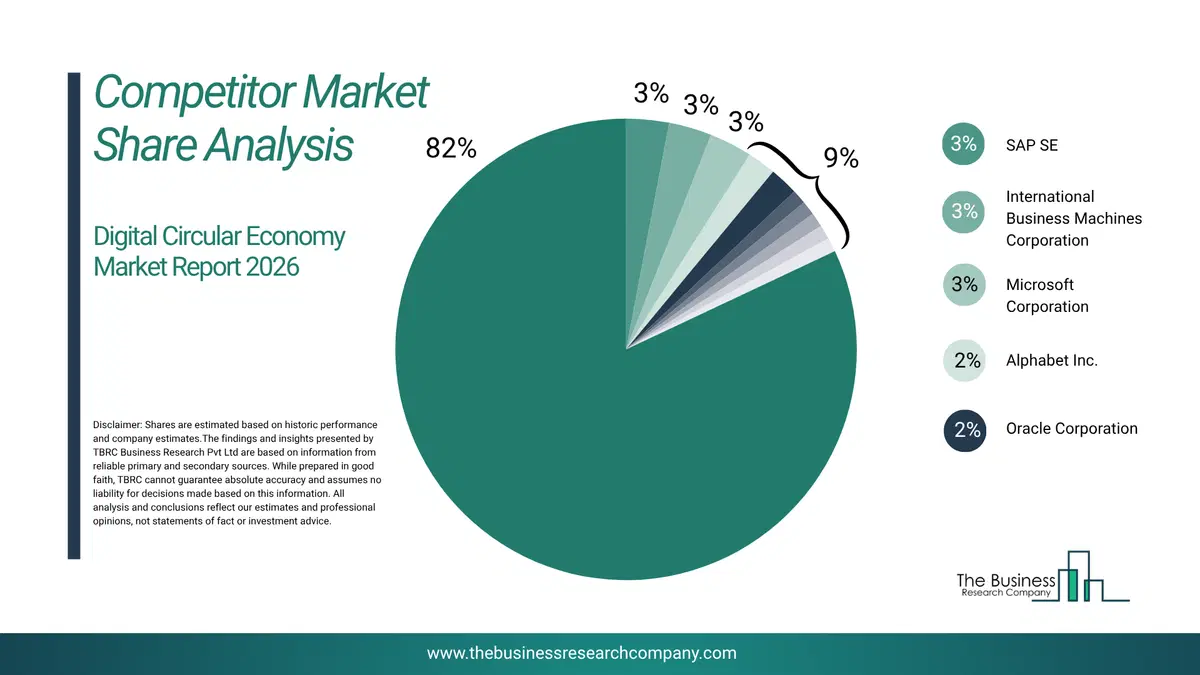
This chart is for illustrative purposes; the full report includes a detailed competitor analysis and comprehensive overview of the top 10 companies in the market.
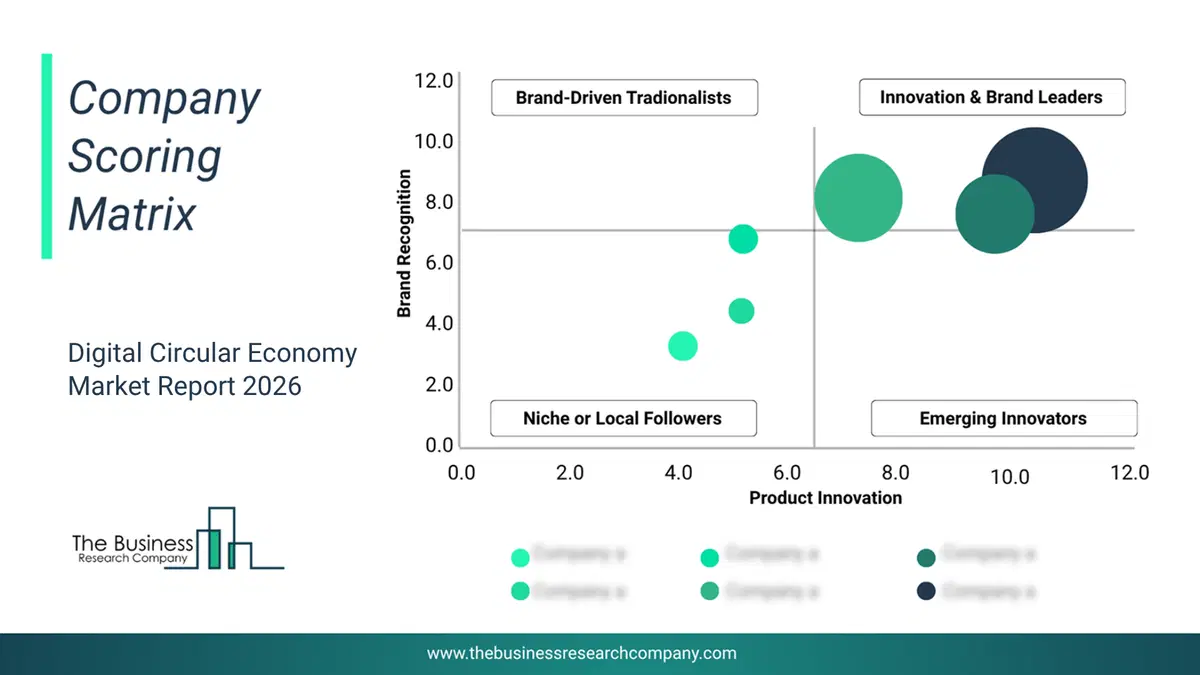
This chart maps companies by product innovation and brand strength, with bubble size indicating relative revenue, helping identify market leaders, challengers, and niche players. This is an illustrative chart; the full report provides a complete and accurate competitive analysis.
Global Digital Circular Economy Market Trends and Insights
Major companies operating in the digital circular economy market are adopting a strategic partnership approach to accelerate the transition to a circular economy. Strategic partnerships refer to a process in which companies leverage each other's strengths and resources to achieve mutual benefits and success. For instance, in June 2023, SAP SE, a Germany-based software company, partnered with Versuni, the Netherlands-based company that designs and sells domestic appliances to focus on sustainability and a circular economy. With the SAP sustainability control tower software, a digital tool for ESG management based on real-time data, the company will be able to promote holistic management by setting goals, monitoring progress, and gaining insights from data, generating robust and auditable ESG reports, as well as improvement actions.What Are Latest Mergers And Acquisitions In The Digital Circular Economy Market?
In May 2024, Flex, a US-based electronics manufacturing company, acquired FreeFlow for an undisclosed amount. The acquisition aims to enhance Flex's reverse logistics and circular economy services, expanding asset disposition and sustainability capabilities to create new revenue streams and support environmental goals. FreeFlow is an Ireland-based electronics manufacturing company specializing in asset disposition and digital circular economy solutions.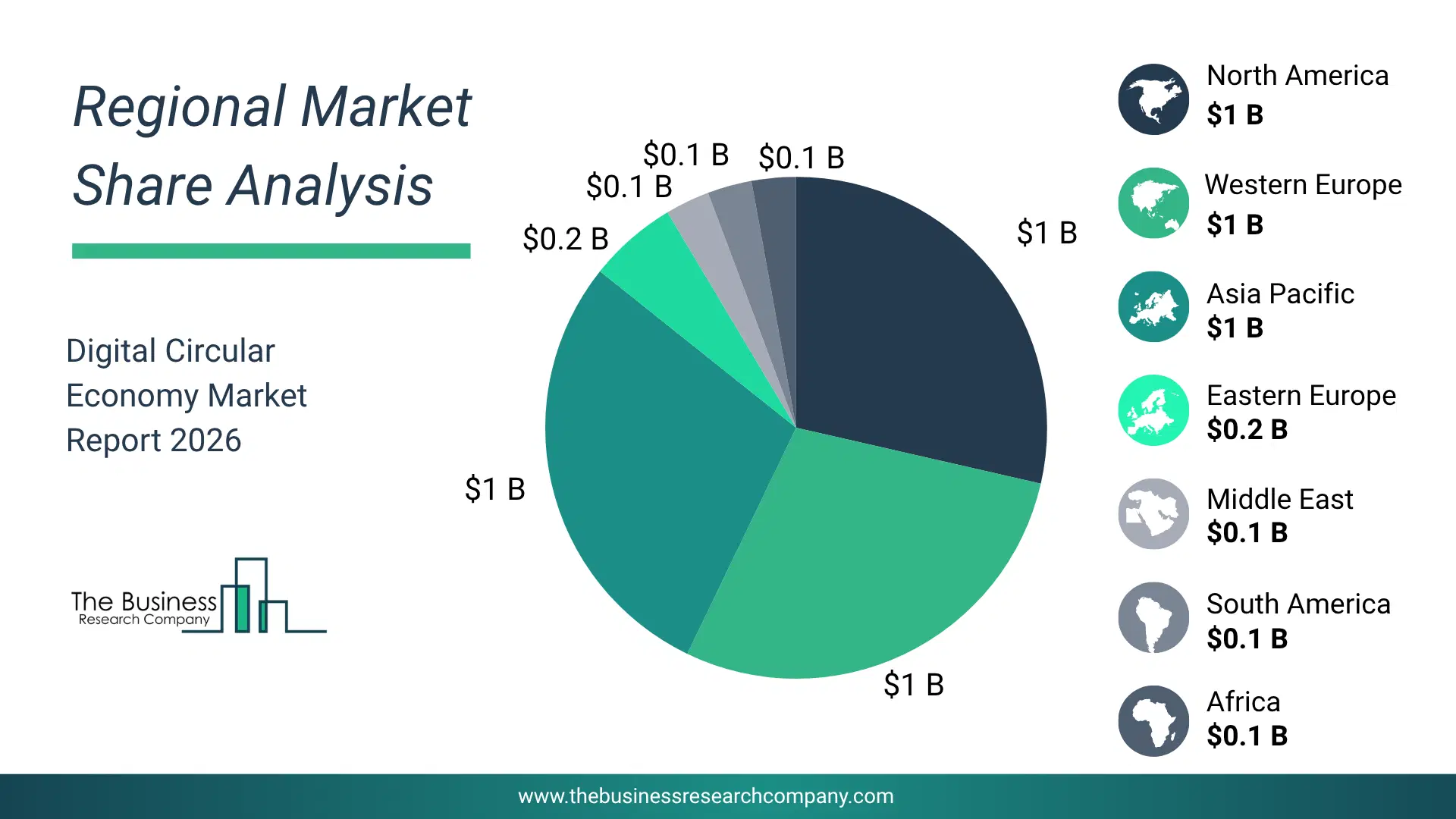
Regional Insights
Europe was the largest region in the digital circular economy market in 2025. Asia-Pacific is expected to be the fastest-growing region in the forecast period. The regions covered in this market report are Asia-Pacific, South East Asia, Western Europe, Eastern Europe, North America, South America, Middle East, Africa. The countries covered in this market report are Australia, Brazil, China, France, Germany, India, Indonesia, Japan, Taiwan, Russia, South Korea, UK, USA, Canada, Italy, Spain.What Defines the Digital Circular Economy Market?
The digital circular economy market consists of revenues earned by entities by providing services such as resource tracking and management, waste management and recycling solutions, and product lifecycle management. The market value includes the value of related goods sold by the service provider or included within the service offering. The digital circular economy market also includes sales of smart devices, recycling and recovery equipment, and modular components. Values in this market are ‘factory gate’ values, that is the value of goods sold by the manufacturers or creators of the goods, whether to other entities (including downstream manufacturers, wholesalers, distributors and retailers) or directly to end customers. The value of goods in this market includes related services sold by the creators of the goods.How is Market Value Defined and Measured?
The market value is defined as the revenues that enterprises gain from the sale of goods and/or services within the specified market and geography through sales, grants, or donations in terms of the currency (in USD unless otherwise specified). The revenues for a specified geography are consumption values that are revenues generated by organizations in the specified geography within the market, irrespective of where they are produced. It does not include revenues from resales along the supply chain, either further along the supply chain or as part of other products.
This chart presents market attractiveness based on a quantitative evaluation of growth, competition, strategic alignment, and risk, offering a clear view of opportunity areas for decision-making. This chart is for illustrative purposes; the full report contains the complete analysis.

This chart highlights the Total Addressable Market (TAM) by estimating the maximum revenue opportunity using an assumption-driven approach, supporting strategic planning and opportunity sizing across markets. The chart is illustrative; the full report provides a more comprehensive analysis.
What Key Data and Analysis Are Included in the Digital Circular Economy Market Report 2026?
The digital circular economy market research report is one of a series of new reports from The Business Research Company that provides market statistics, including industry global market size, regional shares, competitors with the market share, detailed market segments, market trends and opportunities, and any further data you may need to thrive in the digital circular economy industry. The market research report delivers a complete perspective of everything you need, with an in-depth analysis of the current and future state of the industry.Digital Circular Economy Market Report Forecast Analysis
| Report Attribute | Details |
|---|---|
| Market Size Value In 2026 | $4.77 billion |
| Revenue Forecast In 2030 | $12.77 billion |
| Growth Rate | CAGR of 28.2% from 2026 to 2030 |
| Base Year For Estimation | 2025 |
| Actual Estimates/Historical Data | 2020-2025 |
| Forecast Period | 2026 - 2030 |
| Market Representation | Revenue in USD Billion and CAGR from 2026 to 2030 |
| Segments Covered | Offering, Technology, Application, End User |
| Regional Scope | Asia-Pacific, Western Europe, Eastern Europe, North America, South America, Middle East, Africa |
| Country Scope | The countries covered in the report are Australia, Brazil, China, France, Germany, India, Indonesia, Japan, Taiwan, Russia, South Korea, UK, USA, Canada, Italy, Spain. |
| Key Companies Profiled | Apple Inc., Samsung Electronics Co. Ltd., Microsoft Corporation, Dell Technologies Inc., Bosch GmbH, Hitachi Ltd., Siemens AG, Sony Group Corporation, Lenovo Group Limited, General Electric Company, International Business Machines Corporation, Panasonic Holdings Corporation, LG Corporation, Cisco Systems Inc., Oracle Corporation, Schneider Electric SE, Honeywell International Inc., Fujitsu Limited, SAP SE, Mitsubishi Electric Corporation, ABB Ltd., Hewlett Packard Enterprise Company, Nokia Corporation, Capgemini SE, Koninklijke Philips N.V., STMicroelectronics NV, Infineon Technologies AG |
| Customization Scope | Request for Customization |
| Pricing And Purchase Options | Explore Purchase Options |