
Digital Engine-Control System Market Report 2026
Global Outlook – By Component ( Hardware, Software, Services), By Engine Type ( Gasoline, Diesel, Hybrid, Electric), By Vehicle Type ( Passenger Cars, Commercial Vehicles, Off-Highway Vehicles, Other Types), By Application ( Automotive, Aerospace, Marine, Industrial, Other Applications), By End User ( Original Equipment Manufacturers, Aftermarket) – Market Size, Trends, Strategies, and Forecast to 2030
Digital Engine-Control System Market Overview
• Digital Engine-Control System market size has reached to $14.95 billion in 2025 • Expected to grow to $22.44 billion in 2030 at a compound annual growth rate (CAGR) of 8.5% • Growth Driver: Expansion Of Electric And Hybrid Vehicle Production Is Driving The Market Due To Environmental Regulations And EV Demand • Market Trend: AI-Based Engine Control Units Enhance Real-Time Vehicle Performance • North America was the largest region in 2025 and Asia-Pacific is the fastest growing region.Market Gains By 2030 – Top Opportunities By Segment
Market Gain identifies the most promising market opportunities by highlighting the segments or products expected to generate the highest incremental revenue growth over the next five years.
What Is Covered Under Digital Engine-Control System Market?
A digital engine-control system is an electronic system that manages and regulates the operation of an engine using digital computers. It continuously monitors engine parameters, such as fuel flow, temperature, and speed, to optimize performance, efficiency, and safety. By replacing mechanical controls with digital algorithms, it enables precise control, fault detection, and adaptive engine management under varying operating conditions. The main components of a digital engine-control system are hardware, software, and services. Hardware refers to the physical components and electronic devices that manage, monitor, and regulate an engine’s performance through digital signals and computing. The various engine types include gasoline, diesel, hybrid, and electric, and different vehicle types, such as passenger cars, commercial vehicles, off-highway vehicles, and others. It finds application in automotive, aerospace, marine, industrial, and others, serving a diverse range of end users, including original equipment manufacturers and aftermarket.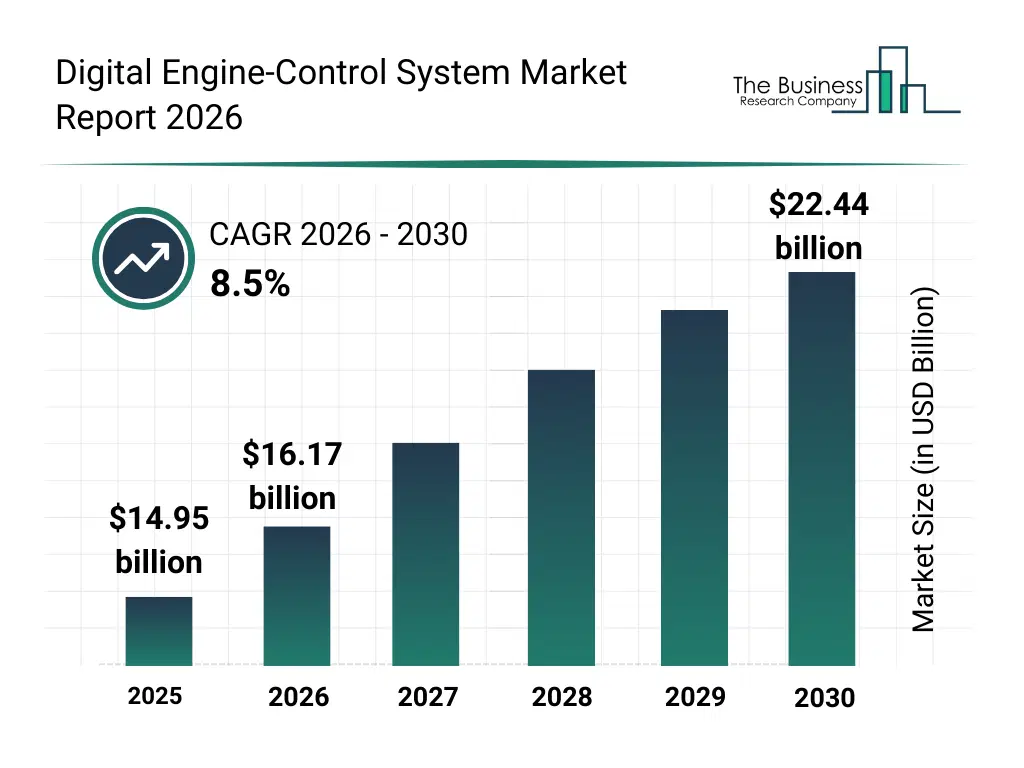
What Is The Digital Engine-Control System Market Size 2026 And Growth Rate?
The digital engine-control system market size has grown strongly in recent years. It will grow from $14.95 billion in 2025 to $16.17 billion in 2026 at a compound annual growth rate (CAGR) of 8.2%. The growth in the historic period can be attributed to rising demand for fuel-efficient engines, advancements in microcontrollers, regulatory pressure on emissions, growth in passenger vehicle production, adoption of electronic fuel injection systems.What Is The Digital Engine-Control System Market Growth Forecast?
The digital engine-control system market size is expected to see strong growth in the next few years. It will grow to $22.44 billion in 2030 at a compound annual growth rate (CAGR) of 8.5%. The growth in the forecast period can be attributed to increasing integration of AI in engine management, growth of hybrid and electric vehicles, rising demand for connected vehicles, advancements in predictive maintenance software, expansion of aftermarket engine control services. Major trends in the forecast period include predictive engine diagnostics, adaptive fuel management, real-time emission control, integration of iot in engine systems, cloud-based engine performance monitoring.
Global Digital Engine-Control System Market Segmentation
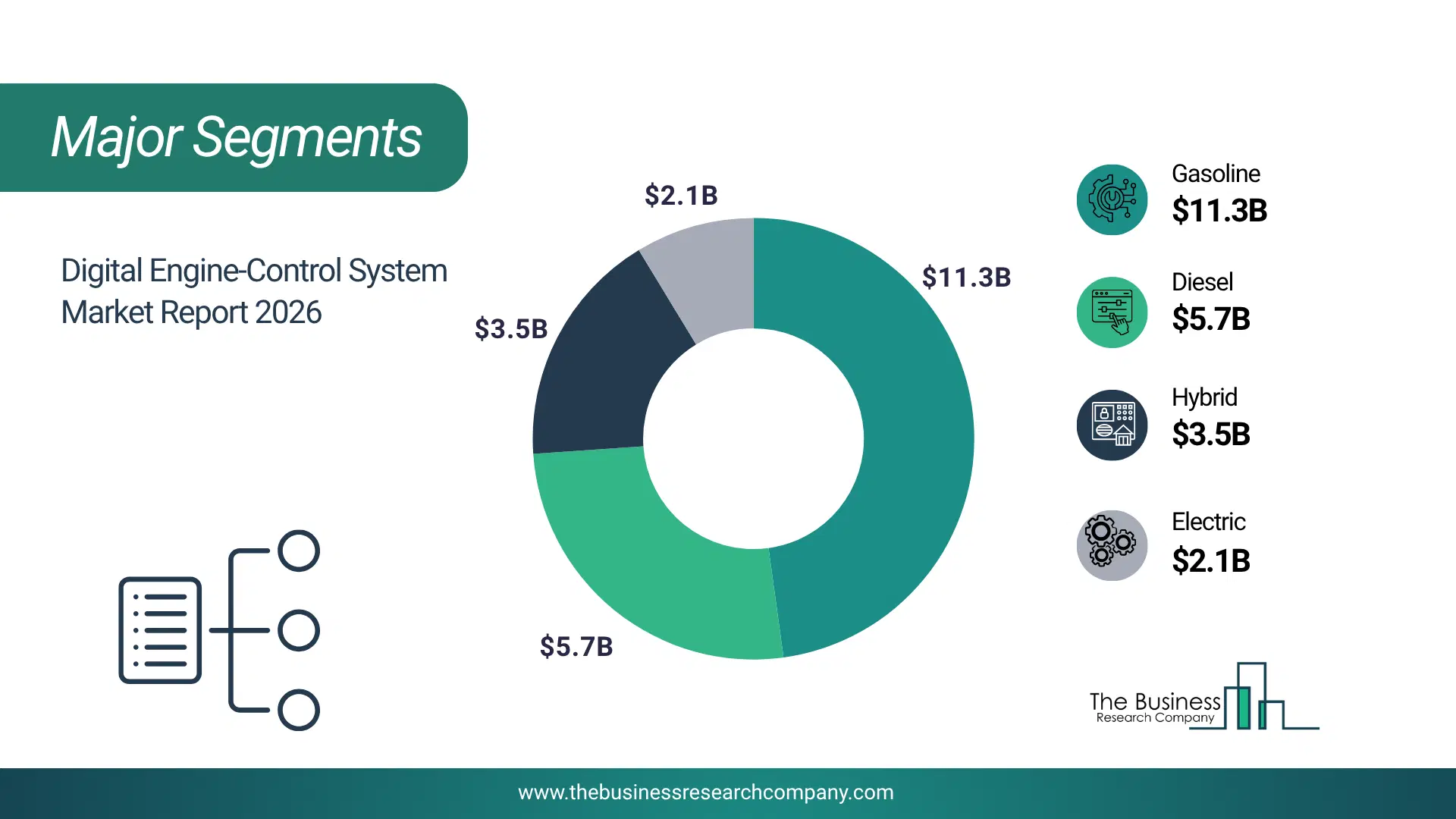
1) By Component: Hardware, Software, Services 2) By Engine Type: Gasoline, Diesel, Hybrid, Electric 3) By Vehicle Type: Passenger Cars, Commercial Vehicles, Off-Highway Vehicles, Other Types 4) By Application: Automotive, Aerospace, Marine, Industrial, Other Applications 5) By End User: Original Equipment Manufacturers, Aftermarket Subsegments: 1) By Hardware: Electronic Control Units, Sensors, Actuators, Power Modules, Communication Interfaces 2) By Software: Control Algorithms, Diagnostic Software, Monitoring Software, Integration Software, Simulation And Modeling Tools 3) By Services: Installation And Integration, Maintenance And Repair, Training And Support, Upgrades And Modernization, Consulting Services The top segments in the digital engine-control system market will be: • Gasoline will reach $11.25 billion by 2030. • Diesel will reach $5.66 billion by 2030. • Hybrid will reach $3.5 billion by 2030. • Electric will reach $2.03 billion by 2030.What Is The Driver Of The Digital Engine-Control System Market?
The rising expansion of electric and hybrid vehicle production is expected to drive the growth in the digital engine control system market going forward. Electric and hybrid vehicle production refers to the process of designing, manufacturing, assembling, and testing vehicles that are either fully electric or combine an electric powertrain with a conventional internal combustion engine. The rising expansion of electric and hybrid vehicle production is driven by increasing environmental regulations, as they push manufacturers to produce cleaner, low-emission vehicles to reduce carbon footprints and meet sustainability goals. Digital engine control systems help the expansion of electric and hybrid vehicle production by optimizing powertrain performance, improving energy efficiency, and enabling precise management of both electric and combustion components for enhanced vehicle reliability and sustainability. For instance, in January 2025, the U.S. Department of Transportation’s Federal Highway Administration, a US-based agency that supports state and local governments, reported that the U.S. Federal Government aims to ensure that 50% of all new vehicles sold by 2030 are zero-emission vehicles, a target significantly higher than current adoption rates, while also planning to establish a comprehensive and equitable network of 500,000 chargers to enhance EV accessibility for both local and long-distance travel. Therefore, the rising expansion of electric and hybrid vehicle production is driving the digital engine control system market.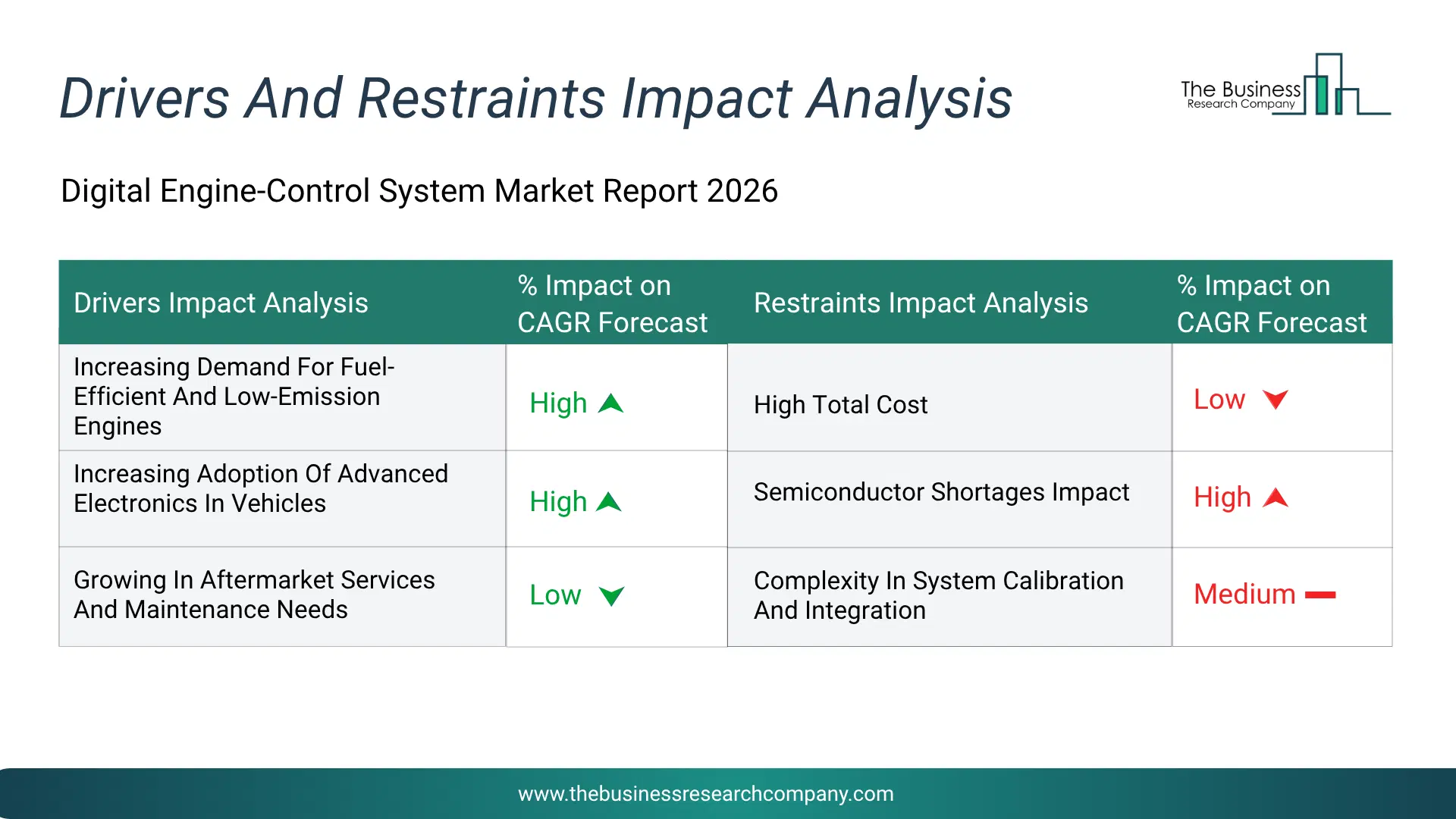
Infographic Chart Showing Key Market Drivers Analysis And Restraints For Digital Engine-Control System Market
The chart presents an impact analysis of key drivers and restraints, quantifying their relative influence on the market's growth rate and helping assess the balance between growth enablers and limiting factors. This chart offers a high-level perspective; the full report contains more detailed insights.
How Will The Drivers Impact Growth In The Global Digital Engine-Control System Market?
• Increasing Demand For Fuel-Efficient And Low-Emission Engines (High) – During the forecast period, the increase in demand for fuel-efficient and low-emission engines is expected to become a key growth driver for the digital engine-control system market by 2030. Rising environmental regulations and fuel efficiency standards are boosting demand for advanced engine management technologies that optimize fuel consumption and reduce emissions. As automotive manufacturers focus on developing cleaner and more efficient vehicles, they increasingly rely on digital engine-control systems to precisely regulate fuel injection, combustion timing, and exhaust management. This expansion encourages the adoption of advanced electronic control units, sensors, and actuators that ensure optimal engine performance and regulatory compliance. Additionally, growing consumer preference for environmentally friendly and cost-efficient vehicles highlights the importance of reliable and intelligent engine-control solutions. Collectively, these factors support steady market growth by directly linking efficiency requirements with increased system adoption. • Increasing Adoption Of Advanced Electronics In Vehicles (High) – During the forecast period, the increase in adoption of advanced electronics in vehicles is expected to emerge as a major factor driving the expansion of the digital engine-control system market by 2030. Rising integration of electronic components such as sensors, actuators, and control modules strongly supports market growth by enabling more precise and efficient engine operation. With growing technological advancements, automotive manufacturers are incorporating sophisticated electronic systems to enhance vehicle performance, safety, and fuel efficiency. Such integration is often supported by the development of connected, hybrid, and autonomous vehicle technologies, which further increases reliance on digital engine-control systems. Higher adoption of electronic vehicle architectures also allows manufacturers to improve real-time monitoring and optimize engine functionality. • Growing In Aftermarket Services And Maintenance Needs (Low) – During the forecast period, the growing demand for aftermarket services and maintenance needs is expected to act as a key growth catalyst for the digital engine-control system market by 2030. The rising complexity of vehicle electronics is accelerating demand for regular diagnostics, calibration, and software updates of engine-control systems. The expansion of vehicle ownership and aging vehicle fleets is increasing the need for reliable maintenance and replacement of electronic control units, sensors, and related components. This growing requirement encourages service providers to adopt advanced diagnostic tools and engine-control solutions to ensure optimal vehicle performance and regulatory compliance. Furthermore, the increasing focus on extending vehicle lifespan highlights the importance of efficient and well-maintained digital engine-control systems.How Will The Restraints Impact Growth In The Global Digital Engine-Control System Market?
• High Total Cost (Low) – During the forecast period, the high total cost of digital engine-control systems acts as a restraint by limiting their adoption, especially among cost-sensitive automakers and consumers. These systems involve expensive components such as advanced ecus, sensors, actuators, and specialized software, as well as installation and calibration services. The overall investment in integrating these technologies increases vehicle production costs, which can be passed on to consumers, reducing demand. Additionally, small and medium-sized automotive manufacturers may face budget constraints that prevent large-scale implementation. Consequently, the high cost factor slows the widespread penetration of digital engine-control systems in the market. • Semiconductor Shortages Impact (High) – During the forecast period, the semiconductor shortages act as a major restraint for the digital engine-control system market by disrupting the supply of critical components such as ecus, sensors, and actuators. These chips are essential for real-time engine monitoring, performance optimization, and emission control. Limited availability leads to production delays, increased costs, and difficulties in meeting vehicle demand. Automakers may postpone or scale down vehicle production due to insufficient electronic components. As a result, the shortage of semiconductors slows the adoption and growth of digital engine-control systems in the automotive sector. • Complexity In System Calibration And Integration (Medium) – During the forecast period, the complexity in system calibration and integration acts as a restraint because digital engine-control systems require highly precise tuning to ensure optimal engine performance, fuel efficiency, and emission compliance. Integrating these systems with diverse engine architectures, sensors, and vehicle control units demands advanced engineering expertise and extensive validation testing. Any calibration error can lead to reduced performance, higher emissions, or engine instability, increasing development risk for manufacturers. Additionally, continuous updates and compatibility adjustments across different vehicle platforms further add to development time and cost. This complexity discourages rapid adoption, particularly among smaller oems with limited technical capabilities.Key Players In The Global Digital Engine-Control System Market
Major companies operating in the digital engine-control system market are Honeywell International Inc., GE Aerospace (GE Aviation), Safran S.A., Raytheon Technologies Corporation (RTX), BAE Systems plc, Moog Inc., Woodward Inc., Curtiss-Wright Corporation, Thales Group, Parker-Hannifin Corporation / Parker Aerospace, Triumph Group, Rolls-Royce Holdings plc, Cummins Inc., Mitsubishi Heavy Industries,Ltd. (MHI), Robert Bosch GmbH, DENSO Corporation, Continental AG, ZF Friedrichshafen AG, Aptiv PLC, Magneti Marelli S.p.A., FADEC Alliance, Silver Atena GmbH, Electronic Concepts & Engineering Inc. (ECE), MTU Aero Engines AG, HEICO Corporation, Kongsberg Gruppen ASA, Infineon Technologies AG, Siemens AG, Emerson Electric Co., Rockwell Automation Inc., ABB Ltd.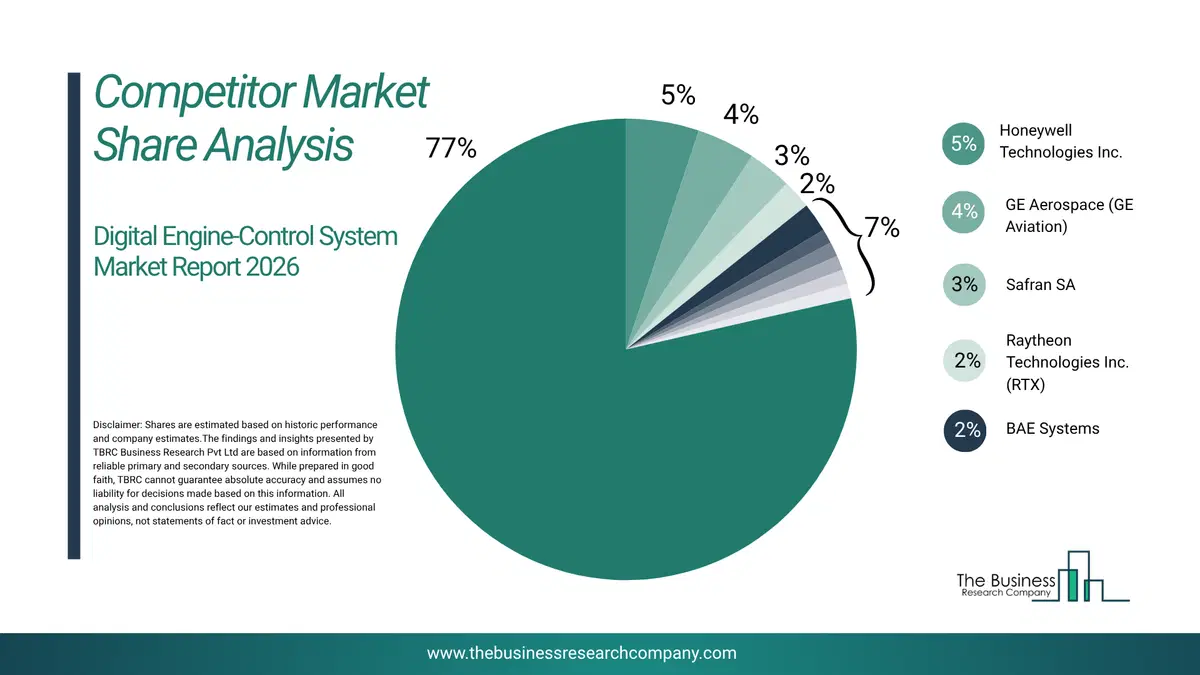
This chart is for illustrative purposes; the full report includes a detailed competitor analysis and comprehensive overview of the top 10 companies in the market.
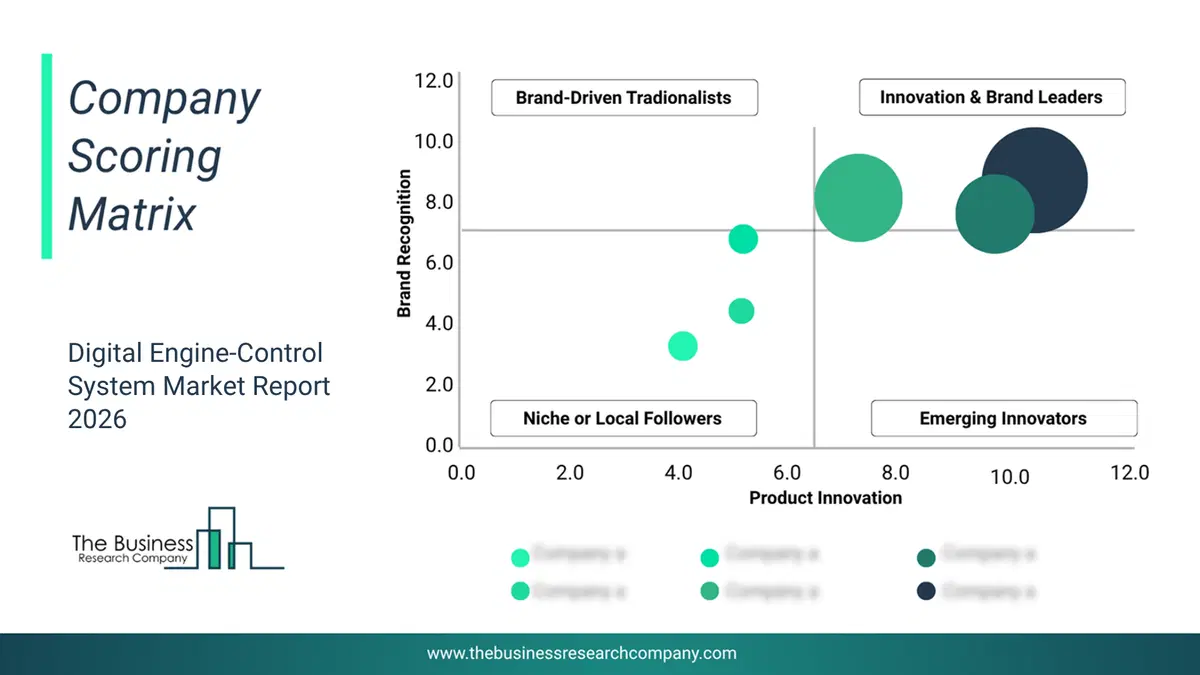
This chart maps companies by product innovation and brand strength, with bubble size indicating relative revenue, helping identify market leaders, challengers, and niche players. This is an illustrative chart; the full report provides a complete and accurate competitive analysis.
Global Digital Engine-Control System Market Trends and Insights
Major companies operating in the digital engine-control system market are focusing on developing innovative solutions, such as artificial intelligence-based electronic control units (ECUs), to enhance engine performance, efficiency, and real-time vehicle control. An artificial intelligence-based electronic control unit (AI-ECU) is a vehicle control system that uses AI algorithms to optimize engine performance, fuel efficiency, and emissions in real time. For instance, in November 2024, Marelli Europe S.p.A., an Italy-based automotive technology company, launched the VEC_480, an AI-based electronic control unit (ECU) designed for engine and vehicle control in motorsport applications. This ECU delivers 2.5 times higher real-time computing performance, 10 times greater inter-processor bandwidth, and enhanced RAM throughput, enabling the rapid execution of complex neural-network algorithms within milliseconds. The ECU leverages AI algorithms to enable real-time predictive control of vehicle functions, improving fuel efficiency and performance. It is designed to process data from vehicle sensors to make instantaneous decisions, supporting the transition towards software-defined vehicles.What Are Latest Mergers And Acquisitions In The Digital Engine-Control System Market?
In July 2025, Safran S.A., a France-based aerospace company, acquired Collins Aerospace’s flight control and actuation business for an undisclosed amount. With this acquisition, Safran aims to solidify its position as a global leader in mission-critical flight control and actuation systems, deliver a comprehensive product offering for next-generation aircraft, and support the aviation industry's move towards more electric, sustainable, and modular aircraft architectures. Collins Aerospace’s flight control and actuation business is a US-based aerospace company that offers a digital engine control system.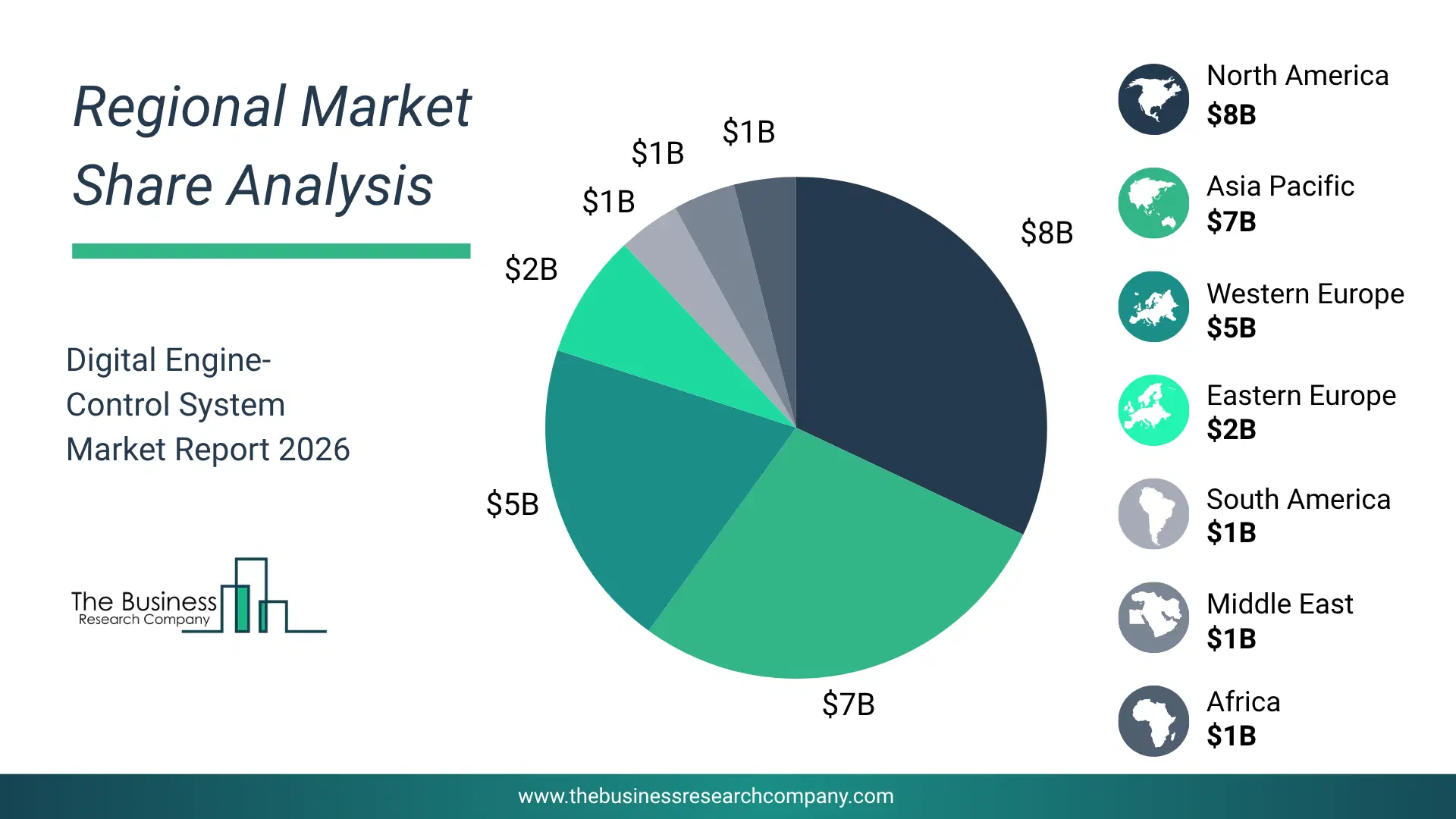
Regional Outlook
North America was the largest region in the digital engine-control system market in 2025. Asia-Pacific is expected to be the fastest-growing region in the forecast period. The regions covered in this market report are Asia-Pacific, South East Asia, Western Europe, Eastern Europe, North America, South America, Middle East, Africa. The countries covered in this market report are Australia, Brazil, China, France, Germany, India, Indonesia, Japan, Taiwan, Russia, South Korea, UK, USA, Canada, Italy, Spain.What Defines the Digital Engine-Control System Market?
The digital engine-control system market consists of revenues earned by entities by providing services such as engine monitoring, performance optimization, diagnostic analysis, software updates, calibration, integration of control units, maintenance support, and consulting for fuel efficiency and emission compliance. The market value includes the value of related goods sold by the service provider or included within the service offering. The digital engine-control system market also includes sales of electronic control units, engine sensors, actuators, software and control modules, turbocharger control modules, and fuel management systems. Values in this market are ‘factory gate’ values; that is, the value of goods sold by the manufacturers or creators of the goods, whether to other entities (including downstream manufacturers, wholesalers, distributors, and retailers) or directly to end customers. The value of goods in this market includes related services sold by the creators of the goods.How is Market Value Defined and Measured?
The market value is defined as the revenues that enterprises gain from the sale of goods and/or services within the specified market and geography through sales, grants, or donations in terms of the currency (in USD unless otherwise specified). The revenues for a specified geography are consumption values that are revenues generated by organizations in the specified geography within the market, irrespective of where they are produced. It does not include revenues from resales along the supply chain, either further along the supply chain or as part of other products.
This chart presents market attractiveness based on a quantitative evaluation of growth, competition, strategic alignment, and risk, offering a clear view of opportunity areas for decision-making. This chart is for illustrative purposes; the full report contains the complete analysis.

This chart highlights the Total Addressable Market (TAM) by estimating the maximum revenue opportunity using an assumption-driven approach, supporting strategic planning and opportunity sizing across markets. The chart is illustrative; the full report provides a more comprehensive analysis.
What Key Data and Analysis Are Included in the Digital Engine-Control System Market Report 2026?
The digital engine-control system market research report is one of a series of new reports from The Business Research Company that provides market statistics, including industry global market size, regional shares, competitors with the market share, detailed market segments, market trends and opportunities, and any further data you may need to thrive in the digital engine-control system industry. The market research report delivers a complete perspective of everything you need, with an in-depth analysis of the current and future state of the industry.Digital Engine-Control System Market Report 2026 Market Report Forecast Analysis
| Report Attribute | Details |
|---|---|
| Market Size Value In 2026 | $16.17 billion |
| Revenue Forecast In 2030 | $22.44 billion |
| Growth Rate | CAGR of 8.5% from 2026 to 2030 |
| Base Year For Estimation | 2025 |
| Actual Estimates/Historical Data | 2020-2025 |
| Forecast Period | 2026 - 2030 |
| Market Representation | Revenue in USD Billion and CAGR from 2026 to 2030 |
| Segments Covered | Component, Engine Type, Vehicle Type, Application, End User |
| Regional Scope | Asia-Pacific, Western Europe, Eastern Europe, North America, South America, Middle East, Africa |
| Country Scope | The countries covered in the report are Australia, Brazil, China, France, Germany, India, ... |
| Key Companies Profiled | Honeywell International Inc., GE Aerospace (GE Aviation), Safran S.A., Raytheon Technologies Corporation (RTX), BAE Systems plc, Moog Inc., Woodward Inc., Curtiss-Wright Corporation, Thales Group, Parker-Hannifin Corporation / Parker Aerospace, Triumph Group, Rolls-Royce Holdings plc, Cummins Inc., Mitsubishi Heavy Industries,Ltd. (MHI), Robert Bosch GmbH, DENSO Corporation, Continental AG, ZF Friedrichshafen AG, Aptiv PLC, Magneti Marelli S.p.A., FADEC Alliance, Silver Atena GmbH, Electronic Concepts & Engineering Inc. (ECE), MTU Aero Engines AG, HEICO Corporation, Kongsberg Gruppen ASA, Infineon Technologies AG, Siemens AG, Emerson Electric Co., Rockwell Automation Inc., ABB Ltd. |
| Customization Scope | Request for Customization |
| Pricing And Purchase Options | Explore Purchase Options |