
Digital Health Monitoring Devices Market Report 2026
Global Outlook – By Digital Health Solution Type (Tele-Health, EHR Or EMR, M-Health, Wireless Health, Remote Patient Monitoring), By Product Type (Device, Software, Services, Other Product Types), By End User (Hospitals, Clinics, Ambulatory Surgical Centers, Homecare Settings, Other End-Users) – Market Size, Trends, Strategies, and Forecast to 2030
Digital Health Monitoring Devices Market Overview
• Digital Health Monitoring Devices market size has reached to $7.75 billion in 2025 • Expected to grow to $20.33 billion in 2030 at a compound annual growth rate (CAGR) of 21.3% • Growth Driver: Surging Global Demand For Remote Monitoring Drives Growth In The Digital Health Monitoring Devices Market • Market Trend: Technological Innovation Takes Center Stage In The Digital Health Monitoring Devices Market • North America was the largest region in 2025.What Is Covered Under Digital Health Monitoring Devices Market?
Digital health monitoring devices are devices used to monitor and analyze acute or chronic conditions outside of the hospital or clinic setting. These devices digitally track and monitor the health of people and give easy access to relevant information, which helps in improving the quality of healthcare and delivering value to healthcare practitioners, patients, hospitals, and governments. The main types of digital health monitoring devices include telehealth, EHR/EMR, m-health, wireless health, and remote patient monitoring. The tele-health monitoring devices are used by patients to monitor their health from home. Telehealth refers to the facilitation and delivery of health and related services, including provider and patient education, medical care, self-care, and health information services, via digital communication technologies and telecommunications. The digital health monitoring devices product types include devices, software, services, and others and are used in hospitals, clinics, ambulatory surgical centers, homecare settings, and others.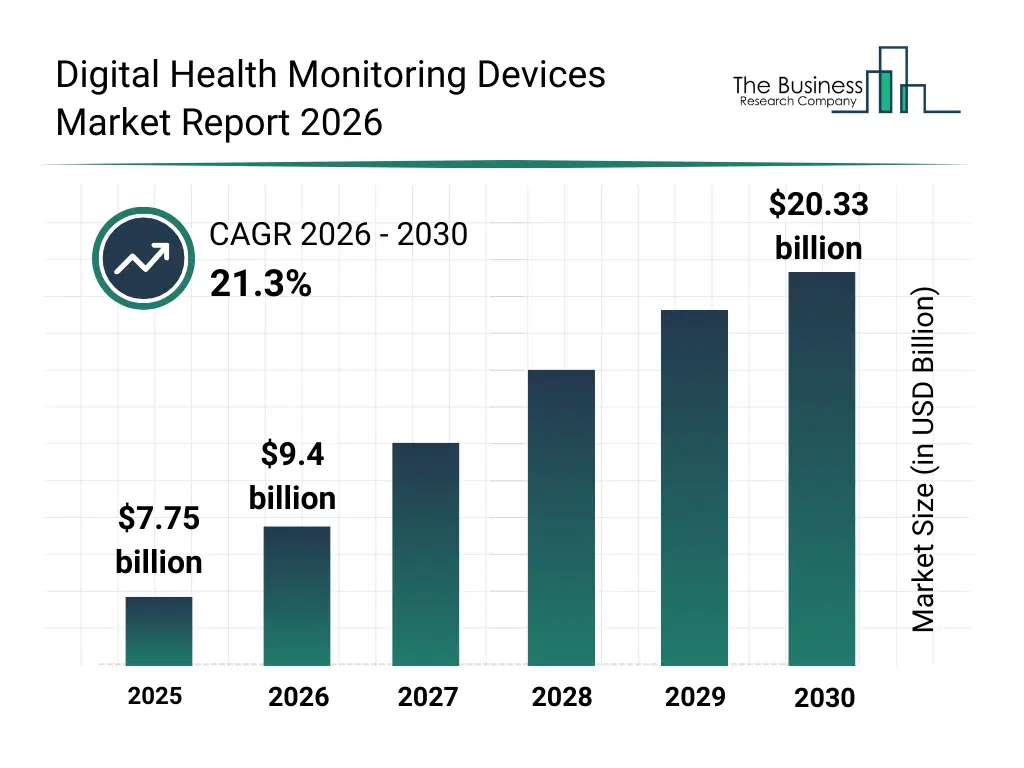
What Is The Digital Health Monitoring Devices Market Size and Share 2026?
The digital health monitoring devices market size has grown exponentially in recent years. It will grow from $7.75 billion in 2025 to $9.4 billion in 2026 at a compound annual growth rate (CAGR) of 21.3%. The growth in the historic period can be attributed to increasing prevalence of chronic diseases, rising demand for home-based healthcare solutions, expansion of mobile health applications, growing adoption of wireless monitoring devices, improved access to digital healthcare infrastructure.What Is The Digital Health Monitoring Devices Market Growth Forecast?
The digital health monitoring devices market size is expected to see exponential growth in the next few years. It will grow to $20.33 billion in 2030 at a compound annual growth rate (CAGR) of 21.3%. The growth in the forecast period can be attributed to increasing investments in telehealth infrastructure, rising focus on preventive healthcare, expansion of AI-enabled health analytics, growing adoption of personalized healthcare solutions, increasing integration of digital health with clinical workflows. Major trends in the forecast period include increasing adoption of remote patient monitoring devices, rising use of wearable health monitoring technologies, growing integration of cloud-based health platforms, expansion of chronic disease management solutions, enhanced focus on continuous health data tracking.
Global Digital Health Monitoring Devices Market Segmentation
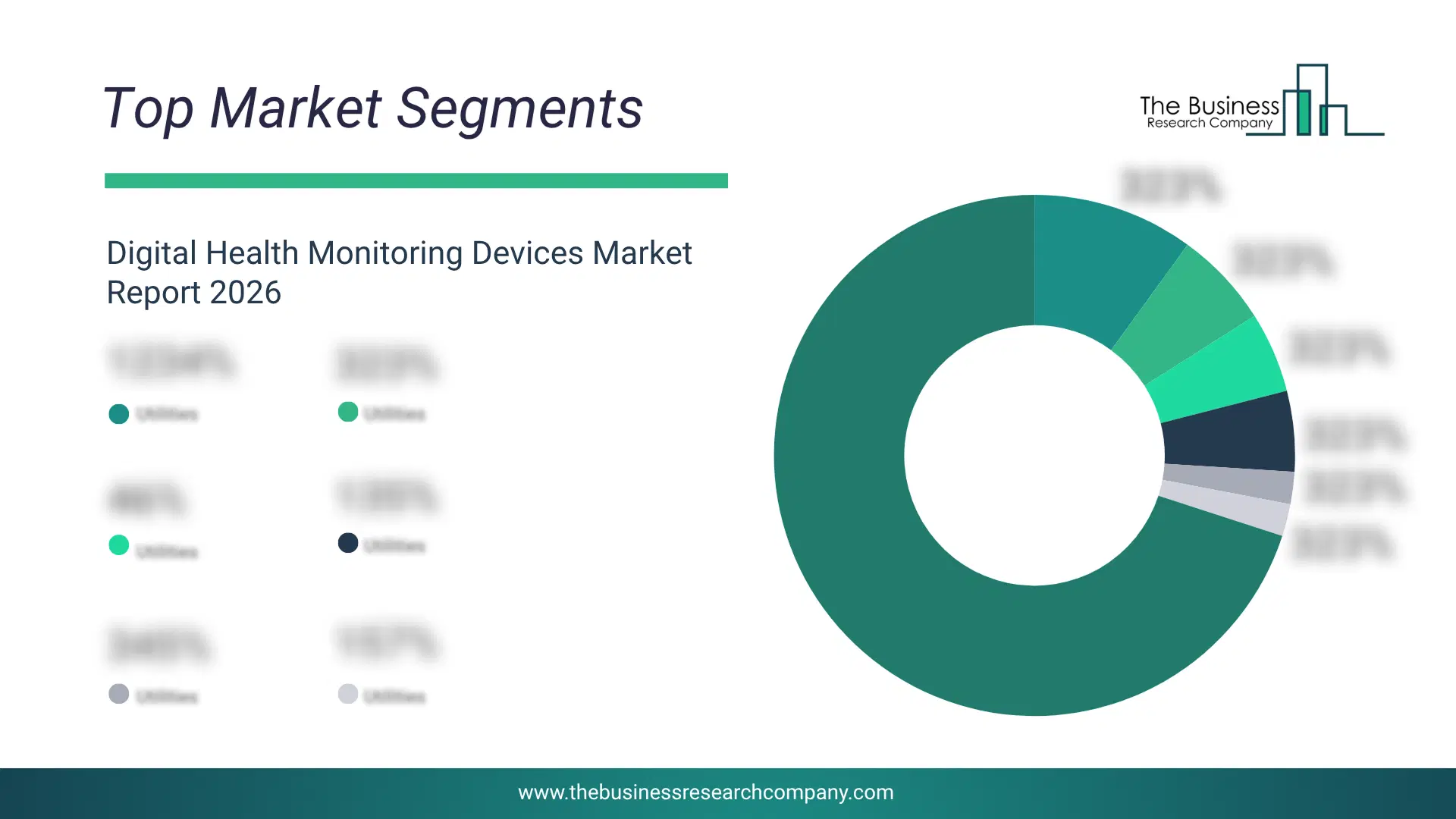
1) By Digital Health Solution Type: Tele-Health, EHR Or EMR, M-Health, Wireless Health, Remote Patient Monitoring 2) By Product Type: Device, Software, Services, Other Product Types 3) By End User: Hospitals, Clinics, Ambulatory Surgical Centers, Homecare Settings, Other End-Users Subsegments: 1) By Tele-Health: Video Consultation Tools, Telemedicine Platforms, Remote Diagnosis Systems 2) By Electronic Health Records Or Electronic Medical Records (EHR Or EMR): Cloud-Based Electronic Health Records (EHR) Or Electronic Medical Records (EMR) Solutions, On-Premises Electronic Health Records (HER) Or Electronic Medical Records (EMR) Solutions, Interoperability Tools 3) By M-Health: Health And Fitness Apps, Mobile Patient Engagement Tools, Medication Management Apps 4) By Wireless Health: Wireless Health Monitoring Devices, Wearable Health Trackers, Wireless Patient Communication Devices 5) By Remote Patient Monitoring: Home Monitoring Devices, Chronic Disease Management Tools, Wearable BiosensorsWhat Is The Driver Of The Digital Health Monitoring Devices Market?
The rising demand for remote monitoring across the globe is expected to propel the growth of the digital health monitoring devices market going forward. The remote monitoring device is a medical device used to track and monitor patients' health at home. The digital health monitoring devices allow healthcare professionals to electronically capture and monitor medical and other health data of patients for assessment, recommendations, and instructions. For instance, in February 2023, according to the UK Parliament, a UK-based legislative body, digital systems for monitoring vital signs were expanded to cover an additional 500,000 individuals in care homes and home-based care settings by March 2023. Therefore, the rise in demand for remote monitoring devices drives the growth of the digital health monitoring devices industry.Key Players In The Global Digital Health Monitoring Devices Market
Major companies operating in the digital health monitoring devices market are Philips Healthcare; Medtronic; GE Healthcare; Abbott Laboratories; Omron Healthcare; Fitbit (Google); Garmin; Dexcom; Withings; Apple Inc.; Masimo Corporation; iHealth Labs; AliveCor; Qardio; Huawei Technologies; Xiaomi Inc.; Polar Electro; ResMed; Nihon Kohden; Siemens Healthineers; Mindray; Spacelabs Healthcare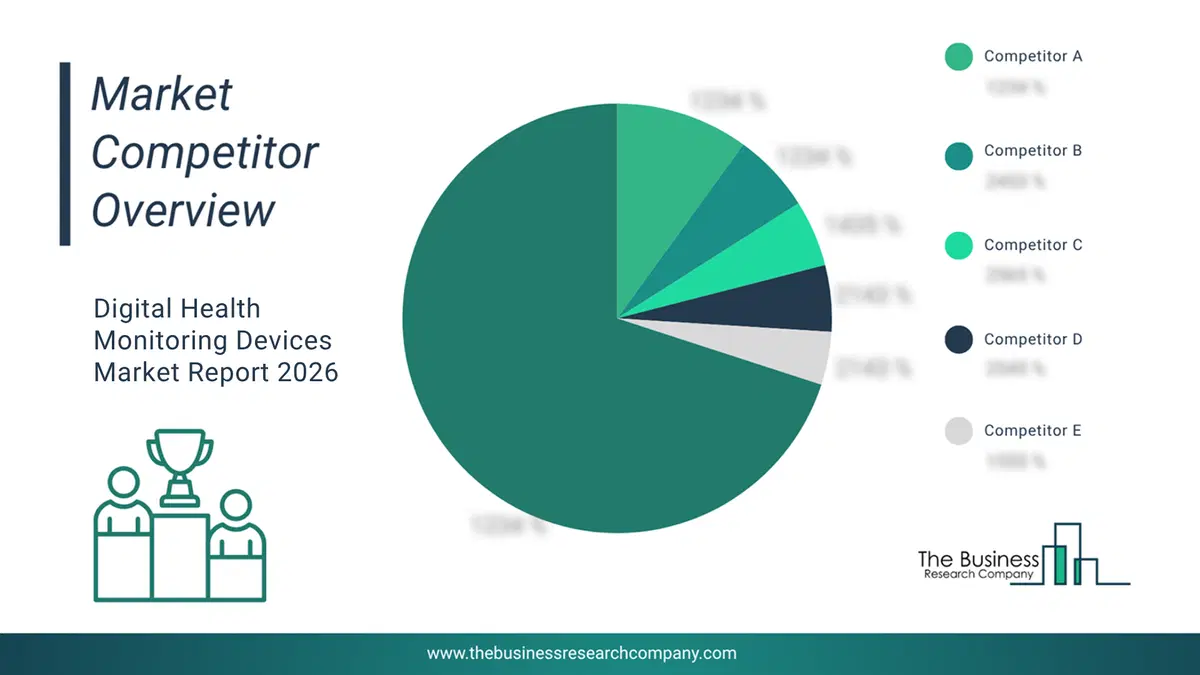
This chart is for illustrative purposes; the full report includes a detailed competitor analysis and comprehensive overview of the top 10 companies in the market.
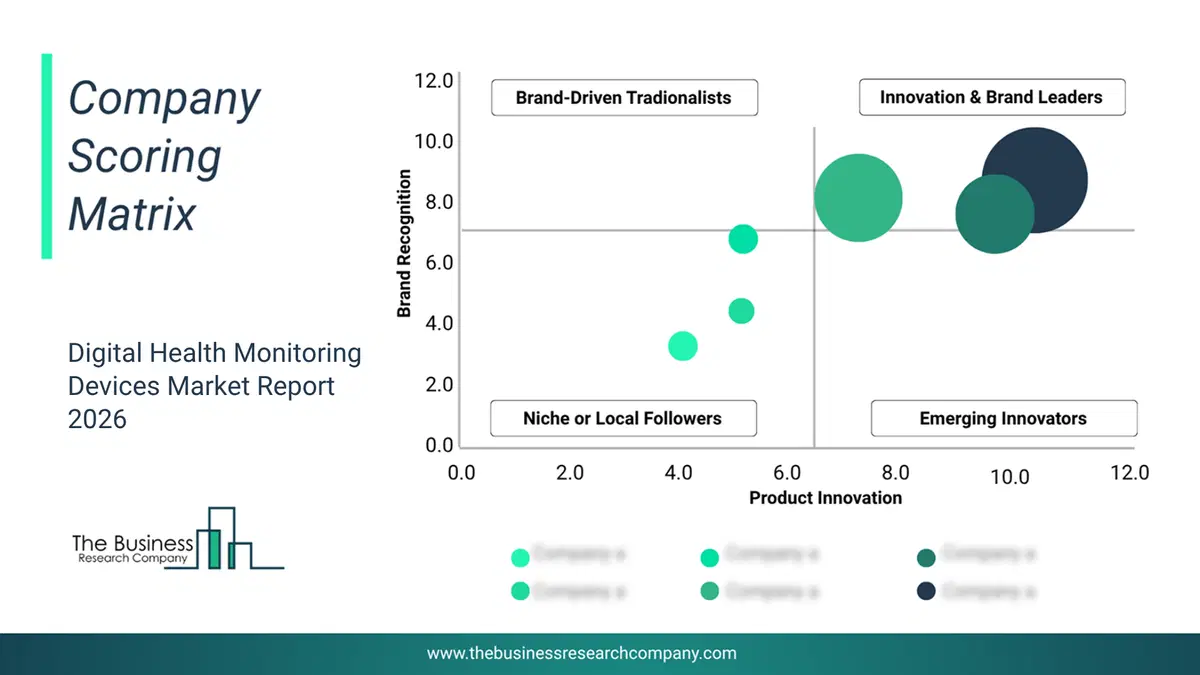
This chart maps companies by product innovation and brand strength, with bubble size indicating relative revenue, helping identify market leaders, challengers, and niche players. This is an illustrative chart; the full report provides a complete and accurate competitive analysis.
Global Digital Health Monitoring Devices Market Trends and Insights
Major companies operating in the digital health monitoring devices market are increasingly emphasizing technological innovation to enhance patient monitoring capabilities and strengthen their competitive position. These advancements enable more reliable, real-time health data collection and seamless integration with remote care platforms, supporting improved patient outcomes and more efficient clinical workflows. For instance, in June 2024, Prevounce Health, a US-based provider of remote care management software, devices, and services, introduced the Pylo GL1-LTE remote blood glucose monitoring device. Clinically validated and equipped with nationwide cellular connectivity, the GL1-LTE ensures consistent and secure data transmission without requiring any device configuration. It integrates directly with the Prevounce remote care management platform and can interface with other healthcare systems through the Pylo cloud API. As part of Prevounce’s Pylo product line which also includes cellular-connected blood pressure monitors and weight scales the device is designed specifically for diabetes-focused remote patient monitoring (RPM) programs, delivering real-time glucose readings to care teams via roaming 4G technology.What Are Latest Mergers And Acquisitions In The Digital Health Monitoring Devices Market?
In September 2024, Becton, Dickinson and Company, a US-based medical device manufacturer, acquired Edwards Lifesciences' Critical Care product group for an undisclosed amount. With this acquisition, BD expands its portfolio of smart connected care solutions by incorporating leading monitoring technologies, including advanced AI-powered clinical decision-making tools. Edwards Lifesciences is a US-based provider of digital health monitoring devices.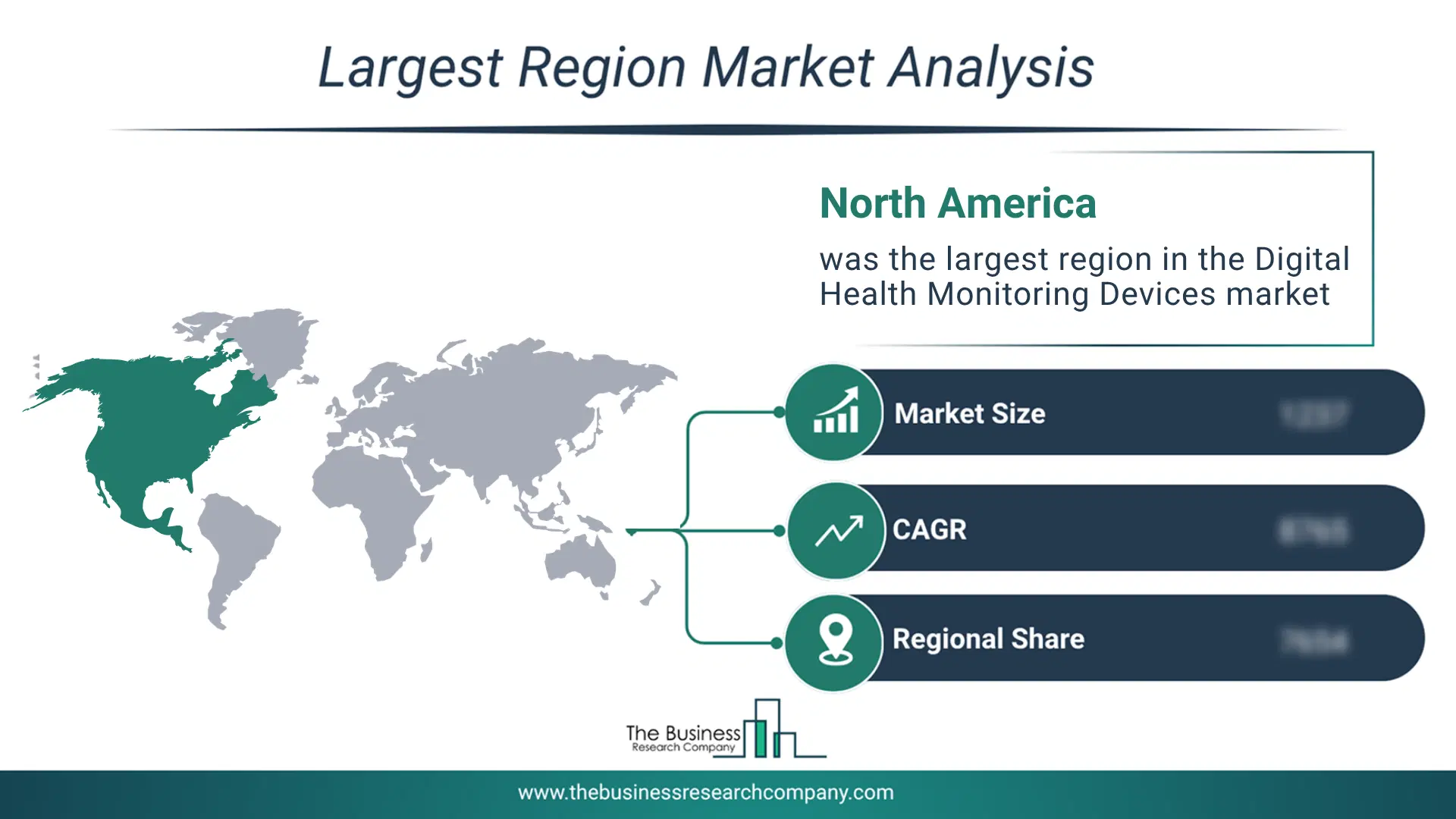
Regional Insights
North America was the largest region in the digital health monitoring devices market share in 2025. The regions covered in this market report are Asia-Pacific, South East Asia, Western Europe, Eastern Europe, North America, South America, Middle East, Africa. The countries covered in this market report are Australia, Brazil, China, France, Germany, India, Indonesia, Japan, Taiwan, Russia, South Korea, UK, USA, Canada, Italy, SpainWhat Defines the Digital Health Monitoring Devices Market?
The digital health monitoring devices market consists of sales of smartphone-based health monitoring devices, sensor-based health monitoring devices, and microcontroller-based health monitoring devices. Values in this market are ‘factory gate’ values, that is, the value of goods sold by the manufacturers or creators of the goods, whether to other entities (including downstream manufacturers, wholesalers, distributors, and retailers) or directly to end customers. The value of goods in this market includes related services sold by the creators of the goods.How is Market Value Defined and Measured?
The market value is defined as the revenues that enterprises gain from the sale of goods and/or services within the specified market and geography through sales, grants, or donations in terms of the currency (in USD unless otherwise specified). The revenues for a specified geography are consumption values that are revenues generated by organizations in the specified geography within the market, irrespective of where they are produced. It does not include revenues from resales along the supply chain, either further along the supply chain or as part of other products.
This chart presents market attractiveness based on a quantitative evaluation of growth, competition, strategic alignment, and risk, offering a clear view of opportunity areas for decision-making. This chart is for illustrative purposes; the full report contains the complete analysis.

This chart highlights the Total Addressable Market (TAM) by estimating the maximum revenue opportunity using an assumption-driven approach, supporting strategic planning and opportunity sizing across markets. The chart is illustrative; the full report provides a more comprehensive analysis.
What Key Data and Analysis Are Included in the Digital Health Monitoring Devices Market Report 2026?
The digital health monitoring devices market research report is one of a series of new reports from The Business Research Company that provides market statistics, including industry global market size, regional shares, competitors with the market share, detailed market segments, market trends and opportunities, and any further data you may need to thrive in the digital health monitoring devices industry. The market research report delivers a complete perspective of everything you need, with an in-depth analysis of the current and future state of the industry.Digital Health Monitoring Devices Market Report Forecast Analysis
| Report Attribute | Details |
|---|---|
| Market Size Value In 2026 | $9.4 billion |
| Revenue Forecast In 2030 | $20.33 billion |
| Growth Rate | CAGR of 21.3% from 2026 to 2030 |
| Base Year For Estimation | 2025 |
| Actual Estimates/Historical Data | 2020-2025 |
| Forecast Period | 2026 - 2030 |
| Market Representation | Revenue in USD Billion and CAGR from 2026 to 2030 |
| Segments Covered | Digital Health Solution Type, Product Type, End User |
| Regional Scope | Asia-Pacific, Western Europe, Eastern Europe, North America, South America, Middle East, Africa |
| Country Scope | The Countries Covered In This Market Report Are Australia, Brazil, China, France, Germany, India, Indonesia, Japan, Taiwan, Russia, South Korea, Uk, Usa, Canada, Italy, Spain. |
| Key Companies Profiled | Philips Healthcare, Medtronic, GE Healthcare, Abbott Laboratories, Omron Healthcare, Fitbit (Google), Garmin, Dexcom, Withings, Apple Inc., Masimo Corporation, iHealth Labs, AliveCor, Qardio, Huawei Technologies, Xiaomi Inc., Polar Electro, ResMed, Nihon Kohden, Siemens Healthineers, Mindray, Spacelabs Healthcare |
| Customization Scope | Request for Customization |
| Pricing And Purchase Options | Explore Purchase Options |