
Digital Twin Cardio-Pulmonary Bypass Market Report 2026
Global Outlook – By Component (Software, Hardware, Services), By Deployment Mode (On-Premises, Cloud-Based), By Application (Cardiac Surgery, Pulmonary Surgery, Research And Development, Training And Education, Other Applications), By End-User (Hospitals, Specialty Clinics, Academic And Research Institutes, Other End-Users) – Market Size, Trends, Strategies, and Forecast to 2030
Digital Twin Cardio-Pulmonary Bypass Market Overview
• Digital Twin Cardio-Pulmonary Bypass market size has reached to $0.6 billion in 2025 • Expected to grow to $1.49 billion in 2030 at a compound annual growth rate (CAGR) of 19.9% • Growth Driver: Rising Prevalence Of Cardiovascular Diseases Driving The Market Growth Due To Increasing Demand For Personalized Surgical Planning • North America was the largest region in 2025 and Asia-Pacific is the fastest growing region.What Is Covered Under Digital Twin Cardio-Pulmonary Bypass Market?
A digital twin cardio-pulmonary bypass is a virtual replica of a patient’s cardiovascular and pulmonary systems designed to simulate physiological responses during bypass procedures. It integrates real-time data, computational modeling, and predictive analytics to assess hemodynamic changes and optimize procedural strategies. The digital model enables precise monitoring, testing, and decision-making without direct intervention on the actual biological system. The main components of digital twin cardio-pulmonary bypass are software, hardware, and services. Software refers to a set of programs and data that direct computer hardware to perform specific tasks, enabling processing, analysis, and decision support. They are deployed through various modes, including on-premises and cloud-based, and are used for various applications, including cardiac surgery, pulmonary surgery, research and development, training and education, and other applications. They are used by various end-users, including hospitals, specialty clinics, academic and research institutes, and other end-users.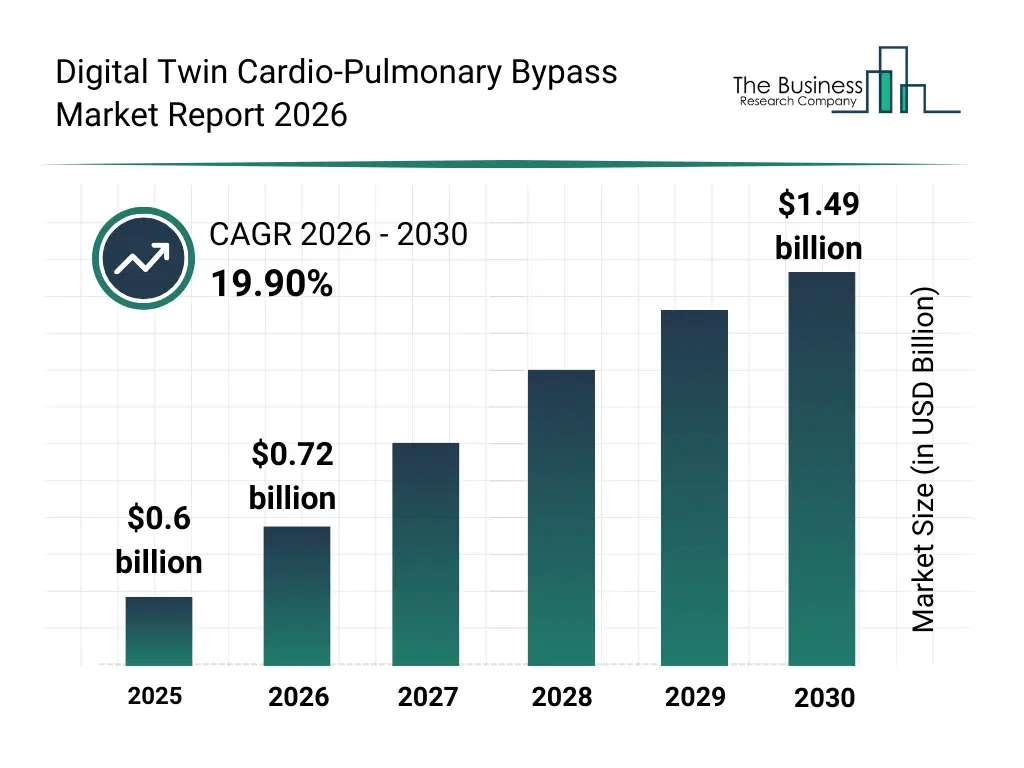
What Is The Digital Twin Cardio-Pulmonary Bypass Market Size and Share 2026?
The digital twin cardio-pulmonary bypass market size has grown exponentially in recent years. It will grow from $0.6 billion in 2025 to $0.72 billion in 2026 at a compound annual growth rate (CAGR) of 20.1%. The growth in the historic period can be attributed to adoption of simulation software in cardiac surgeries, advancements in cardio-pulmonary modeling, development of real-time monitoring systems, integration of predictive analytics, rising interest in risk-free training platforms.What Is The Digital Twin Cardio-Pulmonary Bypass Market Growth Forecast?
The digital twin cardio-pulmonary bypass market size is expected to see rapid growth in the next few years. It will grow to $1.49 billion in 2030 at a compound annual growth rate (CAGR) of 19.9%. The growth in the forecast period can be attributed to integration with ai-driven decision support, expansion of remote surgical monitoring, increased use in clinical training programs, enhanced predictive modeling for patient outcomes, growth in adoption across hospitals and research institutes. Major trends in the forecast period include real-time hemodynamic simulation, predictive surgical planning, ai-driven procedural optimization, virtual training for surgeons, remote clinical monitoring.
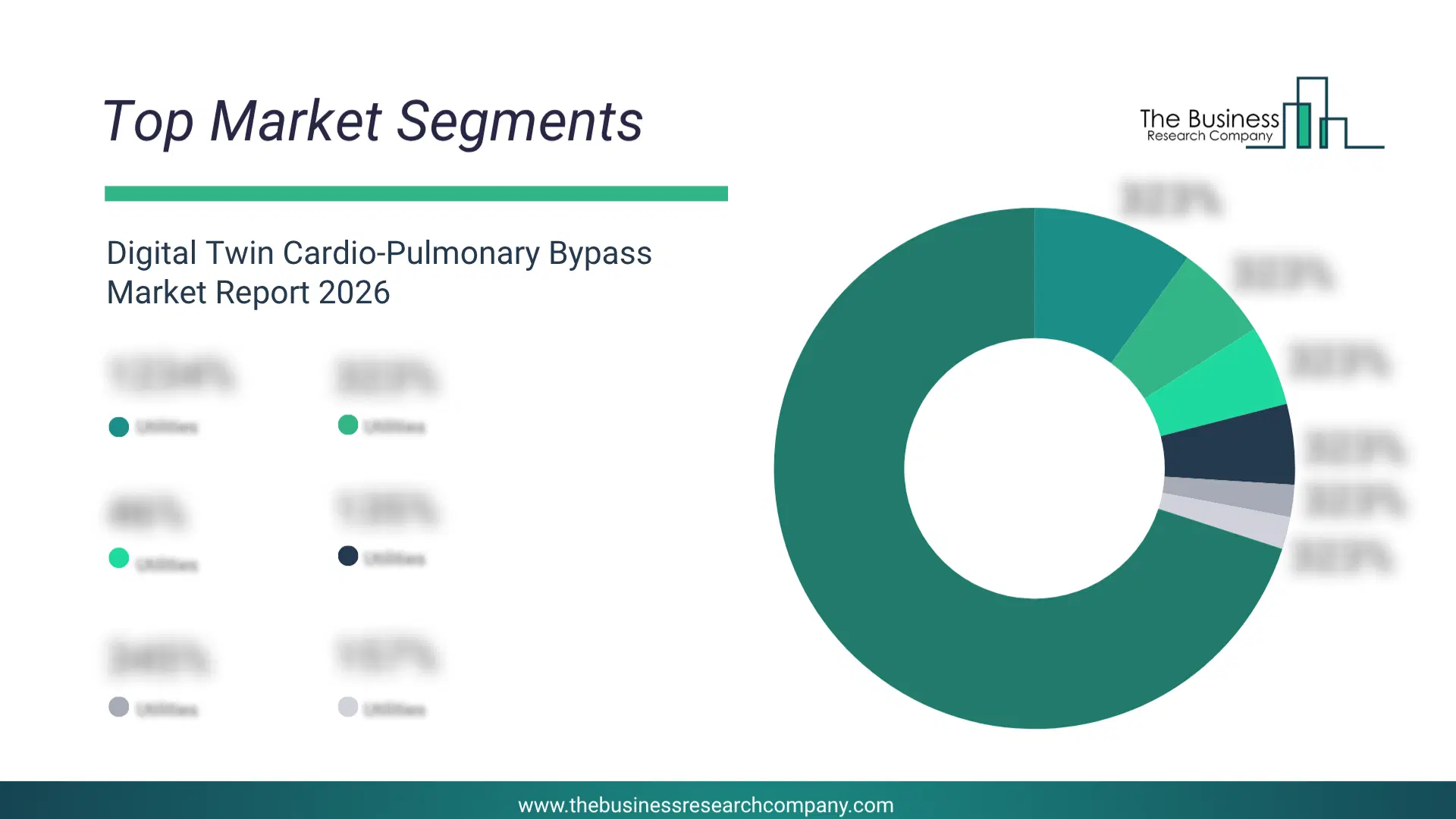
Global Digital Twin Cardio-Pulmonary Bypass Market Segmentation
1) By Component: Software, Hardware, Services 2) By Deployment Mode: On-Premises, Cloud-Based 3) By Application: Cardiac Surgery, Pulmonary Surgery, Research And Development, Training And Education, Other Applications 4) By End-User: Hospitals, Specialty Clinics, Academic And Research Institutes, Other End-Users Subsegments: 1) By Software: Simulation Software, Data Analytics Software, Monitoring Software, Integration Software 2) By Hardware: Sensors And Monitoring Devices, Computing Systems, Imaging Devices, Connectivity Modules 3) By Services: Implementation Services, Maintenance Services, Training Services, Consulting ServicesWhat Are The Drivers Of The Digital Twin Cardio-Pulmonary Bypass Market?
The rising prevalence of cardiovascular diseases (CVDs) is expected to propel the growth of the digital twin cardio-pulmonary bypass market going forward. Cardiovascular diseases (CVDs) refer to a group of disorders affecting the heart and blood vessels, including conditions such as coronary artery disease, heart failure, stroke, and hypertension. The prevalence of cardiovascular diseases (CVDs) is rising due to aging populations because as people grow older, their blood vessels and heart gradually weaken, increasing the risk of heart-related conditions. Digital Twin Cardio-Pulmonary Bypass helps to simulate a patient’s heart and circulatory system, allowing clinicians to predict surgical outcomes, optimize procedures, and reduce complications, thereby directly supporting the management and treatment of cardiovascular diseases (CVDs). For instance, in October 2024, according to the Centers for Disease Control and Prevention, a US-based government agency, in 2023, cardiovascular disease claimed 919,032 lives, accounting for one in every three deaths. Coronary heart disease remained the most prevalent form of heart disease, and notably, about one in six deaths from cardiovascular diseases occurred among adults younger than 65 years. Therefore, the rising prevalence of cardiovascular diseases is driving the growth of the digital twin cardio-pulmonary bypass industry. The increasing demand for precision medicine is expected to propel the growth of the digital twin cardio-pulmonary bypass market going forward. Precision medicine refers to a medical approach that tailor’s treatment and prevention strategies to an individual’s unique genetic makeup, environment, and lifestyle. The demand for precision medicine is rising because advancements in genomics allow doctors to understand a patient’s genetic profile, enabling more targeted and effective treatments. Digital twin cardio-pulmonary bypass supports precision medicine by creating a detailed, patient-specific virtual model of the cardiovascular system, allowing clinicians to simulate procedures, predict individual responses, and optimize treatment strategies tailored to each patient’s unique genetic and physiological profile. For instance, in February 2024, according to the Personalized Medicine Coalition, a US-based non-profit organization, in 2023, the FDA approved 16 new personalized therapies for patients with rare diseases, marking a substantial rise from the six approvals recorded in 2022. Therefore, the increasing demand for precision medicine is driving the growth of the digital twin cardio-pulmonary bypass industry. The increasing investments in medical research are expected to propel the growth of the digital twin cardio-pulmonary bypass market going forward. Medical research refers to the systematic investigation conducted to understand human health, diseases, and medical conditions, and to develop new treatments, drugs, medical devices, and technologies to improve patient care. Investments in medical research are rising because healthcare systems and patients are seeking more advanced, effective, and personalized medical solutions, which require the development of innovative technologies and treatments. Investments in medical research accelerate the development and refinement of digital twin cardio-pulmonary bypass technology by funding the creation of high-fidelity simulation models, enabling precise replication of human cardiovascular physiology, improving surgical planning, patient safety, and treatment outcomes. For instance, in December 2023, according to the Department for Science, Innovation & Technology, a UK-based government department, the United States has allocated $2 billion toward biotechnology and biomanufacturing. Japan plans to achieve “the world’s most advanced bioeconomy” by 2030. France is investing USD 870 million (€800 million) to develop and produce biomedicines. Meanwhile, China’s latest Five-Year Plan pledges to “accelerate the development” and “expand the size and strength” of its bioeconomy. Therefore, the increasing investments in medical research are driving the growth of the digital twin cardio-pulmonary bypass industry.Key Players In The Global Digital Twin Cardio-Pulmonary Bypass Market
Major companies operating in the digital twin cardio-pulmonary bypass market are Tata Consultancy Services Limited (TCS), Medtronic plc, Siemens Healthineers AG, Koninklijke Philips N.V., GE HealthCare Technologies Inc., Boston Scientific Corporation, Dassault Systèmes SE, Terumo Corporation, Synopsys Inc., Getinge AB, LivaNova PLC, Materialise NV, HeartFlow Inc., CFD Research Corporation (CFDRC), Kitware Inc., Circle Cardiovascular Imaging Inc., Keya Medical Inc., inHEART SAS, PrediSurge Inc., InSilicoTrials Technologies SA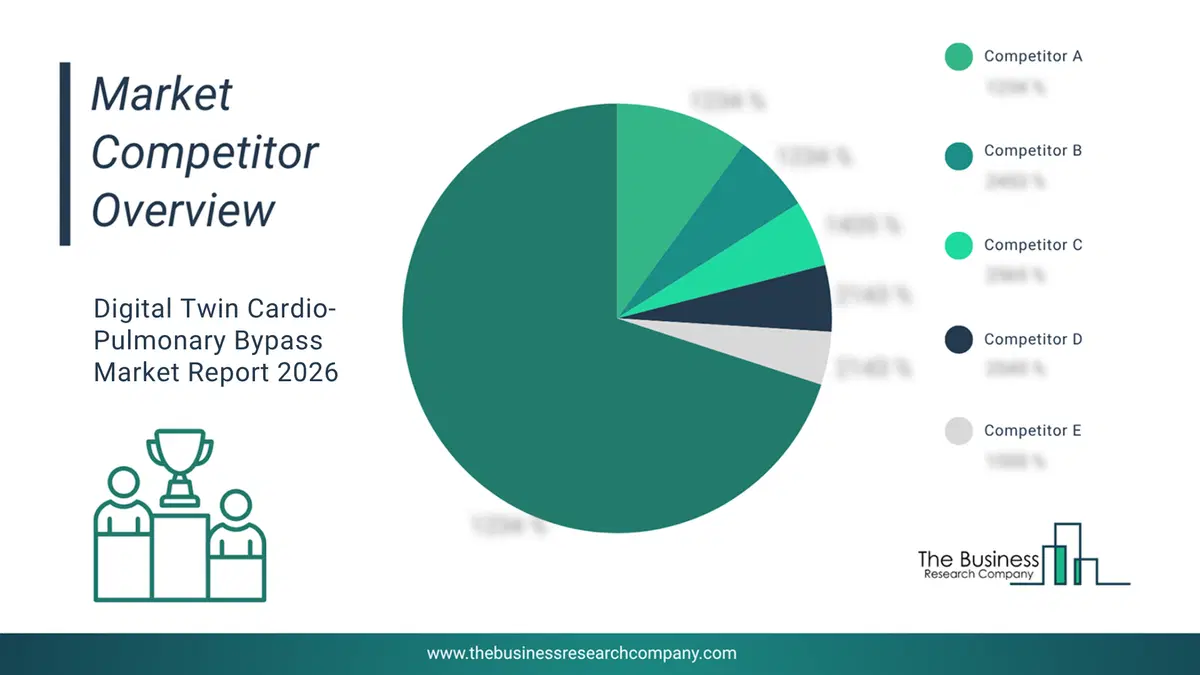
This chart is for illustrative purposes; the full report includes a detailed competitor analysis and comprehensive overview of the top 10 companies in the market.
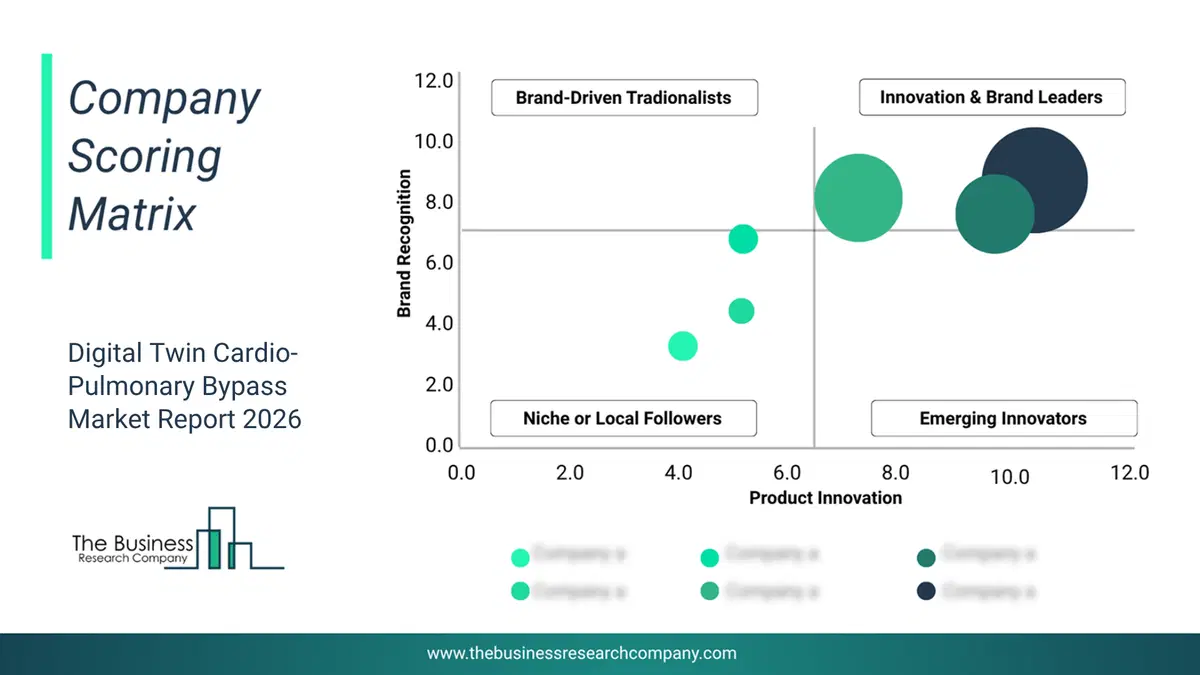
This chart maps companies by product innovation and brand strength, with bubble size indicating relative revenue, helping identify market leaders, challengers, and niche players. This is an illustrative chart; the full report provides a complete and accurate competitive analysis.
Regional Outlook
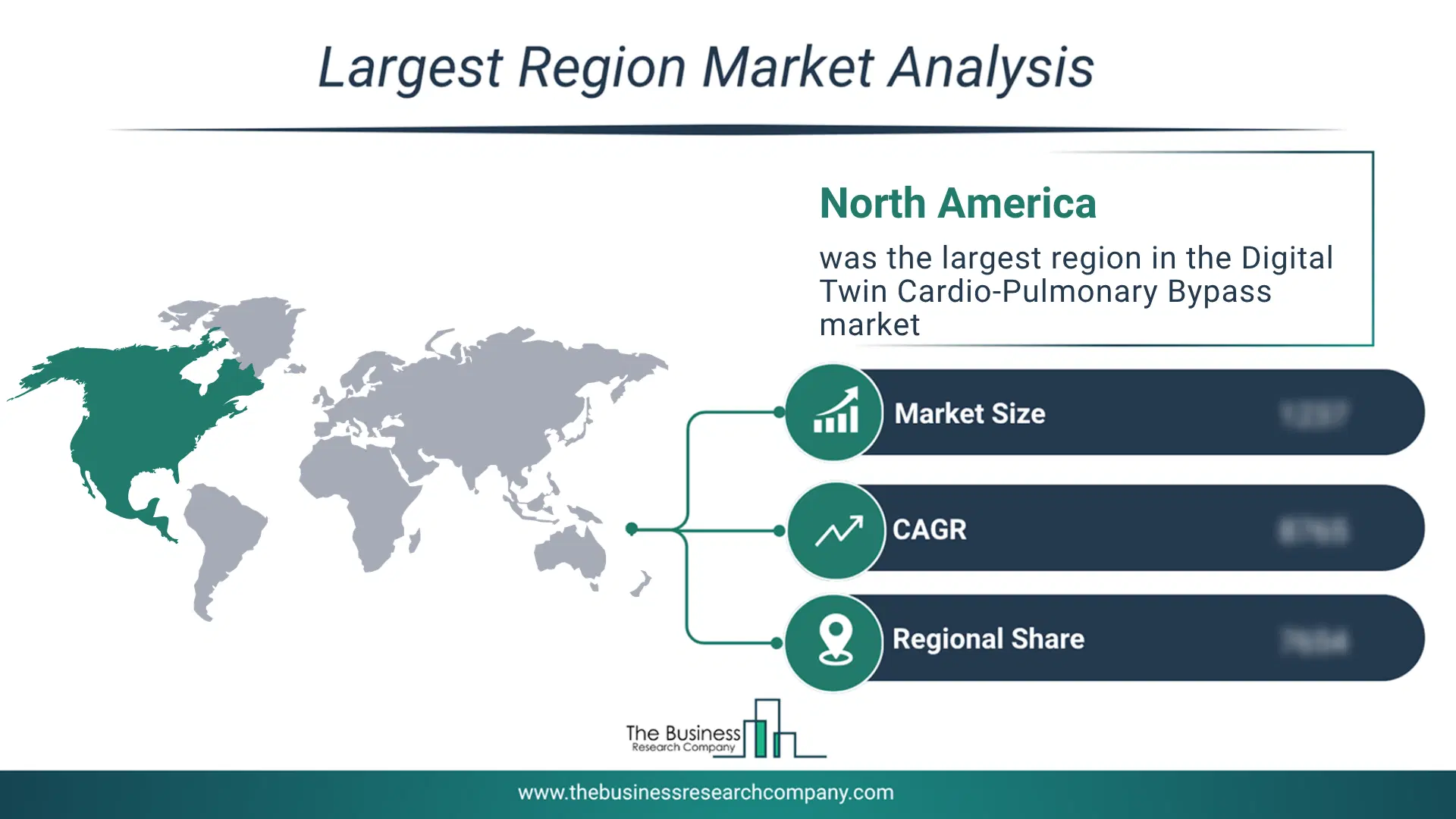
North America was the largest region in the digital twin cardio-pulmonary bypass market in 2025. Asia-Pacific is expected to be the fastest-growing region in the forecast period. The regions covered in this market report are Asia-Pacific, South East Asia, Western Europe, Eastern Europe, North America, South America, Middle East, Africa. The countries covered in this market report are Australia, Brazil, China, France, Germany, India, Indonesia, Japan, Taiwan, Russia, South Korea, UK, USA, Canada, Italy, SpainWhat Defines the Digital Twin Cardio-Pulmonary Bypass Market?
The digital twin cardio-pulmonary bypass market consists of revenues earned by entities by providing services such as real-time monitoring and intraoperative support, training and education for medical professionals, predictive analytics and outcome assessment, software and platform licensing. The market value includes the value of related goods sold by the service provider or included within the service offering. The digital twin cardio-pulmonary bypass market also includes sales of heart-lung machines, advanced patient monitoring systems, virtual and augmented reality surgical planning tools, multi-scale computational heart models, and electrode optimization systems. Values in this market are ‘factory gate’ values, that is the value of goods sold by the manufacturers or creators of the goods, whether to other entities (including downstream manufacturers, wholesalers, distributors and retailers) or directly to end customers. The value of goods in this market includes related services sold by the creators of the goods.How is Market Value Defined and Measured?
The market value is defined as the revenues that enterprises gain from the sale of goods and/or services within the specified market and geography through sales, grants, or donations in terms of the currency (in USD unless otherwise specified). The revenues for a specified geography are consumption values that are revenues generated by organizations in the specified geography within the market, irrespective of where they are produced. It does not include revenues from resales along the supply chain, either further along the supply chain or as part of other products.
This chart presents market attractiveness based on a quantitative evaluation of growth, competition, strategic alignment, and risk, offering a clear view of opportunity areas for decision-making. This chart is for illustrative purposes; the full report contains the complete analysis.

This chart highlights the Total Addressable Market (TAM) by estimating the maximum revenue opportunity using an assumption-driven approach, supporting strategic planning and opportunity sizing across markets. The chart is illustrative; the full report provides a more comprehensive analysis.
What Key Data and Analysis Are Included in the Digital Twin Cardio-Pulmonary Bypass Market Report 2026?
The digital twin cardio-pulmonary bypass market research report is one of a series of new reports from The Business Research Company that provides market statistics, including industry global market size, regional shares, competitors with the market share, detailed market segments, market trends and opportunities, and any further data you may need to thrive in the digital twin cardio-pulmonary bypass industry. The market research report delivers a complete perspective of everything you need, with an in-depth analysis of the current and future state of the industry.Digital Twin Cardio-Pulmonary Bypass Market Report Forecast Analysis
| Report Attribute | Details |
|---|---|
| Market Size Value In 2026 | $0.72 billion |
| Revenue Forecast In 2030 | $1.49 billion |
| Growth Rate | CAGR of 19.9% from 2026 to 2030 |
| Base Year For Estimation | 2025 |
| Actual Estimates/Historical Data | 2020-2025 |
| Forecast Period | 2026 - 2030 |
| Market Representation | Revenue in USD Billion and CAGR from 2026 to 2030 |
| Segments Covered | Component, Deployment Mode, Application, End-User |
| Regional Scope | Asia-Pacific, Western Europe, Eastern Europe, North America, South America, Middle East, Africa |
| Country Scope | The countries covered in the report are Australia, Brazil, China, France, Germany, India, Indonesia, Japan, Taiwan, Russia, South Korea, UK, USA, Canada, Italy, Spain. |
| Key Companies Profiled | Tata Consultancy Services Limited (TCS), Medtronic plc, Siemens Healthineers AG, Koninklijke Philips N.V., GE HealthCare Technologies Inc., Boston Scientific Corporation, Dassault Systèmes SE, Terumo Corporation, Synopsys Inc., Getinge AB, LivaNova PLC, Materialise NV, HeartFlow Inc., CFD Research Corporation (CFDRC), Kitware Inc., Circle Cardiovascular Imaging Inc., Keya Medical Inc., inHEART SAS, PrediSurge Inc., InSilicoTrials Technologies SA |
| Customization Scope | Request for Customization |
| Pricing And Purchase Options | Explore Purchase Options |