
Digital Twins In Healthcare Market Report 2026
Global Outlook – By Type (Process And System Digital Twin, Product Digital Twin ), By Application (Asset And Process Management, Personalized Medicine, Drug Discovery), By End-User (Clinical Research Organizations (CROs), Research And Diagnostic Laboratories, Hospitals And Clinics) - Market Size, Trends, And Global Forecast 2026-2030
Digital Twins In Healthcare Market Overview
• Digital Twins In Healthcare market size has reached to $3.02 billion in 2025 • Expected to grow to $26.24 billion in 2030 at a compound annual growth rate (CAGR) of 54.1% • Growth Driver: Harnessing Simulation Technology For Remote Patient Monitoring And Personalized Care • Market Trend: Revolutionary Digital Twin Avatar Redefining Healthcare Awareness And Personalized Medicine • North America was the largest region in 2025.Market Gains By 2030 – Top Opportunities By Segment
Market Gain identifies the most promising market opportunities by highlighting the segments or products expected to generate the highest incremental revenue growth over the next five years.
What Is Covered Under Digital Twins In Healthcare Market?
A digital twin in healthcare refers to a virtual replica of physical entities such as patients and hospital environments in virtual form, incorporating real-time data from sources such as electronic health records and physiological measurements. These digital replicas facilitate personalized treatment plans, predictive analytics, and enhanced clinical operations by integrating real-time data and virtual simulations. The main types of digital twins in healthcare are process and system digital twins, and product digital twins. A Process and System Digital Twin refers to a virtual representation of a physical process or systems applications including asset and process management, personalized medicine, and drug discovery, and it is used in clinical research organizations, research and diagnostic laboratories, hospitals, and clinics.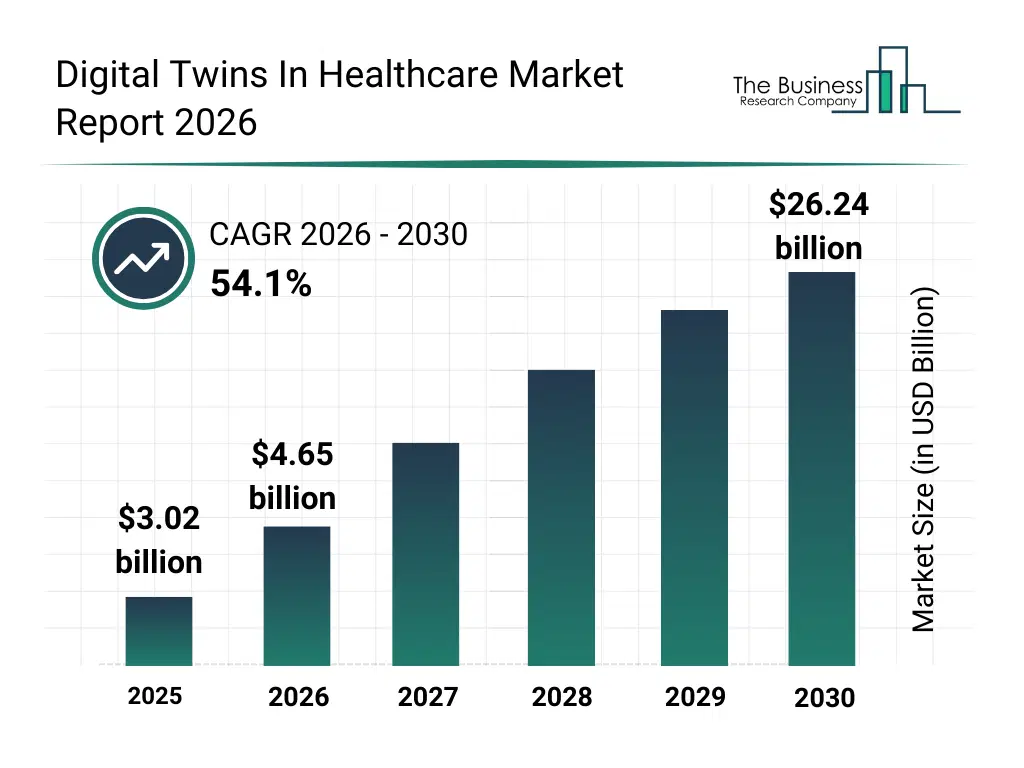
What Is The Digital Twins In Healthcare Market Size and Share 2026?
The digital twins in healthcare market size has grown exponentially in recent years. It will grow from $3.02 billion in 2025 to $4.65 billion in 2026 at a compound annual growth rate (CAGR) of 54.3%. The growth in the historic period can be attributed to advances in medical imaging, early simulation-based planning tools, increasing healthcare data availability, complex treatment pathways, need for precision medicine.What Is The Digital Twins In Healthcare Market Growth Forecast?
The digital twins in healthcare market size is expected to see exponential growth in the next few years. It will grow to $26.24 billion in 2030 at a compound annual growth rate (CAGR) of 54.1%. The growth in the forecast period can be attributed to ai-powered modeling platforms, real-time iot data integration, growth of personalized medicine, digital hospital initiatives, clinical workflow optimization. Major trends in the forecast period include growing use of virtual patient modeling, increasing adoption of predictive healthcare analytics, expansion of digital twins in hospital operations, rising focus on personalized treatment simulation, integration of real-time clinical data streams.
Global Digital Twins In Healthcare Market Segmentation
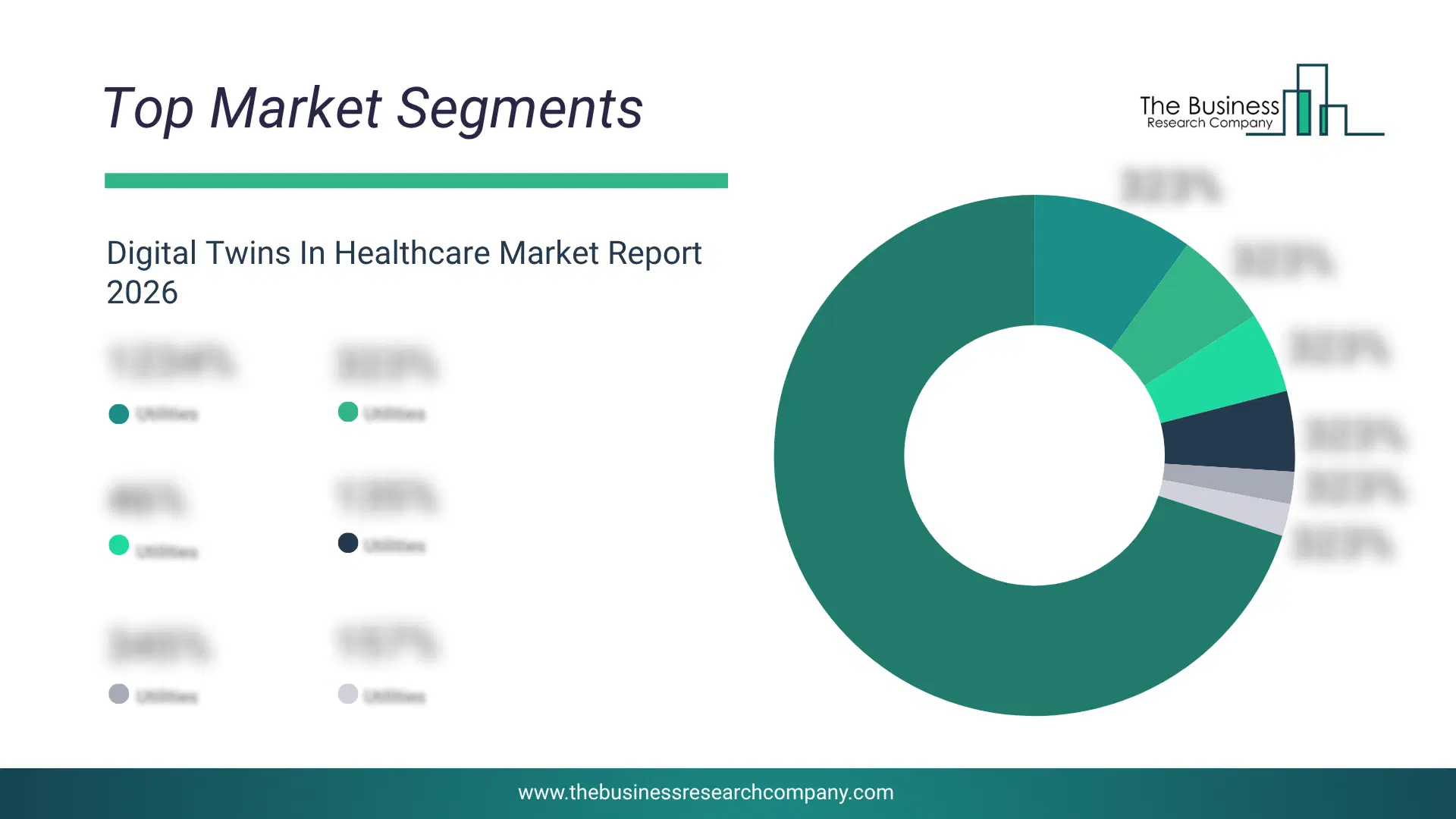
1) By Type: Process And System Digital Twin, Product Digital Twin 2) By Application: Asset And Process Management, Personalized Medicine, Drug Discovery 3) By End-User: Clinical Research Organizations (CROs), Research And Diagnostic Laboratories, Hospitals And Clinics Subsegments: 1) By Process And System Digital Twin: Patient Journey Digital Twin, Hospital Operations Digital Twin, Healthcare Workflow Digital Twin, Clinical Process Digital Twin 2) By Product Digital Twin: Medical Device Digital Twin, Drug Development Digital Twin, Equipment Maintenance Digital Twin, Personalized Medicine Digital Twin The top segments in the digital twins in healthcare market will be: • Process and System Digital Twin will reach $1891.33 Million by 2025. • Product Digital Twin will reach $1125.03 Million by 2025. • Healthcare Providers will reach $1050.81 Million by 2025. • Pharma and Biopharma Companies will reach $893.74 Million by 2025. • Drug Discovery and Development will reach $877.23 Million by 2025.What Is The Driver Of The Digital Twins In Healthcare Market?
The expansion of telehealth is expected to propel the growth of digital twins in the healthcare market going forward. Telehealth refers to using telecommunications technology to provide healthcare services and information remotely. It encompasses various healthcare services, including medical consultations, monitoring, education, and health information exchange, all delivered through digital communication channels. Digital twins can simulate real-time physiological responses and disease progression for individual patients. Telehealth platforms can use this information for remote monitoring, enabling healthcare providers to remotely track patients' vital signs, medication adherence, and overall health. For instance, in November 2025, according to the Australian Bureau of Statistics (ABS), an Australia-based government statistical agency, 22.5% of Australians used telehealth services in 2024–25. Among those who had a telehealth consultation, 90.3% reported they would use telehealth again if offered, up from 89.2% in 2023–24, indicating rising acceptance and continued adoption. Therefore, telehealth expansion is driving the growth of digital twins in the healthcare market.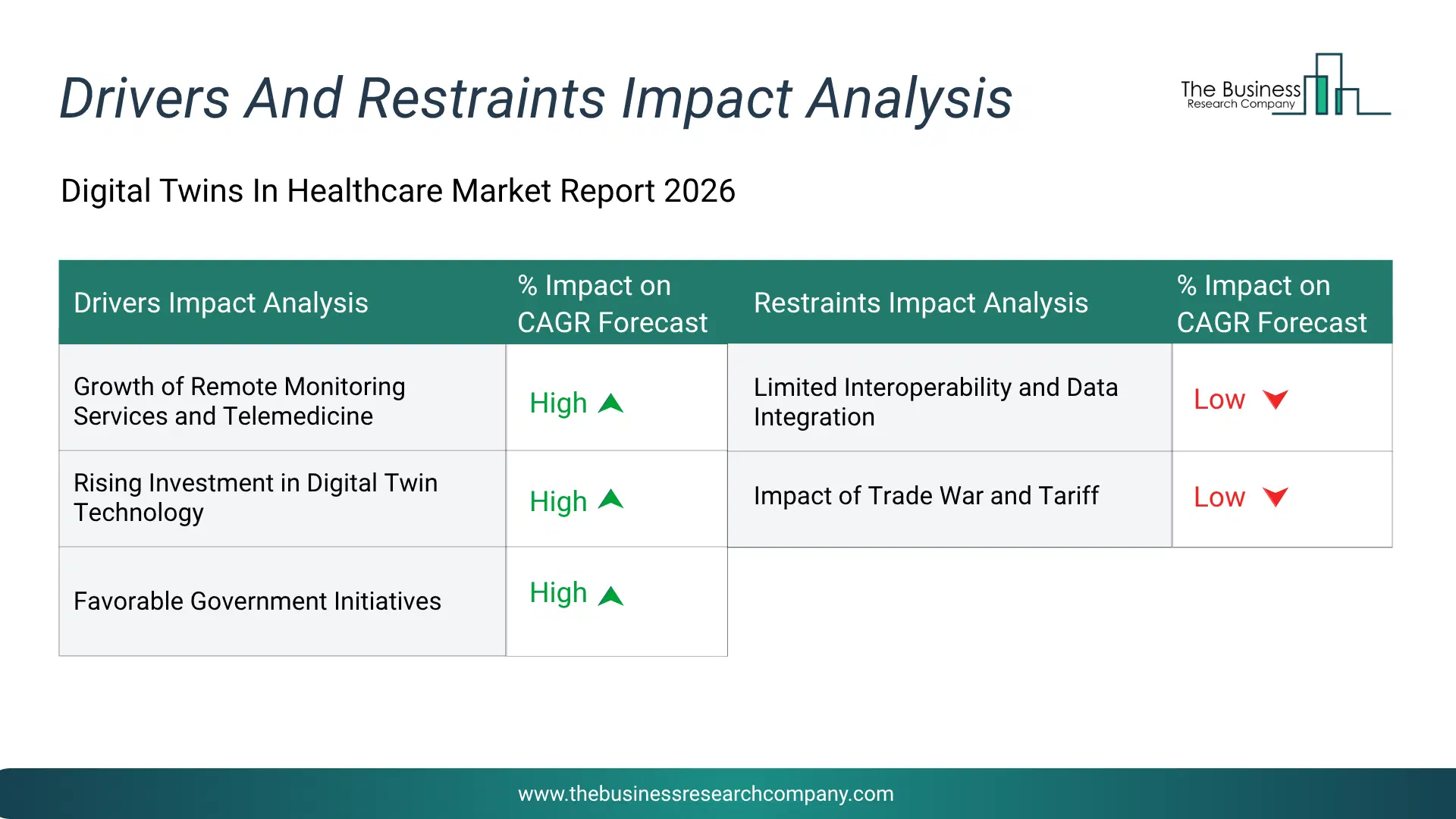
Infographic Chart Showing Key Market Drivers Analysis And Restraints For Digital Twins In Healthcare Market
The chart presents an impact analysis of key drivers and restraints, quantifying their relative influence on the market's growth rate and helping assess the balance between growth enablers and limiting factors. This chart offers a high-level perspective; the full report contains more detailed insights.
How Will The Drivers Impact Growth In The Global Digital Twins In Healthcare Market?
• Growth of Remote Monitoring Services and Telemedicine (High) – The growth of remote monitoring services and telemedicine will serve as a key growth catalyst for the digital twins in healthcare market by 2030, Digital twins in healthcare enhance the growth of remote monitoring services and telemedicine by enabling real-time, personalized virtual representations of patients. These digital models allow healthcare providers to continuously track a patient’s health status from a distance, improving early diagnosis and proactive care. By integrating with wearable devices and IoT sensors, digital twins provide accurate, real-time data that supports timely medical interventions without in-person visits. This strengthens the effectiveness of telemedicine and remote care, making healthcare more accessible and responsive. Therefore, this growth of remote monitoring services and telemedicine operations is projected to supporting to a 4.5% annual growth in the market. • Rising Investment in Digital Twin Technology (High) – The rising investment in digital twin technology will become a significant driver contributing to the growth of the digital twins in healthcare market by 2030 Digital twins in healthcare create virtual models of patients, enabling precise diagnostics, treatment planning, and predictive monitoring. This showcases the immense value of digital twin technology in improving outcomes and reducing costs. As healthcare systems increasingly adopt this innovation, it validates the technology’s practicality and scalability. Consequently, investors see strong commercial potential, fuelling funding and development in broader applications of digital twin solutions. Consequently, the rising investment in digital twin technology strategies is projected to contributing to a 3.5% annual growth in the market • Favorable Government Initiatives (High) – The favorable government initiatives will become a key driver of growth in the digital twins in healthcare market by 2030. These initiatives promote the integration of digital twins to improve patient outcomes through personalized treatment and predictive diagnostics. Regulatory frameworks encouraged by governments ensure data security and interoperability, building trust among healthcare providers. Additionally, government-backed pilot programs and collaborations foster innovation and faster deployment of digital twin solutions across healthcare systems. As a result, the favorable government initiatives is anticipated to contributing to a 6.0% annual growth in the market. • Surge in Cloud Computing Infrastructure (High) – The surge in cloud computing infrastructure will emerge as a major factor driving the expansion of the digital twins in healthcare market by 2030. Digital twins in healthcare help optimize cloud computing infrastructure by driving demand for advanced data storage, processing, and analytics capabilities. As digital twins generate complex simulations and large datasets, they push cloud providers to enhance scalability and performance. This encourages continuous innovation in cloud services tailored for healthcare needs, such as improved security and compliance features. Consequently, the surge in cloud computing infrastructure capabilities is projected to contributing to a 5.0% annual growth in the market.How Will The Restraints Impact Growth In The Global Digital Twins In Healthcare Market?
• Insufficient Clinical Validation (High) – Insufficient Clinical Validation will restrict the growth of the Digital Twins In Healthcare market during the forecast period. Digital twin applications in healthcare lack extensive clinical validation and evidence of effectiveness for many use cases. Limited clinical studies and validation data affect healthcare provider confidence and adoption decisions. The need for clinical validation adds to development costs and timelines, slowing market growth and technology adoption. • Limited Interoperability and Data Integration (High) – Limited Interoperability and Data Integration will restrict the growth of the Digital Twins In Healthcare market during the forecast period. Digital twin solutions require integration with diverse healthcare data sources and legacy systems, creating interoperability challenges. Data format differences, compatibility issues, and lack of standards complicate implementation. Integration challenges can increase project costs and timelines, affecting market growth and adoption. • Impact of Trade War and Tariff (High) – Impact of Trade War and Tariff will restrict the growth of the Digital Twins In Healthcare market during the forecast period. Trade tensions and economic uncertainty can affect healthcare technology investment and digital transformation initiatives. Reduced healthcare IT spending during economic uncertainty may limit the adoption of digital twin solutions. Trade barriers may also impact technology imports and international collaboration in digital health innovation.Key Players In The Global Digital Twins In Healthcare Market
Major companies operating in the digital twins in healthcare market are Amazon.com Inc., Microsoft Corporation, IBM Corporation, Oracle Corporation, SAP SE, NVIDIA Corporation, Siemens AG, Koninklijke Philips N.V., GE HealthCare Technologies Inc., NTT DATA Corporation, Atos SE, Dassault Systemes SE, Ansys Inc., PTC Inc., Twin Health Inc., Faststream Technologies, Rescale Inc., ThoughWire Corp., Q Bio Inc., Verto Healthcare, Unlearn.AI Inc., PrediSurge, QiO Technologies Ltd., NUREA, Predictive Care Inc., Virtonomy GMbH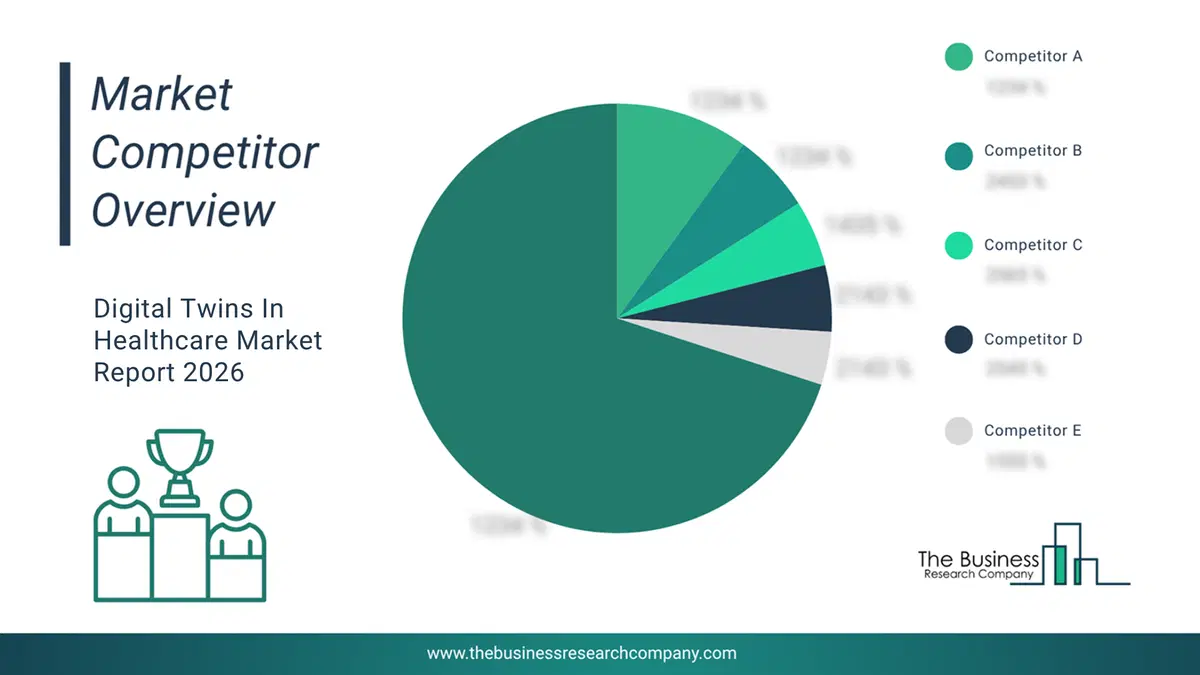
This chart is for illustrative purposes; the full report includes a detailed competitor analysis and comprehensive overview of the top 10 companies in the market.
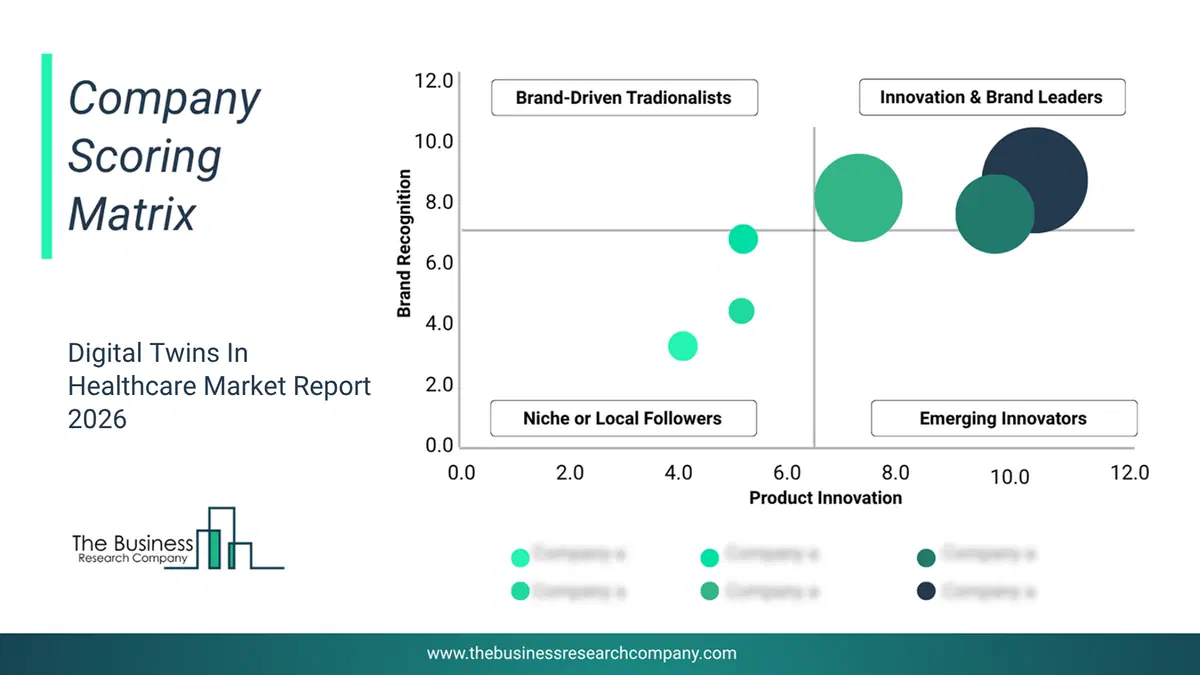
This chart maps companies by product innovation and brand strength, with bubble size indicating relative revenue, helping identify market leaders, challengers, and niche players. This is an illustrative chart; the full report provides a complete and accurate competitive analysis.
Global Digital Twins In Healthcare Market Trends and Insights
Major companies operating in digital twins in the healthcare market are developing innovative digital twin-supported technology, such as Emma, to raise awareness of the role of virtual twins in accelerating medical research and delivering personalized care. Emma is a digital twin-supported technology that provides an interactive, true-to-life virtual replica with additional data points, insights, and analysis that enhance the experience. The technology can optimize surgical procedures and give patients a greater understanding of treatment options. For instance, in September 2023, Dassault Systèmesa SE, a France-based software company, launched a digital twin avatar named Emma to raise awareness about health research. Emma is a virtual model that accurately reflects the characteristics of a physical being. Emma was developed using anonymous health data to conduct numerous tests to gain insight into various diseases and therapies.What Are Latest Mergers And Acquisitions In The Digital Twins In Healthcare Market?
In August 2023, Arcfield, a US-based technology company, acquired Strategic Technology Consulting (STC) for an undisclosed amount. Through this acquisition, Arcfield aims to enhance its capabilities in digital engineering and model-based systems engineering, enabling more efficient technology development and better lifecycle management of complex systems. Strategic Technology Consulting (STC) is a US-based company specializing in systems engineering, technology development, and digital twins for healthcare.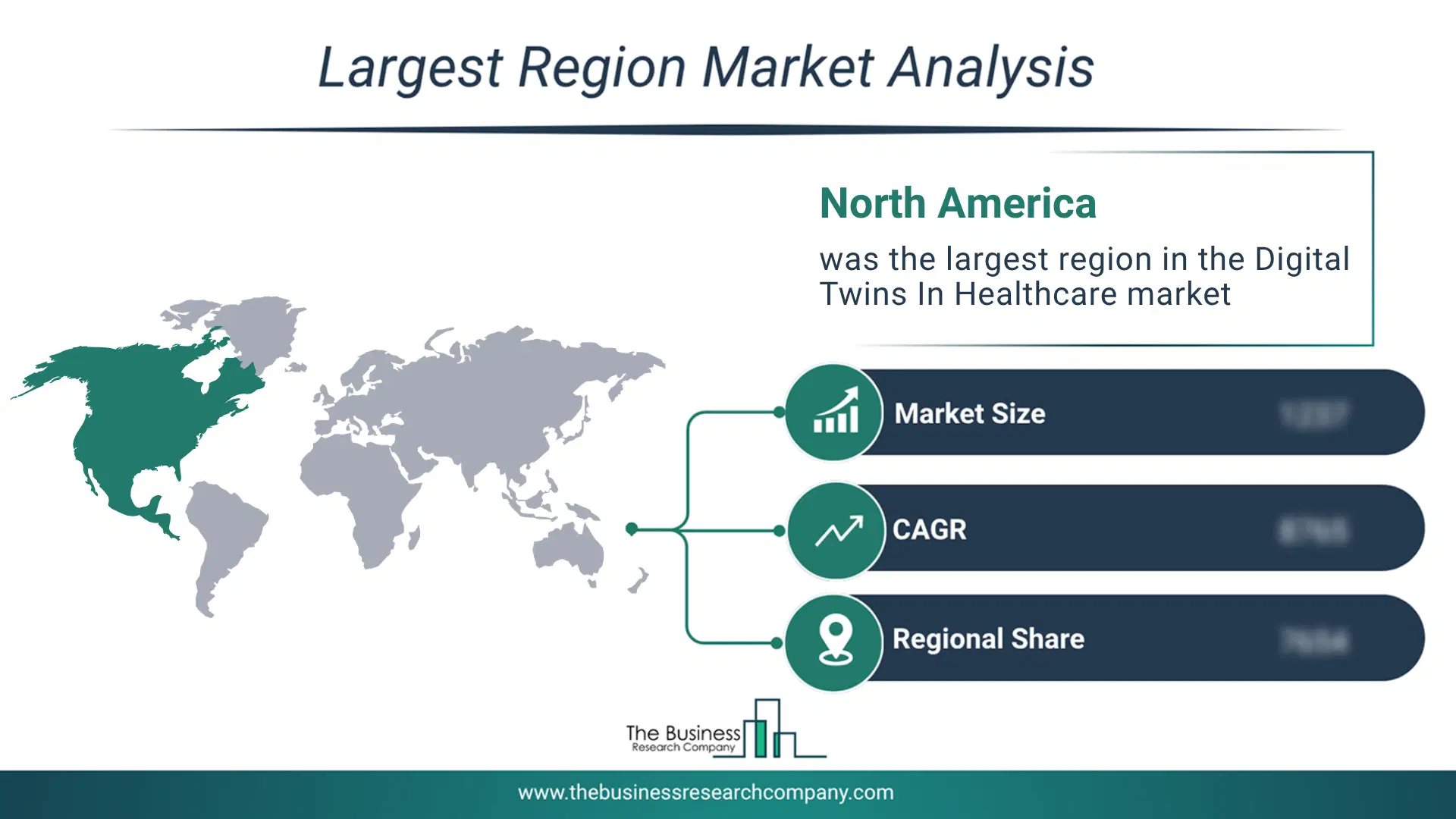
Regional Outlook
North America was the largest region in the digital twins in healthcare market in 2025. The regions covered in this market report are Asia-Pacific, South East Asia, Western Europe, Eastern Europe, North America, South America, Middle East, Africa. The countries covered in this market report are Australia, Brazil, China, France, Germany, India, Indonesia, Japan, Taiwan, Russia, South Korea, UK, USA, Canada, Italy, Spain.What Defines the Digital Twins In Healthcare Market?
The digital twins in healthcare market includes revenues earned by entities by replicating staffing systems, creating digital twins of healthcare facilities, interdisciplinary teamwork and patient care coordination, training and simulation. The market value includes the value of related goods sold by the service provider or included within the service offering. Only goods and services traded between entities or sold to end consumers are included.How is Market Value Defined and Measured?
The market value is defined as the revenues that enterprises gain from the sale of goods and/or services within the specified market and geography through sales, grants, or donations in terms of the currency (in USD unless otherwise specified). The revenues for a specified geography are consumption values that are revenues generated by organizations in the specified geography within the market, irrespective of where they are produced. It does not include revenues from resales along the supply chain, either further along the supply chain or as part of other products.
This chart presents market attractiveness based on a quantitative evaluation of growth, competition, strategic alignment, and risk, offering a clear view of opportunity areas for decision-making. This chart is for illustrative purposes; the full report contains the complete analysis.

This chart highlights the Total Addressable Market (TAM) by estimating the maximum revenue opportunity using an assumption-driven approach, supporting strategic planning and opportunity sizing across markets. The chart is illustrative; the full report provides a more comprehensive analysis.
What Key Data and Analysis Are Included in the Digital Twins In Healthcare Market Report 2026?
The digital twins in healthcare market research report is one of a series of new reports from The Business Research Company that provides market statistics, including industry global market size, regional shares, competitors with the market share, detailed market segments, market trends and opportunities, and any further data you may need to thrive in the digital twins in healthcare industry. The market research report delivers a complete perspective of everything you need, with an in-depth analysis of the current and future state of the industry.Digital Twins In Healthcare Market Report Forecast Analysis
| Report Attribute | Details |
|---|---|
| Market Size Value In 2026 | $4.65 billion |
| Revenue Forecast In 2030 | $26.24 billion |
| Growth Rate | CAGR of 54.3% from 2026 to 2030 |
| Base Year For Estimation | 2025 |
| Actual Estimates/Historical Data | 2020-2025 |
| Forecast Period | 2026 - 2030 |
| Market Representation | Revenue in USD Billion and CAGR from 2026 to 2030 |
| Segments Covered | Type, Application, End-User |
| Regional Scope | Asia-Pacific, Western Europe, Eastern Europe, North America, South America, Middle East, Africa |
| Country Scope | The countries covered in the report are Australia, Brazil, China, France, Germany, India, Indonesia, Japan, Taiwan, Russia, South Korea, UK, USA, Canada, Italy, Spain. |
| Key Companies Profiled | Amazon.com Inc., Microsoft Corporation, IBM Corporation, Oracle Corporation, SAP SE, NVIDIA Corporation, Siemens AG, Koninklijke Philips N.V., GE HealthCare Technologies Inc., NTT DATA Corporation, Atos SE, Dassault Systemes SE, Ansys Inc., PTC Inc., Twin Health Inc., Faststream Technologies, Rescale Inc., ThoughWire Corp., Q Bio Inc., Verto Healthcare, Unlearn.AI Inc., PrediSurge, QiO Technologies Ltd., NUREA, Predictive Care Inc., Virtonomy GMbH |
| Customization Scope | Request for Customization |
| Pricing And Purchase Options | Explore Purchase Options |