

Dipeptide Peptidase 4 Inhibitors Market Report 2026
Global Outlook – By Type (Sitagliptin, Saxagliptin, Linagliptin, Alogliptin, Vildagliptin, Other Types), By Distribution Channel (Hospital Pharmacies, Retail Pharmacies, Online Channels), By Application (Type 2 Diabetes, Gestational Diabetes, Metabolic Syndrome, Other Applications) – Market Size, Trends, Strategies, and Forecast to 2030
Dipeptide Peptidase 4 Inhibitors Market Overview
• Dipeptide Peptidase 4 Inhibitors market size has reached to $11.81 billion in 2025 • Expected to grow to $14.78 billion in 2030 at a compound annual growth rate (CAGR) of 4.5% • Growth Driver: Rising Prevalence Of Diabetes Fueling Growth Of Dipeptidyl Peptidase 4 Inhibitors Market • Asia-Pacific was the largest region in 2025 and Latin America is the fastest growing region.What Is Covered Under Dipeptide Peptidase 4 Inhibitors Market?
Dipeptidyl peptidase-4 (DPP-4) inhibitors are a class of drugs used in the treatment of type 2 diabetes by increasing active incretin levels to regulate blood sugar. DPP-4 inhibitors work by enhancing the action of incretin hormones, which stimulate the release of insulin and inhibit the release of glucagon, thereby lowering blood sugar levels. The main dipeptide peptidase 4 inhibitors are sitagliptin, saxagliptin, linagliptin, alogliptin, vildagliptin and others. Sitagliptin is a type of DPP-4 inhibitor medication used to manage type 2 diabetes by regulating blood sugar levels. It is distributed through several channels such as hospital pharmacies, retail pharmacies, and online channels. It is applied for type 2 diabetes, gestational diabetes, metabolic syndrome, and others.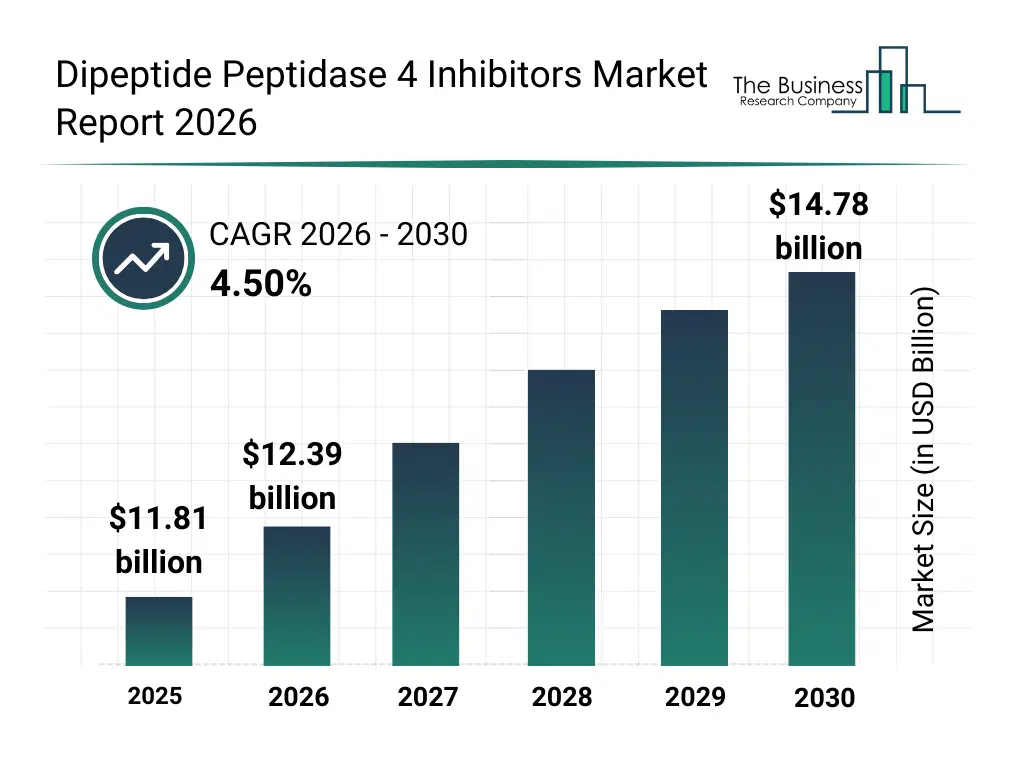
What Is The Dipeptide Peptidase 4 Inhibitors Market Size and Share 2026?
The dipeptide peptidase 4 inhibitors market size has grown steadily in recent years. It will grow from $11.81 billion in 2025 to $12.39 billion in 2026 at a compound annual growth rate (CAGR) of 5.0%. The growth in the historic period can be attributed to growing prevalence of type 2 diabetes globally, need for glucose-lowering therapies with low hypoglycemia risk, widespread clinical acceptance of incretin-based therapies, availability of multiple branded dpp-4 inhibitors, expansion of outpatient diabetes management.What Is The Dipeptide Peptidase 4 Inhibitors Market Growth Forecast?
The dipeptide peptidase 4 inhibitors market size is expected to see steady growth in the next few years. It will grow to $14.78 billion in 2030 at a compound annual growth rate (CAGR) of 4.5%. The growth in the forecast period can be attributed to rising global diabetic population, increasing adoption of combination diabetes therapies, growing focus on patient-friendly oral treatments, expanding access to diabetes care in emerging markets, continued demand for cost-effective glycemic control options. Major trends in the forecast period include sustained use of dpp-4 inhibitors as add-on therapy in type 2 diabetes, growing preference for oral antidiabetic medications, increasing use of dpp-4 inhibitors in elderly diabetic patients, rising demand for fixed-dose combination therapies, steady shift toward generic dpp-4 inhibitor formulations.
Global Dipeptide Peptidase 4 Inhibitors Market Segmentation
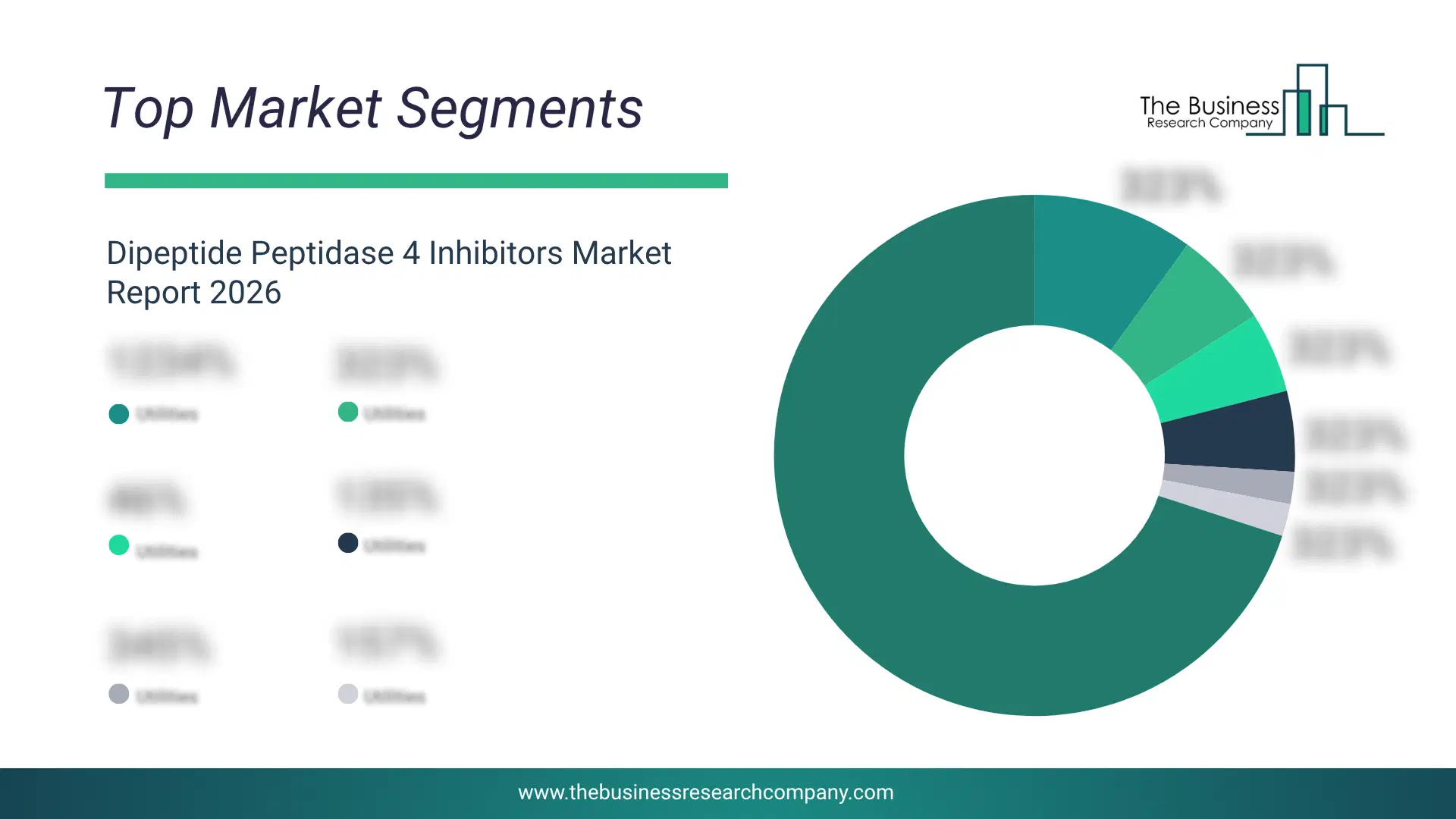
1) By Type: Sitagliptin, Saxagliptin, Linagliptin, Alogliptin, Vildagliptin, Other Types 2) By Distribution Channel: Hospital Pharmacies, Retail Pharmacies, Online Channels 3) By Application: Type 2 Diabetes, Gestational Diabetes, Metabolic Syndrome, Other Applications Subsegments: 1) By Sitagliptin: Branded Sitagliptin, Generic Sitagliptin, Sitagliptin Monotherapy, Sitagliptin Combination Therapy 2) By Saxagliptin: Branded Saxagliptin, Generic Saxagliptin, Saxagliptin Monotherapy, Saxagliptin Combination Therapy 3) By Linagliptin: Branded Linagliptin, Generic Linagliptin, Linagliptin Monotherapy, Linagliptin Combination Therapy 4) By Alogliptin: Branded Alogliptin, Generic Alogliptin, Alogliptin Monotherapy, Alogliptin Combination Therapy 5) By Vildagliptin: Branded Vildagliptin, Generic Vildagliptin, Vildagliptin Monotherapy, Vildagliptin Combination Therapy 6) By Other Types: Teneligliptin, Anagliptin, Gemigliptin, TrelagliptinWhat Are The Drivers Of The Dipeptide Peptidase 4 Inhibitors Market?
The rising prevalence of diabetes is expected to propel the growth of the dipeptide peptidase 4 inhibitors market going forward. Diabetes is a chronic medical condition that affects the way the body metabolizes glucose (sugar), which is a critical source of energy for the body's cells. Diabetes cases are increasing primarily because of the widespread adoption of sedentary lifestyles and unhealthy eating habits in contemporary societies. Dipeptidyl peptidase 4 inhibitors are utilized in diabetes management to enhance glycemic control by inhibiting the degradation of incretin hormones. For instance, in 2024, according to the International Diabetes Federation, a Belgium-based health organization, 537 million adults (1 in 10) were living with diabetes in 2021, and this is expected to rise to 643 million by 2030 and 783 million by 2045. Therefore, the rising prevalence of diabetes drives the dipeptide peptidase 4 inhibitors industry. The rising government initiatives for diabetes management are expected to propel the growth of the dipeptide peptidase 4 inhibitors market going forward. Government initiatives refer to programs, policies, or actions undertaken by government entities at various levels (local, regional, national, or international) to address specific issues, improve public welfare, or achieve particular goals. The rising government initiatives for diabetes management are due to economic burden, health equity, and growing concerns about health management. Government initiatives contribute significantly to dipeptide peptidase 4 inhibitors development for promoting health facilities, ensuring access, fostering innovation, and investment in drug development. For instance, in 2023, according to the Australian Government Department of Health, an Australia-based government agency, the government initiated the Australian National Diabetes Strategy 2021-2030. This strategy emphasizes the importance of preventing, detecting, and managing diabetes, aligning with international policies like the Global Action Plan for the Prevention and Control of Non-Communicable Diseases and the WHO Global Diabetes Compact. Therefore, rising government initiatives for diabetes management drive the dipeptide peptidase inhibitors market.Key Players In The Global Dipeptide Peptidase 4 Inhibitors Market
Major companies operating in the dipeptide peptidase 4 inhibitors market are Merck & Co. Inc., Novartis AG, Bristol Myers Squibb Company, AstraZeneca Plc, Boehringer Ingelheim International GmbH, Takeda Pharmaceutical Company Limited, Daiichi Sankyo Company Limited, Macleods Pharmaceuticals Ltd., Mitsubishi Tanabe Pharma Corp., Dr. Reddy's Laboratories Ltd., Cipla Limited, Cadila Healthcare Limited, Lupin Limited, Zydus Lifesciences Ltd., Glenmark Pharmaceuticals Ltd., Aurobindo Pharma Limited, Alkem Laboratories Ltd., Torrent Pharmaceuticals Limited, Biocon Limited, LG Life Sciences, USV Private Limited, Sanwa Kagaku Kenkyusho Co. Ltd., Kowa Company Ltd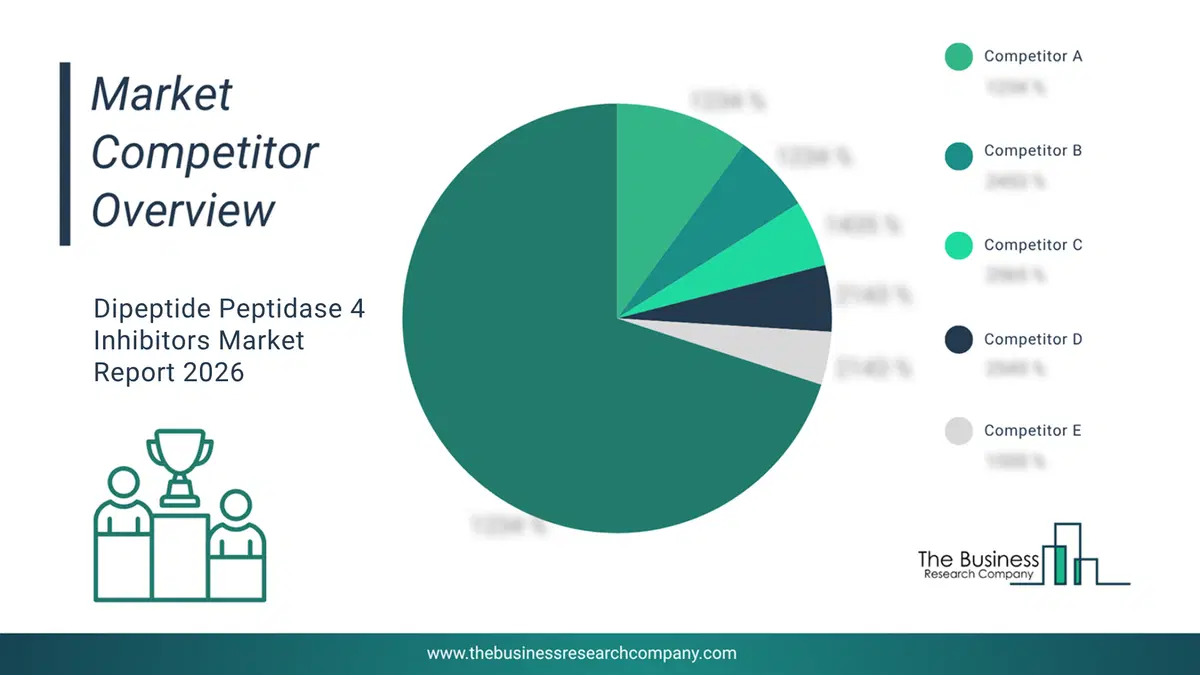
This chart is for illustrative purposes; the full report includes a detailed competitor analysis and comprehensive overview of the top 10 companies in the market.
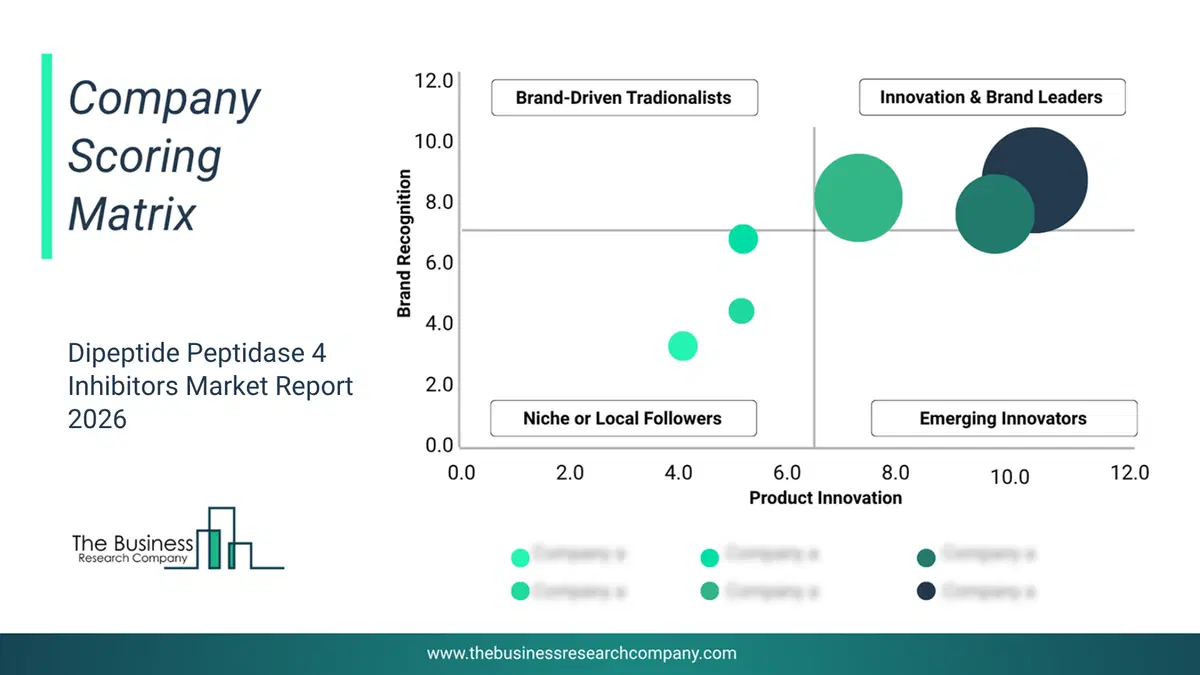
This chart maps companies by product innovation and brand strength, with bubble size indicating relative revenue, helping identify market leaders, challengers, and niche players. This is an illustrative chart; the full report provides a complete and accurate competitive analysis.
What Are Latest Mergers And Acquisitions In The Dipeptide Peptidase 4 Inhibitors Market?
In August 2023, Lupin, an India-based pharmaceutical company acquired two diabetes brands, ONDERO and ONDERO MET, from Boehringer Ingelheim International GmbH for an undisclosed amount. The acquisition aims to strengthen Lupin's commitment to providing superior treatment options for diabetes patients and to expand its portfolio in the anti-diabetes segment. Boehringer Ingelheim International GmbH is a Germany-based company that manufactures dipeptidyl peptidase 4 (DPP-4) inhibitors.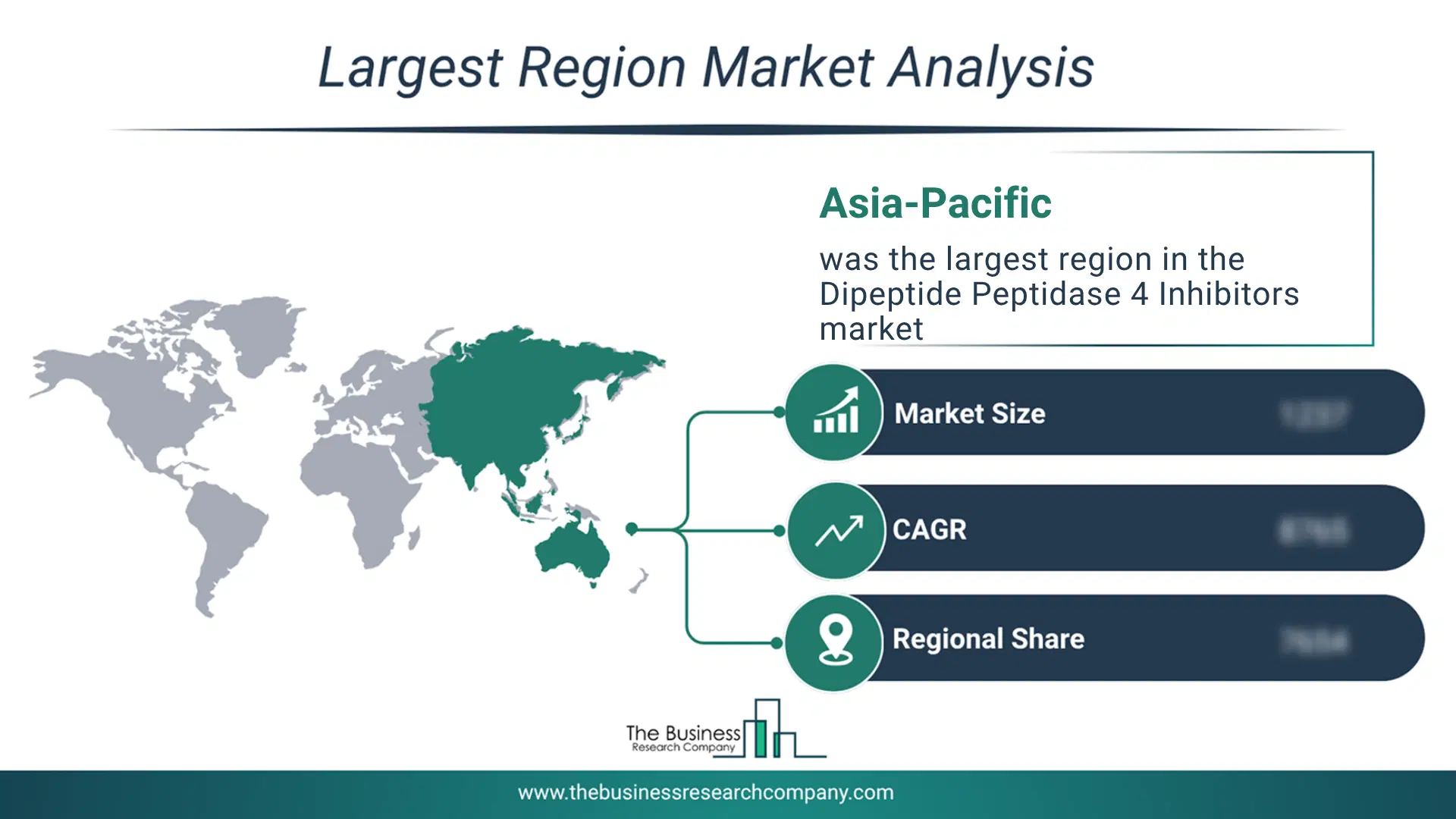
Regional Insights
Asia-Pacific was the largest region in the dipeptide peptidase 4 inhibitors market in 2025. Latin America is expected to be the fastest-growing region in the forecast period. The regions covered in this market report are Asia-Pacific, South East Asia, Western Europe, Eastern Europe, North America, South America, Middle East, Africa. The countries covered in this market report are Australia, Brazil, China, France, Germany, India, Indonesia, Japan, Taiwan, Russia, South Korea, UK, USA, Canada, Italy, Spain.What Defines the Dipeptide Peptidase 4 Inhibitors Market?
The dipeptidyl peptidase-4 inhibitors market consists of sales of gemigliptin, anagliptin, teneligliptin and trelagliptin. Values in this market are ‘factory gate’ values, that is the value of goods sold by the manufacturers or creators of the goods, whether to other entities (including downstream manufacturers, wholesalers, distributors, and retailers) or directly to end customers. The value of goods in this market includes related services sold by the creators of the goods.How is Market Value Defined and Measured?
The market value is defined as the revenues that enterprises gain from the sale of goods and/or services within the specified market and geography through sales, grants, or donations in terms of the currency (in USD unless otherwise specified). The revenues for a specified geography are consumption values that are revenues generated by organizations in the specified geography within the market, irrespective of where they are produced. It does not include revenues from resales along the supply chain, either further along the supply chain or as part of other products.
This chart presents market attractiveness based on a quantitative evaluation of growth, competition, strategic alignment, and risk, offering a clear view of opportunity areas for decision-making. This chart is for illustrative purposes; the full report contains the complete analysis.

This chart highlights the Total Addressable Market (TAM) by estimating the maximum revenue opportunity using an assumption-driven approach, supporting strategic planning and opportunity sizing across markets. The chart is illustrative; the full report provides a more comprehensive analysis.
What Key Data and Analysis Are Included in the Dipeptide Peptidase 4 Inhibitors Market Report 2026?
The dipeptide peptidase 4 inhibitors market research report is one of a series of new reports from The Business Research Company that provides market statistics, including industry global market size, regional shares, competitors with the market share, detailed market segments, market trends and opportunities, and any further data you may need to thrive in the dipeptide peptidase 4 inhibitors industry. The market research report delivers a complete perspective of everything you need, with an in-depth analysis of the current and future state of the industry.Dipeptide Peptidase 4 Inhibitors Market Report Forecast Analysis
| Report Attribute | Details |
|---|---|
| Market Size Value In 2026 | $12.39 billion |
| Revenue Forecast In 2030 | $14.78 billion |
| Growth Rate | CAGR of 5.0% from 2026 to 2030 |
| Base Year For Estimation | 2025 |
| Actual Estimates/Historical Data | 2020-2025 |
| Forecast Period | 2026 - 2030 |
| Market Representation | Revenue in USD Billion and CAGR from 2026 to 2030 |
| Segments Covered | Type, Distribution Channel, Application |
| Regional Scope | Asia-Pacific, Western Europe, Eastern Europe, North America, South America, Middle East, Africa |
| Country Scope | The countries covered in the report are Australia, Brazil, China, France, Germany, India, Indonesia, Japan, Taiwan, Russia, South Korea, UK, USA, Canada, Italy, Spain. |
| Key Companies Profiled | Merck & Co. Inc., Novartis AG, Bristol Myers Squibb Company, AstraZeneca Plc, Boehringer Ingelheim International GmbH, Takeda Pharmaceutical Company Limited, Daiichi Sankyo Company Limited, Macleods Pharmaceuticals Ltd., Mitsubishi Tanabe Pharma Corp., Dr. Reddy's Laboratories Ltd., Cipla Limited, Cadila Healthcare Limited, Lupin Limited, Zydus Lifesciences Ltd., Glenmark Pharmaceuticals Ltd., Aurobindo Pharma Limited, Alkem Laboratories Ltd., Torrent Pharmaceuticals Limited, Biocon Limited, LG Life Sciences, USV Private Limited, Sanwa Kagaku Kenkyusho Co. Ltd., Kowa Company Ltd |
| Customization Scope | Request for Customization |
| Pricing And Purchase Options | Explore Purchase Options |