
Direct-From-Blood Pathogen Detection Market Report 2026
Global Outlook – By Technology (Polymerase Chain Reaction (PCR)-Based, Next-Generation Sequencing, Immunoassay, Mass Spectrometry, Other Technologies), By Pathogen Type (Bacterial, Viral, Fungal, Parasitic), By Application (Sepsis, Bloodstream Infections, Hospital-Acquired Infections, Other Applications), By End-User (Hospitals, Diagnostic Laboratories, Research Institutes, Other End Users) – Market Size, Trends, Strategies, and Forecast to 2030
Direct-From-Blood Pathogen Detection Market Overview
• Direct-From-Blood Pathogen Detection market size has reached to $1.72 billion in 2025 • Expected to grow to $3.09 billion in 2030 at a compound annual growth rate (CAGR) of 12.4% • Growth Driver: Rising Infectious Disease Rates Driving Demand For The Market Due To Rapid Identification Of Bloodstream Pathogens Enabling Timely And Targeted Treatment • Market Trend: Advancing Culture-Independent Bloodstream Infection Diagnosis Through Unbiased Metagenomic Sequencing • North America was the largest region in 2025 and Asia-Pacific is the fastest growing region.What Is Covered Under Direct-From-Blood Pathogen Detection Market?
Direct-from-blood pathogen detection is a diagnostic method that identifies infectious agents such as bacteria, viruses, or fungi directly from a patient’s blood sample without the need for prior culture. It helps to enable rapid, accurate detection of bloodstream infections, sepsis, or other systemic infections, allowing timely treatment decisions and improved patient outcomes. This approach reduces diagnostic delays, lowers the risk of complications, and supports more targeted antimicrobial therapy. The main technology types of direct-from-blood pathogen detection include polymerase chain reaction (PCR)-based, next-generation sequencing, immunoassay, mass spectrometry, and other technologies. polymerase chain reaction-based methods refer to techniques that amplify and detect pathogen deoxyribonucleic acid or ribonucleic acid directly from blood samples for rapid and accurate diagnosis. They are applied to bacterial, viral, fungal, and parasitic pathogens. The various applications involved are sepsis, bloodstream infections, hospital-acquired infections, and other applications, and are used by several end users such as hospitals, diagnostic laboratories, research institutes, and other end users.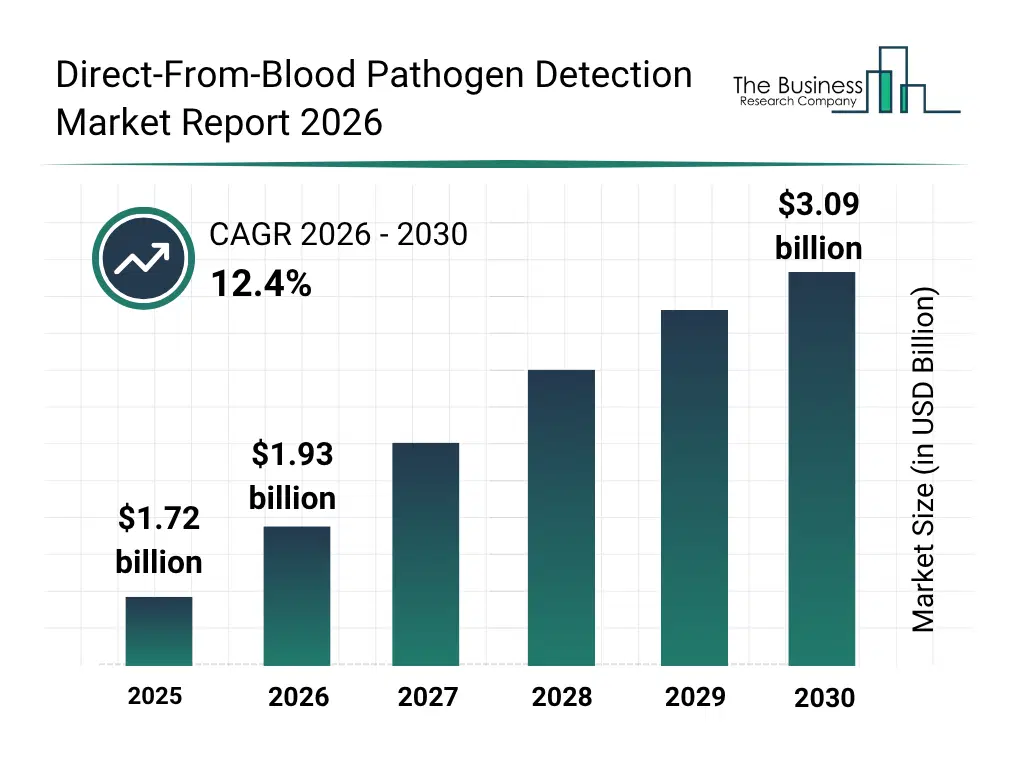
What Is The Direct-From-Blood Pathogen Detection Market Size and Share 2026?
The direct-from-blood pathogen detection market size has grown rapidly in recent years. It will grow from $1.72 billion in 2025 to $1.93 billion in 2026 at a compound annual growth rate (CAGR) of 12.2%. The growth in the historic period can be attributed to increasing incidence of bloodstream infections, rising demand for rapid diagnostics, growth of hospital and clinical laboratory infrastructure, technological advances in molecular diagnostics, increasing awareness of antimicrobial resistance.What Is The Direct-From-Blood Pathogen Detection Market Growth Forecast?
The direct-from-blood pathogen detection market size is expected to see rapid growth in the next few years. It will grow to $3.09 billion in 2030 at a compound annual growth rate (CAGR) of 12.4%. The growth in the forecast period can be attributed to growing adoption of digital and automated pathogen detection platforms, increasing use of multiplex PCR and targeted sequencing, rising demand for point-of-care rapid diagnostics, expansion of hospital and diagnostic laboratory networks in emerging markets, increasing focus on personalized antimicrobial therapy. Major trends in the forecast period include rising adoption of rapid pcr-based diagnostics, increasing use of next-generation sequencing for pathogen detection, expansion of mass spectrometry applications in clinical labs, growing implementation of immunoassay-based detection systems, rising focus on microfluidic and biosensor technologies.
Global Direct-From-Blood Pathogen Detection Market Segmentation
1) By Technology: Polymerase Chain Reaction (PCR)-Based, Next-Generation Sequencing, Immunoassay, Mass Spectrometry, Other Technologies 2) By Pathogen Type: Bacterial, Viral, Fungal, Parasitic 3) By Application: Sepsis, Bloodstream Infections, Hospital-Acquired Infections, Other Applications 4) By End-User: Hospitals, Diagnostic Laboratories, Research Institutes, Other End Users Subsegments: 1) By Polymerase Chain Reaction (PCR)-Based: Real-Time Polymerase Chain Reaction (qPCR), Digital Polymerase Chain Reaction (PCR), Multiplex Polymerase Chain Reaction (PCR) 2) By Next-Generation Sequencing: Whole Genome Sequencing, Targeted Sequencing 3) By Immunoassay: Enzyme-Linked Immunosorbent Assay (ELISA), Lateral Flow Assays, Western Blot 4) By Mass Spectrometry: Matrix-Assisted Laser Desorption or Ionization Time-of-Flight Mass Spectrometry, Liquid Chromatography–Tandem Mass Spectrometry 5) By Other Technologies: Electrochemical Biosensors, Optical Biosensors, Microfluidic ChipsWhat Is The Driver Of The Direct-From-Blood Pathogen Detection Market?
The increasing incidence of infectious diseases is expected to propel the growth of the direct-from-blood pathogen detection market going forward. Infectious diseases refer to illnesses caused by harmful microorganisms that invade and multiply in the body, potentially spreading to others. Increasing infectious diseases is due to urbanization, as higher population density in cities facilitates faster spread of pathogens through close human contact and shared resources. Direct-from-blood pathogen detection aids in detecting infectious diseases by enabling rapid, sensitive, and accurate identification of pathogens directly from blood samples. It reduces diagnostic delays, guides timely treatment decisions, and improves patient outcomes by supporting early intervention and targeted therapy. For instance, in 2023, according to the UK Health Security Agency, a UK-based government agency, the rate of yeast-related bloodstream infections across England rose by 4% compared to 2022. Therefore, the increasing incidence of infectious diseases is driving the growth of the direct-from-blood pathogen detection industry.Key Players In The Global Direct-From-Blood Pathogen Detection Market
Major companies operating in the direct-from-blood pathogen detection market are F. Hoffmann-La Roche Ltd., Thermo Fisher Scientific Inc., Abbott Laboratories, Becton, Dickinson Company, Illumina Inc., Charles River Laboratories, Hologic Inc., BIOMÉRIEUX, Bruker Corporation, Bio-Rad Laboratories Inc., QIAGEN N.V., Tecan Group Ltd., Fluxergy Inc., Q-linea AB, DNAe Group, Karius Inc., T2 Biosystems Inc., Spectral Platforms Inc., BOA Biomedical, Deepull Diagnostics S.L.
This chart is for illustrative purposes; the full report includes a detailed competitor analysis and comprehensive overview of the top 10 companies in the market.
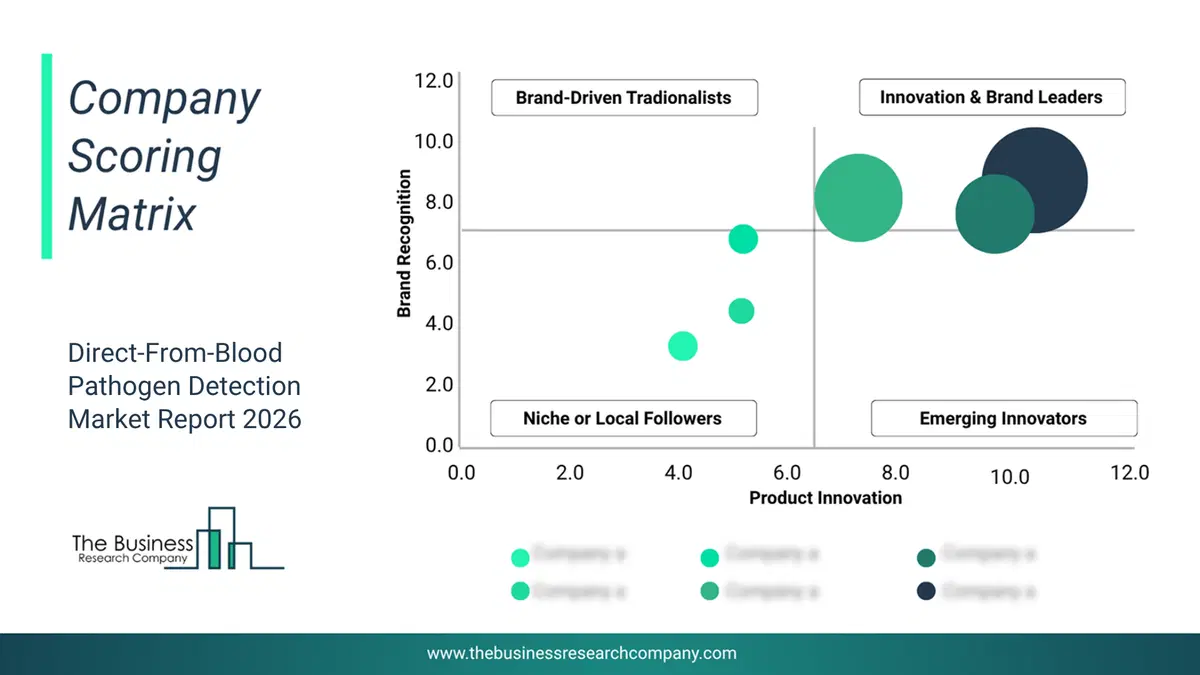
This chart maps companies by product innovation and brand strength, with bubble size indicating relative revenue, helping identify market leaders, challengers, and niche players. This is an illustrative chart; the full report provides a complete and accurate competitive analysis.
Global Direct-From-Blood Pathogen Detection Market Trends and Insights
Major companies operating in the direct-from-blood pathogen detection market are focusing on developing innovative solutions, such as unbiased shotgun metagenomic pathogen detection assays, to enable comprehensive, culture-independent identification of a broad range of pathogens directly from blood samples for faster and more accurate diagnosis of bloodstream infections. An unbiased shotgun metagenomic pathogen detection assay refers to a sequencing-based diagnostic method that examines all genetic material in a sample without prior pathogen targeting to identify known and novel infectious agents in a single analysis. For instance, in February 2026, MedGenome Labs Limited, an India-based health tech company, launched MetaSeq, a metagenomic next-generation sequencing (NGS) blood test capable of detecting over 1,400 pathogens, including bacteria, fungi, parasites, and DNA viruses, from a single sample. This culture-free technology bypasses traditional blood culture limitations, delivering results in about five days to enable faster, targeted treatment for bloodstream infections, especially in immunocompromised patients.What Are Latest Mergers And Acquisitions In The Direct-From-Blood Pathogen Detection Market?
In June 2025, bioMérieux SA, a France-based in vitro diagnostics company, acquired Day Zero Diagnostics Inc. for an undisclosed amount. Through this acquisition, bioMérieux aims to strengthen its position in infectious disease diagnostics by integrating Day Zero Diagnostics’ advanced genome sequencing and bioinformatics technologies to accelerate pathogen identification and antimicrobial resistance detection, thereby enhancing clinical decision-making and improving patient outcomes. Day Zero Diagnostics Inc. is a US-based diagnostics company that offers direct-from-blood pathogen detection technologies.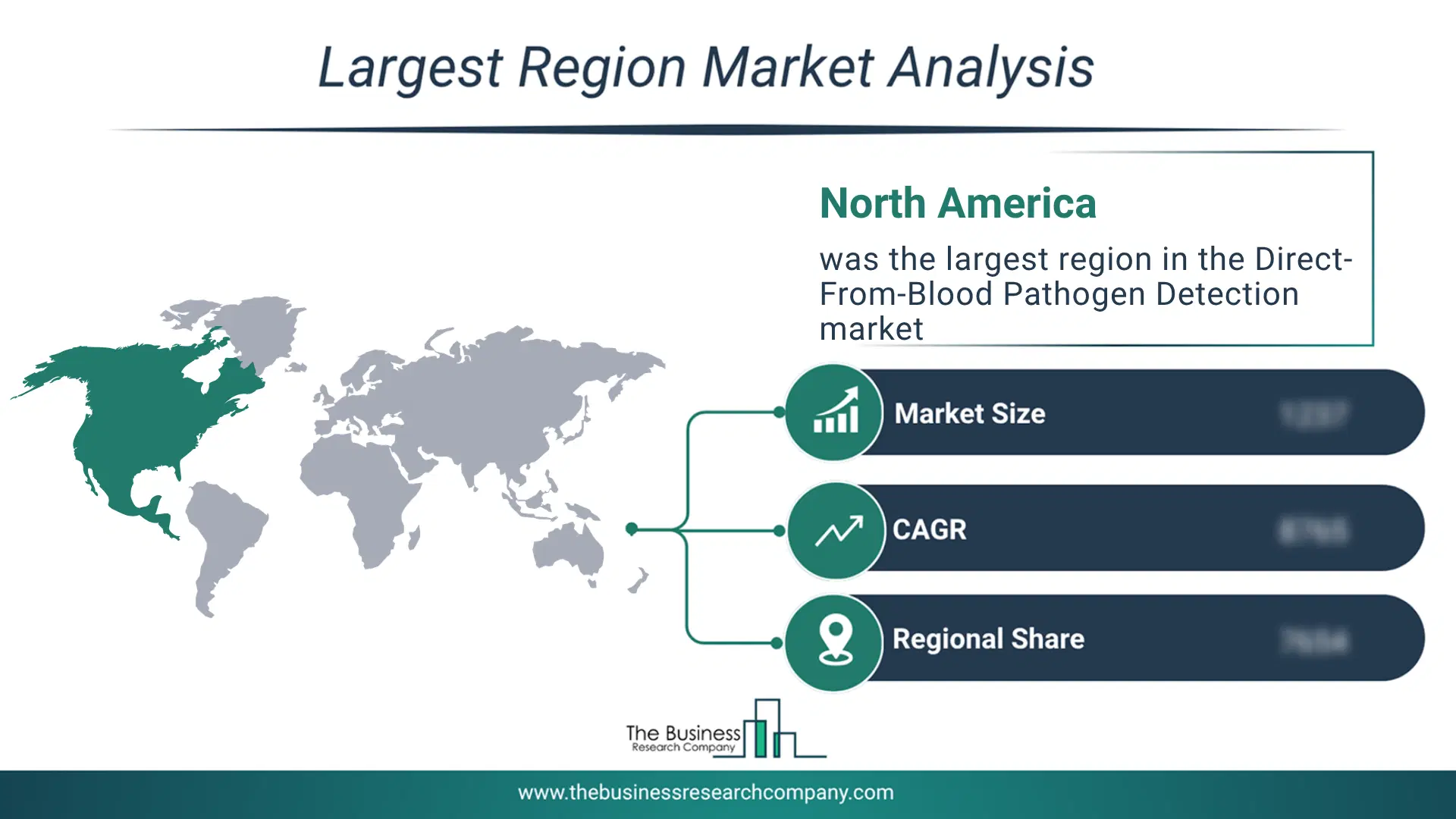
Regional Insights
North America was the largest region in the direct-from-blood pathogen detection market in 2025. Asia-Pacific is expected to be the fastest-growing region in the forecast period. The regions covered in this market report are Asia-Pacific, South East Asia, Western Europe, Eastern Europe, North America, South America, Middle East, Africa. The countries covered in this market report are Australia, Brazil, China, France, Germany, India, Indonesia, Japan, Taiwan, Russia, South Korea, UK, USA, Canada, Italy, Spain.What Defines the Direct-From-Blood Pathogen Detection Market?
The direct-from-blood pathogen detection market consists of revenues earned by entities by providing services such as rapid pathogen identification, antimicrobial susceptibility testing (AST), whole‑genome sequencing analysis, data interpretation and reporting, and outbreak monitoring. The market value includes the value of related goods sold by the service provider or included within the service offering. The direct-from-blood pathogen detection market also includes sales of nucleic acid extraction reagents, sequencing consumables, blood sample enrichment devices, automated sample preparation instruments, and microfluidic cartridges. Values in this market are ‘factory gate’ values, that is, the value of goods sold by the manufacturers or creators of the goods, whether to other entities (including downstream manufacturers, wholesalers, distributors, and retailers) or directly to end customers. The value of goods in this market includes related services sold by the creators of the goods.How is Market Value Defined and Measured?
The market value is defined as the revenues that enterprises gain from the sale of goods and/or services within the specified market and geography through sales, grants, or donations in terms of the currency (in USD unless otherwise specified). The revenues for a specified geography are consumption values that are revenues generated by organizations in the specified geography within the market, irrespective of where they are produced. It does not include revenues from resales along the supply chain, either further along the supply chain or as part of other products.
This chart presents market attractiveness based on a quantitative evaluation of growth, competition, strategic alignment, and risk, offering a clear view of opportunity areas for decision-making. This chart is for illustrative purposes; the full report contains the complete analysis.

This chart highlights the Total Addressable Market (TAM) by estimating the maximum revenue opportunity using an assumption-driven approach, supporting strategic planning and opportunity sizing across markets. The chart is illustrative; the full report provides a more comprehensive analysis.
What Key Data And Analysis Are Included In The Direct-From-Blood Pathogen Detection Market Report 2026?
The direct-from-blood pathogen detection market research report is one of a series of new reports from The Business Research Company that provides market statistics, including industry global market size, regional shares, competitors with the market share, detailed market segments, market trends and opportunities, and any further data you may need to thrive in the direct-from-blood pathogen detection industry. The market research report delivers a complete perspective of everything you need, with an in-depth analysis of the current and future state of the industry.Direct-From-Blood Pathogen Detection Market Report Forecast Analysis
| Report Attribute | Details |
|---|---|
| Market Size Value In 2026 | $1.93 billion |
| Revenue Forecast In 2030 | $3.09 billion |
| Growth Rate | CAGR of 12.4% from 2026 to 2030 |
| Base Year For Estimation | 2025 |
| Actual Estimates/Historical Data | 2020-2025 |
| Forecast Period | 2026 - 2030 |
| Market Representation | Revenue in USD Billion and CAGR from 2026 to 2030 |
| Segments Covered | Technology, Pathogen Type, Application, End-User |
| Regional Scope | Asia-Pacific, Western Europe, Eastern Europe, North America, South America, Middle East, Africa |
| Country Scope | The countries covered in the report are Australia, Brazil, China, France, Germany, India, Indonesia, Japan, Taiwan, Russia, South Korea, UK, USA, Canada, Italy, Spain |
| Key Companies Profiled | F. Hoffmann-La Roche Ltd., Thermo Fisher Scientific Inc., Abbott Laboratories, Becton, Dickinson Company, Illumina Inc., Charles River Laboratories, Hologic Inc., BIOMÉRIEUX, Bruker Corporation, Bio-Rad Laboratories Inc., QIAGEN N.V., Tecan Group Ltd., Fluxergy Inc., Q-linea AB, DNAe Group, Karius Inc., T2 Biosystems Inc., Spectral Platforms Inc., BOA Biomedical, Deepull Diagnostics S.L. |
| Customization Scope | Request for Customization |
| Pricing And Purchase Options | Explore Purchase Options |