
Direct-To-Consumer (DTC) Genetic Testing Market Report 2026
Global Outlook – By Type (Carrier Testing, Predictive Testing, Ancestry And Relationship Testing, Nutrigenomic Testing, Other Types), By Sample (Saliva, Urine, Blood), By Technology (Single Nucleotide Polymorphism Chips, Whole Genome Sequencing, Targeted Analysis), By Business Model (Health Planning Model, Comprehensive Genome Tests Model, Medical Precision Tests Model, Restricted Trait Tests Mode), By End User (Laboratories, Nursing Homes, Hospitals, Imaging Centers, Home Care, Cosmetics, Other End-User) - Market Size, Trends, Strategies, and Forecast to 2030
Direct-To-Consumer (DTC) Genetic Testing Market Overview
• Direct-To-Consumer (DTC) Genetic Testing market size has reached to $2.14 billion in 2025 • Expected to grow to $4.45 billion in 2030 at a compound annual growth rate (CAGR) of 15.7% • Growth Driver: Rising Disease Prevalence Spurs Growth In Direct-To-Consumer Genetic Testing Market • Market Trend: Next-Generation Genomic Platforms Drive Precision And Accessibility In Health Management • North America was the largest region in 2025 and Asia-Pacific is the fastest growing region.What Is Covered Under Direct-To-Consumer (DTC) Genetic Testing Market?
Direct-to-consumer genetic testing involves the marketing of genetic tests directly to consumers through media such as radio, television, print adverts, and the internet, where customers can purchase the tests through online marketplaces and pharmacies. After purchasing a test kit, clients give the business a DNA sample and provide individuals access to their genetic data without necessarily requiring the involvement of a healthcare professional or health insurance provider via a secure website, app, or written report with their results. The main types of direct-to-consumer (DTC) genetic testing include carrier testing, predictive testing, ancestry and relationship testing, nutrigenomic testing and other types. Carrier screening is a type of genetic test that assesses whether or not a person carries an alteration in one of their genes for a certain genetic disorder. They are used to test saliva, urine and blood samples by using different technologies such as single nucleotide polymorphism chips whole genome sequencing and targeted analysis. They are conducted in different business models such as health planning model, comprehensive genome tests model, medical precision tests model and restricted trait tests model and for use by various end-users including laboratories, blood banks, nursing homes, hospitals, imaging centers, home care, cosmetics and others.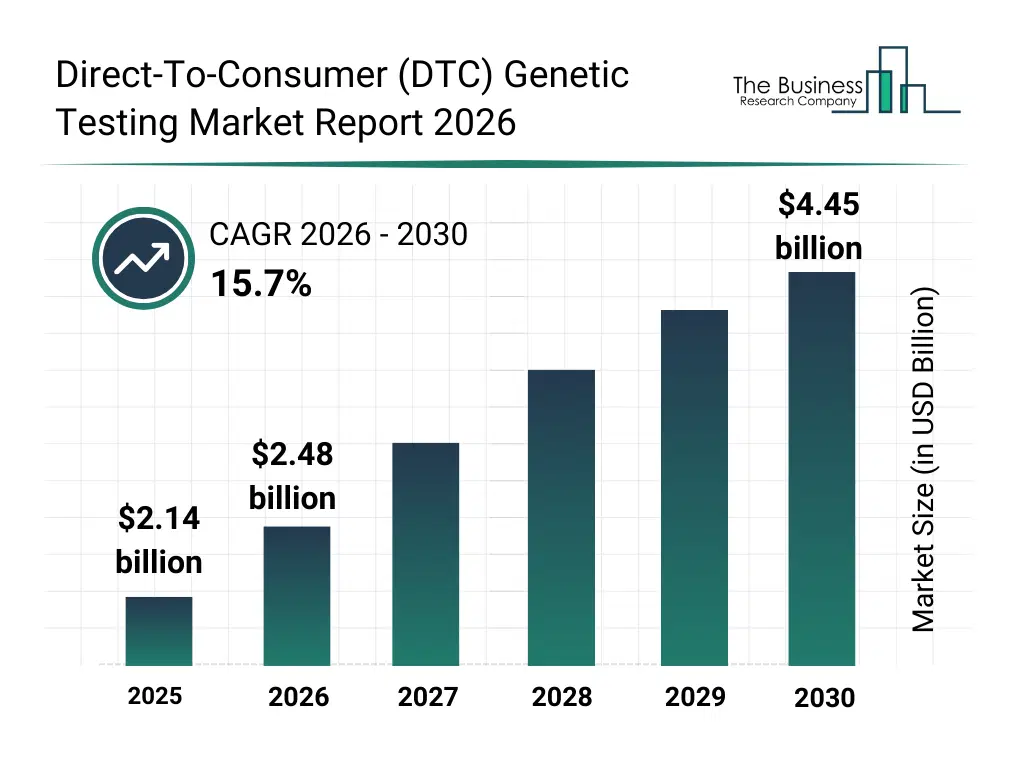
What Is The Direct-To-Consumer (DTC) Genetic Testing Market Size and Share 2026?
The direct-to-consumer (dtc) genetic testing market size has grown rapidly in recent years. It will grow from $2.14 billion in 2025 to $2.48 billion in 2026 at a compound annual growth rate (CAGR) of 16.3%. The growth in the historic period can be attributed to declining cost of dna sequencing, early ancestry testing adoption, increased health awareness, e-commerce penetration, consumer curiosity about genetics.What Is The Direct-To-Consumer (DTC) Genetic Testing Market Growth Forecast?
The direct-to-consumer (dtc) genetic testing market size is expected to see rapid growth in the next few years. It will grow to $4.45 billion in 2030 at a compound annual growth rate (CAGR) of 15.7%. The growth in the forecast period can be attributed to ai-driven genetic interpretation, expansion of precision medicine, regulatory frameworks for genetic data, integration with wellness platforms, demand for personalized healthcare. Major trends in the forecast period include rising consumer interest in genetic health insights, growth of ancestry and relationship testing, expansion of nutrigenomic and lifestyle testing, increasing use of online genetic test platforms, greater focus on personalized health risk assessment.
Global Direct-To-Consumer (DTC) Genetic Testing Market Segmentation
1) By Type: Carrier Testing, Predictive Testing, Ancestry And Relationship Testing, Nutrigenomic Testing, Other Types 2) By Sample: Saliva, Urine, Blood 3) By Technology: Single Nucleotide Polymorphism Chips, Whole Genome Sequencing, Targeted Analysis 4) By Business Model: Health Planning Model, Comprehensive Genome Tests Model, Medical Precision Tests Model, Restricted Trait Tests Mode 5) By End User: Laboratories, Nursing Homes, Hospitals, Imaging Centers, Home Care, Cosmetics, Other End-User Subsegments: 1) By Carrier Testing: Autosomal Recessive Disorders, X-Linked Disorders 2) By Predictive Testing: Risk Assessment For Genetic Conditions, Adult-Onset Conditions 3) By Ancestry And Relationship Testing: Ancestry Composition Analysis, DNA Matching For Relationships 4) By Nutrigenomic Testing: Dietary Recommendations, Metabolism And Fitness Insights 5) By Other Types: Pharmacogenomic Testing, Health Trait TestingWhat Is The Driver Of The Direct-To-Consumer (DTC) Genetic Testing Market?
The rising prevalence of diseases and disorders with genetic transmission capabilities is expected to propel the growth of the direct-to-consumer (DTC) genetic testing market going forward. Genetic disorder refers to an illness caused by changes (mutation) in a person's DNA and it includes single-gene, multifactorial and chromosomal disorders. Direct-to-consumer genetic testing promotes awareness of various genetic disorders that helps in making predictions about health and provides personalized information about an individual’s health, disease risk, and other traits, thus, helps in taking effective health and lifestyle decisions to reduce the disease risk. For instance, in April 2023, the National Library of Medicine (NLM), a US-based medical library, published that an estimated 6.7 million Americans age 65 and older will be living with Alzheimer's dementia (AD), a disorder in which genetics play a significant role, in 2023. This number could grow to 13.8 million by 2060, barring the development of medical breakthroughs to prevent, slow, or cure AD. Therefore, the rising prevalence of diseases and disorders with genetic transmission capabilities is driving the growth of the direct-to-consumer (DTC) genetic testing industry.Key Players In The Global Direct-To-Consumer (DTC) Genetic Testing Market
Major companies operating in the direct-to-consumer (dtc) genetic testing market are 23andMe, AncestryDNA, MyHeritage, FamilyTreeDNA, Living DNA, Vitagene, Orig3n, DNAfit, Helix, Color Genomics, Circle DNA, CRI Genetics, MapMyGenome, Invitae Corporation, TellmeGen, Pathway Genomics, Genebase Systems, EasyDNA, Nebula Genomics, Dante Labs, Veritas Genetics, Xcode Life, Genomic Express, Genomelink, Genomind, WellnessFX, LetsGetChecked, iGene, Dnadoc, OneOme
This chart is for illustrative purposes; the full report includes a detailed competitor analysis and comprehensive overview of the top 10 companies in the market.
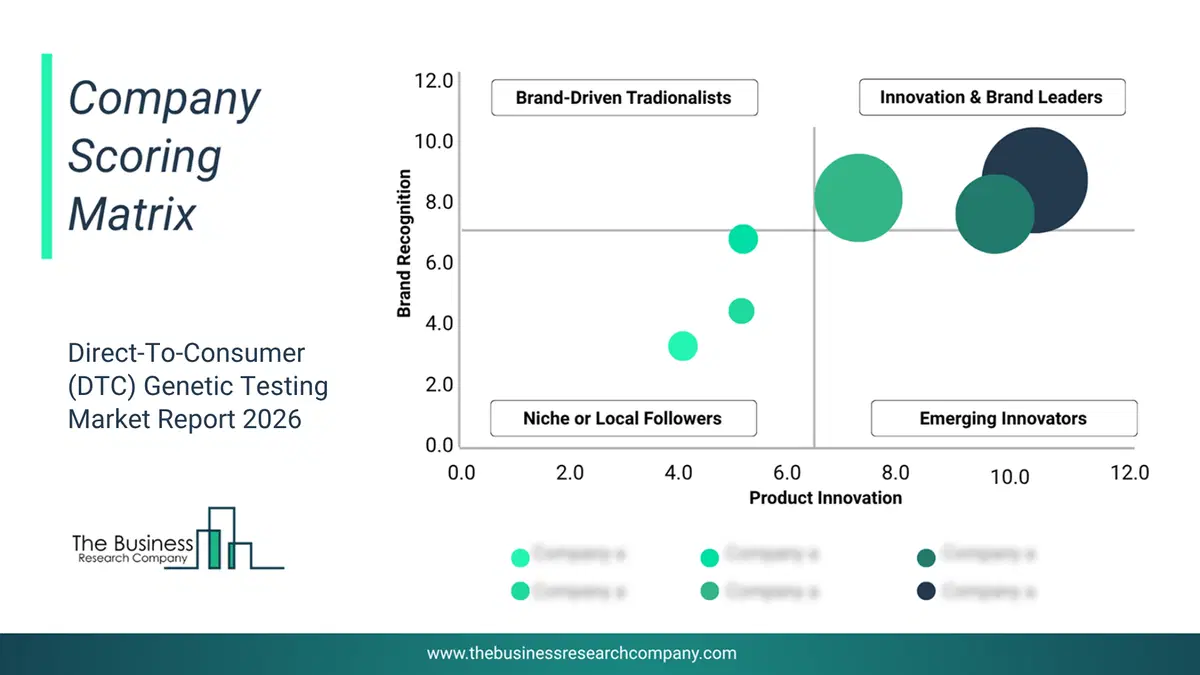
This chart maps companies by product innovation and brand strength, with bubble size indicating relative revenue, helping identify market leaders, challengers, and niche players. This is an illustrative chart; the full report provides a complete and accurate competitive analysis.
Global Direct-To-Consumer (DTC) Genetic Testing Market Trends and Insights
Major companies operating in the direct-to-consumer (DTC) genetic testing market are focusing on developing advanced solutions, such as whole-genome sequencing (WGS) subscription platforms, to provide comprehensive genetic insights, support personalized health planning, and enhance consumer engagement. WGS subscription platforms refer to services that sequence nearly the entire genome, enabling in-depth analysis of ancestry, disease risk, wellness traits, and pharmacogenomics, far beyond traditional SNP-chip-based tests that analyze only selected genetic markers. For instance, in November 2024, ProPhase Labs, a US-based biotech and diagnostics company, launched DNA Complete, a standalone direct-to-consumer WGS service under its subsidiary DNA Complete, Inc. The platform sequences virtually 100% of a customer’s genome, offers tiered subscription plans (Essential, Pro, and Elite), provides ongoing updates, and includes genetic counseling support to help users interpret their results. The service leverages advanced bioinformatics and ancestry analysis while also allowing flexible sample processing through ProPhase’s Nebula Genomics lab or partner labs. This solution combines deep genomic insight with accessibility, convenience, and recurring consumer engagement.What Are Latest Mergers And Acquisitions In The Direct-To-Consumer (DTC) Genetic Testing Market?
In July 2025, TTAM Research Institute, a US-based nonprofit public benefit corporation dedicated to advancing medical and genomic research, acquired substantially all assets of 23andMe Holding Co. for US $305 million. With this acquisition, TTAM gains access to 23andMe’s Personal Genome Service (PGS), research services business lines, and its telehealth arm, Lemonaid Health, thereby expanding its capabilities in consumer-accessible genetic testing, large-scale genomic data analytics, and research infrastructure while strengthening its operational reach in personalized wellness and health insights. 23andMe Holding Co. is a US-based consumer genomics company offering direct-to-consumer DNA testing kits and genetic insights related to ancestry, health risks, traits, and wellness, known for pioneering at-home genetic testing services.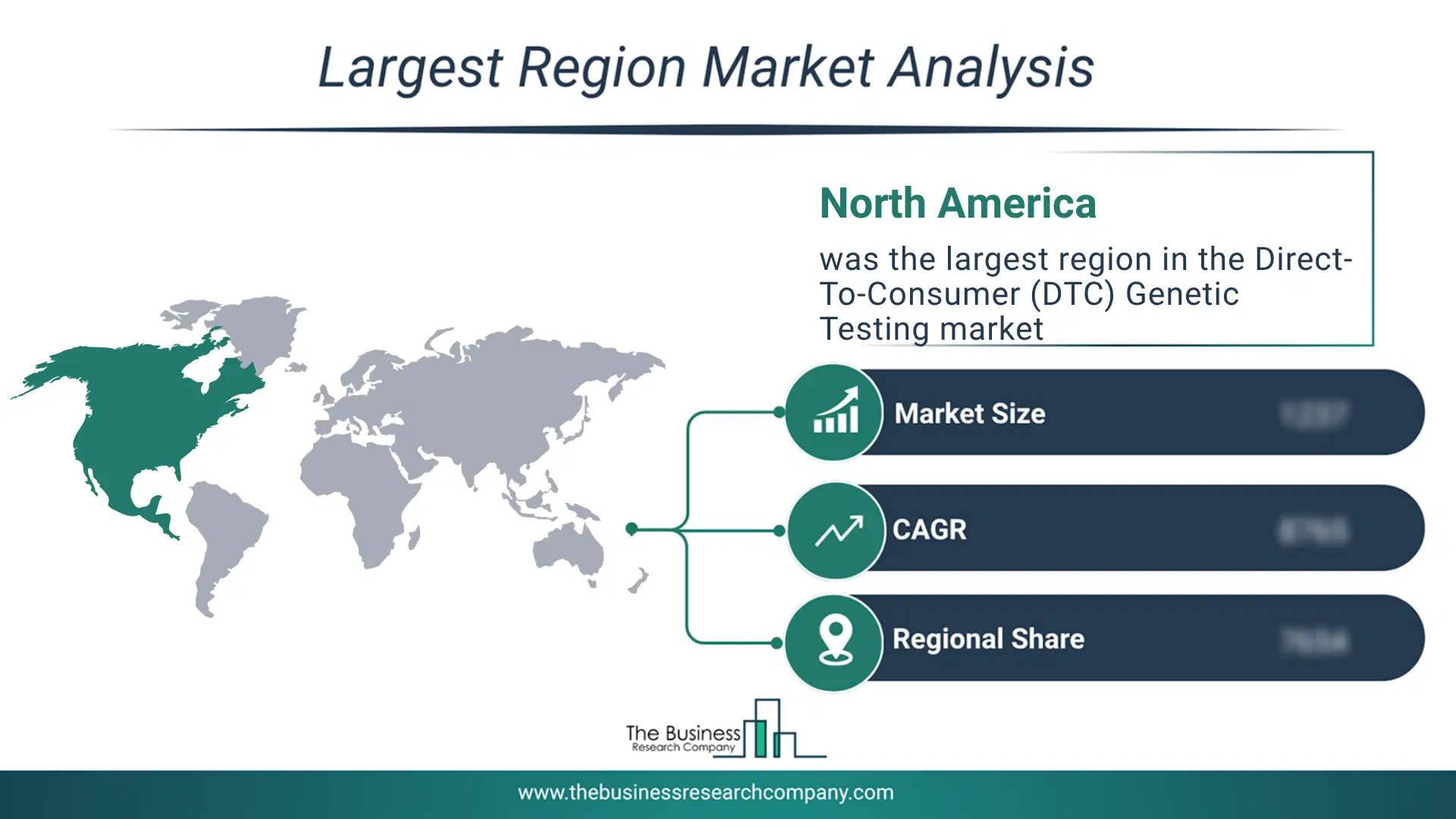
Regional Outlook
North America was the largest region in the direct-to-consumer (DTC) genetic testing market share in 2025. Asia-Pacific was the second-largest region in the global direct-to-consumer (DTC) genetic testing market. The regions covered in this market report are Asia-Pacific, South East Asia, Western Europe, Eastern Europe, North America, South America, Middle East, Africa. The countries covered in this market report are Australia, Brazil, China, France, Germany, India, Indonesia, Japan, Taiwan, Russia, South Korea, UK, USA, Canada, Italy, Spain.What Defines the Direct-To-Consumer (DTC) Genetic Testing Market?
The direct-to-consumer (DTC) genetic testing market includes revenues earned by entities by offering DTC genetic kits and services straight to end-customers, that are used in querying patients' DNA information. Values in this market are ‘factory gate’ values, that is the value of goods sold by the manufacturers or creators of the goods, whether to other entities (including downstream manufacturers, wholesalers, distributors, and retailers) or directly to end customers. The value of goods in this market includes related services sold by the creators of the goods.How is Market Value Defined and Measured?
The market value is defined as the revenues that enterprises gain from the sale of goods and/or services within the specified market and geography through sales, grants, or donations in terms of the currency (in USD unless otherwise specified). The revenues for a specified geography are consumption values that are revenues generated by organizations in the specified geography within the market, irrespective of where they are produced. It does not include revenues from resales along the supply chain, either further along the supply chain or as part of other products.
This chart presents market attractiveness based on a quantitative evaluation of growth, competition, strategic alignment, and risk, offering a clear view of opportunity areas for decision-making. This chart is for illustrative purposes; the full report contains the complete analysis.

This chart highlights the Total Addressable Market (TAM) by estimating the maximum revenue opportunity using an assumption-driven approach, supporting strategic planning and opportunity sizing across markets. The chart is illustrative; the full report provides a more comprehensive analysis.
What Key Data and Analysis Are Included in the Direct-To-Consumer (DTC) Genetic Testing Market Report 2026?
The direct-to-consumer (dtc) genetic testing market research report is one of a series of new reports from The Business Research Company that provides market statistics, including industry global market size, regional shares, competitors with the market share, detailed market segments, market trends and opportunities, and any further data you may need to thrive in the direct-to-consumer (dtc) genetic testing industry. The market research report delivers a complete perspective of everything you need, with an in-depth analysis of the current and future state of the industry.Direct-To-Consumer (DTC) Genetic Testing Market Report Forecast Analysis
| Report Attribute | Details |
|---|---|
| Market Size Value In 2026 | $2.48 billion |
| Revenue Forecast In 2030 | $4.45 billion |
| Growth Rate | CAGR of 15.7% from 2026 to 2030 |
| Base Year For Estimation | 2025 |
| Actual Estimates/Historical Data | 2020-2025 |
| Forecast Period | 2026 - 2030 |
| Market Representation | Revenue in USD Billion and CAGR from 2026 to 2030 |
| Segments Covered | Type, Sample, Technology, Business Model, End User |
| Regional Scope | Asia-Pacific, Western Europe, Eastern Europe, North America, South America, Middle East, Africa |
| Country Scope | The countries covered in the report are Australia, Brazil, China, France, Germany, India, Indonesia, Japan, Taiwan, Russia, South Korea, UK, USA, Canada, Italy, Spain |
| Key Companies Profiled | 23andMe, AncestryDNA, MyHeritage, FamilyTreeDNA, Living DNA, Vitagene, Orig3n, DNAfit, Helix, Color Genomics, Circle DNA, CRI Genetics, MapMyGenome, Invitae Corporation, TellmeGen, Pathway Genomics, Genebase Systems, EasyDNA, Nebula Genomics, Dante Labs, Veritas Genetics, Xcode Life, Genomic Express, Genomelink, Genomind, WellnessFX, LetsGetChecked, iGene, Dnadoc, OneOme |
| Customization Scope | Request for Customization |
| Pricing And Purchase Options | Explore Purchase Options |