
Dispersant Polymer Market Report 2026
Global Outlook – By Type (Acrylic Acid–Based Dispersant Polymers, Maleic Anhydride–Based Dispersant Polymers, Sulfonated Polymer Dispersants, Phosphonated Polymer Dispersants, Lignosulfonate-Based Dispersants, Other Anionic Dispersant Polymers), By Ionic Nature (Anionic Dispersant Polymers, Copolymeric Anionic Dispersants), By Form (Liquid, Powder, Granular), By Technology (Water-Soluble Dispersant Polymers, Water-Dispersible Dispersant Polymers), By Application (Paints and Coatings, Detergents and Cleaning Formulations, Pulp and Paper Processing, Water Treatment, Agriculture (Agrochemical Formulations), Oil and Gas, Pharmaceuticals and Personal Care, Other Applications) – Market Size, Trends, Strategies, and Forecast to 2030
Dispersant Polymer Market Overview
• Dispersant Polymer market size has reached to $10.09 billion in 2025 • Expected to grow to $17.92 billion in 2030 at a compound annual growth rate (CAGR) of 12.2% • Growth Driver: Growing Textile Industry Drives Growth In The Dispersant Polymer Market • Market Trend: Biodegradable Dispersant Polymers Driving Sustainable Formulation Innovation • Asia-Pacific was the largest region in 2025 and Asia-Pacific is the fastest growing region.What Is Covered Under Dispersant Polymer Market?
The dispersant polymers are used to improve the dispersion stability of suspended solids in water. The dispersant polymer refers to low-molecular-weight anionic polymers with anionic functional groups. The anionic functional group gives a negative charge, and the hydrocarbon chain of the polymer gives a surface area to a dispersant molecule. A dispersant molecule is a specially crafted polymer that must meet four standards: sufficient negative charge, the ability of the functional group to ionize or deprotonate in water into ions, controlled molecular size or molecular weight, and the right choice of a functional group to provide necessary charge density so that repulsive forces between the molecules can overcome mutual attraction by Vander wall forces. The main types of products by chemistry in dispersant polymers are acrylic dispersion, vinyl dispersions, polyurethane dispersions, SB dispersions, and others. Acrylic dispersion refers to a type of acrylic polymer that is dispersed in water to form a colloidal suspension or emulsion. This dispersion is often used as a key component in the production of various products, including paints, coatings, adhesives, and sealants. The different technologies include water-based and solvent-based ones and involve various forms such as liquid, powder, and granules. It is used in various areas, including oil and gas, paints and coatings, agriculture, pulp and paper, the detergent industry, pharmaceuticals, and others.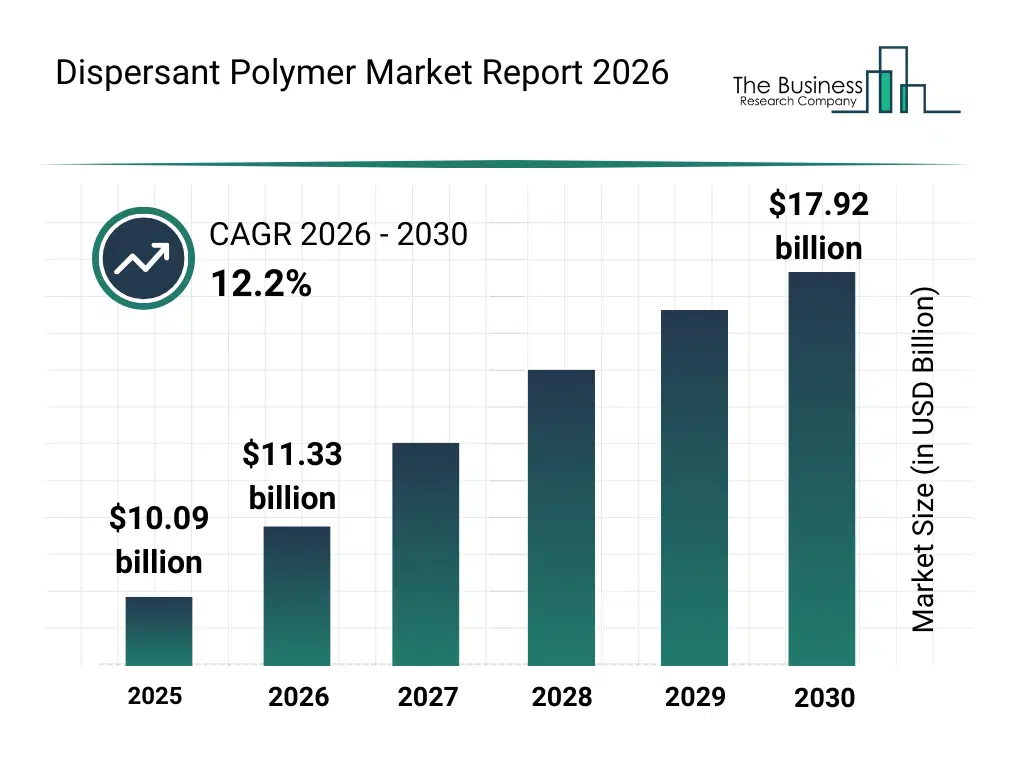
What Is The Dispersant Polymer Market Size and Share 2026?
The dispersant polymer market size has grown rapidly in recent years. It will grow from $10.09 billion in 2025 to $11.33 billion in 2026 at a compound annual growth rate (CAGR) of 12.3%. The growth in the historic period can be attributed to growth of coatings and construction materials industries, expansion of detergent manufacturing, increasing demand for water treatment chemicals, rising industrial process optimization, availability of low molecular weight polymers.What Is The Dispersant Polymer Market Growth Forecast?
The dispersant polymer market size is expected to see rapid growth in the next few years. It will grow to $17.92 billion in 2030 at a compound annual growth rate (CAGR) of 12.2%. The growth in the forecast period can be attributed to increasing demand for eco-friendly formulations, rising adoption of solvent-free technologies, expansion of specialty chemicals in emerging markets, growing focus on dispersion efficiency, increasing industrial water treatment applications. Major trends in the forecast period include increasing use of water-based dispersant polymers, rising demand from paints and coatings industry, growing adoption in detergent formulations, expansion of high-performance dispersion technologies, enhanced focus on process stability.
Global Dispersant Polymer Market Segmentation
1) By Type: Acrylic Acid–Based Dispersant Polymers, Maleic Anhydride–Based Dispersant Polymers, Sulfonated Polymer Dispersants, Phosphonated Polymer Dispersants, Lignosulfonate-Based Dispersants, Other Anionic Dispersant Polymers 2) By Ionic Nature: Anionic Dispersant Polymers, Copolymeric Anionic Dispersants 3) By Form: Liquid, Powder, Granular 4) By Technology: Water-Soluble Dispersant Polymers, Water-Dispersible Dispersant Polymers 5) By Application: Paints and Coatings, Detergents and Cleaning Formulations, Pulp and Paper Processing, Water Treatment, Agriculture (Agrochemical Formulations), Oil and Gas, Pharmaceuticals and Personal Care, Other Applications Subsegments: 1) By Acrylic Acid–Based Dispersant Polymers: Polyacrylic Acid (PAA) Dispersants, Acrylic Acid–Maleic Acid Copolymer Dispersants, Acrylic Acid–Sulfonic Acid Copolymer Dispersants, Modified Acrylic Dispersant Polymers 2) By Maleic Anhydride–Based Dispersant Polymers: Maleic Anhydride–Acrylic Acid Copolymer Dispersants, Maleic Anhydride–Olefin Copolymer Dispersants, Hydrolyzed Maleic Anhydride Polymer Dispersants 3) By Sulfonated Polymer Dispersants: Sulfonated Polystyrene Dispersants, Sulfonated Polyacrylate Dispersants, Sulfonated Naphthalene Polymer Dispersants 4) By Phosphonated Polymer Dispersants: Phosphonate-Functional Acrylic Polymer Dispersants, Polyphosphonate Dispersant Polymers, Phosphonated Copolymer Dispersants 5) By Lignosulfonate-Based Dispersants: Calcium Lignosulfonate Dispersants, Sodium Lignosulfonate Dispersants, Modified Lignosulfonate Dispersants 6) By Other Anionic Dispersant Polymers: Carboxylate-Based Dispersant Polymers, Sulfate-Based Dispersant Polymers, Anionic Polyether DispersantsWhat Is The Driver Of The Dispersant Polymer Market?
The growing textile industry is expected to propel the growth of the dispersant polymer market going forward. The growing textile industry is due to various factors, including increasing consumer demand for sustainable and innovative fabrics, advancements in textile technology, and the rise of e-commerce, which expands market access for textile producers. Dispersant polymers are used in the textile sector to enhance dye dispersion, improve color uniformity, and prevent agglomeration during the dyeing process, resulting in better overall fabric quality and consistency. For instance, in April 2025, according to the United States Fashion Industry Association, a US-based trade association, in the overall U.S. textile & apparel industry output remains high, and textile goods (NAICS 313 + 314) made up over 83% of total output as of 2023. Therefore, the growing textile industry will drive dispersant polymer industryKey Players In The Global Dispersant Polymer Market
Major companies operating in the dispersant polymer market are Dow, Covestro AG, Evonik Industries AG, The Lubrizol Corporation (Berkshire Hathaway), Nippon Shokubai Co. Ltd, Nouryon, Ashland Inc, Lanxess, Croda International, EOC Polymers India Private Limited, Weifang Ruiguang Chemical Co. Ltd, Shanghai Yunsong Technology Development Co. Ltd, Jiangsu Kaiyuan Technology Co. Ltd, Tianjin Royal Land Chemical Co. Ltd, Solvay, Uniqchem, Toagosei Co., BASF, King Industries Inc, SNF United Arab Emirates, KMT Polymers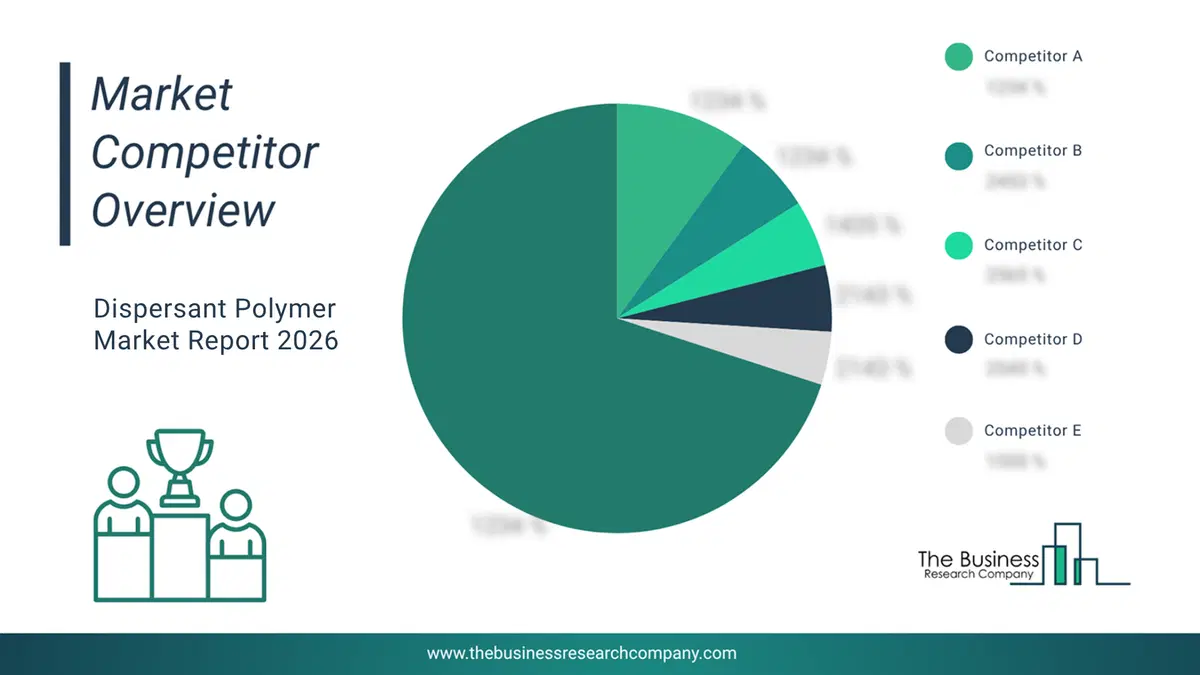
This chart is for illustrative purposes; the full report includes a detailed competitor analysis and comprehensive overview of the top 10 companies in the market.
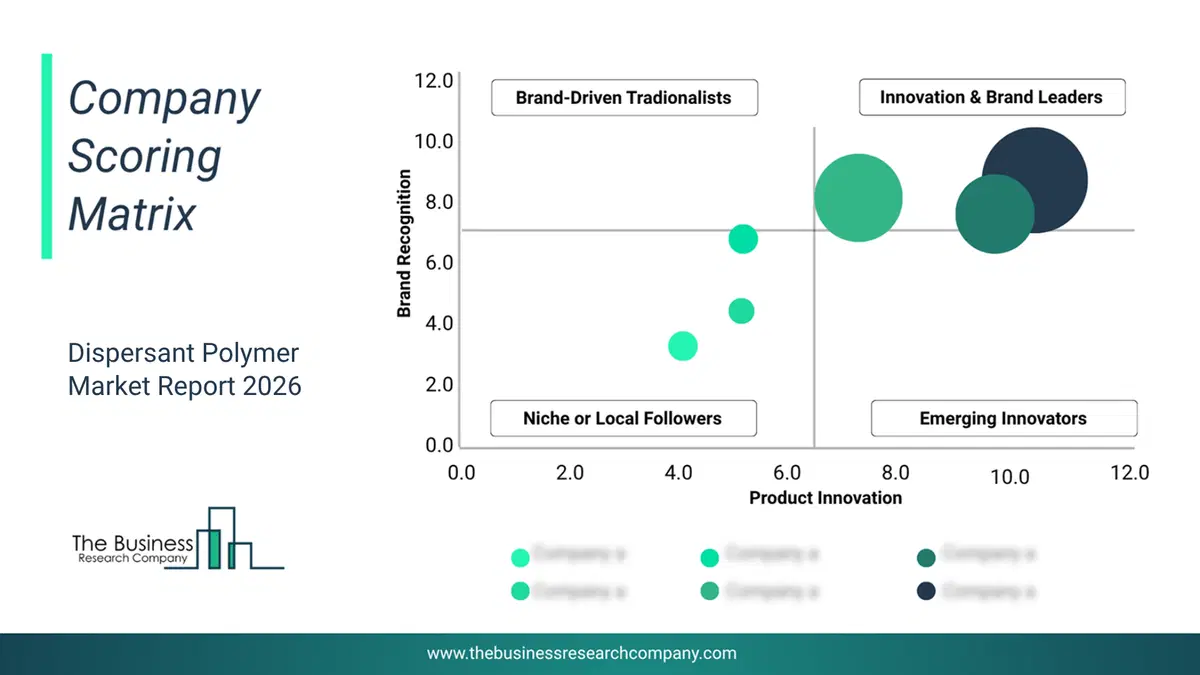
This chart maps companies by product innovation and brand strength, with bubble size indicating relative revenue, helping identify market leaders, challengers, and niche players. This is an illustrative chart; the full report provides a complete and accurate competitive analysis.
Global Dispersant Polymer Market Trends and Insights
Major companies operating in the dispersant polymer market are focusing on developing innovative solutions such as readily biodegradable dispersant to improve stability and efficiency in agricultural formulations. A readily biodegradable dispersant is a chemical agent that effectively disperses ingredients in formulations while breaking down quickly in the environment, minimizing ecological impact. For instance, in April 2025, BASF SE, a Germany-based chemical company, launched Sokalan CP 301, designed for optimal performance in stable agricultural formulations. The product enhances the dispersion of active ingredients in crop protection and fertilizer applications, supporting sustainable agricultural practices while maintaining formulation stability and efficacy. This launch gives BASF a competitive advantage by offering a greener, high-performance solution that meets the growing demand for sustainable agricultural chemicals.What Are Latest Mergers And Acquisitions In The Dispersant Polymer Market?
In July 2024, Arclin Corporation, a US-based producer of specialty chemicals and engineered solutions, acquired RG Dispersants for an undisclosed amount. This acquisition aims to leverage RG Dispersants' expertise in producing high-performance dispersant solutions, allowing Arclin to offer a broader range of products and services to its customers. RG Dispersants is a US-based company that manufactures and supplies dispersant products for various applications, including coatings, inks, and plastics.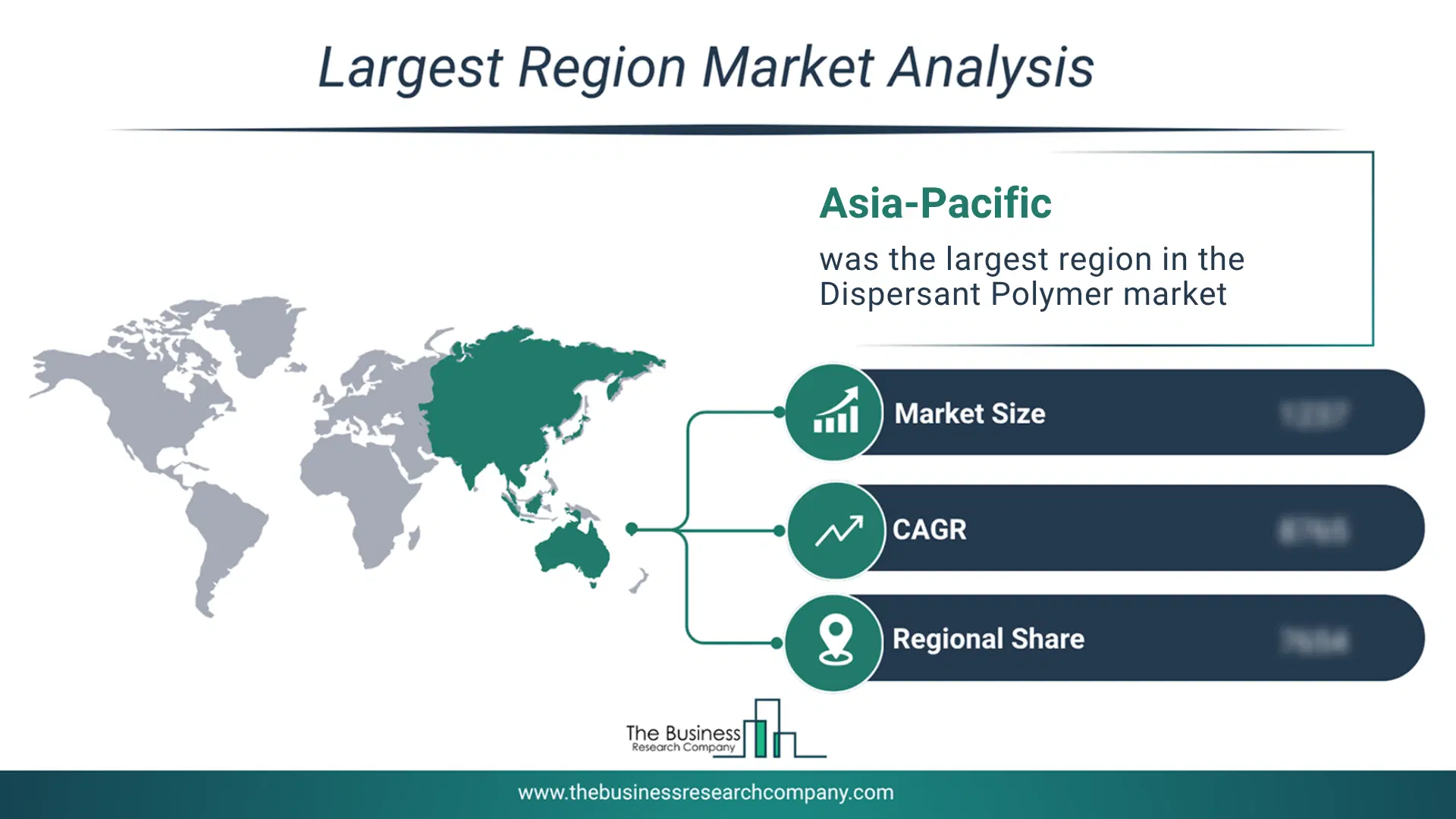
Regional Insights
Asia-Pacific was the largest region in the dispersant polymer market in 2025. Asia-Pacific is expected to be the fastest-growing region in the forecast period. The regions covered in this market report are Asia-Pacific, South East Asia, Western Europe, Eastern Europe, North America, South America, Middle East, Africa The countries covered in this market report are Australia, Brazil, China, France, Germany, India, Indonesia, Japan, Taiwan, Russia, South Korea, UK, USA, Canada, Italy, SpainWhat Defines the Dispersant Polymer Market?
The dispersant polymer market consists of sales of dispersant polymer products such as sodium dodecyl sulfonate (SDS) and sodium dodecyl benzene sulfonate (SDBS). Values in this market are ‘factory gate’ values, that is, the value of goods sold by the manufacturers or creators of the goods, whether to other entities (including downstream manufacturers, wholesalers, distributors, and retailers) or directly to end customers. The value of goods in this market includes related services sold by the creators of the goods.How is Market Value Defined and Measured?
The market value is defined as the revenues that enterprises gain from the sale of goods and/or services within the specified market and geography through sales, grants, or donations in terms of the currency (in USD unless otherwise specified). The revenues for a specified geography are consumption values that are revenues generated by organizations in the specified geography within the market, irrespective of where they are produced. It does not include revenues from resales along the supply chain, either further along the supply chain or as part of other products.
This chart presents market attractiveness based on a quantitative evaluation of growth, competition, strategic alignment, and risk, offering a clear view of opportunity areas for decision-making. This chart is for illustrative purposes; the full report contains the complete analysis.

This chart highlights the Total Addressable Market (TAM) by estimating the maximum revenue opportunity using an assumption-driven approach, supporting strategic planning and opportunity sizing across markets. The chart is illustrative; the full report provides a more comprehensive analysis.
What Key Data and Analysis Are Included in the Dispersant Polymer Market Report 2026?
The dispersant polymer market research report is one of a series of new reports from The Business Research Company that provides market statistics, including industry global market size, regional shares, competitors with the market share, detailed market segments, market trends and opportunities, and any further data you may need to thrive in the dispersant polymer industry. The market research report delivers a complete perspective of everything you need, with an in-depth analysis of the current and future state of the industry.Dispersant Polymer Market Report Forecast Analysis
| Report Attribute | Details |
|---|---|
| Market Size Value In 2026 | $11.33 billion |
| Revenue Forecast In 2030 | $17.92 billion |
| Growth Rate | CAGR of 12.3% from 2026 to 2030 |
| Base Year For Estimation | 2025 |
| Actual Estimates/Historical Data | 2020-2025 |
| Forecast Period | 2026 - 2030 |
| Market Representation | Revenue in USD Billion and CAGR from 2026 to 2030 |
| Segments Covered | Type, Ionic Nature, Form, Technology, Application |
| Regional Scope | Asia-Pacific, Western Europe, Eastern Europe, North America, South America, Middle East, Africa |
| Country Scope | The countries covered in this market report are Australia, Brazil, China, France, Germany, India, Indonesia, Japan, Taiwan, Russia, South Korea, UK, USA, Canada, Italy, Spain |
| Key Companies Profiled | Dow, Covestro AG, Evonik Industries AG, The Lubrizol Corporation (Berkshire Hathaway), Nippon Shokubai Co. Ltd, Nouryon, Ashland Inc, Lanxess, Croda International, EOC Polymers India Private Limited, Weifang Ruiguang Chemical Co. Ltd, Shanghai Yunsong Technology Development Co. Ltd, Jiangsu Kaiyuan Technology Co. Ltd, Tianjin Royal Land Chemical Co. Ltd, Solvay, Uniqchem, Toagosei Co., BASF, King Industries Inc, SNF United Arab Emirates, KMT Polymers |
| Customization Scope | Request for Customization |
| Pricing And Purchase Options | Explore Purchase Options |