
Disposable Battery Market Report 2026
Global Outlook – By Battery Type ( Alkaline Batteries, Lithium Batteries, Zinc-Carbon Batteries, Other Battery Types), By Voltage ( Low Voltage (1.5V, 3V), Medium Voltage (9V, 12V), High Voltage (24V and above)), By Distribution Channels ( Online Retail, Offline Retail, Whole Sale), By Application ( Consumer Electronics, Healthcare Devices, Toys, Remote Controls, Flashlights), By End-User ( Residential, Commercial, Industrial, Government) – Market Size, Trends, Strategies, and Forecast to 2030
Disposable Battery Market Overview
• Disposable Battery market size has reached to $19.43 billion in 2025 • Expected to grow to $25.84 billion in 2030 at a compound annual growth rate (CAGR) of 5.8% • Growth Driver: Increasing Demand For Portable Electronics And Battery-Powered Devices Driving Market Growth Due To Rising Adoption Of Wireless Earbuds, Gaming Hardware, And Mobile Computing Fuels Market Growth • Market Trend: Advancements In Sustainable And High-Performance Battery Technologies • North America was the largest region in 2025 and Asia-Pacific is the fastest growing region.Market Gains By 2030 – Top Opportunities By Segment
Market Gain identifies the most promising market opportunities by highlighting the segments or products expected to generate the highest incremental revenue growth over the next five years.
What Is Covered Under Disposable Battery Market?
Disposable battery are single-use energy storage devices designed for immediate use and then disposal once their chemical energy is depleted, they are designed for convenience and are often non-rechargeable, contrasting with rechargeable battery technologies. The primary purpose of disposable batteries is to provide reliable, low-cost electrical power in a compact form for short- to medium-term use, typically found in household devices like remote controls, flashlights, and toys. The main types of disposable batteries include alkaline batteries, lithium batteries, nickel-metal hydride (NiMH) batteries, zinc-carbon batteries, and others. Alkaline batteries, in particular, utilize zinc and manganese dioxide as active materials, providing reliable and consistent performance across devices such as clocks, toys, household gadgets, and electronics. Disposable batteries are available in a range of voltages, including low (1.5V, 3V), medium (9V, 12V), and high (24V and above), and are distributed through multiple channels such as online retail, offline stores, and wholesale networks. These batteries serve diverse applications, including consumer electronics, healthcare devices, toys, remote controls, and flashlights, catering to a broad spectrum of end-users across residential, commercial, industrial, and government sectors.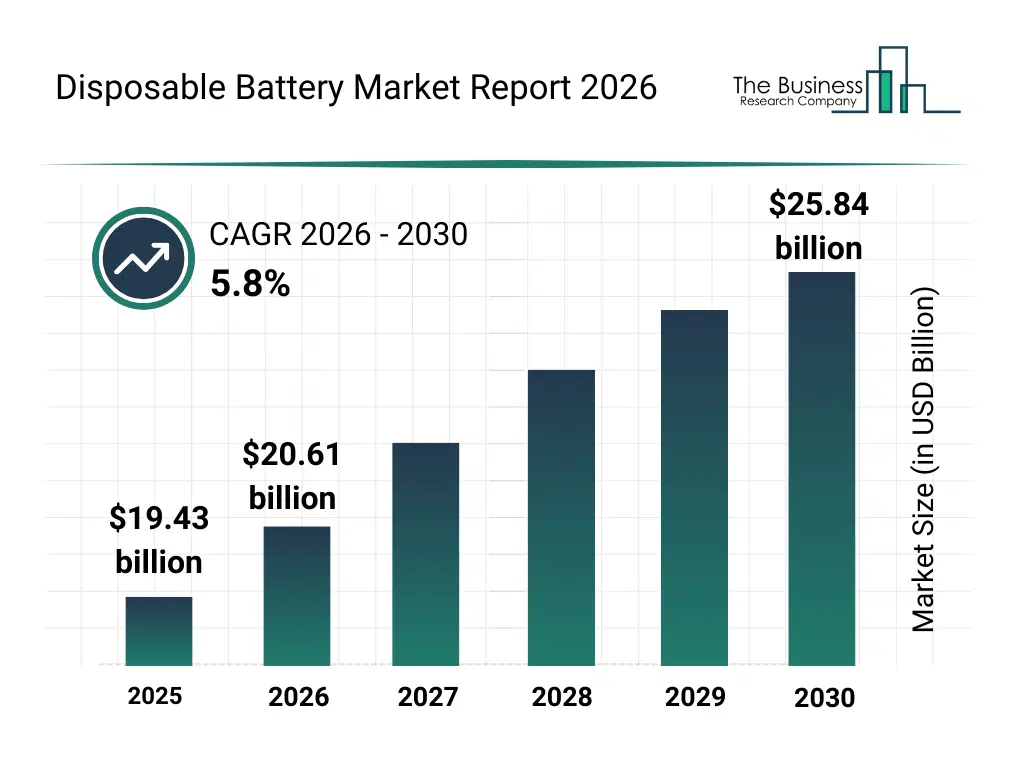
What Is The Disposable Battery Market Size 2026 And Growth Rate?
The disposable battery market size has grown strongly in recent years. It will grow from $19.43 billion in 2025 to $20.61 billion in 2026 at a compound annual growth rate (CAGR) of 6.1%. The growth in the historic period can be attributed to rising demand for household electronic devices, growth in toy and flashlight industries, limited access to rechargeable solutions, low-cost battery manufacturing, expansion of consumer electronics in emerging markets.What Is The Disposable Battery Market Growth Forecast?
The disposable battery market size is expected to see strong growth in the next few years. It will grow to $25.84 billion in 2030 at a compound annual growth rate (CAGR) of 5.8%. The growth in the forecast period can be attributed to increasing focus on sustainability and eco-friendly products, adoption of smart home and IoT devices, development of high-performance disposable batteries, growth in healthcare and portable medical devices, expansion of online retail channels. Major trends in the forecast period include eco-friendly disposable batteries, high energy density batteries, compact & portable power solutions, smart packaging & labeling for batteries, enhanced shelf-life technologies.
Global Disposable Battery Market Segmentation
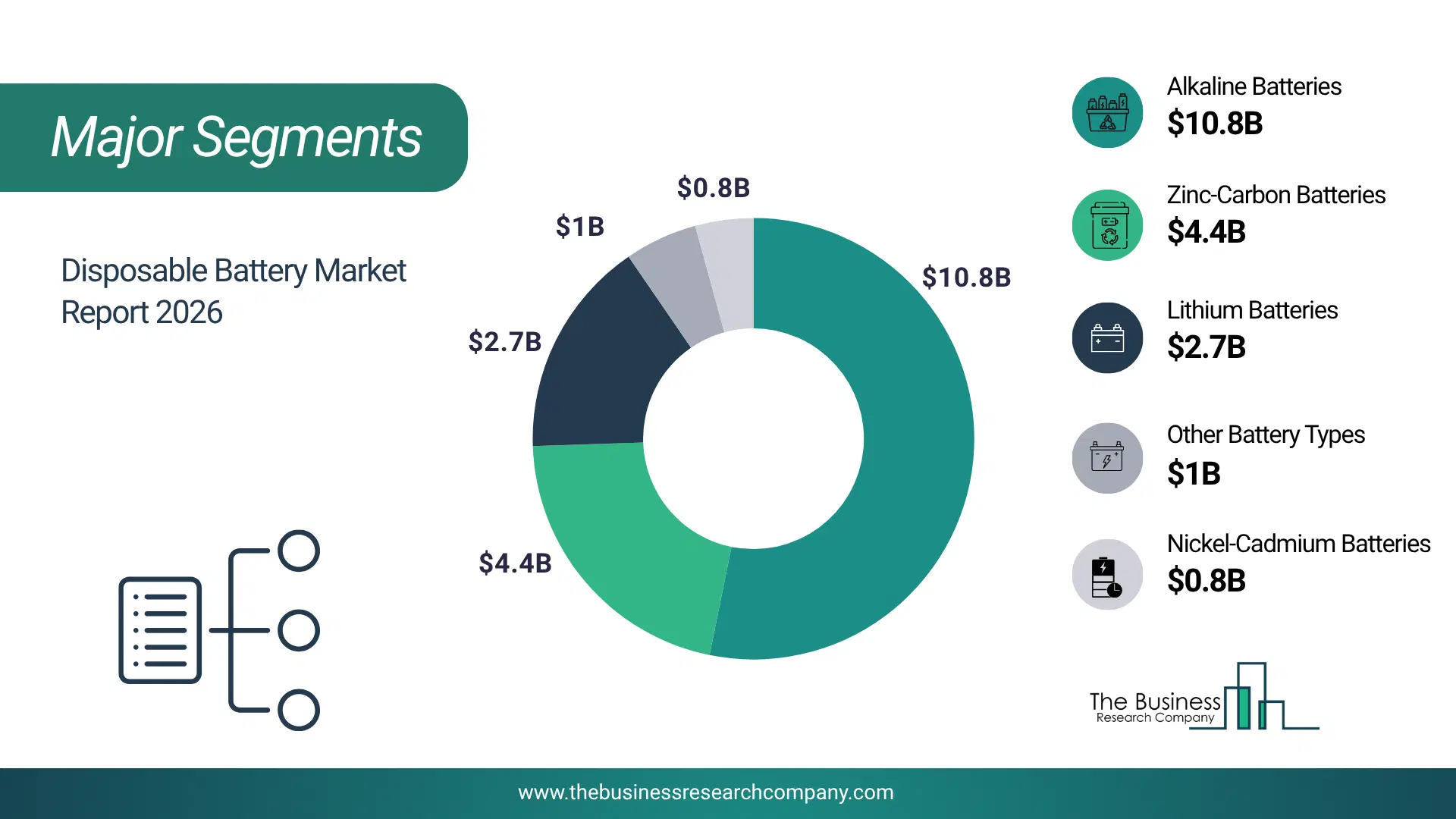
1) By Battery Type: Alkaline Batteries, Lithium Batteries, Zinc-Carbon Batteries, Other Battery Types 2) By Voltage: Low Voltage (1.5V, 3V), Medium Voltage (9V, 12V), High Voltage (24V and above) 3) By Distribution Channels: Online Retail, Offline Retail, Whole Sale 4) By Application: Consumer Electronics, Healthcare Devices, Toys, Remote Controls, Flashlights 5) By End-User: Residential, Commercial, Industrial, Government Subsegments: 1) By Alkaline Batteries: AA, AAA, C, D, 9V, Button Cells 2) By Lithium Batteries: CR Series, L-Series, Coin Cells, Cylindrical Lithium Batteries 3) By Zinc-Carbon Batteries: AA, AAA, C, D, 9V, Specialty Sizes 4) By Other Battery Types: Silver Oxide Batteries, Zinc-Air Batteries, Mercury Batteries, Rechargeable Disposable Hybrids The top segments in the disposable battery market will be: • Alkaline Batteries will reach $10.7 billion by 2030. • Zinc-Carbon Batteries will reach $4.4 billion by 2030. • Lithium Batteries will reach $2.63 billion by 2030. • Other Battery Types will reach $0.96 billion by 2030. • Nickel-Cadmium Batteries will reach $0.79 billion by 2030.What Is The Driver Of The Disposable Battery Market?
The increasing demand for portable electronics and battery-powered devices is expected to propel the growth of the disposable battery market going forward. Portable electronics and battery-powered devices refer to the growing consumer and industrial adoption of compact, mobile, and battery-reliant gadgets for convenience and functionality. The demand for portable electronics and battery-powered devices is rising sharply with the expansion of connected consumer tech devices such as wireless earbuds, gaming hardware, and digital health devices. Disposable batteries support the demand for portable electronics and battery-powered devices by providing affordable, reliable, and easily replaceable power sources for low-drain and portable devices. For instance, in August 2024, according to the Consumer Technology Association (CTA), a US-based tech sector trade association, the overall retail revenues for the consumer technology industry are expected to grow 1% in 2024 to $505 billion, followed by 4.4% growth in 2025 to $527 billion. Therefore, the increasing demand for portable electronics and battery-powered devices is driving the growth of the disposable battery industry.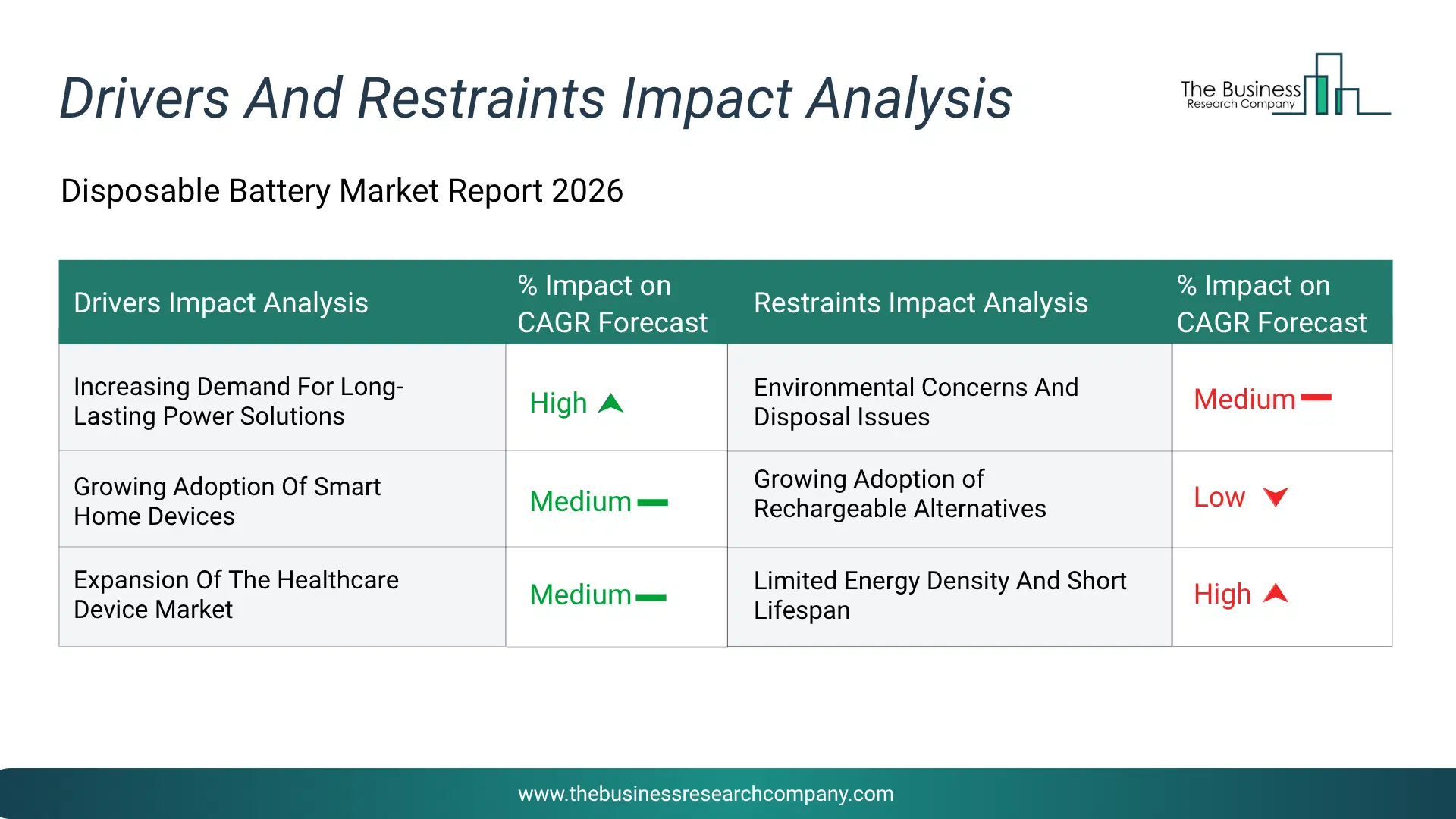
Infographic Chart Showing Key Market Drivers Analysis And Restraints For Disposable Battery Market
The chart presents an impact analysis of key drivers and restraints, quantifying their relative influence on the market's growth rate and helping assess the balance between growth enablers and limiting factors. This chart offers a high-level perspective; the full report contains more detailed insights.
How Will The Drivers Impact Growth In The Global Disposable Battery Market?
• Increasing Demand For Long-Lasting Power Solutions (High) – During the forecast period, the increasing demand for long-lasting power solutions is expected to become a key growth driver for the disposable battery market by 2030. Rising demand for dependable and extended-duration power solutions is fueling growth in the market, as consumers increasingly require reliable energy sources for devices such as remote controls, medical equipment, flashlights, and other household electronics. Ongoing advancements in battery chemistries, particularly in lithium and alkaline technologies, have improved energy density, performance stability, and shelf life, enabling longer operating times. As the adoption of portable and smart devices continues to expand, users favor batteries that minimize replacement frequency and maintenance. Moreover, in emergency preparedness and outdoor settings where charging infrastructure may be unavailable, long-lasting disposable batteries provide a practical and consistent power solution. • Growing Adoption Of Smart Home Devices (Medium) – During the forecast period, the growing adoption of smart home devices is expected to emerge as a major factor driving the expansion of the disposable battery market by 2030. The increasing penetration of smart home technologies is contributing significantly to the growth of the market, as many of these devices depend on battery power to enable seamless and wireless functionality. Devices such as smart locks, motion detectors, remote controls, and thermostats commonly use disposable batteries due to their ease of installation and replacement. As the ecosystem of connected, battery-operated devices expand, demand for dependable and long-lasting disposable batteries continues to rise. Consumers value these batteries for their affordability, convenience, and widespread availability, supporting sustained market expansion, particularly in homes integrating iot-enabled solutions. • Expansion Of The Healthcare Device Market (Medium) – During the forecast period, the expansion of the healthcare device market is expected to act as a key growth catalyst for the disposable battery market by 2030. The rapid growth of the healthcare device sector is contributing to increased demand in the market, as numerous medical devices including thermometers, hearing aids, glucose monitors, and blood pressure monitors require portable and dependable power sources. With the rising adoption of home-based care and wearable health technologies, the need for compact and long-lasting disposable batteries continues to expand. These batteries provide ease of use, reliability, and minimal maintenance, making them well-suited for portable and single-use medical applications. Furthermore, the aging population and growing emphasis on remote patient monitoring are accelerating battery consumption across the healthcare industry.How Will The Restraints Impact Growth In The Global Disposable Battery Market?
• Environmental Concerns And Disposal Issues (Medium) – During the forecast period, the environmental concerns and disposal issues restrain the disposable battery market because these batteries contain toxic materials such as mercury, lead, and cadmium, which can contaminate soil and water if not disposed of properly. Improper disposal contributes to environmental pollution and poses health risks to humans and wildlife. Increasing government regulations on waste management and recycling make production and disposal more costly. Additionally, growing consumer awareness about sustainability is shifting demand toward rechargeable and eco-friendly alternatives, further limiting market growth. • Growing Adoption of Rechargeable Alternatives (Low) – During the forecast period, the growing adoption of rechargeable alternatives is restraining the disposable battery market as consumers and industries shift toward more sustainable and cost-effective power solutions. Rechargeable batteries, such as lithium-ion and nimh, can be reused hundreds of times, reducing the need for single-use batteries. This lowers overall battery consumption and long-term costs. Additionally, increasing environmental awareness and government regulations against electronic waste are further discouraging disposable battery usage. As a result, demand for primary batteries in everyday applications is gradually declining. • Limited Energy Density And Short Lifespan (High) – During the forecast period, the limited energy density and short lifespan act as a restraint for the disposable battery market by restricting their performance in high-drain and long-duration applications. These batteries discharge quickly compared to rechargeable alternatives, making them less suitable for modern electronic devices that require sustained power output. Frequent replacement needs also increase long-term usage costs for consumers and industries. Additionally, performance limitations reduce their competitiveness in applications where efficiency and durability are critical. Overall, these technical constraints hinder wider market adoption and growth.Key Players In The Global Disposable Battery Market
Major companies operating in the disposable battery market are Duracell Inc., Energizer Holdings Inc., Panasonic Holdings Corporation, Maxell Holdings Ltd., Murata Manufacturing Co. Ltd., VARTA AG, GP Batteries International Limited, Eveready Industries India Ltd., Nanfu Battery Co. Ltd., Zhejiang Mustang Battery Co. Ltd., Camelion Battery Co. Ltd., Rayovac (Energizer Holdings Inc.), Toshiba Corporation, Mitsubishi Electric Corporation, Fujitsu Limited, Kodak (Kodak Alaris / Eastman Kodak Company), Koninklijke Philips N.V., Super Power Battery Co. Ltd., Wama Battery Co. Ltd., Golden Power Group Holdings Ltd., Hitachi Maxell Energy Ltd. (Maxell Holdings Ltd.), Renata SA (Swatch Group), Guangzhou Tianqiu Electronics Co. Ltd., Eunicell Battery Co. Ltd., Shenzhen PKCELL Battery Co. Ltd.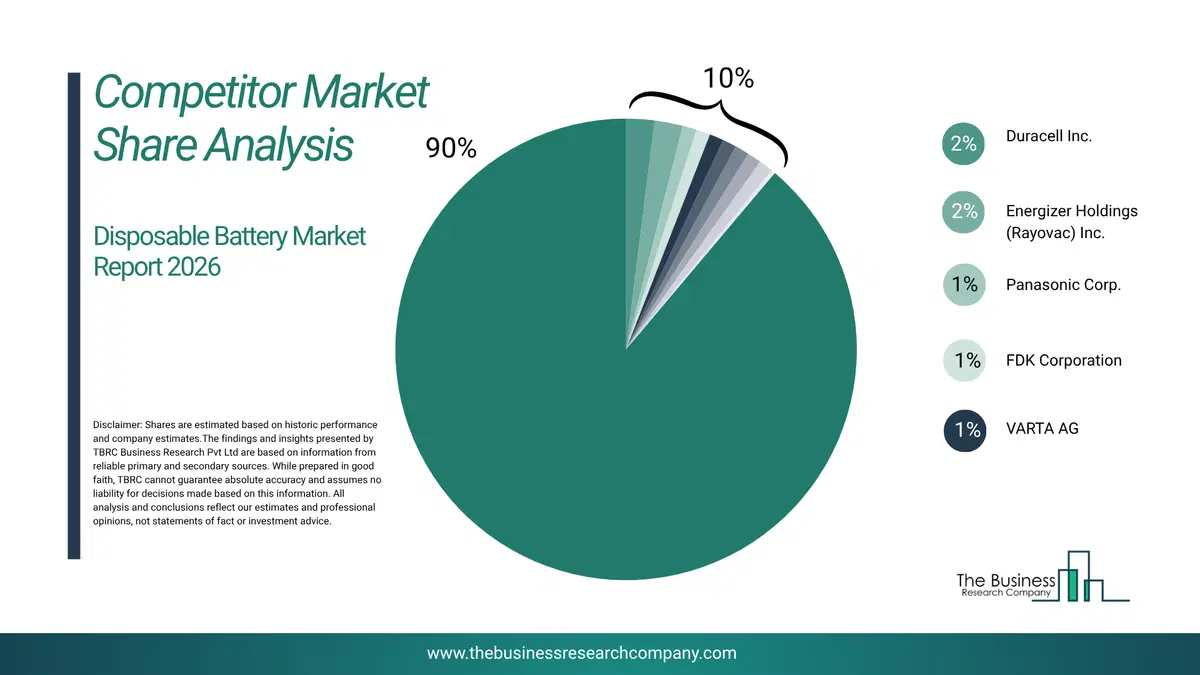
This chart is for illustrative purposes; the full report includes a detailed competitor analysis and comprehensive overview of the top 10 companies in the market.
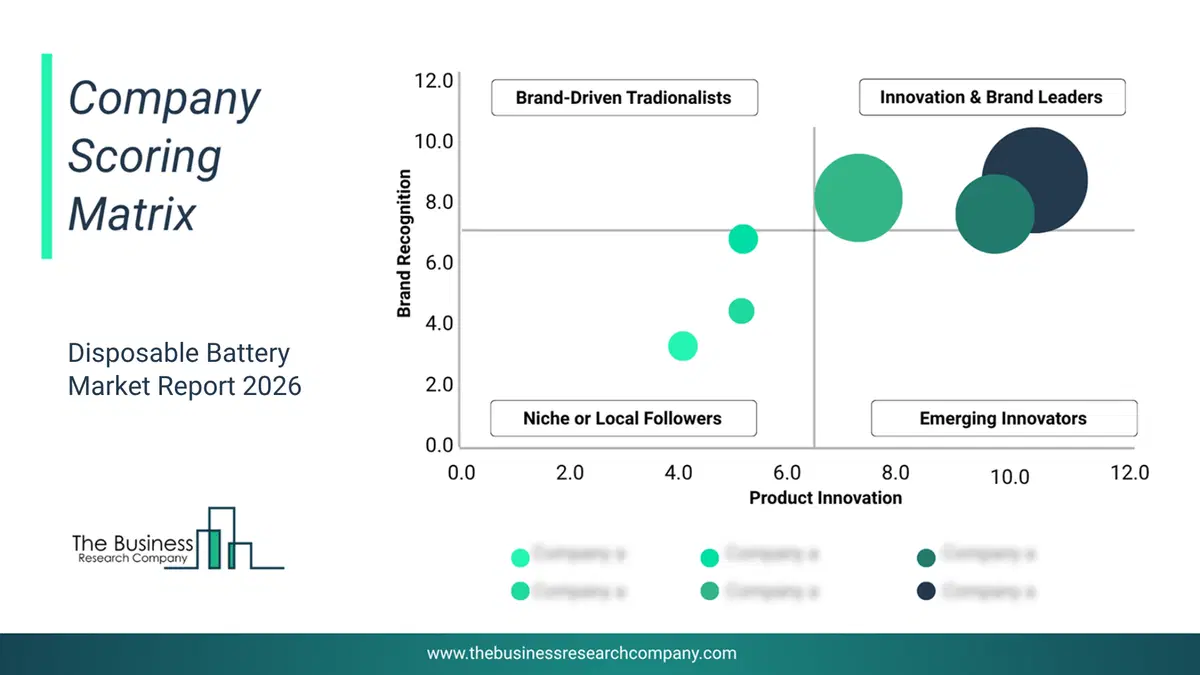
This chart maps companies by product innovation and brand strength, with bubble size indicating relative revenue, helping identify market leaders, challengers, and niche players. This is an illustrative chart; the full report provides a complete and accurate competitive analysis.
Global Disposable Battery Market Trends and Insights
Major companies operating in the disposable battery market are focusing on developing high-performance, eco-friendly batteries to gain a competitive advantage. High-performance, eco-friendly batteries are energy storage devices that deliver superior power, longer lifespan, and reliable performance while minimizing environmental impact through the use of non-toxic materials and sustainable manufacturing processes. For instance, in March 2025, Xupernova, a China-based battery supplier, launched its range of high-performance disposable batteries suitable for remote controls, wireless mice, medical sensors, and security devices. These batteries offer outstanding durability and reliability, catering to diverse global customer needs and reducing environmental impact. Such innovations in battery design and sustainability are driving the transformation of the disposable battery market toward more efficient, safe, and eco-conscious energy solutions.What Are Latest Mergers And Acquisitions In The Disposable Battery Market?
In May 2025, Energizer Holdings Inc., a US-based provider of primary batteries, acquired Advanced Power Solutions NV for an undisclosed amount. With this acquisition, Energizer strengthens its presence in the global disposable battery market, expands its Panasonic-branded battery portfolio in Europe, and enhances manufacturing and distribution capabilities across key regions. Advanced Power Solutions NV is a Belgium-based manufacturer and marketer of disposable batteries.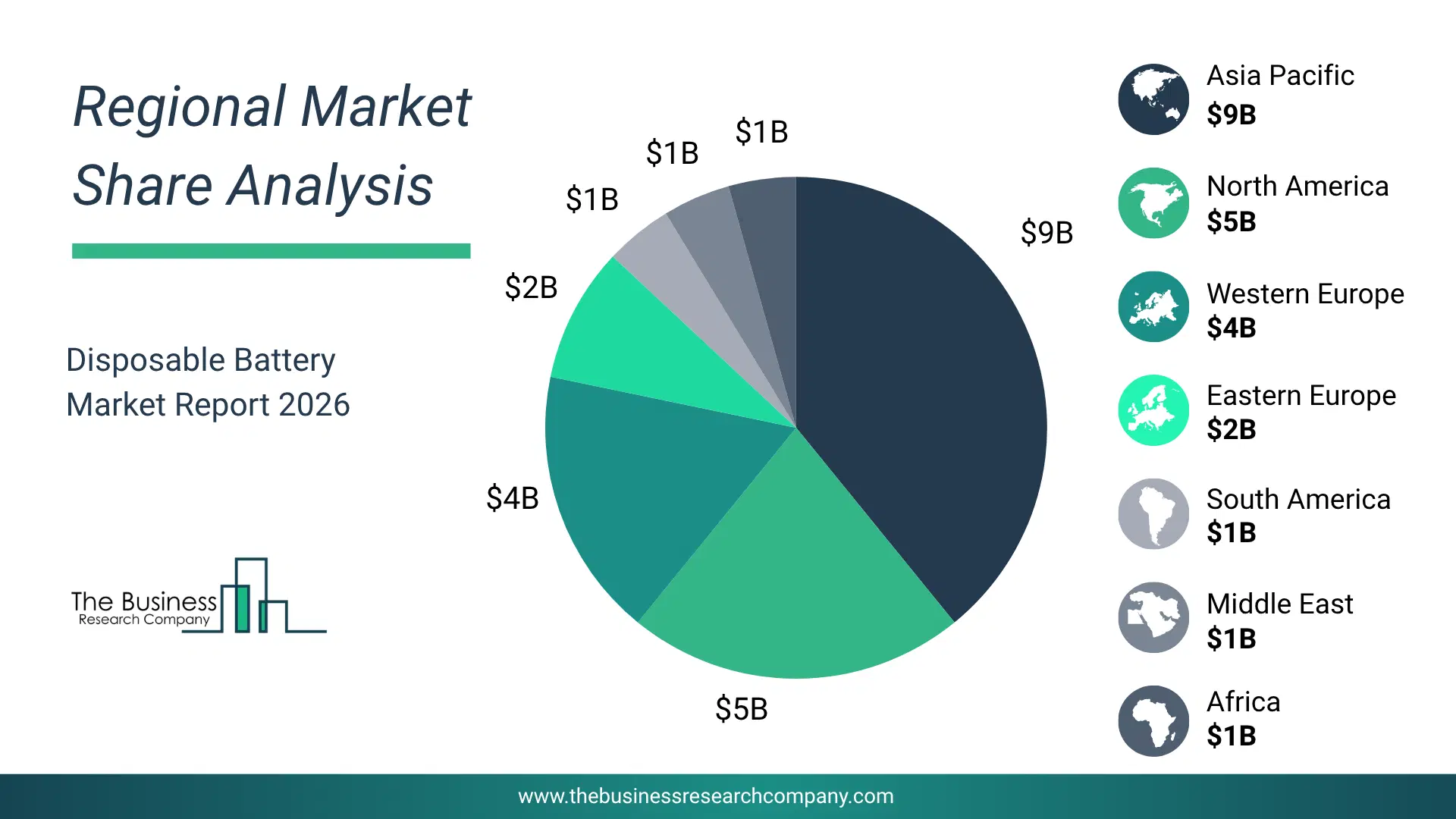
Regional Outlook
North America was the largest region in the disposable battery market in 2025. Asia-Pacific is expected to be the fastest-growing region in the forecast period. The regions covered in this market report are Asia-Pacific, South East Asia, Western Europe, Eastern Europe, North America, South America, Middle East, Africa. The countries covered in this market report are Australia, Brazil, China, France, Germany, India, Indonesia, Japan, Taiwan, Russia, South Korea, UK, USA, Canada, Italy, Spain.What Defines the Disposable Battery Market?
The disposable battery market consists of sales of silver oxide batteries, mercury batteries, and zinc-air batteries. Values in this market are ‘factory gate’ values, that is the value of goods sold by the manufacturers or creators of the goods, whether to other entities (including downstream manufacturers, wholesalers, distributors and retailers) or directly to end customers. The value of goods in this market includes related services sold by the creators of the goods.How is Market Value Defined and Measured?
The market value is defined as the revenues that enterprises gain from the sale of goods and/or services within the specified market and geography through sales, grants, or donations in terms of the currency (in USD unless otherwise specified). The revenues for a specified geography are consumption values that are revenues generated by organizations in the specified geography within the market, irrespective of where they are produced. It does not include revenues from resales along the supply chain, either further along the supply chain or as part of other products.
This chart presents market attractiveness based on a quantitative evaluation of growth, competition, strategic alignment, and risk, offering a clear view of opportunity areas for decision-making. This chart is for illustrative purposes; the full report contains the complete analysis.

This chart highlights the Total Addressable Market (TAM) by estimating the maximum revenue opportunity using an assumption-driven approach, supporting strategic planning and opportunity sizing across markets. The chart is illustrative; the full report provides a more comprehensive analysis.
What Key Data and Analysis Are Included in the Disposable Battery Market Report 2026?
The disposable battery market research report is one of a series of new reports from The Business Research Company that provides market statistics, including industry global market size, regional shares, competitors with the market share, detailed market segments, market trends and opportunities, and any further data you may need to thrive in the disposable battery industry. The market research report delivers a complete perspective of everything you need, with an in-depth analysis of the current and future state of the industry.Disposable Battery Market Report 2026 Market Report Forecast Analysis
| Report Attribute | Details |
|---|---|
| Market Size Value In 2026 | $20.61 billion |
| Revenue Forecast In 2030 | $25.84 billion |
| Growth Rate | CAGR of 5.8% from 2026 to 2030 |
| Base Year For Estimation | 2025 |
| Actual Estimates/Historical Data | 2020-2025 |
| Forecast Period | 2026 - 2030 |
| Market Representation | Revenue in USD Billion and CAGR from 2026 to 2030 |
| Segments Covered | Battery Type, Voltage, Distribution Channels, Application, End-User |
| Regional Scope | Asia-Pacific, Western Europe, Eastern Europe, North America, South America, Middle East, Africa |
| Country Scope | The countries covered in the report are Australia, Brazil, China, France, Germany, India, ... |
| Key Companies Profiled | Duracell Inc., Energizer Holdings Inc., Panasonic Holdings Corporation, Maxell Holdings Ltd., Murata Manufacturing Co. Ltd., VARTA AG, GP Batteries International Limited, Eveready Industries India Ltd., Nanfu Battery Co. Ltd., Zhejiang Mustang Battery Co. Ltd., Camelion Battery Co. Ltd., Rayovac (Energizer Holdings Inc.), Toshiba Corporation, Mitsubishi Electric Corporation, Fujitsu Limited, Kodak (Kodak Alaris / Eastman Kodak Company), Koninklijke Philips N.V., Super Power Battery Co. Ltd., Wama Battery Co. Ltd., Golden Power Group Holdings Ltd., Hitachi Maxell Energy Ltd. (Maxell Holdings Ltd.), Renata SA (Swatch Group), Guangzhou Tianqiu Electronics Co. Ltd., Eunicell Battery Co. Ltd., Shenzhen PKCELL Battery Co. Ltd. |
| Customization Scope | Request for Customization |
| Pricing And Purchase Options | Explore Purchase Options |