
Disposable Endoscopes Global Market Opportunities And Strategies To 2035
By Product (Gastroscopes, Bronchoscopes, Duodenoscopes, Laryngoscopes, Colonoscopes, Ureteroscopes, Other Endoscopes), By Patient Type (Adult, Pediatric), By End User (Hospitals, Ambulatory Surgical Centers, Diagnostic Centers), And By Region, Opportunities And Strategies – Global Forecast To 2035
Disposable Endoscopes Market Definition
Disposable endoscopes refer to single-use medical devices designed for minimally invasive visualization and diagnostic or therapeutic procedures inside the human body. Unlike traditional reusable endoscopes, these devices are intended to be used once and then discarded, eliminating the need for reprocessing, sterilization and maintenance. The disposable endoscopes market consists of sales by entities (organizations, sole traders and partnerships) of disposable endoscopes used by healthcare professionals such as gastroenterologists, pulmonologists, urologists and surgeons across a wide range of clinical settings. Disposable endoscopes are typically used during diagnostic investigations, emergency procedures and surgical interventions where infection control and operational efficiency are critical. These devices serve as substitutes for reusable endoscopes, particularly in scenarios where cross-contamination risks are high or sterilization infrastructure is limited, while complementary products include imaging systems, light sources, monitors and accessory instruments such as biopsy forceps and suction devices.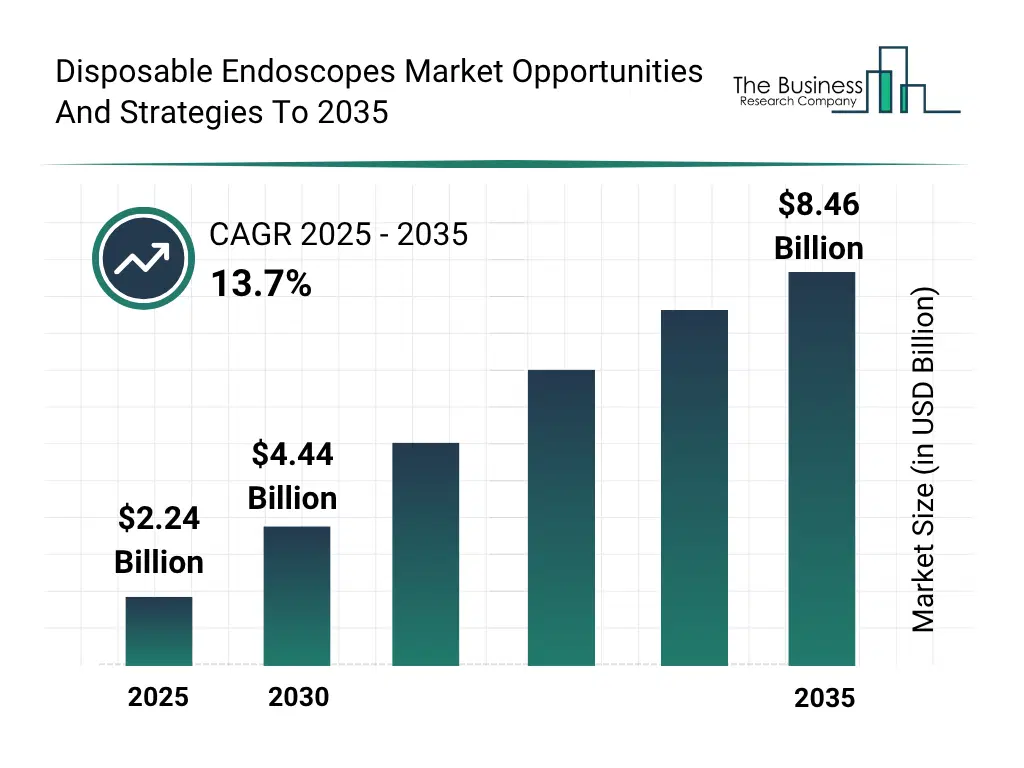
Disposable Endoscopes Market Size
The global disposable endoscopes market reached a value of nearly $2,238.1 million in 2025, having grown at a compound annual growth rate (CAGR) of 15.1% since 2020. The market is expected to grow from $2,238.1 million in 2025 to $4,443.3 million in 2030 at a rate of 14.7%. The market is then expected to grow at a CAGR of 13.7% from 2030 and reach $8,461.1 million in 2035. Growth in the historic period resulted from rising prevalence of hospital-acquired infections (HAIs), increasing demand for minimally invasive procedures, rising prevalence of GI and urinary cancer and higher adoption in bronchoscopy for respiratory and infectious diseases. Factors that negatively affected growth in the historic period were high per-unit cost compared to reusable endoscopes and environmental concerns and medical waste. Going forward, expansion of diagnostic centers, expansion of ICU and critical care diagnostics, rising investments in outpatient and decentralized healthcare models and government initiatives to improve infection prevention and control (IPC) will drive the growth. Factors that could hinder the growth of the disposable endoscopes market in the future include weak penetration in physician-owned practices and high switching costs and impact of trade war and tariff.
Disposable Endoscopes Market Segmentation
The disposable endoscopes market is segmented by product, by patient type and by end user.By Product –
The disposable endoscopes market is segmented by product into:
- a) Gastroscopes
- b) Bronchoscopes
- c) Duodenoscopes
- d) Colonoscopes
- e) Ureteroscopes
- f) Laryngoscopes
- g) Other Endoscopes
By Patient Type –
The disposable endoscopes market is segmented by patient type into:
- a) Adult
- b) Pediatric
By End User –
The disposable endoscopes market is segmented by end user into:
- a) Hospitals
- b) Ambulatory Surgical Centers
- c) Diagnostic Centers
By Geography - The disposable endoscopes market is segmented by geography into:
- China
- India
- Japan
- Australia
- Taiwan
- South Korea
- Indonesia
- USA
- Canada
- Brazil
- France
- Germany
- UK
- Italy
- Spain
- Russia
-
o Asia Pacific
o Africa