
Disposable Incontinence Products Market Report 2026
Global Outlook – By Product Type (Adult Diapers (Briefs), Disposable Protective Underwear (Pull-Ups), Incontinence Pads And Liners, Underpads), By Absorbency Level (Light Absorbency, Moderate Absorbency, Heavy Absorbency), By Incontinence Type (Stress Urinary Incontinence, Urge Urinary Incontinence, Overflow Incontinence, Functional Incontinence, Fecal Incontinence, Dual Incontinence), By Material Type (Super Absorbent Polymers (SAP), Nonwoven Fabrics, Fluff Pulp, Plastic Back Sheets, Bio-based And Sustainable Materials, Other Materials), By End User (Homecare And Individual Consumers, Hospitals, Nursing Homes, Long-Term Care Facilities, Other Healthcare Facilities) – Market Size, Trends, Strategies, and Forecast to 2030
Disposable Incontinence Products Market Overview
• Disposable Incontinence Products market size has reached to $11.63 billion in 2025 • Expected to grow to $16.81 billion in 2030 at a compound annual growth rate (CAGR) of 7.7% • Growth Driver: Urological Disorders Drive Demand For Disposable Incontinence Products • Market Trend: Innovative Solutions Propel Growth In Disposable Incontinence Products Market • Asia-Pacific was the largest region and fastest growing region.Market Gains By 2030 – Top Opportunities By Segment
Market Gain identifies the most promising market opportunities by highlighting the segments or products expected to generate the highest incremental revenue growth over the next five years.
What Is Covered Under Disposable Incontinence Products Market?
Disposable incontinence products are referred to as adult diapers or absorbent pads that are worn by those who have urine incontinence inside underwear to soak up urine. They are used for the management of light to moderate and heavy urinary incontinence and/or fecal incontinence. The main products of disposable incontinence are protective incontinence garments, urine bags, and urinary catheter. Protective incontinence garments are absorbent pads used to soak up pee that is worn inside knickers. It offers a substitute for conventional disposable incontinence products, which are frequently clumsy and made of plastic. The disposable incontinence products are available in plastic, cotton fabric, super absorbents, latex, and other materials with stress urinary incontinence, urge urinary incontinence, overflow incontinence, and functional urinary incontinence types. The disposable incontinence products find its application in urine incontinence, fecal incontinence, and dual incontinence that are used in hospitals, ambulatory surgical centers, nursing facilities, long-term care centers, and other end users.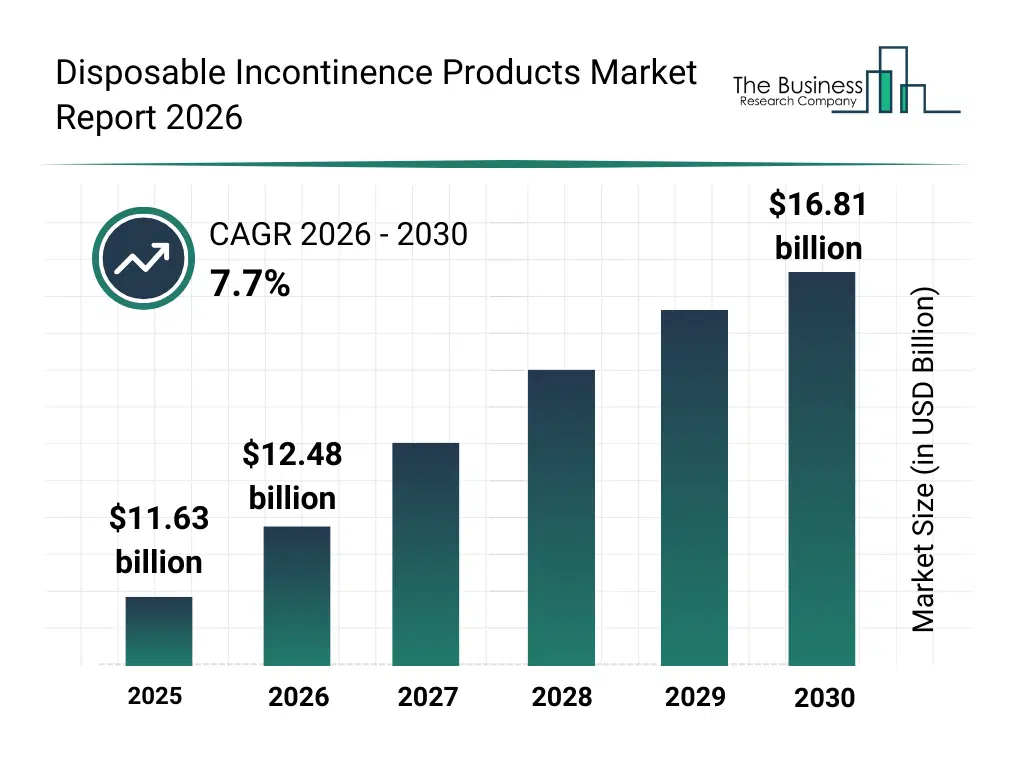
What Is The Disposable Incontinence Products Market Size and Share 2026?
The disposable incontinence products market size has grown strongly in recent years. It will grow from $11.63 billion in 2025 to $12.48 billion in 2026 at a compound annual growth rate (CAGR) of 7.3%. The growth in the historic period can be attributed to aging global population trends, increased diagnosis of urinary incontinence, expansion of long-term care facilities, improvements in absorbent material technologies, growing acceptance of disposable incontinence products.What Is The Disposable Incontinence Products Market Growth Forecast?
The disposable incontinence products market size is expected to see strong growth in the next few years. It will grow to $16.81 billion in 2030 at a compound annual growth rate (CAGR) of 7.7%. The growth in the forecast period can be attributed to rising demand for home-based elderly care, increasing focus on sustainable disposable materials, expansion of healthcare infrastructure in emerging markets, advancements in super absorbent polymers, growing emphasis on patient comfort and dignity. Major trends in the forecast period include increasing demand for high-absorbency disposable products, rising use of skin-friendly and breathable materials, growing focus on comfort and discretion, expansion of adult incontinence care solutions, enhanced emphasis on product hygiene and safety.
Global Disposable Incontinence Products Market Segmentation
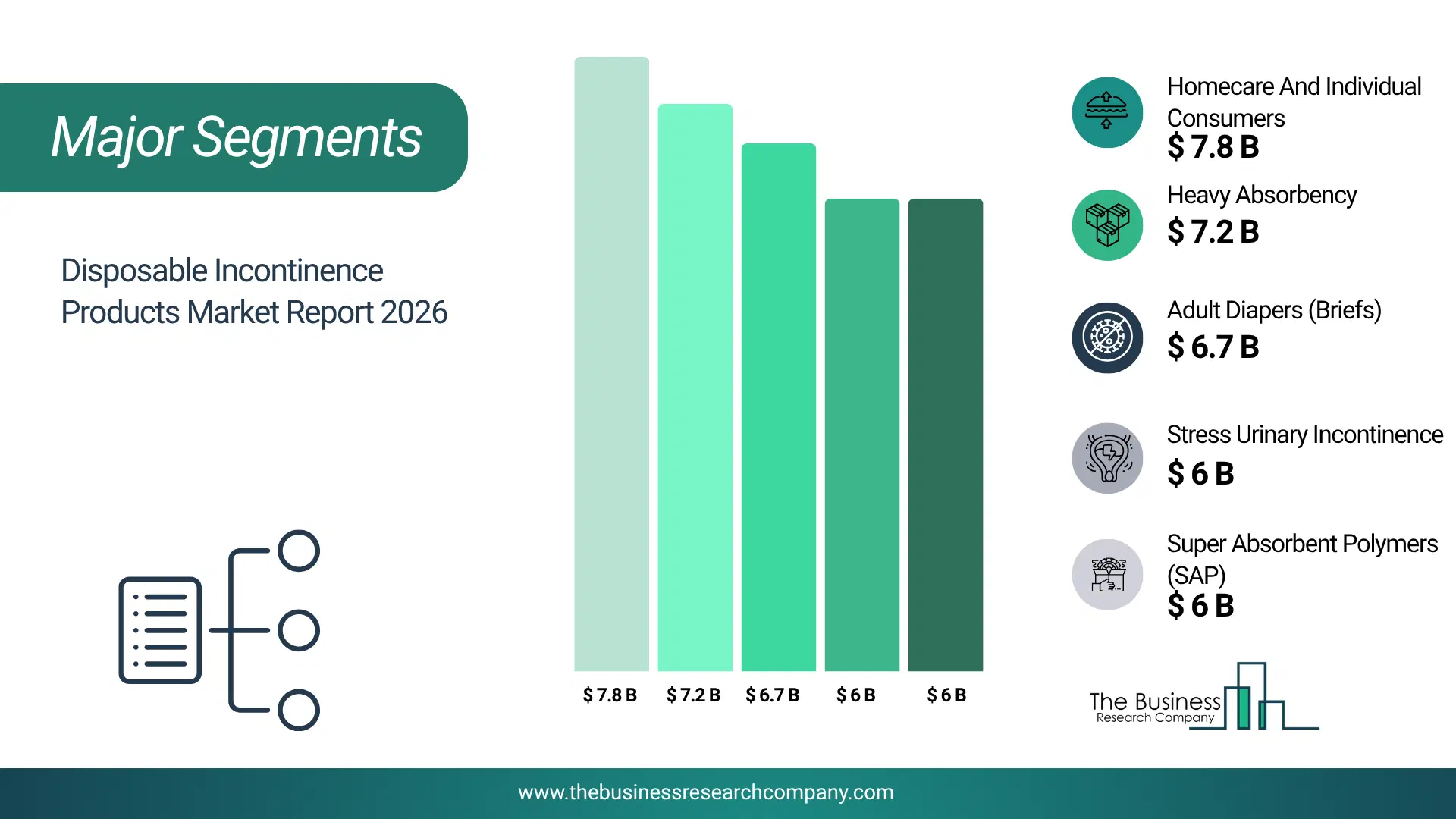
1) By Product Type: Adult Diapers (Briefs), Disposable Protective Underwear (Pull-Ups), Incontinence Pads And Liners, Underpads 2) By Absorbency Level: Light Absorbency, Moderate Absorbency, Heavy Absorbency 3) By Incontinence Type: Stress Urinary Incontinence, Urge Urinary Incontinence, Overflow Incontinence, Functional Incontinence, Fecal Incontinence, Dual Incontinence 4) By Material Type: Super Absorbent Polymers (SAP), Nonwoven Fabrics, Fluff Pulp, Plastic Back Sheets, Bio-based And Sustainable Materials, Other Materials 5) By End User: Homecare And Individual Consumers, Hospitals, Nursing Homes, Long-Term Care Facilities, Other Healthcare Facilities Subsegments: 1) By Adult Diapers (Briefs): Tape-Style Adult Diapers, All-in-One Briefs, Bariatric Adult Diapers, High-Absorbency And Overnight Diapers 2) By Disposable Protective Underwear (Pull-Ups): Standard Pull-Up Underwear, Premium And High-Absorbency Pull-Ups, Gender-Specific Pull-Ups (Men And Women), Discreet And Slim-Fit Pull-Ups 3) By Incontinence Pads And Liners: Light Incontinence Liners, Moderate Absorbency Pads, Heavy Absorbency Pads, Male Guards, Shaped And Contoured Pads 4) By Underpads: Disposable Bed Underpads, Chair And Wheelchair Underpads, Ultra-Absorbent Underpads, Breathable And Leak-Proof Underpads The top segments in the disposable incontinence products market will be: • Homecare And Individual Consumers will reach $7860.23 Million by 2030. • Heavy Absorbency will reach $7211.81 Million by 2030. • Adult Diapers (Briefs) will reach $6702.15 Million by 2030. • Stress Urinary Incontinence will reach $6067.95 Million by 2030. • Super Absorbent Polymers (SAP) will reach $6081.89 Million by 2030.What Is The Driver Of The Disposable Incontinence Products Market?
The growing number of urological disorders is expected to propel the growth of the disposable incontinence products market going forward. A urologic disorder is a sickness or illness that involves, urinary tract infections, kidney stones, issues with bladder control, and prostate issues. Adult incontinence products ensure that a person is dry and comfortable so that nothing prevents them from taking pleasure in life's minor pleasures. Increasing incidents of urological disorders is likely to place a greater burden on healthcare systems and highlight the need for effective prevention and treatment strategies. For instance, in October 2023, according to the National Health Service (NHS) England, a UK-based government department, in 2022/23, hospitals recorded 147, 285 admissions with a primary diagnosis of urinary tract infection (UTI). Individuals aged over 65 accounted for 56% of these cases, totaling 82, 392 admissions. The highest number of admissions occurred in the 80-84 age group, with 17, 280 cases. Therefore, the growing number of urological disorders is driving the growth of the disposable incontinence products industry going forward.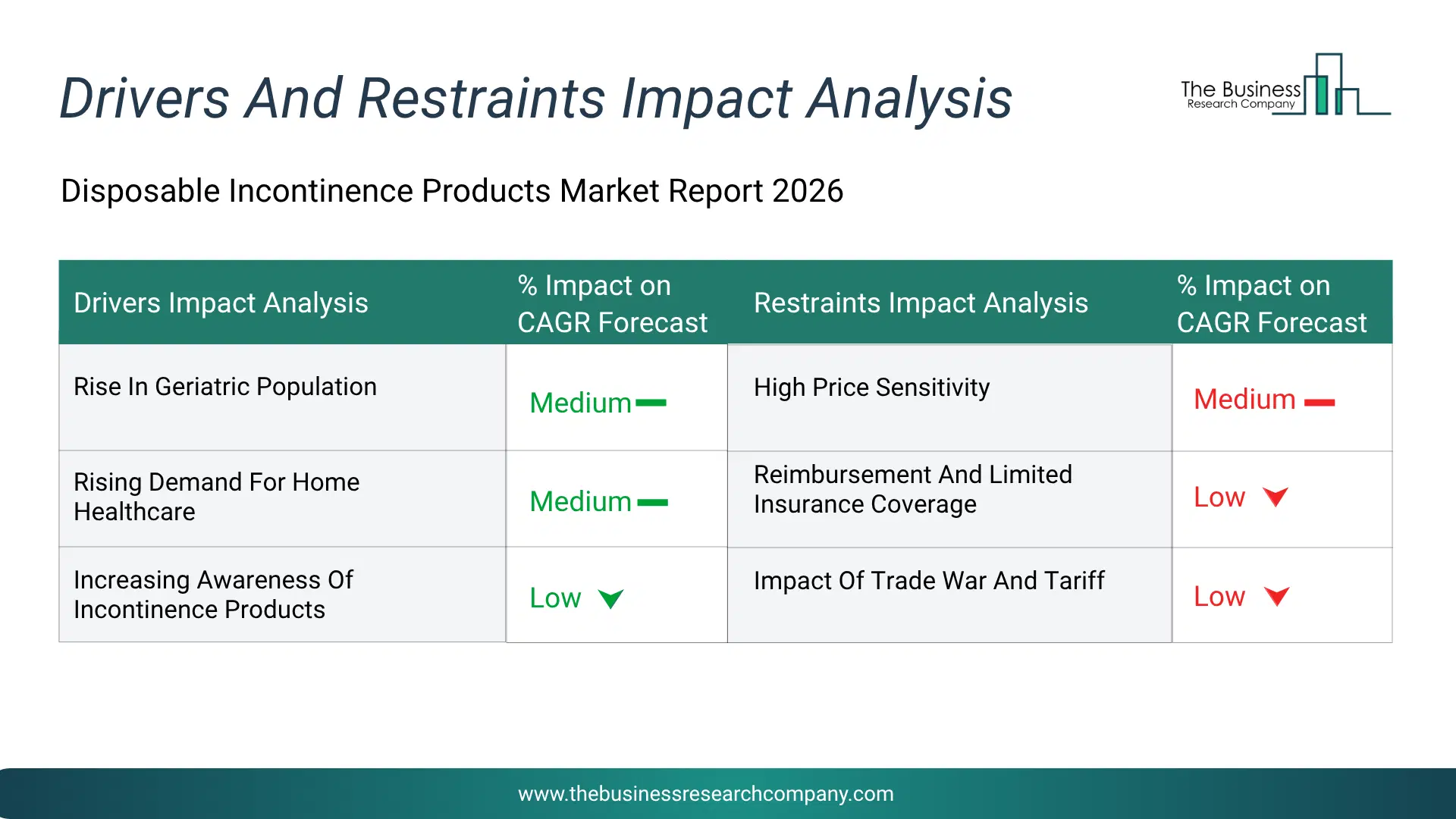
Infographic Chart Showing Key Market Drivers Analysis And Restraints For Disposable Incontinence Products Market
The chart presents an impact analysis of key drivers and restraints, quantifying their relative influence on the market's growth rate and helping assess the balance between growth enablers and limiting factors. This chart offers a high-level perspective; the full report contains more detailed insights.
How Will The Drivers Impact Growth In The Global Disposable Incontinence Products Market?
• Rise In Geriatric Population (Medium) – During the forecast period, the rise in geriatric population will propel the growth of the disposable incontinence products market. Longer life expectancy has increased the number of elderly individuals living with age-related conditions that impact continence. Mobility limitations, cognitive decline, and chronic illnesses often require reliable hygiene support. Older adults value products that maintain dignity, comfort, and independence. Disposable solutions reduce the physical effort required for cleaning and reuse, benefiting both users and caregivers. Their role in preventing skin irritation and infections supports daily use. Demand is further reinforced in assisted living and long-term care settings. This demographic shift creates sustained, recurring consumption. The rise in geriatric population growth contribution during the forecast period in 2025 is 1.5%. • Rising Demand For Home Healthcare (Medium) – During the forecast period, rising demand for home healthcare is expected to be a key driver of the disposable incontinence products market during the forecast period. healthcare systems increasingly promote home-based care to reduce costs and hospital stays. this shift places daily care responsibilities on patients and family caregivers. single-use hygiene solutions simplify routine management in non-clinical environments. they reduce laundry workload and help maintain hygiene standards at home. reliability and ease of disposal make them suitable for chronic care and recovery situations. their use supports aging-in-place trends and long-term illness management. convenience and efficiency drive steady adoption in home settings. the rising demand for home healthcare growth contribution during the forecast period in 2025 is 1.0%. • Increasing Awareness Of Incontinence Products (Low) – During the forecast period, increasing awareness of incontinence products is expected to be a key driver of growth for the disposable incontinence products market during the forecast period. greater access to health information through digital media, healthcare professionals, and pharmacies has improved understanding of bladder and bowel health. this awareness reduces stigma and encourages individuals to address symptoms earlier instead of delaying care. incontinence solutions are increasingly perceived as lifestyle-support products rather than purely medical necessities. innovations in design, such as thinner profiles and odor control, make products more discreet and acceptable for daily use. stronger branding and wider retail availability further normalize usage. education campaigns also highlight preventive use, expanding adoption beyond severe medical cases. together, these factors drive consistent and long-term usage across multiple age groups. the increasing awareness of incontinence products growth contribution during the forecast period in 2025 is 0.8%. • Postpartum And Delivery-Related Injury (Low) – During the forecast period, the postpartum and delivery-related injury is anticipated to support the growth of the disposable incontinence products market in the forecast period. pregnancy and childbirth commonly lead to pelvic floor weakness and temporary bladder control issues. new mothers often require high-absorbency products during the recovery period. disposable options provide hygienic protection and allow frequent changes without discomfort. their ease of use is especially important during the physically demanding postpartum phase. soft materials and skin-friendly designs support healing and comfort. these products also enable greater mobility and confidence after delivery. as awareness of postpartum care improves, adoption continues to rise. the postpartum and delivery-related injury growth contribution during the forecast period in 2025 is 0.5%.How Will The Restraints Impact Growth In The Global Disposable Incontinence Products Market?
• High Price Sensitivity (Medium) – During the forecast period, high price sensitivity is restricting the growth of the disposable incontinence products market during the forecast period. high costs relative to income levels make regular use difficult for many consumers, especially in low- and middle-income regions. these products are often required daily, creating a recurring expense that strains household budgets. limited insurance coverage or reimbursement further shifts the cost burden to patients and caregivers. as a result, some users reduce usage frequency or switch to lower-quality alternatives. institutions such as nursing homes also face budget constraints when purchasing in bulk. this price sensitivity ultimately slows wider adoption despite clear medical need. growth affected by the high price sensitivity during the forecast period in 2025 is -1.0%. • Reimbursement And Limited Insurance Coverage (Medium) – During the forecast period, reimbursement and limited insurance coverage are restricting the growth of the disposable incontinence products market during the forecast period. limited reimbursement policies mean that many users must pay out of pocket for daily hygiene needs. insurance plans in several countries either exclude these products or provide only partial coverage. this places a financial burden on elderly patients, caregivers, and low-income households. as costs accumulate over time, users may ration usage or delay adoption altogether. healthcare providers and care facilities also face budgetary limits without adequate reimbursement support. consequently, access and regular usage remain constrained despite widespread need. growth affected by the reimbursement and limited insurance coverage during the forecast period in 2025 is -0.8%. • Impact Of Trade War And Tariff (Low) – During the forecast period, the impact of trade war and tariffs is restricting the growth of the disposable incontinence products market during the forecast period. trade disputes and tariff increases raise the cost of imported raw materials such as fluff pulp, superabsorbent polymers, and nonwoven fabrics. manufacturers often rely on cross-border supply chains, making them vulnerable to sudden cost escalations and supply disruptions. higher input costs are frequently passed on to distributors and end users through price increases. this further intensifies affordability challenges, particularly in price-sensitive regions. uncertainty around trade policies also discourages long-term sourcing and investment decisions. together, these factors limit expansion and slow adoption during the forecast period. growth affected by the impact of trade wars and tariffs during the forecast period in 2025 is -0.3%.Key Players In The Global Disposable Incontinence Products Market
Major companies operating in the disposable incontinence products market are Kimberly Clark Corporation, Essity AB, Unicharm Corporation, Kao Corporation, Ontex Group, First Quality Enterprises, Paul Hartmann AG, Abena Group, Drylock Technologies, Attindas Hygiene Partners, TZMO SA, Hengan International Group, Daio Paper Corporation, Chiaus Holdings, Nobel Hygiene, Principle Business Enterprises, Medline Industries, Edgewell Personal Care, Pigeon Corporation, Nitto Industries, DSG International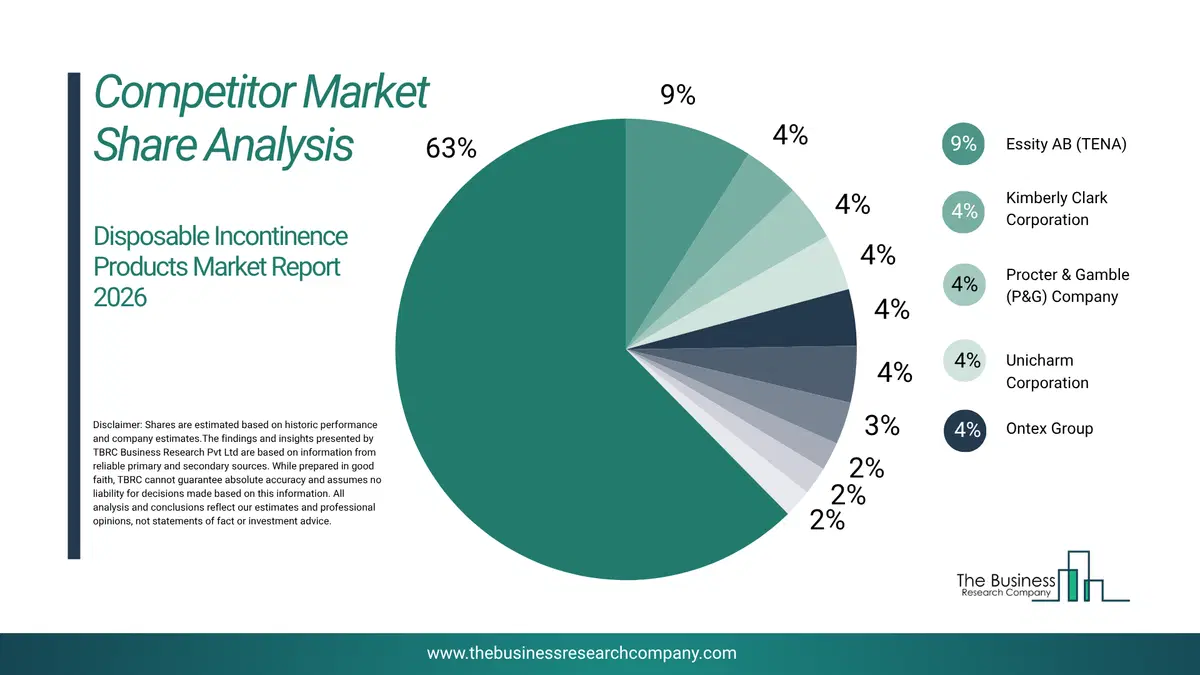
This chart is for illustrative purposes; the full report includes a detailed competitor analysis and comprehensive overview of the top 10 companies in the market.
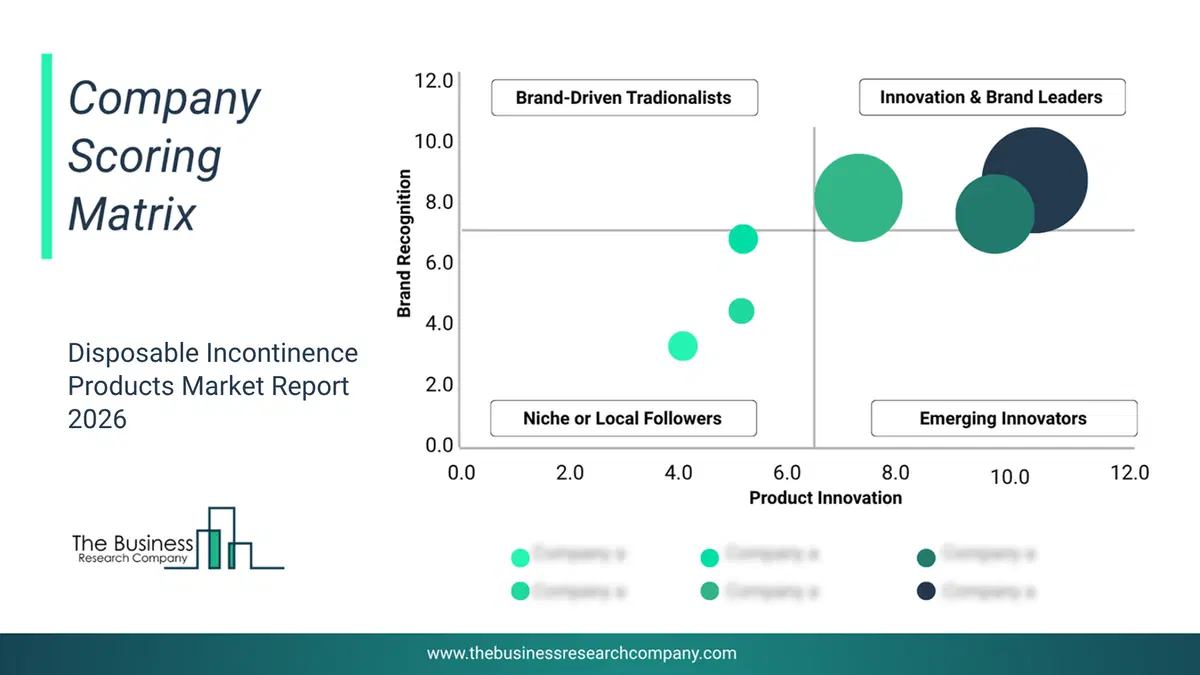
This chart maps companies by product innovation and brand strength, with bubble size indicating relative revenue, helping identify market leaders, challengers, and niche players. This is an illustrative chart; the full report provides a complete and accurate competitive analysis.
Global Disposable Incontinence Products Market Trends and Insights
Major companies operating in the disposable incontinence products market are focusing on developing innovative solutions, such as extra-thin absorbent underpants, to strengthen their market position and provide discreet, comfortable, and effective incontinence careExtra-thin disposable underpants provide high absorbency in a slim, discreet design that fits under clothing without bulging while featuring soft, cotton-like textures and antibacterial properties for comfort and hygiene. For instance, in May 2023, Nobel Hygiene Pvt Ltd, an India-based hygiene products company, launched UltraThinz, an extra-thin absorbent disposable underpant for younger individuals experiencing light incontinence due to conditions such as obesity, postpartum recovery, or menopause-related issues. UltraThinz comes in two variants a peach-colored version for women and a grey-colored version for men catering to gender-specific needs. Key features include a sleek, discreet design, high-quality absorption, comfortable texture, and antibacterial properties; applications span light incontinence management for adults seeking discretion and comfort; benefits include improved confidence, comfort, and hygiene without the bulk of conventional products.What Are Latest Mergers And Acquisitions In The Disposable Incontinence Products Market?
In October 2023, Henry Schein Inc., a US-based healthcare technology company, acquired a Shield Healthcare Inc., for an undisclosed amount. With this acquisition, Henry Schein aims to expand its respiratory and home healthcare offerings by integrating Shield Healthcare’s specialized product portfolio and distribution capabilities, enhancing its service to patients and providers. Shield Healthcare Inc. is a US-based healthcare products company that specializes in providing disposable incontinence products.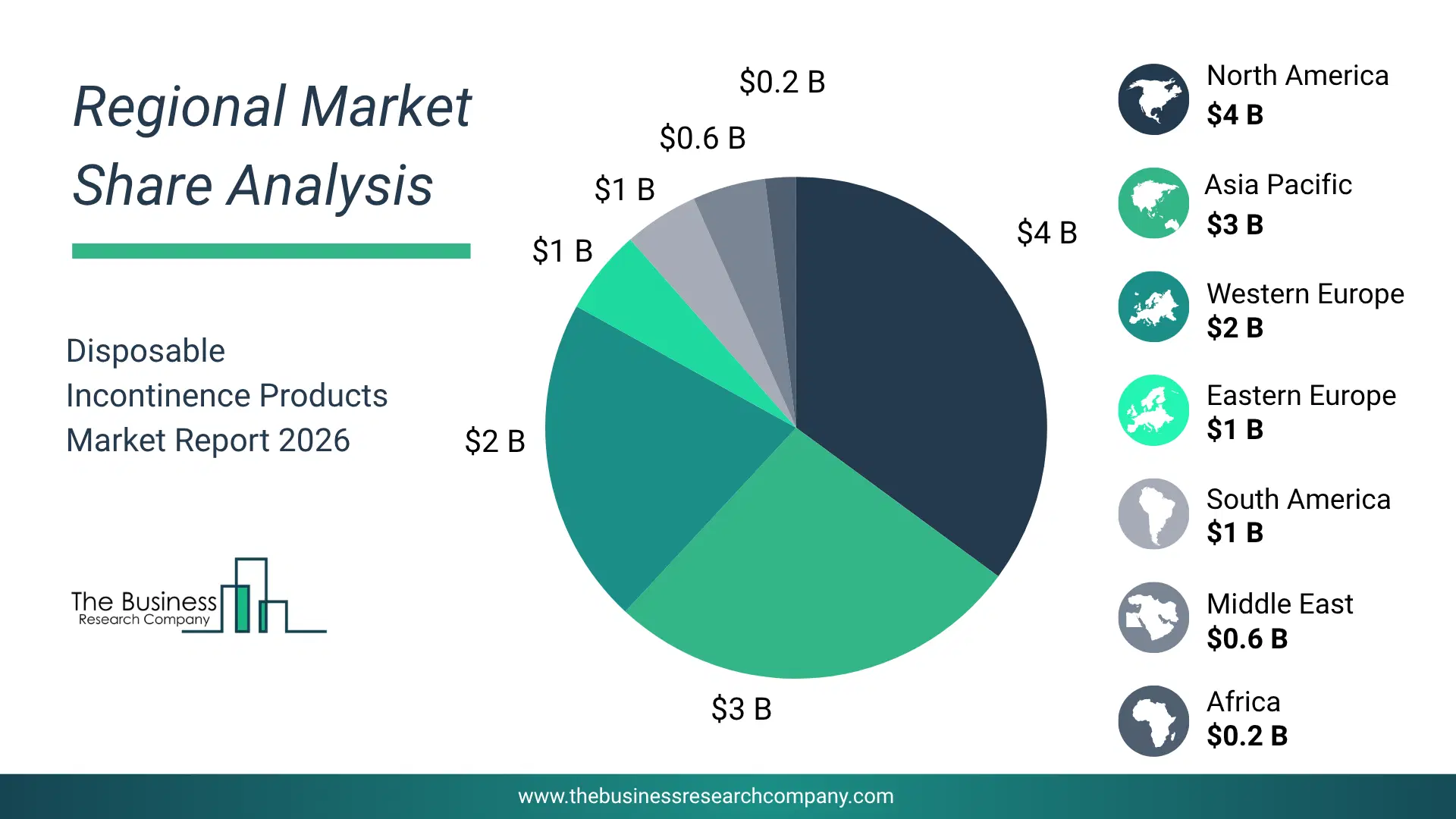
Regional Outlook
Asia-Pacific was the largest region in the disposable incontinence products market in 2025. Asia-Pacific is expected to be the fastest-growing region in the global disposable incontinence products market during the forecast period. The regions covered in this market report are Asia-Pacific, South East Asia, Western Europe, Eastern Europe, North America, South America, Middle East, Africa. The countries covered in this market report are Australia, Brazil, China, France, Germany, India, Indonesia, Japan, Taiwan, Russia, South Korea, UK, USA, Canada, Italy, Spain.What Defines the Disposable Incontinence Products Market?
The disposable incontinence products markets consists of sales of booster pads, adult briefs, male guards, bladder control pads, and underpads external or condom catheter. Values in this market are ‘factory gate’ values, that is the value of goods sold by the manufacturers or creators of the goods, whether to other entities (including downstream manufacturers, wholesalers, distributors and retailers) or directly to end customers. The value of goods in this market includes related services sold by the creators of the goods.How is Market Value Defined and Measured?
The market value is defined as the revenues that enterprises gain from the sale of goods and/or services within the specified market and geography through sales, grants, or donations in terms of the currency (in USD unless otherwise specified). The revenues for a specified geography are consumption values that are revenues generated by organizations in the specified geography within the market, irrespective of where they are produced. It does not include revenues from resales along the supply chain, either further along the supply chain or as part of other products.
This chart presents market attractiveness based on a quantitative evaluation of growth, competition, strategic alignment, and risk, offering a clear view of opportunity areas for decision-making. This chart is for illustrative purposes; the full report contains the complete analysis.

This chart highlights the Total Addressable Market (TAM) by estimating the maximum revenue opportunity using an assumption-driven approach, supporting strategic planning and opportunity sizing across markets. The chart is illustrative; the full report provides a more comprehensive analysis.
What Key Data and Analysis Are Included in the Disposable Incontinence Products Market Report 2026?
The disposable incontinence products market research report is one of a series of new reports from The Business Research Company that provides market statistics, including Market Report 2026?global market size, regional shares, competitors with the market share, detailed market segments, market trends and opportunities, and any further data you may need to thrive in the disposable incontinence products Market Report 2026? The market research report delivers a complete perspective of everything you need, with an in-depth analysis of the current and future state of the Market Report 2026?Disposable Incontinence Products Market Report Forecast Analysis
| Report Attribute | Details |
|---|---|
| Market Size Value In 2026 | $12.48 billion |
| Revenue Forecast In 2030 | $16.81 billion |
| Growth Rate | CAGR of 7.3% from 2026 to 2030 |
| Base Year For Estimation | 2025 |
| Actual Estimates/Historical Data | 2020-2025 |
| Forecast Period | 2026 - 2030 - 2035 |
| Market Representation | Revenue in USD Billion and CAGR from 2026 to 2030 |
| Segments Covered | Product Type, Absorbency Level, Incontinence Type, Material Type, End User |
| Regional Scope | Asia-Pacific, Western Europe, Eastern Europe, North America, South America, Middle East, Africa |
| Country Scope | The countries covered in the report are Australia, Brazil, China, France, Germany, India, Indonesia, Japan, Taiwan, Russia, South Korea, UK, USA, Canada, Italy, Spain. |
| Key Companies Profiled | Kimberly Clark Corporation, Essity AB, Unicharm Corporation, Kao Corporation, Ontex Group, First Quality Enterprises, Paul Hartmann AG, Abena Group, Drylock Technologies, Attindas Hygiene Partners, TZMO SA, Hengan International Group, Daio Paper Corporation, Chiaus Holdings, Nobel Hygiene, Principle Business Enterprises, Medline Industries, Edgewell Personal Care, Pigeon Corporation, Nitto Industries, DSG International |
| Customization Scope | Request for Customization |
| Pricing And Purchase Options | Explore Purchase Options |