

Disruptive Behavior Disorder Treatment Market Report 2026
Global Outlook – By Type (Oppositional Defiant Disorder, Conduct Disorder, Intermittent Explosive Disorder), By Treatment (Medication Management, Comprehensive Evaluation, Family Therapy, Parenting Modification, Group Therapy, Individual Therapy, Social And Emotional Skills Training), By Age Group (Children 4 To 12 Years, Adolescents 13 To 17 Years, Young Adults 18 To 24 Years, Adults 25 Years And Above), By End User (Hospitals, Outpatient Clinics, Residential Treatment Facilities, Home Care Settings, Specialized Disruptive Behavior Disorder Treatment Centers) – Market Size, Trends, Strategies, and Forecast to 2030
Disruptive Behavior Disorder Treatment Market Overview
• Disruptive Behavior Disorder Treatment market size has reached to $1.62 billion in 2025 • Expected to grow to $2.15 billion in 2030 at a compound annual growth rate (CAGR) of 5.8% • Growth Driver: Increasing Prevalence Of Mental Illness Fueling The Growth Of The Market Due To Rising Chronic Stress And Growing Demand For Early Behavioral Intervention • North America was the largest region in 2025.What Is Covered Under Disruptive Behavior Disorder Treatment Market?
Disruptive behavior disorder (DBD) treatment refers to a range of therapeutic approaches used to manage and reduce the symptoms of disorders such as Oppositional Defiant Disorder (ODD) and Conduct Disorder (CD). The main goal of disruptive behavior disorder (DBD) treatments is to improve a child’s behavior, emotional regulation, and social functioning. The main types of disruptive behavior disorder treatment are oppositional defiant disorder, conduct disorder, and intermittent explosive disorder. Oppositional defiant disorder is a behavioral condition in which children or adolescents consistently exhibit defiant, hostile, and uncooperative behavior toward authority figures. The treatment approaches include medication management, comprehensive evaluation, family therapy, parenting modification, group therapy, individual therapy, and social and emotional skills training, targeting affected age groups such as children 4 to 12 years, adolescents 13 to 17 years, young adults 18 to 24 years, and adults 25 years and above. The key end users include hospitals, outpatient clinics, residential treatment facilities, home care settings, and specialized disruptive behavior disorder treatment centers.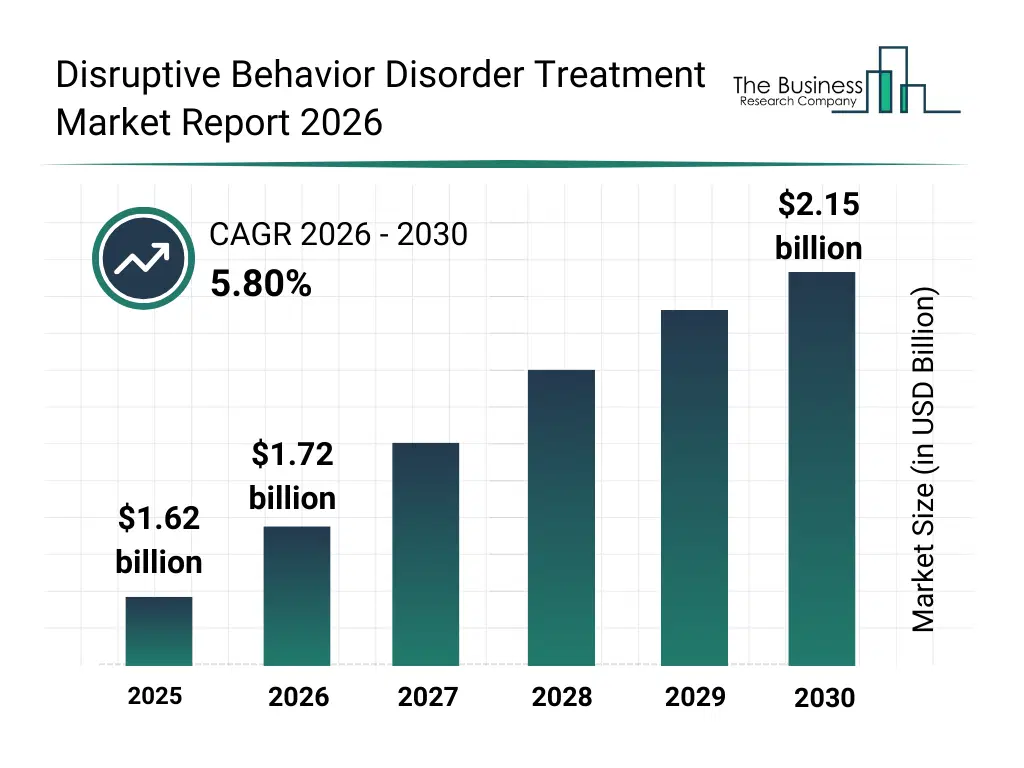
What Is The Disruptive Behavior Disorder Treatment Market Size and Share 2026?
The disruptive behavior disorder treatment market size has grown strongly in recent years. It will grow from $1.62 billion in 2025 to $1.72 billion in 2026 at a compound annual growth rate (CAGR) of 6.1%. The growth in the historic period can be attributed to increasing diagnosis of childhood behavioral disorders, school-based mental health referrals, reliance on psychotherapy approaches, specialist-driven treatment models, limited pharmacological options.What Is The Disruptive Behavior Disorder Treatment Market Growth Forecast?
The disruptive behavior disorder treatment market size is expected to see strong growth in the next few years. It will grow to $2.15 billion in 2030 at a compound annual growth rate (CAGR) of 5.8%. The growth in the forecast period can be attributed to mental health awareness growth, expansion of teletherapy services, government mental health initiatives, integration of digital behavioral platforms, demand for personalized treatment plans. Major trends in the forecast period include growing demand for early behavioral intervention, increased use of family-centered therapy programs, expansion of multidisciplinary treatment models, rising adoption of digital mental health tools, focus on long-term behavioral outcome monitoring.
Global Disruptive Behavior Disorder Treatment Market Segmentation
1) By Type: Oppositional Defiant Disorder, Conduct Disorder, Intermittent Explosive Disorder 2) By Treatment: Medication Management, Comprehensive Evaluation, Family Therapy, Parenting Modification, Group Therapy, Individual Therapy, Social And Emotional Skills Training 3) By Age Group: Children 4 To 12 Years, Adolescents 13 To 17 Years, Young Adults 18 To 24 Years, Adults 25 Years And Above 4) By End User: Hospitals, Outpatient Clinics, Residential Treatment Facilities, Home Care Settings, Specialized Disruptive Behavior Disorder Treatment Centers Subsegments: 1) By Oppositional Defiant Disorder: Mild Oppositional Defiant Disorder, Moderate Oppositional Defiant Disorder, Severe Oppositional Defiant Disorder 2) By Conduct Disorder: Childhood-Onset Conduct Disorder, Adolescent-Onset Conduct Disorder, Unspecified Onset Conduct Disorder 3) By Intermittent Explosive Disorder: Frequent Low-Intensity Explosive Episodes, Infrequent High-Intensity Explosive Episodes, Mixed Severity Explosive EpisodesWhat Are The Drivers Of The Disruptive Behavior Disorder Treatment Market?
The increasing prevalence of mental illness is expected to propel the growth of the disruptive behavior disorder treatment market going forward. Mental illness refers to a wide range of mental health conditions that affect a person’s mood, thinking, behavior, and overall functioning. The prevalence of mental illness is increasing due to rising levels of chronic stress, as prolonged stress disrupts brain function and triggers or worsens mental health disorders. Disruptive behavior disorder treatment aids in mental illness management by addressing persistent behavioral issues in children and adolescents, making it essential for early intervention. It enhances emotional regulation and social functioning through targeted therapies, improving overall mental health outcomes. For instance, in May 2024, according to the American Psychiatric Association, a US-based organization, in 2024, 43% of U.S. adults reported feeling more anxious than they did the year before, marking an increase from 37% in 2023 and 32% in 2022, indicating a growing trend in anxiety levels. Therefore, the increasing prevalence of mental illness is driving the growth of the disruptive behavior disorder treatment industry. The rising healthcare expenditure is expected to propel the growth of the disruptive behavior disorder treatment market going forward. Healthcare expenditure is the total amount of money spent on medical services, treatments, facilities, research, and public health initiatives to maintain or improve health outcomes. The increasing healthcare expenditure is due to the aging population, which requires more medical care, treatments, and long-term healthcare services. Increased healthcare expenditure enhances disruptive behavior disorder treatment by enabling greater access to specialized therapies, medications, and early intervention services. It supports developing advanced treatment programs, improving mental health outcomes and overall care quality. For instance, in December 2024, according to the Centers for Medicare & Medicaid Services (CMS), a US-based federal agency, the national health expenditures (NHE) grew by 7.5% to $4.9 trillion in 2023, accounting for 17.6% of gross domestic product (GDP). Therefore, the rising healthcare expenditure is driving the growth of the disruptive behavior disorder treatment industry. The rise in telehealth services is expected to propel the growth of the disruptive behavior disorder treatment market going forward. Telehealth services are healthcare services provided remotely using phones, video calls, or apps, allowing patients to consult doctors without visiting a clinic or hospital. The rising adoption of telehealth services is driven by their convenience in accessing healthcare from home, especially for managing chronic conditions. Telehealth services enhance disruptive behavior disorder treatment by enabling remote access to therapy and counseling, making care more accessible for patients in underserved or rural areas. They reduce barriers to treatment by offering flexible scheduling and real-time support, improving treatment adherence and mental health outcomes. For instance, in April 2023, according to FAIR Health Inc., a US-based non-profit organization, in 2023, national telehealth use increased by 7.3%, rising from 5.5% of medical claim lines in December 2022 to 5.9% in January 2023. Therefore, the rise in telehealth services is driving the growth of the disruptive behavior disorder treatment industry.Key Players In The Global Disruptive Behavior Disorder Treatment Market
Major companies operating in the disruptive behavior disorder treatment market are Sheppard Pratt Health System, Rogers Behavioral Health, The Menninger Clinic, Devereux Advanced Behavioral Health, Youth Villages, Universal Health Services Behavioral Health Division, Acadia Healthcare, Newport Healthcare, The Guidance Center, Centerstone, Behavioral Health Network, Cumberland Hospital for Children and Adolescents, ViewPoint Health, Merit Behavioral Care, Center for Discovery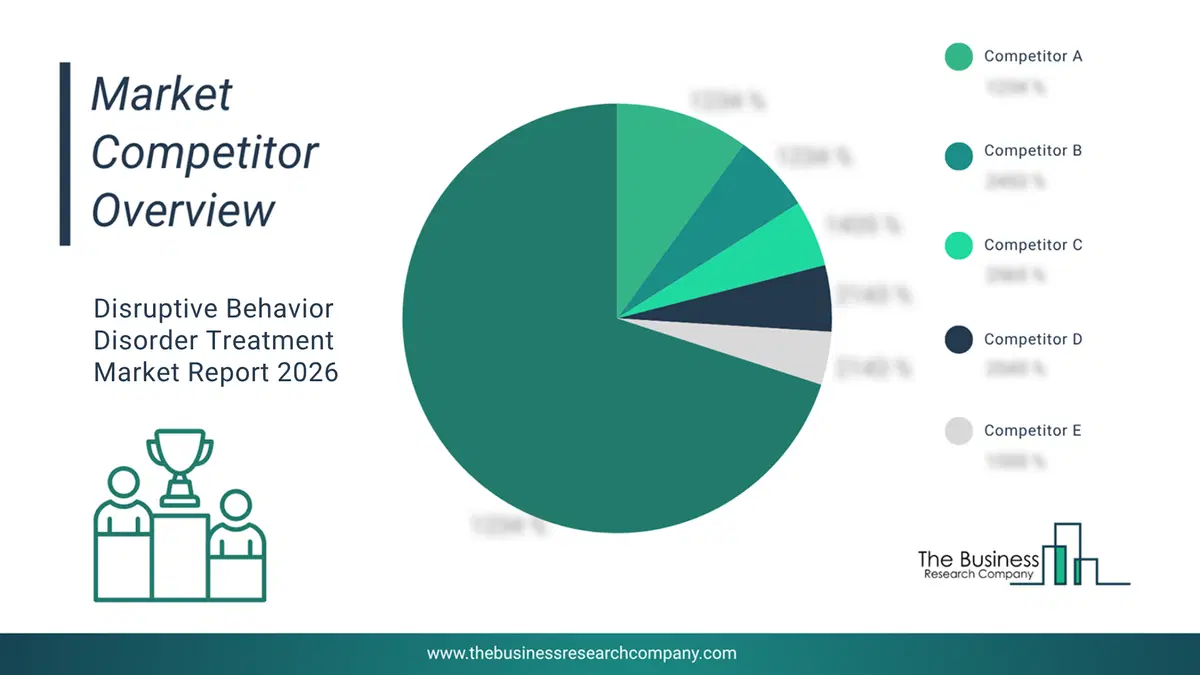
This chart is for illustrative purposes; the full report includes a detailed competitor analysis and comprehensive overview of the top 10 companies in the market.
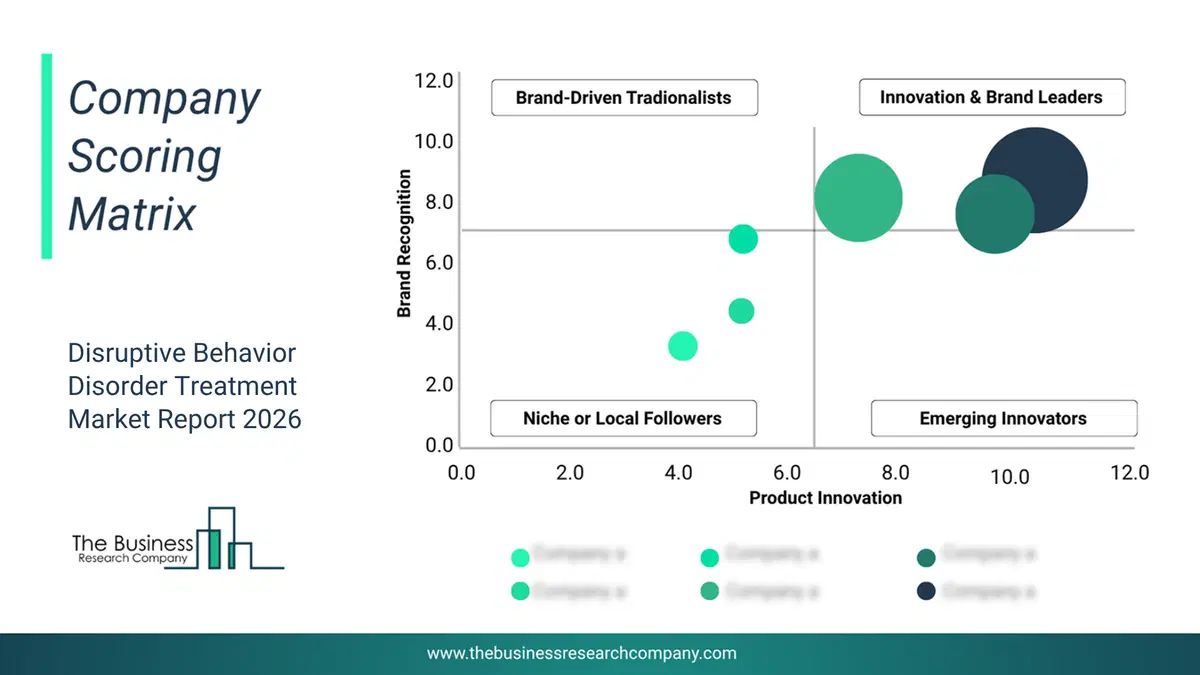
This chart maps companies by product innovation and brand strength, with bubble size indicating relative revenue, helping identify market leaders, challengers, and niche players. This is an illustrative chart; the full report provides a complete and accurate competitive analysis.
Regional Insights
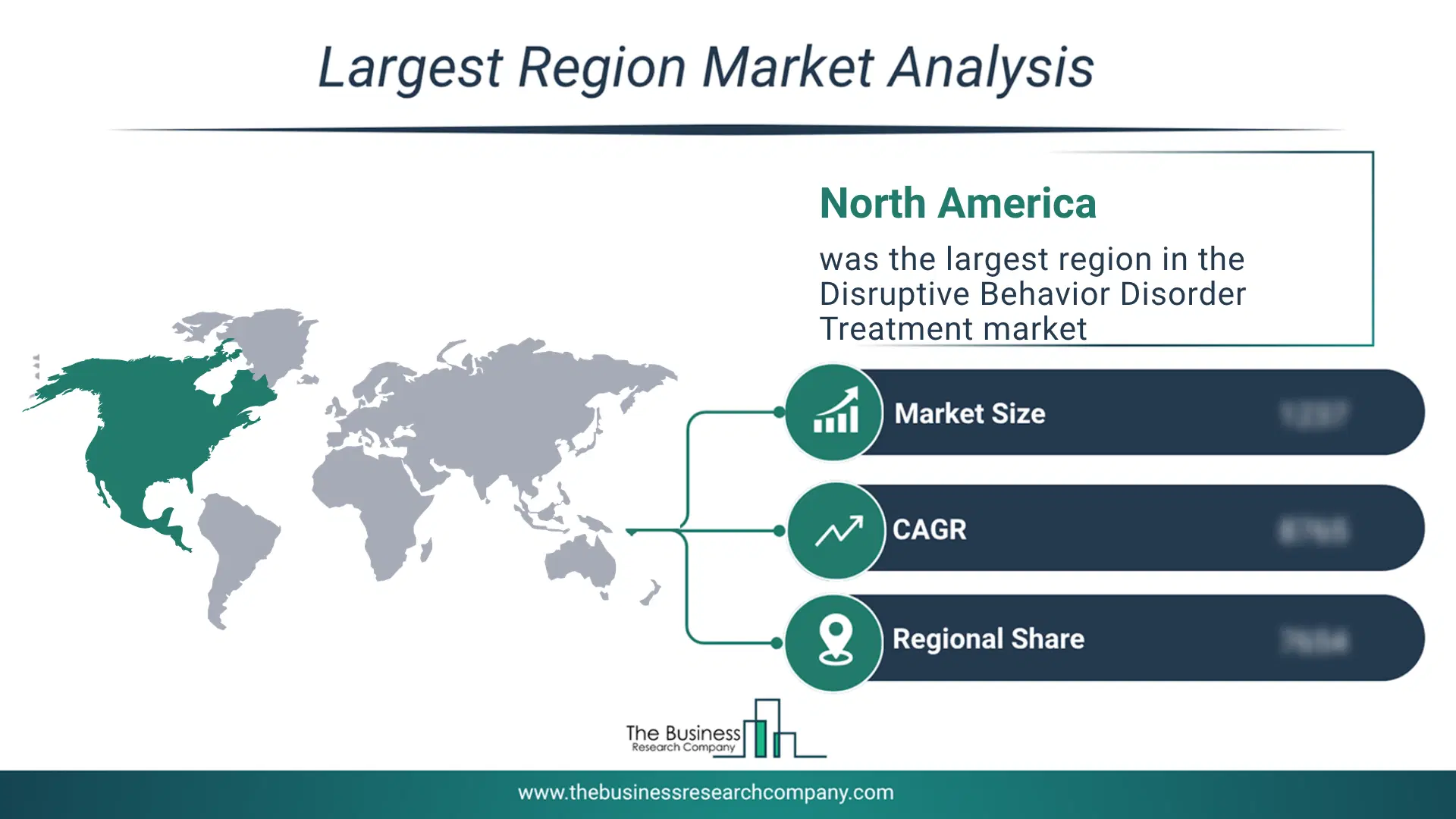
North America was the largest region in the disruptive behavior disorder treatment market in 2025. The regions covered in this market report are Asia-Pacific, South East Asia, Western Europe, Eastern Europe, North America, South America, Middle East, Africa. The countries covered in this market report are Australia, Brazil, China, France, Germany, India, Indonesia, Japan, Taiwan, Russia, South Korea, UK, USA, Canada, Italy, Spain.What Defines the Disruptive Behavior Disorder Treatment Market?
The disruptive behavior disorder treatment market consists of revenues earned by entities by providing services such as behavioral therapy, parent management training, counseling, social skills development programs, psychiatric evaluations, medication management, and support for families and schools. The market value includes the value of related goods sold by the service provider or included within the service offering. The disruptive behavior disorders treatment market also includes sales of therapeutic tools, digital mental health apps, assessment kits, and educational materials designed to support diagnosis and treatment. Values in this market are ‘factory gate’ values, that is the value of goods sold by the manufacturers or creators of the goods, whether to other entities (including downstream manufacturers, wholesalers, distributors and retailers) or directly to end customers. The value of goods in this market includes related services sold by the creators of the goods.How is Market Value Defined and Measured?
The market value is defined as the revenues that enterprises gain from the sale of goods and/or services within the specified market and geography through sales, grants, or donations in terms of the currency (in USD unless otherwise specified). The revenues for a specified geography are consumption values that are revenues generated by organizations in the specified geography within the market, irrespective of where they are produced. It does not include revenues from resales along the supply chain, either further along the supply chain or as part of other products.
This chart presents market attractiveness based on a quantitative evaluation of growth, competition, strategic alignment, and risk, offering a clear view of opportunity areas for decision-making. This chart is for illustrative purposes; the full report contains the complete analysis.

This chart highlights the Total Addressable Market (TAM) by estimating the maximum revenue opportunity using an assumption-driven approach, supporting strategic planning and opportunity sizing across markets. The chart is illustrative; the full report provides a more comprehensive analysis.
What Key Data and Analysis Are Included in the Disruptive Behavior Disorder Treatment Market Report 2026?
The disruptive behavior disorder treatment market research report is one of a series of new reports from The Business Research Company that provides market statistics, including industry global market size, regional shares, competitors with the market share, detailed market segments, market trends and opportunities, and any further data you may need to thrive in the disruptive behavior disorder treatment industry. The market research report delivers a complete perspective of everything you need, with an in-depth analysis of the current and future state of the industry.Disruptive Behavior Disorder Treatment Market Report Forecast Analysis
| Report Attribute | Details |
|---|---|
| Market Size Value In 2026 | $1.72 billion |
| Revenue Forecast In 2030 | $2.15 billion |
| Growth Rate | CAGR of 6.1% from 2026 to 2030 |
| Base Year For Estimation | 2025 |
| Actual Estimates/Historical Data | 2020-2025 |
| Forecast Period | 2026 - 2030 |
| Market Representation | Revenue in USD Billion and CAGR from 2026 to 2030 |
| Segments Covered | Type, Treatment, Age Group, End User |
| Regional Scope | Asia-Pacific, Western Europe, Eastern Europe, North America, South America, Middle East, Africa |
| Country Scope | The countries covered in the report are Australia, Brazil, China, France, Germany, India, Indonesia, Japan, Taiwan, Russia, South Korea, UK, USA, Canada, Italy, Spain. |
| Key Companies Profiled | Sheppard Pratt Health System, Rogers Behavioral Health, The Menninger Clinic, Devereux Advanced Behavioral Health, Youth Villages, Universal Health Services Behavioral Health Division, Acadia Healthcare, Newport Healthcare, The Guidance Center, Centerstone, Behavioral Health Network, Cumberland Hospital for Children and Adolescents, ViewPoint Health, Merit Behavioral Care, Center for Discovery |
| Customization Scope | Request for Customization |
| Pricing And Purchase Options | Explore Purchase Options |