
Distributed Fiber Optic Sensor Market Report 2026
Global Outlook – By Type ( Single-Mode, Multimode ), By Technology ( Brillouin Scattering, Raman Scattering, Rayleigh Scattering ), By Application ( Strain Sensing, Temperature Sensing, Acoustic/Vibration Sensing, Pressure Sensing, Other Applications), By End User ( Oil And Gas, Power And Utility, Safety And Security, Industrial, Civil Engineering ) – Market Size, Trends, Strategies, and Forecast to 2030
Distributed Fiber Optic Sensor Market Overview
• Distributed Fiber Optic Sensor market size has reached to $1.32 billion in 2025 • Expected to grow to $2.28 billion in 2030 at a compound annual growth rate (CAGR) of 11.5% • Growth Driver: Growing Telecommunications Industry Propel The Growth Of The Distributed Fiber Optic Sensors Market • Market Trend: Launch Of High-Definition Fiber Optic Temperature Measurement System • North America was the largest region in 2025 and Asia-Pacific is the fastest growing region.What Is Covered Under Distributed Fiber Optic Sensor Market?
The distributed fiber optic sensors are generally used in high voltage electricity regions and are designed to withstand high temperatures. These are deployed to the high electromagnetic zone where electronic sensors cannot operate to strain, temperature, and acoustic perturbations along with the performance of optical fiber networks. The main types of distributed fiber optic sensors are single-mode and multimode. Single-mode and multimode have to core of 9 micrometers and 50-micrometer diameters respectively. The technology segments consist of Brillouin scattering, Raman scattering, and Rayleigh scattering. These technologies are used to detect the strain, temperature, and other effects. The market is segmented by the application that includes strain sensing, temperature sensing, acoustic/vibration sensing, pressure sensing, and others that are used by end-user such as oil and gas, power and utility, safety and security, industrial and civil engineering.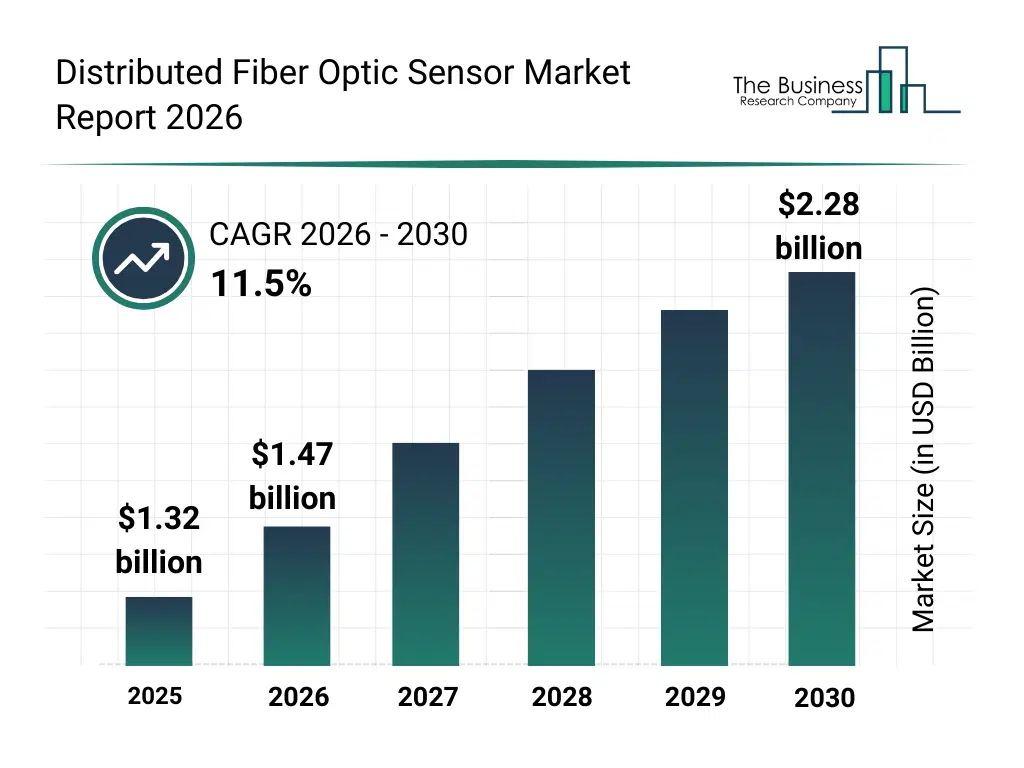
What Is The Distributed Fiber Optic Sensor Market Size 2026 And Growth Rate?
The distributed fiber optic sensor market size has grown rapidly in recent years. It will grow from $1.32 billion in 2025 to $1.47 billion in 2026 at a compound annual growth rate (CAGR) of 12.0%. The growth in the historic period can be attributed to rise in deployment in high voltage electricity regions, increasing adoption in oil & gas and power sectors, implementation in industrial safety monitoring, integration in civil engineering projects, expansion in temperature and acoustic sensing applications.What Is The Distributed Fiber Optic Sensor Market Growth Forecast?
The distributed fiber optic sensor market size is expected to see rapid growth in the next few years. It will grow to $2.28 billion in 2030 at a compound annual growth rate (CAGR) of 11.5%. The growth in the forecast period can be attributed to increase in IoT-enabled monitoring, rising adoption of smart grid compatible distributed fiber optic sensors, expansion in real-time acoustic and strain detection, growth in automated temperature sensing, increase in predictive maintenance and safety monitoring. Major trends in the forecast period include integration of AI-enabled fiber sensing, deployment of IoT-connected optical networks, adoption of real-time distributed monitoring, implementation of smart grid compatible fiber sensors, expansion of automated strain and temperature detection.
Global Distributed Fiber Optic Sensor Market Segmentation
1) By Type: Single-Mode, Multimode 2) By Technology: Brillouin Scattering, Raman Scattering, Rayleigh Scattering 3) By Application: Strain Sensing, Temperature Sensing, Acoustic/Vibration Sensing, Pressure Sensing, Other Applications 4) By End User: Oil And Gas, Power And Utility, Safety And Security, Industrial, Civil Engineering Subsegments: 1) By Single-Mode: Rayleigh Scattering Sensors, Brillouin Scattering Sensors, Raman Scattering Sensors 2) By Multimode: Modal Dispersion Sensors, Time-Domain Reflectometry (TDR) Sensors, Frequency-Domain Reflectometry (FDR) SensorsWhat Is The Driver Of The Distributed Fiber Optic Sensor Market?
The growing telecommunications industry is expected to drive the growth of the distributed fiber optic sensors going forward. The telecommunications industry is growing due to increased demand for connectivity, the rollout of 5G networks, the rise of remote work and telecommuting, IoT expansion, cloud computing adoption, global digital transformation, government investments, competition, and innovations in technology. Distributed fiber optic sensors are integral in telecom for real-time cable monitoring, fault detection, security, and data optimization. They enhance network performance and data integrity, ensuring reliable communication services. For instance, in December 2023, according to the report published by the Office of Communications (Ofcom), a UK-based government office, as of September 2023, the UK had over 18,500 5G deployments across approximately 81,000 sites, an increase from roughly 12,000 5G deployments in 2022. Therefore, the growing telecommunications sector will continue to drive the growth of the distributed fiber optic sensors in the forecast period.Key Players In The Global Distributed Fiber Optic Sensor Market
Major companies operating in the distributed fiber optic sensor market are AFL Pvt. Ltd., AP Sensing GmbH, Baker Hughes Inc., Bandweaver Ltd., Brugg Kable AG, Fotech Solutions Ltd., Future Fiber Technologies Ltd., Halliburton Co., LIOS Technology GmbH, Luna Innovations Incorporated, Omnisens SA, Qinetiq Group PLC, Schlumberger Limited, Tendeka Inc., Weatherford International plc, Yokogawa Electric Corporation, DarkPulse Inc., Sensornet Ltd., Silixa Ltd., OptaSense Inc., Ziebel AS, OZ Optics, FBGS Technologies GmbH, Technobis Fibre Technologies BV, Smart Fibres Ltd., FISO Technologies Inc., FiberSensing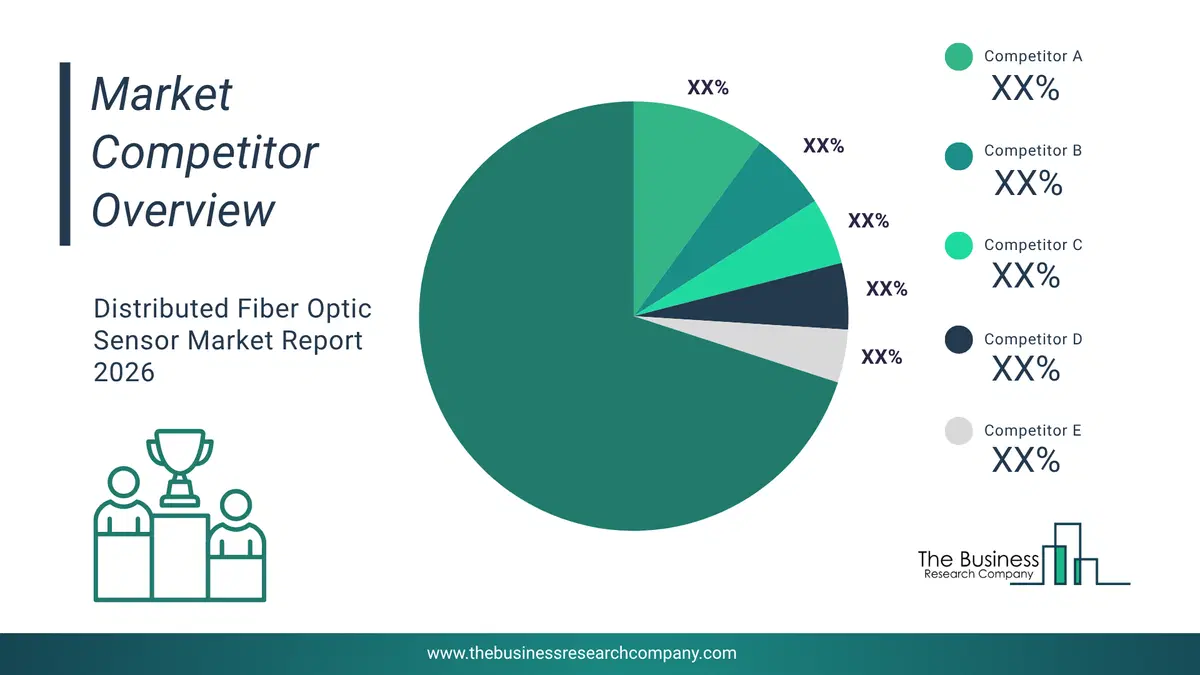
This chart is for illustrative purposes; the full report includes a detailed competitor analysis and comprehensive overview of the top 10 companies in the market.
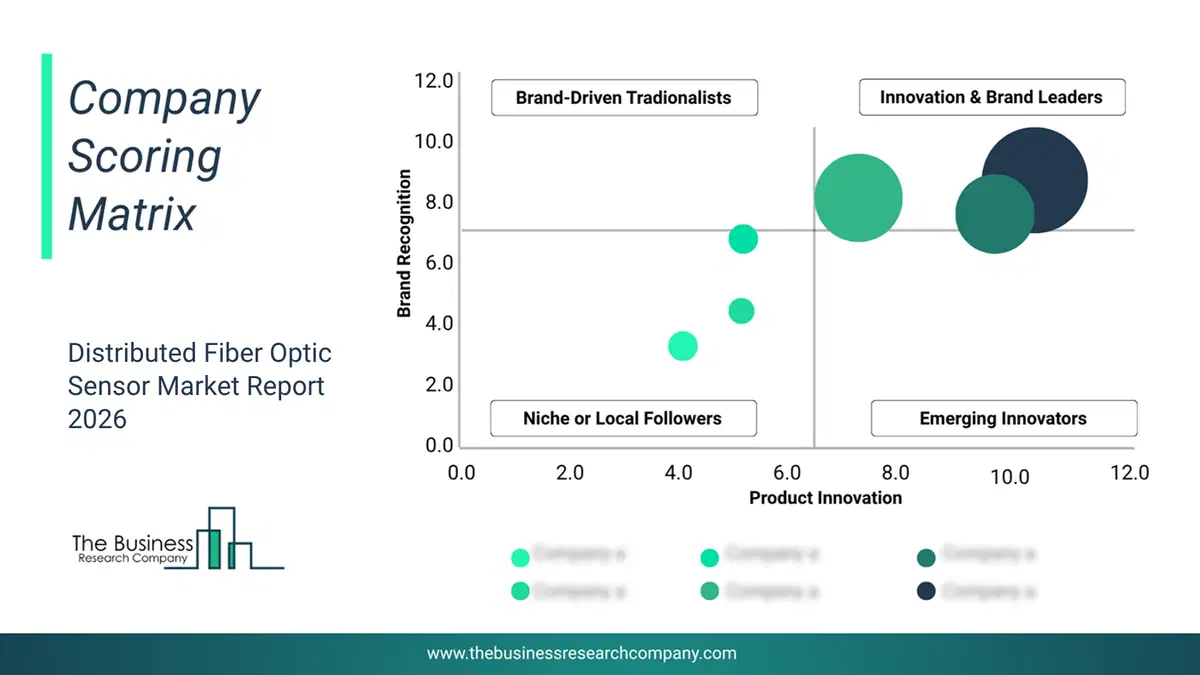
This chart maps companies by product innovation and brand strength, with bubble size indicating relative revenue, helping identify market leaders, challengers, and niche players. This is an illustrative chart; the full report provides a complete and accurate competitive analysis.
Global Distributed Fiber Optic Sensor Market Trends and Insights
Major companies operating in the Distributed Fiber Optic Sensor Market are focusing on technological advancements, such as integrated real-time asset monitoring and analytics solutions, to gain a competitive advantage. These solutions leverage distributed temperature sensing (DTS), simultaneous temperature and strain sensing (DTSS), and distributed acoustic sensing (DAS) technologies to provide continuous, precise monitoring of critical infrastructure, including pipelines, power transmission lines, and data center interconnects. For instance, in July 2024, Viavi Solutions, a U.S.-based network and fiber optic solutions company, introduced NITRO® Fiber Sensing, which integrates real-time monitoring with advanced analytics. This product features remote fiber test heads that detect temperature, strain, and acoustic vibrations along fiber optic cables, enabling proactive maintenance and swift threat detection. It delivers precise location alerts for external interferences like digging or vehicle movement, thus enhancing infrastructure resilience and reducing operational downtime. Such technological innovations drive efficiencies and security improvements within the Distributed Fiber Optic Sensor Market.What Are Latest Mergers And Acquisitions In The Distributed Fiber Optic Sensor Market?
In December 2023, Luna Innovations Incorporated, a US-based provider of advanced fiber optic-based technology, acquired Silixa Ltd. for up to $38 million. With this acquisition, Luna Innovations aimed to strengthen its position in the fiber optic sensing market by enhancing its technological capabilities in distributed acoustic sensing (DAS), distributed temperature sensing (DTS), and distributed strain sensing (DSS). Silixa Ltd. is a UK-based provider of distributed fiber optic sensing solutions, offering end-to-end sensing technologies focused on temperature, strain, and acoustic measurements for applications in energy, natural environments, mining, and defense.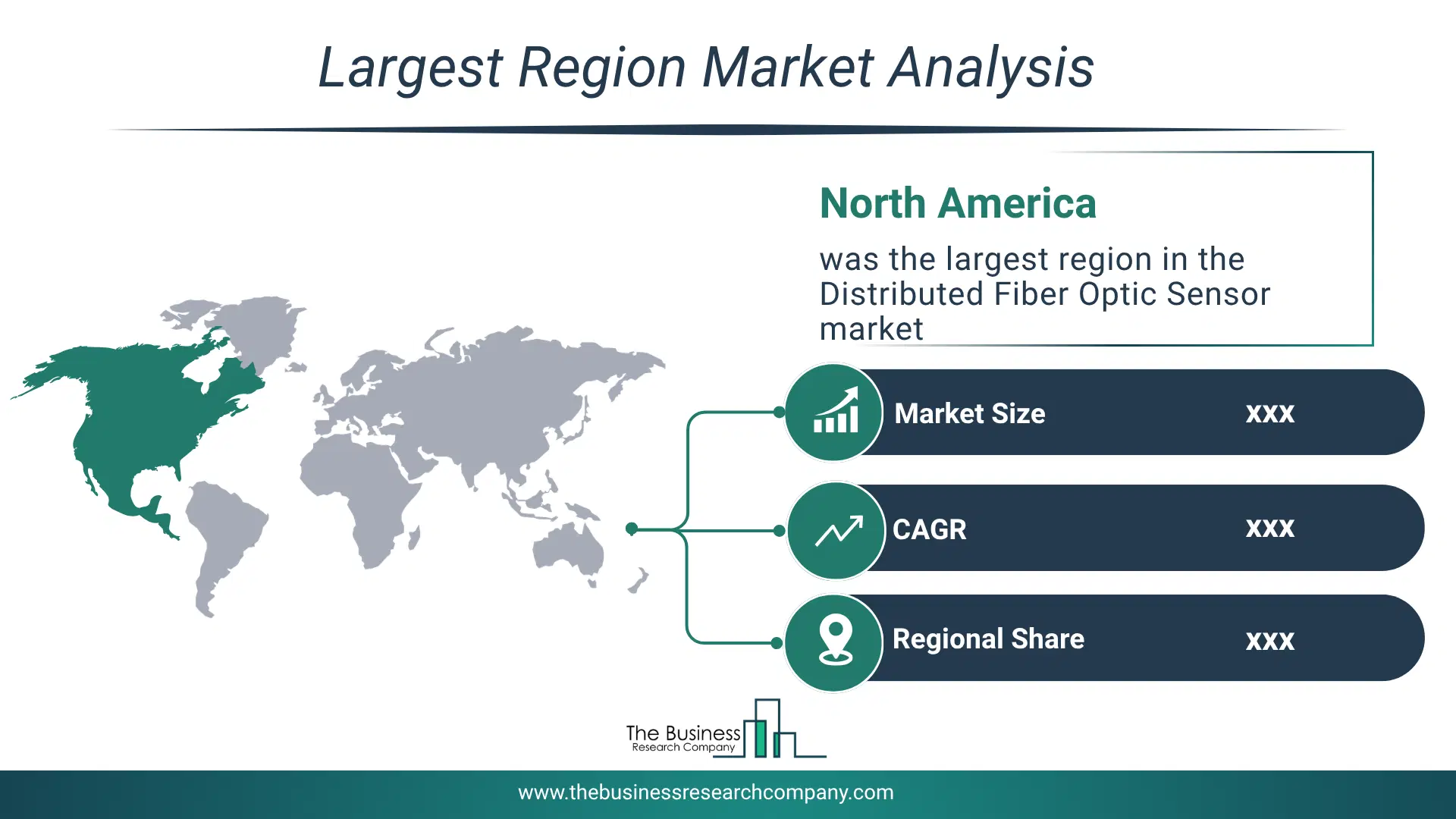
Regional Outlook
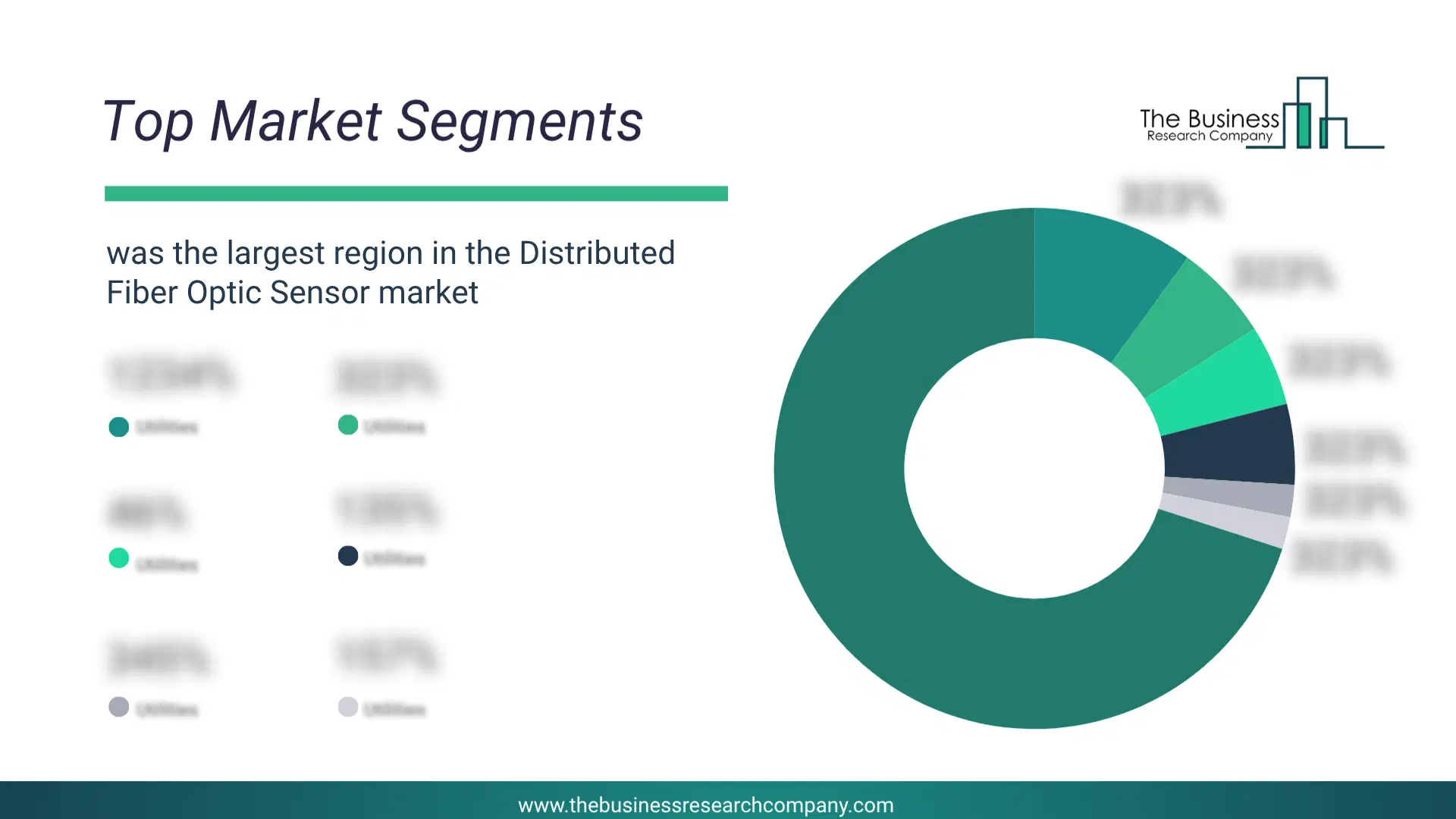
North America was the largest region in the distributed fiber optic sensor market in 2025. Asia-Pacific is expected to be the fastest-growing region in the forecast period. The regions covered in this market report are Asia-Pacific, South East Asia, Western Europe, Eastern Europe, North America, South America, Middle East, Africa. The countries covered in this market report are Australia, Brazil, China, France, Germany, India, Indonesia, Japan, Taiwan, Russia, South Korea, UK, USA, Canada, Italy, Spain.What Defines the Distributed Fiber Optic Sensor Market?
The distributed fiber optic sensors market consists of revenues earned by entities by providing distributed fiber optic sensors solutions to provide intelligently monitoring of a wide range of variables such as temperature, strain, and acoustic perturbations which enables continuous, real-time measurements along the entire length of a fibre optic cable. The market value includes the value of related goods sold by the service provider or included within the service offering. The distributed fiber optic sensors market also includes sales of rayleigh, brillouin, and raman scattering-based distributed fiber optic sensors. Values in this market are ‘factory gate’ values, that is the value of goods sold by the manufacturers or creators of the goods, whether to other entities (including downstream manufacturers, wholesalers, distributors and retailers) or directly to end customers. The value of goods in this market includes related services sold by the creators of the goods.How is Market Value Defined and Measured?
The market value is defined as the revenues that enterprises gain from the sale of goods and/or services within the specified market and geography through sales, grants, or donations in terms of the currency (in USD unless otherwise specified). The revenues for a specified geography are consumption values that are revenues generated by organizations in the specified geography within the market, irrespective of where they are produced. It does not include revenues from resales along the supply chain, either further along the supply chain or as part of other products.
This chart presents market attractiveness based on a quantitative evaluation of growth, competition, strategic alignment, and risk, offering a clear view of opportunity areas for decision-making. This chart is for illustrative purposes; the full report contains the complete analysis.

This chart highlights the Total Addressable Market (TAM) by estimating the maximum revenue opportunity using an assumption-driven approach, supporting strategic planning and opportunity sizing across markets. The chart is illustrative; the full report provides a more comprehensive analysis.
What Key Data and Analysis Are Included in the Distributed Fiber Optic Sensor Market Report 2026?
The distributed fiber optic sensor market research report is one of a series of new reports from The Business Research Company that provides market statistics, including industry global market size, regional shares, competitors with the market share, detailed market segments, market trends and opportunities, and any further data you may need to thrive in the distributed fiber optic sensor industry. The market research report delivers a complete perspective of everything you need, with an in-depth analysis of the current and future state of the industry.Distributed Fiber Optic Sensor Market Report Forecast Analysis
| Report Attribute | Details |
|---|---|
| Market Size Value In 2026 | $1.47 billion |
| Revenue Forecast In 2030 | $2.28 billion |
| Growth Rate | CAGR of 11.5% from 2026 to 2030 |
| Base Year For Estimation | 2025 |
| Actual Estimates/Historical Data | 2020-2025 |
| Forecast Period | 2026 - 2030 |
| Market Representation | Revenue in USD Billion and CAGR from 2026 to 2030 |
| Segments Covered | Type, Technology, Application, End User |
| Regional Scope | Asia-Pacific, Western Europe, Eastern Europe, North America, South America, Middle East, Africa |
| Country Scope | The countries covered in the report are Australia, Brazil, China, France, Germany, India, Indonesia, Japan, Taiwan, Russia, South Korea, UK, USA, Canada, Italy, Spain. |
| Key Companies Profiled | AFL Pvt. Ltd., AP Sensing GmbH, Baker Hughes Inc., Bandweaver Ltd., Brugg Kable AG, Fotech Solutions Ltd., Future Fiber Technologies Ltd., Halliburton Co., LIOS Technology GmbH, Luna Innovations Incorporated, Omnisens SA, Qinetiq Group PLC, Schlumberger Limited, Tendeka Inc., Weatherford International plc, Yokogawa Electric Corporation, DarkPulse Inc., Sensornet Ltd., Silixa Ltd., OptaSense Inc., Ziebel AS, OZ Optics, FBGS Technologies GmbH, Technobis Fibre Technologies BV, Smart Fibres Ltd., FISO Technologies Inc., FiberSensing |
| Customization Scope | Request for Customization |
| Pricing And Purchase Options | Explore Purchase Options |