
Distribution Franchise Market Report 2026
Global Outlook – By Type (Product Distribution Franchise, Business Format Franchise), By Franchisee Type (Individual, Multi-Unit, Master Franchise), By Industry (Food And Beverage, Retail, Automotive, Health And Wellness, Education, Other Industries) – Market Size, Trends, Strategies, and Forecast to 2030
Distribution Franchise Market Overview
• Distribution Franchise market size has reached to $169.17 billion in 2025 • Expected to grow to $262.08 billion in 2030 at a compound annual growth rate (CAGR) of 9.1% • Growth Driver: Rising Popularity Of Franchising Due To Demand For Low-risk Business Models And Brand Support • Market Trend: Adoption Of Last-Mile Distribution Optimization To Boost Efficiency And Expand Market Reach • North America was the largest region in 2025 and Asia-Pacific is the fastest growing region.What Is Covered Under Distribution Franchise Market?
Distribution franchise refers to a business model in which a company (the franchisor) grants an individual or entity (the franchisee) the rights to distribute its products or services in a specific geographic area or market. The franchisee operates under the franchisor’s brand name and guidelines and often receives support such as training, marketing resources, and access to proprietary products or systems. The main types of distribution franchise are product distribution franchise and business format franchise. Product distribution franchise refers to a type of franchise model where the franchisee is primarily responsible for distributing the franchisor's products. The various franchisee type, including individual; multi-unit and master franchise and cater to several industry such as food and beverage; retail; automotive; health and wellness; education, and others.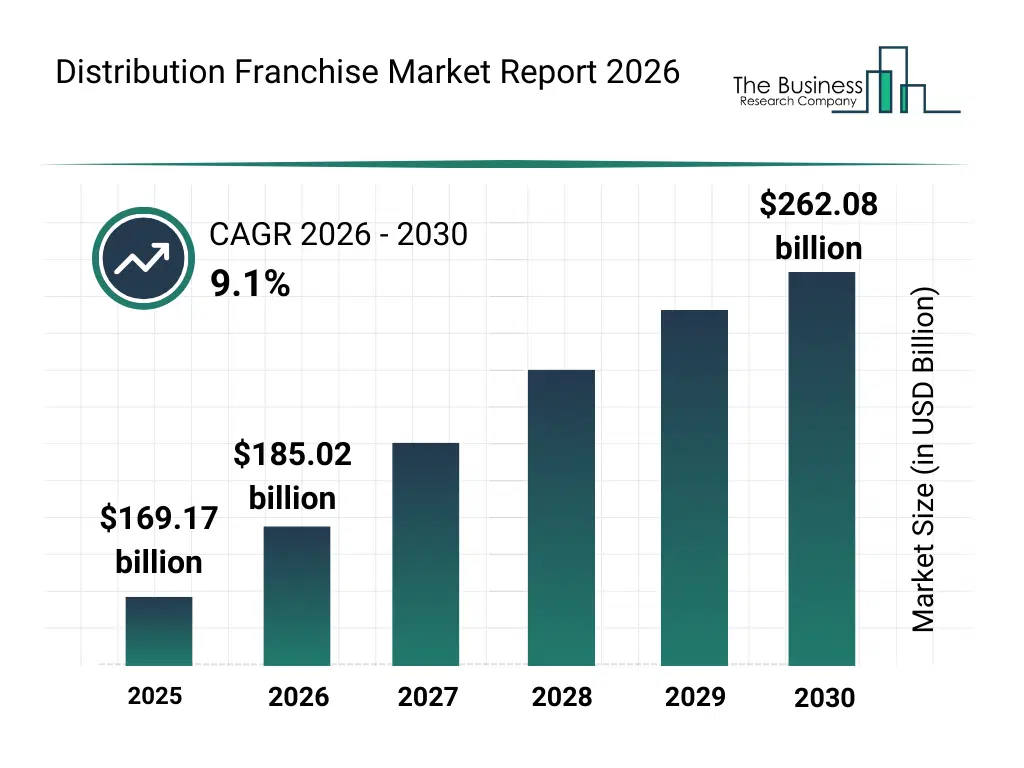
What Is The Distribution Franchise Market Size and Share 2026?
The distribution franchise market size has grown strongly in recent years. It will grow from $169.17 billion in 2025 to $185.02 billion in 2026 at a compound annual growth rate (CAGR) of 9.4%. The growth in the historic period can be attributed to growing consumer demand for branded products, expansion of retail infrastructure, adoption of franchising models by multinational companies, increasing small and medium enterprises participation, government initiatives supporting entrepreneurship.What Is The Distribution Franchise Market Growth Forecast?
The distribution franchise market size is expected to see strong growth in the next few years. It will grow to $262.08 billion in 2030 at a compound annual growth rate (CAGR) of 9.1%. The growth in the forecast period can be attributed to rising adoption of digital platforms for franchise management, integration of AI in supply chain operations, growth in electric mobility distribution, increasing demand for sustainable and climate-conscious products, expansion of health and wellness franchise segments. Major trends in the forecast period include expansion of regional distribution networks, franchisee training and support enhancement, multi-channel retail integration, adoption of technology-enabled supply chain solutions, customization of product offerings for local markets.
Global Distribution Franchise Market Segmentation
1) By Type: Product Distribution Franchise, Business Format Franchise 2) By Franchisee Type: Individual, Multi-Unit, Master Franchise 3) By Industry: Food And Beverage, Retail, Automotive, Health And Wellness, Education, Other Industries Subsegments: 1) By Product Distribution Franchise: Automotive Products, Vending Machines, Appliances And Electronics, Beverage Bottling, Cosmetics And Personal Care Products, Industrial And Construction Equipment, Packaged Food And Beverages 2) By Business Format Franchise: Fast Food And Quick-Service Restaurants, Retail Stores, Fitness Centers, Educational Services, Cleaning And Maintenance Services, Beauty And Wellness Clinics, Hospitality And LodgingWhat Is The Driver Of The Distribution Franchise Market?
The growing popularity of franchising is expected to propel the growth of the distribution franchise market going forward. Franchising refers to a business model in which a company (the franchisor) licenses its brand, products, and operational systems to independent operators (franchisees), enabling them to run their own businesses. The growing popularity of franchising can be due to its low-risk business model, which enables entrepreneurs to operate under an established brand with a proven system, minimizing the uncertainties of starting a business from the ground up. Distribution franchises help franchising by enabling efficient product delivery, expanding brand reach, ensuring consistency in service or product availability, and supporting local market penetration. For instance, in February 2024, according to the International Franchise Association, a US-based trade association for franchising, the overall number of franchise establishments in the US will increase by more than 15,000 units, or 1.9%, reaching 821,000 units in 2024. Therefore, the growing popularity of franchising is driving the growth of the distribution franchise industry.Key Players In The Global Distribution Franchise Market
Major companies operating in the distribution franchise market are Shell Plc, Volkswagen AG, Toyota Motor Corporation, TotalEnergies SE, BP Plc, Ford Motor Company, FedEx Corporation, PepsiCo Inc., 7-Eleven Inc., The Coca-Cola Company, McDonald’s Corporation, Marriott International Inc., Mahindra & Mahindra Limited, Burger King Corporation, Ace Hardware Corporation, Hilton Worldwide Holdings Inc., Yum! Brands Inc., Subway LLC, Domino’s Pizza Inc., Hero MotoCorp Limited.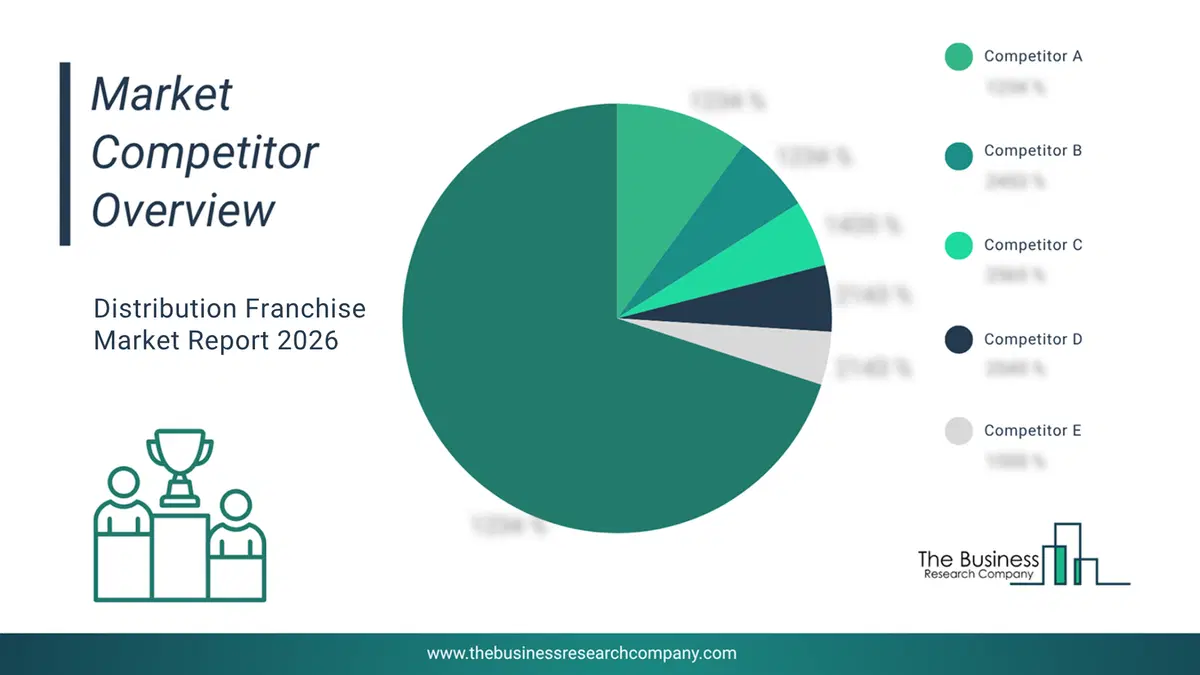
This chart is for illustrative purposes; the full report includes a detailed competitor analysis and comprehensive overview of the top 10 companies in the market.
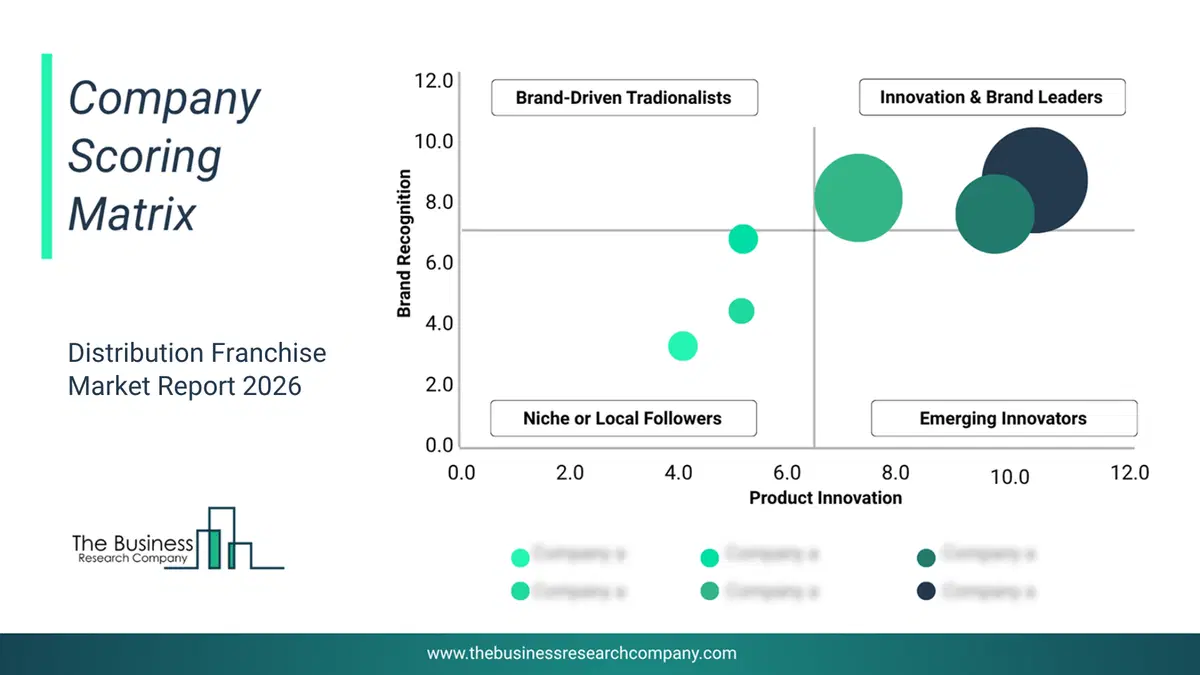
This chart maps companies by product innovation and brand strength, with bubble size indicating relative revenue, helping identify market leaders, challengers, and niche players. This is an illustrative chart; the full report provides a complete and accurate competitive analysis.
Global Distribution Franchise Market Trends and Insights
Major companies operating in the distribution franchise market are focusing on developing innovative approaches, such as last-mile distribution optimization, to enhance delivery efficiency, customer satisfaction, and franchisee performance. Last-mile distribution optimization refers to the process of improving the efficiency, speed, and cost-effectiveness of the final leg of the delivery journey from a distribution center or transportation hub to the end customer’s location. For instance, in November 2024, OmniRetail Inc., a Nigeria-based B2B e-commerce platform, launched a franchise model to transform FMCG distribution in Nigeria. The OmniHub franchise model offers a range of tech-enabled features designed to streamline and modernize FMCG distribution in Nigeria. It provides entrepreneurs with the opportunity to manage their own decentralized warehouses while leveraging OmniRetail’s vast network of over 200 manufacturers, 144,000+ retailers, and 1,100 logistics partners. Key features include AI-powered predictive procurement, which ensures optimal inventory levels and reduces stockouts; real-time visibility into stock and demand; seamless access to branded goods; and end-to-end logistics support. The model follows an asset-light structure, making it scalable and cost-efficient, while also enabling partners to generate steady income and enhance product availability in underserved areas.What Are Latest Mergers And Acquisitions In The Distribution Franchise Market?
In March 2024, Varun Beverages Ltd. (VBL), an India-based beverage company, acquired Beverages Company (Pty) Ltd. for an undisclosed amount. With this acquisition, BevCo aims to maintain its current organization, management, and well-established brand in the beverage distribution market, ensuring seamless business continuity despite the change in ownership. B Beverages Company (Pty) Ltd. is a South Africa-based beverage company that involves distribution franchises.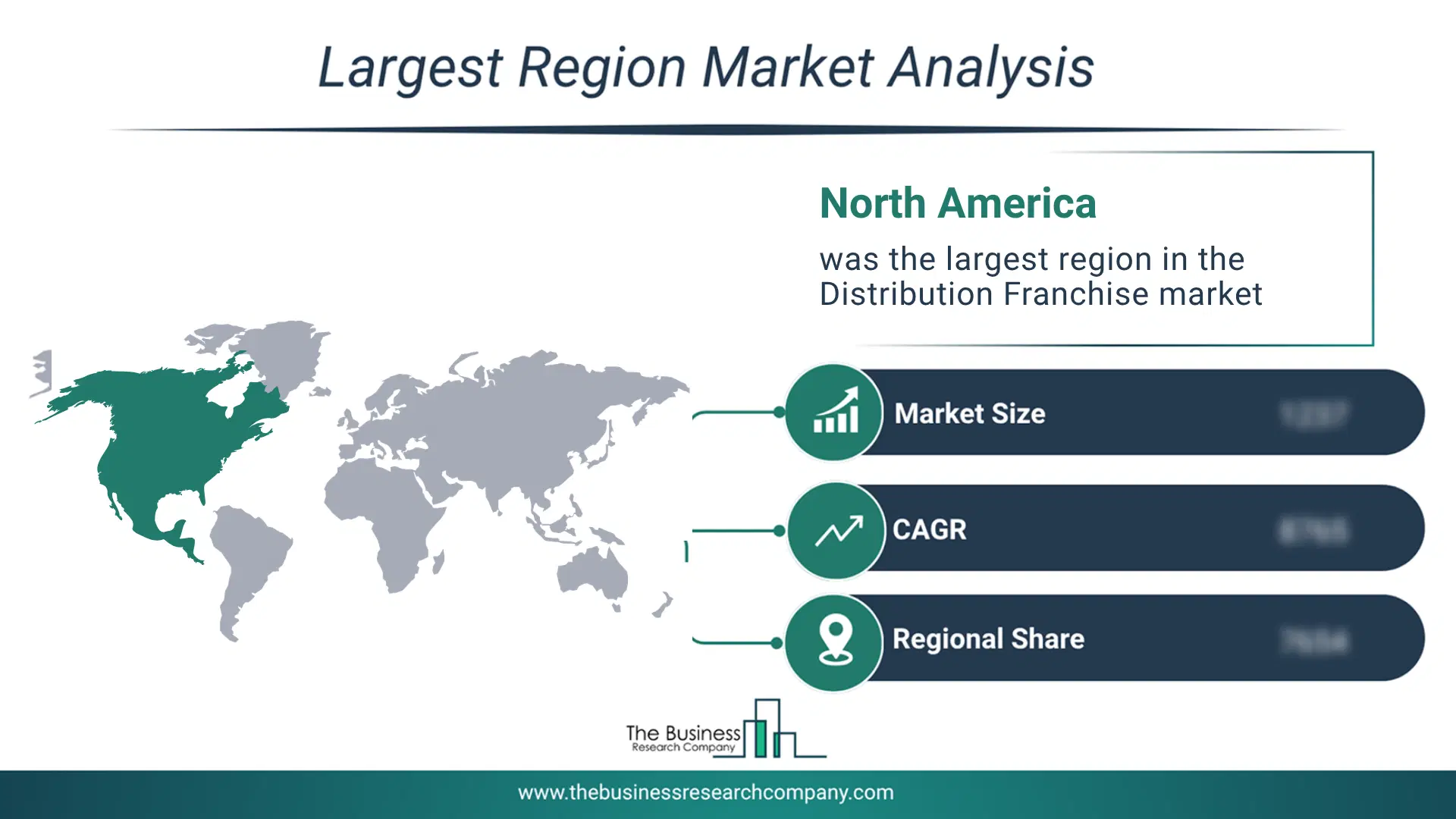
Regional Outlook
North America was the largest region in the distribution franchise market in 2025. Asia‑Pacific is expected to be the fastest‑growing region during the forecast period. The regions covered in this market report are Asia-Pacific, South East Asia, Western Europe, Eastern Europe, North America, South America, Middle East and Africa. The countries covered in this market report are Australia; Brazil; China; France; Germany; India; Indonesia; Japan; Taiwan; Russia; South Korea; UK; USA; Canada; Italy; Spain.What Defines the Distribution Franchise Market?
The distribution franchise market includes revenues earned by entities by providing services such as warehousing, transportation, delivery of goods, inventory management, order processing, retail distribution, and customer support. The market value includes the value of related goods sold by the service provider or included within the service offering. Only goods and services traded between entities or sold to end consumers are included.How is Market Value Defined and Measured?
The market value is defined as the revenues that enterprises gain from the sale of goods and/or services within the specified market and geography through sales, grants, or donations in terms of the currency (in USD unless otherwise specified). The revenues for a specified geography are consumption values that are revenues generated by organizations in the specified geography within the market, irrespective of where they are produced. It does not include revenues from resales along the supply chain, either further along the supply chain or as part of other products.
This chart presents market attractiveness based on a quantitative evaluation of growth, competition, strategic alignment, and risk, offering a clear view of opportunity areas for decision-making. This chart is for illustrative purposes; the full report contains the complete analysis.

This chart highlights the Total Addressable Market (TAM) by estimating the maximum revenue opportunity using an assumption-driven approach, supporting strategic planning and opportunity sizing across markets. The chart is illustrative; the full report provides a more comprehensive analysis.
What Key Data and Analysis Are Included in the Distribution Franchise Market Report 2026?
The distribution franchise market research report is one of a series of new reports from The Business Research Company that provides market statistics, including industry global market size, regional shares, competitors with the market share, detailed market segments, market trends and opportunities, and any further data you may need to thrive in the distribution franchise industry. The market research report delivers a complete perspective of everything you need, with an in-depth analysis of the current and future state of the industry.Distribution Franchise Market Report Forecast Analysis
| Report Attribute | Details |
|---|---|
| Market Size Value In 2026 | $7.07 billion |
| Revenue Forecast In 2030 | $11.26 billion |
| Growth Rate | CAGR of 11.9% from 2026 to 2030 |
| Base Year For Estimation | 2025 |
| Actual Estimates/Historical Data | 2020-2025 |
| Forecast Period | 2026 - 2030 |
| Market Representation | Revenue in USD Billion and CAGR from 2026 to 2030 |
| Segments Covered | Type, Franchisee Type, Industry |
| Regional Scope | Asia-Pacific, Western Europe, Eastern Europe, North America, South America, Middle East, Africa |
| Country Scope | The countries covered in the report are Australia, Brazil, China, France, Germany, India, Indonesia, Japan, Taiwan, Russia, South Korea, UK, USA, Canada, Italy, Spain. |
| Key Companies Profiled | Shell Plc, Volkswagen AG, Toyota Motor Corporation, TotalEnergies SE, BP Plc, Ford Motor Company, FedEx Corporation, PepsiCo Inc., 7-Eleven Inc., The Coca-Cola Company, McDonald’s Corporation, Marriott International Inc., Mahindra & Mahindra Limited, Burger King Corporation, Ace Hardware Corporation, Hilton Worldwide Holdings Inc., Yum! Brands Inc., Subway LLC, Domino’s Pizza Inc., Hero MotoCorp Limited. |
| Customization Scope | Request for Customization |
| Pricing And Purchase Options | Explore Purchase Options |