
Drug Delivery Systems Market Report 2026
Global Outlook – By Type (Injection-Based Drug Delivery System, Oral Drug Delivery System, Inhalation Or Pulmonary Drug Delivery System, Transmucosal Drug Delivery System), By Material (Polymer-Based Drug Delivery Systems, Lipid-Based Drug Delivery Systems, Inorganic Drug Delivery Systems, Biologics-Based Drug Delivery Systems, Hybrid Drug Delivery Systems), By Application (Infectious Disease, Oncology, Ophthalmology, Urology, Diabetes, Central Nervous System, Other Applications), By End-User (Hospitals, Pharmaceutical Companies, Research Institutions, Homecare Settings, Diagnostic Laboratories) – Market Size, Trends, Strategies, and Forecast to 2030
Drug Delivery Systems Market Overview
• Drug Delivery Systems market size has reached to $44.21 billion in 2025 • Expected to grow to $62.89 billion in 2030 at a compound annual growth rate (CAGR) of 7.2% • Growth Driver: Rising Respiratory Disorders Driving Growth Of The Market Due To Increasing Need For Targeted Lung Treatments • Market Trend: Innovative Metal-Free Multidose Nasal Spray Pumps Enhance User Experience And Sustainability • North America was the largest region in 2025 and Asia-Pacific is the fastest growing region.What Is Covered Under Drug Delivery Systems Market?
Drug delivery systems are advanced mechanisms or technologies designed to transport therapeutic substances within the body in a controlled and efficient manner. These systems aim to enhance the efficacy and safety of treatments by regulating the rate, time, and location of drug release. Drug delivery systems help to maintain appropriate drug concentrations in target areas, reduce side effects, and improve patient compliance. The main types of drug delivery systems include injection-based drug delivery systems, oral drug delivery systems, inhalation or pulmonary drug delivery systems, and transmucosal drug delivery systems. An injection-based drug delivery system is a medical device designed to deliver medications into the body through various injection routes using components like a syringe, needle, or auto-injector for controlled and targeted drug administration. It is made using various material types such as polymer-based drug delivery systems, lipid-based drug delivery systems, inorganic drug delivery systems, biologics-based drug delivery systems, and hybrid drug delivery systems and is applied for infectious disease, oncology, ophthalmology, urology, diabetes, central nervous system, and others. It is used by several end-users, including hospitals, pharmaceutical companies, research institutions, homecare settings, and diagnostic laboratories.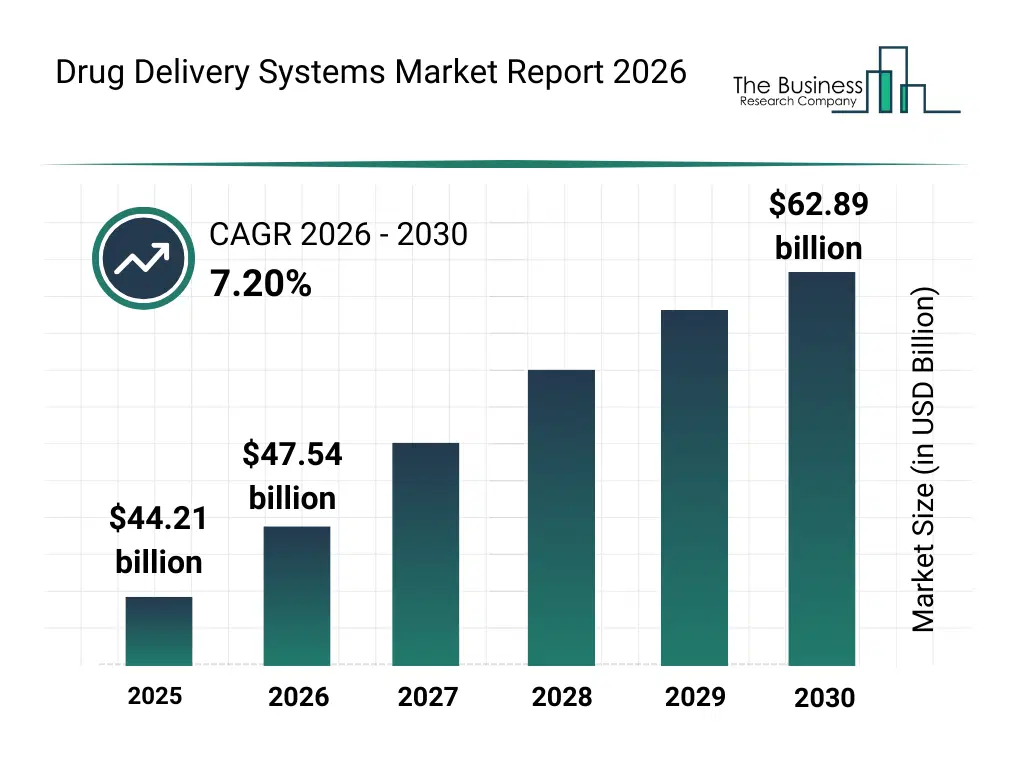
What Is The Drug Delivery Systems Market Size and Share 2026?
The drug delivery systems market size has grown strongly in recent years. It will grow from $44.21 billion in 2025 to $47.54 billion in 2026 at a compound annual growth rate (CAGR) of 7.5%. The growth in the historic period can be attributed to reliance on conventional oral and injectable delivery, limited biologics formulations, growing hospital and clinical infrastructure, increasing chronic disease prevalence, rising r&d in pharmaceuticals.What Is The Drug Delivery Systems Market Growth Forecast?
The drug delivery systems market size is expected to see strong growth in the next few years. It will grow to $62.89 billion in 2030 at a compound annual growth rate (CAGR) of 7.2%. The growth in the forecast period can be attributed to advancement in polymer and lipid-based delivery systems, growth of personalized medicine, increasing use of inhalation and transmucosal delivery, rising adoption of homecare and self-administration devices, integration of digital monitoring and smart delivery technologies. Major trends in the forecast period include rising adoption of targeted and controlled drug release technologies, increasing development of biologics and advanced therapeutics, growth in homecare drug delivery solutions, expansion of minimally invasive and needle-free delivery systems, enhanced focus on patient compliance and safety.
Global Drug Delivery Systems Market Segmentation
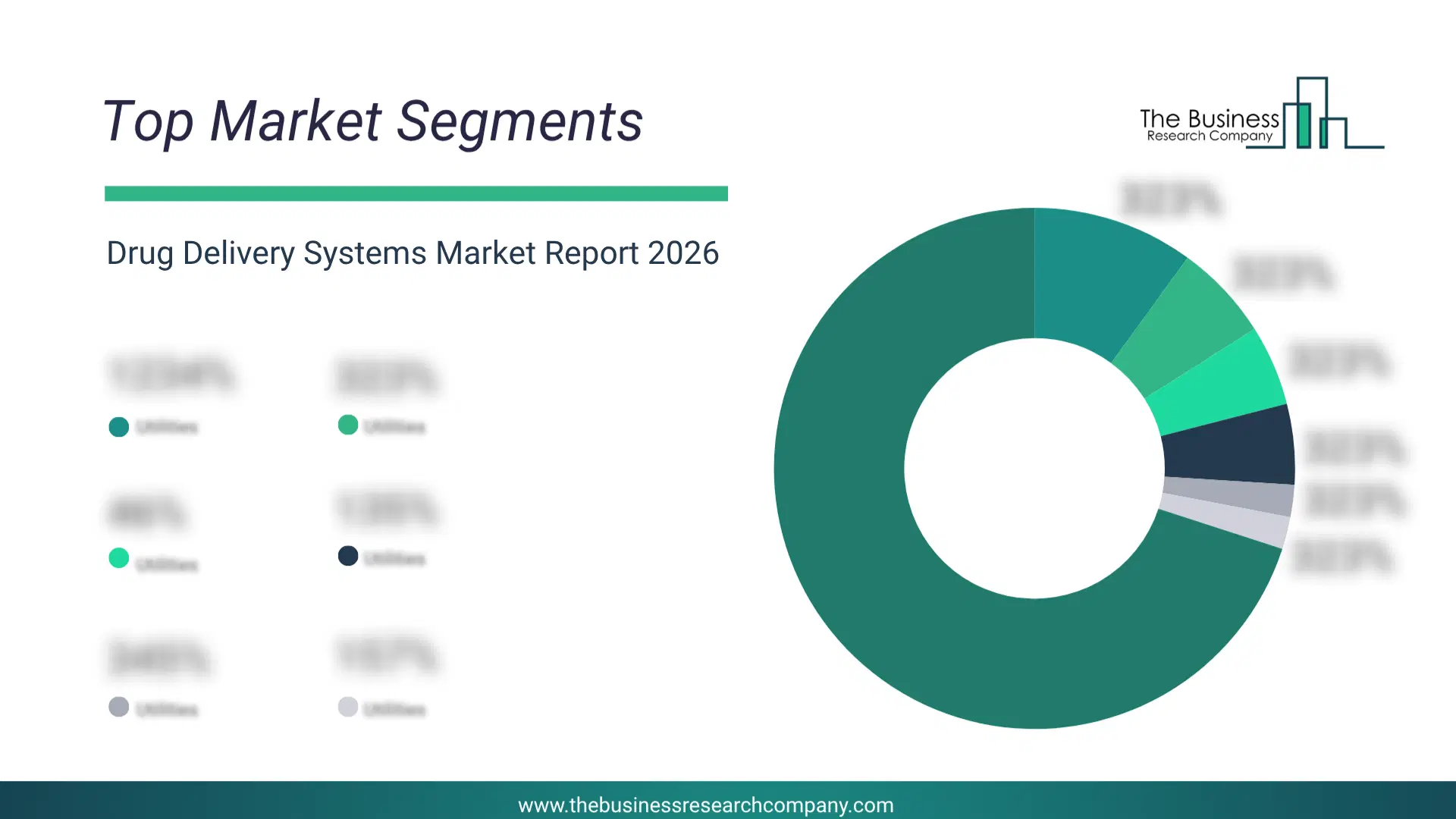
1) By Type: Injection-Based Drug Delivery System, Oral Drug Delivery System, Inhalation Or Pulmonary Drug Delivery System, Transmucosal Drug Delivery System 2) By Material: Polymer-Based Drug Delivery Systems, Lipid-Based Drug Delivery Systems, Inorganic Drug Delivery Systems, Biologics-Based Drug Delivery Systems, Hybrid Drug Delivery Systems 3) By Application: Infectious Disease, Oncology, Ophthalmology, Urology, Diabetes, Central Nervous System, Other Applications 4) By End-User: Hospitals, Pharmaceutical Companies, Research Institutions, Homecare Settings, Diagnostic Laboratories Subsegments: 1) By Injection-Based Drug Delivery System: Intravenous (IV), Intramuscular (IM), Subcutaneous (SC), Intradermal, Intrathecal, Depot Injections, Needle-Free Injectors 2) By Oral Drug Delivery System: Tablets, Capsules, Solutions And Syrups, Suspensions, Powders And Granules, Modified Release Formulations 3) By Inhalation Or Pulmonary Drug Delivery System: Metered Dose Inhalers (MDIs), Dry Powder Inhalers (DPIs), Nebulizers, Soft Mist Inhalers, Nasal Sprays 4) By Transmucosal Drug Delivery System: Buccal Delivery, Sublingual Delivery, Rectal Delivery, Vaginal Delivery, Nasal Mucosal DeliveryWhat Is The Driver Of The Drug Delivery Systems Market?
The increasing prevalence of respiratory disorders is anticipated to fuel the growth of the drug delivery systems market going forward. Respiratory disorders are conditions that impair the normal functioning of the lungs and airways, leading to difficulty in breathing and reduced oxygen intake. Respiratory disorders are rising due to increasing air pollution, which continuously exposes the population to toxic airborne particles and gases that impair lung function and contribute to the development and worsening of respiratory conditions. Drug delivery systems are critical in effectively treating and managing respiratory disorders, such as asthma, chronic obstructive pulmonary disease (COPD), pulmonary fibrosis, and cystic fibrosis. These systems ensure that medications are delivered directly to the lungs, enhancing therapeutic outcomes while minimizing systemic side effects. For instance, in March 2025, according to the UK Health Security Agency, a UK-based government agency, in 2024, tuberculosis cases in England increased by 13%, rising to 5,480 cases from 4,850 cases in 2023. Therefore, the increasing prevalence of respiratory disorders will boost the growth of the drug delivery systems industry.Key Players In The Global Drug Delivery Systems Market
Major companies operating in the drug delivery systems market are Pfizer Inc., Johnson & Johnson, F. Hoffmann La Roche AG, Merck & Co. Inc., AbbVie Inc., Bayer AG, Sanofi S.A., Bristol Myers Squibb Company, AstraZeneca PLC, Abbott Laboratories Inc., Novartis AG, GlaxoSmithKline PLC, Eli Lilly and Company, Amgen Inc., Becton Dickinson and Company, Teva Pharmaceutical Industries Ltd., Tandem Diabetes Care, Pacira Biosciences Inc., Universal Stabilization Technologies Inc., Spectrum Pharmaceuticals Inc., West Pharmaceutical Services Inc., Catalent Inc., Recipharm AB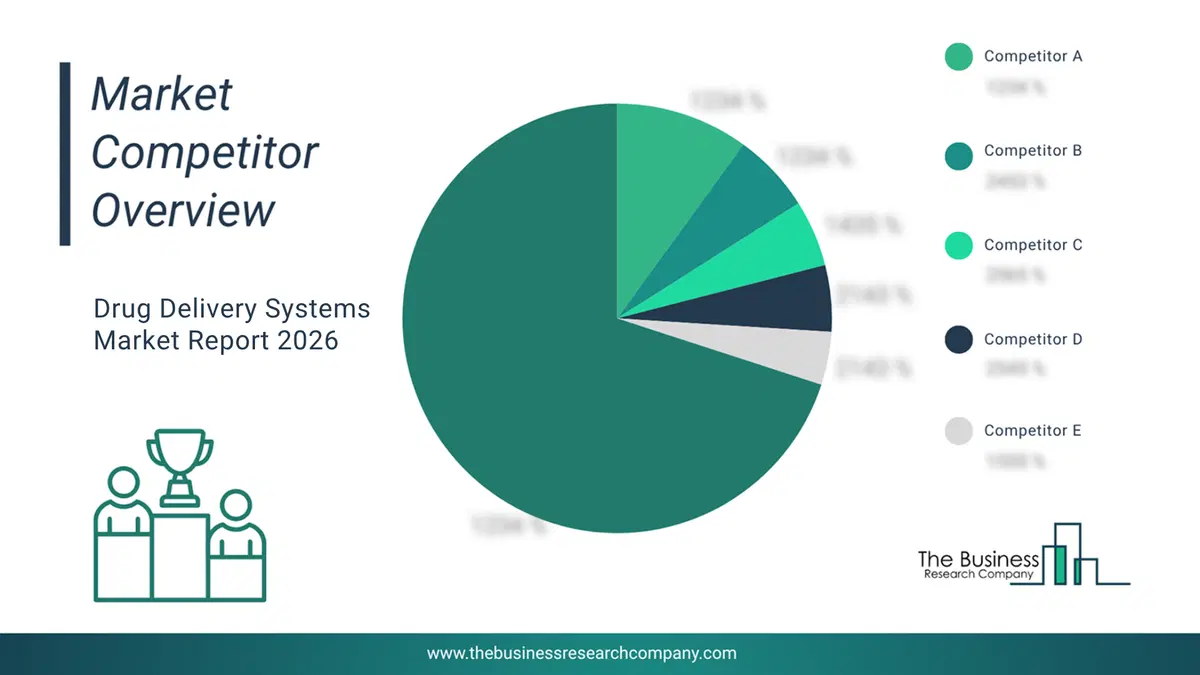
This chart is for illustrative purposes; the full report includes a detailed competitor analysis and comprehensive overview of the top 10 companies in the market.
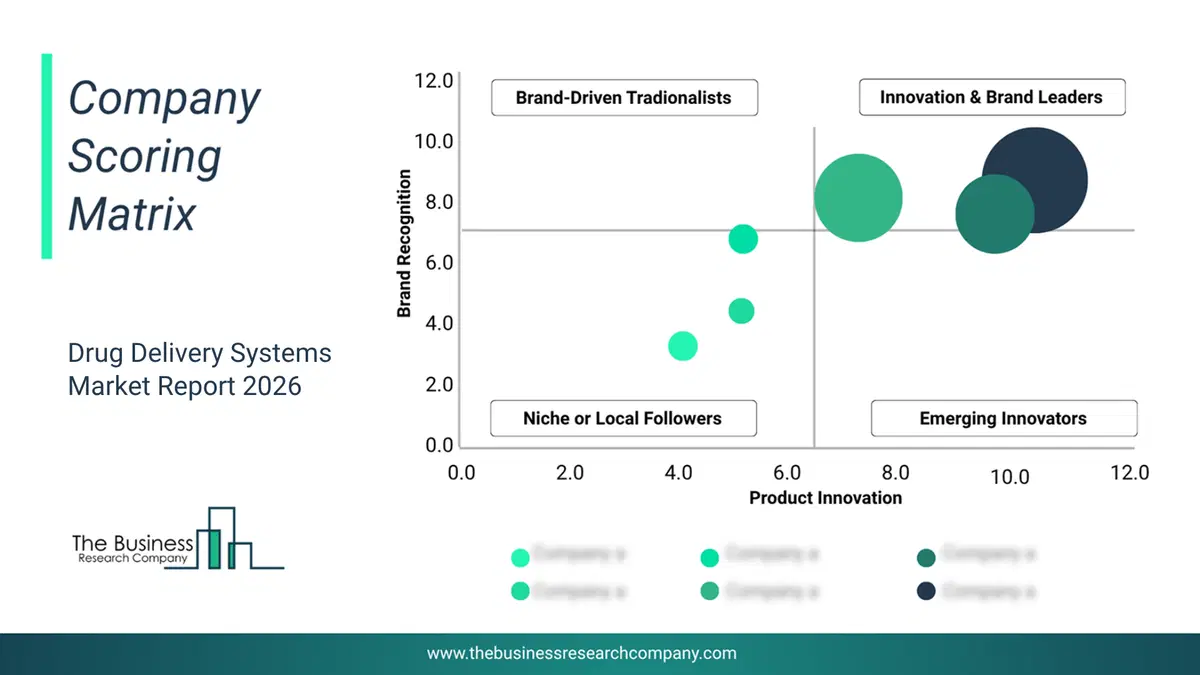
This chart maps companies by product innovation and brand strength, with bubble size indicating relative revenue, helping identify market leaders, challengers, and niche players. This is an illustrative chart; the full report provides a complete and accurate competitive analysis.
Global Drug Delivery Systems Market Trends and Insights
Major companies operating in the drug delivery systems market are focusing on developing advanced solutions, such as metal-free, multidose nasal spray pumps, to improve user comfort and ease of handling. Metal-free, multidose nasal spray pumps are devices designed to deliver multiple doses of medication through the nasal passage without using any metal components, ensuring safety and compatibility with various formulations. For instance, in January 2023, Aptar Pharma, a US-based pharmaceutical company, launched the APF Futurity metal-free, multidose nasal spray pump. This nasal spray pump is engineered for delivering nasal saline and other similar over-the-counter products, with a strong focus on recyclability. It is the first highly recyclable nasal spray pump from Aptar Pharma, earning a Class AA certification from cyclos-HTP for European recycling systems. Made entirely from polyolefin materials and free of metal components or recycling contaminants, it helps streamline recycling and improve recyclate quality. Utilizing Aptar Pharma’s Advanced Preservative Free technology, this metal-free pump ensures precise and consistent dosing with gentle operation, without compromising on ease of use or effectiveness.What Are Latest Mergers And Acquisitions In The Drug Delivery Systems Market?
In January 2024, Kindeva Drug Delivery, a US-based contract development and manufacturing organization, acquired Summit Biosciences Inc. for an undisclosed amount. With this acquisition, Kindeva broadened its drug delivery capabilities with an additional platform. The acquisition allows the company to offer biopharma clients a wider range of advanced drug-device combination products, such as those for pulmonary, injectable, transdermal, and nasal applications. Summit Biosciences Inc. is a US-based intranasal drug-delivery contract development and manufacturing company.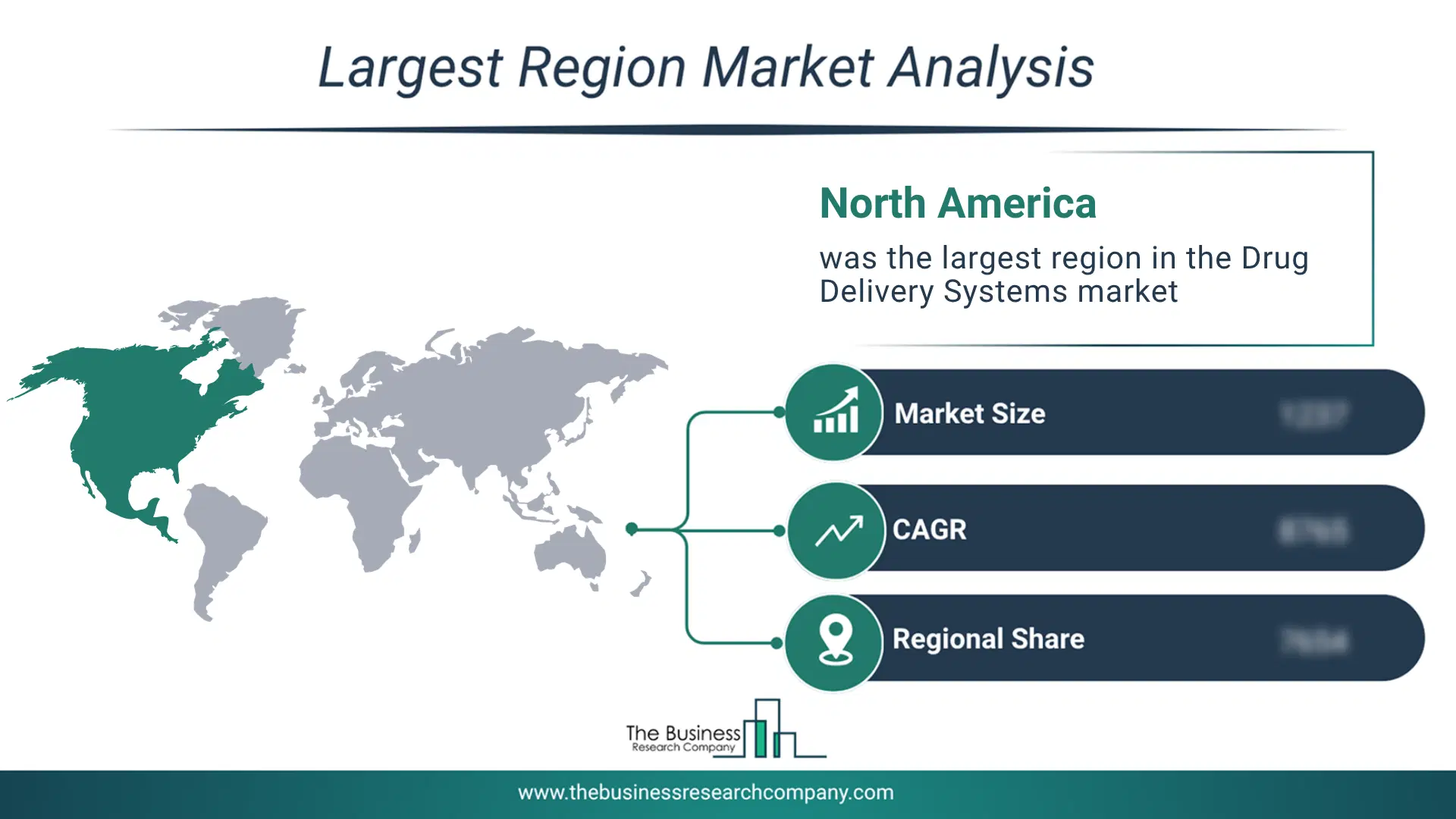
Regional Outlook
North America was the largest region in the drug delivery system market in 2025. Asia-Pacific is expected to be the fastest-growing region in the forecast period. The regions covered in this market report are Asia-Pacific, South East Asia, Western Europe, Eastern Europe, North America, South America, Middle East, Africa. The countries covered in this market report are Australia, Brazil, China, France, Germany, India, Indonesia, Japan, Taiwan, Russia, South Korea, UK, USA, Canada, Italy, SpainWhat Defines the Drug Delivery Systems Market?
The drug delivery systems market consists of sales of implantable devices, targeted delivery carriers, nanoparticle-based systems, and bio adhesive systems. Values in this market are ‘factory gate’ values, that is the value of goods sold by the manufacturers or creators of the goods, whether to other entities (including downstream manufacturers, wholesalers, distributors and retailers) or directly to end customers. The value of goods in this market includes related services sold by the creators of the goods.How is Market Value Defined and Measured?
The market value is defined as the revenues that enterprises gain from the sale of goods and/or services within the specified market and geography through sales, grants, or donations in terms of the currency (in USD unless otherwise specified). The revenues for a specified geography are consumption values that are revenues generated by organizations in the specified geography within the market, irrespective of where they are produced. It does not include revenues from resales along the supply chain, either further along the supply chain or as part of other products.
This chart presents market attractiveness based on a quantitative evaluation of growth, competition, strategic alignment, and risk, offering a clear view of opportunity areas for decision-making. This chart is for illustrative purposes; the full report contains the complete analysis.

This chart highlights the Total Addressable Market (TAM) by estimating the maximum revenue opportunity using an assumption-driven approach, supporting strategic planning and opportunity sizing across markets. The chart is illustrative; the full report provides a more comprehensive analysis.
What Key Data and Analysis Are Included in the Drug Delivery Systems Market Report 2026?
The drug delivery systems market research report is one of a series of new reports from The Business Research Company that provides market statistics, including industry global market size, regional shares, competitors with the market share, detailed market segments, market trends and opportunities, and any further data you may need to thrive in the drug delivery systems industry. The market research report delivers a complete perspective of everything you need, with an in-depth analysis of the current and future state of the industry.Drug Delivery Systems Market Report Forecast Analysis
| Report Attribute | Details |
|---|---|
| Market Size Value In 2026 | $47.54 billion |
| Revenue Forecast In 2030 | $62.89 billion |
| Growth Rate | CAGR of 7.2% from 2026 to 2030 |
| Base Year For Estimation | 2025 |
| Actual Estimates/Historical Data | 2020-2025 |
| Forecast Period | 2026 - 2030 |
| Market Representation | Revenue in USD Billion and CAGR from 2026 to 2030 |
| Segments Covered | Type, Material, Application, End-User |
| Regional Scope | Asia-Pacific, Western Europe, Eastern Europe, North America, South America, Middle East, Africa |
| Country Scope | The countries covered in the report are Australia, Brazil, China, France, Germany, India, Indonesia, Japan, Taiwan, Russia, South Korea, UK, USA, Canada, Italy, Spain. |
| Key Companies Profiled | Pfizer Inc., Johnson & Johnson, F. Hoffmann La Roche AG, Merck & Co. Inc., AbbVie Inc., Bayer AG, Sanofi S.A., Bristol Myers Squibb Company, AstraZeneca PLC, Abbott Laboratories Inc., Novartis AG, GlaxoSmithKline PLC, Eli Lilly and Company, Amgen Inc., Becton Dickinson and Company, Teva Pharmaceutical Industries Ltd., Tandem Diabetes Care, Pacira Biosciences Inc., Universal Stabilization Technologies Inc., Spectrum Pharmaceuticals Inc., West Pharmaceutical Services Inc., Catalent Inc., Recipharm AB |
| Customization Scope | Request for Customization |
| Pricing And Purchase Options | Explore Purchase Options |