
Dry Eye Syndrome Market Report 2026
Global Outlook – By Product (Liquid Drops, Gel, Liquid Wipes, Eye Ointment, Other Products), By Treatment (Corticosteroids, Artificial Tears, Oral Omega Supplements, Lubricating Agent, Other Treatments), By Disease Type (Evaporative, Aqueous), By Distribution Channel (Offline, Online), By Application (Hospitals And Clinics, Medical Laboratories, Other Applications) – Market Size, Trends, Strategies, and Forecast to 2030
Dry Eye Syndrome Market Overview
• Dry Eye Syndrome market size has reached to $4.17 billion in 2025 • Expected to grow to $5.96 billion in 2030 at a compound annual growth rate (CAGR) of 7.5% • Growth Driver: The Aging Population Fuels Growth In The Dry Eye Syndrome Market • Market Trend: Advances In Drug Delivery Technology For Dry Eye Treatment • North America was the largest region in 2025 and Asia-Pacific is the fastest growing region.What Is Covered Under Dry Eye Syndrome Market?
Dry eye syndrome, commonly known as dry eye illness, is a common disorder in which the eyes either do not produce enough tears or produce poor-quality tears. Dry eye occurs when your eyes do not produce enough tears to keep your eyes moist. This can cause discomfort, irritation, and inflammation of the eyes. The main types of products for dry eye syndrome are liquid drops, gel, liquid wipes, eye ointment, and others. Liquid eye drops refer to a fluid formulation applied directly into the eyes to provide moisture, lubrication, and relief from dryness and irritation. It includes various treatments, such as corticosteroids, artificial tears, oral omega supplements, lubricating agents, and others. It is distributed through offline and online channels, and it is used to treat evaporative and aqueous diseases. These are used for several applications, including hospitals and clinics, medical laboratories, and others.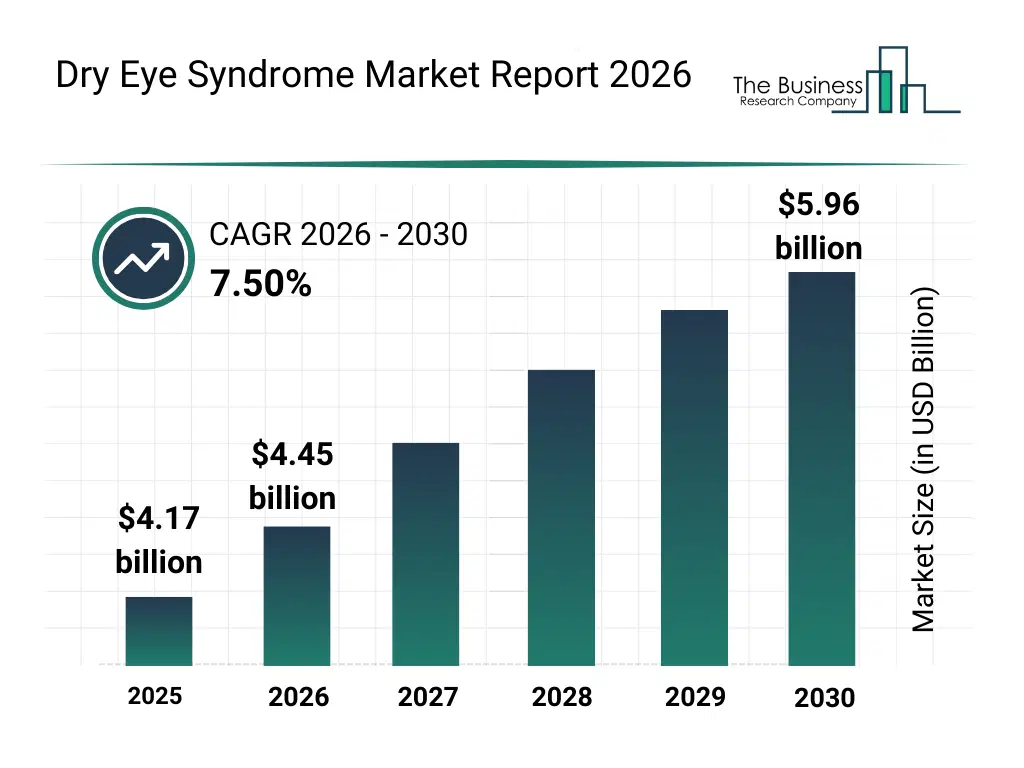
What Is The Dry Eye Syndrome Market Size and Share 2026?
The dry eye syndrome market size has grown strongly in recent years. It will grow from $4.17 billion in 2025 to $4.45 billion in 2026 at a compound annual growth rate (CAGR) of 6.9%. The growth in the historic period can be attributed to increasing prevalence of dry eye syndrome, growing geriatric population, rising screen time and digital device usage, increasing awareness about eye health, advancements in artificial tear formulations.What Is The Dry Eye Syndrome Market Growth Forecast?
The dry eye syndrome market size is expected to see strong growth in the next few years. It will grow to $5.96 billion in 2030 at a compound annual growth rate (CAGR) of 7.5%. The growth in the forecast period can be attributed to development of novel drug delivery systems, growth in personalized medicine, rising adoption of wearable eye care devices, expansion of online pharmacy channels, increasing research in natural and herbal eye care products. Major trends in the forecast period include advanced tear film diagnostics, novel drug delivery systems, personalized dry eye treatments, natural and herbal formulations, wearable eye care devices.
Global Dry Eye Syndrome Market Segmentation
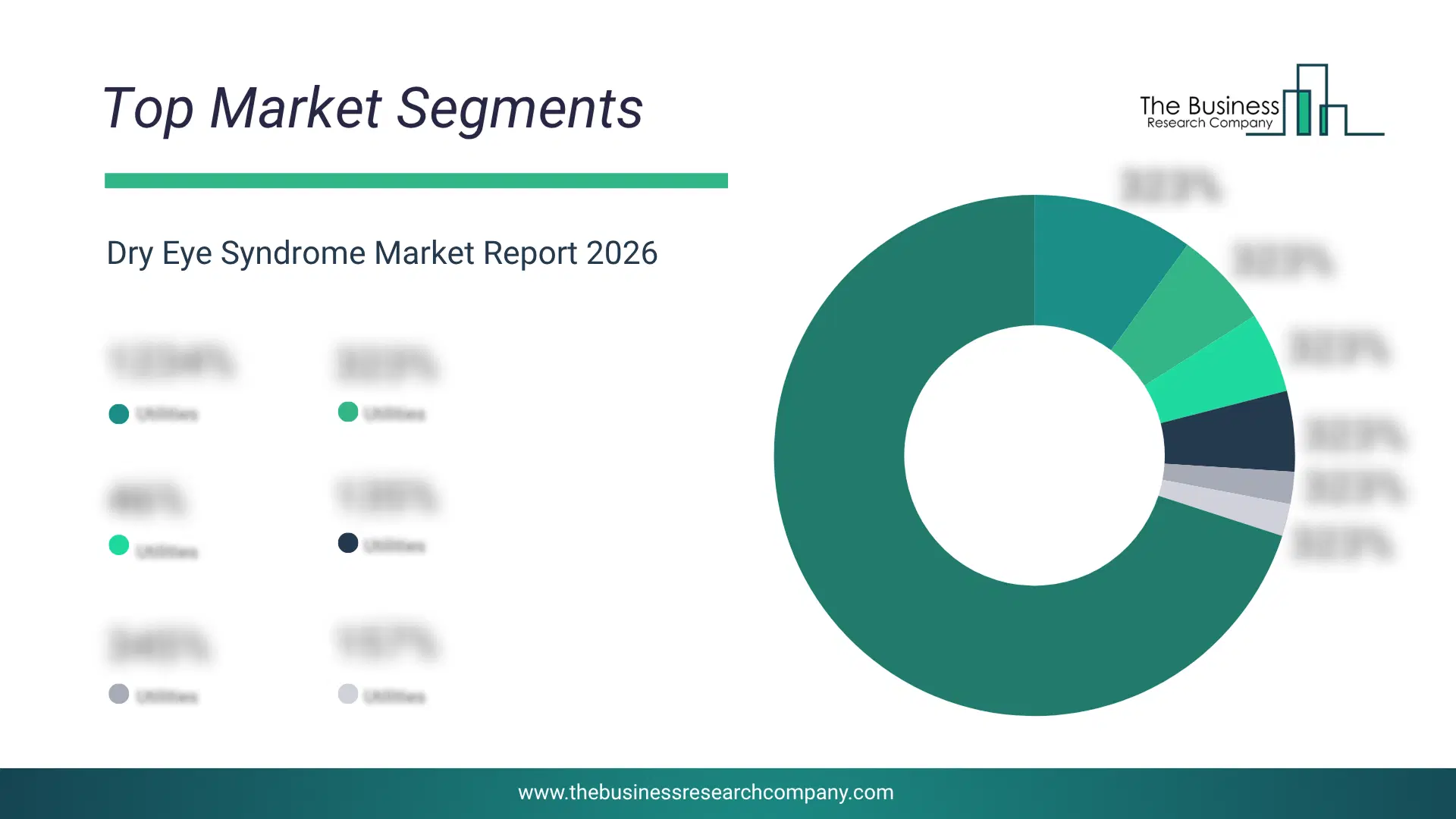
1) By Product: Liquid Drops, Gel, Liquid Wipes, Eye Ointment, Other Products 2) By Treatment: Corticosteroids, Artificial Tears, Oral Omega Supplements, Lubricating Agent, Other Treatments 3) By Disease Type: Evaporative, Aqueous 4) By Distribution Channel: Offline, Online 5) By Application: Hospitals And Clinics, Medical Laboratories, Other Applications Subsegments: 1) By Liquid Drops: Preservative-Free Drops, Preserved Liquid Drops, Antibiotic-Infused Drops 2) By Gel: Long-Lasting Gels, Hydrogel Formulations 3) By Liquid Wipes: Pre-Moistened Wipes, Anti-Bacterial Wipes 4) By Eye Ointment: Night-Time Ointments, Therapeutic Ointments 5) By Other Products: Eye Masks, Contact Lens Solutions, Nutritional SupplementsWhat Is The Driver Of The Dry Eye Syndrome Market?
The growing aging population is expected to propel the growth of the dry eye syndrome market going forward. The aging population refers to a demographic trend characterized by an increasing proportion of elderly individuals within a population. The aging population presents a factor in the growth of dry eye syndrome because, as the number of older adults continues to increase, so too will the demand for effective treatments and solutions for this increasingly prevalent condition. For instance, in October 2025, according to the World Health Organization (WHO), a Switzerland-based United Nations (UN) organization, by 2030, one in six people globally will be aged 60 or older, with the population of individuals in this age group projected to double to 2.1 billion by 2050. Therefore, the growing aging population is driving the growth of the dry eye syndrome industry.Key Players In The Global Dry Eye Syndrome Market
Major companies operating in the dry eye syndrome market are Allergan plc, Novartis AG, Otsuka Pharmaceutical Co. Ltd., Santendo Pharmaceutical Co. Ltd., Sentiss Pharma Pvt. Ltd., Johnson & Johnson, Alcon Vision LLC, Akorn Operating Company LLC, Sun Pharmaceutical Industries Ltd., Bausch Health Companies Inc., AbbVie Inc., I-MED Pharma Inc., AFT Pharmaceuticals, Horus Pharma, Novaliq GmbH, OASIS Medical, Prestige Consumer Healthcare, VISUfarma, Alimera Science, Kala Pharmaceuticals Inc., Nicox S.A., EyeGate Pharmaceuticals Inc., ReVision Therapeutics Inc., Itear Medical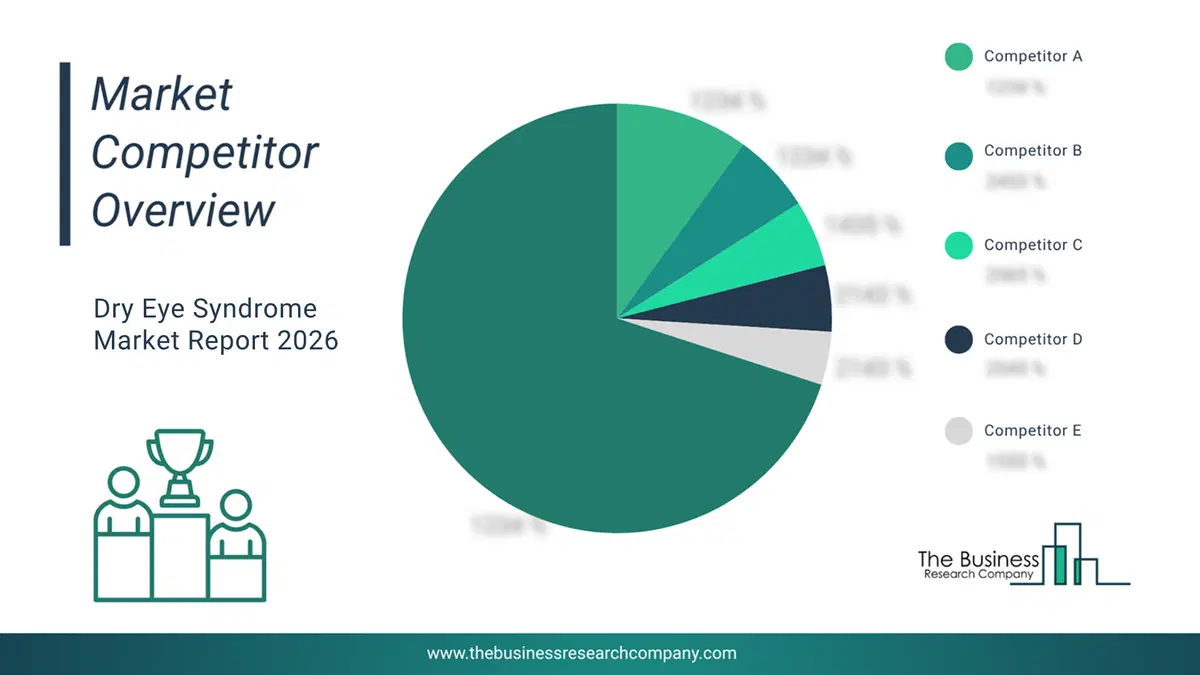
This chart is for illustrative purposes; the full report includes a detailed competitor analysis and comprehensive overview of the top 10 companies in the market.
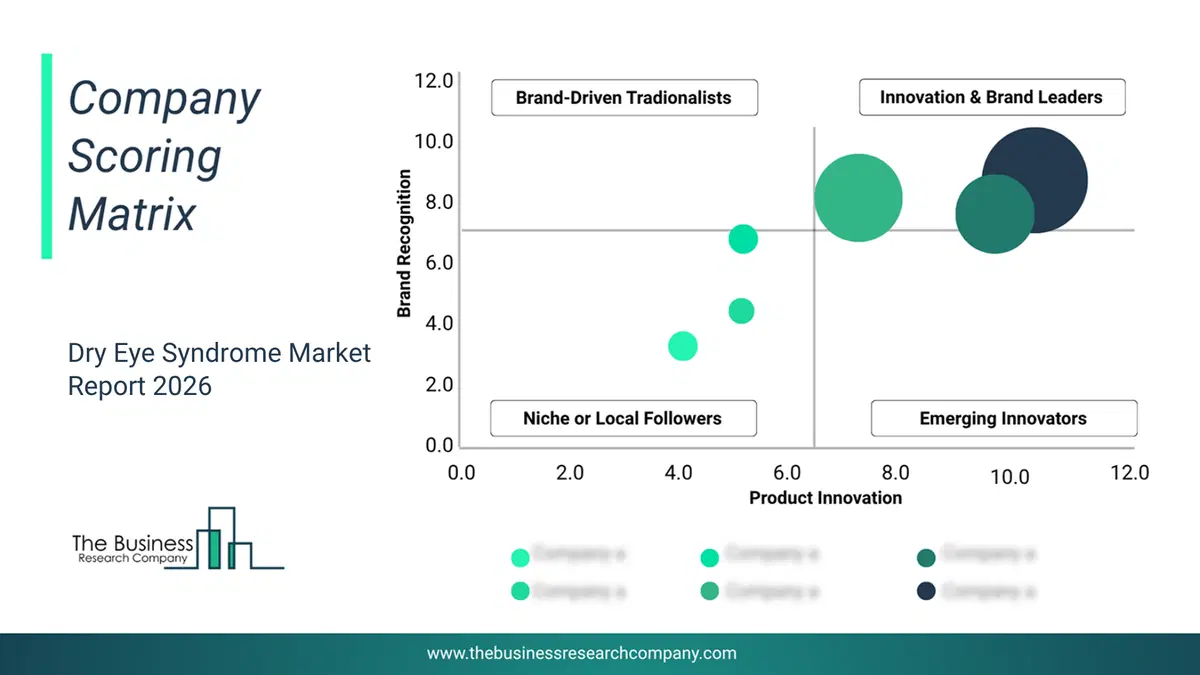
This chart maps companies by product innovation and brand strength, with bubble size indicating relative revenue, helping identify market leaders, challengers, and niche players. This is an illustrative chart; the full report provides a complete and accurate competitive analysis.
Global Dry Eye Syndrome Market Trends and Insights
Major companies operating in the dry eye syndrome market are focusing on developing advanced solutions such as nanomicellar drug delivery technology to enhance treatment effectiveness and patient comfort. Nanomicellar drug delivery technology uses tiny micelles to improve the penetration of active ingredients into ocular tissues and supports faster therapeutic action. This approach aims to address the limitations of existing treatments and meet the strong unmet need in dry eye disease. For instance, in April 2023, Sun Pharma, an India-based pharmaceutical company, launched CEQUA, which features NCELL nanomicellar technology. The product is the first dry eye treatment in India delivered with this technology, and it provides superior delivery over cyclosporine emulsion 0.05 percent. It is backed by several years of clinical experience in the United States and other geographies, and it offers faster results with good patient comfort from the start of treatment. The launch responds to the growing prevalence of dry eye disease in India, where increasing screen time has contributed to rising cases and a projected expansion of disease burden in the coming years.What Are Latest Mergers And Acquisitions In The Dry Eye Syndrome Market?
In July 2024, Bausch + Lomb, a Canada-based eye health company, acquired Trukera Medical for an undisclosed amount. With this acquisition, Bausch + Lomb aims to strengthen its dry eye disease capabilities and expand its diagnostic technology portfolio to improve preoperative and clinical outcomes. Trukera Medical is a U.S.-based provider of ophthalmic diagnostic solutions, including the ScoutPro tear osmolarity system used to support the detection and management of dry eye disease.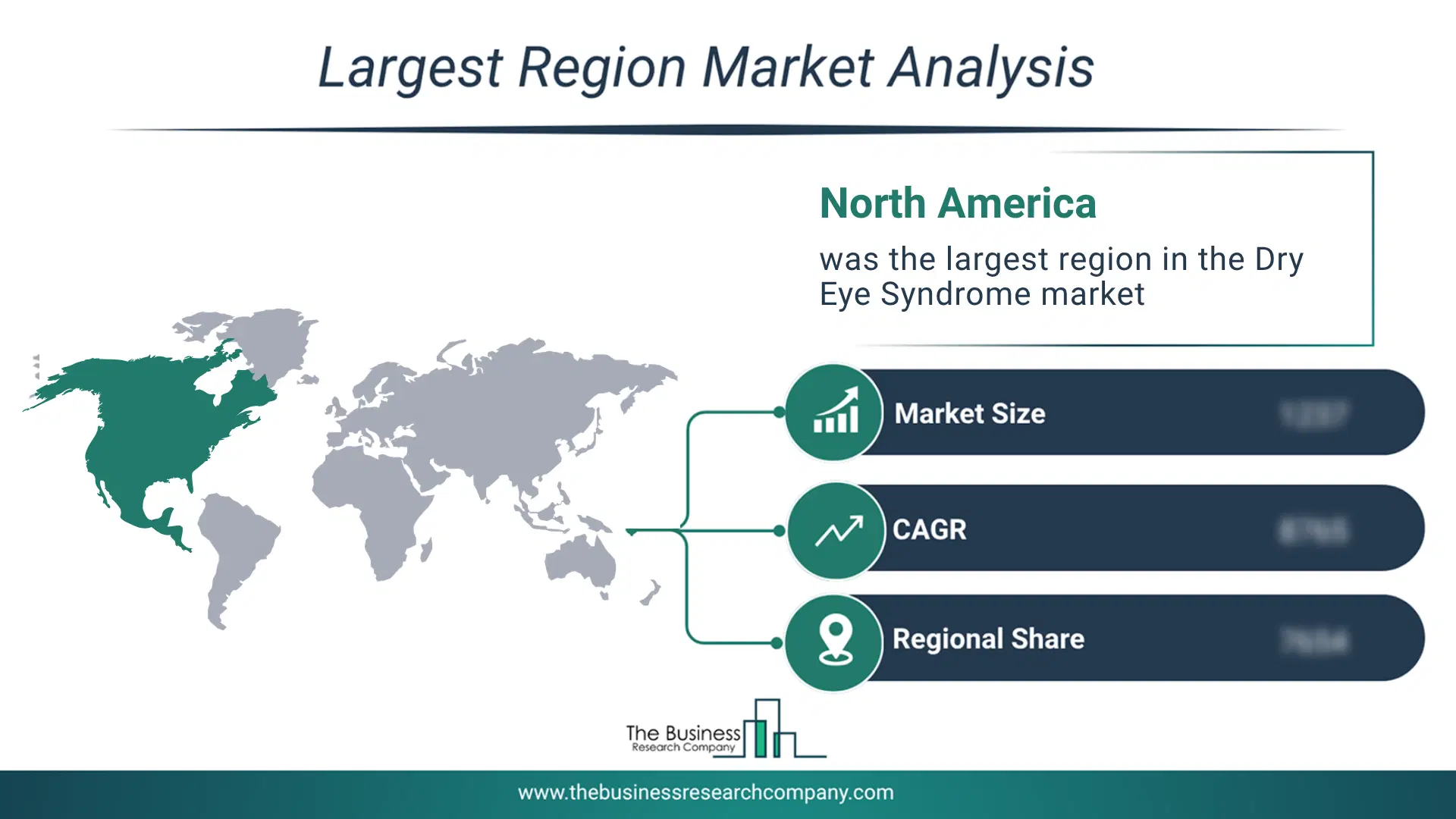
Regional Insights
North America was the largest region in the dry eye syndrome market in 2025. Asia-Pacific is expected to be the fastest-growing region in the global dry eye syndrome market report during the forecast period. The regions covered in this market report are Asia-Pacific, South East Asia, Western Europe, Eastern Europe, North America, South America, Middle East, Africa. The countries covered in this market report are Australia, Brazil, China, France, Germany, India, Indonesia, Japan, Taiwan, Russia, South Korea, UK, USA, Canada, Italy, Spain.What Defines the Dry Eye Syndrome Market?
The dry eye syndrome market includes revenues earned by entities by providing services such as dry eye diagnosis, treatment of dry eye syndrome, prescribed medications, antibiotics, humidifiers, and protective eyewear. The market value includes the value of related goods sold by the service provider or included within the service offering. Only goods and services traded between entities or sold to end consumers are included.How is Market Value Defined and Measured?
The market value is defined as the revenues that enterprises gain from the sale of goods and/or services within the specified market and geography through sales, grants, or donations in terms of the currency (in USD unless otherwise specified). The revenues for a specified geography are consumption values that are revenues generated by organizations in the specified geography within the market, irrespective of where they are produced. It does not include revenues from resales along the supply chain, either further along the supply chain or as part of other products.
This chart presents market attractiveness based on a quantitative evaluation of growth, competition, strategic alignment, and risk, offering a clear view of opportunity areas for decision-making. This chart is for illustrative purposes; the full report contains the complete analysis.

This chart highlights the Total Addressable Market (TAM) by estimating the maximum revenue opportunity using an assumption-driven approach, supporting strategic planning and opportunity sizing across markets. The chart is illustrative; the full report provides a more comprehensive analysis.
What Key Data and Analysis Are Included in the Dry Eye Syndrome Market Report 2026?
The dry eye syndrome market research report is one of a series of new reports from The Business Research Company that provides market statistics, including industry global market size, regional shares, competitors with the market share, detailed market segments, market trends and opportunities, and any further data you may need to thrive in the dry eye syndrome industry. The market research report delivers a complete perspective of everything you need, with an in-depth analysis of the current and future state of the industry.Dry Eye Syndrome Market Report Forecast Analysis
| Report Attribute | Details |
|---|---|
| Market Size Value In 2026 | $4.45 billion |
| Revenue Forecast In 2030 | $5.96 billion |
| Growth Rate | CAGR of 6.9% from 2026 to 2030 |
| Base Year For Estimation | 2025 |
| Actual Estimates/Historical Data | 2020-2025 |
| Forecast Period | 2026 - 2030 |
| Market Representation | Revenue in USD Billion and CAGR from 2026 to 2030 |
| Segments Covered | Product, Treatment, Disease Type, Distribution Channel, Application |
| Regional Scope | Asia-Pacific, Western Europe, Eastern Europe, North America, South America, Middle East, Africa |
| Country Scope | The countries covered in the report are Australia, Brazil, China, France, Germany, India, Indonesia, Japan, Taiwan, Russia, South Korea, UK, USA, Canada, Italy, Spain. |
| Key Companies Profiled | Allergan plc, Novartis AG, Otsuka Pharmaceutical Co. Ltd., Santendo Pharmaceutical Co. Ltd., Sentiss Pharma Pvt. Ltd., Johnson & Johnson, Alcon Vision LLC, Akorn Operating Company LLC, Sun Pharmaceutical Industries Ltd., Bausch Health Companies Inc., AbbVie Inc., I-MED Pharma Inc., AFT Pharmaceuticals, Horus Pharma, Novaliq GmbH, OASIS Medical, Prestige Consumer Healthcare, VISUfarma, Alimera Science, Kala Pharmaceuticals Inc., Nicox S.A., EyeGate Pharmaceuticals Inc., ReVision Therapeutics Inc., Itear Medical |
| Customization Scope | Request for Customization |
| Pricing And Purchase Options | Explore Purchase Options |