

Dyslexia Treatment Market Report 2026
Global Outlook – By Type (Double Deficit Dyslexia, Visual Dyslexia, Phonological Dyslexia, Other Types), By Therapy (Occupational Therapy, Speech Therapy, Cognitive Behavioral Therapy), By Distribution Channel (Hospital Pharmacies, Retail Pharmacies, Other Distribution Channels), By End Users (Psychiatric Institutions, Rehabilitation Centers, Home Care, Other End-users) - Market Size, Trends, Strategies, and Forecast to 2030
Dyslexia Treatment Market Overview
• Dyslexia Treatment market size has reached to $30.17 billion in 2025 • Expected to grow to $40.92 billion in 2030 at a compound annual growth rate (CAGR) of 6.1% • Growth Driver: Rising Prevalence Of Chronic Diseases Driving Growth In The Market • Market Trend: Advanced Solutions In Dyslexia Treatment Market • North America was the largest region in 2025 and Asia-Pacific is the fastest growing region.What Is Covered Under Dyslexia Treatment Market?
Dyslexia treatment involves a range of strategies and interventions designed to help individuals with dyslexia improve their reading, writing, and spelling skills. This typically includes specialized educational programs, such as structured literacy and multisensory instruction, which use visual, auditory, and kinesthetic techniques to reinforce learning. Regular practice, tailored support, and early intervention are key components of effective dyslexia treatment. The main types of dyslexia treatment are double-deficit dyslexia, visual dyslexia, phonological dyslexia, and others. Double-deficit dyslexia is a form of dyslexia characterized by difficulties in both phonological processing (the ability to break down words into sounds) and naming speed (the ability to quickly name letters and numbers). The therapy for dyslexia includes occupational therapy, speech therapy, and cognitive behavioral therapy, and the drugs are cyclizine, meclizine, dimenhydrinate, methylphenidate, and others. The distribution channel includes hospital pharmacies, retail pharmacies, and others and is used by various end users, such as psychiatric institutions, rehabilitation centers, home care, and others.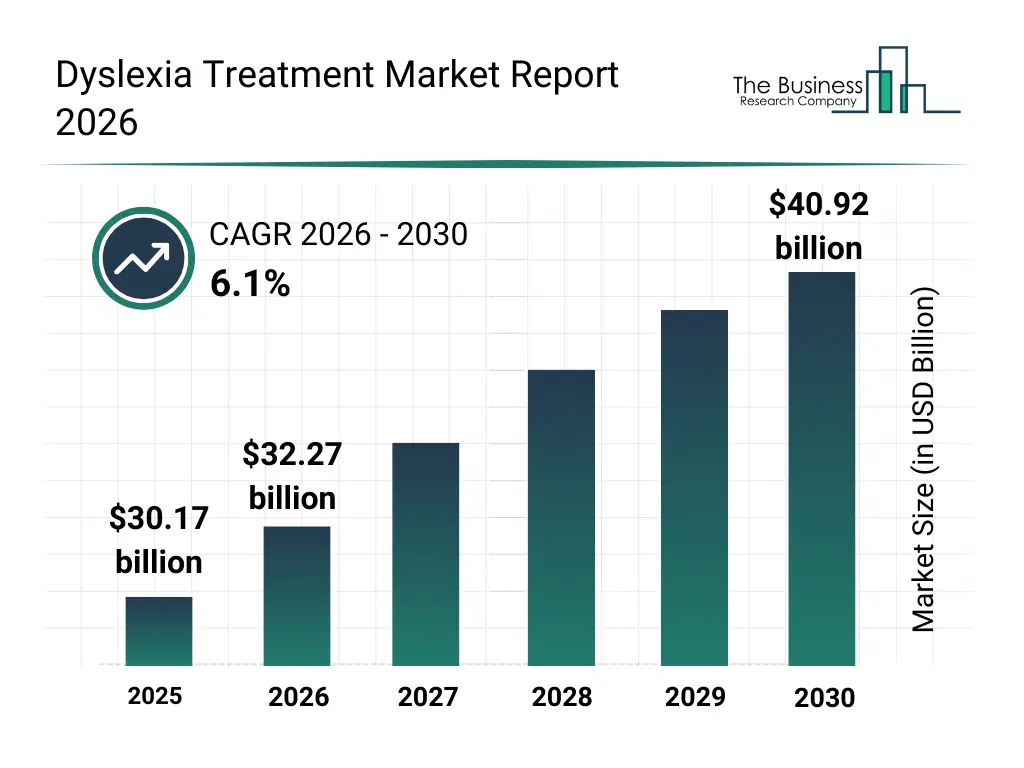
What Is The Dyslexia Treatment Market Size and Share 2026?
The dyslexia treatment market size has grown strongly in recent years. It will grow from $30.17 billion in 2025 to $32.27 billion in 2026 at a compound annual growth rate (CAGR) of 6.9%. The growth in the historic period can be attributed to learning disability awareness, special education programs, school-based intervention adoption, literacy curriculum development, therapist availability.What Is The Dyslexia Treatment Market Growth Forecast?
The dyslexia treatment market size is expected to see strong growth in the next few years. It will grow to $40.92 billion in 2030 at a compound annual growth rate (CAGR) of 6.1%. The growth in the forecast period can be attributed to digital education platforms growth, personalized learning models, early screening programs, home-based therapy expansion, inclusive education policies. Major trends in the forecast period include growing adoption of structured literacy programs, increased use of multisensory learning approaches, expansion of digital learning and assistive tools, rising focus on early childhood intervention, integration of speech and occupational therapies.
Global Dyslexia Treatment Market Segmentation
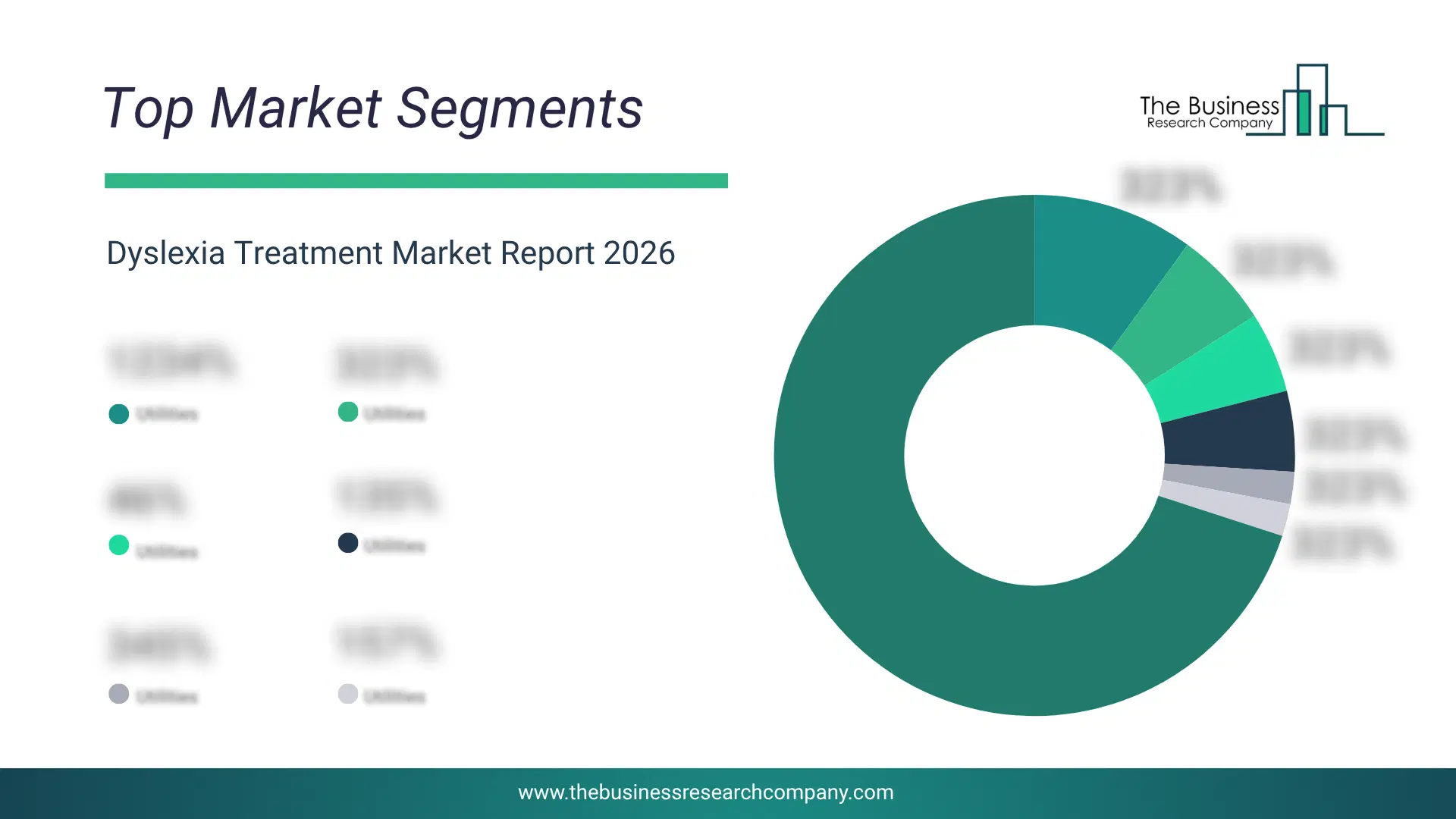
1) By Type: Double Deficit Dyslexia, Visual Dyslexia, Phonological Dyslexia, Other Types 2) By Therapy: Occupational Therapy, Speech Therapy, Cognitive Behavioral Therapy 3) By Distribution Channel: Hospital Pharmacies, Retail Pharmacies, Other Distribution Channels 4) By End Users: Psychiatric Institutions, Rehabilitation Centers, Home Care, Other End-users Subsegments: 1) By Double Deficit Dyslexia: Phonological And Visual Processing Treatment, Integrated Therapy Approaches 2) By Visual Dyslexia: Visual Processing Treatment, Optometric And Visual Therapy, Color Overlay Therapy 3) By Phonological Dyslexia: Phonics-Based Treatment, Speech And Language Therapy, Auditory Training And Exercises 4) By Other Types: Rapid Naming Dyslexia, Motor Dyslexia, Surface DyslexiaWhat Are The Drivers Of The Dyslexia Treatment Market?
The increasing prevalence of chronic diseases is expected to propel the growth of the dysautonomia (autonomic dysfunction) market going forward. Chronic disease is a chronic condition or chronic sickness, a health condition that persists or lasts for over three months. The rise in chronic disease is due to factors such as increased frequency of multimorbidity, in which people are diagnosed with many chronic disorders at the same time. Dysautonomia (autonomic dysfunction) plays a crucial role in chronic diseases by disrupting the body's ability to regulate essential functions like heart rate, blood pressure, and digestion, often exacerbating symptoms and complicating management. For instance, in April 2025, according to the NHS Confederation, a UK-based national association, in 2035, it is estimated that 17% of the UK population could be living with four or more chronic conditions. Therefore, the increasing prevalence of chronic diseases is driving the growth of the dysautonomia (autonomic dysfunction) industry. The increase in the prevalence of neurological disorders is expected to propel the growth of the dyslexia treatment market going forward. Neurological disorders are medical conditions that affect the central and peripheral nervous system, including the brain, spinal cord, and nerves. The prevalence of neurological disorders is rising due to aging populations, lifestyle changes, environmental exposures, and improved diagnostic technologies that enhance detection and reporting. The dyslexia treatment market supports this trend by offering multisensory learning, cognitive training, and targeted interventions that enhance neuroplasticity and improve cognitive processing in individuals affected by neurological-related learning challenges. For instance, in March 2023, according to the Alzheimer's Association, a US-based nonprofit voluntary health organization, in 2023, approximately 6.7 million Americans aged 65 and older are living with Alzheimer's dementia, and this number is projected to rise to 13.8 million by 2060. Therefore, an increase in the prevalence of neurological disorders is driving the growth of the dyslexia treatment industry.Key Players In The Global Dyslexia Treatment Market
Major companies operating in the dyslexia treatment market are Pfizer Inc., Astrazeneca Plc, Novartis AG, Takeda Pharmaceutical Company Limited, Eli Lilly and Company, Viatris Inc., Teva Pharmaceutical Industries Ltd., Purdue Pharma, Apotex Corporation, Endo International Plc, Amneal Pharmaceuticals LLC, Unither Pharmaceuticals LLC, RPG Life Sciences Ltd., Jubilant Pharma Limited, Breckenridge Pharmaceutical Inc., Rhodes Pharmaceuticals L.P., Cian Healthcare Pvt. Ltd, Lexia Learning Systems LLC, Wallace Pharmaceuticals Ltd., Ironshore Pharmaceuticals Inc., DK Pharmachem Pvt Ltd., Speechify Inc., Lingit AS, Lyfta, Nessy Learning Ltd.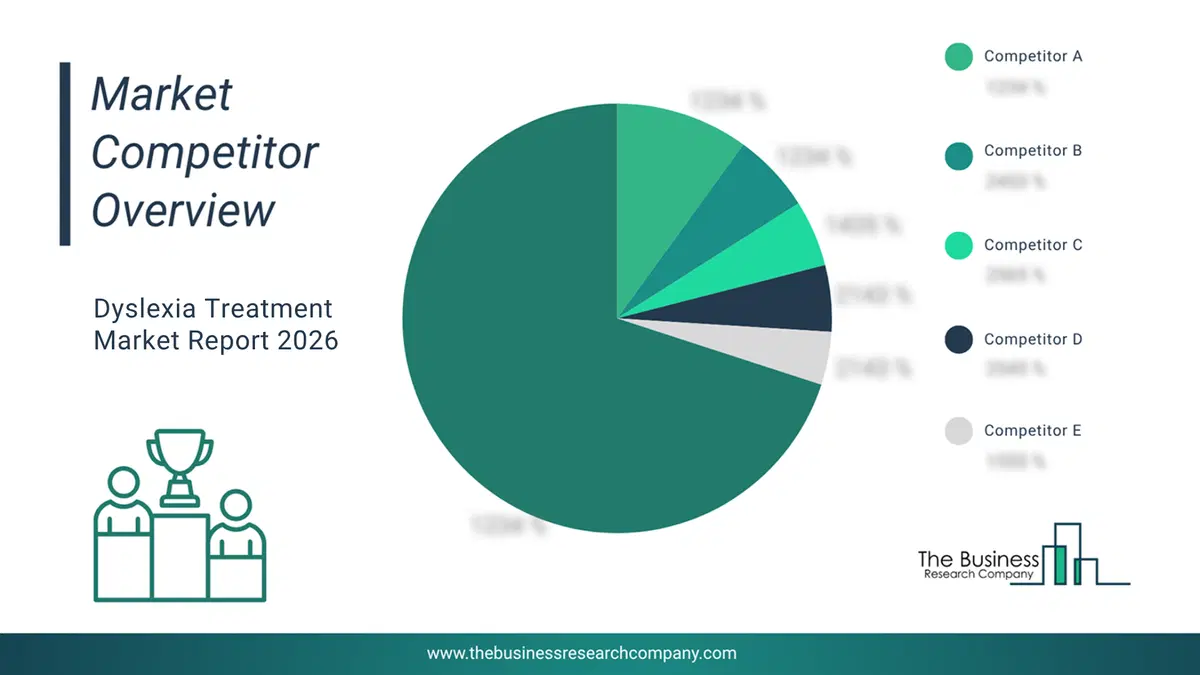
This chart is for illustrative purposes; the full report includes a detailed competitor analysis and comprehensive overview of the top 10 companies in the market.
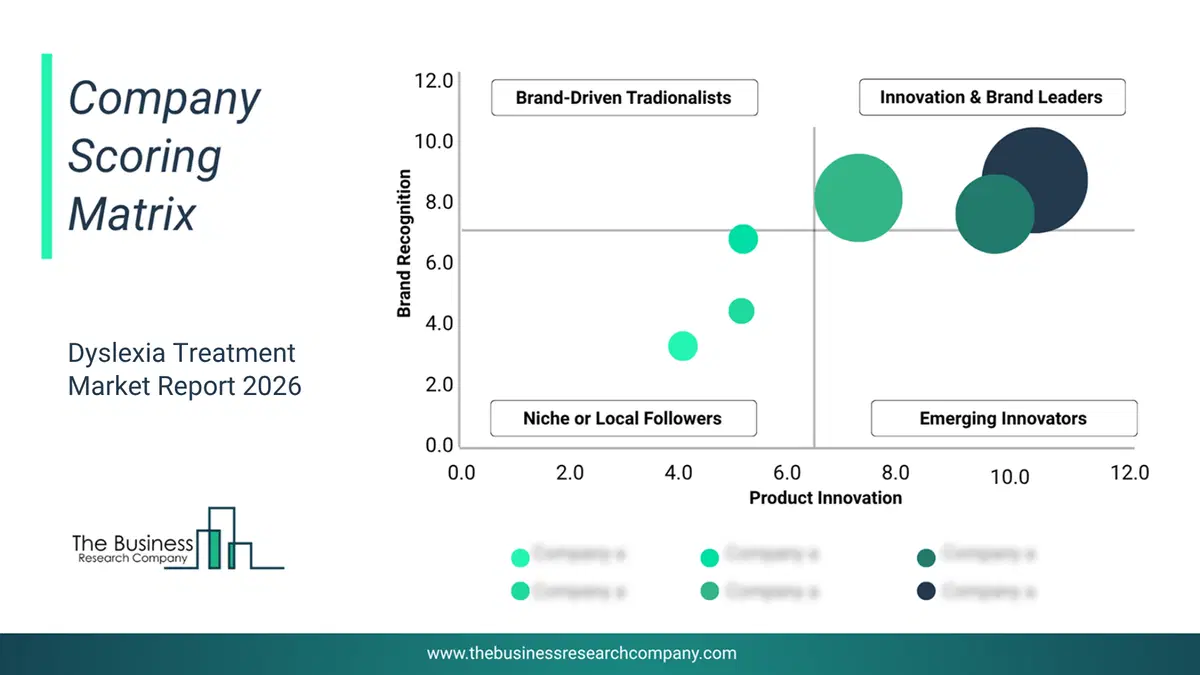
This chart maps companies by product innovation and brand strength, with bubble size indicating relative revenue, helping identify market leaders, challengers, and niche players. This is an illustrative chart; the full report provides a complete and accurate competitive analysis.
Global Dyslexia Treatment Market Trends and Insights
Major companies operating in the dyslexia treatment market are focusing on developing advanced solutions such as white noise features to enhance focus, reduce distractions, and improve reading fluency for neurodivergent learners. A white noise feature is an auditory tool that provides consistent background sound to support concentration and cognitive processing, particularly benefiting individuals with dyslexia, ADHD, and related learning differences. For instance, in October 2024, Promova Limited, a US-based technology company, launched Dyslexia Mode 2.0, an enhanced accessibility feature designed to improve language learning for individuals with dyslexia and other neurodiverse conditions. The updated version includes adjustable font sizes, color-shift options to reduce visual contrast, and the removal of all-caps text to improve readability, alongside supportive auditory elements such as white noise. Developed with expert input including guidance from dyslexic designer Martin Pysny Dyslexia Mode 2.0 delivers a more inclusive and comfortable learning environment tailored to users with unique cognitive and visual processing needs.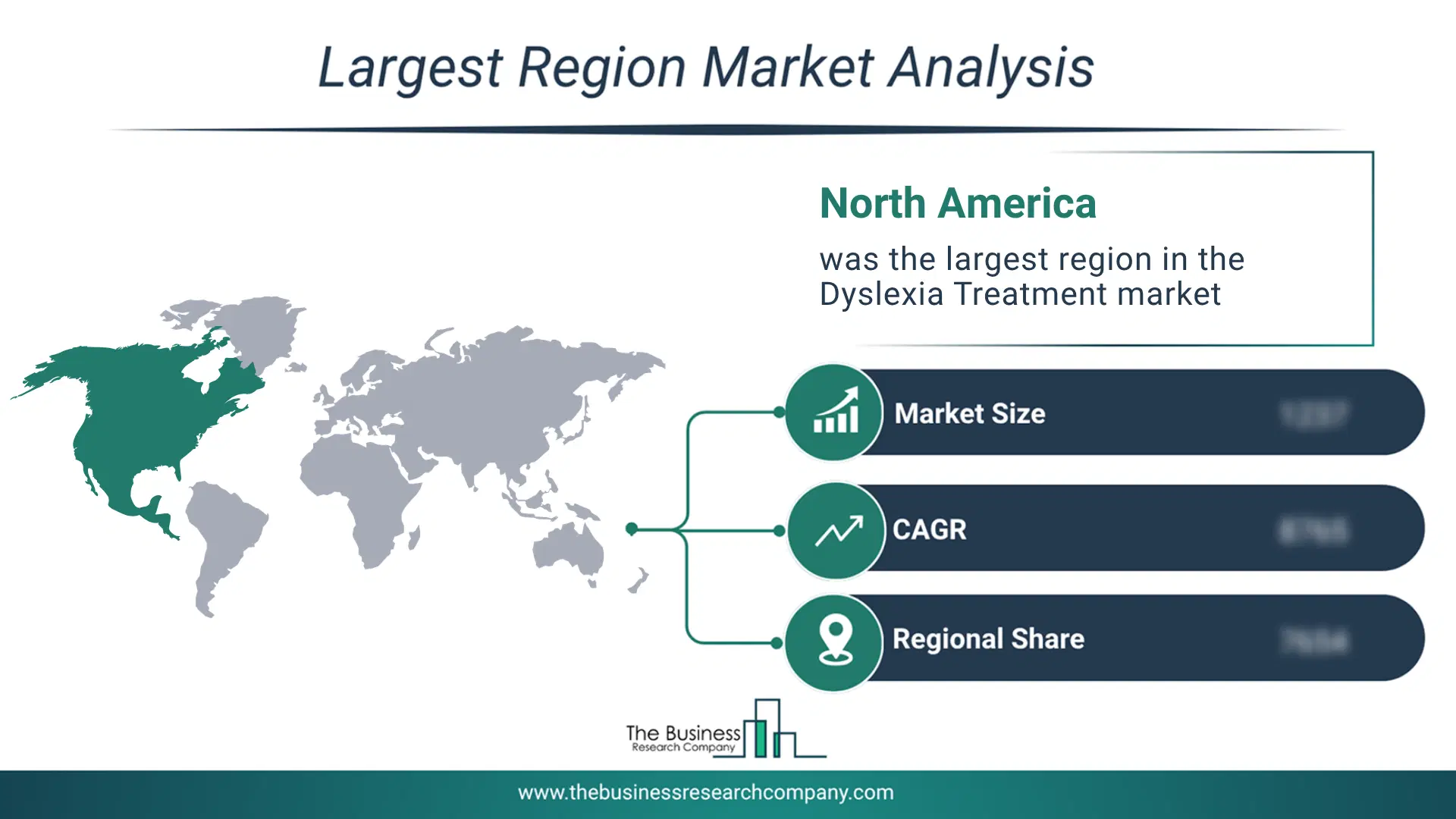
Regional Outlook
North America was the largest region in the dyslexia treatment market in 2025. Asia-Pacific is expected to be the fastest-growing region in the forecast period. The regions covered in this market report are Asia-Pacific, South East Asia, Western Europe, Eastern Europe, North America, South America, Middle East, Africa. The countries covered in this market report are Australia, Brazil, China, France, Germany, India, Indonesia, Japan, Taiwan, Russia, South Korea, UK, USA, Canada, Italy, Spain.What Defines the Dyslexia Treatment Market?
The dyslexia treatment market consists of revenues earned by entities by services such as literacy programs, multisensory interventions, assistive technologies, individualized education plans, cognitive training, and therapies targeting visual and auditory processing skills. The market value includes the value of related goods sold by the service provider or included within the service offering. The dyslexia treatment market also includes sales of assistive listening devices, phonological processing tools, digital pens and notetaking devices, eye-tracking devices, and multi-sensory learning tools. Values in this market are ‘factory gate’ values, that is the value of goods sold by the manufacturers or creators of the goods, whether to other entities (including downstream manufacturers, wholesalers, distributors, and retailers) or directly to end customers. The value of goods in this market includes related services sold by the creators of the goods.How is Market Value Defined and Measured?
The market value is defined as the revenues that enterprises gain from the sale of goods and/or services within the specified market and geography through sales, grants, or donations in terms of the currency (in USD unless otherwise specified). The revenues for a specified geography are consumption values that are revenues generated by organizations in the specified geography within the market, irrespective of where they are produced. It does not include revenues from resales along the supply chain, either further along the supply chain or as part of other products.
This chart presents market attractiveness based on a quantitative evaluation of growth, competition, strategic alignment, and risk, offering a clear view of opportunity areas for decision-making. This chart is for illustrative purposes; the full report contains the complete analysis.

This chart highlights the Total Addressable Market (TAM) by estimating the maximum revenue opportunity using an assumption-driven approach, supporting strategic planning and opportunity sizing across markets. The chart is illustrative; the full report provides a more comprehensive analysis.
What Key Data and Analysis Are Included in the Dyslexia Treatment Market Report 2026?
The dyslexia treatment market research report is one of a series of new reports from The Business Research Company that provides market statistics, including industry global market size, regional shares, competitors with the market share, detailed market segments, market trends and opportunities, and any further data you may need to thrive in the dyslexia treatment industry. The market research report delivers a complete perspective of everything you need, with an in-depth analysis of the current and future state of the industry.Dyslexia Treatment Market Report Forecast Analysis
| Report Attribute | Details |
|---|---|
| Market Size Value In 2026 | $32.27 billion |
| Revenue Forecast In 2030 | $40.92 billion |
| Growth Rate | CAGR of 6.1% from 2026 to 2030 |
| Base Year For Estimation | 2025 |
| Actual Estimates/Historical Data | 2020-2025 |
| Forecast Period | 2026 - 2030 |
| Market Representation | Revenue in USD Billion and CAGR from 2026 to 2030 |
| Segments Covered | Type, Therapy, Distribution Channel, End Users |
| Regional Scope | Asia-Pacific, Western Europe, Eastern Europe, North America, South America, Middle East, Africa |
| Country Scope | The countries covered in the report are Australia, Brazil, China, France, Germany, India, Indonesia, Japan, Taiwan, Russia, South Korea, UK, USA, Canada, Italy, Spain |
| Key Companies Profiled | Pfizer Inc., Astrazeneca Plc, Novartis AG, Takeda Pharmaceutical Company Limited, Eli Lilly and Company, Viatris Inc., Teva Pharmaceutical Industries Ltd., Purdue Pharma, Apotex Corporation, Endo International Plc, Amneal Pharmaceuticals LLC, Unither Pharmaceuticals LLC, RPG Life Sciences Ltd., Jubilant Pharma Limited, Breckenridge Pharmaceutical Inc., Rhodes Pharmaceuticals L.P., Cian Healthcare Pvt. Ltd, Lexia Learning Systems LLC, Wallace Pharmaceuticals Ltd., Ironshore Pharmaceuticals Inc., DK Pharmachem Pvt Ltd., Speechify Inc., Lingit AS, Lyfta, Nessy Learning Ltd. |
| Customization Scope | Request for Customization |
| Pricing And Purchase Options | Explore Purchase Options |