

Eco-Friendly Automotive Interior Materials Market Report 2026
Global Outlook – By Material Type (Recycled Textiles, Sustainable Leather Alternatives, Bio-Composites, Cork, Bamboo, Wood-Based Materials), By Processing (Injection Molding, Extrusion, Blow Molding, Other Processing), By Vehicle Type (Passenger Cars, Light Commercial Vehicles, Heavy Commercial Vehicles), By Sales Channel (Original Equipment Manufactures (OEM), Aftermarket), By Application (Seating Systems, Dashboard And Instrument Panels, Door Trim Systems, Flooring Systems, Roof And Headliner Systems, Cargo Area Interiors) – Market Size, Trends, Strategies, and Forecast to 2030
Eco-Friendly Automotive Interior Materials Market Overview
• Eco-Friendly Automotive Interior Materials market size has reached to $8.4 billion in 2025 • Expected to grow to $14.45 billion in 2030 at a compound annual growth rate (CAGR) of 11.4% • Growth Driver: Rising Electric Vehicle Adoption Driving The Market Growth Due To Increasing Demand For Sustainable And Low-Carbon Automotive Interior Materials • Market Trend: Bio-Composite Innovations Enhance Sustainable Vehicle Interiors • Asia-Pacific was the largest region in 2025 and Western Europe is the fastest growing region.What Is Covered Under Eco-Friendly Automotive Interior Materials Market?
Eco-friendly automotive interior materials are sustainable materials used in vehicle interiors that are derived from renewable, recycled, bio-based, or low-emission sources to minimize environmental impact throughout their lifecycle. These materials help reduce carbon emissions, conserve natural resources, and support circular economy goals while meeting automotive standards for durability, safety, and performance. The main material types of eco-friendly automotive interior materials include recycled textiles, sustainable leather alternatives, bio-composites, cork, bamboo, and wood-based materials. Recycled textiles refer to interior materials produced from recovered textile fibers and other recycled materials and used to provide durable, lightweight, and resource-efficient surfaces and components within vehicle cabins. These materials are processed through methods such as injection molding, extrusion, blow molding, and others for vehicle types such as passenger cars, light commercial vehicles, and heavy commercial vehicles. They are supplied through sales channels such as original equipment manufacturers (OEM) and aftermarket for applications such as seating systems, dashboard and instrument panels, door trim systems, flooring systems, roof and headliner systems, and cargo area interiors.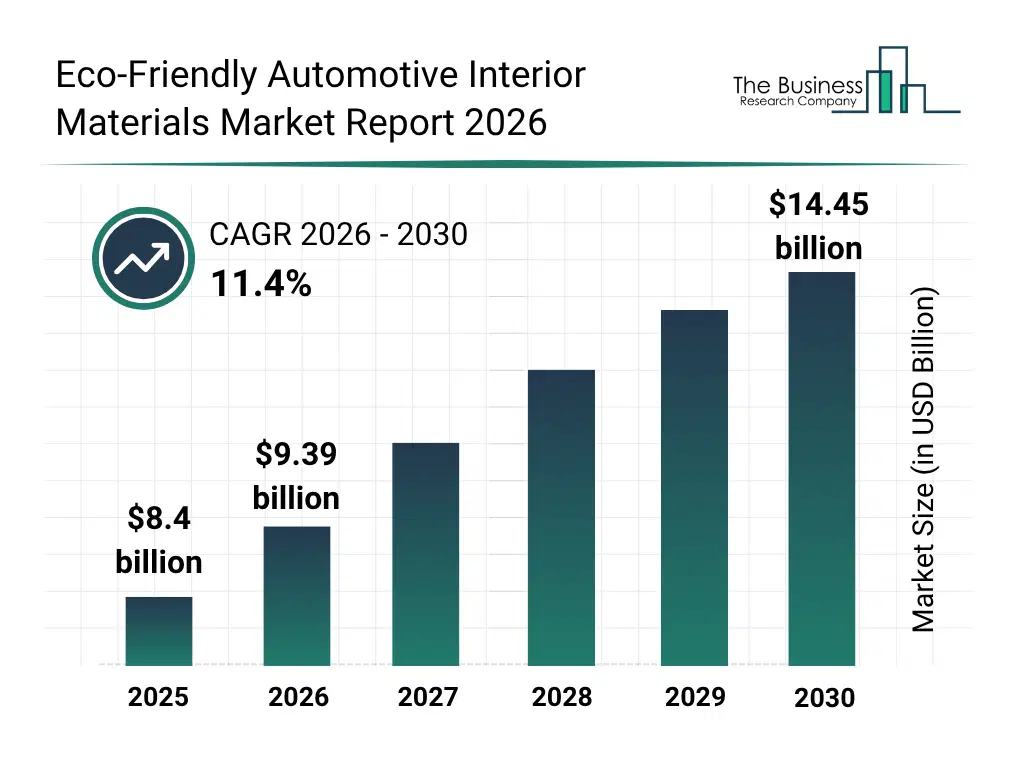
What Is The Eco-Friendly Automotive Interior Materials Market Size and Share 2026?
The eco-friendly automotive interior materials market size has grown rapidly in recent years. It will grow from $8.4 billion in 2025 to $9.39 billion in 2026 at a compound annual growth rate (CAGR) of 11.8%. The growth in the historic period can be attributed to rising automotive sustainability requirements, growing demand for recycled interior materials, increasing environmental concerns over conventional interior materials, expansion of sustainable material adoption by automotive OEMs, rising consumer preference for eco-friendly vehicle interiors.What Is The Eco-Friendly Automotive Interior Materials Market Growth Forecast?
The eco-friendly automotive interior materials market size is expected to see rapid growth in the next few years. It will grow to $14.45 billion in 2030 at a compound annual growth rate (CAGR) of 11.4%. The growth in the forecast period can be attributed to increasing adoption of circular material sourcing, growing demand for bio-based interior components, rising use of lightweight sustainable materials, increasing regulatory pressure to reduce vehicle lifecycle emissions, expanding use of sustainable materials across electric vehicles. Major trends in the forecast period include increasing use of recycled textile materials in vehicle interiors, growing adoption of bio-based leather alternatives, rising use of natural fiber bio-composites, increasing development of low-emission interior material formulations, growing integration of renewable wood and plant-based materials in interior components.Tariff Impact On Eco-Friendly Automotive Interior Materials Market
Tariffs are impacting the eco-friendly automotive interior materials market by increasing the cost of imported recycled textiles, bio-based leather alternatives, natural fibers, specialty resins, and sustainable wood-based materials used in vehicle interiors. This is raising material and production costs across seating, dashboard, door trim, flooring, headliner, and cargo-area applications, particularly in import-dependent regions such as Asia-Pacific, Europe, and North America. Material-intensive segments such as bio-composites, sustainable leather alternatives, and recycled textiles are most exposed to global sourcing pressures. However, tariffs are encouraging regional material production, local feedstock sourcing, supplier diversification, and investment in domestic sustainable-material manufacturing capacity.
Global Eco Friendly Automotive Interior Materials Market Segmentation
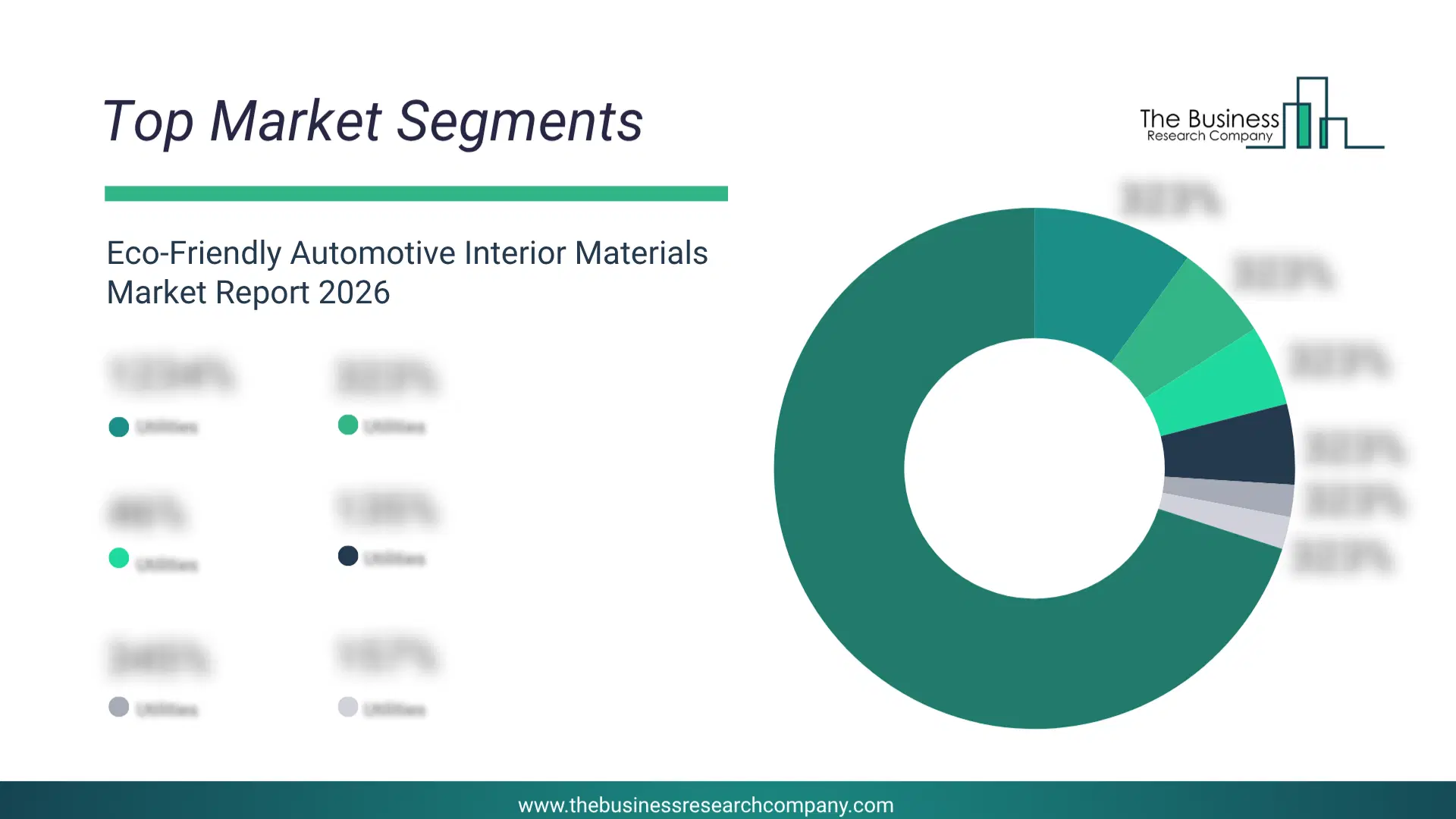
1) By Material Type: Recycled Textiles, Sustainable Leather Alternatives, Bio-Composites, Cork, Bamboo, Wood-Based Materials 2) By Processing: Injection Molding, Extrusion, Blow Molding, Other Processing 3) By Vehicle Type: Passenger Cars, Light Commercial Vehicles, Heavy Commercial Vehicles 4) By Sales Channel: Original Equipment Manufactures (OEM), Aftermarket 5) By Application: Seating Systems, Dashboard And Instrument Panels, Door Trim Systems, Flooring Systems, Roof And Headliner Systems, Cargo Area Interiors Subsegments: 1) By Recycled Textiles: Recycled Polyester Fabrics, Recycled Nylon Fabrics, Recycled Cotton Fabrics, Recycled Wool Fabrics, Recycled Blended Fabrics 2) By Sustainable Leather Alternatives: Bio-Based Leather, Recycled Leather, Polyurethane Leather, Silicone Leather, Mycelium Leather 3) By Bio-Composites: Flax Fiber Composites, Hemp Fiber Composites, Kenaf Fiber Composites, Jute Fiber Composites, Cellulose Fiber Composites 4) By Cork: Natural Cork, Recycled Cork, Cork Composite, Agglomerated Cork 5) By Bamboo: Bamboo Fiber, Bamboo Veneer, Bamboo Composite, Laminated Bamboo 6) By Wood-Based Materials: Natural Wood Veneers, Engineered Wood Panels, Reconstituted Wood Veneers, Wood Fiber CompositesWhat Is The Driver Of The Eco-Friendly Automotive Interior Materials Market?
The rising adoption of electric vehicles is expected to propel the growth of the eco-friendly automotive interior materials market going forward. Electric vehicles are automobiles powered wholly or partially by electric motors using energy stored in rechargeable battery systems. The adoption of electric vehicles is increasing due to growing environmental concerns, as consumers, businesses, and governments seek to reduce greenhouse gas emissions, improve air quality, and decrease dependence on fossil fuels through cleaner and more sustainable transportation solutions. Rising adoption of electric vehicles is driving demand for eco-friendly automotive interior materials as automakers increasingly focus on reducing overall vehicle carbon footprints, improving sustainability credentials, and incorporating lightweight, recyclable, and bio-based materials into EV cabin designs. For instance, in May 2026, according to the International Energy Agency (IEA), a France-based intergovernmental energy organization, global electric car production reached nearly 22 million units in 2025, representing an increase of more than 25% compared with 2024. Therefore, the rising adoption of electric vehicles is driving the growth of the eco-friendly automotive interior materials industry.Key Players In The Global Eco-Friendly Automotive Interior Materials Market
Major companies operating in the eco-friendly automotive interior materials market are BASF SE, Dow Inc., LyondellBasell Industries N.V., Saudi Basic Industries Corporation, Celanese Corporation, Mitsubishi Chemical Group Corporation, Arkema S.A., Magna International Inc., FORVIA SE, DuPont de Nemours Inc., Lear Corporation, Adient plc, Covestro AG, Braskem S.A., Asahi Kasei Corporation, Toray Industries Inc., Teijin Limited, Kuraray Co. Ltd., Dräxlmaier Group, Yanfeng International Automotive Technology Co. Ltd., Toyoda Gosei Co. Ltd., Borealis AG, International Automotive Components Group S.A., Grupo Antolin-Irausa S.A., Toyota Boshoku Corporation, Hyundai Transys Inc., TS TECH Co. Ltd., TACHI-S Co. Ltd., Seiren Co. Ltd.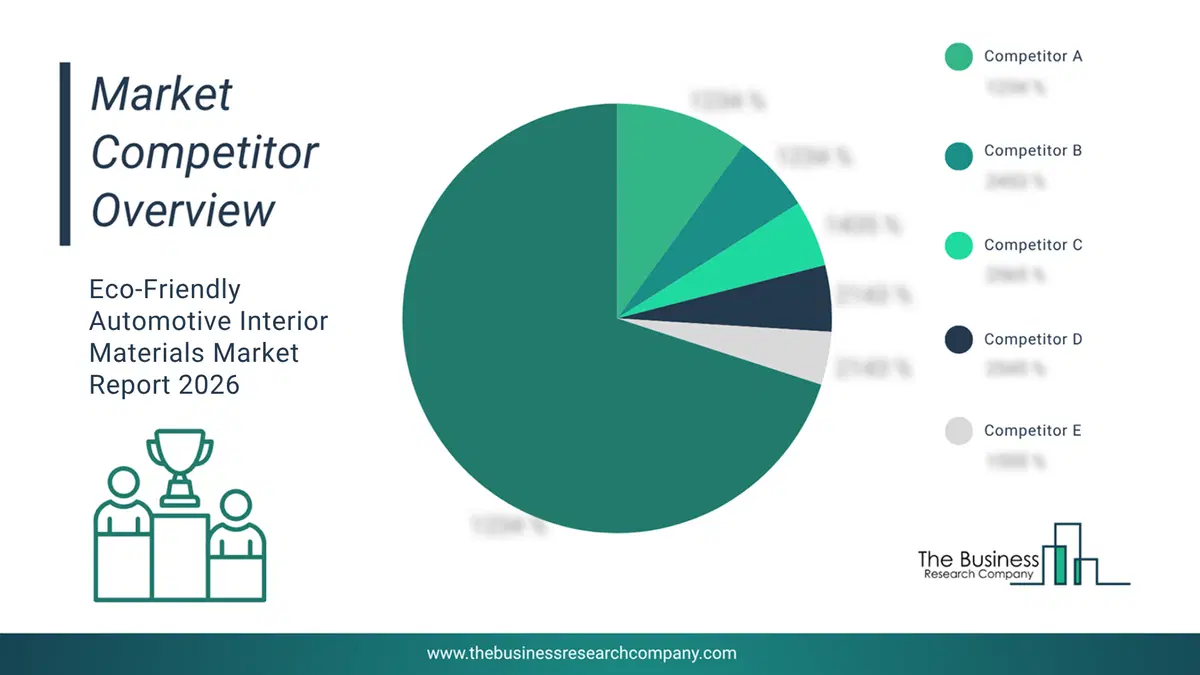
This chart is for illustrative purposes; the full report includes a detailed competitor analysis and comprehensive overview of the top 10 companies in the market.
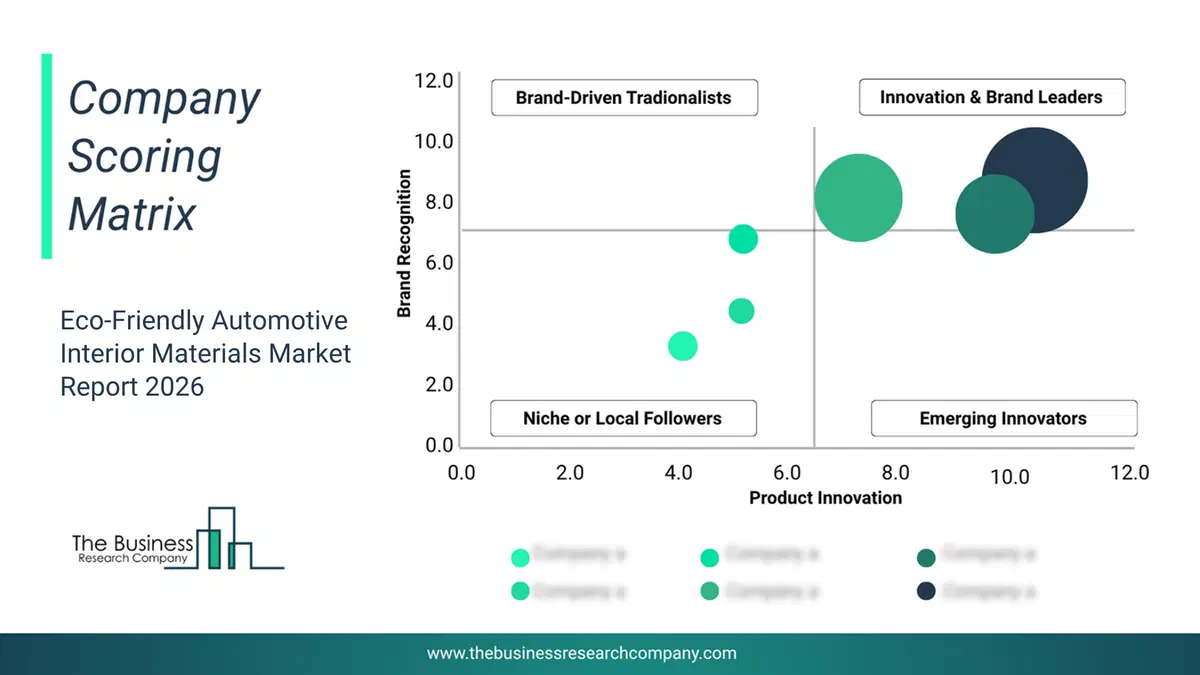
This chart maps companies by product innovation and brand strength, with bubble size indicating relative revenue, helping identify market leaders, challengers, and niche players. This is an illustrative chart; the full report provides a complete and accurate competitive analysis.
Global Eco-Friendly Automotive Interior Materials Market Trends and Insights
Major companies operating in the eco-friendly automotive interior materials market are focusing on developing innovative solutions, such as bio-composite materials for visible automotive interior parts, to enhance sustainability, reduce vehicle carbon footprints, and improve interior aesthetics. Bio-composite materials are advanced automotive interior materials that combine recycled polymers with renewable natural fibres, offering lightweight construction, lower environmental impact, and comparable mechanical performance to conventional petroleum-based plastics while providing enhanced visual appeal. For instance, in June 2025, MATERI’ACT, a France-based sustainable materials company and subsidiary of FORVIA, launched NAFILean Vision, an innovative family of sustainable biocomposites for automotive visible parts. Building on the company's NAFILean-R technology, the material blends low-carbon recycled plastics with renewable biomass such as hemp, wood, reed, vine shoots, and oyster shells to create durable, injection-moulded interior components. NAFILean Vision enables natural fibres to remain visible, delivering unique textures and premium aesthetics without requiring secondary decorative processes such as painting or laminating, thereby reducing manufacturing costs and CO₂ emissions. The material also supports advanced colour, material, and finish (CMF) customisation while meeting stringent automotive performance standards, making it suitable for applications including dashboard trims, door panels, centre consoles, and other visible interior components.What Are Latest Mergers And Acquisitions In The Eco-Friendly Automotive Interior Materials Market?
In August 2025, Hyundai CRADLE, a South Korea-based open innovation hub of Hyundai Motor Group, partnered with UNCAGED Innovations to co-develop sustainable, animal-free leather alternatives for automotive interiors. Through the partnership, Hyundai CRADLE aims to develop grain-based, bio-based leather alternatives for vehicle interiors, reducing greenhouse gas emissions by 95%, water use by 89%, and energy consumption by 71% while maintaining required durability and quality. UNCAGED Innovations is a US-based biomaterials company that manufactures sustainable biomaterials that are being developed specifically for automotive interior applications.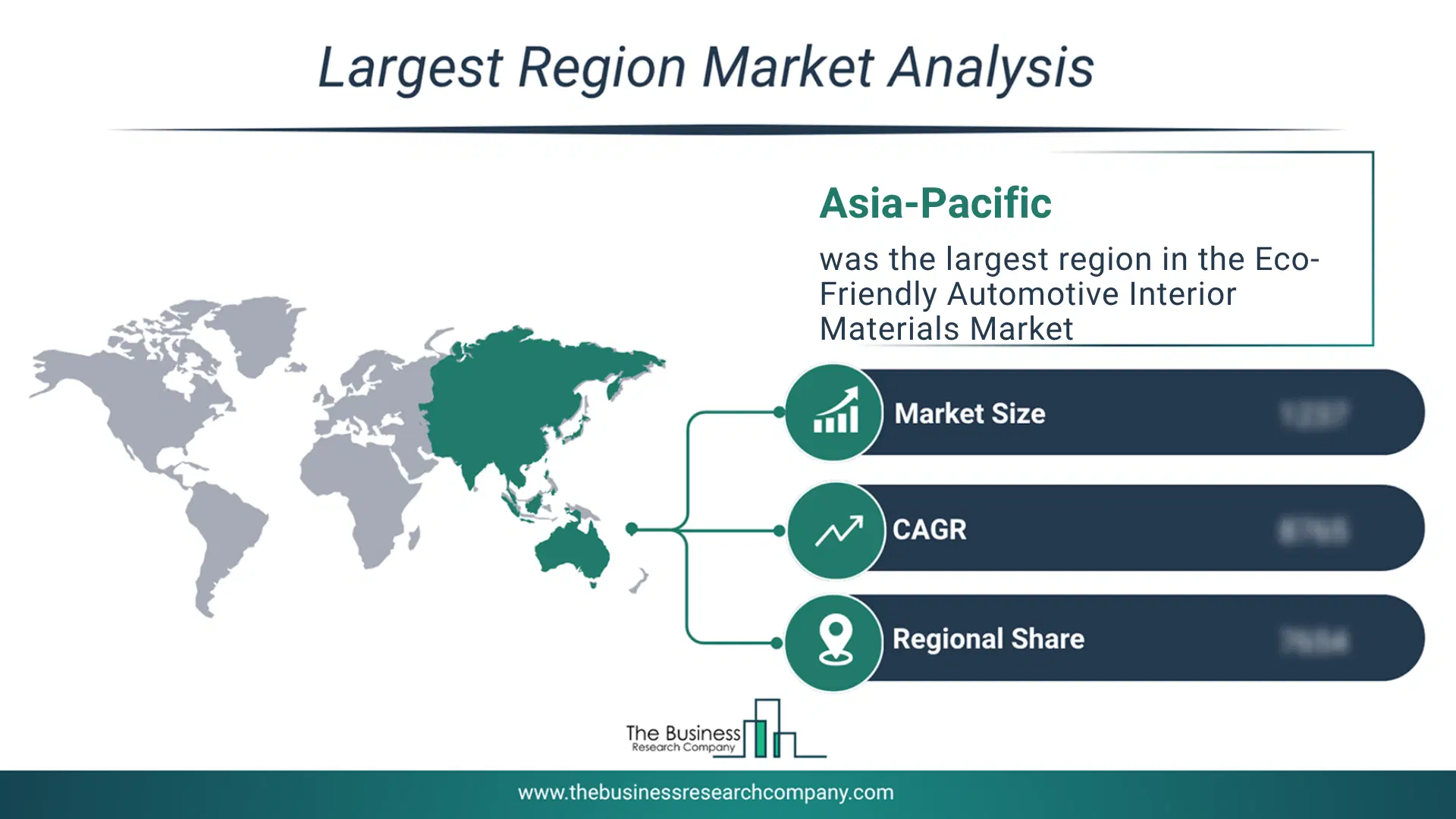
Regional Outlook
Asia-Pacific was the largest region in the eco-friendly automotive interior materials market in 2025. Western Europe is expected to be the fastest-growing region in the forecast period. The regions covered in this market report are Asia-Pacific, South East Asia, Western Europe, Eastern Europe, North America, South America, Middle East, Africa. The countries covered in this market report are Australia, Brazil, China, France, Germany, India, Indonesia, Japan, Taiwan, Russia, South Korea, UK, USA, Canada, Italy, Spain.What Defines the Eco-Friendly Automotive Interior Materials Market?
The eco-friendly automotive interior materials market consists of sales of recycled plastics, natural fiber composites, recycled polyurethane foams, and bio-based polymers. Values in this market are ‘factory gate’ values, that is, the value of goods sold by the manufacturers or creators of the goods, whether to other entities (including downstream manufacturers, wholesalers, distributors, and retailers) or directly to end customers. The value of goods in this market includes related services sold by the creators of the goods.How is Market Value Defined and Measured?
The market value is defined as the revenues that enterprises gain from the sale of goods and/or services within the specified market and geography through sales, grants, or donations in terms of the currency (in USD unless otherwise specified). The revenues for a specified geography are consumption values that are revenues generated by organizations in the specified geography within the market, irrespective of where they are produced. It does not include revenues from resales along the supply chain, either further along the supply chain or as part of other products.
This chart presents market attractiveness based on a quantitative evaluation of growth, competition, strategic alignment, and risk, offering a clear view of opportunity areas for decision-making. This chart is for illustrative purposes; the full report contains the complete analysis.

This chart highlights the Total Addressable Market (TAM) by estimating the maximum revenue opportunity using an assumption-driven approach, supporting strategic planning and opportunity sizing across markets. The chart is illustrative; the full report provides a more comprehensive analysis.
What Key Data and Analysis Are Included in the Eco-Friendly Automotive Interior Materials Market Report 2026?
The eco-friendly automotive interior materials market research report is one of a series of new reports from The Business Research Company that provides market statistics, including industry global market size, regional shares, competitors with the market share, detailed market segments, market trends and opportunities, and any further data you may need to thrive in the eco-friendly automotive interior materials industry. The market research report delivers a complete perspective of everything you need, with an in-depth analysis of the current and future state of the industry.Eco-Friendly Automotive Interior Materials Market Report Forecast Analysis
| Report Attribute | Details |
|---|---|
| Market Size Value In 2026 | $9.39 billion |
| Revenue Forecast In 2030 | $14.45 billion |
| Growth Rate | CAGR of 11.4% from 2026 to 2030 |
| Base Year For Estimation | 2025 |
| Actual Estimates/Historical Data | 2020-2025 |
| Forecast Period | 2026 - 2030 |
| Market Representation | Revenue in USD Billion and CAGR from 2026 to 2030 |
| Segments Covered | Material Type, Processing, Vehicle Type, Sales Channel, Application |
| Regional Scope | Asia-Pacific, Western Europe, Eastern Europe, North America, South America, Middle East, Africa |
| Country Scope | The countries covered in the report are Australia, Brazil, China, France, Germany, India, Indonesia, Japan, Taiwan, Russia, South Korea, UK, USA, Canada, Italy, Spain. |
| Key Companies Profiled | BASF SE, Dow Inc., LyondellBasell Industries N.V., Saudi Basic Industries Corporation, Celanese Corporation, Mitsubishi Chemical Group Corporation, Arkema S.A., Magna International Inc., FORVIA SE, DuPont de Nemours Inc., Lear Corporation, Adient plc, Covestro AG, Braskem S.A., Asahi Kasei Corporation, Toray Industries Inc., Teijin Limited, Kuraray Co. Ltd., Dräxlmaier Group, Yanfeng International Automotive Technology Co. Ltd., Toyoda Gosei Co. Ltd., Borealis AG, International Automotive Components Group S.A., Grupo Antolin-Irausa S.A., Toyota Boshoku Corporation, Hyundai Transys Inc., TS TECH Co. Ltd., TACHI-S Co. Ltd., Seiren Co. Ltd. |
| Customization Scope | Request for Customization |
| Pricing And Purchase Options | Explore Purchase Options |