
Edge Bioinformatics For Sequencing Market Report 2026
Global Outlook – By Sequencing Technology (Next Generation Sequencing, Sanger Sequencing, Third Generation Sequencing, Other Sequencing), By Component (Hardware, Software, Services), By Deployment Mode (On Device Edge Deployment, On Premises Edge Deployment, Hybrid Edge And Cloud Deployment), By Application (Clinical Diagnostics, Field Research, Forensics, Drug Discovery, Public Health And Disease Surveillance), By End User (Hospitals And Clinics, Biotechnology And Pharmaceutical Companies, Academic And Research Institutes, Government And Public Health Organizations) – Market Size, Trends, Strategies, and Forecast to 2030
Edge Bioinformatics For Sequencing Market Overview
• Edge Bioinformatics For Sequencing market size has reached to $1.99 billion in 2025 • Expected to grow to $4.21 billion in 2030 at a compound annual growth rate (CAGR) of 16.2% • Growth Driver: Rising Precision Medicine Accelerating Demand For The Market Due To Advancements In Genomic Sequencing And Increased FDA Approvals Of Personalized Therapies • North America was the largest region in 2025 and Asia-Pacific is the fastest growing region.What Is Covered Under Edge Bioinformatics For Sequencing Market?
Edge bioinformatics for sequencing refers to the analysis of genomic sequencing data at or near the point of data generation, using local computing resources such as onboard processors, portable devices, or on-site servers rather than relying on centralized or cloud-based infrastructure. This approach enables real-time or near–real-time processing of sequencing data reducing data transfer requirements, latency, and dependence on high-bandwidth connectivity. The main sequencing technologies of edge bioinformatics for sequencing include next-generation sequencing, Sanger sequencing, third-generation sequencing, and others. Next-generation sequencing (NGS) is a high-throughput technology that rapidly determines the precise order of nucleotides in DNA or RNA molecules. The different components include hardware, software, and services, with deployment modes that include on-device edge deployment, on-premises edge deployment, and hybrid edge and cloud deployment. The various applications involved are clinical diagnostics, field research, forensics, drug discovery, and public health and disease surveillance, and they are used by several end users such as hospitals and clinics, biotechnology and pharmaceutical companies, academic and research institutes, and government and public health organizations.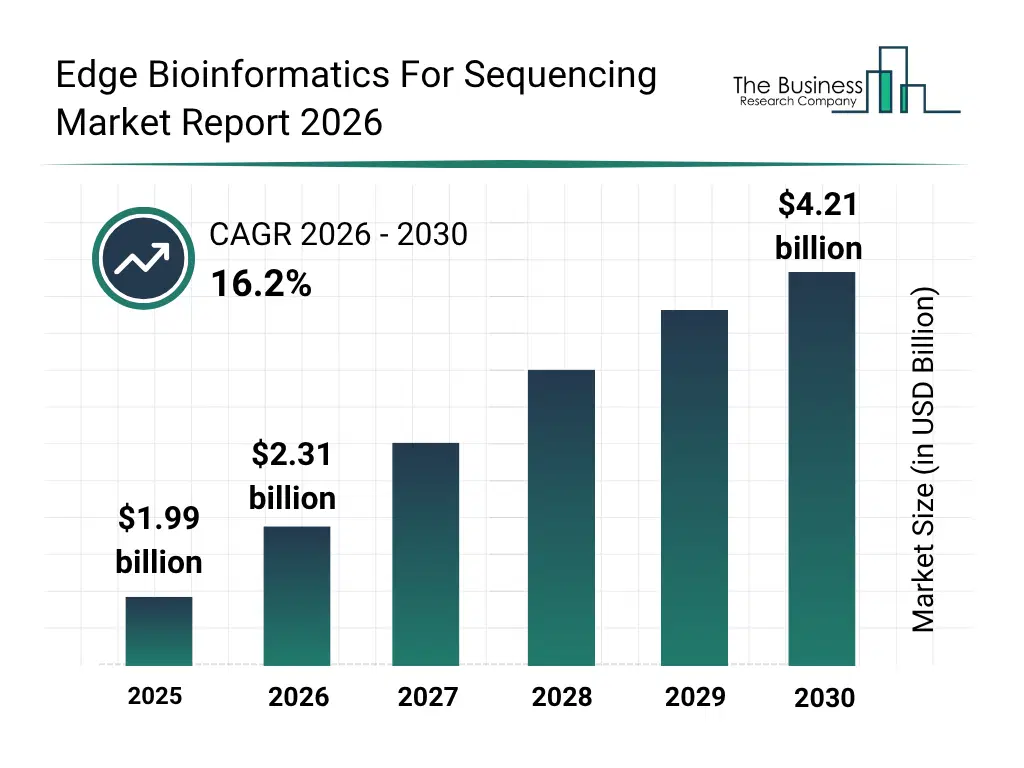
What Is The Edge Bioinformatics For Sequencing Market Size and Share 2026?
The edge bioinformatics for sequencing market size has grown rapidly in recent years. It will grow from $1.99 billion in 2025 to $2.31 billion in 2026 at a compound annual growth rate (CAGR) of 16.0%. The growth in the historic period can be attributed to increasing adoption of next generation sequencing technologies, growth in genomics research, rising demand for rapid diagnostic tools, expansion of biotechnology infrastructure, development of portable sequencing devices.What Is The Edge Bioinformatics For Sequencing Market Growth Forecast?
The edge bioinformatics for sequencing market size is expected to see rapid growth in the next few years. It will grow to $4.21 billion in 2030 at a compound annual growth rate (CAGR) of 16.2%. The growth in the forecast period can be attributed to growing adoption of AI-driven sequencing analysis, increasing deployment of on-device edge computing, rising demand for real-time field diagnostics, expansion of public health surveillance programs, integration of hybrid edge-cloud sequencing platforms. Major trends in the forecast period include increasing adoption of on-device edge sequencing, rising integration of real-time data analytics in sequencing, expansion of portable and field-deployable sequencing platforms, growing focus on clinical diagnostics and personalized medicine, rising demand for hybrid edge and cloud sequencing solutions.
Global Edge Bioinformatics For Sequencing Market Segmentation
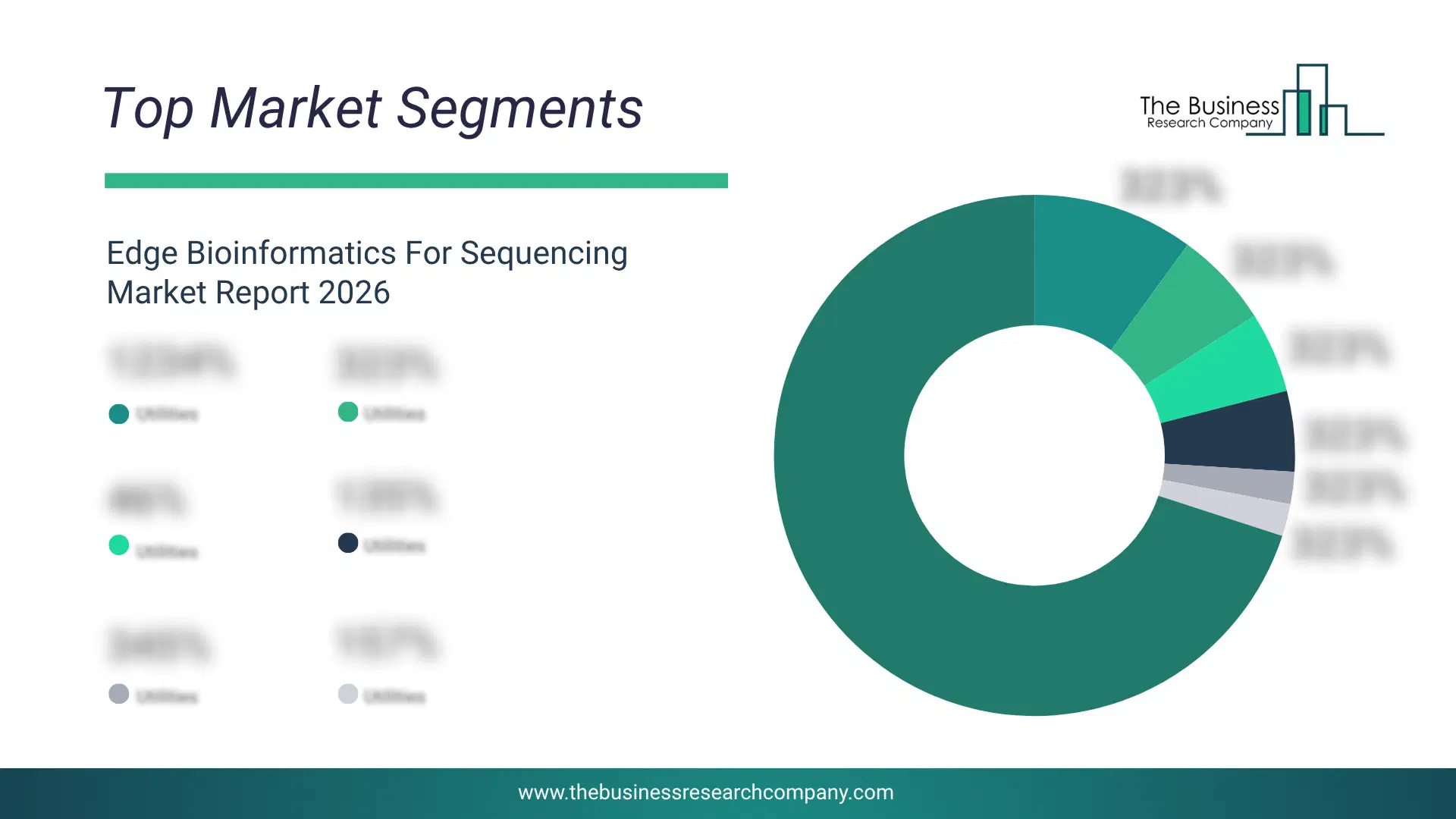
1) By Sequencing Technology: Next Generation Sequencing, Sanger Sequencing, Third Generation Sequencing, Other Sequencing 2) By Component: Hardware, Software, Services 3) By Deployment Mode: On Device Edge Deployment, On Premises Edge Deployment, Hybrid Edge And Cloud Deployment 4) By Application: Clinical Diagnostics, Field Research, Forensics, Drug Discovery, Public Health And Disease Surveillance 5) By End User: Hospitals And Clinics, Biotechnology And Pharmaceutical Companies, Academic And Research Institutes, Government And Public Health Organizations Subsegments: 1) By Next Generation Sequencing: Sequencing By Synthesis, Sequencing By Ligation, Ion Semiconductor Sequencing, Pyrosequencing 2) By Sanger Sequencing: Chain Termination Method, Capillary Electrophoresis Sequencing, Radioactive Labeling Sequencing, Fluorescent Labeling Sequencing 3) By Third Generation Sequencing: Single Molecule Real Time Sequencing, Nanopore Sequencing, Single Molecule Sequencing Without Amplification 4) By Other Sequencing: Shotgun Sequencing, Targeted Sequencing, Exome Sequencing, Transcriptome SequencingWhat Are The Drivers Of The Edge Bioinformatics For Sequencing Market?
The rise of precision medicine is expected to propel the growth of the edge bioinformatics for sequencing market in the coming years. Precision medicine is a personalized healthcare approach that uses genetic, environmental, and lifestyle information to deliver targeted and more effective treatments for individual patients. Its adoption is accelerating due to advances in genomic sequencing technologies, which have made sequencing faster, more accurate, and more affordable, enabling treatment decisions to be tailored to an individual’s genetic profile. As precision medicine increasingly depends on large-scale genomic data and rapid analysis, centralized cloud-based bioinformatics face challenges such as latency, bandwidth demands, and data privacy concerns. Edge bioinformatics for sequencing overcomes these limitations by enabling real-time, on-site genomic data analysis, supporting faster mutation detection and more timely personalized clinical decisions. For instance, in February 2024, the Personalized Medicine Coalition, a US-based non-profit organization, reported that in 2023 the US Food and Drug Administration approved 16 new personalized treatments for rare disease patients, up from six in 2022. Therefore, the rising precision medicine is driving the growth of the edge bioinformatics for sequencing industry. The rise in healthcare expenditure is expected to contribute to the growth of the edge bioinformatics for sequencing market in the coming years. Healthcare expenditure refers to the total financial resources spent by individuals, organizations, and governments on the prevention, diagnosis, treatment, and management of health conditions. This expenditure is increasing largely due to advancements in medical technology, as the adoption of sophisticated diagnostic tools, genomic sequencing platforms, and innovative therapies often involves higher costs and sustained investment. Rising healthcare expenditure enables healthcare systems, research institutions, and life sciences companies to allocate greater resources toward advanced genomic infrastructure, including high-throughput sequencing technologies and real-time data analysis capabilities. For instance, in December 2024, the Centers for Medicare & Medicaid Services (CMS), a US-based agency responsible for administering Medicare and Medicaid programs, reported that U.S. healthcare expenditures increased by 7.5% in 2023, reaching $4.9 trillion, or approximately $14,570 per person. Therefore, the rising healthcare expenditure is driving the growth of the edge bioinformatics for the sequencing market. The increasing research and development investments are expected to propel the growth of the edge bioinformatics for the sequencing market going forward. Research and development (R&D) investments refer to the allocation of resources toward creating new products, improving existing offerings, and advancing technologies to drive innovation and long-term business growth. Rising technological advancements are driving increased research and development investments, as companies must continuously innovate and upgrade their products and processes to keep pace with rapid digital transformation and changing industry standards. Research and development (R&D) investments support edge bioinformatics for sequencing by enabling the development of advanced algorithms, optimized hardware integration, and real-time data processing capabilities that allow genomic data to be analyzed directly at or near sequencing devices, reducing latency, lowering data transfer costs, and accelerating clinical and research decision-making. For instance, in 2023, according to the Office for National Statistics, a UK-based government agency, the UK government’s net spending on research and development (R&D) increased to £17.4 billion ($22.1 billion) in 2023, up from £16.1 billion ($20.45 billion) in 2022, marking an 8.2% rise. Therefore, the increasing research and development investments are driving the growth of edge bioinformatics for the sequencing market.Key Players In The Global Edge Bioinformatics For Sequencing Market
Major companies operating in the edge bioinformatics for sequencing market are Roche Holding AG, Thermo Fisher Scientific Inc., BC Platforms Ltd., Eurofins Scientific SE, Agilent Technologies Inc., Illumina Inc., Revvity Inc, Bio-Rad Laboratories Inc., QIAGEN N.V., 10x Genomics Inc., Azenta Life Sciences Inc., BGI Genomics Co. Ltd., Novogene Co. Ltd., Seven Bridges Genomics Inc., Genedata AG, DNAnexus Inc., Oxford Nanopore Technologies Ltd., Saphetor SA, Strand Life Sciences Pvt. Ltd., PierianDx Inc., DNASTAR Inc., Golden Helix Inc., Partek Incorporated.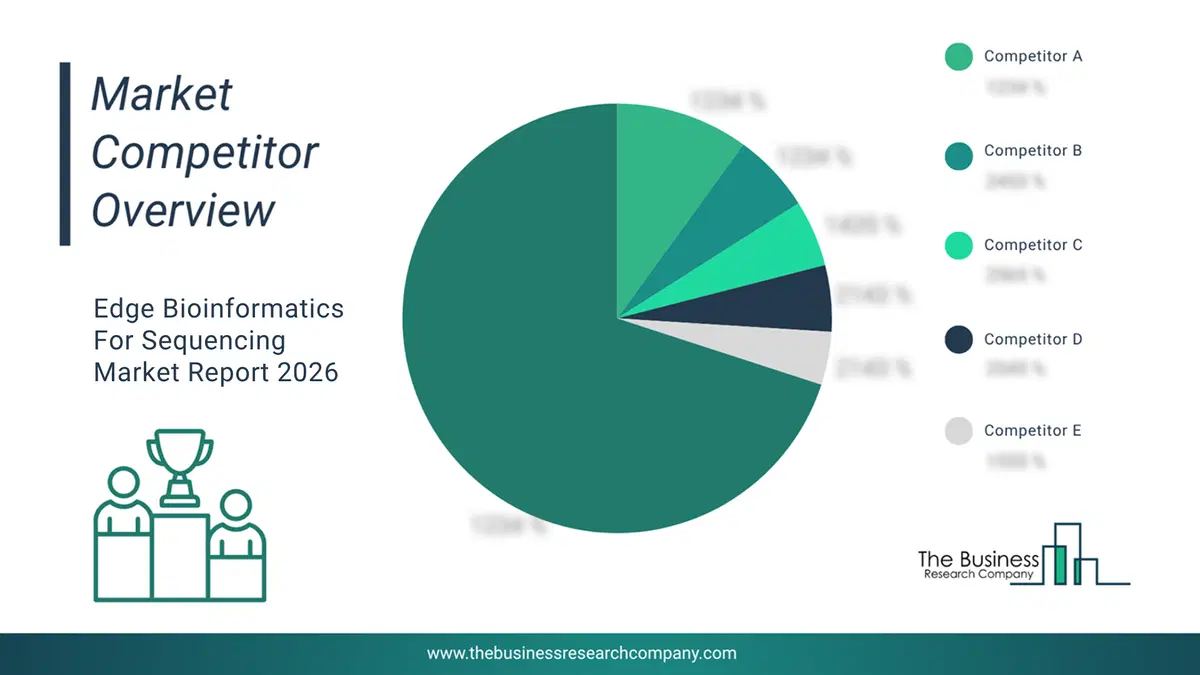
This chart is for illustrative purposes; the full report includes a detailed competitor analysis and comprehensive overview of the top 10 companies in the market.
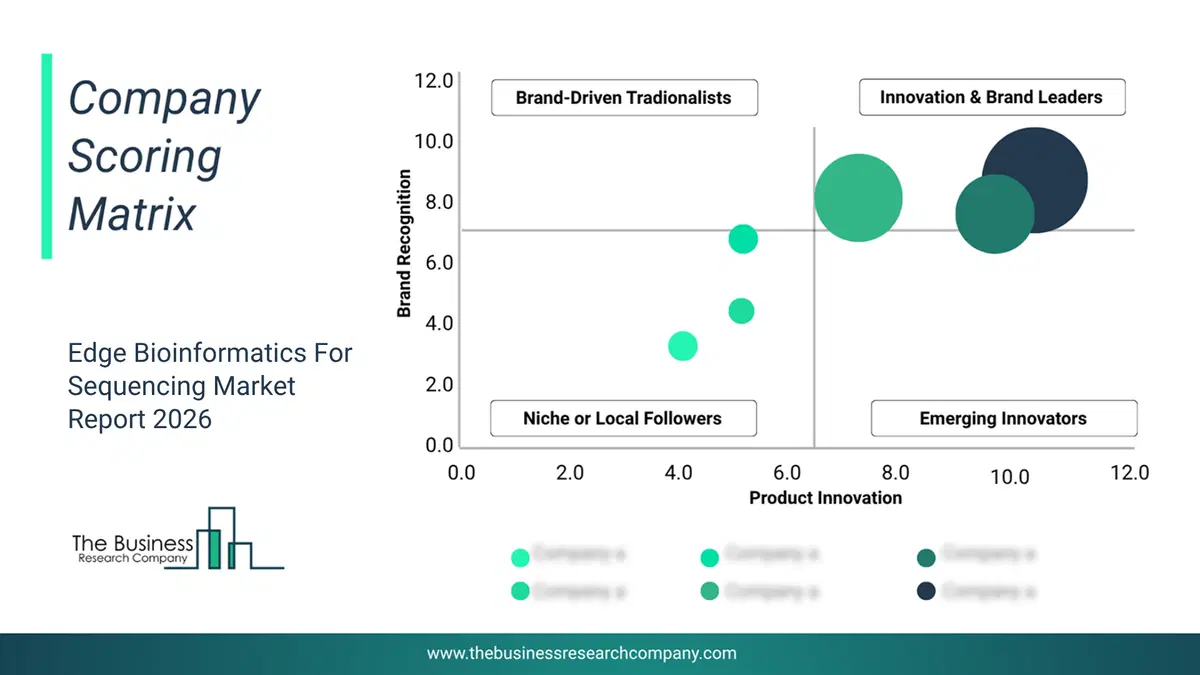
This chart maps companies by product innovation and brand strength, with bubble size indicating relative revenue, helping identify market leaders, challengers, and niche players. This is an illustrative chart; the full report provides a complete and accurate competitive analysis.
Regional Insights
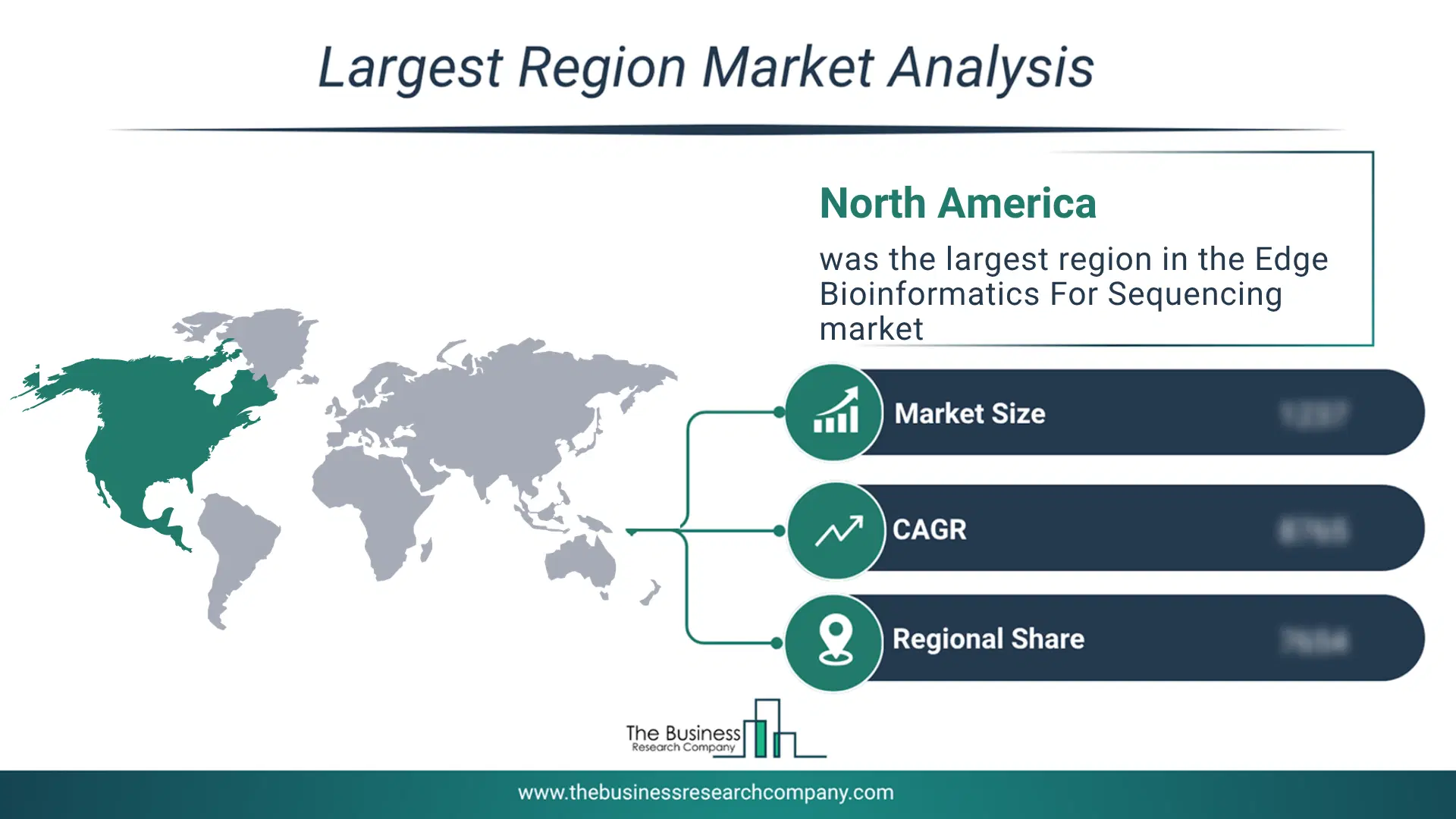
North America was the largest region in the edge bioinformatics for sequencing market in 2025. Asia-Pacific is expected to be the fastest-growing region in the forecast period. The regions covered in this market report are Asia-Pacific, South East Asia, Western Europe, Eastern Europe, North America, South America, Middle East, Africa. The countries covered in this market report are Australia, Brazil, China, France, Germany, India, Indonesia, Japan, Taiwan, Russia, South Korea, UK, USA, Canada, Italy, Spain.What Defines the Edge Bioinformatics For Sequencing Market?
The edge bioinformatics for sequencing market consists of revenues earned by entities by providing services such as real-time basecalling and signal processing, on-device read alignment and genome mapping, and quality control and run performance monitoring. The market value includes the value of related goods sold by the service provider or included within the service offering. The edge bioinformatics for sequencing market also includes sales of compact edge AI accelerators, portable laptops, and mobile DNA sequencing SoC prototypes. Values in this market are ‘factory gate’ values; that is, the value of goods sold by the manufacturers or creators of the goods, whether to other entities (including downstream manufacturers, wholesalers, distributors, and retailers) or directly to end customers. The value of goods in this market includes related services sold by the creators of the goods.How is Market Value Defined and Measured?
The market value is defined as the revenues that enterprises gain from the sale of goods and/or services within the specified market and geography through sales, grants, or donations in terms of the currency (in USD unless otherwise specified). The revenues for a specified geography are consumption values that are revenues generated by organizations in the specified geography within the market, irrespective of where they are produced. It does not include revenues from resales along the supply chain, either further along the supply chain or as part of other products.
This chart presents market attractiveness based on a quantitative evaluation of growth, competition, strategic alignment, and risk, offering a clear view of opportunity areas for decision-making. This chart is for illustrative purposes; the full report contains the complete analysis.

This chart highlights the Total Addressable Market (TAM) by estimating the maximum revenue opportunity using an assumption-driven approach, supporting strategic planning and opportunity sizing across markets. The chart is illustrative; the full report provides a more comprehensive analysis.
What Key Data And Analysis Are Included In The Edge Bioinformatics For Sequencing Market Report 2026?
The edge bioinformatics for sequencing market research report is one of a series of new reports from The Business Research Company that provides market statistics, including industry global market size, regional shares, competitors with the market share, detailed market segments, market trends and opportunities, and any further data you may need to thrive in the edge bioinformatics for sequencing industry. The market research report delivers a complete perspective of everything you need, with an in-depth analysis of the current and future state of the industry.Edge Bioinformatics For Sequencing Market Report Forecast Analysis
| Report Attribute | Details |
|---|---|
| Market Size Value In 2026 | $2.31 billion |
| Revenue Forecast In 2030 | $4.21 billion |
| Growth Rate | CAGR of 16.2% from 2026 to 2030 |
| Base Year For Estimation | 2025 |
| Actual Estimates/Historical Data | 2020-2025 |
| Forecast Period | 2026 - 2030 |
| Market Representation | Revenue in USD Billion and CAGR from 2026 to 2030 |
| Segments Covered | Sequencing Technology, Component, Deployment Mode, Application, End User |
| Regional Scope | Asia-Pacific, Western Europe, Eastern Europe, North America, South America, Middle East, Africa |
| Country Scope | The Countries Covered In This Market Report Are Australia, Brazil, China, France, Germany, India, Indonesia, Japan, Taiwan, Russia, South Korea, Uk, Usa, Canada, Italy, Spain. |
| Key Companies Profiled | Roche Holding AG, Thermo Fisher Scientific Inc., BC Platforms Ltd., Eurofins Scientific SE, Agilent Technologies Inc., Illumina Inc., Revvity Inc, Bio-Rad Laboratories Inc., QIAGEN N.V., 10x Genomics Inc., Azenta Life Sciences Inc., BGI Genomics Co. Ltd., Novogene Co. Ltd., Seven Bridges Genomics Inc., Genedata AG, DNAnexus Inc., Oxford Nanopore Technologies Ltd., Saphetor SA, Strand Life Sciences Pvt. Ltd., PierianDx Inc., DNASTAR Inc., Golden Helix Inc., Partek Incorporated. |
| Customization Scope | Request for Customization |
| Pricing And Purchase Options | Explore Purchase Options |