
Edible Films And Coatings Market Report 2026
Global Outlook – By Type (Protein-Based Edible Films and Coatings, Polysaccharide-Based Edible Films and Coatings, Lipid-Based Edible Films and Coatings, Composite Edible Films and Coatings), By Application (Dairy products, Bakery and Confectionery, Fruits and Vegetables, Meat, Poultry, and Seafood, Other Applications), By End-User (Food and Beverage Industry, Food Processing and Packaging Industry, Fresh Produce and Post-Harvest Handling Industry) – Market Size, Trends, Strategies, and Forecast to 2030
Edible Films And Coatings Market Overview
• Edible Films And Coatings market size has reached to $3.65 billion in 2025 • Expected to grow to $5.8 billion in 2030 at a compound annual growth rate (CAGR) of 9.7% • Growth Driver: Surging Demand For Organic Products Fuels Edible Films And Coatings Market Growth • Market Trend: Innovative Plant-Based Coating Extends Fresh Produce Shelf Life And Reduces Plastic Waste • North America was the largest region in 2025 and Asia-Pacific is the fastest growing region.What Is Covered Under Edible Films And Coatings Market?
The edible films and coatings market consists of sales of edible films and coatings and related products by entities (organizations, sole traders, and partnerships) used for preventing moisture loss, maintaining quality, safe transportation, and storage of foods. Edible films and coatings refer to thin layers of edible materials applied to food products that play an important role in their conservation, distribution, and marketing. The main types of ingredients in edible films and coatings are protein, polysaccharides, lipids, and composites. Proteins refer to a class of nitrogenous organic compounds that have large molecules composed of one or more long chains of amino acids. The applications include dairy products, bakery and confectionery, fruits and vegetables, meat, poultry, seafood, and other applications. The various end-users include food and beverages and pharmaceuticals.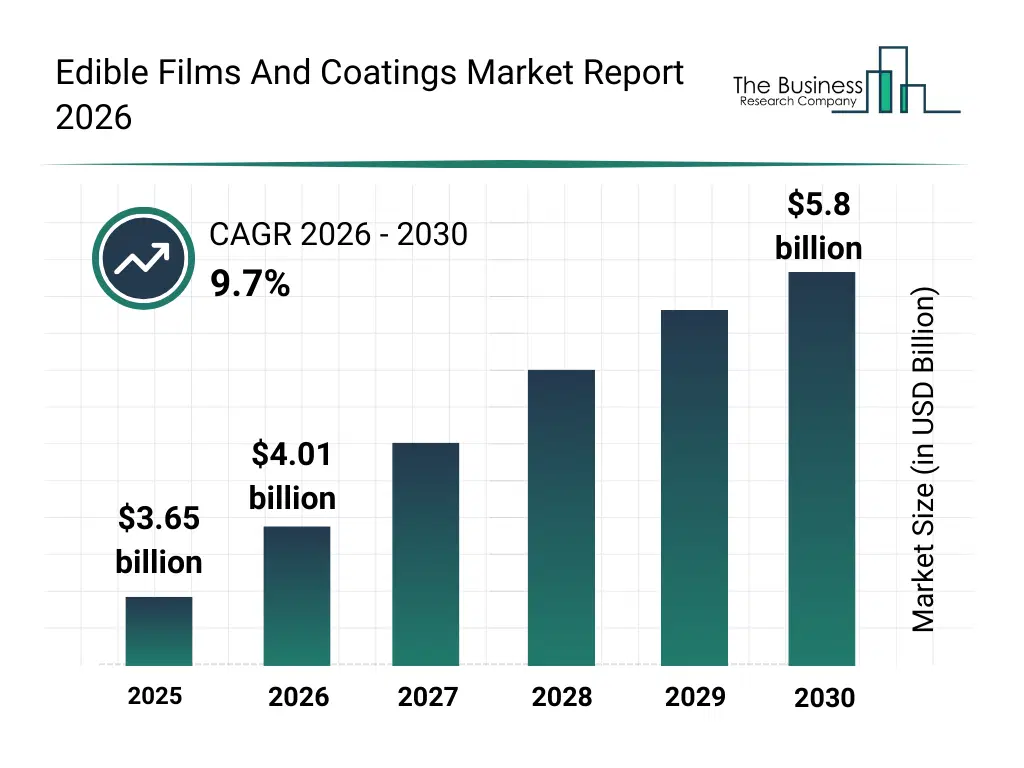
What Is The Edible Films And Coatings Market Size and Share 2026?
The edible films and coatings market size has grown strongly in recent years. It will grow from $3.65 billion in 2025 to $4.01 billion in 2026 at a compound annual growth rate (CAGR) of 9.9%. The growth in the historic period can be attributed to rising demand for packaged and processed foods, growth of fresh produce exports, increasing focus on food waste reduction, availability of natural biopolymer materials, expansion of food coating applications.What Is The Edible Films And Coatings Market Growth Forecast?
The edible films and coatings market size is expected to see strong growth in the next few years. It will grow to $5.8 billion in 2030 at a compound annual growth rate (CAGR) of 9.7%. The growth in the forecast period can be attributed to growing adoption of sustainable packaging regulations, rising demand for eco-friendly food preservation solutions, expansion of edible packaging in fresh food segments, increasing investment in food biotechnology innovations, growing focus on circular economy practices. Major trends in the forecast period include growing adoption of biodegradable food packaging solutions, rising demand for shelf-life extension technologies, expansion of natural and plant-based film materials, increased focus on food safety and quality preservation, growth in clean-label packaging solutions.
Global Edible Films And Coatings Market Segmentation
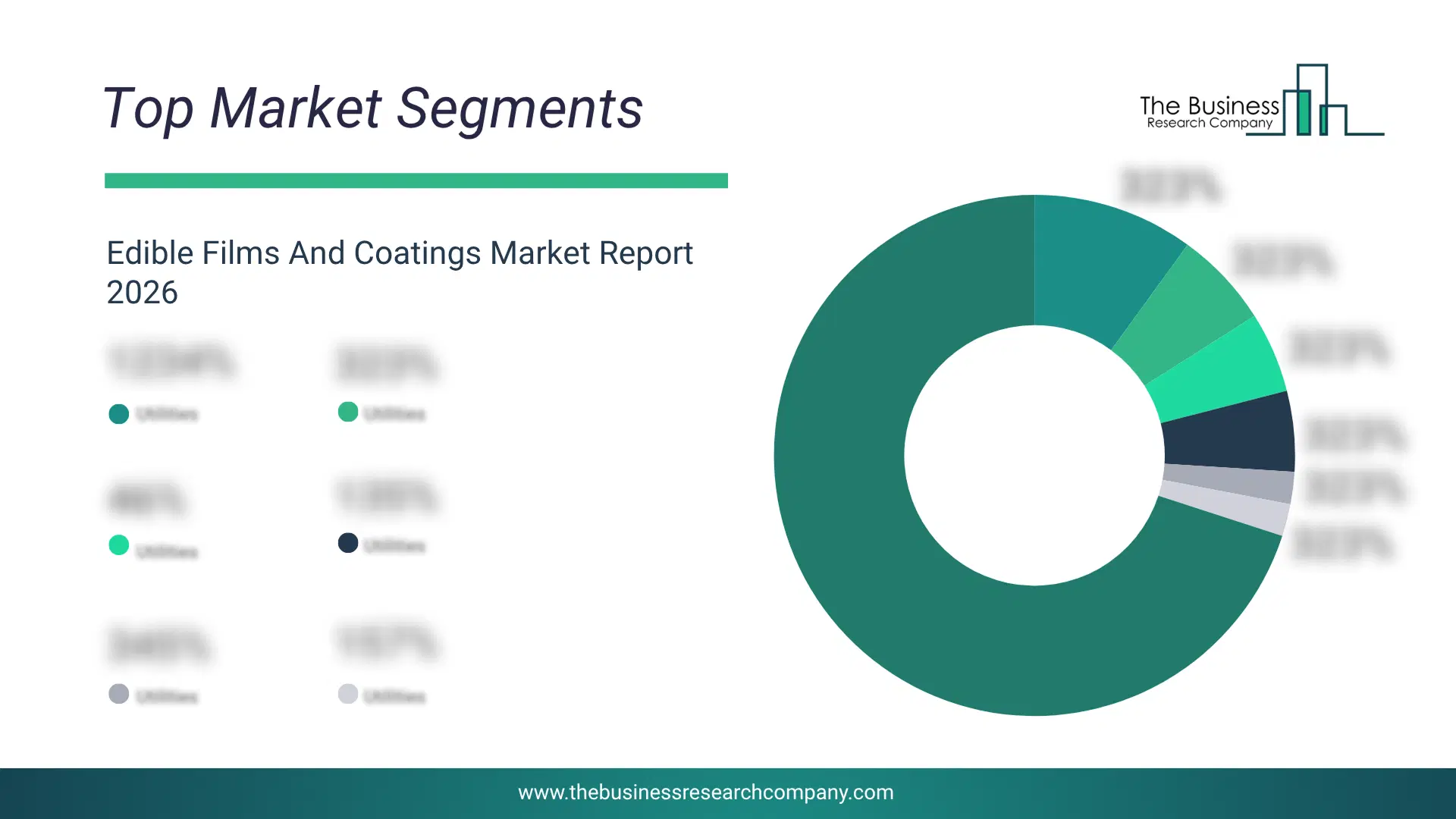
1) By Type: Protein-Based Edible Films and Coatings, Polysaccharide-Based Edible Films and Coatings, Lipid-Based Edible Films and Coatings, Composite Edible Films and Coatings 2) By Application: Dairy products, Bakery and Confectionery, Fruits and Vegetables, Meat, Poultry, and Seafood, Other Applications 3) By End-User: Food and Beverage Industry, Food Processing and Packaging Industry, Fresh Produce and Post-Harvest Handling Industry Subsegments: 1) By Protein-Based Edible Films and Coatings: Casein-Based Films, Whey Protein-Based Films, Soy Protein-Based Films, Gelatin-Based Films 2) By Polysaccharide-Based Edible Films and Coatings: Starch-Based Films, Cellulose-Based Films, Pectin-Based Films, Alginate-Based Films, Chitosan-Based Films 3) By Lipid-Based Edible Films and Coatings: Fatty Acid–Based Films, Wax-Based Coatings, Lecithin-Based Coatings, Resin-Based Edible Coatings 4) By Composite Edible Films and Coatings: Protein–Polysaccharide Composites, Lipid–Polysaccharide Composites, Protein–Lipid Composites, Multi-Layered Edible Films and CoatingsWhat Is The Driver Of The Edible Films And Coatings Market?
The rising demand for organic products is expected to boost the growth of the edible films and coatings market going forward. Organic products refer to items that are produced and processed in accordance with specific organic farming and processing standards. Organic products often require specific packaging to maintain their organic status. Edible films and coatings, made from natural and organic ingredients, are a suitable choice for such products, aligning with the organic branding and ensuring that the packaging remains consistent with the organic nature of the contents. For instance, in April 2024, according to the report published by Nutraceuticals World, a US-based media production company, in 2023, sales of natural and organic products increased by 4.8%, reaching $209 billion. New Hope expects stronger market performance in 2024. Therefore, the rising demand for organic products is driving the growth of the edible films and coatings industry.Key Players In The Global Edible Films And Coatings Market
Major companies operating in the edible films and coatings market are Tate & Lyle PLC, DuPont de Nemours Inc., Döhler GmbH, Royal DSM N.V., Cargill Inc., Ingredion Incorporated, Watson Inc., Kerry Group plc, Ashland Global Holdings Inc., JRF Technology LLC, BluWrap Inc., CP Kelco India Pvt. Ltd., Nagase & Co. Ltd., Food Machinery and Chemical Corporation (FMC Corporation), MonoSol LLC, Lactips S.A., Pace International LLC, Sufresca, AgroFresh Solutions Inc., Akorn Technology Inc.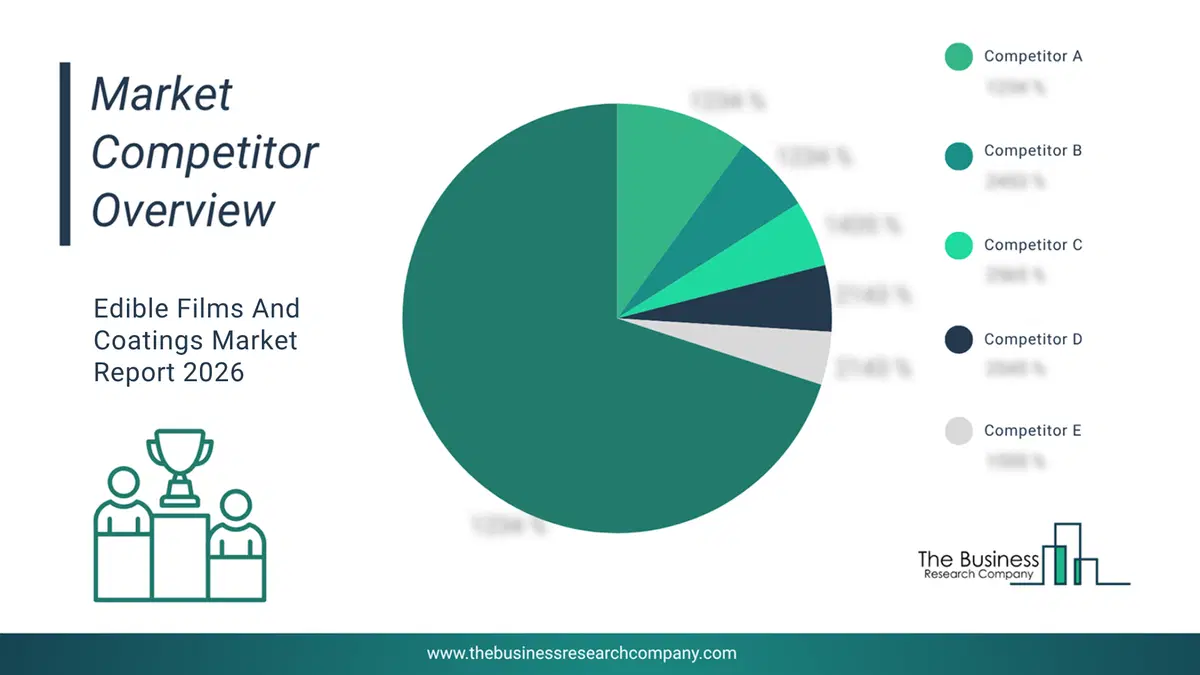
This chart is for illustrative purposes; the full report includes a detailed competitor analysis and comprehensive overview of the top 10 companies in the market.
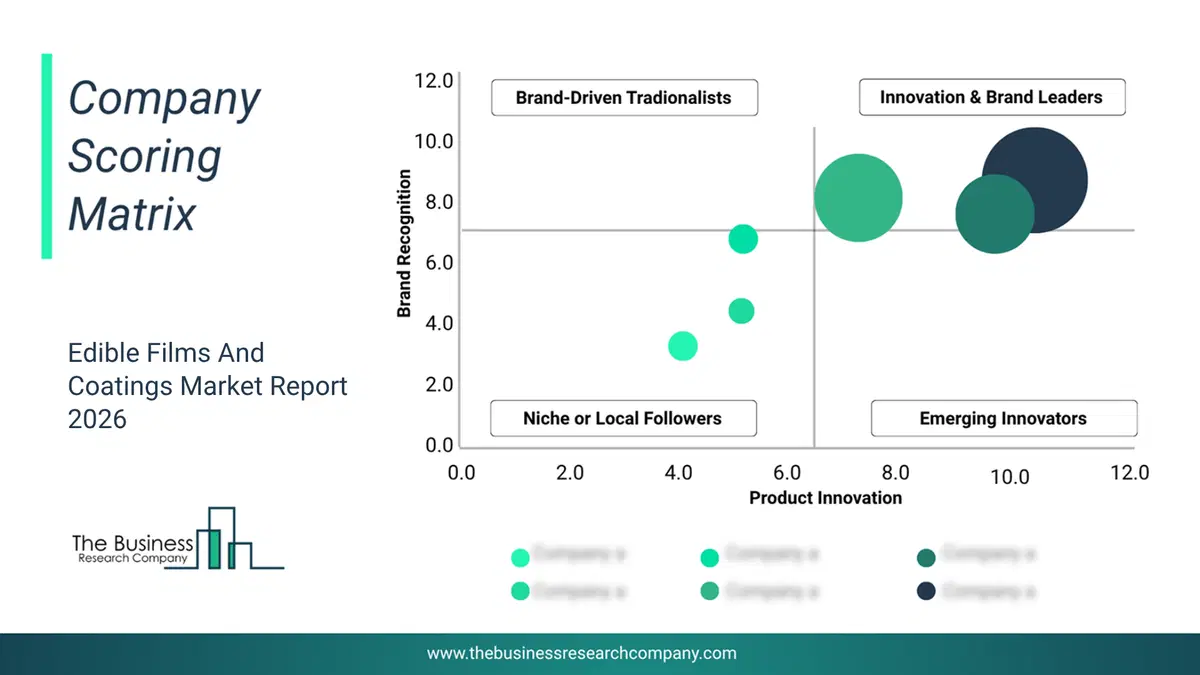
This chart maps companies by product innovation and brand strength, with bubble size indicating relative revenue, helping identify market leaders, challengers, and niche players. This is an illustrative chart; the full report provides a complete and accurate competitive analysis.
Global Edible Films And Coatings Market Trends and Insights
Major companies operating in the edible films and coatings market are focusing on developing innovative solutions such as moisture‑barrier films to enhance shelf life, reduce spoilage, and improve food safety. Moisture‑barrier films are thin edible or biodegradable layers applied to food products that prevent water loss or absorption, helping maintain freshness and texture. For instance, in October 2025, Swiggy Pvt Ltd, a Sweden-based food-tech company, launched for the first time ever an additive-free, plant-based, edible coating for fresh produce, aiming to replace plastic packaging. The coating is made from just rapeseed oil and oat oil, ensuring it is completely safe and edible for consumers. The launch began with a one-month pilot in Sweden, where cucumbers coated with this product were sold through retailer ICA and supplier Odlarna.se. By extending shelf life and reducing the need for plastic wrap, this innovation aims to significantly cut plastic waste and contribute to more sustainable food packaging practices.What Are Latest Mergers And Acquisitions In The Edible Films And Coatings Market?
In January 2024, Generation Food Rural Partners I LP. a US-based investment fund managed firm acquired DisSolves, Inc. for an undisclosed amount. Through this acquisition Generation Food Rural Partners I LP aims to enhance the development and commercialization of edible and biodegradable film technologies and accelerate their adoption in sustainable packaging solutions. DisSolves Inc. is a US-based materials science company specializing provides a edible films and coatings.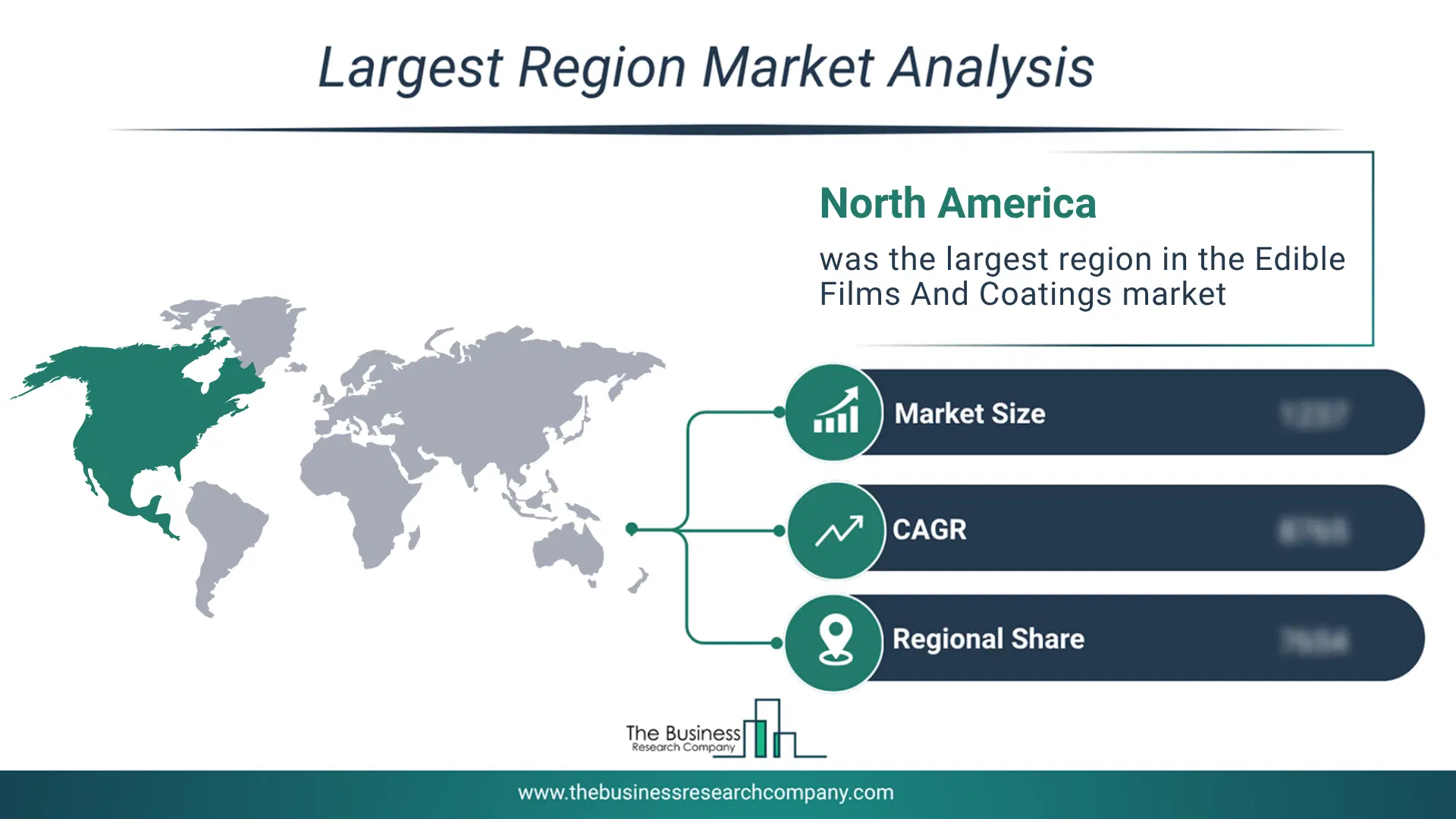
Regional Insights
North America was the largest region in the edible films and coatings market in 2025. Asia-Pacific is expected to be the fastest-growing region in the edible films and coatings market during the forecast period. The regions covered in this market report are Asia-Pacific, South East Asia, Western Europe, Eastern Europe, North America, South America, Middle East, Africa The countries covered in this market report are Australia, Brazil, China, France, Germany, India, Indonesia, Japan, Taiwan, Russia, South Korea, UK, USA, Canada, Italy, SpainWhat Defines the Edible Films And Coatings Market?
The edible films and coatings market consists of sales of protein-based coatings such as collagen films, gelatin films and wheat gluten films. Values in this market are ‘factory gate’ values, that is the value of goods sold by the manufacturers or creators of the goods, whether to other entities (including downstream manufacturers, wholesalers, distributors, and retailers) or directly to end customers. The value of goods in this market includes related services sold by the creators of the goods.How is Market Value Defined and Measured?
The market value is defined as the revenues that enterprises gain from the sale of goods and/or services within the specified market and geography through sales, grants, or donations in terms of the currency (in USD unless otherwise specified). The revenues for a specified geography are consumption values that are revenues generated by organizations in the specified geography within the market, irrespective of where they are produced. It does not include revenues from resales along the supply chain, either further along the supply chain or as part of other products.
This chart presents market attractiveness based on a quantitative evaluation of growth, competition, strategic alignment, and risk, offering a clear view of opportunity areas for decision-making. This chart is for illustrative purposes; the full report contains the complete analysis.

This chart highlights the Total Addressable Market (TAM) by estimating the maximum revenue opportunity using an assumption-driven approach, supporting strategic planning and opportunity sizing across markets. The chart is illustrative; the full report provides a more comprehensive analysis.
What Key Data and Analysis Are Included in the Edible Films And Coatings Market Report 2026?
The edible films and coatings market research report is one of a series of new reports from The Business Research Company that provides market statistics, including industry global market size, regional shares, competitors with the market share, detailed market segments, market trends and opportunities, and any further data you may need to thrive in the edible films and coatings industry. The market research report delivers a complete perspective of everything you need, with an in-depth analysis of the current and future state of the industry.Edible Films And Coatings Market Report Forecast Analysis
| Report Attribute | Details |
|---|---|
| Market Size Value In 2026 | $4.01 billion |
| Revenue Forecast In 2030 | $5.8 billion |
| Growth Rate | CAGR of 9.9% from 2026 to 2030 |
| Base Year For Estimation | 2025 |
| Actual Estimates/Historical Data | 2020-2025 |
| Forecast Period | 2026 - 2030 |
| Market Representation | Revenue in USD Billion and CAGR from 2026 to 2030 |
| Segments Covered | Type, Application, End-User |
| Regional Scope | Asia-Pacific, Western Europe, Eastern Europe, North America, South America, Middle East, Africa |
| Country Scope | The countries covered in this market report are Australia, Brazil, China, France, Germany, India, Indonesia, Japan, Taiwan, Russia, South Korea, UK, USA, Canada, Italy, Spain |
| Key Companies Profiled | Tate & Lyle PLC, DuPont de Nemours Inc., Döhler GmbH, Royal DSM N.V., Cargill Inc., Ingredion Incorporated, Watson Inc., Kerry Group plc, Ashland Global Holdings Inc., JRF Technology LLC, BluWrap Inc., CP Kelco India Pvt. Ltd., Nagase & Co. Ltd., Food Machinery and Chemical Corporation (FMC Corporation), MonoSol LLC, Lactips S.A., Pace International LLC, Sufresca, AgroFresh Solutions Inc., Akorn Technology Inc. |
| Customization Scope | Request for Customization |
| Pricing And Purchase Options | Explore Purchase Options |