
Elder Care Services And Assistive Devices Market Report 2026
Global Outlook – By Offering (Services, Assisted Devices, Living Aids, Assistive Furniture, Bathroom Safety Equipment, Other Offerings), By Funding (Private, Public), By End User (Hospitals, Homecare Settings, Nursing Homes, Rehabilitation Centers, Other End Users) - Market Size, Trends, And Global Forecast 2026-2030
Elder Care Services And Assistive Devices Market Overview
• Elder Care Services And Assistive Devices market size has reached to $898.41 billion in 2025 • Expected to grow to $1237.58 billion in 2030 at a compound annual growth rate (CAGR) of 6.6% • Growth Driver: Impact of Assistive Living Technologies on the Growth of Elder Care Services and Assistive Devices Market • Market Trend: Technological Advancements in Elder Care • North America was the largest region in 2025.Market Gains By 2030 – Top Opportunities By Segment
Market Gain identifies the most promising market opportunities by highlighting the segments or products expected to generate the highest incremental revenue growth over the next five years.
What Is Covered Under Elder Care Services And Assistive Devices Market?
Elder care services and assistive devices refer to a variety of support systems and equipment designed to assist elderly individuals with their daily activities and health needs. The primary goal of these services and devices is to enable older adults to live independently and comfortably, while ensuring their health needs are met through continuous monitoring and assistance. The main offerings in the elder care services and assistive devices market are services, assisted devices, living aids, assistive furniture, bathroom safety equipment, and others. Services in the elder care services and assistive devices refer to a range of support and care options designed to assist elderly individuals in managing daily activities and health needs. Funding for these offerings comes from both private and public sources. The primary end users include hospitals, home care settings, nursing homes, rehabilitation centers, and others.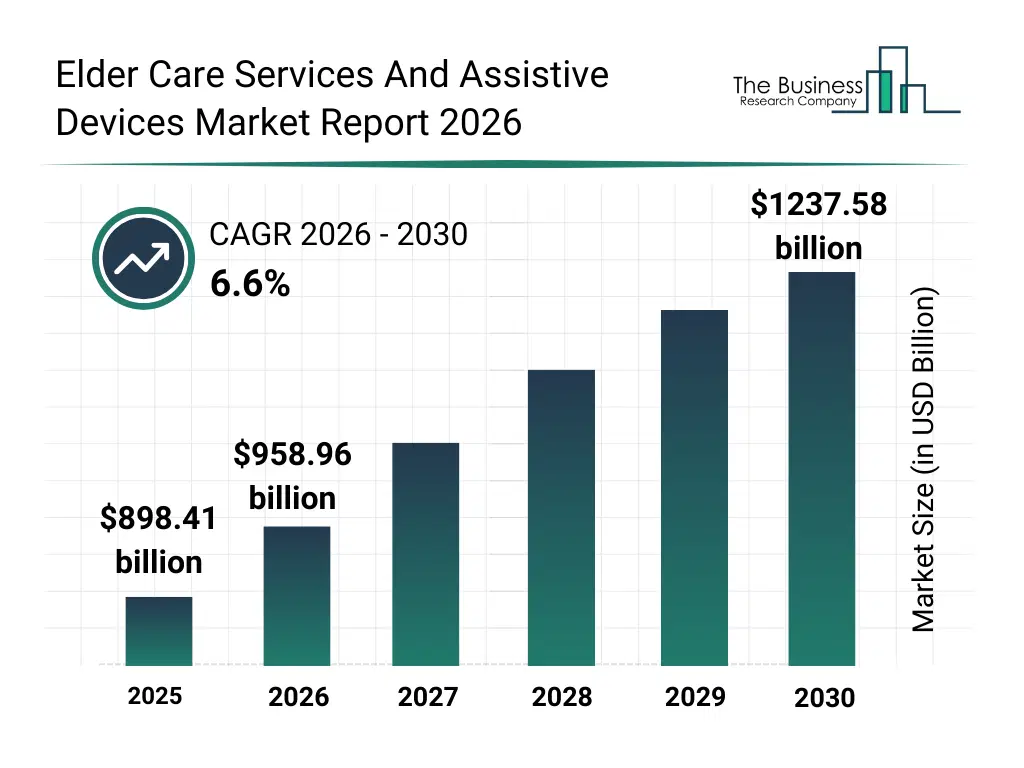
What Is The Elder Care Services And Assistive Devices Market Size and Share 2026?
The elder care services and assistive devices market size has grown strongly in recent years. It will grow from $898.41 billion in 2025 to $958.96 billion in 2026 at a compound annual growth rate (CAGR) of 6.7%. The growth in the historic period can be attributed to aging population growth, caregiver shortages, chronic disease burden, independent living preference, long-term care costs.What Is The Elder Care Services And Assistive Devices Market Growth Forecast?
The elder care services and assistive devices market size is expected to see strong growth in the next few years. It will grow to $1237.58 billion in 2030 at a compound annual growth rate (CAGR) of 6.6%. The growth in the forecast period can be attributed to smart home eldercare solutions, wearable monitoring adoption, ai-enabled caregiving tools, preventive geriatric care, government aging programs. Major trends in the forecast period include rising adoption of home-based elder care solutions, increasing use of smart assistive devices, growing demand for mobility and safety aids, expansion of remote health monitoring for seniors, integration of personalized care services.
Global Elder Care Services And Assistive Devices Market Segmentation
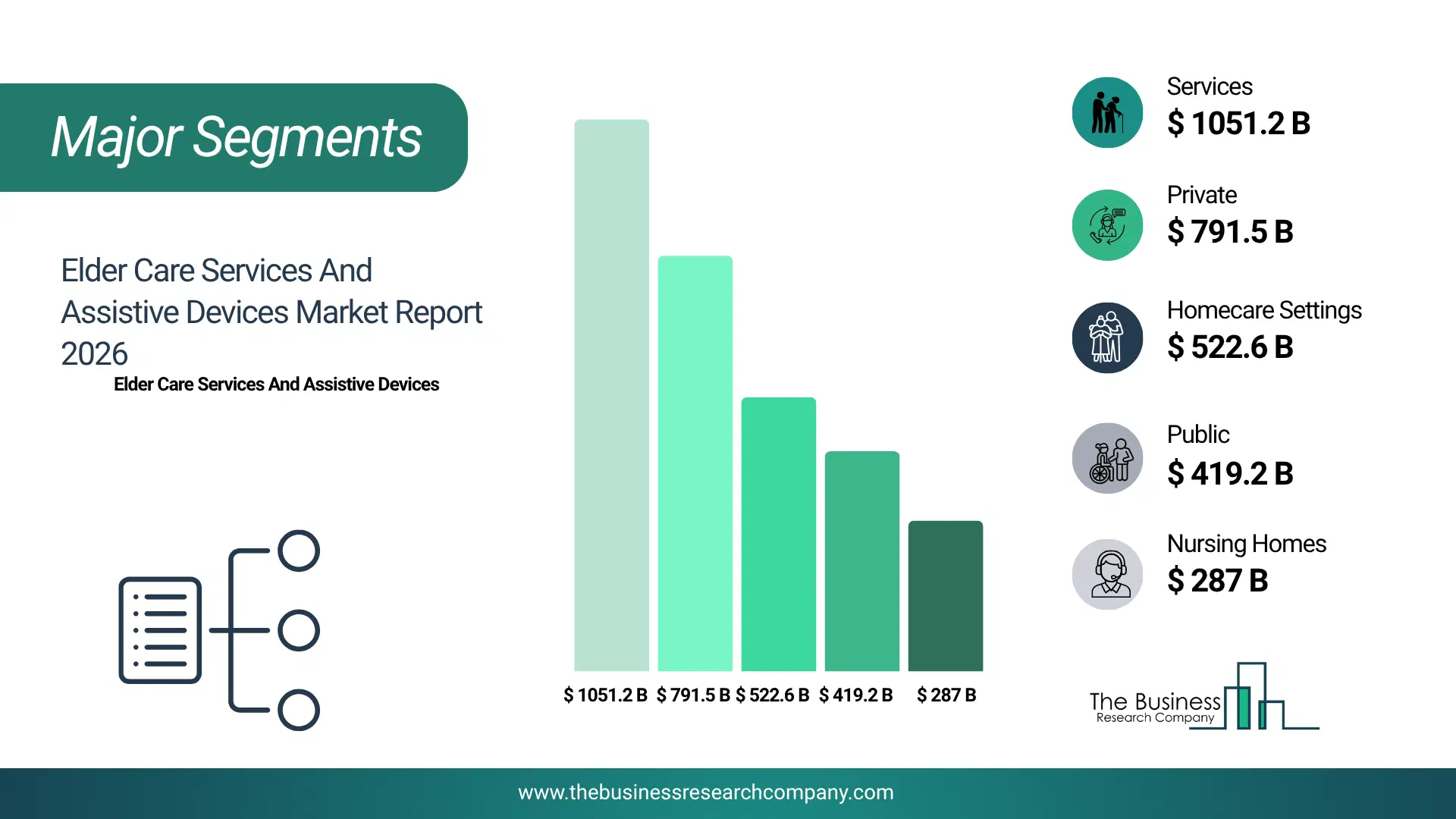
1) By Offering: Services, Assisted Devices, Living Aids, Assistive Furniture, Bathroom Safety Equipment, Other Offerings 2) By Funding: Private, Public 3) By End User: Hospitals, Homecare Settings, Nursing Homes, Rehabilitation Centers, Other End Users Subsegments: 1) By Services: Home Health Care Services, Nursing And Palliative Care Services, Senior Companion Services, Rehabilitation Services, Telehealth And Remote Monitoring Services, Personal Care Assistance 2) By Assisted Devices: Mobility Aids, Hearing Aids, Vision Aids, Orthotic Devices, Monitoring Devices 3) By Living Aids: Adaptive Kitchen Tools, Medication Management Devices, Eating And Drinking Aids, Memory Aids And Cognitive Assistive Devices, Communication Aids 4) By Assistive Furniture: Adjustable Beds, Reclining Chairs And Lift Chairs, Ergonomic Chairs And Desks, Ramps And Raised Seating, Specialized Tables And Overbed Stands 5) By Bathroom Safety Equipment: Grab Bars, Shower Chairs And Stools, Raised Toilet Seats, Bath Lifts, Non-Slip Mats And Flooring 6) By Other Offerings: Environmental Control Systems, Cognitive Therapy Tools, Mobility Platforms, Smart Wearables For Health Monitoring The top segments in the elder care services and assistive devices market will be: • Services will reach $1051234.22 Million by 2030. • Private will reach $791549.04 Million by 2030. • Homecare Settings will reach $522645.09 Million by 2030. • Public will reach $419272.23 Million by 2030. • Nursing Homes will reach $286993.01 Million by 2030.What Is The Driver Of The Elder Care Services And Assistive Devices Market?
The rise in need for assistive living technologies is expected to propel the growth of the elder care services and assistive devices market going forward. Assistive living technologies are tools and systems that help people with disabilities or age-related difficulties manage daily activities and improve their overall well-being, fostering greater independence through enhanced mobility, communication, and task management. The rise in the need for assistive living technologies is driven by factors such as an aging population, the increasing prevalence of chronic conditions, the desire for greater independence among seniors, and advancements in technology that enhance functionality and affordability. Assistive living technologies in elderly care services enhance independence, improve safety, facilitate communication, monitor health, and support daily living activities. For instance, in January 2024, according to the World Health Organization (WHO), a Switzerland-based intergovernmental organization for international public health, over 2.5 billion people globally currently need assistive products, and with the aging population and increasing prevalence of noncommunicable diseases, this figure is expected to rise to around 3.5 billion by 2050. Therefore, the rise in need for assistive living technologies is driving the market for elder care services and assistive devices.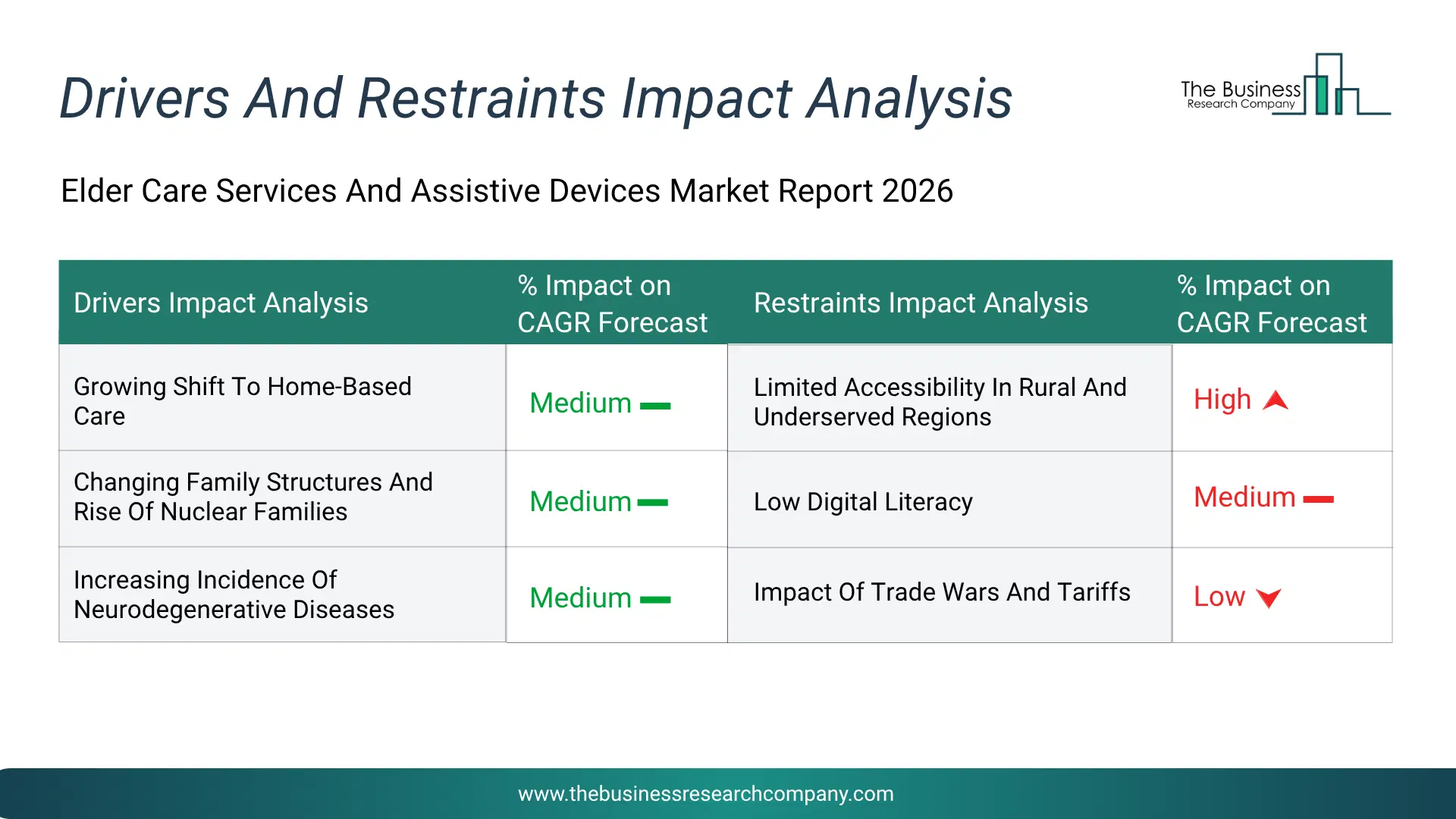
Infographic Chart Showing Key Market Drivers Analysis And Restraints For Elder Care Services And Assistive Devices Market
The chart presents an impact analysis of key drivers and restraints, quantifying their relative influence on the market's growth rate and helping assess the balance between growth enablers and limiting factors. This chart offers a high-level perspective; the full report contains more detailed insights.
How Will The Drivers Impact Growth In The Global Elder Care Services And Assistive Devices Market?
• Growing Shift To Home-Based Care (Medium) – During the forecast period, the growing shift to home-based care is expected to be a key driver propelling growth in the elder care services and assistive devices market. As the aging population rises, seniors increasingly prefer receiving care in the comfort of their own homes, seeking personalized, convenient and flexible care solutions. The rising adoption of home-based care services is projected to expand the demand for in-home nursing, personal assistance and remote health monitoring, leading to increased utilization of professional caregivers, telehealth technologies and home-adapted assistive devices. A broader adoption of home-based care models enhances patient satisfaction, improves health outcomes and drives sustained demand for integrated services that combine healthcare delivery, daily living support and monitoring solutions. The growing shift to home-based care growth contribution during the forecast period in 2025 is 1.5%. • Changing Family Structures And Rise Of Nuclear Families (Medium) – During the forecast period, the changing family structures and rise of nuclear families are expected to be a key driver propelling growth in the elder care services and assistive devices market. As households increasingly adopt compact, independent living models, there is a growing need for self-sufficiency and technology-enabled caregiving solutions that offer convenience, immediacy and scalable support for ageing members. The rising prevalence of nuclear family setups is expanding demand for remote monitoring devices, autonomous assistance systems and AI-driven daily aid tools, along with integrated health data, mobility support and real-time safety services. The changing family structures and rise of nuclear families are driving greater demand for smart elder care solutions, remote monitoring technologies and integrated wellness services in elder care services and the assistive devices market. The changing family structures and rise of nuclear families growth contribution during the forecast period in 2025 is 1.3%. • Increasing Incidence Of Neurodegenerative Diseases (Medium) – During the forecast period, the increasing incidence of neurodegenerative diseases is expected to be a major driver fuelling growth in the elder care services and assistive devices market. As the prevalence of conditions such as Alzheimer’s disease, Parkinson’s disease and diabetic neuropathy rises, there is a growing demand for specialised care, early detection tools and technology-enabled management systems that enhance patient independence and safety. The expanding burden of neurological disorders is driving adoption of AI-powered monitoring devices, cognitive support technologies and integrated health management platforms, along with mobility assistance and real-time intervention services. The rising incidence of neurodegenerative diseases is thus propelling a greater need for comprehensive neurological care solutions, remote monitoring systems and personalised wellness services in the elder care services and assistive devices market. The increasing incidence of neurodegenerative diseases growth contribution during the forecast period in 2025 is 1.0%. • Growth Of Senior Living Communities And Retirement Housing (Low) – During the forecast period, the growth of senior living communities and retirement housing is expected to be a key driver propelling growth in the elder care services and assistive devices market. As the global elderly population rises and more seniors seek safe, low-maintenance and community-orientated living options, there is an increasing demand for integrated housing solutions that combine comfort, healthcare accessibility and social engagement. The expansion of senior-living developments is boosting the adoption of smart elder care technologies, mobility aids and health-monitoring devices, alongside AI-enabled assistance systems and remote wellness services. The rise of retirement housing and senior living communities is driving greater demand for holistic elder care solutions that enhance independence, safety and quality of life for ageing populations. The growth of senior living communities and retirement housing growth contribution during the forecast period in 2025 is 0.8%.How Will The Restraints Impact Growth In The Global Elder Care Services And Assistive Devices Market?
• Limited Accessibility In Rural And Underserved Regions (Medium) – During the forecast period, limited accessibility in rural and underserved regions is expected to restrict the growth of the elder care services and assistive devices market. As the management of elder care increasingly involves specialised services such as home healthcare, rehabilitation programmes and the use of assistive devices, care pathways become more complex and require accessible healthcare infrastructure and trained personnel. The growing reliance on multi-stage care approaches, including physical therapy, remote monitoring and personalised assistive technologies, increases the complexity of care and patient management. The presence of limited healthcare facilities and the need for skilled carers in rural and underserved regions can limit service accessibility and slow the broader adoption of elder care services and assistive devices in the market. Growth affected by the limited accessibility in rural and underserved regions during the forecast period in 2025 is -2.0%. • Low Digital Literacy (Medium) – During the forecast period, low digital literacy is expected to restrict the growth of the elder care services and assistive devices market. As the management of elder care increasingly involves digital tools and platforms such as telehealth, smart monitoring systems and assistive devices, service pathways become more complex and require specialised digital skills and support. The growing reliance on multi-stage digital solutions, including online care coordination, remote monitoring and app-based health management, increases the complexity of service delivery and user engagement. The presence of low digital literacy and the need for targeted digital training can limit service accessibility and slow the broader adoption of technologically enhanced elder care solutions. Growth affected by the low digital literacy during the forecast period in 2025 is -1.5%. • Impact Of Trade Wars And Tariffs (Medium) – During the forecast period, trade wars and tariffs are expected to restrict the growth of the elder care services and assistive devices market. As the provision of elder care increasingly relies on imported medical equipment, mobility aids and advanced assistive technologies, rising tariffs and international trade tensions make sourcing these products more expensive and complex. The growing dependence on global supply chains for specialised devices and components increases operational costs and may lead to delays in product availability. The presence of trade barriers and tariff-related uncertainties can limit accessibility to essential elder care solutions and slow the broader adoption of elder care services and the assistive devices market. Growth affected by the impact of trade wars and tariffs during the forecast period in 2025 is -0.3%.Key Players In The Global Elder Care Services And Assistive Devices Market
Major companies operating in the elder care services and assistive devices market are Koninklijke Philips N.V., Stryker Corporation, Sonova Holding AG, Sunrise Senior Living, Life Care Centers of America Inc., Brookdale Senior Living Inc., GN Store Nord A/S, Amedisys Inc., LHC Group Inc., Atria Senior Living Inc., Cochlear Limited, Extendicare Inc., Invacare Corporation, Oticon A/S, Genesis HealthCare Co., Sunrise Medical Inc., Permobil AB, Pride Mobility Products Corporation, Five Star Senior Living, Tobii Dynavox AB, Inclusive Technology Ltd., Living Assistance Services Inc., Jabbla, Blue Chip Medical Products Inc.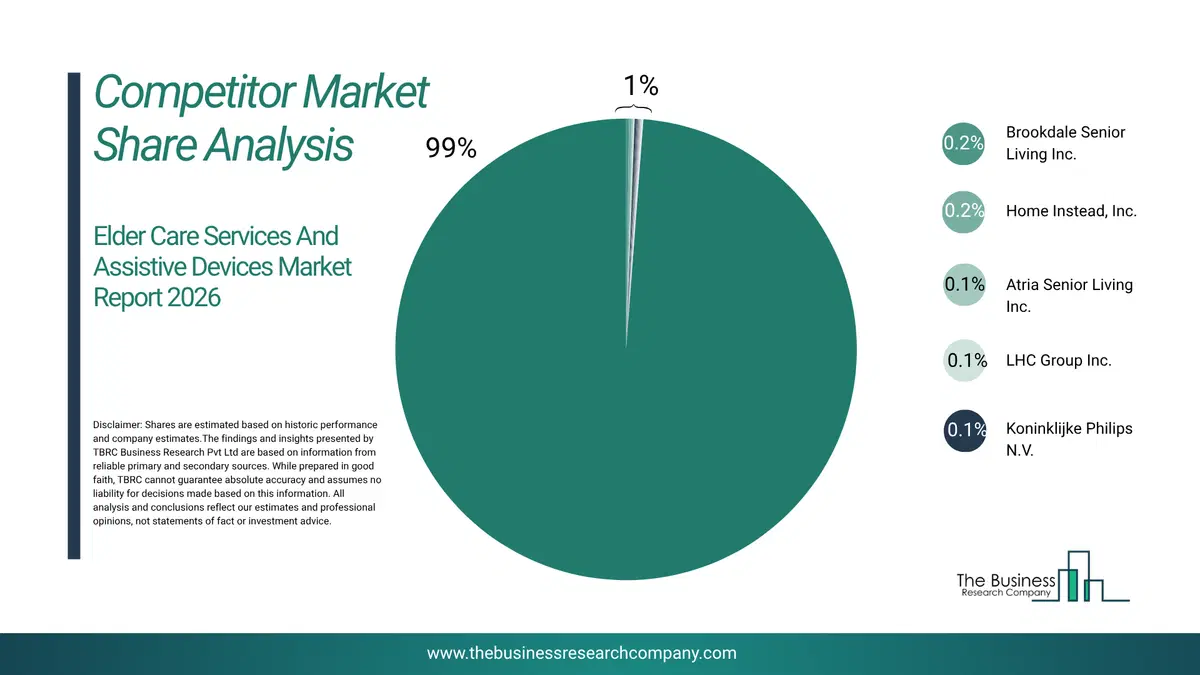
This chart is for illustrative purposes; the full report includes a detailed competitor analysis and comprehensive overview of the top 10 companies in the market.
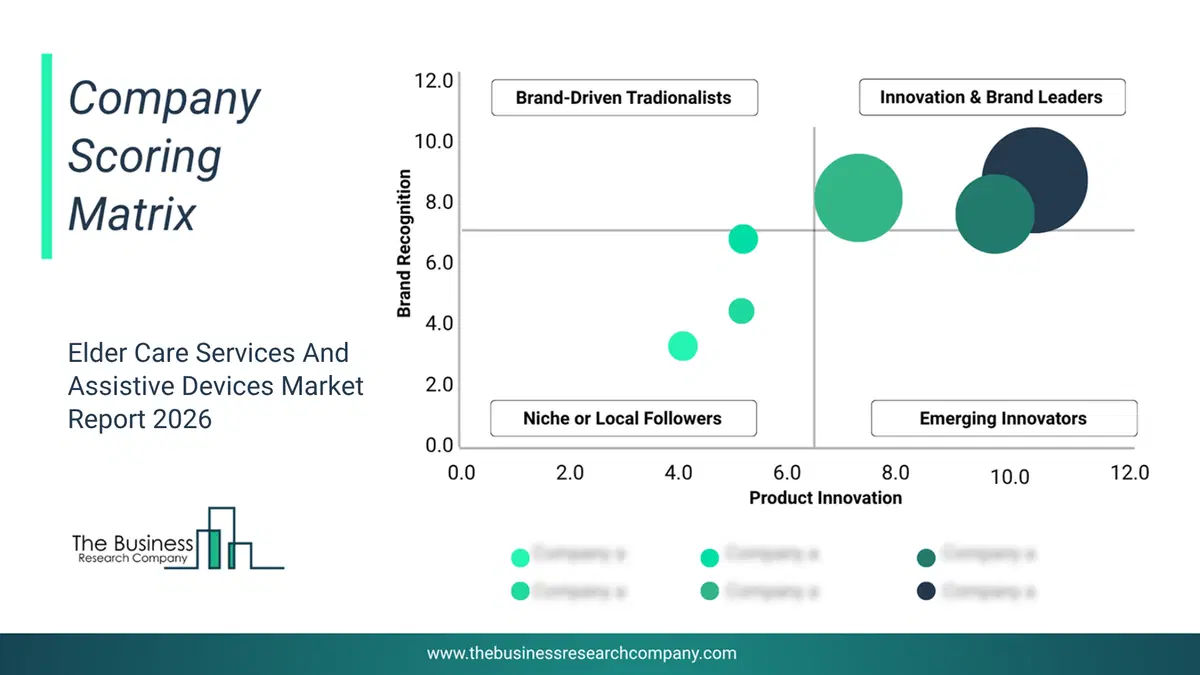
This chart maps companies by product innovation and brand strength, with bubble size indicating relative revenue, helping identify market leaders, challengers, and niche players. This is an illustrative chart; the full report provides a complete and accurate competitive analysis.
Global Elder Care Services And Assistive Devices Market Trends and Insights
Major companies operating in the elder care services and assistive devices market are developing intelligent care services such as artificial intelligence (AI)-based cognitive care to enhance the quality of care, improve patient outcomes, and provide personalized support for the elderly. AI-based cognitive care for the elderly utilizes artificial intelligence to monitor cognitive health, provide personalized assistance, offer companionship, manage health needs, and ensure safety. For instance, in June 2023, IIT Madras inaugurated the National Center for Assistive Health Technologies (NCAHT-IITM) to enhance research and development in assistive technologies for individuals with disabilities and the elderly. The center aims to facilitate interactions among users, developers, and policymakers to create innovative solutions. The event featured key speakers including Dr. Rajiv Bahl from ICMR, emphasizing the center's role in transforming lives through technology and collaboration. Additionally, new self-training modules for wheelchair users were launched to promote independence. Therefore, the elder care services and assistive devices market is poised for significant growth, driven by the increasing aging population and rising demand for enhanced quality of life solutions.What Are Latest Mergers And Acquisitions In The Elder Care Services And Assistive Devices Market?
In December 2024, Addus HomeCare Corporation, a US-based home-care services company, acquired Gentiva Health Services Inc.’s personal-care operations for undisclosed amount. With this acquisition, Addus expanded its market reach into seven additional states and strengthened its scale in the U.S. elder-care services market. Gentiva Health Services Inc. a US-based provider of hospice, palliative and personal care services, specialised in home-based personal-care services for elderly, chronically ill and disabled consumers across multiple states.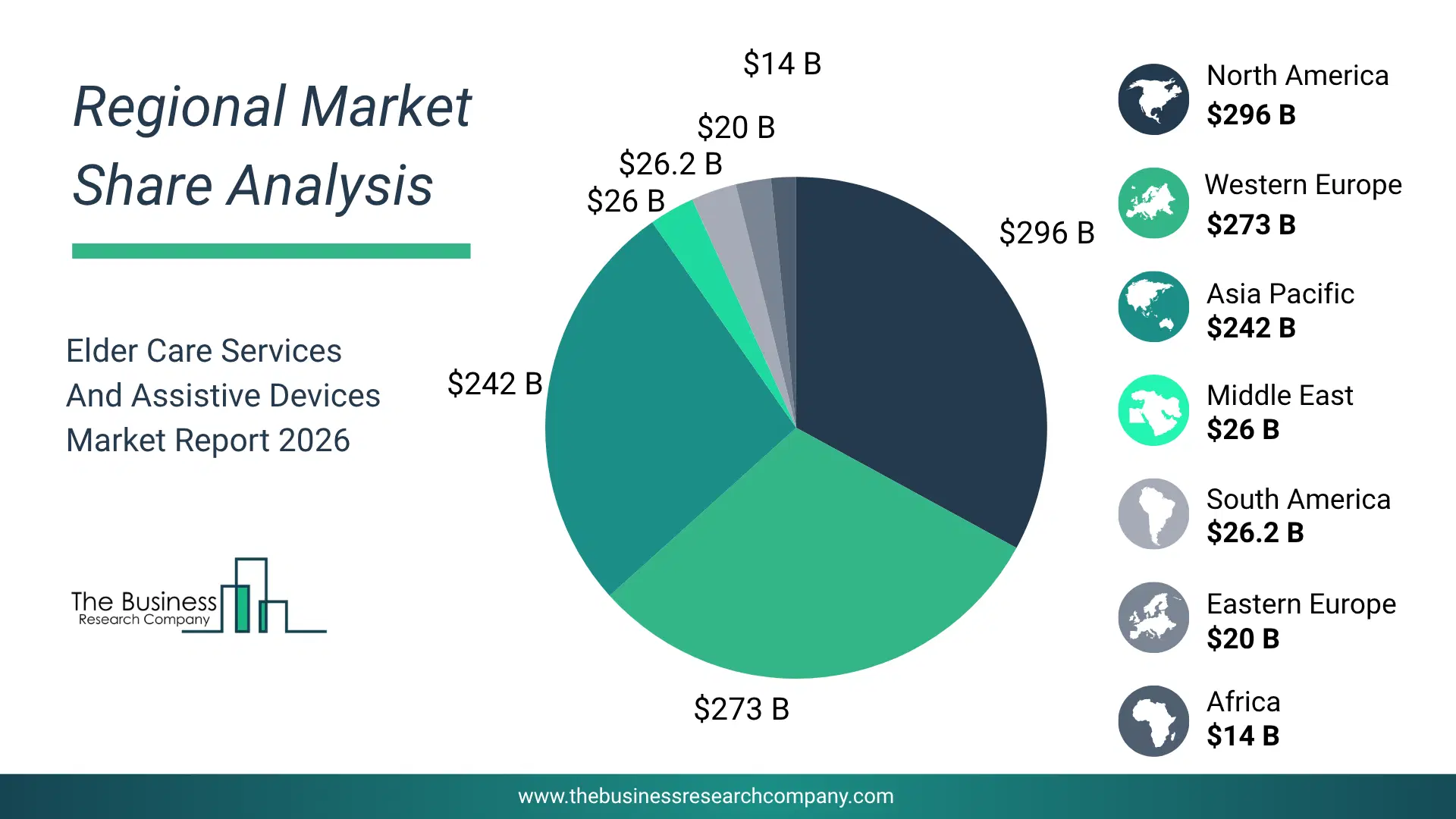
Regional Outlook
North America was the largest region in the elder care services and assistive devices market in 2025. The regions covered in this market report are Asia-Pacific, South East Asia, Western Europe, Eastern Europe, North America, South America, Middle East, Africa. The countries covered in this market report are Australia, Brazil, China, France, Germany, India, Indonesia, Japan, Taiwan, Russia, South Korea, UK, USA, Canada, Italy, Spain.What Defines the Elder Care Services And Assistive Devices Market?
The elder care services and assistive devices market consists of revenues earned by entities by providing services such as in-home personal care, medical and nursing services, physical and occupational therapy, meal preparation, transportation assistance, and the provision of mobility aids. The market value includes the value of related goods sold by the service provider or included within the service offering. The elder care services and assistive devices market also includes sales of mobility aids, wheelchairs, walkers, hearing aids, visual aids, medical alert systems, adaptive clothing, and home modifications. Values in this market are ‘factory gate’ values, that is the value of goods sold by the manufacturers or creators of the goods, whether to other entities (including downstream manufacturers, wholesalers, distributors and retailers) or directly to end customers. The value of goods in this market includes related services sold by the creators of the goods.How is Market Value Defined and Measured?
The market value is defined as the revenues that enterprises gain from the sale of goods and/or services within the specified market and geography through sales, grants, or donations in terms of the currency (in USD unless otherwise specified). The revenues for a specified geography are consumption values that are revenues generated by organizations in the specified geography within the market, irrespective of where they are produced. It does not include revenues from resales along the supply chain, either further along the supply chain or as part of other products.
This chart presents market attractiveness based on a quantitative evaluation of growth, competition, strategic alignment, and risk, offering a clear view of opportunity areas for decision-making. This chart is for illustrative purposes; the full report contains the complete analysis.

This chart highlights the Total Addressable Market (TAM) by estimating the maximum revenue opportunity using an assumption-driven approach, supporting strategic planning and opportunity sizing across markets. The chart is illustrative; the full report provides a more comprehensive analysis.
What Key Data and Analysis Are Included in the Elder Care Services And Assistive Devices Market Report 2026?
The elder care services and assistive devices market research report is one of a series of new reports from The Business Research Company that provides market statistics, including industry global market size, regional shares, competitors with the market share, detailed market segments, market trends and opportunities, and any further data you may need to thrive in the elder care services and assistive devices industry. The market research report delivers a complete perspective of everything you need, with an in-depth analysis of the current and future state of the industry.Elder Care Services And Assistive Devices Market Report Forecast Analysis
| Report Attribute | Details |
|---|---|
| Market Size Value In 2026 | $958.96 billion |
| Revenue Forecast In 2030 | $1237.58 billion |
| Growth Rate | CAGR of 6.7% from 2026 to 2030 |
| Base Year For Estimation | 2025 |
| Actual Estimates/Historical Data | 2020-2025 |
| Forecast Period | 2026 - 2030 - 2035 |
| Market Representation | Revenue in USD Billion and CAGR from 2026 to 2030 |
| Segments Covered | Offering, Funding, End User |
| Regional Scope | Asia-Pacific, Western Europe, Eastern Europe, North America, South America, Middle East, Africa |
| Country Scope | The countries covered in the report are Australia, Brazil, China, France, Germany, India, Indonesia, Japan, Taiwan, Russia, South Korea, UK, USA, Canada, Italy, Spain. |
| Key Companies Profiled | Koninklijke Philips N.V., Stryker Corporation, Sonova Holding AG, Sunrise Senior Living, Life Care Centers of America Inc., Brookdale Senior Living Inc., GN Store Nord A/S, Amedisys Inc., LHC Group Inc., Atria Senior Living Inc., Cochlear Limited, Extendicare Inc., Invacare Corporation, Oticon A/S, Genesis HealthCare Co., Sunrise Medical Inc., Permobil AB, Pride Mobility Products Corporation, Five Star Senior Living, Tobii Dynavox AB, Inclusive Technology Ltd., Living Assistance Services Inc., Jabbla, Blue Chip Medical Products Inc. |
| Customization Scope | Request for Customization |
| Pricing And Purchase Options | Explore Purchase Options |