
Electric Bus Market Report 2026
Global Outlook – By Type (Battery Electric Bus, Fuel Cell Electric Bus), By Battery Type (Lithium-Nickel-Manganese-Cobalt-Oxide, Lithium-Iron-Phosphate, Other Battery Types), By Vehicle Range (Less Than 200 Miles, Above 200 Miles), By Battery Capacity (Up to 400 kWh, Above 400 kWh), By Application (Intercity, Intracity) – Market Size, Trends, Strategies, and Forecast to 2030
Electric Bus Market Overview
• Electric Bus market size has reached to $40.47 billion in 2025 • Expected to grow to $67.3 billion in 2030 at a compound annual growth rate (CAGR) of 10.7% • Growth Driver: Surge In Commercial And Heavy-Duty Vehicle Adoption Fueling The Growth Of The Market Due To Increasing Demand For Zero-Emission, Energy-Efficient Fleet Transportation • Market Trend: Next-Generation Zero-Emission Bus Innovations Enhancing Urban Mobility And Passenger Experience • Asia-Pacific was the largest region and fastest growing region.Market Gains By 2030 – Top Opportunities By Segment
Market Gain identifies the most promising market opportunities by highlighting the segments or products expected to generate the highest incremental revenue growth over the next five years.
What Is Covered Under Electric Bus Market?
An electric bus is an electric vehicle (EV) that runs on electricity rather than diesel or gasoline. The electric bus is powered exclusively by a zero-emissions electricity source. The main types of electric buses are battery electric vehicles, plug-in hybrid electric vehicles, and fuel cell electric vehicles. Battery electric vehicles are entirely electric vehicles with rechargeable batteries that do not have a gasoline engine. The battery pack, which is recharged from the grid, provides all of the vehicle's energy. The various batteries used are lithium-nickel-manganese-cobalt-oxide, lithium-iron-phosphate, and others. The vehicle ranges are less than 200 miles and above 200 miles depending on the capacity in terms of the distance of the vehicle. The battery capacity of electric buses is up to 400 kWh and above 400 kWh depending upon the capacity of the battery used. The electric bus can be used for intercity and intracity applications.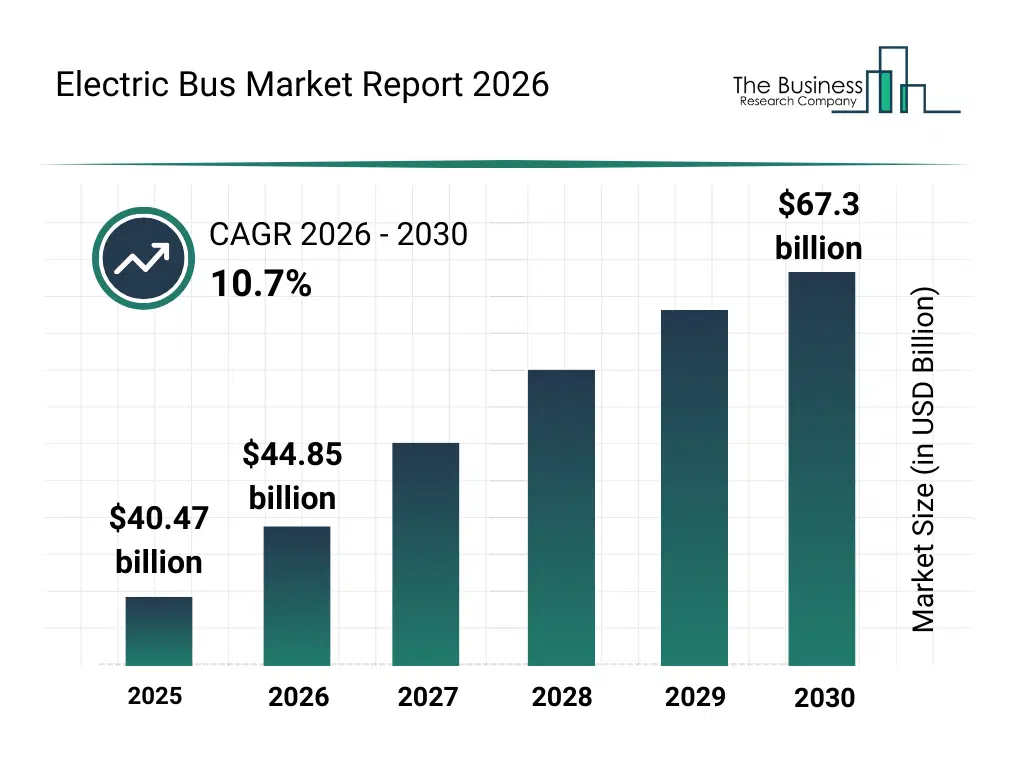
What Is The Electric Bus Market Size and Share 2026?
The electric bus market size has grown rapidly in recent years. It will grow from $40.47 billion in 2025 to $44.85 billion in 2026 at a compound annual growth rate (CAGR) of 10.8%. The growth in the historic period can be attributed to government emission regulations, urban air pollution concerns, public transport electrification programs, declining battery costs, pilot electric bus deployments.What Is The Electric Bus Market Growth Forecast?
The electric bus market size is expected to see rapid growth in the next few years. It will grow to $67.3 billion in 2030 at a compound annual growth rate (CAGR) of 10.7%. The growth in the forecast period can be attributed to expansion of charging networks, smart city initiatives, advancements in battery energy density, hydrogen ecosystem development, large-scale fleet electrification. Major trends in the forecast period include rapid adoption of zero-emission public transport, expansion of fast-charging infrastructure, deployment of long-range electric buses, integration of smart fleet management, growth of fuel cell bus pilots.
Global Electric Bus Market Segmentation
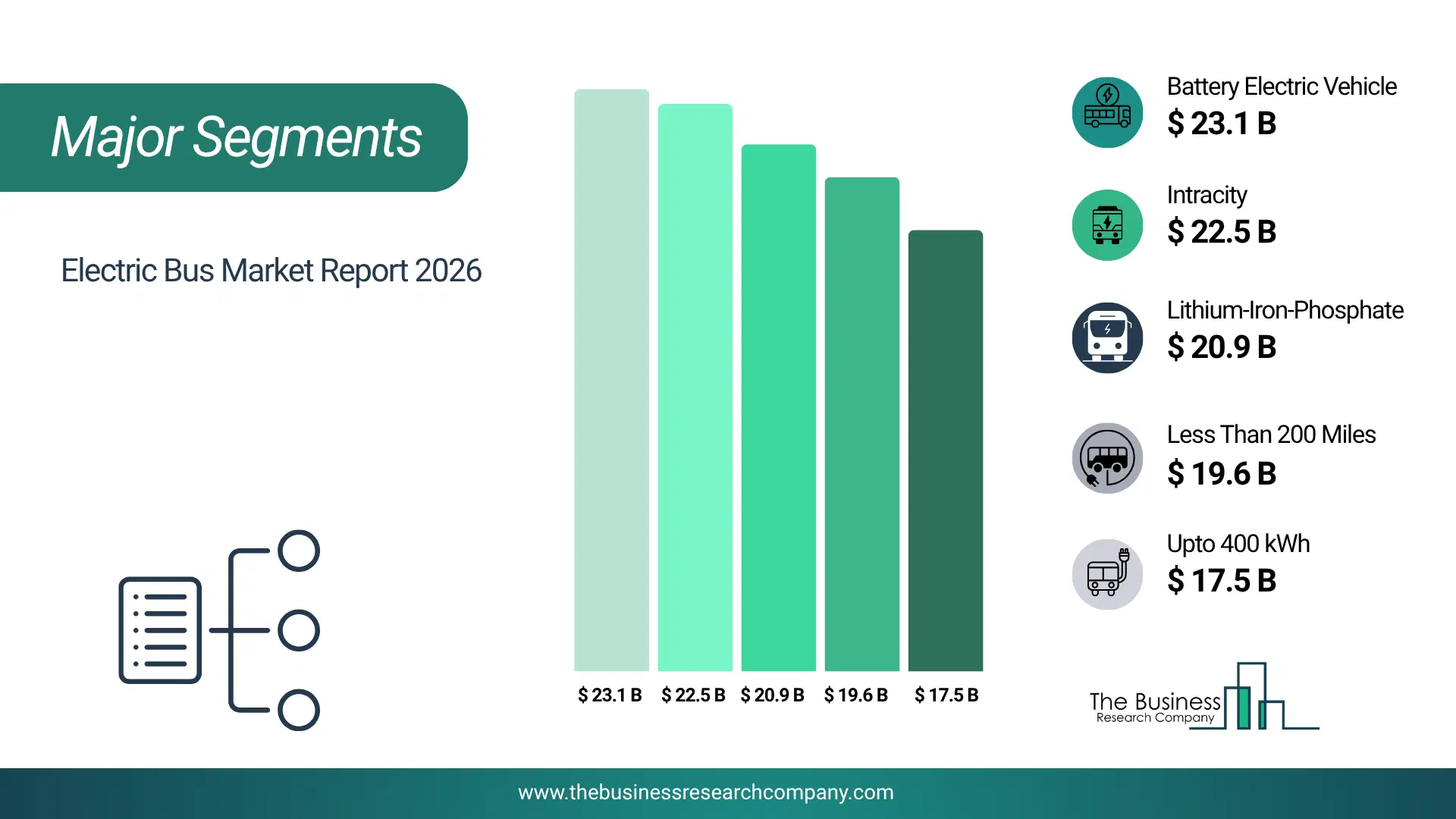
1) By Type: Battery Electric Bus, Fuel Cell Electric Bus 2) By Battery Type: Lithium-Nickel-Manganese-Cobalt-Oxide, Lithium-Iron-Phosphate, Other Battery Types 3) By Vehicle Range: Less Than 200 Miles, Above 200 Miles 4) By Battery Capacity: Up to 400 kWh, Above 400 kWh 5) By Application: Intercity, Intracity Subsegments: 1) By Battery Electric Bus (BEB): Standard-Range Battery Electric Bus, Extended-Range Battery Electric Bus, Fast-Charging Battery Electric Bus, Opportunity And In-Motion Charging Battery Electric Bus 2) By Fuel Cell Electric Bus (FCEB): Hydrogen Fuel Cell Electric Bus, Range-Extended Fuel Cell Electric Bus, Hybrid Fuel Cell–Battery Electric Bus The top segments in the electric bus market will be: • Battery Electric Vehicle will reach $23140.51 Million by 2030. • Intracity will reach $22491.76 Million by 2030. • Less Than 200 Miles will reach $19683.39 Million by 2030. • Upto 400 kWh will reach $17545.83 Million by 2030. • Lithium-Iron-Phosphate will reach $20919.77 Million by 2030.What Is The Driver Of The Electric Bus Market?
The rising adoption in commercial and heavy-duty vehicles is expected to drive the growth of the electric bus market going forward. Commercial and heavy-duty vehicles are large transport vehicles designed to carry goods or passengers, typically used for industrial, logistics, and commercial operations. Commercial and heavy-duty vehicles are rising due to increasing demand for efficient goods transportation driven by expanding e-commerce and logistics networks. Electric buses are used in commercial and heavy-duty fleets by providing zero-emission, energy-efficient transportation for mass passenger movement in urban and intercity routes. For instance, in September 2023, according to the World Resources Institute, a US-based non-profit organization, the collective count of electric school buses reached 5,982 in June 2023, marking a notable increase of over 3,200 buses compared to June 2022. Therefore, the rising adoption in commercial and heavy-duty vehicles is driving the growth of the electric bus industry.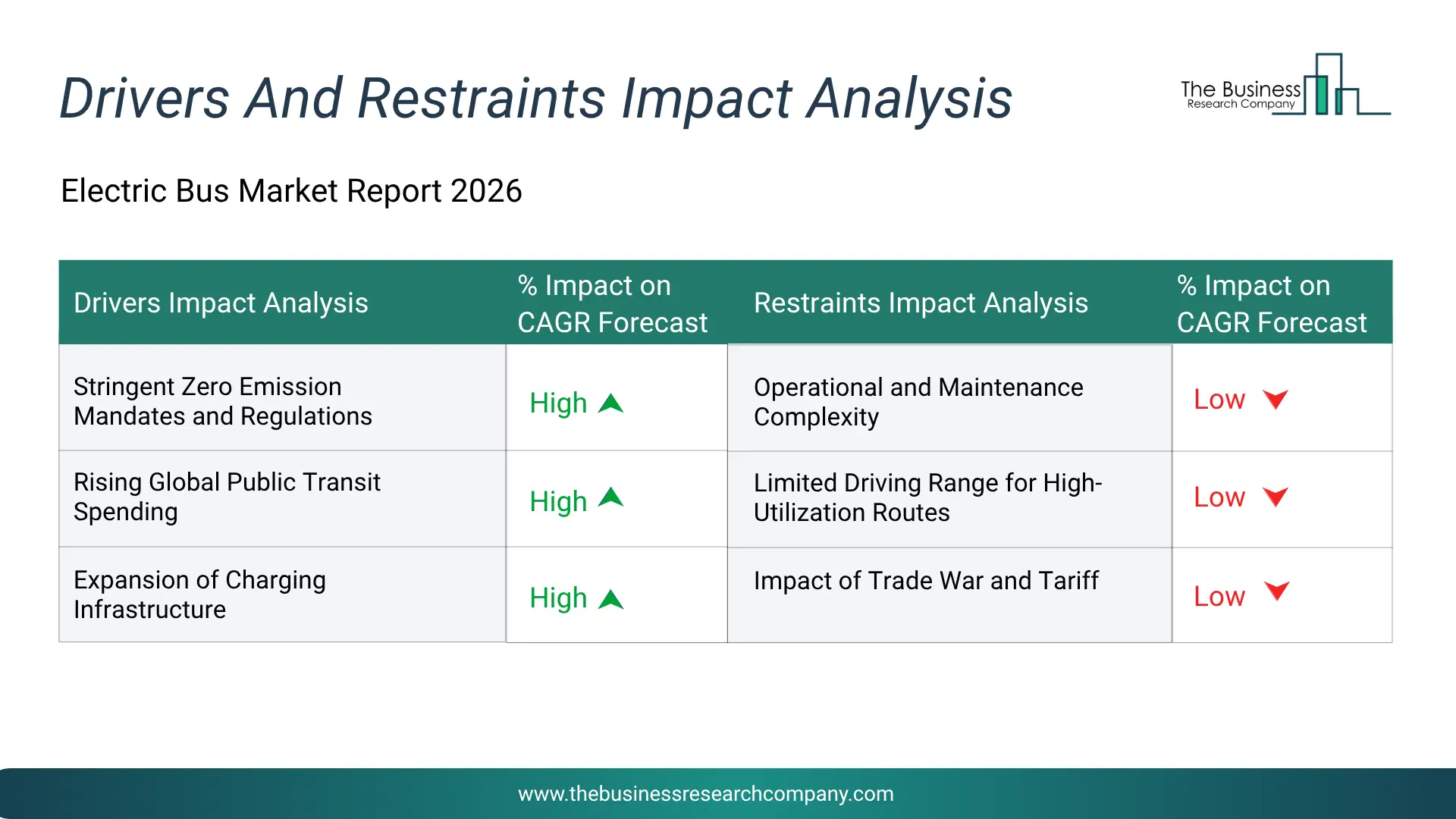
Infographic Chart Showing Key Market Drivers Analysis And Restraints For Electric Bus Market
The chart presents an impact analysis of key drivers and restraints, quantifying their relative influence on the market's growth rate and helping assess the balance between growth enablers and limiting factors. This chart offers a high-level perspective; the full report contains more detailed insights.
How Will The Drivers Impact Growth In The Global Electric Bus Market?
• Stringent Zero Emission Mandates and Regulations (High) – During the forecast period, the stringent zero emission mandates and regulations will serve as a key growth catalyst for the electric bus market by 2030. as compliance requirements tighten, transit agencies and fleet operators will be compelled to transition toward zero-emission vehicle options, directly increasing demand for electric buses. these regulations will accelerate procurement timelines, shorten replacement cycles for conventional buses and push manufacturers to rapidly scale compliant electric bus offerings. over time, regulatory pressure will reinforce electric buses as the default choice for new fleet additions, strengthening long-term market growth. therefore, this stringent zero emission mandates and regulations is projected to supporting to a 2.5% annual growth in the market. • Rising Global Public Transit Spending (High) – During the forecast period, the rising global public transit spending will emerge as a major factor driving the expansion of the electric bus market by 2030. as governments and transport authorities allocate higher budgets to improve public transportation systems, electric buses are likely to be prioritized due to their alignment with sustainability and long-term cost-efficiency goals. increased funding will support larger procurement programs, providing manufacturers with greater order volumes and encouraging scale production of electric bus platforms. this sustained capital flow into public transit will strengthen demand for battery electric, plug-in hybrid and fuel cell electric buses, supporting continued market expansion. consequently, the rising global public transit spending is projected to contributing to a 2.8% annual growth in the market. • Expansion of Charging Infrastructure (High) – During the forecast period, the expansion of charging infrastructure will become a key driver of growth in the electric bus market by 2030. as charging availability improves at depots and along transit corridors, fleet operators will gain greater confidence in adopting electric buses without compromising route reliability or service frequency. this improved operational readiness will translate into stronger demand for electric bus models with varied battery capacities and charging compatibility, encouraging manufacturers to expand their product portfolios. while charging infrastructure itself lies outside the vehicle market, its growth directly supports higher electric bus procurement by enabling smoother integration of electric buses into daily transit operations. as a result, expansion of charging infrastructure is anticipated to contributing to a 3.0% annual growth in the market. • Corporate and Municipal Net-Zero Commitments (High) – During the forecast period, the corporate and municipal net-zero commitments will propel the growth of the electric bus market. As cities, industrial operators and large institutions commit to carbon neutrality, electric buses will become a key tool for reducing emissions from passenger transport operations. These commitments will influence purchasing decisions, favoring electric bus platforms that support measurable emission reductions and long-term sustainability objectives. For manufacturers, this shift will translate into consistent demand from both public and corporate buyers seeking zero-emission bus solutions, further accelerating adoption and commercialization of electric buses across diverse applications. The corporate and municipal net-zero commitments growth contribution during the forecast period in 2025 is 2.4%.How Will The Restraints Impact Growth In The Global Electric Bus Market?
• Operational and Maintenance Complexity (High) – During the forecast period, operational and maintenance complexity is restricting the growth of the electric bus market during the forecast period. electric buses involve high-voltage systems, battery health management and specialized diagnostics that require trained personnel and new maintenance protocols. fleet operators may face challenges related to staff training, spare parts availability and system integration, which can disrupt operations during the transition phase. these complexities can discourage adoption, particularly among operators with limited technical capacity, thereby slowing the widespread uptake of electric buses. growth affected by the operational and maintenance complexity during the forecast period in 2025 is -0.5%. • Limited Driving Range for High-Utilization Routes (High) – During the forecast period, limited driving range for high-utilization routes is restricting the growth of the electric bus market during the forecast period. routes with extended daily mileage, minimal dwell time, or demanding duty cycles can exceed the practical operating range of certain electric bus configurations. this limitation forces operators to either modify schedules, invest in higher-capacity battery variants, or retain conventional buses for specific routes. consequently, range constraints reduce the applicability of electric buses across all route types, slowing full fleet electrification and restraining market growth. growth affected by the limited driving range for high-utilization routes during the forecast period in 2025 is -0.4%. • Impact of Trade War and Tariff (High) – During the forecast period, the impact of the trade war and tariffs restricting the growth of the electric bus market during the forecast period. electric buses rely on globally sourced components such as batteries, power electronics and specialized materials, which are vulnerable to import tariffs and trade restrictions. these measures can raise production costs, disrupt procurement planning and delay vehicle deliveries, ultimately increasing prices for end customers. ongoing trade tensions also create uncertainty for long-term investment and capacity expansion, limiting manufacturers’ ability to scale production efficiently and restraining overall market growth. growth affected by the impact of the trade war and tariffs during the forecast period in 2025 is -0.2%.Key Players In The Global Electric Bus Market
Major companies operating in the electric bus market report include BYD Co. Ltd., Tata Motors Limited, Zhengzhou Yutong Bus Co. Ltd., Scania AB, Dongfeng Motor Corporation, MAN Truck & Bus AG, Sinotruk Hong Kong Limited, Foton Motor Group, VDL Groep, Ashok Leyland Limited, NFI Group Inc., Blue Bird Corporation, Solaris Bus & Coach S.A., Gillig LLC, New Flyer of America Inc., Eicher Motors Limited, Alexander Dennis Limited, JBM Auto Limited, King Long United Automotive Industry Co. Ltd., Zhongtong Bus & Holding Company Limited, Proterra lnc., Nanjing Golden Dragon Bus Manufacturing Co. Ltd., Ebusco, The CAF Group incorporates, GreenPower Motor Company Inc., The Volvo Group, Daimler AG, Higer Bus Company Limited, Motiv Power Systems Inc., Zhuhai Guangtong Automobile Co. Ltd., Shenzhen Wuzhoulong Motors Co. Ltd., Olectra Greentech Limited, Xiamen King Long United Automotive Industry Co. Ltd., Yaxing Motor Coach Co. Ltd.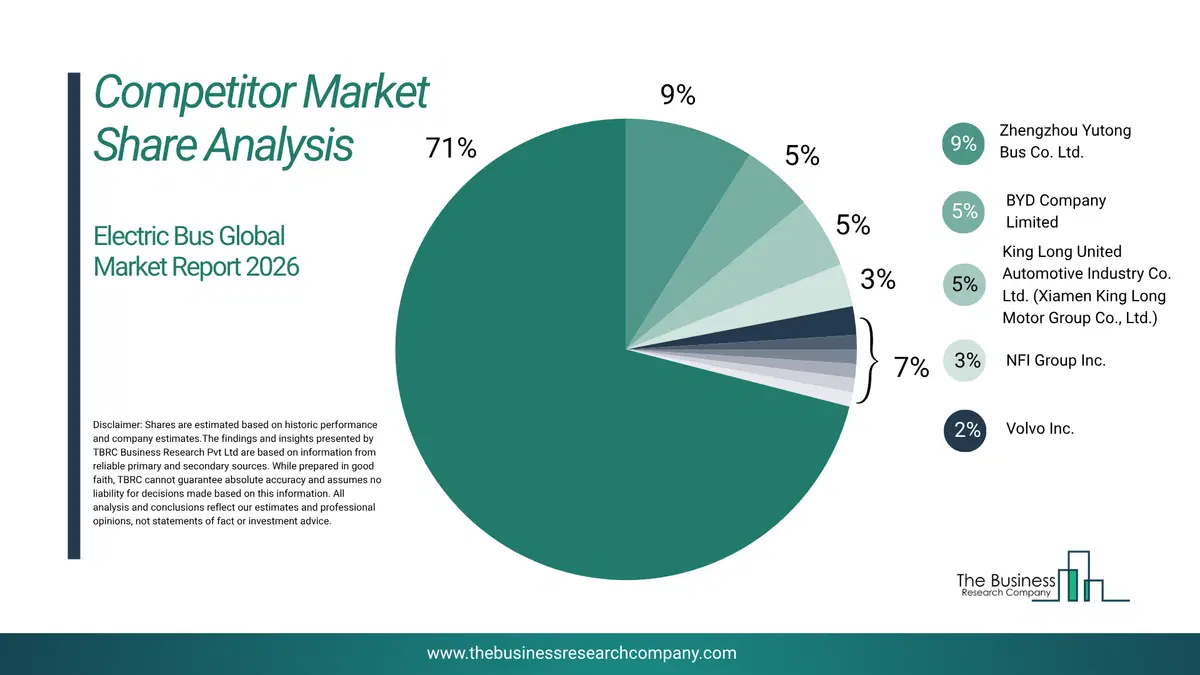
This chart is for illustrative purposes; the full report includes a detailed competitor analysis and comprehensive overview of the top 10 companies in the market.
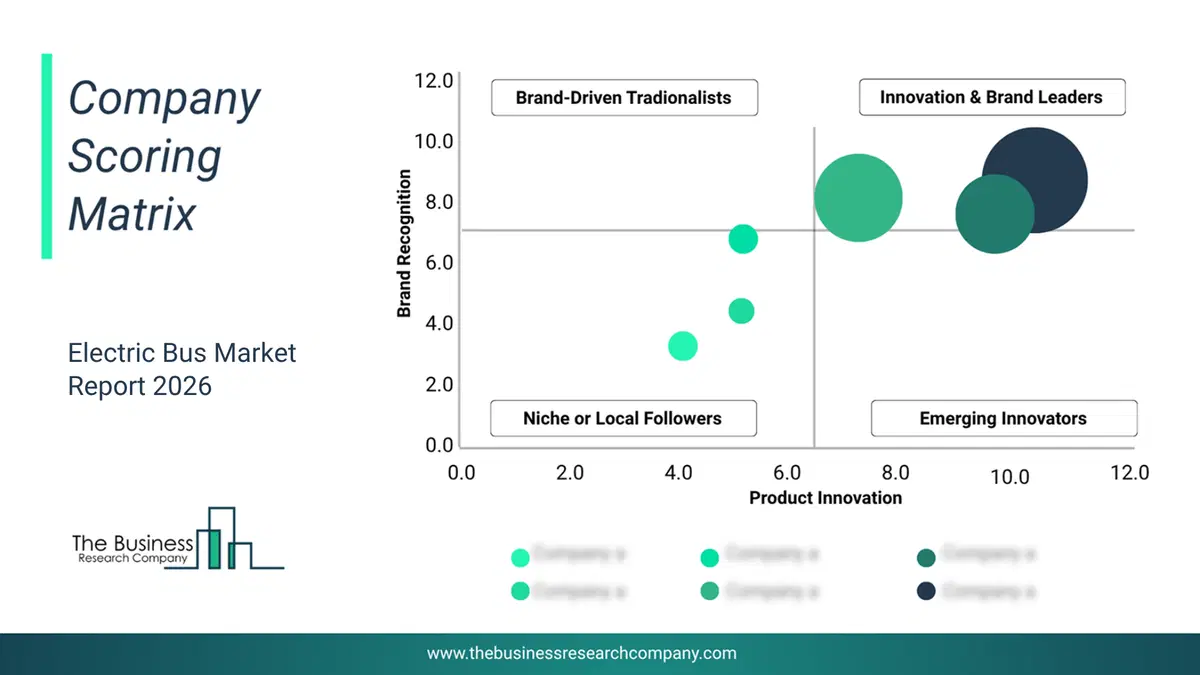
This chart maps companies by product innovation and brand strength, with bubble size indicating relative revenue, helping identify market leaders, challengers, and niche players. This is an illustrative chart; the full report provides a complete and accurate competitive analysis.
Global Electric Bus Market Trends and Insights
Major companies operating in the electric bus market are focusing on developing advanced, zero-emission models with enhanced battery options, improved passenger comfort, integrated charging solutions, and comprehensive service offerings to strengthen their market presence. For instance, in May 2023, Volvo Buses, a Sweden-based company that manufactures buses and coaches, launched the fully electric LUMINUS city bus in Mexico, celebrating its 25th anniversary. Produced locally, the LUMINUS offers battery options ranging from 280 to 470 kWh and lengths between 9.7 and 13 meters. It features advanced safety systems, a low entrance for accessibility, and spacious interiors equipped with wireless internet and USB charging ports. Volvo Buses provides comprehensive solutions that encompass the buses, charging infrastructure, and financing, while maintaining a commitment to zero-emission products.What Are Latest Mergers And Acquisitions In The Electric Bus Market?
In January 2024, Phoenix Motorcars, Inc., a US-based manufacturer of electric vehicles, acquired Proterra Inc. and Proterra Operating Company, Inc. for an undisclosed amount. Through this acquisition, Phoenix Motor aims to bolster its presence in the electric bus market by leveraging Proterra's expertise, technology, and product portfolio. This strategic move enhances Phoenix Motor's capacity to deliver innovative and sustainable electric transit solutions for public transportation. Both Proterra Inc. and Proterra Operating Company, Inc. are US-based companies specializing in the manufacturing of electric buses and related technologies.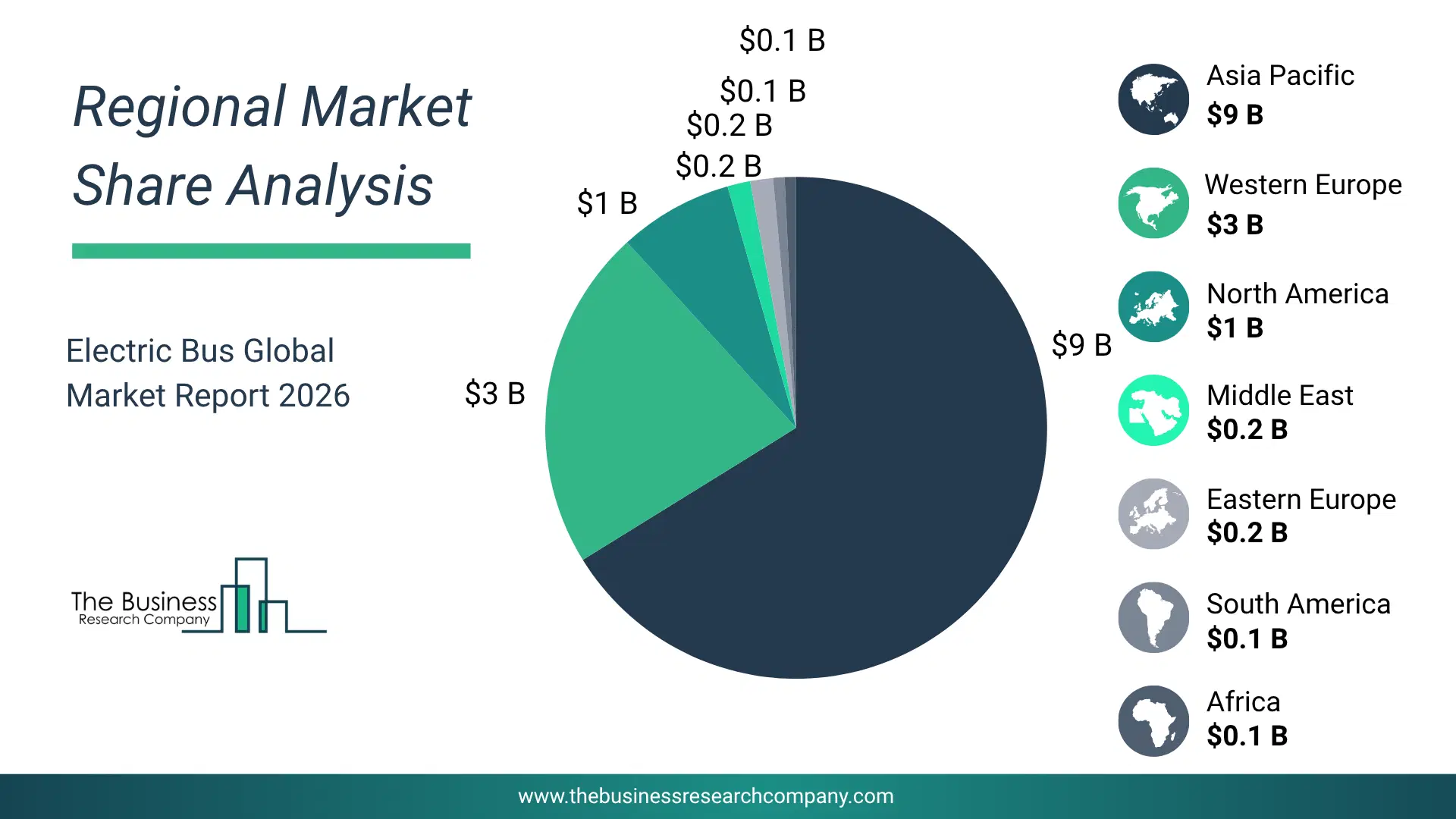
Regional Outlook
Asia-Pacific was the largest region in the electric bus market in 2025 and is expected to be the fastest-growing region in the forecast period. The regions covered in this market report include Asia-Pacific, South East Asia, Western Europe, Eastern Europe, North America, South America, Middle East, Africa. The countries covered in this market report include Australia, Brazil, China, France, Germany, India, Indonesia, Japan, Taiwan, Russia, South Korea, UK, USA, Canada, Italy, SpainWhat Defines the Electric Bus Market?
The electric bus market consists of sales of battery-powered all-electric buses. Values in this market are ‘factory gate’ values, that is the value of goods sold by the manufacturers or creators of the goods, whether to other entities (including downstream manufacturers, wholesalers, distributors and retailers) or directly to end customers. The value of goods in this market includes related services sold by the creators of the goods.How is Market Value Defined and Measured?
The market value is defined as the revenues that enterprises gain from the sale of goods and/or services within the specified market and geography through sales, grants, or donations in terms of the currency (in USD unless otherwise specified). The revenues for a specified geography are consumption values that are revenues generated by organizations in the specified geography within the market, irrespective of where they are produced. It does not include revenues from resales along the supply chain, either further along the supply chain or as part of other products.
This chart presents market attractiveness based on a quantitative evaluation of growth, competition, strategic alignment, and risk, offering a clear view of opportunity areas for decision-making. This chart is for illustrative purposes; the full report contains the complete analysis.

This chart highlights the Total Addressable Market (TAM) by estimating the maximum revenue opportunity using an assumption-driven approach, supporting strategic planning and opportunity sizing across markets. The chart is illustrative; the full report provides a more comprehensive analysis.
What Key Data and Analysis Are Included in the Electric Bus Market Report 2026?
The electric bus market research report is one of a series of new reports from The Business Research Company that provides market statistics, including industry global market size, regional shares, competitors with the market share, detailed market segments, market trends and opportunities, and any further data you may need to thrive in the electric bus industry. The market research report delivers a complete perspective of everything you need, with an in-depth analysis of the current and future state of the industry.Electric Bus Market Report Forecast Analysis
| Report Attribute | Details |
|---|---|
| Market Size Value In 2026 | $44.85 billion |
| Revenue Forecast In 2030 | $67.3 billion |
| Growth Rate | CAGR of 10.8% from 2026 to 2030 |
| Base Year For Estimation | 2025 |
| Actual Estimates/Historical Data | 2020-2025 |
| Forecast Period | 2026 - 2030 - 2035 |
| Market Representation | Revenue in USD Billion and CAGR from 2026 to 2030 |
| Segments Covered | Type, Battery Type, Vehicle Range, Battery Capacity, Application |
| Regional Scope | Asia-Pacific, Western Europe, Eastern Europe, North America, South America, Middle East, Africa |
| Country Scope | The countries covered in the report are Australia, Brazil, China, France, Germany, India, Indonesia, Japan, Taiwan, Russia, South Korea, UK, USA, Canada, Italy, Spain. |
| Key Companies Profiled | BYD Co. Ltd., Tata Motors Limited, Zhengzhou Yutong Bus Co. Ltd., Scania AB, Dongfeng Motor Corporation, MAN Truck & Bus AG, Sinotruk Hong Kong Limited, Foton Motor Group, VDL Groep, Ashok Leyland Limited, NFI Group Inc., Blue Bird Corporation, Solaris Bus & Coach S.A., Gillig LLC, New Flyer of America Inc., Eicher Motors Limited, Alexander Dennis Limited, JBM Auto Limited, King Long United Automotive Industry Co. Ltd., Zhongtong Bus & Holding Company Limited, Proterra lnc., Nanjing Golden Dragon Bus Manufacturing Co. Ltd., Ebusco, The CAF Group incorporates, GreenPower Motor Company Inc., The Volvo Group, Daimler AG, Higer Bus Company Limited, Motiv Power Systems Inc., Zhuhai Guangtong Automobile Co. Ltd., Shenzhen Wuzhoulong Motors Co. Ltd., Olectra Greentech Limited, Xiamen King Long United Automotive Industry Co. Ltd., Yaxing Motor Coach Co. Ltd. |
| Customization Scope | Request for Customization |
| Pricing And Purchase Options | Explore Purchase Options |