
Electric Cars Market Report 2026
Global Outlook – By Type (Battery Electric Vehicle (BEV), Plug-in Hybrid Electric Vehicle (PHEV)), By Battery Type (Lithium-Iron-Phosphate (LFP), Lithium–Nickel–Manganese Cobalt Oxide (Li-NMC), Lithium–Titanate Oxide (LTO) Battery, Lithium–Nickel–Cobalt–Aluminum Oxide (NCA) Battery, Nickel–Metal Hydride (NiMH) Battery), By Application (Home Use, Commercial Use) – Market Size, Trends, Strategies, and Forecast to 2030
Electric Cars Market Overview
• Electric Cars market size has reached to $546.1 billion in 2025 • Expected to grow to $968.33 billion in 2030 at a compound annual growth rate (CAGR) of 12% • Growth Driver: Surging Electric Vehicle Sales Fuel Robust Growth In Driveline Electric Car Market • Market Trend: Revolutionizing Sustainable Mobility With Advanced Innovations • Asia-Pacific was the largest region in 2025 and Western Europe is the fastest growing region.Market Gains By 2030 – Top Opportunities By Segment
Market Gain identifies the most promising market opportunities by highlighting the segments or products expected to generate the highest incremental revenue growth over the next five years.
What Is Covered Under Electric Cars Market?
Electric cars refers to passenger vehicles powered entirely or partially by electric motors using energy stored in rechargeable batteries instead of internal combustion engines. It is used for personal and commercial transportation while reducing fuel consumption, emissions, and dependence on fossil fuels. The main types in the electric cars market are battery electric vehicles (BEV), plug-in hybrid electric vehicles (PHEV), and hybrid electric vehicles (HEV). Battery electric vehicles operate only on stored electricity, and their main components consist of a high-voltage battery, one or more electric motors (either alternating current [AC] or direct current [DC]), and a controller for managing the power electronics. The battery types involved are lithium-iron-phosphate (left), lithium–nickel–manganese cobalt oxide (li–nmc), lithium–titanate oxide (to) battery, lithium–nickel–cobalt–aluminum oxide (NCA) battery, nickel-metal hydride (NIMH) battery, lead-acid battery. The applications involved are home use and commercial use.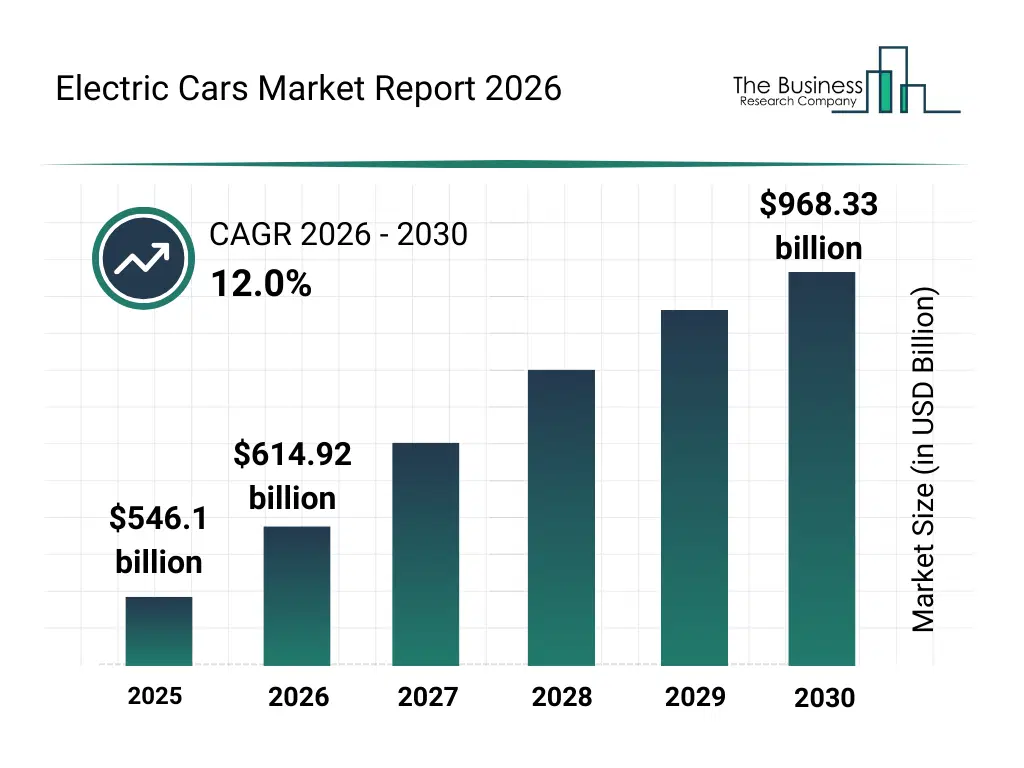
What Is The Electric Cars Market Size and Share 2026?
The electric cars market size has grown rapidly in recent years. It will grow from $546.1 billion in 2025 to $614.92 billion in 2026 at a compound annual growth rate (CAGR) of 12.6%. The growth in the historic period can be attributed to emission regulations, rising fuel prices, government EV incentives, early consumer adoption, advancements in lithium-ion batteries.What Is The Electric Cars Market Growth Forecast?
The electric cars market size is expected to see rapid growth in the next few years. It will grow to $968.33 billion in 2030 at a compound annual growth rate (CAGR) of 12.0%. The growth in the forecast period can be attributed to next-generation battery chemistries, mass-market EV affordability, autonomous driving integration, global charging infrastructure rollout, zero-emission mandates. Major trends in the forecast period include rapid shift toward battery electric vehicles, expansion of fast charging networks, growing adoption of long-range evs, integration of advanced driver assistance systems, growth of premium electric models.
Global Electric Cars Market Segmentation
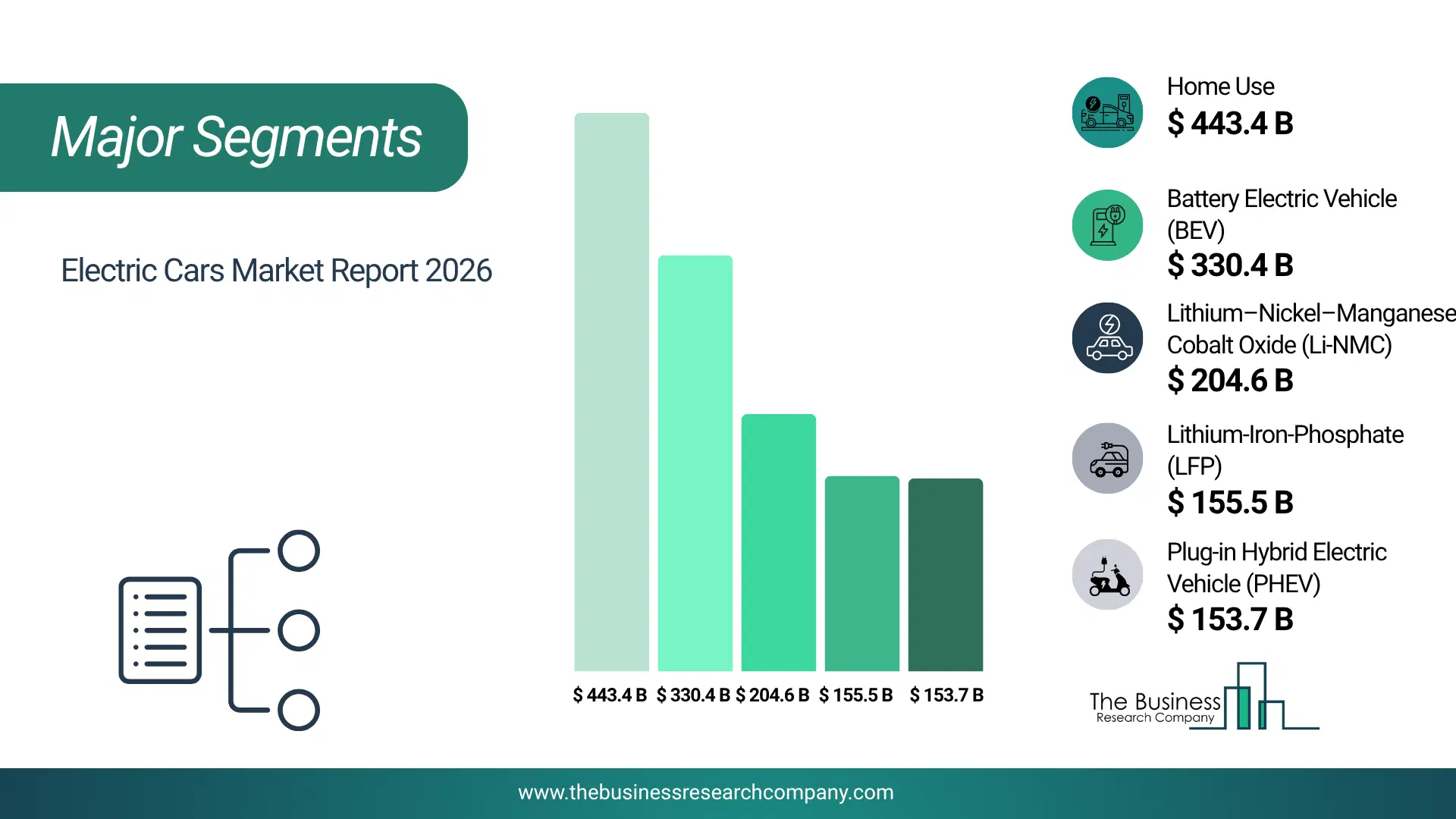
1) By Type: Battery Electric Vehicle (BEV), Plug-in Hybrid Electric Vehicle (PHEV) 2) By Battery Type: Lithium-Iron-Phosphate (LFP), Lithium–Nickel–Manganese Cobalt Oxide (Li-NMC), Lithium–Titanate Oxide (LTO) Battery, Lithium–Nickel–Cobalt–Aluminum Oxide (NCA) Battery, Nickel–Metal Hydride (NiMH) Battery 3) By Application: Home Use, Commercial Use Subsegments: 1) By Battery Electric Vehicle (BEV): Compact BEVs, Mid-Size BEVs, Full-Size BEVs, Luxury BEVs 2) By Plug-In Hybrid Electric Vehicle (PHEV): Compact PHEVs, Mid-Size PHEVs, Full-Size PHEVs, Luxury PHEVs The top segments in the electric cars market will be: • Home Use will reach $443437.23 Million by 2025. • Battery Electric Vehicle (BEV) will reach $330427.84 Million by 2025. • Lithium–Nickel–Manganese Cobalt Oxide (Li-NMC) will reach $204631.87 Million by 2025. • Lithium-Iron-Phosphate (LFP) will reach $155536 Million by 2025. • Plug-in Hybrid Electric Vehicle (PHEV) will reach $153735.81 Million by 2025.What Is The Driver Of The Electric Cars Market?
The growing sale of electric vehicles is expected to propel the growth of the electric vehicle cars market going forward. Electric vehicles (EVs) rely on stored electricity in batteries or similar energy storage systems, obviating the necessity for internal combustion engines. Driveline systems in electric vehicles transmit power from the electric motor to the wheels, enabling propulsion and determining the vehicle's performance and efficiency. For instance, in April 2024, according to the International Energy Agency (IEA), a France-based intergovernmental organization, reported that in 2024, the number of new electric car registrations in China reached 8.1 million in 2023, representing a 35% increase compared to 2022. Therefore, the growing sale of electric vehicles is driving the growth of the driveline electric cars industry.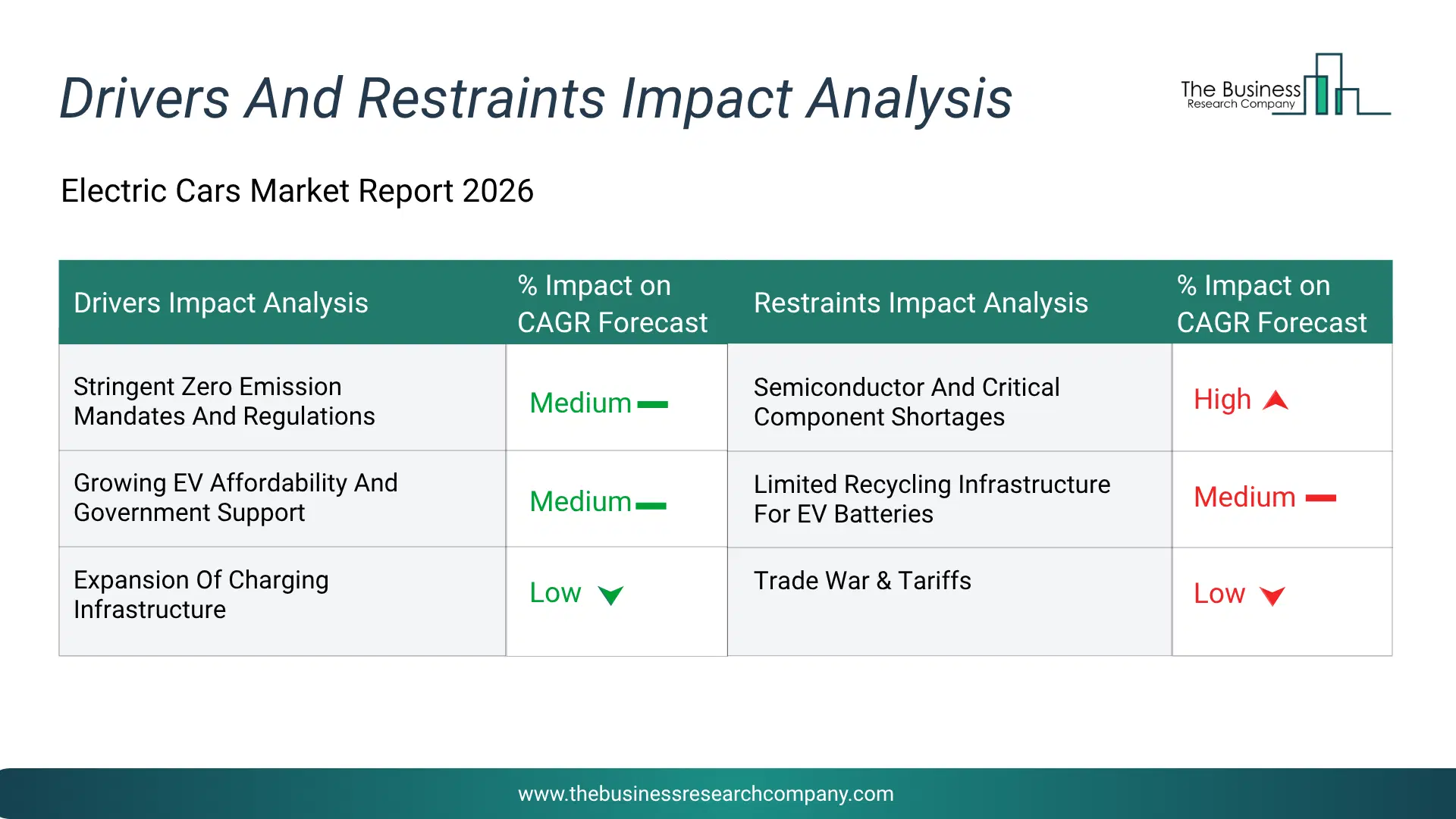
Infographic Chart Showing Key Market Drivers Analysis And Restraints For Electric Cars Market
The chart presents an impact analysis of key drivers and restraints, quantifying their relative influence on the market's growth rate and helping assess the balance between growth enablers and limiting factors. This chart offers a high-level perspective; the full report contains more detailed insights.
How Will The Drivers Impact Growth In The Global Electric Cars Market?
• Stringent Zero Emission Mandates And Regulations (Medium) – The stringent zero emission mandates & regulations will become a key driver of growth in the electric cars market by 2030. Governments worldwide are increasingly enforcing policies that limit or phase out internal combustion engine vehicles, compelling automakers to accelerate the production and adoption of electric vehicles (EVs). These regulations include emission reduction targets, stricter fuel economy standards and incentives for clean transportation. Compliance with such mandates encourages innovation in EV technology, infrastructure development and sustainable mobility solutions. As a result, regulatory pressure is driving both manufacturers and consumers toward electric alternatives, positioning stringent zero-emission policies as a critical factor propelling the expansion of the electric car market. As a result, the stringent zero emission mandates & regulations is anticipated to contributing to a 1.3% annual growth in the market. • Growing EV Affordability And Government Support (Medium) – The growing EV affordability and government support will emerge as a major factor driving the expansion of the electric cars market by 2030. Declining battery costs, economies of scale in production and competitive pricing strategies by automakers are making electric vehicles (EVs) more accessible to a broader consumer base. Simultaneously, government initiatives such as subsidies, tax incentives, reduced registration fees and favourable policies for EV adoption are further stimulating demand. These measures not only lower the total cost of ownership but also encourage businesses and consumers to transition from conventional vehicles to electric alternatives. Together, improving affordability and proactive policy support are anticipated to drive substantial growth in the electric car market. Consequently, the growing EV affordability and government support capabilities is projected to contributing to a 1.0% annual growth in the market. • Expansion Of Charging Infrastructure (Low) – The expansion of charging infrastructure within digital manufacturing processes will serve as a key growth catalyst for the electric cars market by 2030. As governments, private companies and public utilities invest in expanding charging networks, consumer confidence in electric vehicles (EVs) strengthens, addressing range anxiety major barrier to adoption. Increased accessibility of fast-charging stations in urban and highway locations enables longer journeys and more convenient daily use, making EVs a viable alternative to traditional internal combustion vehicles. Additionally, advancements in smart charging solutions and home-based charging options further enhance convenience. Therefore, this expansion of charging infrastructure across digital manufacturing operations is projected to supporting to a 0.8% annual growth in the market. • Increasing Vehicle Ownership (Low) – The increasing vehicle ownership will become a significant driver contributing to the growth of the electric cars market by 2030. As disposable incomes increase and urbanization accelerates, more consumers are purchasing personal vehicles, creating greater demand for mobility solutions. Within this context, electric vehicles (EVs) are emerging as a preferred choice due to their environmental benefits, lower operating costs and evolving technological advancements. The shift toward sustainable transportation, coupled with increasing awareness of climate change, is motivating consumers to consider EVs over conventional vehicles. Consequently, the growing number of vehicle owners is expected to serve as a key market driver, supporting the expansion of the electric car segment. Consequently, the increasing vehicle ownership strategies is projected to contributing to a 0.5% annual growth in the market.How Will The Restraints Impact Growth In The Global Electric Cars Market?
• Semiconductor And Critical Component Shortages (Medium) – Semiconductor And Critical Component Shortages will restrict the growth of the Electric Cars market during the forecast period. Electric car production depends on semiconductors and critical components affected by global supply shortages. Component shortages lead to production delays and reduced vehicle availability. Supply constraints can limit electric car sales and market growth, creating delivery backlogs. • Limited Recycling Infrastructure For EV Batteries (Low) – Limited Recycling Infrastructure For EV Batteries will restrict the growth of the Electric Cars market during the forecast period. The limited availability of recycling infrastructure for EV batteries creates environmental and sustainability concerns. Battery recycling challenges affect the end-of-life management of electric vehicles. Infrastructure gaps can limit the environmental benefits of EVs and affect consumer adoption, impacting market growth. • Trade War & Tariffs (Low) – Trade War & Tariffs will restrict the growth of the Electric Cars market during the forecast period. Trade tariffs on EV components and vehicles affect pricing and affordability. Trade barriers can impact the competitiveness of imported EVs and domestic manufacturing. Trade tensions may affect EV adoption rates and market growth.Key Players In The Global Electric Cars Market
Major companies operating in the electric cars market report include Toyota Motor Corporation, Bayerische Motoren Werke Aktiengesellschaft, BYD Company Limited, Tesla Inc., Renault Group, Volkswagen AG, General Motors Company, Beijing Automotive Industry Holding Co. Ltd., SAIC Motor Corporation Limited, Daimler AG, Chery Automobile Co. Ltd., Hyundai Motor Company, Ford Motor Company, Changan Automobile Co. Ltd., Volvo Car Corporation, Anhui Jianghuai Automobile Co. Ltd., Mitsubishi Motors Corporation, Geely Automobile Holdings Limited, Great Wall Motor Company Limited, Audi AG, Jaguar Land Rover Automotive PLC, Mahindra Electric Mobility Limited, Honda Motor Co. Ltd., Nissan Motor Co. Ltd., Lightyear BV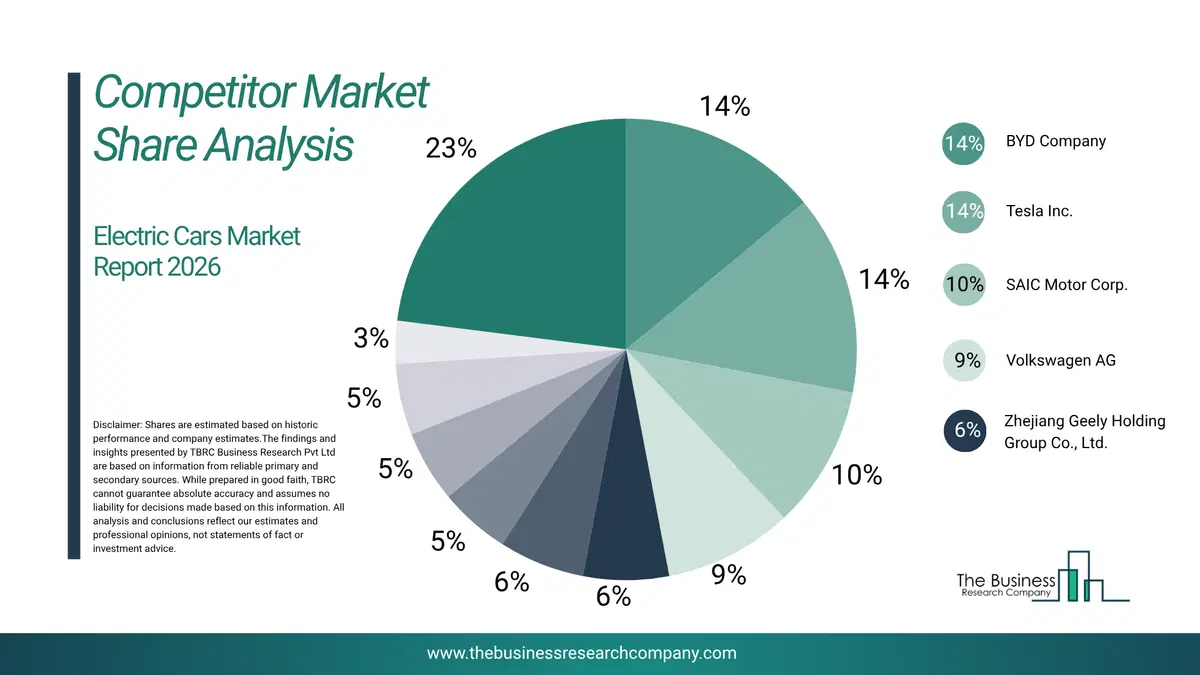
This chart is for illustrative purposes; the full report includes a detailed competitor analysis and comprehensive overview of the top 10 companies in the market.
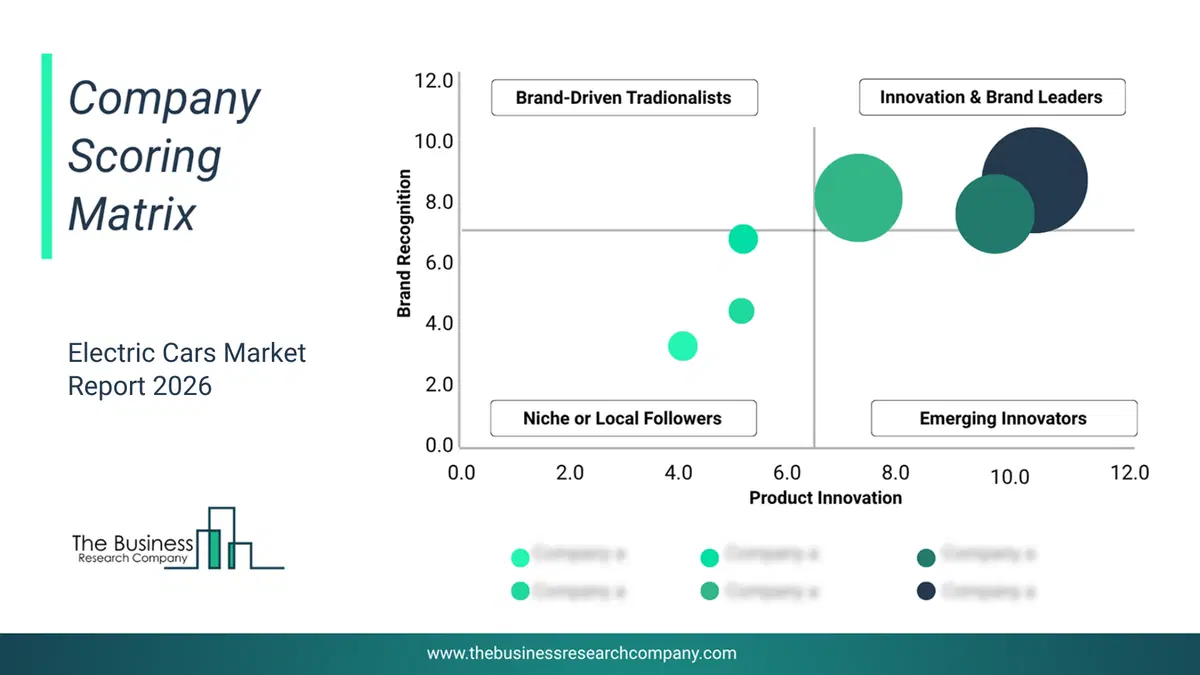
This chart maps companies by product innovation and brand strength, with bubble size indicating relative revenue, helping identify market leaders, challengers, and niche players. This is an illustrative chart; the full report provides a complete and accurate competitive analysis.
Global Electric Cars Market Trends and Insights
Major players in the electric car market are focusing on new electric vehicles, such as electric SUVs, to meet growing consumer demand for sustainable and high-performance mobility solutions. Electric SUVs are sport utility vehicles powered entirely by electric motors using energy stored in rechargeable battery packs, offering a sustainable alternative to traditional fuel-powered SUVs. For instance, in November 2024, Mahindra & Mahindra, an India-based automobile manufacturing company, has unveiled its flagship electric SUVs, the BE 6e and XEV 9e, starting at Rs 18.90 lakh and Rs 21.90 lakh, respectively, with deliveries expected by early March 2025. Featuring advanced LFP battery technology and certified ranges exceeding 650 km, these launches aim to strengthen Mahindra's position in the competitive EV market.What Are Latest Mergers And Acquisitions In The Electric Cars Market?
In December 2024, Toyoda Gosei Co. Ltd., a Japan-based automotive parts manufacturing company, acquired stake in EV Motors Japan Co. Ltd. (EVM-J) for an undisclosed amount. This acquisition helps the company gain hands-on expertise in the fast-growing commercial EV sector, from development to mass production. By collaborating with EVM-J, Toyoda Gosei expand its knowledge of advanced EV technologies, strengthen its position in next-generation mobility, and drive sustainable growth as the auto industry transitions toward CASE. EV Motors Japan Co. Ltd. (EVM-J) is a Japan-based automobile company that specializes in manufacturing electric vehicle.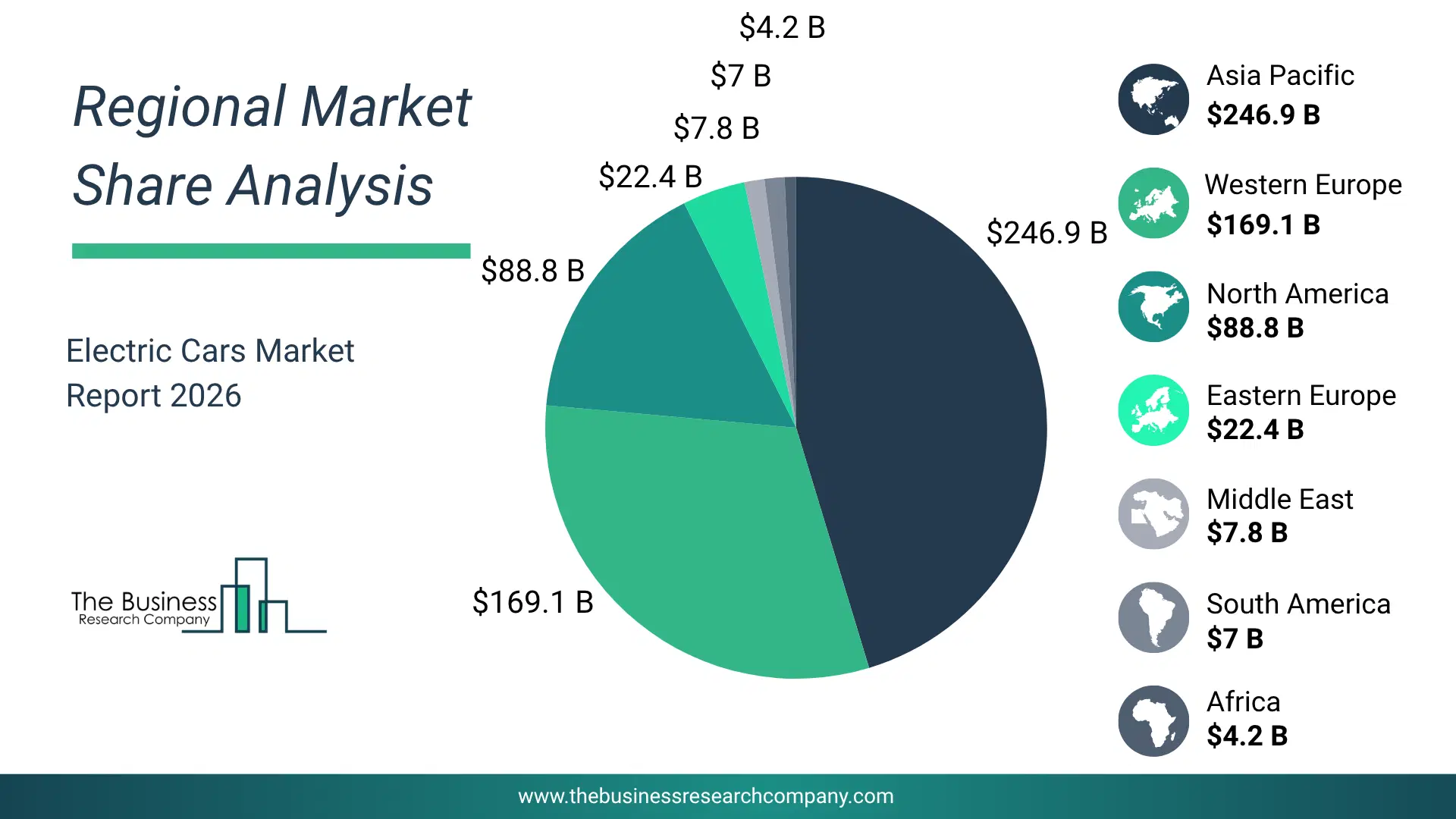
Regional Outlook
Asia-Pacific was the largest region in the electric cars market in 2025. Western Europe was the second largest region in the electric cars market. The regions covered in this market report include Asia-Pacific, South East Asia, Western Europe, Eastern Europe, North America, South America, Middle East, Africa. The countries covered in this market report include Australia, Brazil, China, France, Germany, India, Indonesia, Japan, Taiwan, Russia, South Korea, UK, USA, Canada, Italy, SpainWhat Defines the Electric Cars Market?
The electric cars market consists of sales of fuel cell electric vehicle (FCEV) and all-electric vehicle (AEV). Values in this market are factory gate values, that is the value of goods sold by the manufacturers or creators of the goods, whether to other entities (including downstream manufacturers, wholesalers, distributors and retailers) or directly to end customers. The value of goods in this market includes related services sold by the creators of the goods.How is Market Value Defined and Measured?
The market value is defined as the revenues that enterprises gain from the sale of goods and/or services within the specified market and geography through sales, grants, or donations in terms of the currency (in USD unless otherwise specified). The revenues for a specified geography are consumption values that are revenues generated by organizations in the specified geography within the market, irrespective of where they are produced. It does not include revenues from resales along the supply chain, either further along the supply chain or as part of other products.
This chart presents market attractiveness based on a quantitative evaluation of growth, competition, strategic alignment, and risk, offering a clear view of opportunity areas for decision-making. This chart is for illustrative purposes; the full report contains the complete analysis.

This chart highlights the Total Addressable Market (TAM) by estimating the maximum revenue opportunity using an assumption-driven approach, supporting strategic planning and opportunity sizing across markets. The chart is illustrative; the full report provides a more comprehensive analysis.
What Key Data and Analysis Are Included in the Electric Cars Market Report 2026?
The electric cars market research report is one of a series of new reports from The Business Research Company that provides market statistics, including industry global market size, regional shares, competitors with the market share, detailed market segments, market trends and opportunities, and any further data you may need to thrive in the electric cars industry. The market research report delivers a complete perspective of everything you need, with an in-depth analysis of the current and future state of the industry.Electric Cars Market Report Forecast Analysis
| Report Attribute | Details |
|---|---|
| Market Size Value In 2026 | $614.92 billion |
| Revenue Forecast In 2030 | $968.33 billion |
| Growth Rate | CAGR of 12.6% from 2026 to 2030 |
| Base Year For Estimation | 2025 |
| Actual Estimates/Historical Data | 2020-2025 |
| Forecast Period | 2026 - 2030 |
| Market Representation | Revenue in USD Billion and CAGR from 2026 to 2030 |
| Segments Covered | Type, Battery Type, Application |
| Regional Scope | Asia-Pacific, Western Europe, Eastern Europe, North America, South America, Middle East, Africa |
| Country Scope | The countries covered in the report are Australia, Brazil, China, France, Germany, India, Indonesia, Japan, Taiwan, Russia, South Korea, UK, USA, Canada, Italy, Spain. |
| Key Companies Profiled | Toyota Motor Corporation, Bayerische Motoren Werke Aktiengesellschaft, BYD Company Limited, Tesla Inc., Renault Group, Volkswagen AG, General Motors Company, Beijing Automotive Industry Holding Co. Ltd., SAIC Motor Corporation Limited, Daimler AG, Chery Automobile Co. Ltd., Hyundai Motor Company, Ford Motor Company, Changan Automobile Co. Ltd., Volvo Car Corporation, Anhui Jianghuai Automobile Co. Ltd., Mitsubishi Motors Corporation, Geely Automobile Holdings Limited, Great Wall Motor Company Limited, Audi AG, Jaguar Land Rover Automotive PLC, Mahindra Electric Mobility Limited, Honda Motor Co. Ltd., Nissan Motor Co. Ltd., Lightyear BV |
| Customization Scope | Request for Customization |
| Pricing And Purchase Options | Explore Purchase Options |