

Electric Highway (e-Highway) Market Report 2026
Global Outlook – By Component (Hardware, Software Or Platform, Services), By Technology (Overhead Lines, Rail, Inductive), By Scale (Long-Distance Electrified Roads, Local Electrified Roads), By End User (Government And Public Sector, Logistics And Transportation Companies, Automotive Original Equipment Manufacturers (OEMs) And Mobility Providers, Infrastructure Developers And Contractors) – Market Size, Trends, Strategies, and Forecast to 2030
Electric Highway (e-Highway) Market Overview
• Electric Highway (e-Highway) market size has reached to $29.25 billion in 2025 • Expected to grow to $57.9 billion in 2030 at a compound annual growth rate (CAGR) of 14.6% • Growth Driver: Increasing Need For Charging Solutions Fueling The Growth Of The Market Due To Rising Electric Vehicle Adoption • Market Trend: Advancements In Electrified Road Systems For EV Charging While In Motion • North America was the largest region in 2025 and Asia-Pacific is the fastest growing region.Market Gains By 2030 – Top Opportunities By Segment
Market Gain identifies the most promising market opportunities by highlighting the segments or products expected to generate the highest incremental revenue growth over the next five years.
What Is Covered Under Electric Highway (e-Highway) Market?
An electric highway (e-Highway) refers to a road transportation system equipped with advanced electrification infrastructure that enables electric vehicles, particularly heavy-duty trucks and buses, to draw power while in motion. The primary aim of e-Highways is to reduce dependence on fossil fuels, lower greenhouse gas emissions, and enhance energy efficiency in long-distance and freight transport. The main components of electric highways (e-Highway) include hardware, software or platform, and services. Hardware refers to the physical infrastructure and equipment, such as charging systems, power converters, and monitoring devices, that enable the continuous electrification of roadways for electric vehicles. These highways employ technologies including overhead lines, rail, and inductive systems, and are implemented at scales ranging from long-distance electrified roads to local electrified roads. The key end-users include government and public sector bodies, logistics and transportation companies, automotive original equipment manufacturers (OEMs) and mobility providers, as well as infrastructure developers and contractors.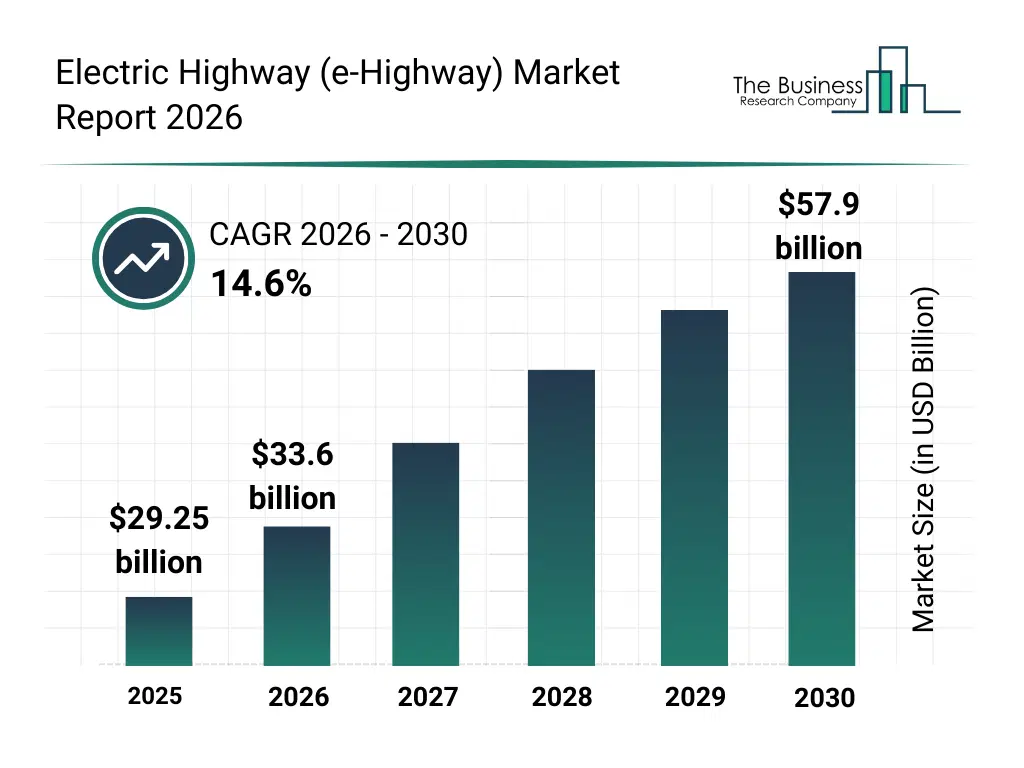
What Is The Electric Highway (e-Highway) Market Size and Share 2026?
The electric highway (e-highway) market size has grown rapidly in recent years. It will grow from $29.25 billion in 2025 to $33.6 billion in 2026 at a compound annual growth rate (CAGR) of 14.9%. The growth in the historic period can be attributed to government-funded e-highway pilot projects, rising fuel cost pressures on freight transport, early adoption of overhead line truck systems, infrastructure electrification trials, collaboration between utilities and transport agencies.What Is The Electric Highway (e-Highway) Market Growth Forecast?
The electric highway (e-highway) market size is expected to see rapid growth in the next few years. It will grow to $57.9 billion in 2030 at a compound annual growth rate (CAGR) of 14.6%. The growth in the forecast period can be attributed to expansion of long-distance zero-emission freight corridors, rising investments in electric heavy-duty vehicles, growing adoption of dynamic charging infrastructure, integration with renewable grid systems, increasing policy support for electrified highways. Major trends in the forecast period include increasing pilot deployment of electrified road corridors, rising integration of overhead and inductive charging technologies, growing focus on freight electrification solutions, expansion of smart road energy management systems, enhanced collaboration between transport and energy sectors.
Global Electric Highway (e-Highway) Market Segmentation
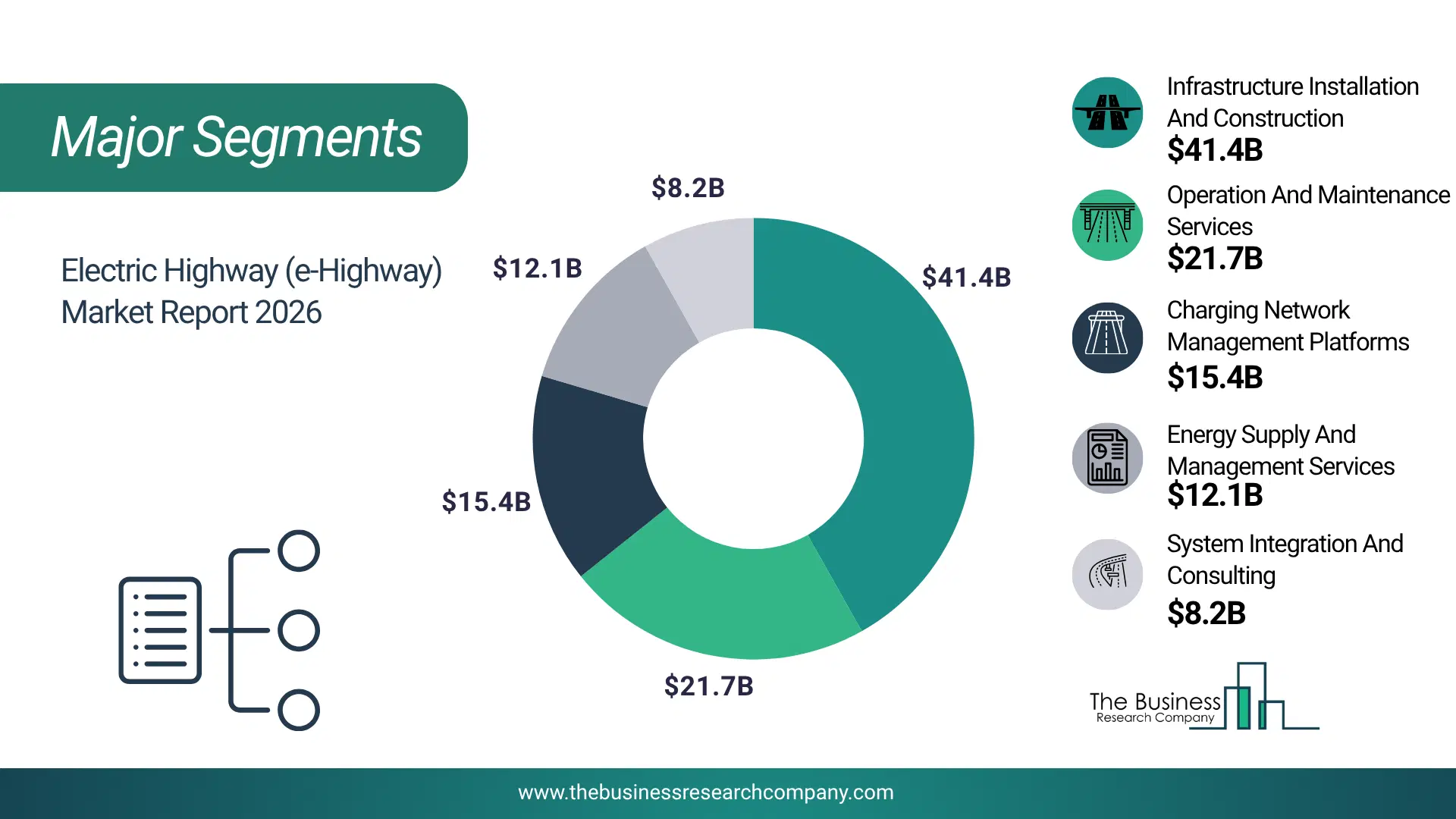
1) By Component: Hardware, Software Or Platform, Services 2) By Technology: Overhead Lines, Rail, Inductive 3) By Scale: Long-Distance Electrified Roads, Local Electrified Roads 4) By End User: Government And Public Sector, Logistics And Transportation Companies, Automotive Original Equipment Manufacturers (OEMs) And Mobility Providers, Infrastructure Developers And Contractors Subsegments: 1) By Component: Charging Stations, Electric Cables And Connectors, Inductive Charging Pads, Power Electronics And Converters, Energy Storage Systems, Sensors And Monitoring Devices 2) By Software Or Platform: Charging Management Software, Fleet Management Platforms, Energy Management And Optimization Software, Payment And Billing Platforms, Navigation And Route Planning Software, Data Analytics And Reporting Platforms 3) By Services: Installation And Commissioning Services, Maintenance And Repair Services, Consulting And Advisory Services, Financing And Leasing Services, Operation And Management Services, Customer Support And Training Services The top segments in the electric highway (e-highway) market will be: • Infrastructure Installation And Construction will reach $41.35 billion by 2030. • Operation And Maintenance Services will reach $21.65 billion by 2030. • Charging Network Management Platforms will reach $15.36 billion by 2030. • Energy Supply And Management Services will reach $12.08 billion by 2030. • System Integration And Consulting will reach $8.18 billion by 2030.What Are The Drivers Of The Electric Highway (e-Highway) Market?
The increasing need for charging solutions is expected to propel the growth of the electric highway (e-Highway) market going forward. The need for charging solutions refers to the growing requirement for reliable, large-scale infrastructure to power the expanding fleet of electric vehicles. The need for charging solutions is rising due to the rapid increase in electric vehicle adoption. As more EVs enter roads each year, the pressure to expand reliable and efficient charging infrastructure grows to ensure uninterrupted mobility. Electric highway (e-Highway) helps meet the need for charging solutions by providing a continuous, large-scale, and efficient power supply to electric vehicles, enabling seamless long-distance travel without reliance on frequent stationary charging stops. For instance, in May 2025, according to the International Energy Agency (IEA), a France-based autonomous intergovernmental organization, in 2024, more than 1.3 million public charging points were added to the global stock, representing an increase of more than 30% compared to 2023. In Europe, public charging points grew by more than 35 % in 2024 compared to 2023, and in the United States, the public charging stock increased by 20 % in 2024 to just under 200,000 public charging points. Therefore, the increasing need for charging solutions is driving the growth of the electric highway (e-highway) industry. The increasing adoption of electric vehicles is expected to propel the growth of the Electric Highway (e-Highway) market going forward. Electric vehicles are automobiles that use one or more electric motors for propulsion, drawing energy from rechargeable batteries instead of internal combustion engines. The rise in electric vehicle adoption is due to stricter emission regulations, supportive government incentives, and increasing environmental awareness, encouraging consumers and fleet operators to transition to zero-emission mobility. Electric highways support the expansion of electric mobility by enabling dynamic or continuous charging, reducing range anxiety, lowering onboard battery requirements, and improving the viability of long-distance and heavy-duty electric transport. For instance, in October 2025, according to the UK Department for Transport, a UK-based government transport and vehicle statistics authority, 112,785 zero-emission vehicles were registered for the first time in the UK, accounting for 19.0% of all new vehicle registrations, while battery electric cars represented 22.2% of new car registrations, up from 17.5% in April–June 2024. Therefore, the increasing adoption of electric vehicles is driving the growth of the Electric Highway (e-Highway) industry.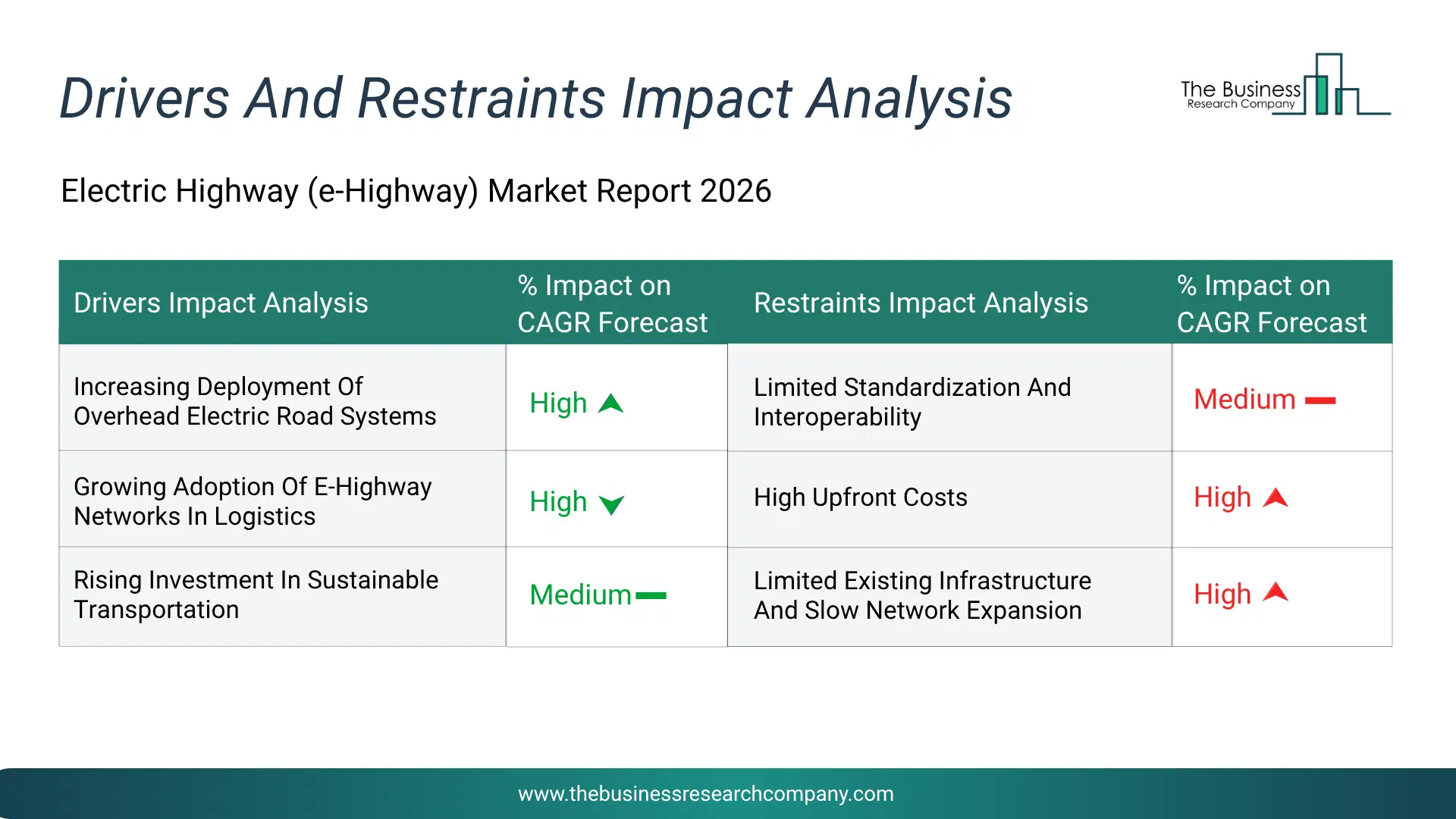
Infographic Chart Showing Key Market Drivers Analysis And Restraints For Electric Highway (E-Highway) Market
The chart presents an impact analysis of key drivers and restraints, quantifying their relative influence on the market's growth rate and helping assess the balance between growth enablers and limiting factors. This chart offers a high-level perspective; the full report contains more detailed insights.
How Will The Drivers Impact Growth In The Global Electric Highway (e-Highway) Market?
• Increasing Deployment Of Overhead Electric Road Systems (High) – During the forecast period, the increasing deployment of overhead electric road systems is expected to become a key growth driver for the electric highway (e-highway) market by 2030. The increasing deployment of overhead electric road systems is driving the electric highway market by enabling efficient and continuous power supply to electric vehicles while in motion. These systems reduce the dependence on stationary charging stations, allowing for longer travel ranges and minimal downtime. They also lower operational costs for fleet operators by improving energy efficiency and reducing fuel expenses. Additionally, the integration of overhead lines supports large-scale electrification of heavy-duty transport, a key contributor to emissions. As governments and industries push for sustainable mobility, this technology accelerates the adoption of e-highways globally. • Growing Adoption Of E-Highway Networks In Logistics (High) – During the forecast period, the growing adoption of e-highway networks in logistics is expected to emerge as a major factor driving the expansion of the electric highway (e-highway) market by 2030. The growing adoption of e-highway networks in logistics is a major driver for the electric highway market as it enables efficient, low-emission transportation of goods over long distances. Logistics companies are increasingly turning to e-highways to reduce fuel costs and carbon footprints while maintaining high operational productivity. These networks support continuous vehicle operation without frequent charging stops, improving delivery timelines and reliability. They also align with global sustainability targets and corporate esg commitments. As a result, expanding e-highway infrastructure is becoming integral to modernizing freight and logistics operations worldwide. • Rising Investment In Sustainable Transportation (Medium) – During the forecast period, the rising investment in sustainable transportation is expected to act as a key growth catalyst for the electric highway (e-highway) market by 2030. Rising investment in sustainable transportation is propelling the electric highway market by promoting large-scale development of eco-friendly mobility infrastructure. Governments and private players are allocating significant funds to reduce dependence on fossil fuels and lower greenhouse gas emissions. These investments accelerate the deployment of electric road systems, advanced charging technologies, and renewable energy integration. They also encourage partnerships between technology providers, automakers, and infrastructure developers to expand e-highway projects. Consequently, the growing financial commitment to sustainability is driving the global adoption of electric highways.How Will The Restraints Impact Growth In The Global Electric Highway (e-Highway) Market?
• Limited Standardization And Interoperability (Medium) – During the forecast period, the limited standardization and interoperability act as major restraints for the electric highway (e-highway) system because different countries and manufacturers often adopt varying technologies, power systems, and connector designs. This lack of uniform standards hinders cross-border operations and complicates large-scale deployment. Truck operators face compatibility issues when transitioning between networks developed by different providers. Additionally, it increases infrastructure and maintenance costs due to the need for multiple system integrations. Consequently, the absence of standardized frameworks slows adoption and limits the efficiency of e-highway implementation. • High Upfront Costs (High) – During the forecast period, the high upfront costs act as a major restraint for the electric highway (e-highway) system because establishing the necessary infrastructure—such as overhead power lines, substations, and compatible trucks—requires significant capital investment. Governments and private investors often hesitate to commit large funds without guaranteed long-term returns. Additionally, the high initial expenses make large-scale deployment economically challenging, especially for developing regions. Truck operators also face the burden of upgrading or purchasing ehighway-compatible vehicles, further increasing costs. These financial barriers slow adoption and delay widespread implementation of the technology. • Limited Existing Infrastructure And Slow Network Expansion (High) – During the forecast period, the limited existing infrastructure and slow network expansion act as a restraint for the electric highway (e-highway) system because the technology requires dedicated electrified road segments, which are currently available only in limited pilot regions. The slow pace of infrastructure rollout restricts continuous long-distance trucking operations and reduces practical usability for freight operators. In many regions, the absence of connected highway corridors makes it difficult to achieve seamless transport efficiency. Additionally, expanding the network demands significant coordination between governments, utilities, and private stakeholders, which further delays implementation. Overall, insufficient infrastructure coverage hampers large-scale adoption and commercial viability.Key Players In The Global Electric Highway (e-Highway) Market
Major companies operating in the electric highway (e-highway) market are Volkswagen Group, Siemens AG, Tata Motors, Scania, Volvo, Schneider Electric SE, ABB Ltd, Electreon, Elonroad, ENRX, Elways, Continental AG, Qualcomm Technologies Inc, Bombardier (transport electrification division), Alstom SA, WiTricity Corporation, Hevo Power, Grivix, Seamless Energy Technologies, Remote Energy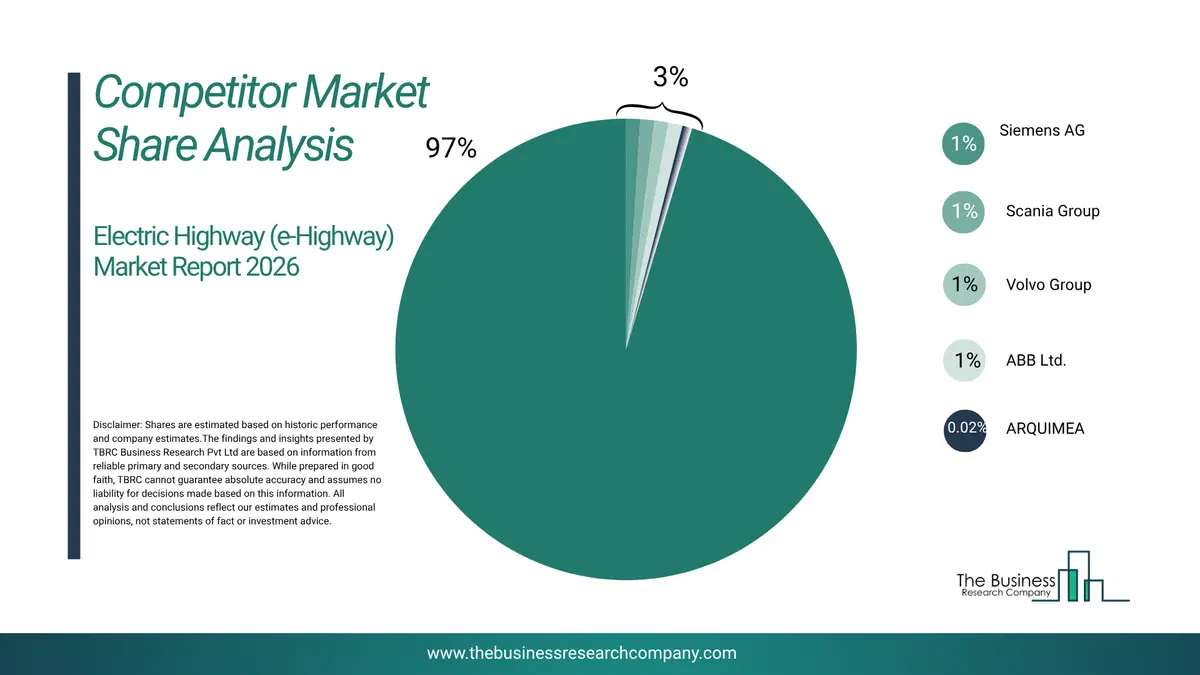
This chart is for illustrative purposes; the full report includes a detailed competitor analysis and comprehensive overview of the top 10 companies in the market.
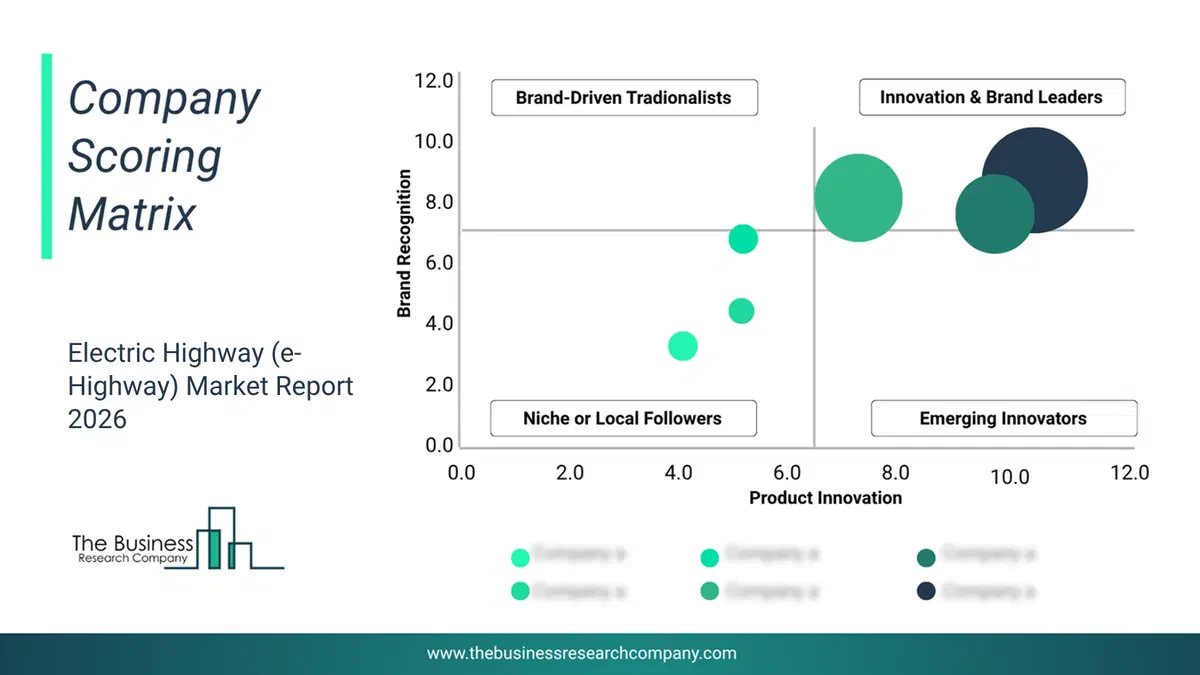
This chart maps companies by product innovation and brand strength, with bubble size indicating relative revenue, helping identify market leaders, challengers, and niche players. This is an illustrative chart; the full report provides a complete and accurate competitive analysis.
Global Electric Highway (e-Highway) Market Trends and Insights
Major companies operating in the electric highway (e-Highway) market are focusing on advancements in electrified road systems such as inductive charging technology to enable electric vehicles to charge while in motion, enhancing efficiency and supporting long-distance sustainable transportation. Inductive charging technology refers to a wireless power transfer system where energy is transmitted from coils embedded in the road to a receiver installed in an electric vehicle. It allows vehicles to charge while driving, reducing reliance on stationary charging stations and supporting continuous long-distance travel. For instance, in February 2024, Detroit, a US-based City, unveiled the nation's first wireless EV charging road, a quarter-mile stretch on 14th Street in the Michigan Central innovation district. This involves embedded inductive coils that wirelessly charge electric vehicles as they drive by transferring energy to receivers fitted on the vehicles, marking a significant step toward nationwide adoption of zero-emission mobility and enhanced EV infrastructure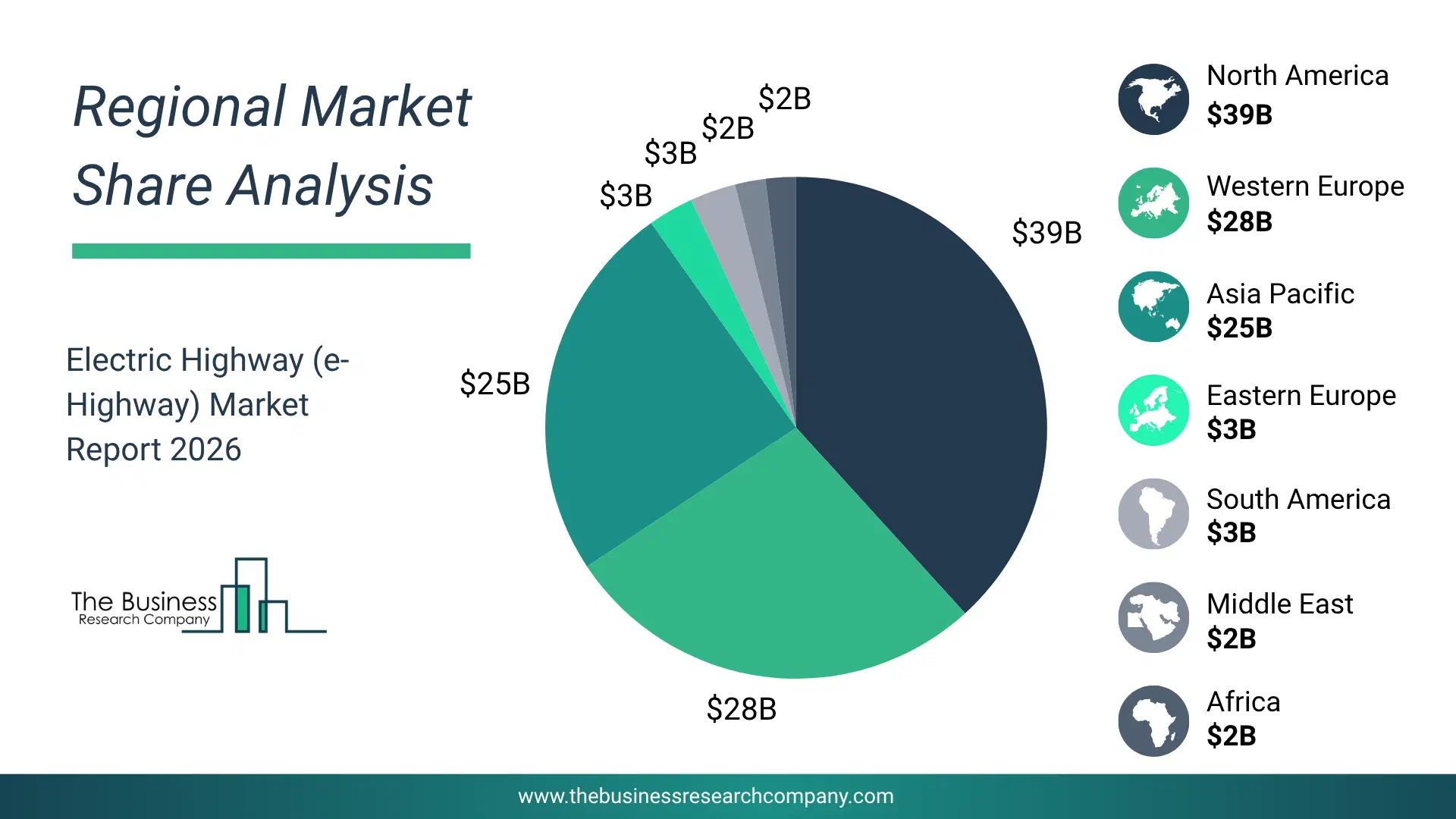
Regional Outlook
North America was the largest region in the electric highway (e-highway) market in 2025. Asia-Pacific is expected to be the fastest-growing region in the forecast period. The regions covered in this market report are Asia-Pacific, South East Asia, Western Europe, Eastern Europe, North America, South America, Middle East, Africa. The countries covered in this market report are Australia, Brazil, China, France, Germany, India, Indonesia, Japan, Taiwan, Russia, South Korea, UK, USA, Canada, Italy, SpainWhat Defines the Electric Highway (e-Highway) Market?
The electric highway (e-highway) market consists of revenues earned by entities by providing services such as energy supply and charging services, grid integration and load management, maintenance and repair services, data analytics and performance monitoring, and financing and leasing solutions. The market value includes the value of related goods sold by the service provider or included within the service offering. The electric highway (e-highway) market also includes sales of charging infrastructure hardware, power conversion and distribution systems, and energy storage solutions. Values in this market are ‘factory gate’ values, that is, the value of goods sold by the manufacturers or creators of the goods, whether to other entities (including downstream manufacturers, wholesalers, distributors, and retailers) or directly to end customers. The value of goods in this market includes related services sold by the creators of the goods.How is Market Value Defined and Measured?
The market value is defined as the revenues that enterprises gain from the sale of goods and/or services within the specified market and geography through sales, grants, or donations in terms of the currency (in USD unless otherwise specified). The revenues for a specified geography are consumption values that are revenues generated by organizations in the specified geography within the market, irrespective of where they are produced. It does not include revenues from resales along the supply chain, either further along the supply chain or as part of other products.
This chart presents market attractiveness based on a quantitative evaluation of growth, competition, strategic alignment, and risk, offering a clear view of opportunity areas for decision-making. This chart is for illustrative purposes; the full report contains the complete analysis.

This chart highlights the Total Addressable Market (TAM) by estimating the maximum revenue opportunity using an assumption-driven approach, supporting strategic planning and opportunity sizing across markets. The chart is illustrative; the full report provides a more comprehensive analysis.
What Key Data and Analysis Are Included in the Electric Highway (e-Highway) Market Report 2026?
The electric highway (e-highway) market research report is one of a series of new reports from The Business Research Company that provides market statistics, including Market Report 2026?global market size, regional shares, competitors with the market share, detailed market segments, market trends and opportunities, and any further data you may need to thrive in the electric highway (e-highway) Market Report 2026? The market research report delivers a complete perspective of everything you need, with an in-depth analysis of the current and future state of the Market Report 2026?Electric Highway (e-Highway) Market Report Forecast Analysis
| Report Attribute | Details |
|---|---|
| Market Size Value In 2026 | $33.6 billion |
| Revenue Forecast In 2030 | $57.9 billion |
| Growth Rate | CAGR of 14.6% from 2026 to 2030 |
| Base Year For Estimation | 2025 |
| Actual Estimates/Historical Data | 2020-2025 |
| Forecast Period | 2026 - 2030 |
| Market Representation | Revenue in USD Billion and CAGR from 2026 to 2030 |
| Segments Covered | Component, Technology, Scale, End User |
| Regional Scope | Asia-Pacific, Western Europe, Eastern Europe, North America, South America, Middle East, Africa |
| Country Scope | The countries covered in the report are Australia, Brazil, China, France, Germany, India, ... |
| Key Companies Profiled | Volkswagen Group, Siemens AG, Tata Motors, Scania, Volvo, Schneider Electric SE, ABB Ltd, Electreon, Elonroad, ENRX, Elways, Continental AG, Qualcomm Technologies Inc, Bombardier (transport electrification division), Alstom SA, WiTricity Corporation, Hevo Power, Grivix, Seamless Energy Technologies, Remote Energy |
| Customization Scope | Request for Customization |
| Pricing And Purchase Options | Explore Purchase Options |