
Electric Hybrid Ferries Market Report 2026
Global Outlook – By Propulsion Type (Diesel-Electric, Plug-in Hybrid Electric, Hydrogen Fuel Cell-Electric, Solar-Electric, Other Propulsion Types), By Range (Short-Range Ferries (<50 nautical miles), Medium-Range Ferries (50-100 nautical miles), Long-Range Ferries (>100 nautical miles), Island-Hopping Ferries, Other Ranges), By Energy Management System (Shore Power Systems, Automated Power Management, Battery Management Systems, Energy Recovery Systems, Smart Grid Integration, Renewable Energy Systems, Other Energy Management Systems), By Vessel Size (Small Ferries (<50m length), Medium Ferries ,Extra Large Ferries (>150m length), Other Vessel Sizes), By Application (Passenger Ferries, RoPax Vessels (Roll-on/Roll-off Passenger) – Market Size, Trends, Strategies, and Forecast to 2030
Electric Hybrid Ferries Market Overview
• Electric Hybrid Ferries market size has reached to $4.67 billion in 2025 • Expected to grow to $8.49 billion in 2030 at a compound annual growth rate (CAGR) of 12.6% • Growth Driver: Surge In Sustainable Public Transportation Fueling The Growth Of The Market Due To Rising Environmental Awareness And Demand For Eco-friendly Transit • Market Trend: Innovative Diesel-lithium Battery Ferries Launch To Revolutionize Eco-friendly Water Transport • Europe was the largest region in 2025 and Asia-Pacific is the fastest growing region.What Is Covered Under Electric Hybrid Ferries Market?
Electric hybrid ferries refer to vessels that combine battery-powered electric propulsion with conventional fuel-based engines. They enable reduced emissions and improved fuel efficiency by switching between or combining power sources. Electric hybrid ferries support sustainable and eco-friendly maritime transportation. The main propulsion types of electric hybrid ferries includes diesel-electric, plug-in hybrid electric, hydrogen fuel cell-electric, solar-electric and other propulsion types. Diesel-electric refers to a propulsion system where a diesel engine generates electricity to power electric motors that drive the vessel's propellers. The ranges are short-range ferries (<50 nautical miles), medium-range ferries (50-100 nautical miles), long-range ferries (>100 nautical miles), island-hopping ferries and other ranges. The energy management system is as given shore power systems, automated power management, battery management systems, energy recovery systems, smart grid integration, renewable energy systems and other energy management systems. There are vessel sizes small ferries (<50m length), medium ferries (50-100m length), large ferries (100-150m length) and extra-large ferries (>150m length) and other vessel sizes. The key applications passenger ferries, ropax vessels (roll-on/roll-off passenger), car ferries, cargo ferries, specialty transport ferries, tourist ferries and other applications.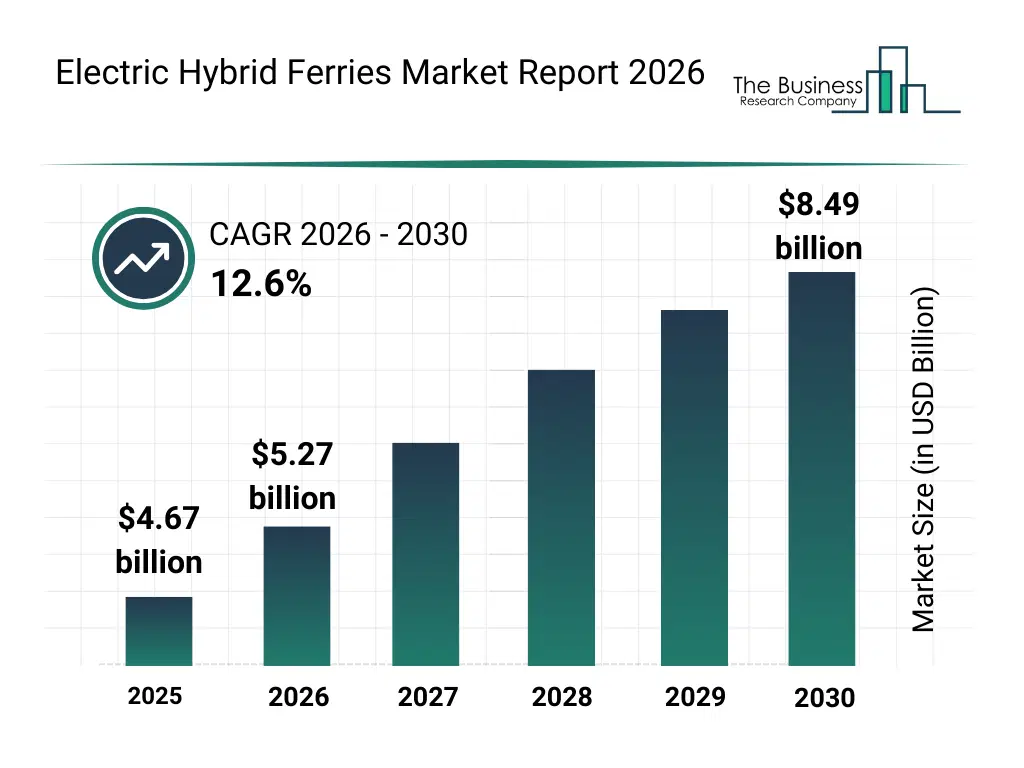
What Is The Electric Hybrid Ferries Market Size and Share 2026?
The electric hybrid ferries market size has grown rapidly in recent years. It will grow from $4.67 billion in 2025 to $5.27 billion in 2026 at a compound annual growth rate (CAGR) of 12.9%. The growth in the historic period can be attributed to transition toward cleaner marine transport, fuel efficiency requirements, hybrid propulsion pilots, maritime emission regulations, ferry fleet modernization.What Is The Electric Hybrid Ferries Market Growth Forecast?
The electric hybrid ferries market size is expected to see rapid growth in the next few years. It will grow to $8.49 billion in 2030 at a compound annual growth rate (CAGR) of 12.6%. The growth in the forecast period can be attributed to increased hydrogen and battery integration, smart grid-enabled ports, demand for operational flexibility, emission reduction mandates, technological maturity of hybrid systems. Major trends in the forecast period include adoption of plug-in hybrid propulsion, integration of advanced energy management systems, growth of long-range hybrid ferries, use of alternative fuels, expansion of retrofit projects.
Global Electric Hybrid Ferries Market Segmentation
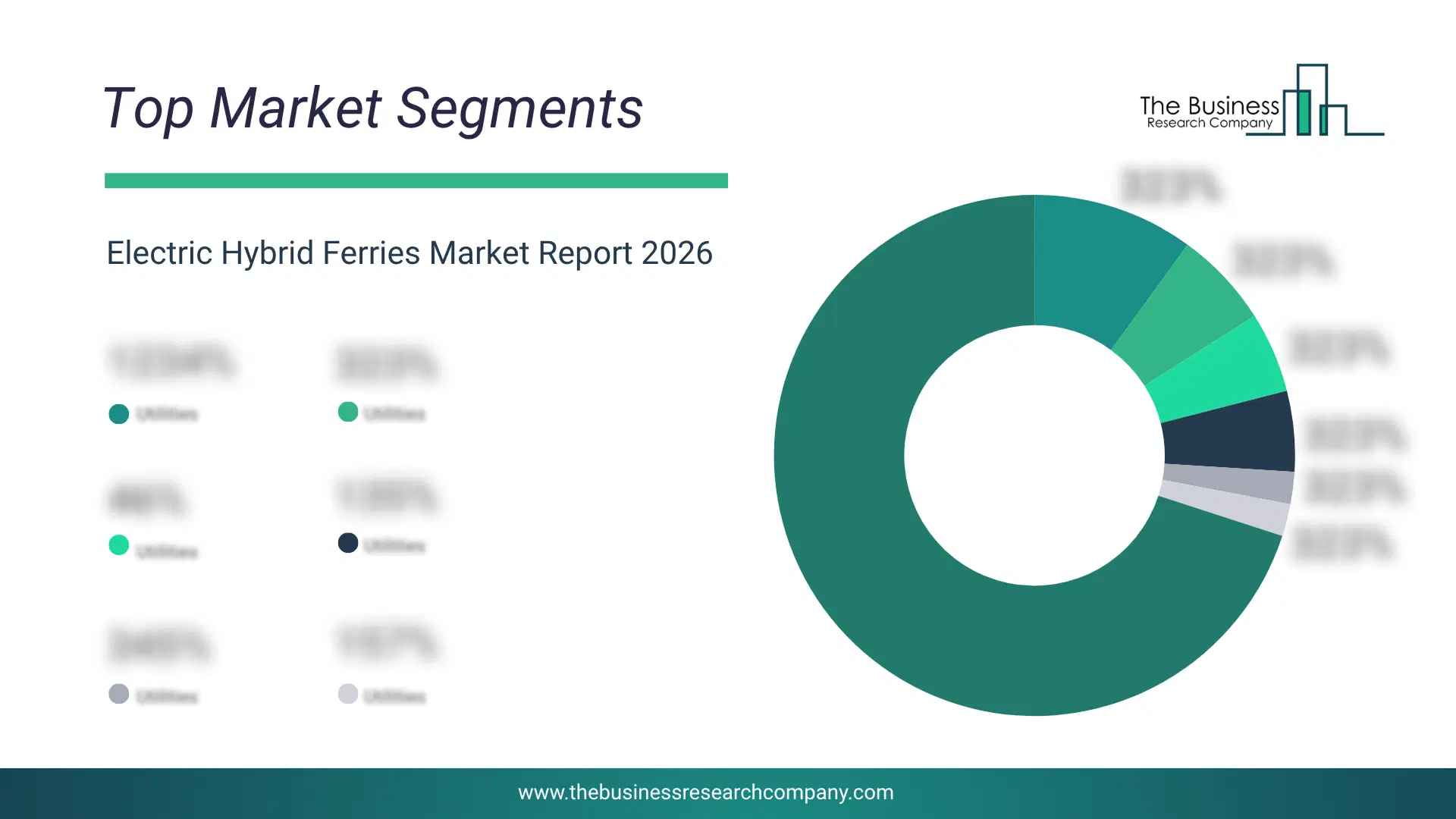
1) By Propulsion Type: Diesel-Electric, Plug-in Hybrid Electric, Hydrogen Fuel Cell-Electric, Solar-Electric, Other Propulsion Types 2) By Range: Short-Range Ferries (<50 nautical miles), Medium-Range Ferries (50-100 nautical miles), Long-Range Ferries (>100 nautical miles), Island-Hopping Ferries, Other Ranges 3) By Energy Management System: Shore Power Systems, Automated Power Management, Battery Management Systems, Energy Recovery Systems, Smart Grid Integration, Renewable Energy Systems, Other Energy Management Systems 4) By Vessel Size: Small Ferries (<50m length), Medium Ferries (50-100m length), Large Ferries (100-150m length), Extra Large Ferries (>150m length), Other Vessel Sizes 5) By Application: Passenger Ferries, RoPax Vessels (Roll-on/Roll-off Passenger), Car Ferries, Cargo Ferries, Specialty Transport Ferries, Tourist Ferries, Other Applications Subsegments: 1) By Diesel-Electric: Series Hybrid, Parallel Hybrid, Combined Hybrid (Series-Parallel) 2) By Plug-in Hybrid Electric: Battery Capacity, Charging Mode, Operational Mode 3) By Hydrogen Fuel Cell-Electric: Proton Exchange Membrane Fuel Cell (PEMFC), Solid Oxide Fuel Cell (SOFC), Alkaline Fuel Cell (AFC) 4) By Solar-Electric: Photovoltaic Panel Type, Energy Storage Type, Solar Integration 5) By Other Propulsion Types: Compressed Natural Gas (CNG) Hybrid, Battery-Electric with Range Extender, Flywheel Hybrid SystemsWhat Is The Driver Of The Electric Hybrid Ferries Market?
The increasing demand for sustainable public transportation is expected to propel the growth of the electric hybrid ferries market going forward. Sustainable public transportation is eco-friendly transit systems that reduce environmental impact while efficiently moving people. The rise in demand for sustainable public transportation is driven by environmental concerns and the need to reduce carbon emissions while promoting efficient urban mobility. Electric hybrid ferries reduce emissions, noise, and fuel use by combining electric and diesel power. They improve air quality, support renewable energy use, and promote cleaner, more sustainable public transport, especially in urban and coastal areas. For instance, in November 2025, the Department for Transport, a UK-based government organisation, reported that in England, there were 3.7 billion local bus passenger journeys in the year ending March 2025, an increase of 1% compared with the year ending March 2024. Therefore, the increasing demand for sustainable public transportation is driving the growth of the electric hybrid ferries industry.Key Players In The Global Electric Hybrid Ferries Market
Major companies operating in the electric hybrid ferries market report include ABB Marine & Ports, Rolls-Royce Power Systems AG, Voith Group GmbH & Co. KGaA, Wärtsilä Corporation, Siemens Marine, Kongsberg Gruppen, Cemre Shipyard Inc., Incat Tasmania Pty Ltd, Ferguson Marine (Port Glasgow) Ltd, Remontowa Shiprepair Yard S.A., Stena RoRo AB, Damen Shipyards Group, Austal Limited, Candela Technology AB, Wight Shipyard Co. Ltd, Navalt Solar and Electric Boats, Norled AS, BC Ferries, Washington State Ferries, Texelstroom, Havila Voyages AS, Corvus Energy, Leclanché SA, Saft Groupe, Echandia Marine AB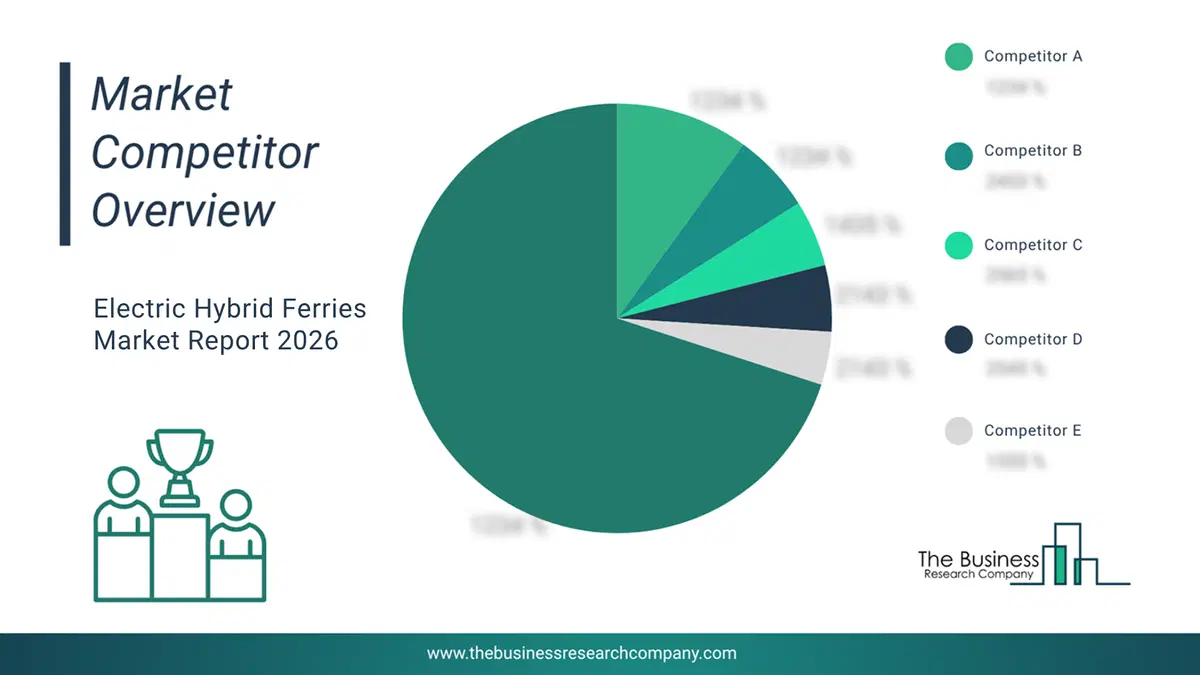
This chart is for illustrative purposes; the full report includes a detailed competitor analysis and comprehensive overview of the top 10 companies in the market.
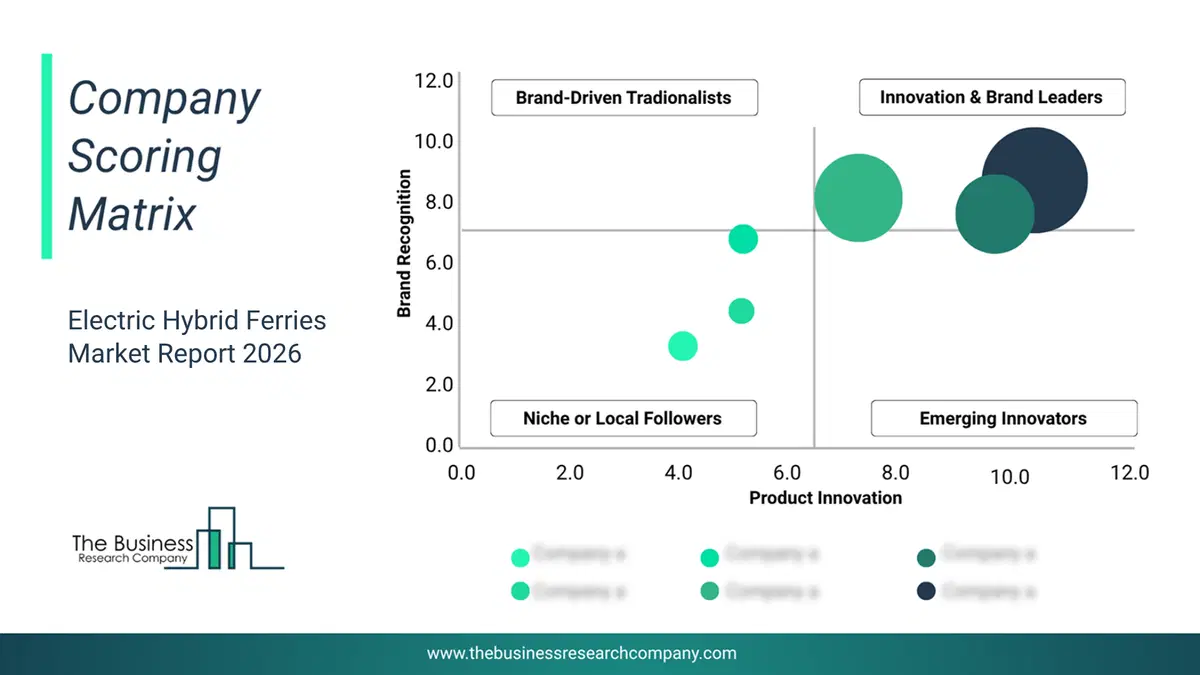
This chart maps companies by product innovation and brand strength, with bubble size indicating relative revenue, helping identify market leaders, challengers, and niche players. This is an illustrative chart; the full report provides a complete and accurate competitive analysis.
Global Electric Hybrid Ferries Market Trends and Insights
Major companies operating in the electric hybrid ferries market are focusing on developing innovative technologies, such as hybrid-electric passenger ferries, to reduce carbon emissions, improve fuel efficiency, meet stricter environmental regulations, and cater to the growing demand for sustainable maritime transportation solutions. Hybrid-electric passenger ferries are vessels designed to transport people and powered by electric batteries and conventional fuel engines (typically diesel). For instance, in January 2025, Derecktor, a US-based shipbuilding company, launched two hybrid-electric ferries, Juliette Gordon Low II and Susie King Taylor II, for Chatham Area Transit (CAT) in Savannah. These hybrid-electric vessels feature advanced propulsion systems that combine diesel generators with lithium-ion batteries to ensure cleaner and more efficient operation. This hybrid setup optimizes fuel consumption, significantly reducing greenhouse gas emissions and minimizing noise pollution. Additionally, integrating waterjet propulsion improves maneuverability and performance, making these ferries ideal for short urban transit routes while supporting sustainable and eco-friendly maritime transportation.What Are Latest Mergers And Acquisitions In The Electric Hybrid Ferries Market?
In April 2024, Yamaha Motor, a Japan-based manufacturing company engaged in land mobility, marine, robotics, and financial services, acquired Torqeedo for $17 billion. The acquisition aims to strengthen Yamaha’s position in the electric propulsion market by integrating Torqeedo’s advanced electric marine technology, accelerating innovation in sustainable boating solutions, and expanding its global footprint in eco-friendly marine mobility. Torqeedo is a Germany-based manufacturing company of electric and hybrid marine propulsion systems.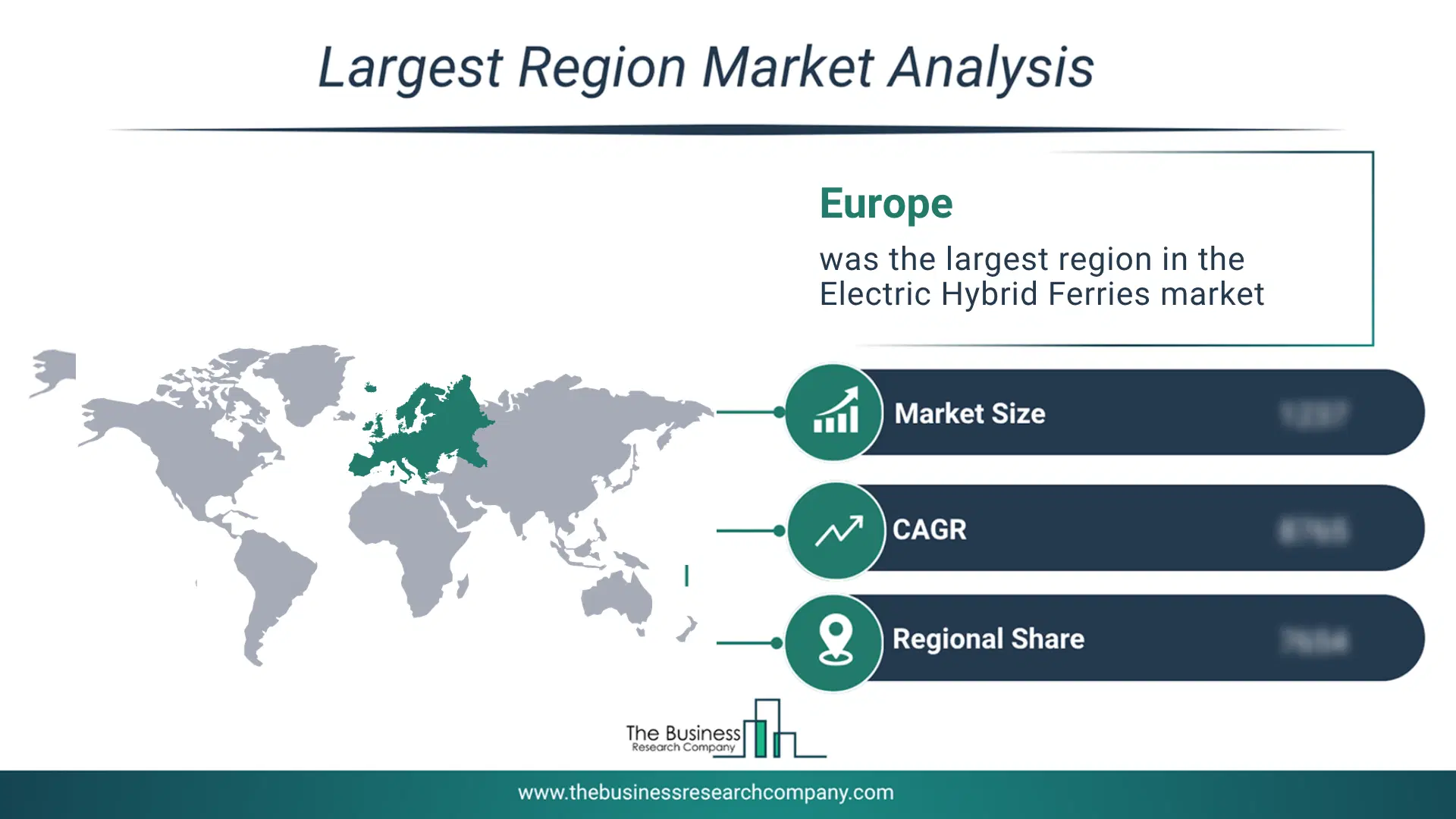
Regional Outlook
Europe was the largest region in the electric hybrid ferries in 2025. Asia-Pacific is expected to be the fastest-growing region in the forecast period. The regions covered in this market report include Asia-Pacific, South East Asia, Western Europe, Eastern Europe, North America, South America, Middle East, Africa. The countries covered in this market report include Australia, Brazil, China, France, Germany, India, Indonesia, Japan, Taiwan, Russia, South Korea, UK, USA, Canada, Italy, SpainWhat Defines the Electric Hybrid Ferries Market?
The electric hybrid ferries market consists of sales solar-assisted hybrid ferries, wind-assisted hybrid ferries, LNG-electric hybrid ferries. Values in this market are ‘factory gate’ values, that is the value of goods sold by the manufacturers or creators of the goods, whether to other entities (including downstream manufacturers, wholesalers, distributors and retailers) or directly to end customers. The value of goods in this market includes related services sold by the creators of the goods.How is Market Value Defined and Measured?
The market value is defined as the revenues that enterprises gain from the sale of goods and/or services within the specified market and geography through sales, grants, or donations in terms of the currency (in USD unless otherwise specified). The revenues for a specified geography are consumption values that are revenues generated by organizations in the specified geography within the market, irrespective of where they are produced. It does not include revenues from resales along the supply chain, either further along the supply chain or as part of other products.
This chart presents market attractiveness based on a quantitative evaluation of growth, competition, strategic alignment, and risk, offering a clear view of opportunity areas for decision-making. This chart is for illustrative purposes; the full report contains the complete analysis.

This chart highlights the Total Addressable Market (TAM) by estimating the maximum revenue opportunity using an assumption-driven approach, supporting strategic planning and opportunity sizing across markets. The chart is illustrative; the full report provides a more comprehensive analysis.
What Key Data and Analysis Are Included in the Electric Hybrid Ferries Market Report 2026?
The electric hybrid ferries market research report is one of a series of new reports from The Business Research Company that provides market statistics, including industry global market size, regional shares, competitors with the market share, detailed market segments, market trends and opportunities, and any further data you may need to thrive in the electric hybrid ferries industry. The market research report delivers a complete perspective of everything you need, with an in-depth analysis of the current and future state of the industry.Electric Hybrid Ferries Market Report Forecast Analysis
| Report Attribute | Details |
|---|---|
| Market Size Value In 2026 | $5.27 billion |
| Revenue Forecast In 2030 | $8.49 billion |
| Growth Rate | CAGR of 12.9% from 2026 to 2030 |
| Base Year For Estimation | 2025 |
| Actual Estimates/Historical Data | 2020-2025 |
| Forecast Period | 2026 - 2030 - 2030 |
| Market Representation | Revenue in USD Billion and CAGR from 2026 to 2030 |
| Segments Covered | Propulsion Type, Range, Energy Management System, Vessel Size, Application |
| Regional Scope | Asia-Pacific, Western Europe, Eastern Europe, North America, South America, Middle East, Africa |
| Country Scope | The countries covered in the report are Australia, Brazil, China, France, Germany, India, Indonesia, Japan, Taiwan, Russia, South Korea, UK, USA, Canada, Italy, Spain. |
| Key Companies Profiled | ABB Marine & Ports, Rolls-Royce Power Systems AG, Voith Group GmbH & Co. KGaA, Wärtsilä Corporation, Siemens Marine, Kongsberg Gruppen, Cemre Shipyard Inc., Incat Tasmania Pty Ltd, Ferguson Marine (Port Glasgow) Ltd, Remontowa Shiprepair Yard S.A., Stena RoRo AB, Damen Shipyards Group, Austal Limited, Candela Technology AB, Wight Shipyard Co. Ltd, Navalt Solar and Electric Boats, Norled AS, BC Ferries, Washington State Ferries, Texelstroom, Havila Voyages AS, Corvus Energy, Leclanché SA, Saft Groupe, Echandia Marine AB |
| Customization Scope | Request for Customization |
| Pricing And Purchase Options | Explore Purchase Options |