
Electric Mobility Market Report 2026
Global Outlook – By Product (Electric Bikes; Electric Scooters; Electric Motorized Scooters; Electric Motorcycles), By Drive (Belt Drive; Chain Drive; Hub Drive), By Battery (Lead Acid Battery; Li-Ion Battery; Other Batteries), By End-User (Personal; Commercial) – Market Size, Trends, Strategies, and Forecast to 2030
Electric Mobility Market Overview
• Electric Mobility market size has reached to $657.19 billion in 2025 • Expected to grow to $1208.86 billion in 2030 at a compound annual growth rate (CAGR) of 12.9% • Growth Driver: Electric Vehicles Sparking a Green Revolution in Electric Mobility • Market Trend: Innovative Advancements In Integrated E-Powertrain Systems by Leading Electric Mobility Companies • Asia-Pacific was the largest region in 2025 and Europe is the fastest growing region.Market Gains By 2030 – Top Opportunities By Segment
Market Gain identifies the most promising market opportunities by highlighting the segments or products expected to generate the highest incremental revenue growth over the next five years.
What Is Covered Under Electric Mobility Market?
Electric mobility refers to the use of electric power, typically from batteries or fuel cells, to propel vehicles and enable transportation. This includes full electric vehicles, plug-in hybrids, and hydrogen fuel cell vehicles that convert hydrogen into electricity. It typically includes an electric motor, battery pack, on-board charger, and other components for power conversion and control. The main product types of electric mobility are electric bikes, electric scooters, electric motorized scooters, and electric motorcycles. Electric bikes, often referred to as e-bikes, are bicycles equipped with an integrated electric motor and battery that assist the rider's pedaling efforts. The various types of drives include belt drive, chain drive, and hub drive with various battery types that include lead acid battery, li-ion battery, and others. These are used by various end-users such as personal, and commercial.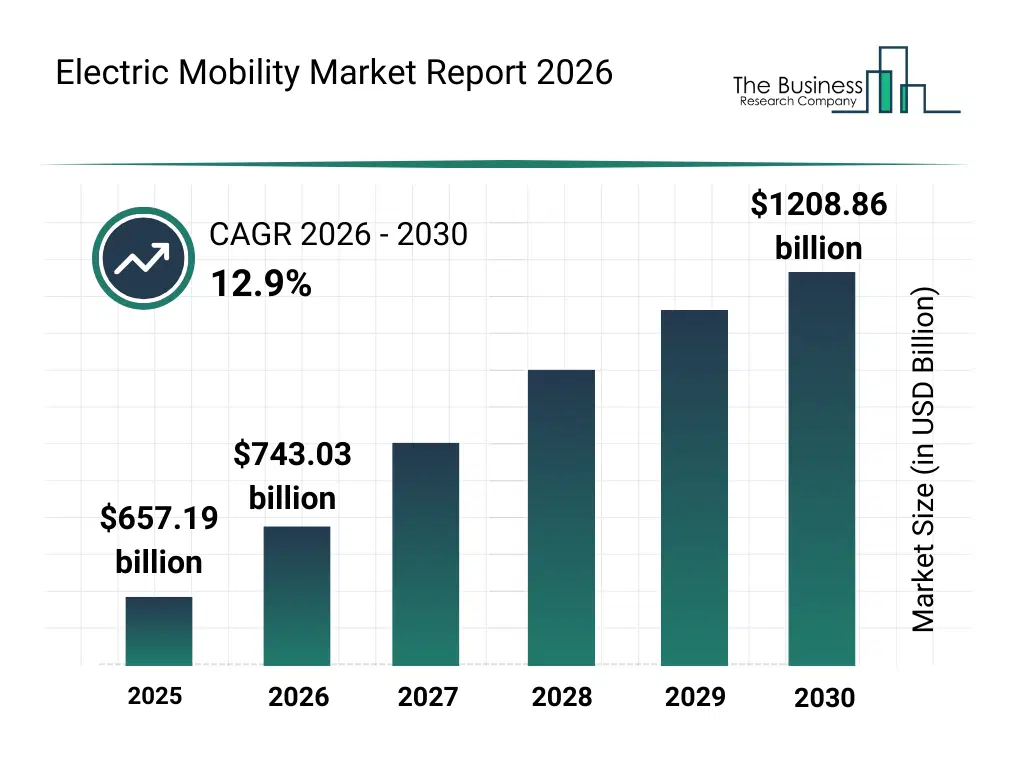
What Is The Electric Mobility Market Size and Share 2026?
The electric mobility market size has grown rapidly in recent years. It will grow from $657.19 billion in 2025 to $743.03 billion in 2026 at a compound annual growth rate (CAGR) of 13.1%. The growth in the historic period can be attributed to government incentives for electric vehicles, rising fuel cost volatility, urban congestion challenges, early adoption of electric scooters and bikes, improvements in lithium-ion battery technology.What Is The Electric Mobility Market Growth Forecast?
The electric mobility market size is expected to see rapid growth in the next few years. It will grow to $1208.86 billion in 2030 at a compound annual growth rate (CAGR) of 12.9%. The growth in the forecast period can be attributed to increasing investments in charging infrastructure, rising adoption of smart connected electric vehicles, expansion of shared electric mobility services, growing focus on battery recycling solutions, increasing penetration of electric mobility in emerging markets. Major trends in the forecast period include increasing adoption of battery-powered two-wheelers, rising deployment of urban electric mobility solutions, growing focus on battery performance and range optimization, expansion of charging infrastructure integration, enhanced focus on lightweight electric vehicle design.
Global Electric Mobility Market Segmentation
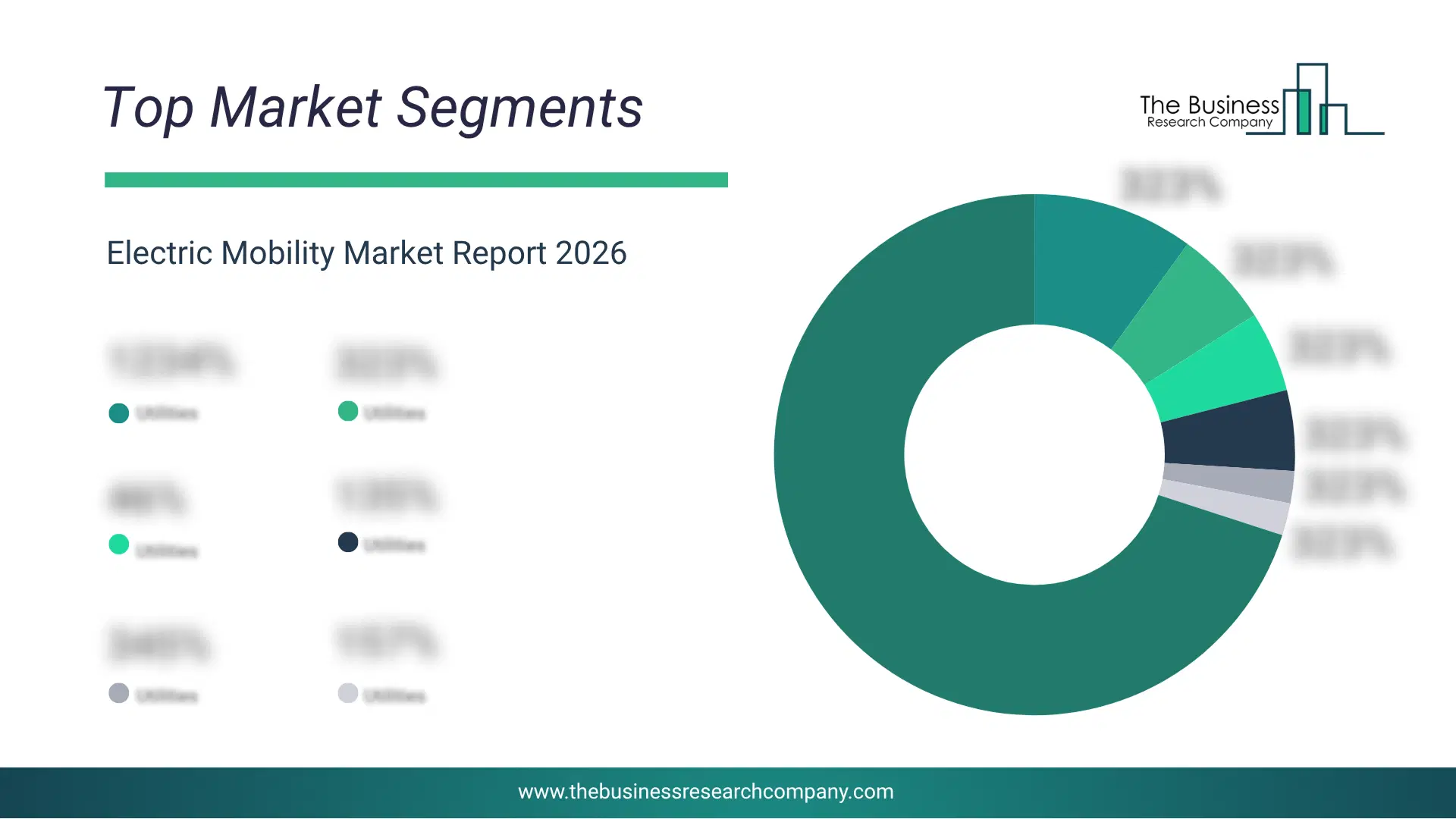
1) By Product: Electric Bikes, Electric Scooters, Electric Motorized Scooters, Electric Motorcycles 2) By Drive: Belt Drive, Chain Drive, Hub Drive 3) By Battery: Lead Acid Battery, Li-Ion Battery, Other Batteries 4) By End-User: Personal, Commercial Subsegments: 1) By Electric Bikes: Pedal-Assist Electric Bikes, Throttle-Control Electric Bikes 2) By Electric Scooters: Stand-Up Electric Scooters, Sit-Down Electric Scooters 3) By Electric Motorized Scooters: Folding Electric Scooters, Off-Road Electric Scooters 4) By Electric Motorcycles: City Electric Motorcycles, Sports Electric Motorcycles The top segments in the electric mobility market will be: • Li-Ion Battery will reach $550422.54 Million by 2025. • Electric Cars will reach $546096.01 Million by 2025. • Personal will reach $488248.62 Million by 2025. • Chain Drive will reach $295365.89 Million by 2025. • Hub Drive will reach $278475.16 Million by 2025.What Is The Driver Of The Electric Mobility Market?
The increasing demand for electric vehicles is expected to propel the growth of the electric mobility market going forward. Electric vehicles (EVs) are automobiles that are powered primarily or entirely by electricity stored in rechargeable batteries. Electric vehicles significantly reduce greenhouse gas emissions, air pollution, and dependence on fossil fuels, contributing to a more sustainable and environmentally friendly transportation system that supports electric mobility. For instance, In April 2024, CITAevcharger an UK-based smart electric vehicle solution provider company, reported that the UK now has 1,000,000 fully electric vehicles (EVs) on its roads, reflecting a notable 18% increase in battery-electric car registrations during 2023. Electric cars comprised 15.2% of new car registrations in March 2024, marking a significant rise of 40% compared to 2022, when there were only 265,000 battery-electric cars registered. Furthermore, projections indicate that the UK will require around 2.3 million charging points by 2030 to support this growing market. Therefore, the increasing demand for electric vehicles is driving the growth of the electric mobility industry.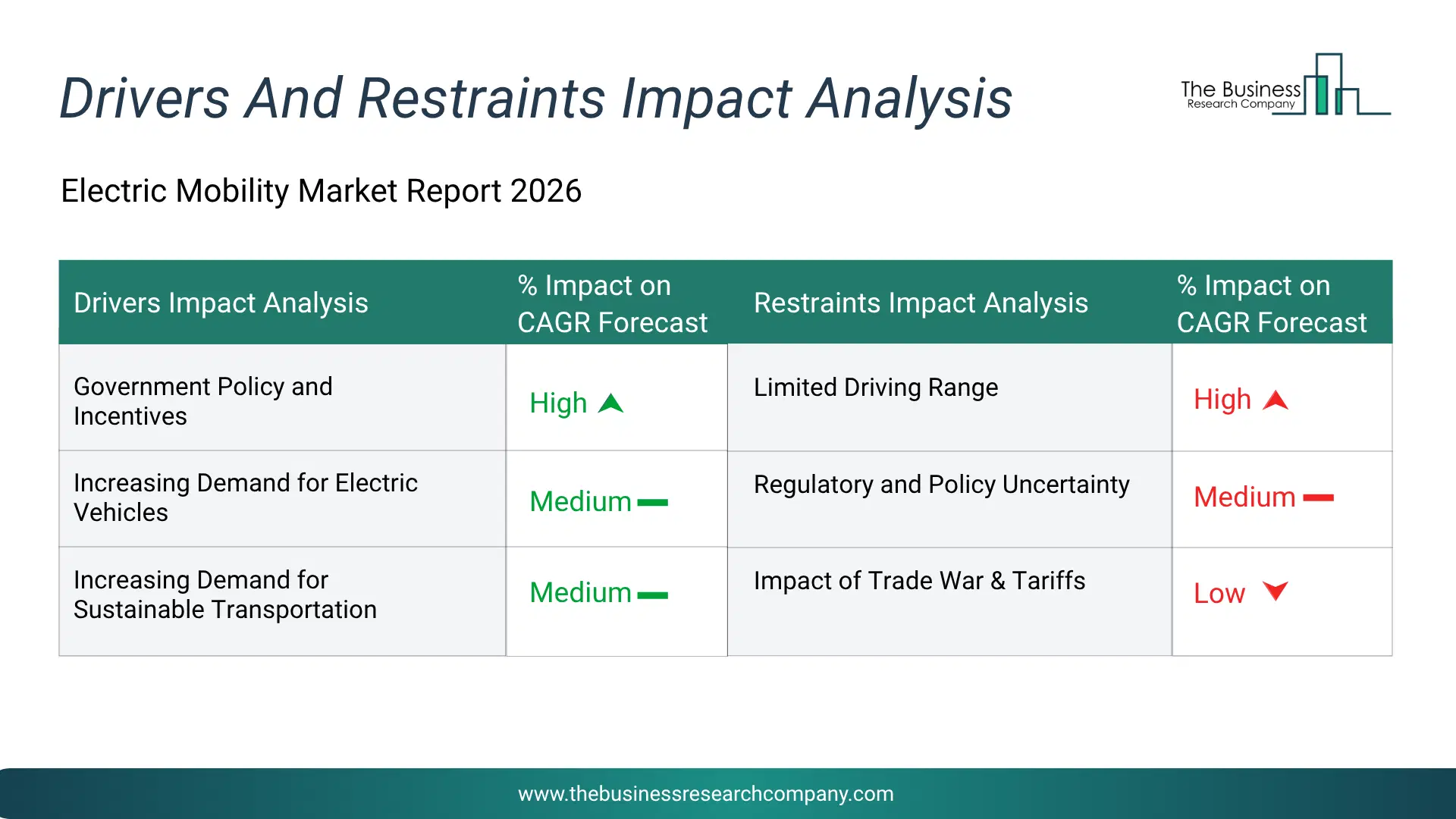
Infographic Chart Showing Key Market Drivers Analysis And Restraints For Electric Mobility Market
The chart presents an impact analysis of key drivers and restraints, quantifying their relative influence on the market's growth rate and helping assess the balance between growth enablers and limiting factors. This chart offers a high-level perspective; the full report contains more detailed insights.
How Will The Drivers Impact Growth In The Global Electric Mobility Market?
• Government Policy and Incentives (High) – The government policy and incentives will serve as a key growth catalyst for the market by 2030. It is making EVs more affordable and attractive to consumers. Subsidies, tax rebates and reduced registration fees lower upfront costs, encouraging purchases. Government Investment in charging infrastructure and grants for R&D supports the expansion and innovation of the EV ecosystem. Therefore, this government policy and incentives is projected to supporting to a 1.4% annual growth in the market. • Increasing Demand for Electric Vehicles (Medium) – The higher fuel prices will emerge as a major factor driving the expansion of the market by 2030. rising fuel prices increase the cost of operating conventional vehicles, making them less economical for daily use. this motivates consumers and businesses to consider electric vehicles (evs), which run on electricity and are cheaper per kilometer compared to gasoline or diesel vehicles. as more people switch to evs to save on fuel expenses, demand for electric mobility rises. consequently, the higher fuel prices is projected to contributing to a 1.9% annual growth in the market. • Increasing Demand for Sustainable Transportation (Medium) – The increasing demand for sustainable transportation will become a key driver of growth in the electric mobility market by 2030. the rising demand for sustainable transportation is driving consumers and businesses to shift from conventional fossil-fuel vehicles to electric vehicles (evs), which produce lower emissions and reduce environmental impact. the growing environmental awareness among the public is encouraging the adoption of cleaner mobility options. as a result, the increasing demand for sustainable transportation is anticipated to contributing to a 2.4% annual growth in the market. • Higher Fuel Prices (Medium) – The higher fuel prices will emerge as a major factor driving the expansion of the market by 2030. Rising fuel prices increase the cost of operating conventional vehicles, making them less economical for daily use. This motivates consumers and businesses to consider electric vehicles (EVs), which run on electricity and are cheaper per kilometer compared to gasoline or diesel vehicles. As more people switch to EVs to save on fuel expenses, demand for electric mobility rises. Consequently, the higher fuel prices is projected to contributing to a 1.9% annual growth in the market.How Will The Restraints Impact Growth In The Global Electric Mobility Market?
• Limited Driving Range (High) – Limited Driving Range will restrict the growth of the Electric Mobility market during the forecast period. Range anxiety remains a significant barrier to EV adoption, as consumers worry about running out of charge before reaching their destination. Current battery technology limits the distance electric vehicles can travel on a single charge compared to conventional vehicles. This limitation is particularly concerning for long-distance travel, commercial applications, and regions with sparse charging infrastructure, hindering widespread EV acceptance and market growth. • Regulatory and Policy Uncertainty (Medium) – Regulatory and Policy Uncertainty will restrict the growth of the Electric Mobility market during the forecast period. Inconsistent government policies, fluctuating EV subsidies, and unclear long-term regulatory frameworks create uncertainty for both manufacturers and consumers. Changes in emissions standards, tax incentives, and charging infrastructure mandates can disrupt market planning and investment decisions. This regulatory volatility makes it difficult for stakeholders to commit to long-term EV strategies, slowing market development. • Impact of Trade War & Tariffs (Medium) – Impact of Trade War & Tariffs will restrict the growth of the Electric Mobility market during the forecast period. Trade disputes have led to tariffs on EV components including batteries, semiconductors, and electric motors. These tariffs increase manufacturing costs, raising EV prices for consumers. Additionally, restrictions on critical mineral supplies essential for battery production create supply chain vulnerabilities, potentially disrupting EV production and limiting market growth.Key Players In The Global Electric Mobility Market
Major companies operating in the electric mobility market are Volkswagen AG, Toyota Motor Corporation, Mercedes-Benz Group AG, Ford Motor Company, General Motors Company, Bayerische Motoren Werke AG, Honda Motor Co. Ltd., SAIC Motor Corp. Ltd., Robert Bosch GmbH, Hyundai Motor Company, Hitachi Ltd., Tesla Inc., Siemens AG, Nissan Motor Co. Ltd., Panasonic Corporation, BYD Company Ltd., AB Volvo, Renault Group, Contemporary Amperex Technology Co. Limited, ZF Friedrichshafen AG, Continental AG, Tata Motors Limited, Magna International Inc., Denso Corporation, Mitsubishi Electric Corporation, ABB Ltd., Beijing Automotive Group Co. Ltd., Valeo SA, LG Energy Solution Ltd., BorgWarner Inc.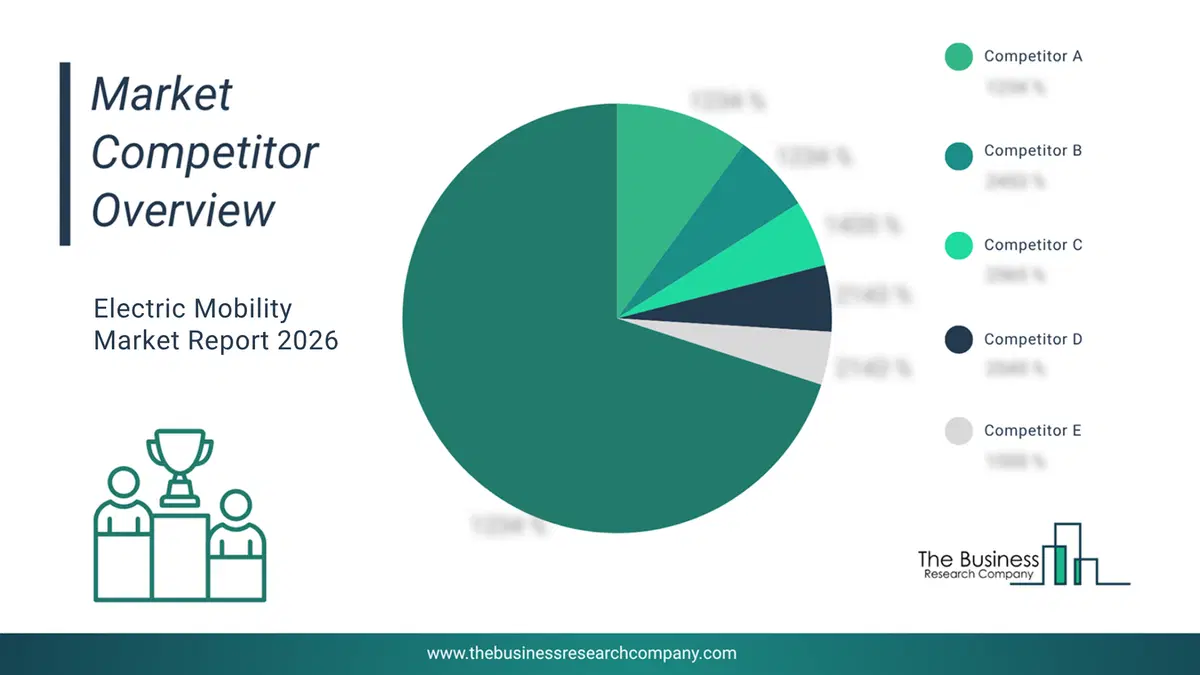
This chart is for illustrative purposes; the full report includes a detailed competitor analysis and comprehensive overview of the top 10 companies in the market.
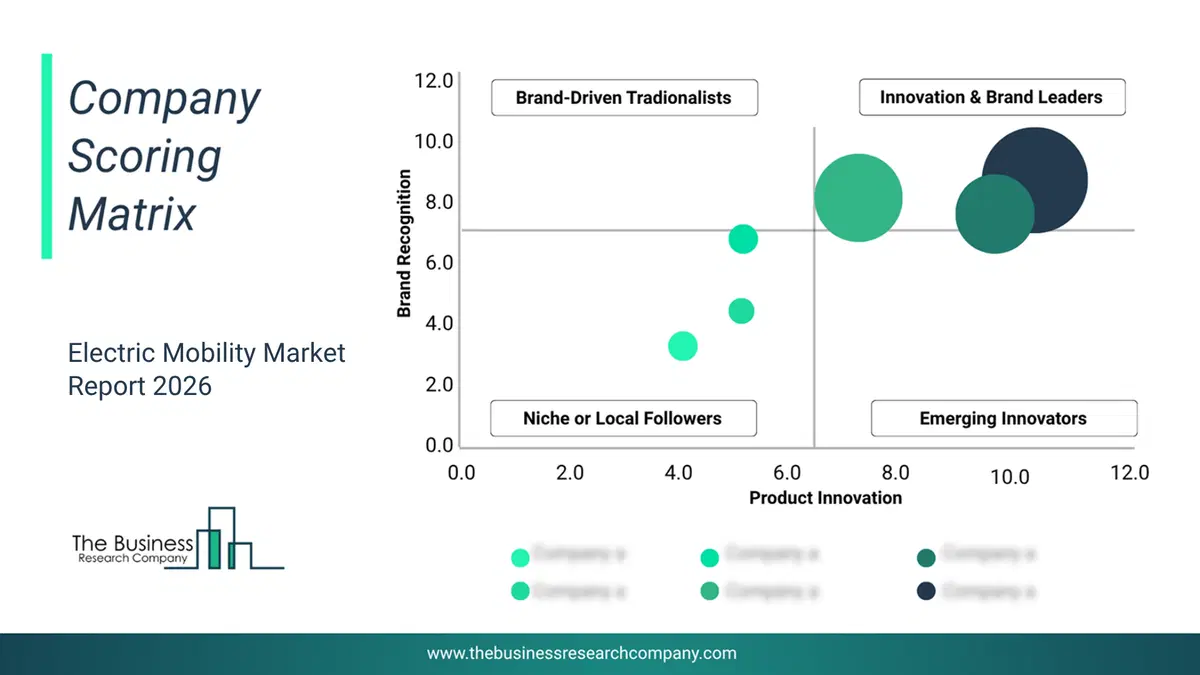
This chart maps companies by product innovation and brand strength, with bubble size indicating relative revenue, helping identify market leaders, challengers, and niche players. This is an illustrative chart; the full report provides a complete and accurate competitive analysis.
Global Electric Mobility Market Trends and Insights
Major companies operating in the electric mobility market are focused on advancements in electric mobility to gain a competitive edge in the market. An integrated E-powertrain system is a comprehensive, unified electric powertrain that combines the motor, power electronics, and energy storage components to propel an electric vehicle efficiently. For instance, in May 2023, ZF Friedrichshafen AG, a Germany-based technology company, launched AXTrax 2, a modular, integrated, axle-based e-powertrain system that enables the electrification of all types of commercial vehicles. It makes it possible for advanced digital and telematics systems to communicate and exchange data about e-axle systems through the controller area network bus. The AxTrax 2 is an axle-based system that replaces the engine, transmission, driveshaft, differential, and conventional axle to electrify a commercial vehicle. This design helps to maximize the available space for batteries and enhances the manufacturer's design flexibility for future electric mobility concepts.What Are Latest Mergers And Acquisitions In The Electric Mobility Market?
In March 2023, Shell USA Inc., a US-based energy and mobility services company, acquired Volta Inc. for approximately $169 million. With this acquisition, Shell aimed to expand and scale its U.S. public electric vehicle (EV) charging network to better participate in the growing EV infrastructure market and diversify its mobility offerings beyond traditional fuels. Volta Inc. is a US-based electric vehicle charging and media network technology company that specializes in providing a public EV charging network with integrated advertising screens and a development pipeline of additional charge points across high-traffic destination sites.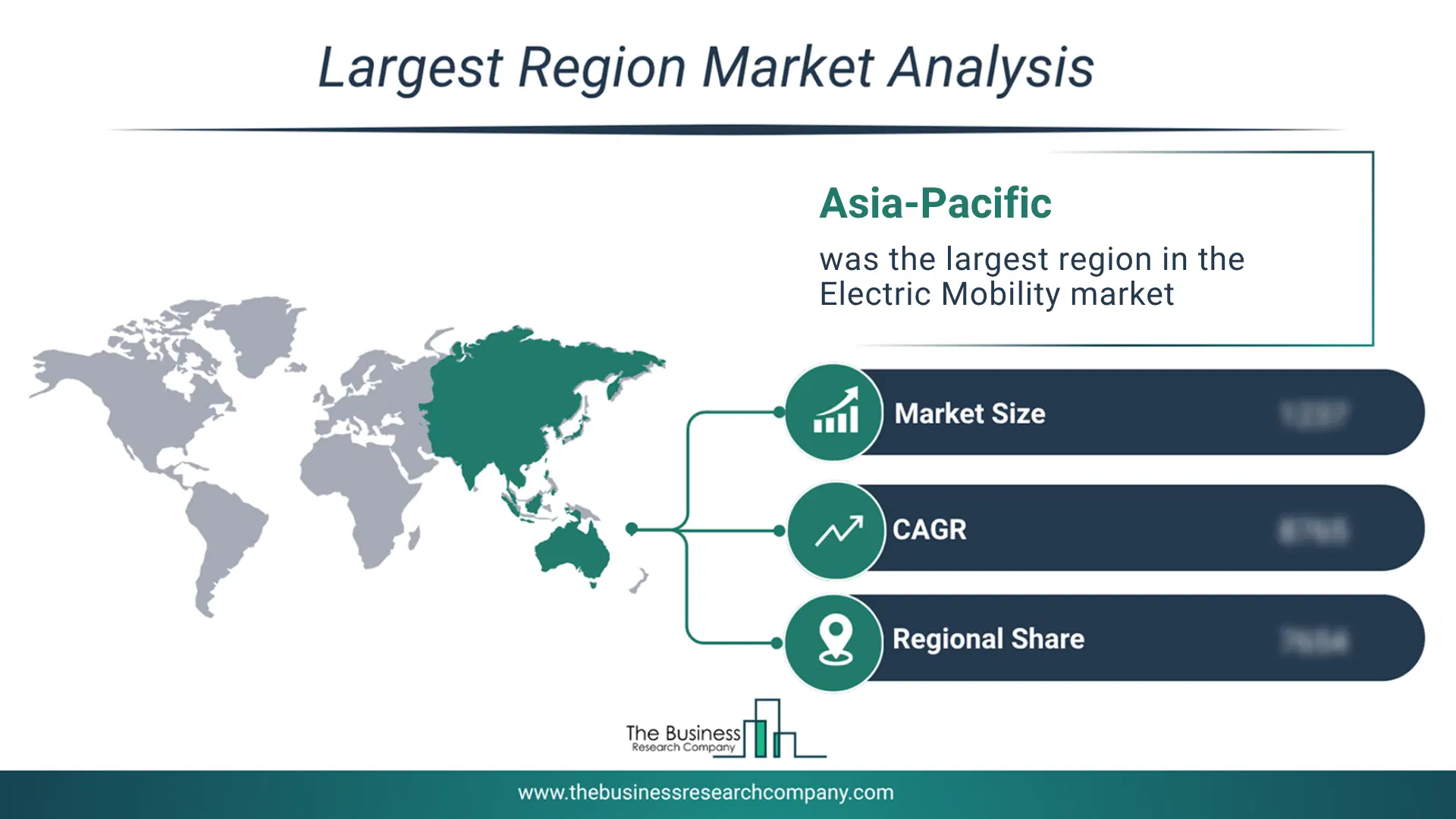
Regional Outlook
Asia-Pacific was the largest region in the electric mobility market in 2025. Europe is expected to be the fastest-growing region in the forecast period. The regions covered in this market report are Asia-Pacific, South East Asia, Western Europe, Eastern Europe, North America, South America, Middle East, Africa. The countries covered in this market report are Australia; Brazil; China; France; Germany; India; Indonesia; Japan; Taiwan; Russia; South Korea; UK; USA; Canada; Italy; Spain.What Defines the Electric Mobility Market?
The electric mobility market consists of sales of electric vehicles, electric vehicle components such as electric motors, traction battery packs, and charge port and replacement parts. Values in this market are ‘factory gate’ values, that is the value of goods sold by the manufacturers or creators of the goods, whether to other entities (including downstream manufacturers, wholesalers, distributors, and retailers) or directly to end customers. The value of goods in this market includes related services sold by the creators of the goods.How is Market Value Defined and Measured?
The market value is defined as the revenues that enterprises gain from the sale of goods and/or services within the specified market and geography through sales, grants, or donations in terms of the currency (in USD unless otherwise specified). The revenues for a specified geography are consumption values that are revenues generated by organizations in the specified geography within the market, irrespective of where they are produced. It does not include revenues from resales along the supply chain, either further along the supply chain or as part of other products.
This chart presents market attractiveness based on a quantitative evaluation of growth, competition, strategic alignment, and risk, offering a clear view of opportunity areas for decision-making. This chart is for illustrative purposes; the full report contains the complete analysis.

This chart highlights the Total Addressable Market (TAM) by estimating the maximum revenue opportunity using an assumption-driven approach, supporting strategic planning and opportunity sizing across markets. The chart is illustrative; the full report provides a more comprehensive analysis.
What Key Data and Analysis Are Included in the Electric Mobility Market Report 2026?
The electric mobility market research report is one of a series of new reports from The Business Research Company that provides market statistics, including Market Report 2026?global market size, regional shares, competitors with the market share, detailed market segments, market trends and opportunities, and any further data you may need to thrive in the electric mobility Market Report 2026? The market research report delivers a complete perspective of everything you need, with an in-depth analysis of the current and future state of the Market Report 2026?Electric Mobility Market Report Forecast Analysis
| Report Attribute | Details |
|---|---|
| Market Size Value In 2026 | $743.03 billion |
| Revenue Forecast In 2030 | $1208.86 billion |
| Growth Rate | CAGR of 13.1% from 2026 to 2030 |
| Base Year For Estimation | 2025 |
| Actual Estimates/Historical Data | 2020-2025 |
| Forecast Period | 2026 - 2030 |
| Market Representation | Revenue in USD Billion and CAGR from 2026 to 2030 |
| Segments Covered | Product, Drive, Battery, End-User |
| Regional Scope | Asia-Pacific, Western Europe, Eastern Europe, North America, South America, Middle East, Africa |
| Country Scope | The countries covered in the report are Australia, Brazil, China, France, Germany, India, Indonesia, Japan, Taiwan, Russia, South Korea, UK, USA, Canada, Italy, Spain. |
| Key Companies Profiled | Volkswagen AG, Toyota Motor Corporation, Mercedes-Benz Group AG, Ford Motor Company, General Motors Company, Bayerische Motoren Werke AG, Honda Motor Co. Ltd., SAIC Motor Corp. Ltd., Robert Bosch GmbH, Hyundai Motor Company, Hitachi Ltd., Tesla Inc., Siemens AG, Nissan Motor Co. Ltd., Panasonic Corporation, BYD Company Ltd., AB Volvo, Renault Group, Contemporary Amperex Technology Co. Limited, ZF Friedrichshafen AG, Continental AG, Tata Motors Limited, Magna International Inc., Denso Corporation, Mitsubishi Electric Corporation, ABB Ltd., Beijing Automotive Group Co. Ltd., Valeo SA, LG Energy Solution Ltd., BorgWarner Inc. |
| Customization Scope | Request for Customization |
| Pricing And Purchase Options | Explore Purchase Options |