
Electric Vehicle (EV) Supply Chain Management Market Report 2026
Global Outlook – By Component (Batteries, Power Electronics, Motors, Chassis And Body Structure, Charging Infrastructure And Systems, Software And Connectivity Solutions), By Vehicle Type (Passenger Vehicles, Commercial Vehicles, Two-Wheelers And Three-Wheelers, Off-Highway Vehicles), By Stage (Upstream, Midstream, Downstream), By Deployment Mode (On-Premises, Cloud), By Organization Size (Small And Medium-Sized Enterprises (SMEs), Large Enterprises) – Market Size, Trends, Strategies, and Forecast to 2030
Electric Vehicle (EV) Supply Chain Management Market Overview
• Electric Vehicle (EV) Supply Chain Management market size has reached to $0.67 billion in 2025 • Expected to grow to $1.03 billion in 2030 at a compound annual growth rate (CAGR) of 9.1% • Growth Driver: Expanding Charging Infrastructure Fueling The Growth Of The Market Due To Increasing Accessibility And Deployment Efficiency • Market Trend: Strategic Partnerships Drive Sustainability And Efficiency In EV Supply Chain Management • North America was the largest region in 2025.Market Gains By 2030 – Top Opportunities By Segment
Market Gain identifies the most promising market opportunities by highlighting the segments or products expected to generate the highest incremental revenue growth over the next five years.
What Is Covered Under Electric Vehicle (EV) Supply Chain Management Market?
Electric vehicle (EV) supply chain management refers to the planning, coordination, and optimization of processes involved in sourcing, manufacturing, and delivering components specific to EVs, such as batteries, motors, and electronics, to ensure efficient and sustainable vehicle production. The main component types of electric vehicle (EV) supply chain management are batteries, power electronics, motors, chassis and body structure, charging infrastructure and systems, and software and connectivity solutions. Batteries are the core of electric vehicles, storing and supplying energy using lithium-ion cells, with performance shaped by chemistry, manufacturing, and recycling processes. The vehicle types include passenger vehicles, commercial vehicles, two-wheelers and three-wheelers, and off-highway vehicles with different stages such as upstream, midstream, and downstream. It shows various deployment modes, such as on-premises and cloud, and is used by several organization sizes, including small and medium-sized enterprises (SMEs) and large enterprises.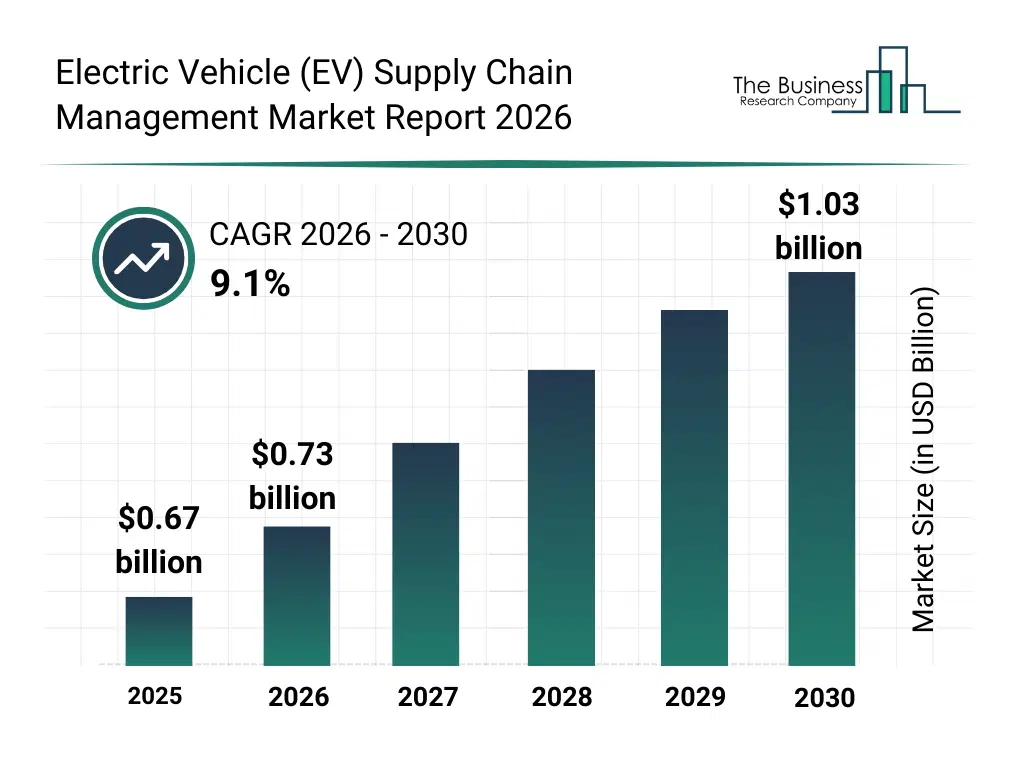
What Is The Electric Vehicle (EV) Supply Chain Management Market Size and Share 2026?
The electric vehicle (EV) supply chain management market size has grown strongly in recent years. It will grow from $0.67 billion in 2025 to $0.73 billion in 2026 at a compound annual growth rate (CAGR) of 9.3%. The growth in the historic period can be attributed to early ev manufacturing investments, battery raw material sourcing, globalization of automotive supply chains, logistics optimization, cost reduction initiatives.What Is The Electric Vehicle (EV) Supply Chain Management Market Growth Forecast?
The electric vehicle (EV) supply chain management market size is expected to see strong growth in the next few years. It will grow to $1.03 billion in 2030 at a compound annual growth rate (CAGR) of 9.1%. The growth in the forecast period can be attributed to resilient supply chain strategies, battery recycling integration, AI-driven supply planning, regional manufacturing mandates, sustainability compliance requirements. Major trends in the forecast period include localization of battery supply chains, integration of digital supply platforms, focus on sustainable sourcing, expansion of ev manufacturing hubs, adoption of predictive logistics.
Global Electric Vehicle (EV) Supply Chain Management Market Segmentation
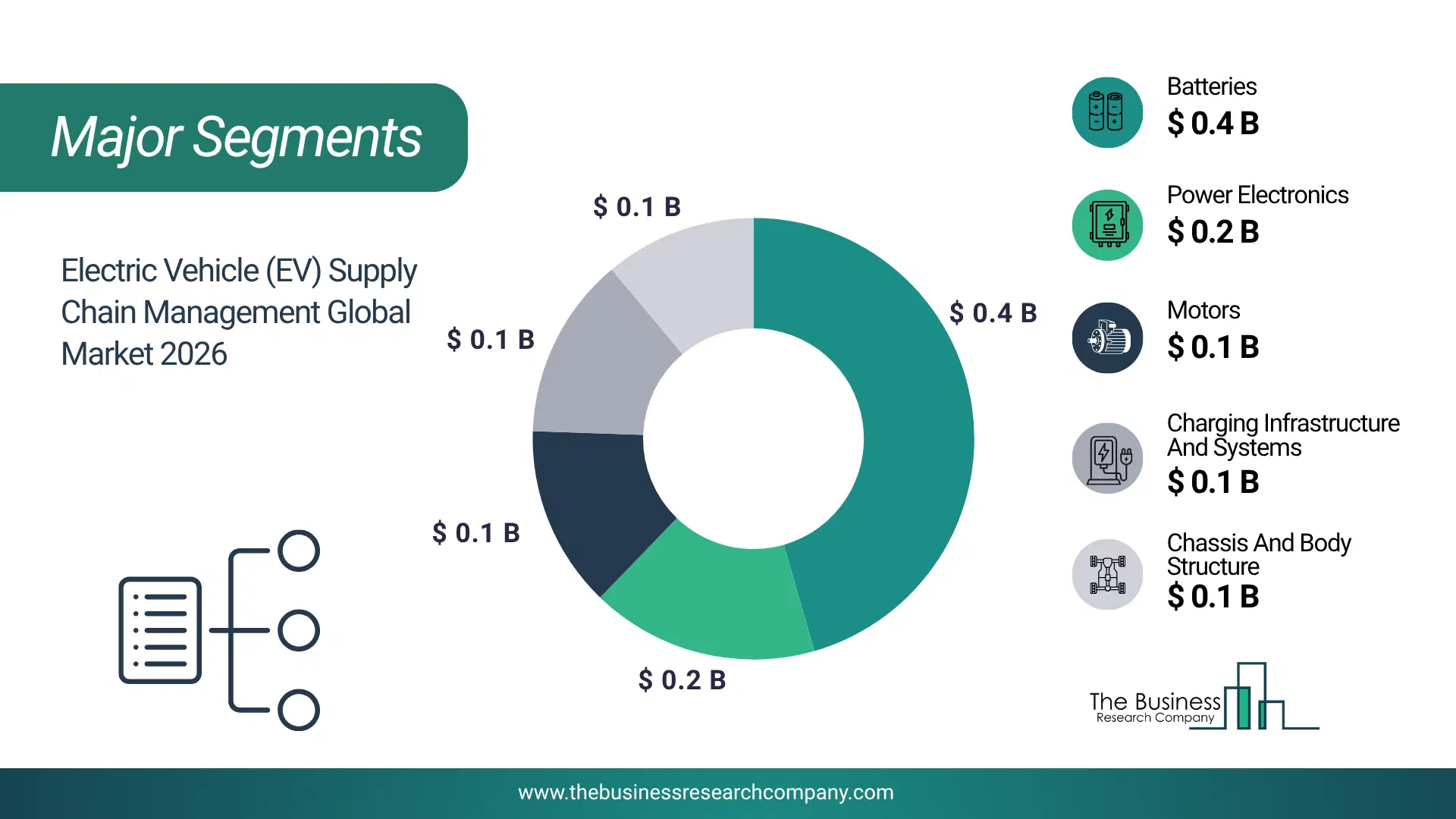
1) By Component: Batteries, Power Electronics, Motors, Chassis And Body Structure, Charging Infrastructure And Systems, Software And Connectivity Solutions 2) By Vehicle Type: Passenger Vehicles, Commercial Vehicles, Two-Wheelers And Three-Wheelers, Off-Highway Vehicles 3) By Stage: Upstream, Midstream, Downstream 4) By Deployment Mode: On-Premises, Cloud 5) By Organization Size: Small And Medium-Sized Enterprises (SMEs), Large Enterprises Subsegments: 1) By Batteries: Lithium-Ion Cells, Battery Management Systems (BMS), Battery Packs, Battery Thermal Management Systems, Battery Recycling And Second-Life Applications 2) By Power Electronics: Inverters, Converters, On-Board Chargers, Control Units, Power Modules 3) By Motors: Permanent Magnet Synchronous Motors (PMSM), Induction Motors, Brushless Direct Current (DC) Motors, Switched Reluctance Motors, Motor Controllers 4) By Chassis And Body Structure: Lightweight Materials, Vehicle Frames And Subframes, Crash Structures, Suspension Components, Integration Modules 5) By Charging Infrastructure And Systems: Alternating Current (AC) Charging Stations, Direct Current (DC) Fast Charging Stations, Wireless Charging Systems, Battery Swapping Stations, Charging Management Software 6) By Software And Connectivity Solutions: Vehicle Telematics Systems, Fleet Management Software, Over-The-Air (OTA) Updates, Charging Network Integration Software, Predictive Maintenance And Diagnostic Tools The top segments in the electric vehicle (ev) supply chain management market will be: • Batteries will reach $0.43 billion by 2030. • Power Electronics will reach $0.16 billion by 2030. • Motors will reach $0.13 billion by 2030. • Charging Infrastructure And Systems will reach $0.12 billion by 2030. • Chassis And Body Structure will reach $0.1 billion by 2030.What Is The Driver Of The Electric Vehicle (EV) Supply Chain Management Market?
The expanding charging infrastructure is expected to propel the growth in the electric vehicle (EV) supply chain management market going forward. Charging infrastructure comprises the integrated hardware and software systems that support electric vehicle (EV) battery charging across residential, commercial, and public settings. The rise in electric vehicle adoption is driving the expansion of charging infrastructure to meet the growing demand for convenient and reliable access. Expanding charging infrastructure helps in EV supply chain management by boosting consumer confidence and streamlining vehicle deployment. It reduces range anxiety and enables more efficient logistics and distribution across the EV ecosystem. For instance, in August 2023, according to GreenCars Inc., a US-based resource providing information on zero-emission vehicles, by the end of the first quarter of 2023, the United States had more than 68,000 charging stations and over 140,000 charging ports available. Therefore, the expanding charging infrastructures are driving the electric vehicle (EV) supply chain management industry.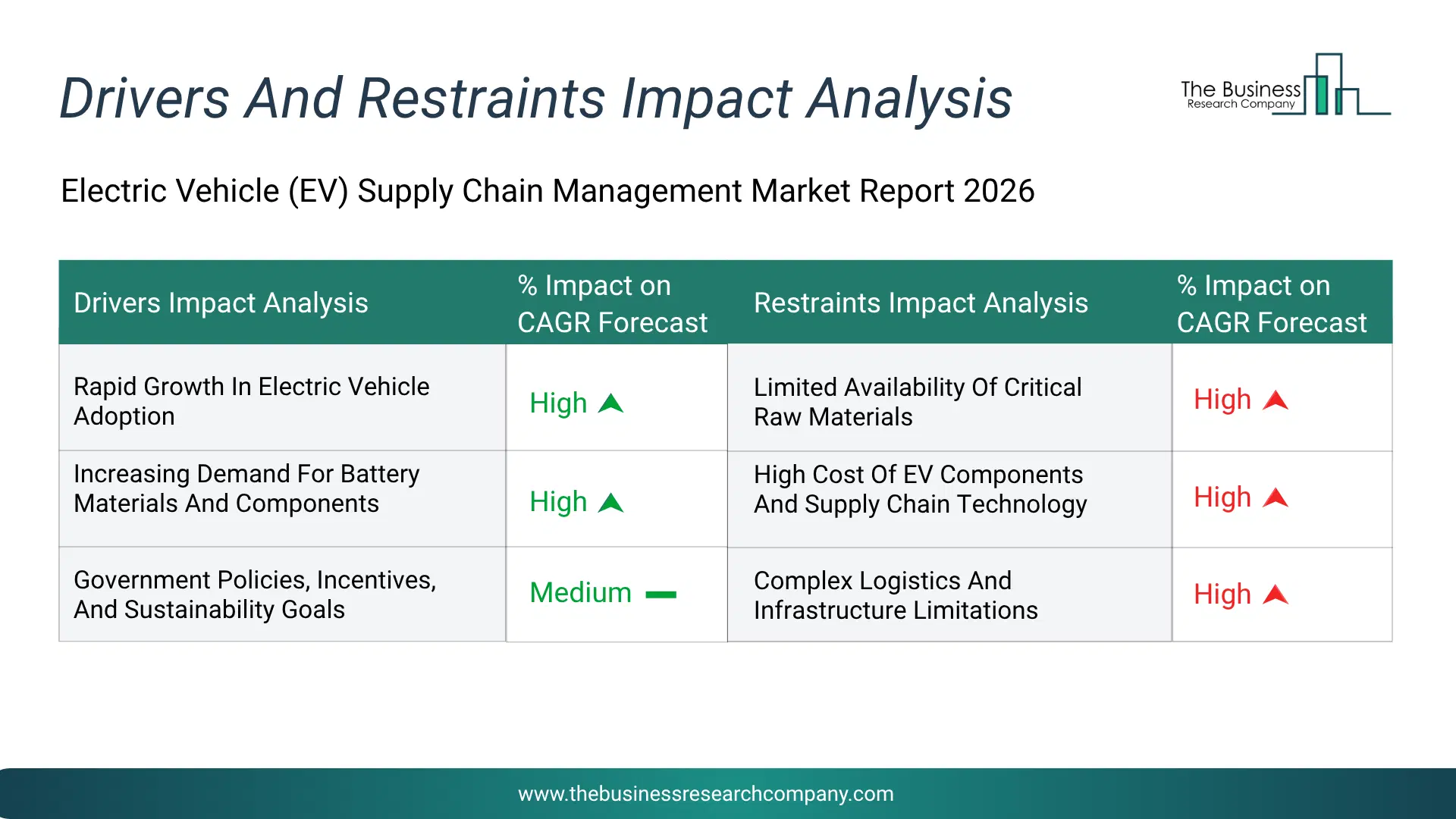
Infographic Chart Showing Key Market Drivers Analysis And Restraints For Electric Vehicle (Ev) Supply Chain Management Market
The chart presents an impact analysis of key drivers and restraints, quantifying their relative influence on the market's growth rate and helping assess the balance between growth enablers and limiting factors. This chart offers a high-level perspective; the full report contains more detailed insights.
How Will The Drivers Impact Growth In The Global Electric Vehicle (EV) Supply Chain Management Market?
• Rapid Growth In Electric Vehicle Adoption (High) – During the forecast period, the rapid growth in electric vehicle adoption is expected to become a key growth driver for the ev supply chain management market by 2030. Increasing production and sales of electric vehicles are creating higher demand for efficient coordination of raw materials, components, and finished vehicles across global supply chains. Automakers and suppliers are focusing on improving visibility, traceability, and responsiveness within supply chain networks to manage rising volumes and complexity. This expansion is accelerating the adoption of advanced supply chain management solutions. • Increasing Demand For Battery Materials And Components (High) – During the forecast period, the increasing demand for battery materials and components is expected to emerge as a major factor driving the expansion of the ev supply chain management market by 2030. The growing need for critical raw materials such as lithium, cobalt, and nickel is intensifying supply chain challenges, including sourcing, transportation, and inventory management. Companies are investing in digital platforms and strategic partnerships to ensure stable supply and cost efficiency. This rising complexity is driving the need for advanced supply chain solutions. • Government Policies, Incentives, And Sustainability Goals (Medium) – During the forecast period, government policies, incentives, and sustainability goals are expected to act as key growth catalysts for the ev supply chain management market by 2030. Regulatory frameworks promoting local manufacturing, carbon reduction targets, and circular economy initiatives are encouraging companies to redesign supply chains for efficiency and sustainability. Additionally, incentives for domestic production and battery recycling are supporting supply chain localization and optimization.How Will The Restraints Impact Growth In The Global Electric Vehicle (EV) Supply Chain Management Market?
• Limited Availability Of Critical Raw Materials (High) – During the forecast period, the the limited availability of critical raw materials such as lithium, cobalt, and nickel creates significant challenges for the electric vehicle supply chain. Since these materials are essential for battery production, shortages can disrupt procurement planning and manufacturing schedules. Supply concentration in a few regions also increases the risk of price fluctuations and geopolitical supply disruptions. This makes it difficult for companies to maintain stable inventory levels and efficient supplier coordination. As a result, the scarcity of key raw materials acts as a restraint on the growth of the electric vehicle supply chain management market. • High Cost Of EV Components And Supply Chain Technology (High) – During the forecast period, the the high cost of electric vehicle components such as batteries, power electronics, and advanced sensors increases the overall expenses involved in ev production and supply chain operations. Implementing advanced supply chain management technologies, including digital tracking systems and data analytics platforms, also requires significant investment. Smaller manufacturers and suppliers may face financial constraints in adopting these technologies. High operational and technology costs can slow the modernization of supply chain processes and limit efficiency improvements. As a result, the high cost of ev components and supply chain technologies acts as a restraint on the growth of the electric vehicle supply chain management market. • Complex Logistics And Infrastructure Limitations (High) – During the forecast period, the complex logistics processes and inadequate infrastructure create challenges in the efficient movement of electric vehicle components across the supply chain. Ev manufacturing requires the transportation of specialized parts such as batteries, semiconductors, and electronic systems that demand careful handling and regulatory compliance. Limited charging, storage, and transportation infrastructure in some regions further complicates supply chain coordination. These factors can lead to delays, higher logistics costs, and inefficiencies in distribution networks. As a result, complex logistics and infrastructure limitations act as a restraint on the growth of the electric vehicle supply chain management market.Key Players In The Global Electric Vehicle (EV) Supply Chain Management Market
Major companies operating in the electric vehicle (ev) supply chain management market report include Tesla Inc., BYD Company Limited, Volkswagen AG, Toyota Motor Corporation, General Motors, Ford Motor Company, Hyundai Motor Company, Kia Corporation, Stellantis N.V., Renault Group, BMW AG, Mercedes-Benz Group AG, SAIC Motor Corporation Limited, Geely Automobile Holdings Limited, Tata Motors Limited, Mahindra & Mahindra Limited, NIO Inc., XPeng Inc., Rivian Automotive, Lucid Group, Shell plc, Siemens AG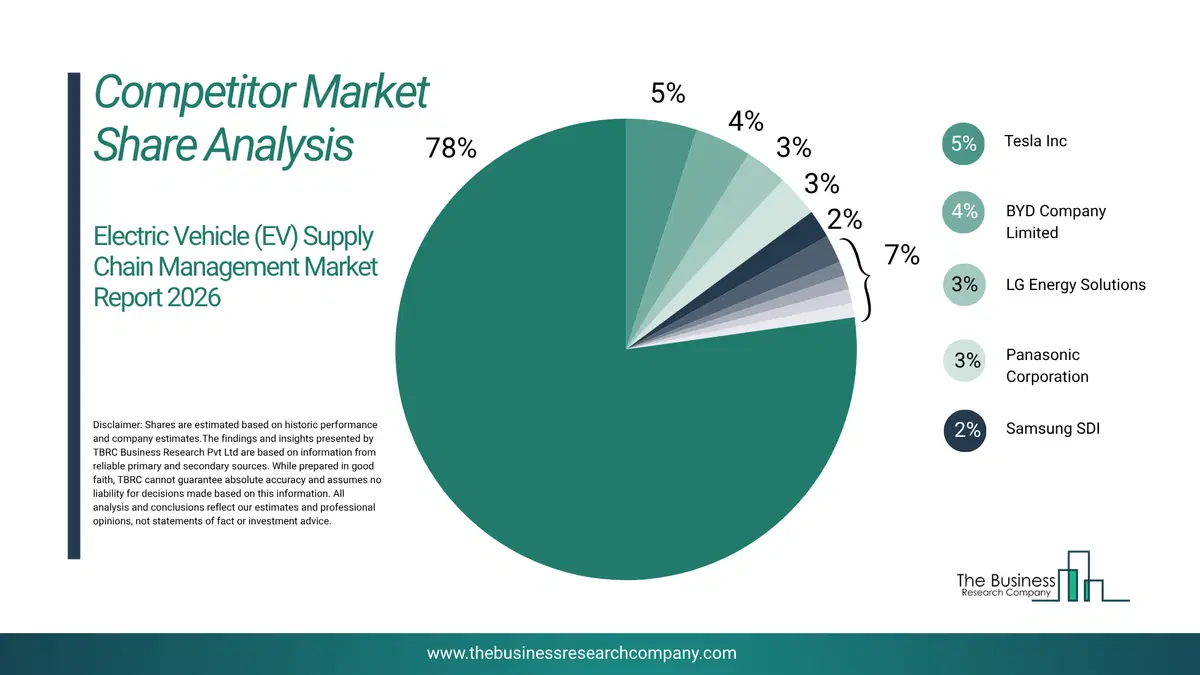
This chart is for illustrative purposes; the full report includes a detailed competitor analysis and comprehensive overview of the top 10 companies in the market.
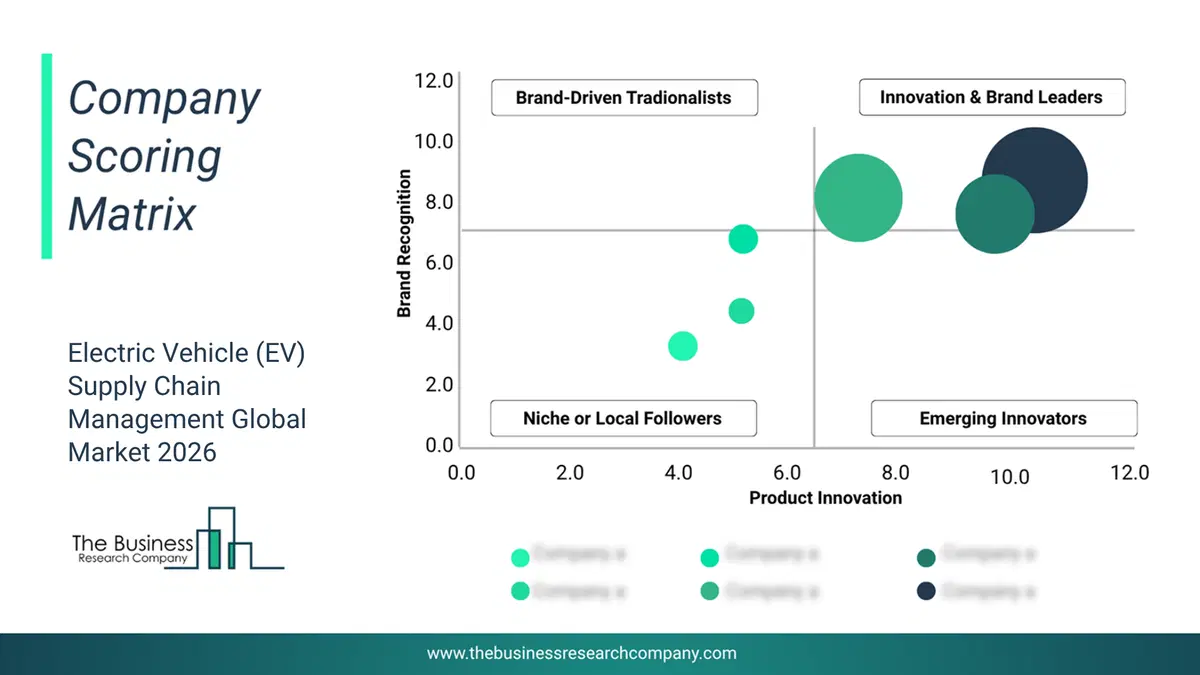
This chart maps companies by product innovation and brand strength, with bubble size indicating relative revenue, helping identify market leaders, challengers, and niche players. This is an illustrative chart; the full report provides a complete and accurate competitive analysis.
Global Electric Vehicle (EV) Supply Chain Management Market Trends and Insights
Major companies operating in the electric vehicle (EV) supply chain management market are focused on strategic partnerships to streamline production and distribution processes across the electric vehicle ecosystem. Strategic partnerships are collaborative agreements between companies to leverage each other’s strengths, resources, or technologies for mutual benefit. These alliances help improve EV supply chain efficiency, reduce costs, and enhance market competitiveness. For instance, in April 2025, Boots Retail Thailand, a Thailand-based pharmacy-led health and beauty retailer, partnered with DHL Supply Chain, a Germany-based logistics company, to launch a 100% electric vehicle (EV) fleet. This initiative aims to reduce carbon emissions by 74 metric tons annually, supporting Thailand's efforts to improve air quality and aligning with Boots' broader sustainability mission. The fleet will distribute products to over 250 Boots stores nationwide, setting a new benchmark for sustainable retail logistics and contributing to a cleaner environment. This collaboration underscores both companies' commitment to environmental sustainability and ESG-aligned procurement and logistics strategies.What Are Latest Mergers And Acquisitions In The Electric Vehicle (EV) Supply Chain Management Market?
In January 2024, Hitachi Energy Ltd., a Switzerland-based energy-infrastructure company, acquired COET S.p.A. for an undisclosed amount. With this acquisition, Hitachi Energy aimed to strengthen and expand its global offering in high-power electric-vehicle charging infrastructure and power electronics, enhancing its technological capability and production capacity for grid-edge and sustainable mobility applications. COET S.p.A. is an Italy-based manufacturing company that specializes in designing and producing power equipment for electric mobility, rail, and high-power industrial applications.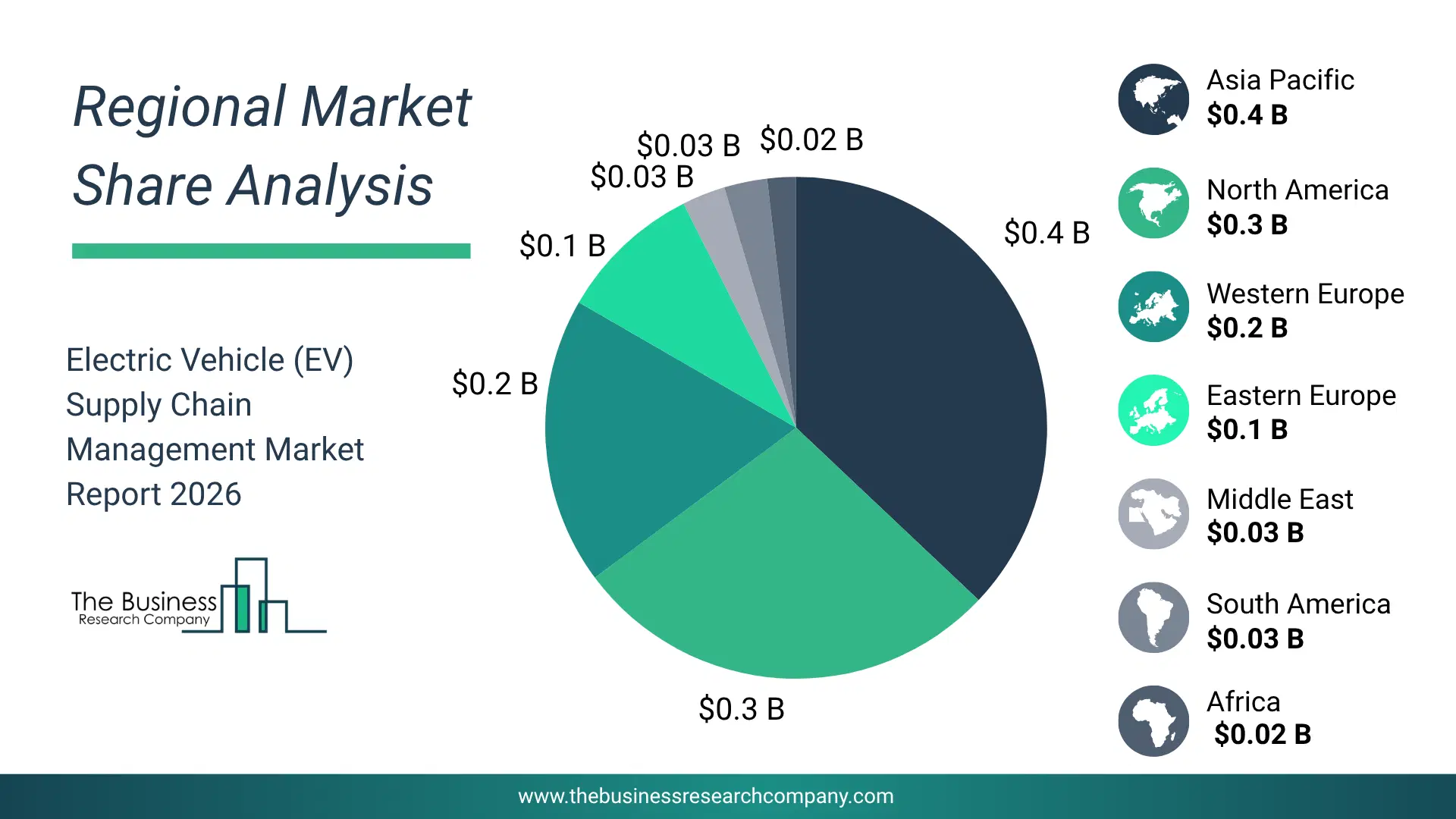
Regional Outlook
North America was the largest region in the electric vehicle (EV) supply chain management market in 2025. The regions covered in this market report include Asia-Pacific, South East Asia, Western Europe, Eastern Europe, North America, South America, Middle East, Africa. The countries covered in this market report include Australia, Brazil, China, France, Germany, India, Indonesia, Japan, Taiwan, Russia, South Korea, UK, USA, Canada, Italy, SpainWhat Defines the Electric Vehicle (EV) Supply Chain Management Market?
The electric vehicle (EV) supply chain management market consists of revenues earned by entities by providing services such as logistics management, production optimization, and risk mitigation within the EV sector. The market value includes the value of related goods and services sold by the service provider or included within the service offering. The electric vehicle (EV) supply chain management market also includes sales of thermal management systems, vehicle control units, sensor systems, and suspension and braking systems. Values in this market are ‘factory gate’ values, meaning the value of goods sold by manufacturers or suppliers, whether to other entities (including automakers, battery producers, and logistics providers) or directly to end customers. The value of goods in this market includes related services sold by the creators of the goods.How is Market Value Defined and Measured?
The market value is defined as the revenues that enterprises gain from the sale of goods and/or services within the specified market and geography through sales, grants, or donations in terms of the currency (in USD unless otherwise specified). The revenues for a specified geography are consumption values that are revenues generated by organizations in the specified geography within the market, irrespective of where they are produced. It does not include revenues from resales along the supply chain, either further along the supply chain or as part of other products.
This chart presents market attractiveness based on a quantitative evaluation of growth, competition, strategic alignment, and risk, offering a clear view of opportunity areas for decision-making. This chart is for illustrative purposes; the full report contains the complete analysis.

This chart highlights the Total Addressable Market (TAM) by estimating the maximum revenue opportunity using an assumption-driven approach, supporting strategic planning and opportunity sizing across markets. The chart is illustrative; the full report provides a more comprehensive analysis.
What Key Data and Analysis Are Included in the Electric Vehicle (EV) Supply Chain Management Market Report 2026?
The electric vehicle (ev) supply chain management market research report is one of a series of new reports from The Business Research Company that provides market statistics, including industry global market size, regional shares, competitors with the market share, detailed market segments, market trends and opportunities, and any further data you may need to thrive in the electric vehicle (ev) supply chain management industry. The market research report delivers a complete perspective of everything you need, with an in-depth analysis of the current and future state of the industry.Electric Vehicle (EV) Supply Chain Management Market Report Forecast Analysis
| Report Attribute | Details |
|---|---|
| Market Size Value In 2026 | $0.73 billion |
| Revenue Forecast In 2030 | $1.03 billion |
| Growth Rate | CAGR of 9.3% from 2026 to 2030 |
| Base Year For Estimation | 2025 |
| Actual Estimates/Historical Data | 2020-2025 |
| Forecast Period | 2026 - 2030 |
| Market Representation | Revenue in USD Billion and CAGR from 2026 to 2030 |
| Segments Covered | Component, Vehicle Type, Stage, Deployment Mode, Organization Size |
| Regional Scope | Asia-Pacific, Western Europe, Eastern Europe, North America, South America, Middle East, Africa |
| Country Scope | The countries covered in the report are Australia, Brazil, China, France, Germany, India, Indonesia, Japan, Taiwan, Russia, South Korea, UK, USA, Canada, Italy, Spain. |
| Key Companies Profiled | Tesla Inc., BYD Company Limited, Volkswagen AG, Toyota Motor Corporation, General Motors, Ford Motor Company, Hyundai Motor Company, Kia Corporation, Stellantis N.V., Renault Group, BMW AG, Mercedes-Benz Group AG, SAIC Motor Corporation Limited, Geely Automobile Holdings Limited, Tata Motors Limited, Mahindra & Mahindra Limited, NIO Inc., XPeng Inc., Rivian Automotive, Lucid Group, Shell plc, Siemens AG |
| Customization Scope | Request for Customization |
| Pricing And Purchase Options | Explore Purchase Options |