
Electric Vehicle Fleet Management Market Report 2026
Global Outlook – By Component ( Hardware, Software, Services), By Type ( On-Premises, Cloud-Based), By Fleet Size ( Large Size, Medium Size, Small Size) – Market Size, Trends, Strategies, and Forecast to 2030
Electric Vehicle Fleet Management Market Overview
• Electric Vehicle Fleet Management market size has reached to $24.92 billion in 2025 • Expected to grow to $32.33 billion in 2030 at a compound annual growth rate (CAGR) of 5.3% • Growth Driver: Government Policies Driving Growth In The Electric Vehicle Fleet Management Market • Market Trend: Enhancing Urban Transportation Innovations In Electric Vehicle Fleet Management And Mobility-as-a-Service • North America was the largest region in 2025 and Asia-Pacific is the fastest growing region.Market Gains By 2030 – Top Opportunities By Segment
Market Gain identifies the most promising market opportunities by highlighting the segments or products expected to generate the highest incremental revenue growth over the next five years.
What Is Covered Under Electric Vehicle Fleet Management Market?
Electric vehicle fleet management refers to involving the supervision and optimization of a collection of electric vehicles (EVs) used for various purposes, such as transportation, delivery, or logistics. It is used to maximize the effectiveness, sustainability, and cost-efficiency of the electric vehicle fleet while minimizing environmental impact and operational costs. The main components in electric vehicle fleet management are hardware, software, and services. Hardware refers to physical components such as sensors, telematics devices, and charging infrastructure utilized for monitoring and managing electric vehicle fleets. These are several types, such as on-premises and cloud-based, which are deployed in several sizes of feet, including large, medium, and small.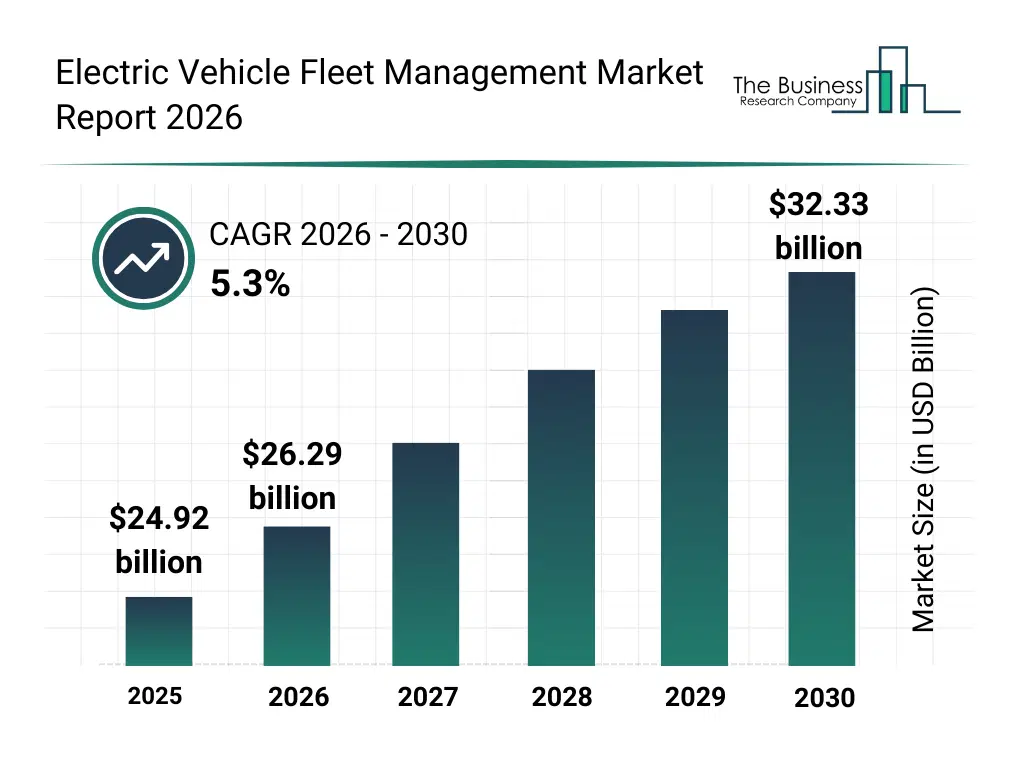
What Is The Electric Vehicle Fleet Management Market Size 2026 And Growth Rate?
The electric vehicle fleet management market size has grown strongly in recent years. It will grow from $24.92 billion in 2025 to $26.29 billion in 2026 at a compound annual growth rate (CAGR) of 5.5%. The growth in the historic period can be attributed to rise in fleet electrification initiatives, expansion of charging infrastructure, increasing demand for fleet cost reduction, early adoption of gps based tracking systems, growing regulatory push for emission reduction.What Is The Electric Vehicle Fleet Management Market Growth Forecast?
The electric vehicle fleet management market size is expected to see strong growth in the next few years. It will grow to $32.33 billion in 2030 at a compound annual growth rate (CAGR) of 5.3%. The growth in the forecast period can be attributed to increasing adoption of cloud fleet software, rise in large scale commercial ev deployment, growth in predictive maintenance tools, expansion of smart charging networks, increasing integration of autonomous fleet technologies. Major trends in the forecast period include increasing adoption of ev telematics solutions, growth in cloud based fleet optimization platforms, rising integration of smart charging management systems, expansion of predictive battery health monitoring, increasing use of real time route planning and analytics.
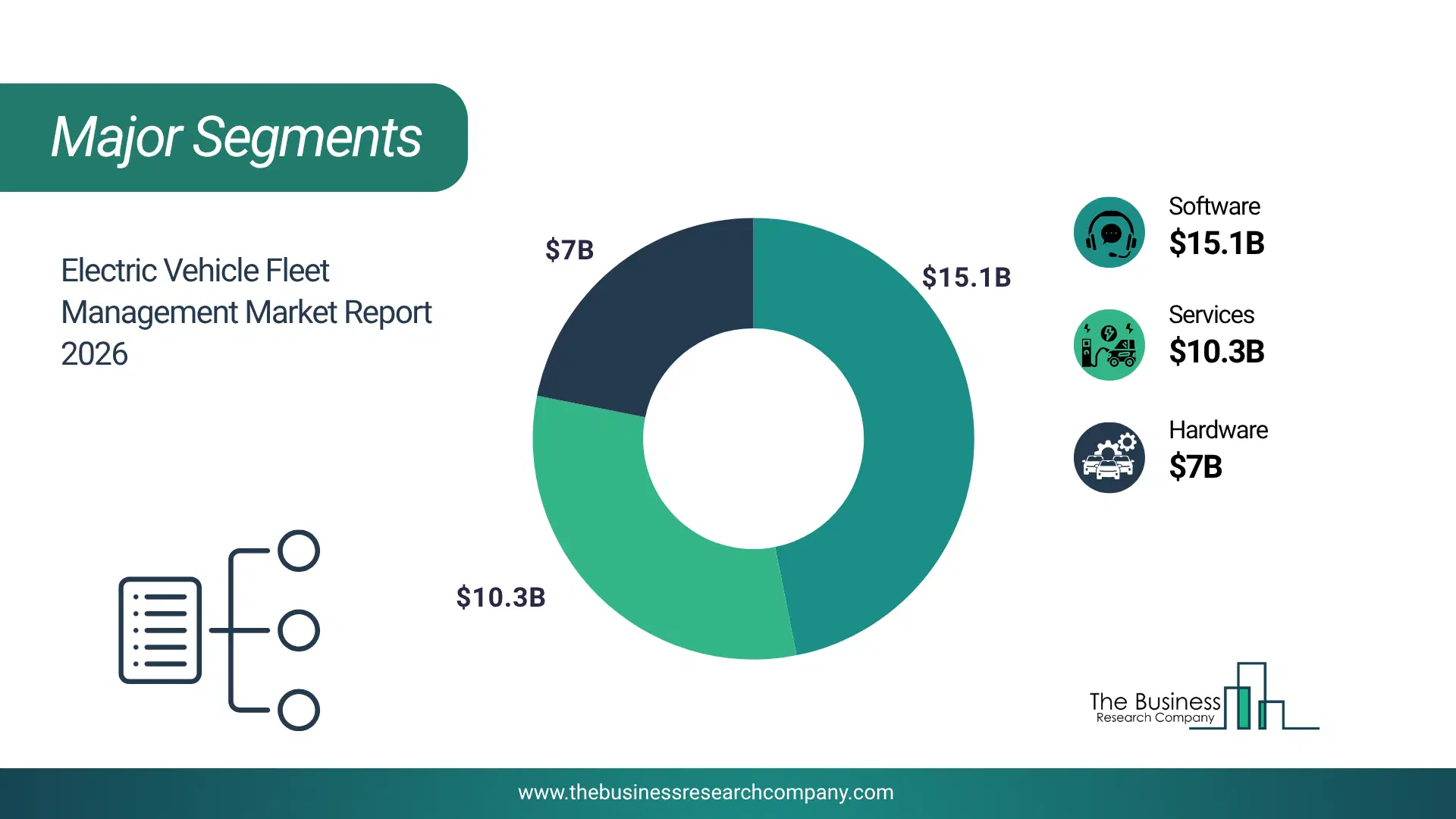
Global Electric Vehicle Fleet Management Market Segmentation
1) By Component: Hardware, Software, Services 2) By Type: On-Premises, Cloud-Based 3) By Fleet Size: Large Size, Medium Size, Small Size Subsegments: 1) By Hardware: Electric Vehicle Tracking Devices, Charging Infrastructure, Telematics And Sensors, Battery Management Systems (BMS), Onboard Units (OBUs) 2) By Software: Fleet Management Software, Route Optimization Software, Charging Management Software, Vehicle Diagnostics And Maintenance Software, Fleet Analytics And Reporting Software 3) By Services: Fleet Management Services (Operations And Monitoring), Charging Infrastructure Management Services, Maintenance And Repair Services, Consulting And Integration Services, Data Analytics And Reporting Services The top segments in the electric vehicle fleet management market will be: • Software will reach $15.02 billion by 2030. • Services will reach $10.25 billion by 2030. • Hardware will reach $6.99 billion by 2030.What Is The Driver Of The Electric Vehicle Fleet Management Market?
The growing government policies supporting EV adoption are expected to propel the growth of the electric vehicle fleet management market going forward. Government policies supporting EV adoption include incentives such as tax credits and subsidies for purchasing EVs, grants for charging infrastructure development, and regulations promoting emissions reductions and clean transportation goals. These investments support the development of advanced fleet management solutions designed to meet the specific needs of electric vehicle fleets, such as predictive maintenance algorithms, energy management systems, and integration with renewable energy sources. For instance, in April 2022, according to reports published by the International Energy Agency (IEA), a France-based autonomous intergovernmental organization, global spending by governments and consumers on electric vehicles had significantly increased and exceeded $400 billion in 2022. Additionally, 11 countries, aiming for 100% zero-emission new truck and bus sales by 2040, signed on to the Global Memorandum of Understanding (MoU) on Zero-Emission Medium- and Heavy-Duty Vehicles, bringing the total number of signatories to 27. Therefore, the growing government policies supporting EV adoption are driving the growth of the electric vehicle fleet management industry.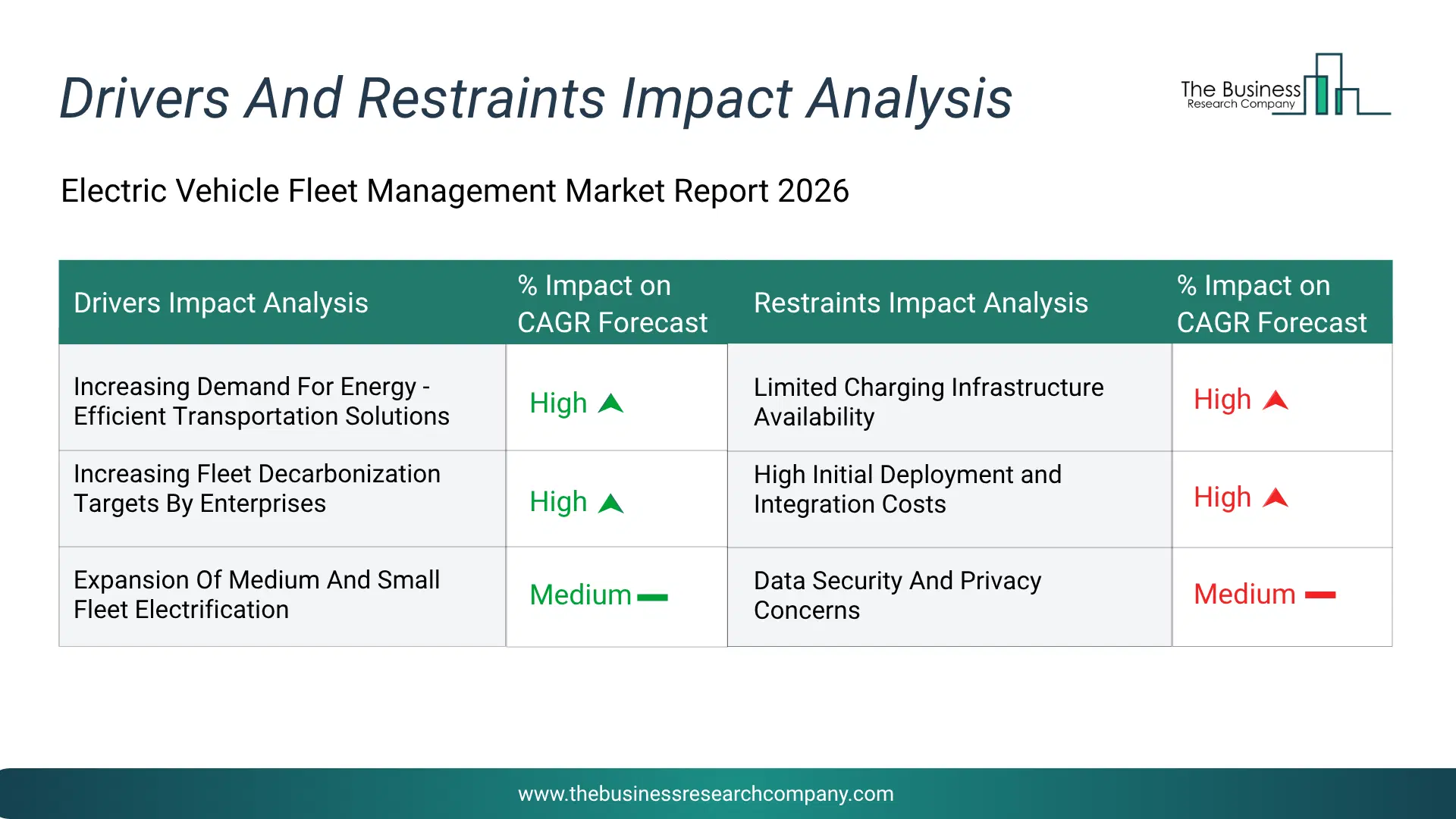
Infographic Chart Showing Key Market Drivers Analysis And Restraints For Electric Vehicle Fleet Management Market
The chart presents an impact analysis of key drivers and restraints, quantifying their relative influence on the market's growth rate and helping assess the balance between growth enablers and limiting factors. This chart offers a high-level perspective; the full report contains more detailed insights.
How Will The Drivers Impact Growth In The Global Electric Vehicle Fleet Management Market?
• Increasing Demand For Energy -Efficient Transportation Solutions (High) – During the forecast period, the increasing focus on energy -efficient transportation is playing a key role in driving the electric vehicle fleet management market by 2030. Organizations and logistics providers are increasingly adopting solutions that cut fuel consumption and operational costs while enhancing vehicle utilization. Electric vehicles offer greater energy efficiency than conventional internal combustion vehicles, making them ideal for fleet operations. Combined with fleet management platforms that optimize routes, monitor energy use, and manage charging schedules, these solutions support cost -effective and sustainable mobility, driving broader adoption of ev fleet management systems. • Increasing Fleet Decarbonization Targets By Enterprises (High) – During the forecast period, the increasing fleet decarbonization targets by enterprises is playing a key role in driving the electric vehicle fleet management market by 2030. Enterprises across sectors are increasingly committing to carbon reduction and net-zero goals as part of their sustainability strategies. Shifting corporate fleets to electric vehicles is a critical step in meeting these environmental targets. Ev fleet management platforms help organizations monitor emissions, optimize battery and charging performance, and provide analytics to track sustainability progress, fueling rising demand for sophisticated fleet management solutions. • Expansion Of Medium And Small Fleet Electrification (Medium) – During the forecast period, the expansion of medium and small fleet electrification is playing a key role in driving the electric vehicle fleet management market by 2030. The electrification of small and medium fleets, such as delivery vans, service vehicles, and local logistics fleets, is gaining momentum. These operators need effective tools to manage vehicle performance, charging schedules, and route optimization to sustain operational efficiency. Ev fleet management solutions offer centralized platforms for monitoring and coordinating multiple vehicles, while predictive insights help minimize downtime and maximize battery usage, driving growing demand for specialized fleet management technologies among smaller operators.How Will The Restraints Impact Growth In The Global Electric Vehicle Fleet Management Market?
• Limited Charging Infrastructure Availability (High) – During the forecast period, the limited charging infrastructure availability remains a significant restraint for the electric vehicle fleet management market, particularly for fleets operating across long-distance routes and multiple geographic regions. Insufficient public and depot-based charging stations can lead to vehicle downtime, route planning challenges, and reduced fleet utilization. Fleet operators may face difficulties in scaling ev deployments in areas with inadequate charging networks. This infrastructure gap increases operational uncertainty and slows the transition from conventional fleets to electric vehicles. • High Initial Deployment and Integration Costs (High) – During the forecast period, the high initial deployment and integration costs hinder the adoption of electric vehicle fleet management solutions, especially among small and medium-sized fleet operators. Organizations must invest in ev procurement, charging infrastructure, fleet management software, telematics systems, and grid upgrades, creating substantial upfront capital requirements. Integrating these technologies with existing fleet operations and it systems can further increase implementation expenses. The long payback period associated with these investments may delay fleet electrification decisions and limit market growth. • Data Security And Privacy Concerns (Medium) – During the forecast period, the data security and privacy concerns act as a restraint in the electric vehicle fleet management market due to the large amount of operational and vehicle data collected by fleet management platforms. These systems rely on connected technologies, cloud platforms, and real-time data transmission to monitor vehicle performance, driver behavior, and charging activities. Organizations may be concerned about potential cyber threats, unauthorized data access, or misuse of sensitive fleet information. Such risks can affect trust in digital fleet management solutions, particularly for enterprises handling critical logistics operations. Consequently, concerns related to cybersecurity and data protection can slow the adoption of ev fleet management systems.Key Players In The Global Electric Vehicle Fleet Management Market
Major companies operating in the electric vehicle fleet management market are Verizon Connect Inc., Tesla Inc., Siemens AG, BYD Company Limited, Schneider Electric SE, ABB Ltd., Rivian Automotive Inc., Arrival Ltd., Solera Group, Geotab Inc., AeroVironment Inc., Enel X North America Inc., Proterra Inc., ChargePoint Inc., Lordstown Motors Corp., Allego N.V., Lion Electric Company, Blink Charging Co., EVBox Group B.V., Greenlots Inc., Nuvve Corporation, Driivz Ltd., PowerFlex Systems Inc., Electrify America LLC, Fleet Complete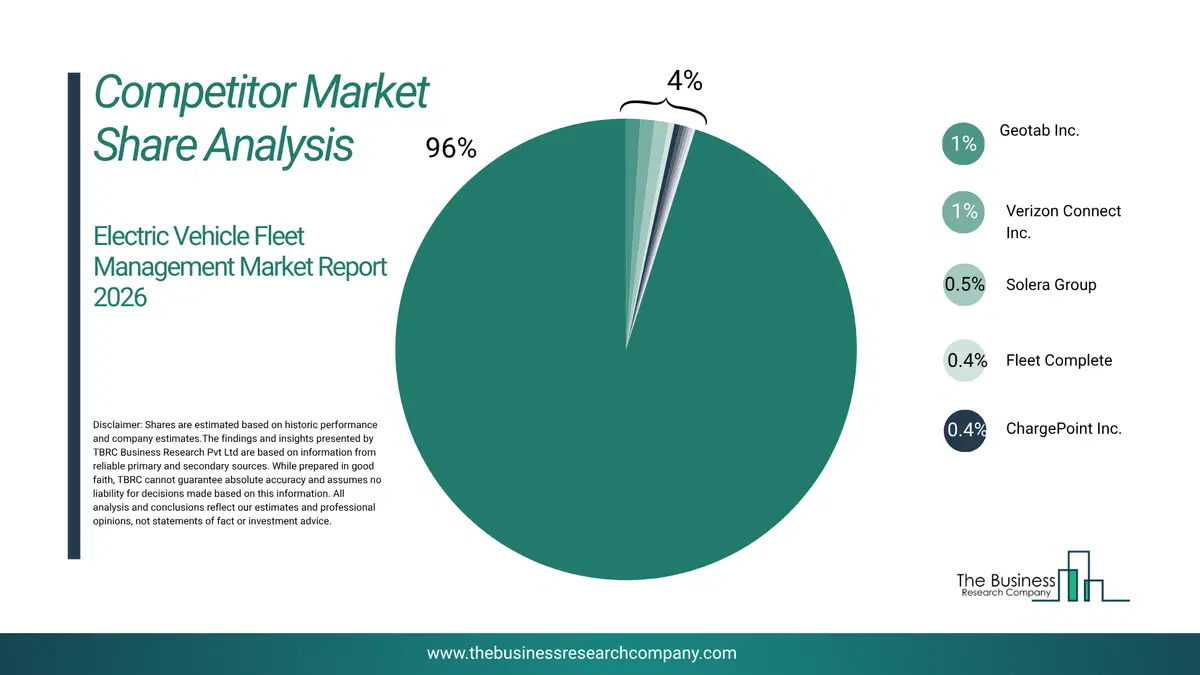
This chart is for illustrative purposes; the full report includes a detailed competitor analysis and comprehensive overview of the top 10 companies in the market.
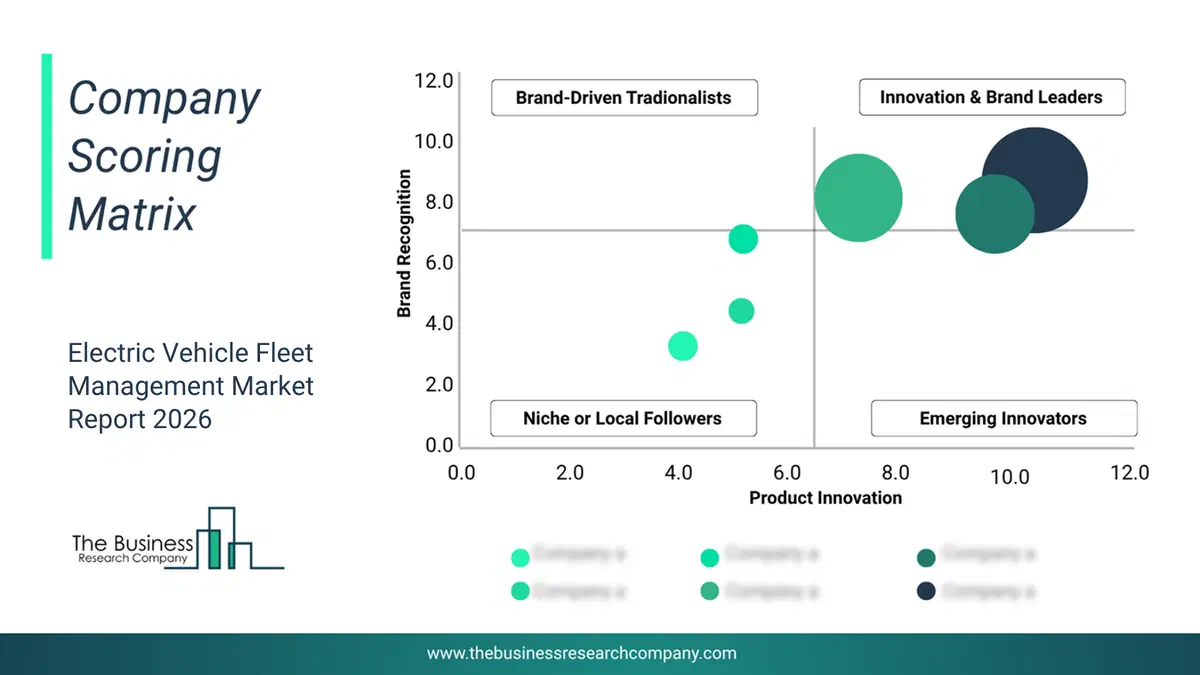
This chart maps companies by product innovation and brand strength, with bubble size indicating relative revenue, helping identify market leaders, challengers, and niche players. This is an illustrative chart; the full report provides a complete and accurate competitive analysis.
Global Electric Vehicle Fleet Management Market Trends and Insights
Major companies operating in the electric vehicle fleet management market are focused on developing platforms for last-mile EV fleet operators to optimize route planning, enhance vehicle utilization, monitor real-time performance, improve maintenance scheduling, and reduce operational costs, thereby increasing efficiency and sustainability in urban transportation. Mobility-as-a-Service (MaaS) platform refers to an integrated, user-friendly system that provides access to various transportation services through a single digital interface. It combines public and private transport options such as buses, trains, ridesharing, bike-sharing, and car rentals into a seamless mobility experience. For instance, in September 2024, myTVS Accessories, an India-based company, launched the myTVS MaaS Platform. The MaaS platform offers various charging options, including portable chargers and dedicated myTVS charging stations, facilitating easier access to charging infrastructure for fleet operators. Advanced telematics services provide real-time data on vehicle performance, while roadside assistance ensures support during breakdowns or emergencies.What Are Latest Mergers And Acquisitions In The Electric Vehicle Fleet Management Market?
In January 2023, AcBel Polytech Inc., a Taiwan-based power management solutions manufacturer, acquired ABB's Power Conversion division for $505 million. With this acquisition, AcBel Polytech aims to expand its portfolio by incorporating ABB's expertise in providing electric vehicle fleet management solutions. ABB Ltd. is a Switzerland-based company that offers electric vehicle fleet management solutions.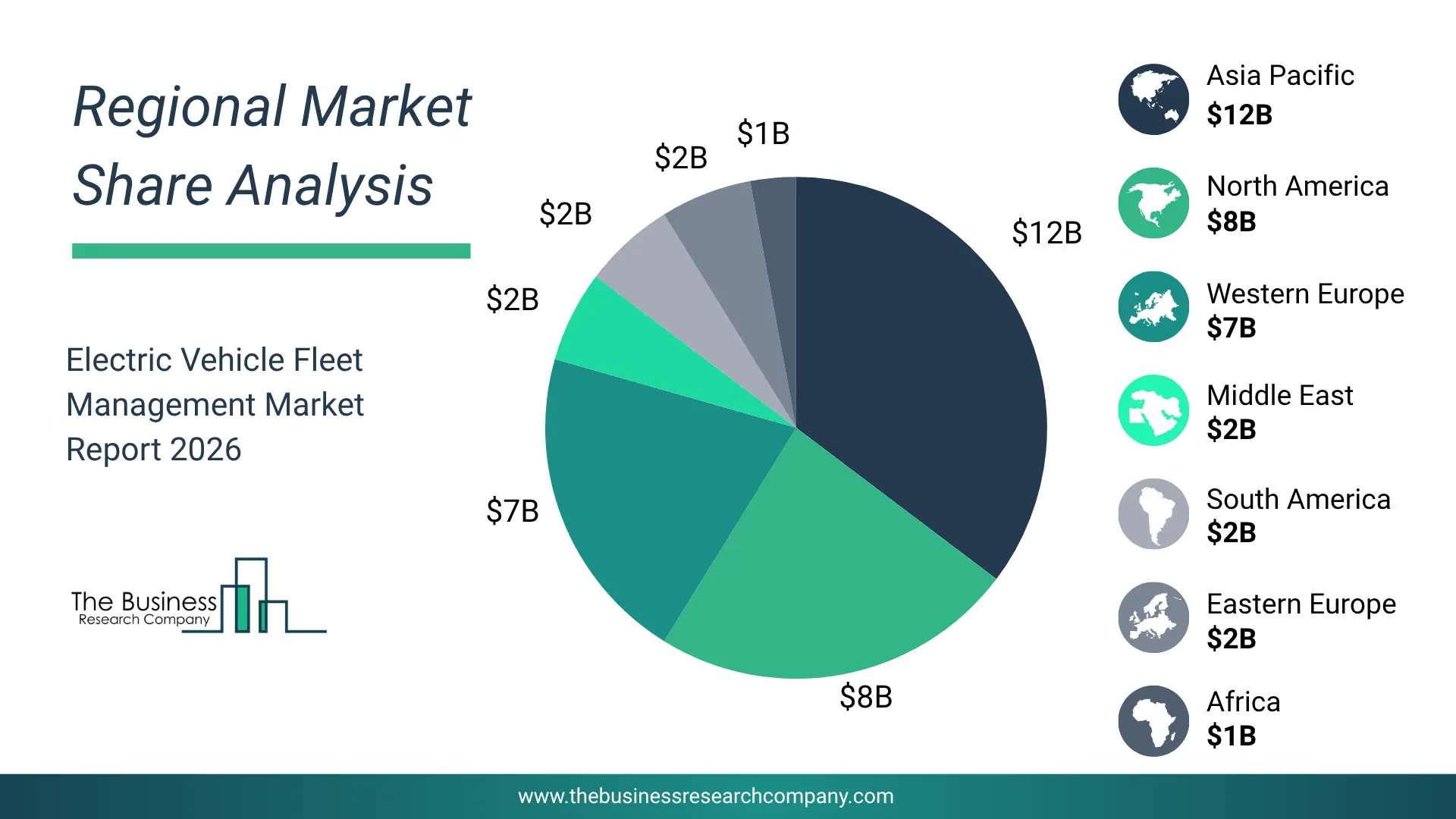
Regional Outlook
North America was the largest region in the electric vehicle fleet management market in 2025. Asia-Pacific is expected to be the fastest-growing region in the forecast period. The regions covered in this market report are Asia-Pacific, South East Asia, Western Europe, Eastern Europe, North America, South America, Middle East, Africa. The countries covered in this market report are Australia, Brazil, China, France, Germany, India, Indonesia, Japan, Taiwan, Russia, South Korea, UK, USA, Canada, Italy, Spain.What Defines the Electric Vehicle Fleet Management Market?
The electric vehicle fleet management market includes revenues earned by entities by providing services, such as monitoring vehicle performance, optimizing routes, and scheduling maintenance. The market value includes the value of related goods sold by the service provider or included within the service offering. Only goods and services traded between entities or sold to end consumers are included.How is Market Value Defined and Measured?
The market value is defined as the revenues that enterprises gain from the sale of goods and/or services within the specified market and geography through sales, grants, or donations in terms of the currency (in USD unless otherwise specified). The revenues for a specified geography are consumption values that are revenues generated by organizations in the specified geography within the market, irrespective of where they are produced. It does not include revenues from resales along the supply chain, either further along the supply chain or as part of other products.
This chart presents market attractiveness based on a quantitative evaluation of growth, competition, strategic alignment, and risk, offering a clear view of opportunity areas for decision-making. This chart is for illustrative purposes; the full report contains the complete analysis.

This chart highlights the Total Addressable Market (TAM) by estimating the maximum revenue opportunity using an assumption-driven approach, supporting strategic planning and opportunity sizing across markets. The chart is illustrative; the full report provides a more comprehensive analysis.
What Key Data and Analysis Are Included in the Electric Vehicle Fleet Management Market Report 2026?
The electric vehicle fleet management market research report is one of a series of new reports from The Business Research Company that provides market statistics, including industry global market size, regional shares, competitors with the market share, detailed market segments, market trends and opportunities, and any further data you may need to thrive in the electric vehicle fleet management industry. The market research report delivers a complete perspective of everything you need, with an in-depth analysis of the current and future state of the industry.Electric Vehicle Fleet Management Market Report 2026 Market Report Forecast Analysis
| Report Attribute | Details |
|---|---|
| Market Size Value In 2026 | $26.29 billion |
| Revenue Forecast In 2030 | $32.33 billion |
| Growth Rate | CAGR of 5.3% from 2026 to 2030 |
| Base Year For Estimation | 2025 |
| Actual Estimates/Historical Data | 2020-2025 |
| Forecast Period | 2026 - 2030 |
| Market Representation | Revenue in USD Billion and CAGR from 2026 to 2030 |
| Segments Covered | Component, Type, Fleet Size |
| Regional Scope | Asia-Pacific, Western Europe, Eastern Europe, North America, South America, Middle East, Africa |
| Country Scope | The countries covered in the report are Australia, Brazil, China, France, Germany, India, ... |
| Key Companies Profiled | Verizon Connect Inc., Tesla Inc., Siemens AG, BYD Company Limited, Schneider Electric SE, ABB Ltd., Rivian Automotive Inc., Arrival Ltd., Solera Group, Geotab Inc., AeroVironment Inc., Enel X North America Inc., Proterra Inc., ChargePoint Inc., Lordstown Motors Corp., Allego N.V., Lion Electric Company, Blink Charging Co., EVBox Group B.V., Greenlots Inc., Nuvve Corporation, Driivz Ltd., PowerFlex Systems Inc., Electrify America LLC, Fleet Complete |
| Customization Scope | Request for Customization |
| Pricing And Purchase Options | Explore Purchase Options |