
Electric Vehicle Fluid Lubricants Market Report 2026
Global Outlook – By Product Type (Engine Oils For Hybrid Electric Vehicles Only, Driveline And E-Axle Fluids, Thermal Management Fluids Or Coolants, Greases, Brake Fluids, Refrigerant Compressor Oils, Dielectric Fluids, Other Specialty Fluids), By Vehicle Type (Passenger Vehicles, Light Commercial Vehicles, Heavy Commercial Vehicles), By Sales Channel (Original Equipment Manufacturer, Aftermarket), By Application (E-Axles And Reduction Gears, Electric Motors And Bearings, Battery Thermal Management Systems, Braking Systems, Air Conditioning And Heat Pump Systems, Other Applications) – Market Size, Trends, Strategies, and Forecast to 2030
Electric Vehicle Fluid Lubricants Market Overview
• Electric Vehicle Fluid Lubricants market size has reached to $1.41 billion in 2025 • Expected to grow to $2.96 billion in 2030 at a compound annual growth rate (CAGR) of 15.8% • Growth Driver: Rising Adoption Of Electric Vehicles Worldwide Fueling The Growth Of The Market Due To Increasing Demand For Advanced Thermal And Drivetrain Fluids • Market Trend: Advancements In Thermal Management Fluids Enhancing Charging Performance, Battery Safety, And Thermal Stability • Asia-Pacific was the largest region in 2025 and Western Europe is the fastest growing region.What Is Covered Under Electric Vehicle Fluid Lubricants Market?
Electric vehicle (EV) fluid lubricants are specially formulated fluids used to lubricate, cool, and protect the components of electric vehicles. They are designed for electric motors, gears, bearings, e-axles, and other drivetrain parts to reduce friction, minimize wear, and improve efficiency. These fluids help manage heat, improve performance, reduce energy losses, and extend the life of EV components. The main product types of electric vehicle fluid lubricants include engine oils for hybrid electric vehicles only, driveline and e-axle fluids, thermal management fluids or coolants, greases, brake fluids, refrigerant compressor oils, dielectric fluids, and other specialty fluids. Engine oils for hybrid electric vehicles only refer to lubricants specifically formulated for the internal combustion engines used in hybrid electric powertrains to reduce friction, protect engine components, and support efficient operation. Electric vehicle fluid lubricants are used in passenger vehicles, light commercial vehicles, and heavy commercial vehicles and are distributed through original equipment manufacturer and aftermarket channels.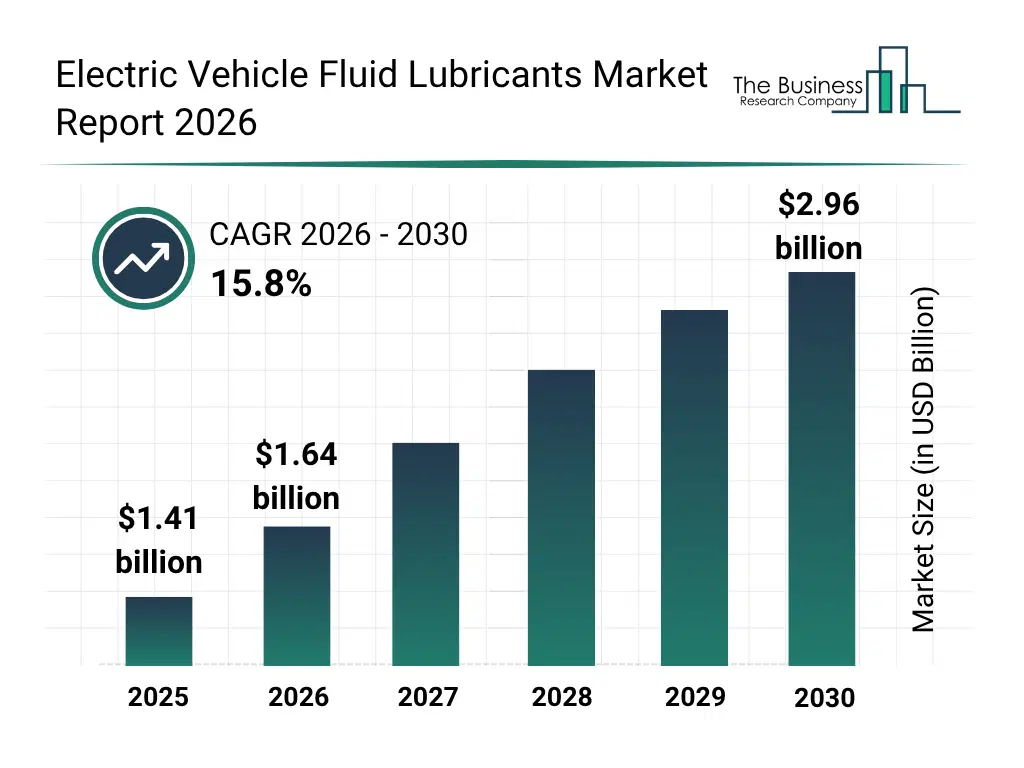
What Is The Electric Vehicle Fluid Lubricants Market Size and Share 2026?
The electric vehicle fluid lubricants market size has grown rapidly in recent years. It will grow from $1.41 billion in 2025 to $1.64 billion in 2026 at a compound annual growth rate (CAGR) of 16.4%. The growth in the historic period can be attributed to growing electric vehicle production, increasing adoption of e-axle systems, rising demand for drivetrain efficiency, expansion of EV charging infrastructure, increasing focus on EV component durability.What Is The Electric Vehicle Fluid Lubricants Market Growth Forecast?
The electric vehicle fluid lubricants market size is expected to see rapid growth in the next few years. It will grow to $2.96 billion in 2030 at a compound annual growth rate (CAGR) of 15.8%. The growth in the forecast period can be attributed to accelerating EV sales growth, increasing adoption of high-performance electric motors, rising demand for advanced battery thermal management, expansion of electric commercial vehicles, growing need for specialized EV drivetrain fluids. Major trends in the forecast period include rising demand for low-viscosity EV drivetrain fluids, increasing development of thermally stable EV lubricants, growing adoption of dielectric fluids for electric motors, increasing use of specialized fluids for e-axles and reduction gears, development of longer-life lubricants for EV components.Tariff Impact On Electric Vehicle Fluid Lubricants Market
Tariffs are impacting the electric vehicle fluid lubricants market by increasing the cost of imported base oils, synthetic additives, performance additives, cooling agents, specialty chemicals, and lubricant manufacturing equipment. Higher material and logistics costs can raise production expenses for driveline and e-axle fluids, thermal management fluids, dielectric fluids, greases, and other specialty fluids, particularly across automotive manufacturing supply chains. Product-intensive segments such as e-axle fluids and thermal management fluids may face greater cost pressures, with North America, Europe, and Asia-Pacific affected by international sourcing dependencies. However, tariffs may encourage regional sourcing, domestic lubricant production, supplier diversification, and investment in localized EV fluid manufacturing.
Global Electric Vehicle Fluid Lubricants Market Segmentation
1) By Product Type: Engine Oils For Hybrid Electric Vehicles Only, Driveline And E-Axle Fluids, Thermal Management Fluids Or Coolants, Greases, Brake Fluids, Refrigerant Compressor Oils, Dielectric Fluids, Other Specialty Fluids 2) By Vehicle Type: Passenger Vehicles, Light Commercial Vehicles, Heavy Commercial Vehicles 3) By Sales Channel: Original Equipment Manufacturer, Aftermarket 4) By Application: E-Axles And Reduction Gears, Electric Motors And Bearings, Battery Thermal Management Systems, Braking Systems, Air Conditioning And Heat Pump Systems, Other Applications Subsegments: 1) By Engine Oils For Hybrid Electric Vehicles Only: Fully Synthetic Engine Oils, Semi Synthetic Engine Oils, Mineral Engine Oils 2) By Driveline And E-Axle Fluids: Single-Speed Reduction Gear Fluids, Multi-Speed Transmission Fluids, Integrated E-Axle Fluids 3) By Thermal Management Fluids Or Coolants: Glycol-Based Coolants, Water-Based Coolants, Synthetic Thermal Fluids, Phase-Change Thermal Fluids 4) By Greases: Lithium Greases, Calcium Greases, Polyurea Greases, Silicone Greases 5) By Brake Fluids: Glycol Ether Brake Fluids, Silicone Brake Fluids, Mineral Brake Fluids 6) By Refrigerant Compressor Oils: Polyol Ester Oils, Polyalkylene Glycol Oils, Polyvinyl Ether Oils 7) By Dielectric Fluids: Synthetic Hydrocarbon Dielectric Fluids, Ester-Based Dielectric Fluids, Silicone Dielectric Fluids, Fluorinated Dielectric Fluids 8) By Other Specialty Fluids: Hydraulic Fluids, Corrosion Protection Fluids, Cleaning Fluids, Assembly FluidsWhat Is The Driver Of The Electric Vehicle Fluid Lubricants Market?
The rising adoption of electric vehicles worldwide is expected to propel the growth of the electric vehicle (EV) fluid lubricants market going forward. Electric vehicle adoption refers to the increasing purchase and use of battery electric vehicles (BEVs) and plug-in hybrid electric vehicles (PHEVs) by consumers, businesses, and fleet operators as alternatives to conventional internal combustion engine vehicles. Adoption of electric vehicles is rising due to increasing government incentives and stricter vehicle emission regulations, which encourage consumers and businesses to shift toward cleaner transportation while reducing the overall cost of electric vehicle ownership. The adoption of electric vehicles supports the growth of electric vehicle fluid lubricants by increasing the demand for specialized thermal management, transmission, and cooling fluids required to enhance electric vehicle performance and efficiency. For instance, in January 2026, according to the Electric Vehicle Council (EVC), an Australia-based electric vehicle industry association, total electric vehicle sales in Australia increased by 38% in 2025 compared with 2024, exceeding 157,000 units, while electric vehicle market share of new-car sales increased from 9.6% in 2024 to 13.1% in 2025. Therefore, the rising adoption of electric vehicles worldwide is driving the growth of the electric vehicle (EV) fluid lubricants market.Key Players In The Global Electric Vehicle Fluid Lubricants Market
Major companies operating in the electric vehicle fluid lubricants market are Exxon Mobil Corporation, Shell plc, Chevron Corporation, TotalEnergies SE, BASF SE, ENEOS Corporation, Idemitsu Kosan Co. Ltd., Repsol S.A., Indian Oil Corporation Limited, GS Caltex Corporation, Petroliam Nasional Berhad, Hindustan Petroleum Corporation Limited, Bharat Petroleum Corporation Limited, The Lubrizol Corporation, NewMarket Corporation, Gulf Oil International Limited, Quaker Chemical Corporation, Freudenberg & Co. KG, Savita Oil Technologies Limited, BP p.l.c., FUCHS SE, China Petrochemical Corporation, Saudi Arabian Oil Company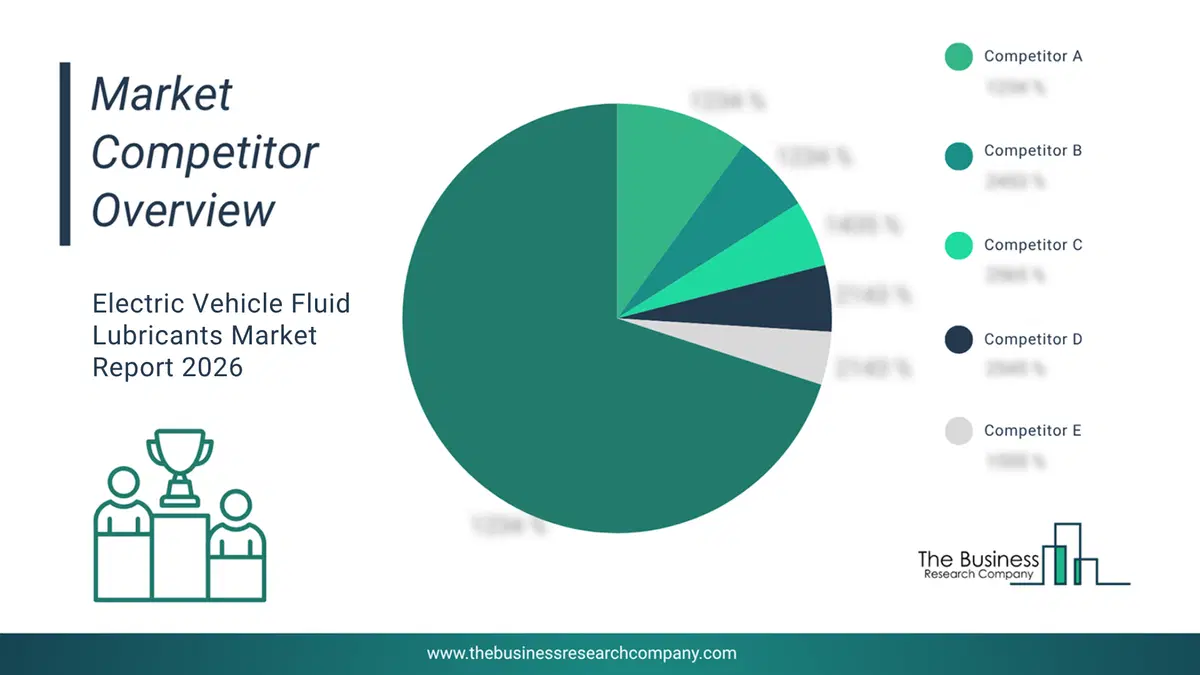
This chart is for illustrative purposes; the full report includes a detailed competitor analysis and comprehensive overview of the top 10 companies in the market.
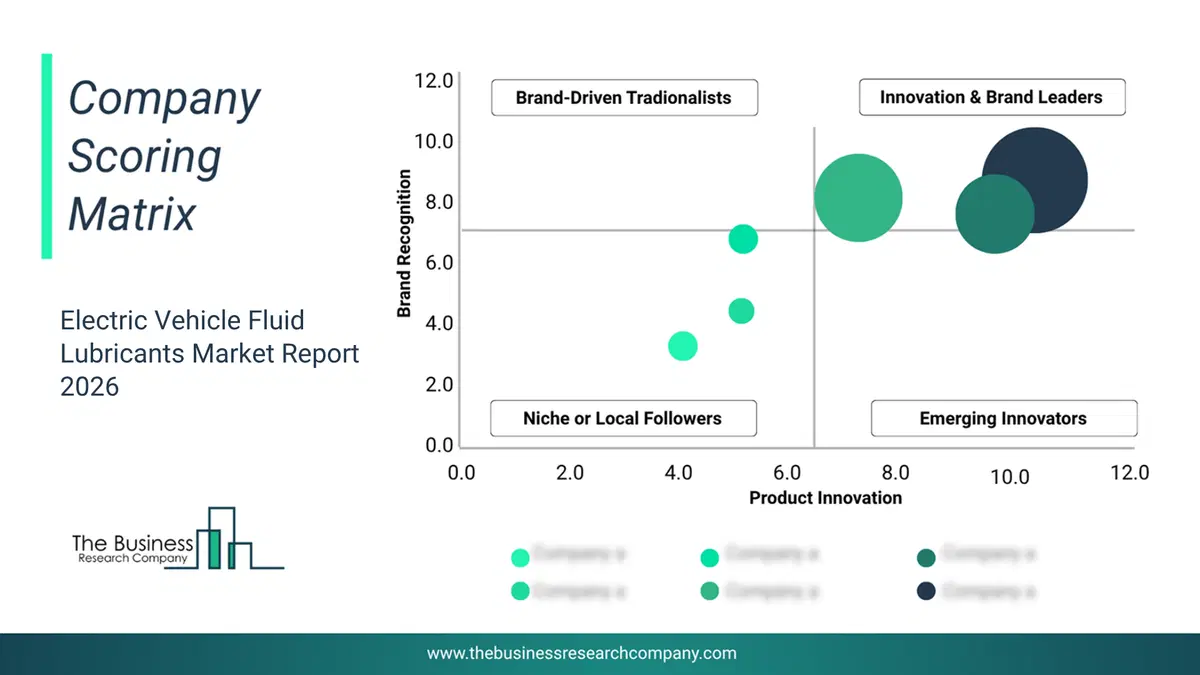
This chart maps companies by product innovation and brand strength, with bubble size indicating relative revenue, helping identify market leaders, challengers, and niche players. This is an illustrative chart; the full report provides a complete and accurate competitive analysis.
Global Electric Vehicle Fluid Lubricants Market Trends and Insights
Major companies operating in the electric vehicle fluid lubricants market are focusing on developing advanced thermal management fluids to improve battery thermal performance, enable faster charging, enhance safety, and support the efficiency of battery electric vehicles. Thermal management fluids are specialized electrically non-conductive fluids designed to provide direct heat transfer within battery packs and other electric vehicle powertrain components. For instance, in September 2025, Shell, a UK-based energy and lubricants company, successfully formulated and demonstrated Shell EV-Plus Thermal Fluid, an advanced EV thermal management fluid developed in collaboration with RML Group, a UK-based automotive innovation company. The fluid was demonstrated in a 34 kWh battery pack that achieved charging from 10% to 80% capacity in under 10 minutes by reducing thermal stresses and enabling higher cell charging currents. The electrically non-conductive fluid fills the spaces within the battery pack and maintains direct contact with battery cells, facilitating heat transfer and consistent temperature control during rapid charging while providing protection against adverse thermal events.What Are Latest Mergers And Acquisitions In The Electric Vehicle Fluid Lubricants Market?
In July 2025, Shell, a UK-based provider of automotive lubricants, industrial lubricants, specialty fluids, and energy solutions, extended its technical partnership with Nissan Formula E Team, to advance research and development of efficient and sustainable lubricant solutions. Through the partnership, Shell and Nissan Formula E Team will collaborate on developing and optimizing EV-specific fluids, including bespoke Shell EV-Plus E-Transmission and E-Thermal fluids, designed to support the performance and thermal management requirements of electric vehicle powertrains. The fluids are specifically developed for high-speed electric racing applications and help manage the extreme thermal demands placed on the Nissan Formula E powertrain, supporting improved performance and efficiency. Nissan Formula E Team is a Japan-based electric vehicle racing team.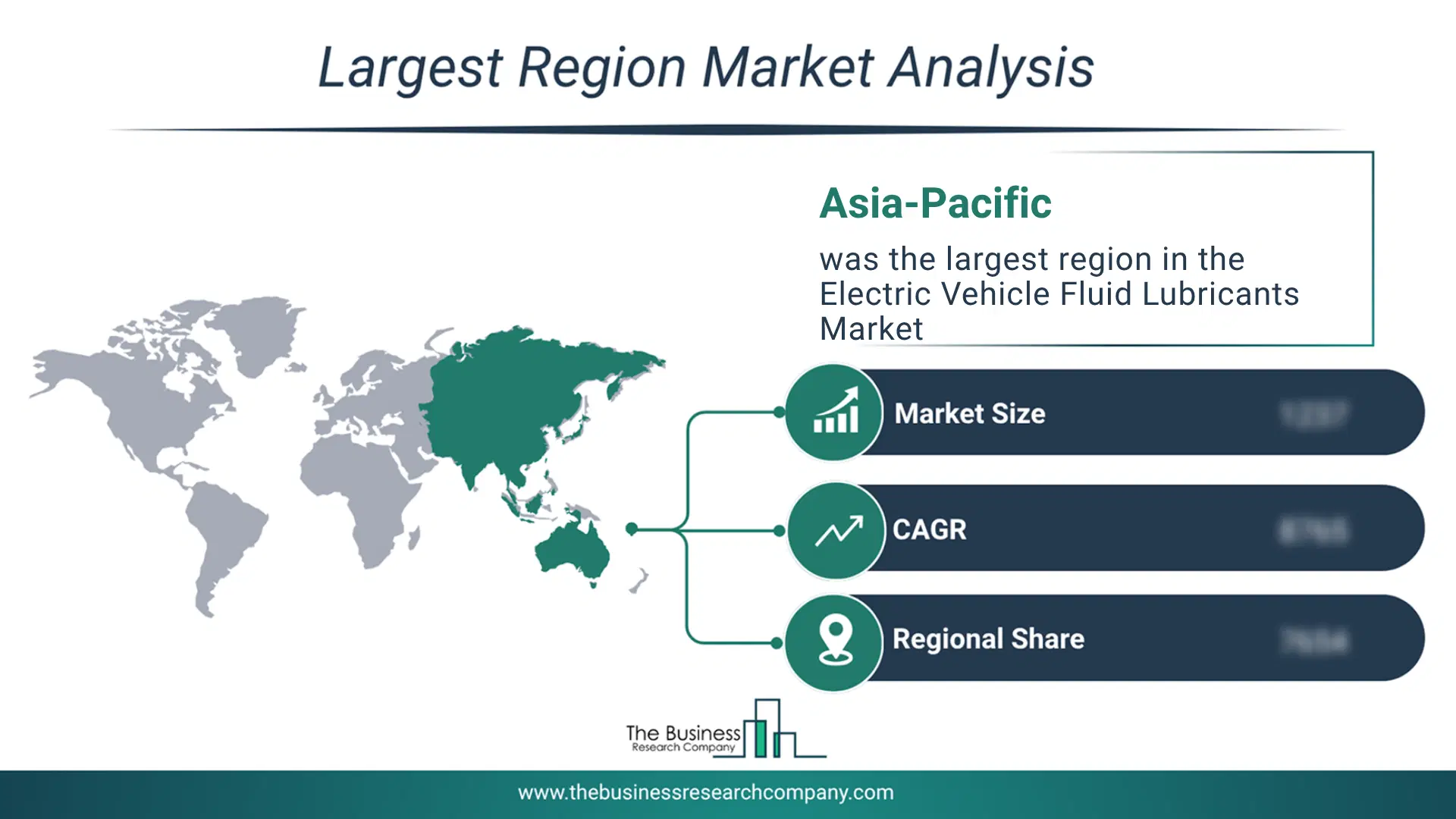
Regional Outlook
Asia-Pacific was the largest region in the electric vehicle fluid lubricants market in 2025. Western Europe is expected to be the fastest-growing region in the forecast period. The regions covered in this market report are Asia-Pacific, South East Asia, Western Europe, Eastern Europe, North America, South America, Middle East, Africa. The countries covered in this market report are Australia, Brazil, China, France, Germany, India, Indonesia, Japan, Taiwan, Russia, South Korea, UK, USA, Canada, Italy, Spain.What Defines the Electric Vehicle Fluid Lubricants Market?
The electric vehicle fluid lubricants market consists of sales of electric motor lubrication, e-axle lubricants, and gear reduction fluids. Values in this market are ‘factory gate’ values, that is, the value of goods sold by the manufacturers or creators of the goods, whether to other entities (including downstream manufacturers, wholesalers, distributors, and retailers) or directly to end customers. The value of goods in this market includes related services sold by the creators of the goods.How is Market Value Defined and Measured?
The market value is defined as the revenues that enterprises gain from the sale of goods and/or services within the specified market and geography through sales, grants, or donations in terms of the currency (in USD unless otherwise specified). The revenues for a specified geography are consumption values that are revenues generated by organizations in the specified geography within the market, irrespective of where they are produced. It does not include revenues from resales along the supply chain, either further along the supply chain or as part of other products.
This chart presents market attractiveness based on a quantitative evaluation of growth, competition, strategic alignment, and risk, offering a clear view of opportunity areas for decision-making. This chart is for illustrative purposes; the full report contains the complete analysis.

This chart highlights the Total Addressable Market (TAM) by estimating the maximum revenue opportunity using an assumption-driven approach, supporting strategic planning and opportunity sizing across markets. The chart is illustrative; the full report provides a more comprehensive analysis.
What Key Data and Analysis Are Included in the Electric Vehicle Fluid Lubricants Market Report 2026?
The electric vehicle fluid lubricants market research report is one of a series of new reports from The Business Research Company that provides market statistics, including industry global market size, regional shares, competitors with the market share, detailed market segments, market trends and opportunities, and any further data you may need to thrive in the electric vehicle fluid lubricants industry. The market research report delivers a complete perspective of everything you need, with an in-depth analysis of the current and future state of the industry.Electric Vehicle Fluid Lubricants Market Report Forecast Analysis
| Report Attribute | Details |
|---|---|
| Market Size Value In 2026 | $1.64 billion |
| Revenue Forecast In 2030 | $2.96 billion |
| Growth Rate | CAGR of 15.8% from 2026 to 2030 |
| Base Year For Estimation | 2025 |
| Actual Estimates/Historical Data | 2020-2025 |
| Forecast Period | 2026 - 2030 |
| Market Representation | Revenue in USD Billion and CAGR from 2026 to 2030 |
| Segments Covered | Product Type, Vehicle Type, Sales Channel, Application |
| Regional Scope | Asia-Pacific, Western Europe, Eastern Europe, North America, South America, Middle East, Africa |
| Country Scope | The countries covered in the report are Australia, Brazil, China, France, Germany, India, Indonesia, Japan, Taiwan, Russia, South Korea, UK, USA, Canada, Italy, Spain. |
| Key Companies Profiled | Exxon Mobil Corporation, Shell plc, Chevron Corporation, TotalEnergies SE, BASF SE, ENEOS Corporation, Idemitsu Kosan Co. Ltd., Repsol S.A., Indian Oil Corporation Limited, GS Caltex Corporation, Petroliam Nasional Berhad, Hindustan Petroleum Corporation Limited, Bharat Petroleum Corporation Limited, The Lubrizol Corporation, NewMarket Corporation, Gulf Oil International Limited, Quaker Chemical Corporation, Freudenberg & Co. KG, Savita Oil Technologies Limited, BP p.l.c., FUCHS SE, China Petrochemical Corporation, Saudi Arabian Oil Company |
| Customization Scope | Request for Customization |
| Pricing And Purchase Options | Explore Purchase Options |