
Electronic Medical Records Market Report 2026
Global Outlook – By Care Setting (Acute, Ambulatory, Post-Acute), By Product (Client-Server-Based EHR, Web-Based EHR), By Mode of Delivery (Cloud-Based Model, On-Premise Model), By Business Models (Licensed Software, Technology Resale, Subscriptions, Professional Services, Managed Services, Other Business Models), By Application (E-Prescription, Practice Management, Referral Management, Patient Management, Population Health Management, Other Applications) - Market Size, Trends, And Global Forecast 2026-2030
Electronic Medical Records Market Overview
• Electronic Medical Records market size has reached to $40.63 billion in 2025 • Expected to grow to $55.02 billion in 2030 at a compound annual growth rate (CAGR) of 6.2% • Growth Driver: The Rising Burden of Chronic Diseases Fueling Market Growth Due to Increasing Demand for Continuous Health Data Management • Market Trend: Revolutionizing Patient Care For Enhanced EMR Interoperability and Coding Accuracy • North America was the largest region in 2025 and Asia-Pacific is the fastest growing region.Market Gains By 2030 – Top Opportunities By Segment
Market Gain identifies the most promising market opportunities by highlighting the segments or products expected to generate the highest incremental revenue growth over the next five years.
What Is Covered Under Electronic Medical Records Market?
Electronic medical records refer to a digital version of patient information. The electronic medical record includes organizing, presenting the storing clinical data or documents of patients over long periods interpreting health conditions, placing orders, and providing ongoing care, scheduling, billing, and prescription. The main types of electronic medical records are acute, ambulatory, and post-acute. Acute electronic medical records are those that include clinical data repositories, order input, outcomes reporting, and/or clinician charting and documentation software packages that provide basic inpatient functionality. The products offered are client-server-based EHR and web-based HER that is delivered on a cloud-based, on-premise model. The business model of electronic medical records includes licensed software, technology resale, subscriptions, professional services, managed services, and others, that can be applied in various industries such as e-prescription, practice management, referral management, patient management, population health management, and others.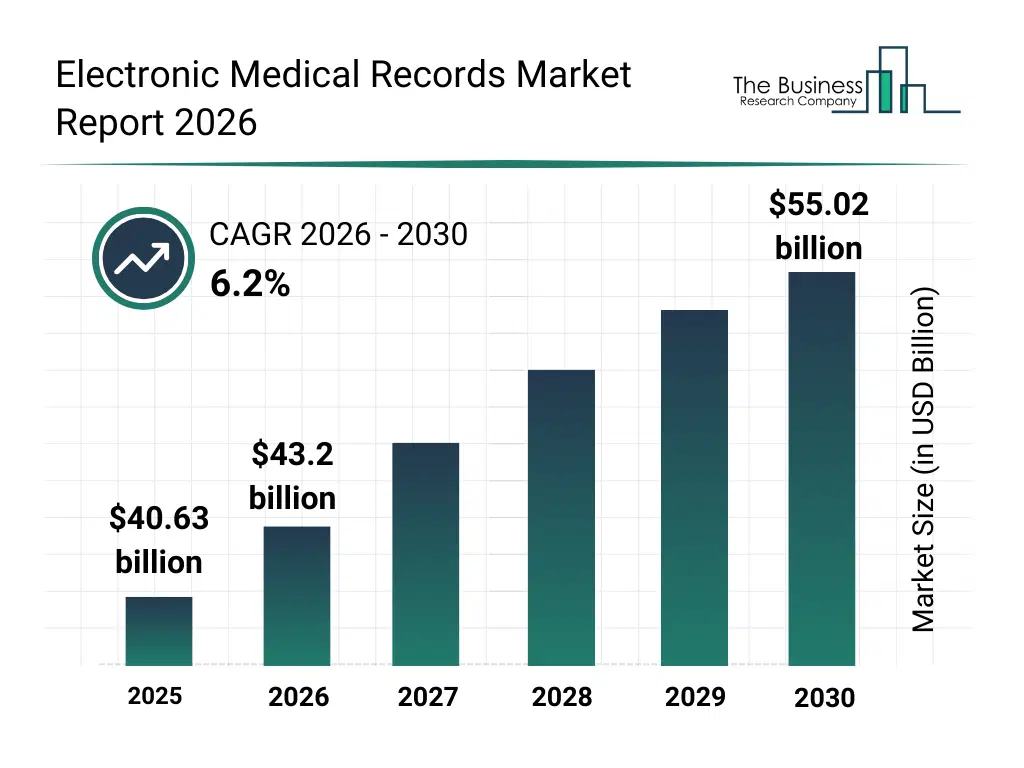
What Is The Electronic Medical Records Market Size and Share 2026?
The electronic medical records market size has grown strongly in recent years. It will grow from $40.63 billion in 2025 to $43.2 billion in 2026 at a compound annual growth rate (CAGR) of 6.3%. The growth in the historic period can be attributed to healthcare digitization initiatives, need for accurate patient records, hospital workflow inefficiencies, regulatory compliance requirements, billing and documentation complexity.What Is The Electronic Medical Records Market Growth Forecast?
The electronic medical records market size is expected to see strong growth in the next few years. It will grow to $55.02 billion in 2030 at a compound annual growth rate (CAGR) of 6.2%. The growth in the forecast period can be attributed to ai-assisted clinical documentation, interoperability standards adoption, remote care integration, population health management, cybersecurity investments. Major trends in the forecast period include transition from paper-based to digital records, cloud-based emr deployment, interoperability across healthcare systems, integrated clinical and administrative workflows, real-time patient data access.
Global Electronic Medical Records Market Segmentation
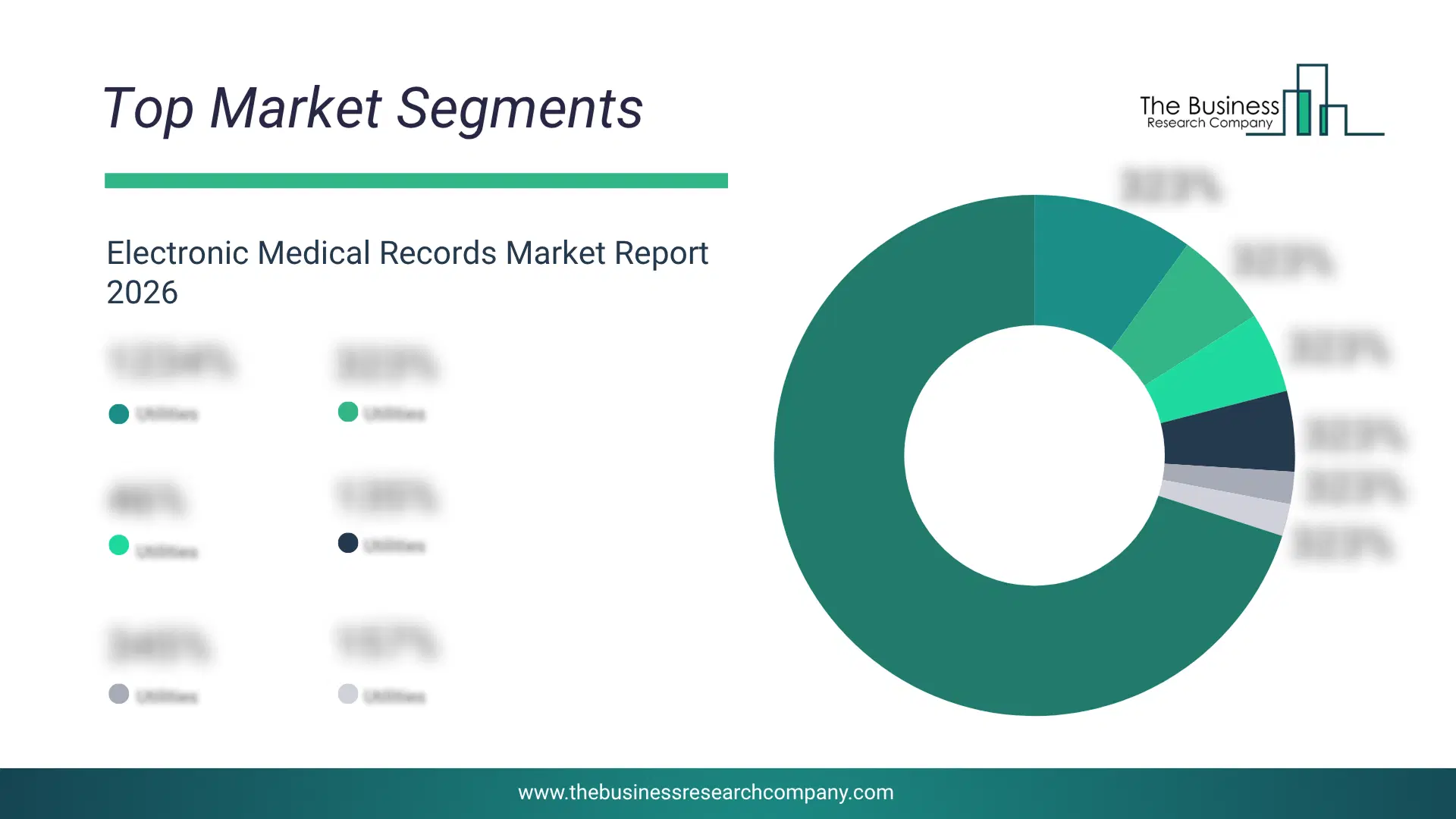
1) By Care Setting: Acute, Ambulatory, Post-Acute 2) By Product: Client-Server-Based EHR, Web-Based EHR 3) By Mode of Delivery: Cloud-Based Model, On-Premise Model 4) By Business Models: Licensed Software, Technology Resale, Subscriptions, Professional Services, Managed Services, Other Business Models 5) By Application: E-Prescription, Practice Management, Referral Management, Patient Management, Population Health Management, Other Applications Subsegments: 1) By Acute: Hospital EMR Systems, Emergency Care EMR 2) By Ambulatory: Outpatient EMR Systems, Specialty Practice EMR 3) By Post-Acute: Long-Term Care EMR, Rehabilitation Facility EMR The top segments in the electronic medical records market will be: • Cloud-Based Model will reach $24895.63 Million by 2025. • Web-Based EHR will reach $23222.1 Million by 2025. • Acute will reach $18450.99 Million by 2025. • Client-Server-Based EHR will reach $17593.98 Million by 2025. • Ambulatory will reach $16166.92 Million by 2025.What Is The Driver Of The Electronic Medical Records Market?
The rising prevalence of chronic and noncommunicable diseases is expected to propel the growth of the electronic medical records (EMR) market going forward. Chronic diseases including cancer, cardiovascular disorders, diabetes, and chronic respiratory illnesses are long-term medical conditions that require ongoing monitoring, coordinated care, and comprehensive patient data management. The increase in chronic disease prevalence is driven by factors such as aging populations, sedentary lifestyles, environmental changes, and rapid urbanization, resulting in a higher demand for long-term healthcare services. EMR systems support chronic disease management by enabling efficient, real-time digital documentation, streamlined data retrieval, and improved clinical decision-making across healthcare settings. For instance, in September 2023, according to the World Health Organization (WHO), a Switzerland-based intergovernmental organization, the share of deaths caused by NCDs will rise to about 86% globally by 2048. Therefore, the rising prevalence of chronic diseases is driving the growth of the electronic medical records industry.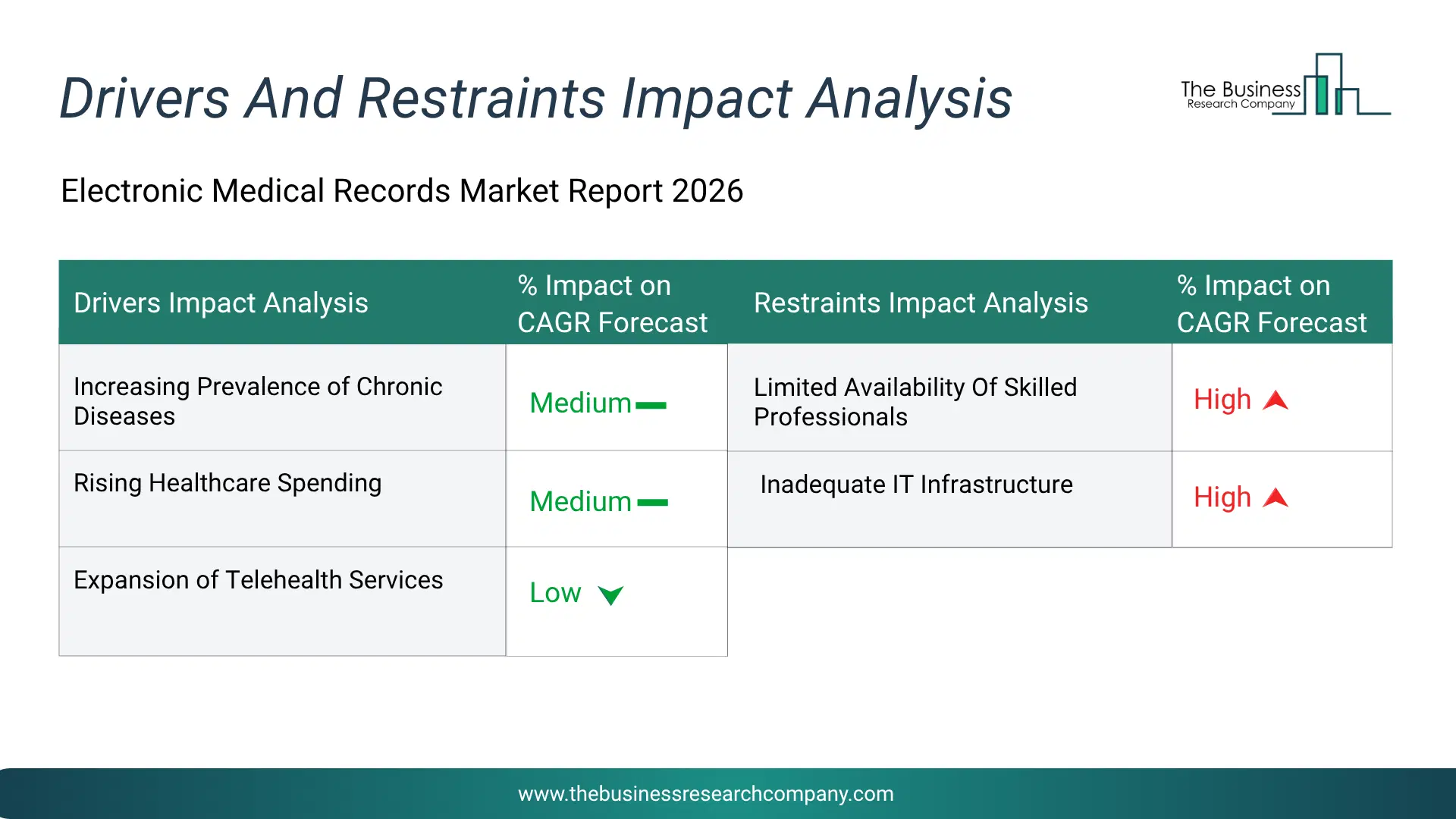
Infographic Chart Showing Key Market Drivers Analysis And Restraints For Electronic Medical Records Market
The chart presents an impact analysis of key drivers and restraints, quantifying their relative influence on the market's growth rate and helping assess the balance between growth enablers and limiting factors. This chart offers a high-level perspective; the full report contains more detailed insights.
How Will The Drivers Impact Growth In The Global Electronic Medical Records Market?
• Increasing Prevalence of Chronic Diseases (Medium) – The increasing prevalence of chronic diseases will become a key driver of growth in the electronic medical records market by 2030. As cases of diabetes, cardiovascular diseases, and other long-term conditions rise due to aging populations, lifestyle changes, and environmental factors, healthcare providers and governments are increasingly turning to electronic medical records to improve patient management. Electronic medical records enhance data accessibility, streamline workflows, and support evidence-based decision-making, reducing administrative costs and improving patient outcomes. This shift enables healthcare systems to manage growing patient volumes efficiently while ensuring long-term sustainability. As a result, the increasing prevalence of chronic diseases is anticipated to contributing to a 1.5% annual growth in the market. • Rising Healthcare Spending (Medium) – The rising healthcare spending will emerge as a major factor driving the expansion of the electronic medical records market by 2030. As governments, insurers, and healthcare providers face increasing expenditures due to aging populations, advanced medical treatments, and regulatory requirements, electronic medical records are being leveraged to improve efficiency and reduce operational costs. Electronic medical records streamline administrative processes, minimize paperwork, and enhance data sharing, leading to better resource allocation and improved patient care. This shift enables healthcare systems to control rising costs while maintaining quality and accessibility. Consequently, the rising healthcare spending capabilities is projected to contributing to a 1.0% annual growth in the market. • Expansion of Telehealth Services (Low) – The expansion of telehealth services will serve as a key growth catalyst for the electronic medical records market by 2030. As healthcare providers and governments invest in virtual care solutions to enhance accessibility, reduce hospital visits, and improve chronic disease management, electronic medical records are being leveraged to ensure efficient data integration and real-time information sharing. Electronic medical records enable secure access to patient histories, support interoperability between telehealth platforms, and enhance clinical decision-making. This shift improves healthcare delivery, reduces costs, and supports the long-term growth of digital health solutions. Therefore, this expansion of telehealth services is projected to supporting to a 0.8% annual growth in the market. • Increasing Digital Transformation in Healthcare (Low) – The increasing digital transformation in healthcare will become a significant driver contributing to the growth of the electronic medical records market by 2030. As healthcare providers, insurers, and governments invest in advanced digital solutions to enhance efficiency, interoperability, and data security, electronic medical records are being leveraged to streamline workflows and improve decision-making. Electronic medical records enable seamless data exchange, support predictive analytics, and enhance patient engagement through digital health platforms. This shift optimizes healthcare operations, reduces administrative burdens, and drives long-term improvements in care delivery. Consequently, the increasing digital transformation in healthcare strategies is projected to contributing to a 0.5% annual growth in the market.How Will The Restraints Impact Growth In The Global Electronic Medical Records Market?
• Limited Availability Of Skilled Professionals (Medium) – Limited Availability Of Skilled Professionals will restrict the growth of the Electronic Medical Records market during the forecast period. EMR implementation and optimization require skilled healthcare IT professionals with clinical and technical expertise. The shortage of qualified EMR specialists limits implementation capacity and system effectiveness. Skill gaps can lead to implementation challenges and reduced return on EMR investments. • Inadequate IT Infrastructure (Low) – Inadequate IT Infrastructure will restrict the growth of the Electronic Medical Records market during the forecast period. EMR deployment requires reliable IT infrastructure that may be inadequate in many healthcare settings. Infrastructure gaps including connectivity and hardware limitations affect EMR adoption and performance. Infrastructure constraints can limit the implementation of comprehensive EMR solutions and affect market growth.Key Players In The Global Electronic Medical Records Market
Major companies operating in the electronic medical records market are Cerner Corporation, Allscripts Healthcare Solutions Inc, General Electric Company GE Healthcare, Athenahealth, Epic Systems Corp, NextGen Healthcare Inc, eClinicalWorks, CPSI, Intersystems Corporation, AdvancedMD Inc, Philips Healthcare, Medical Information Technology Inc MEDITECH, CureMD Healthcare, Greenway Health LLC, OSCARwest, MV Sistemas, Philips‑Tasy, Siemens Healthineers, WebPT, Ava Industries, HealthPlix Technologies, ModMed, Netsmart, DrChrono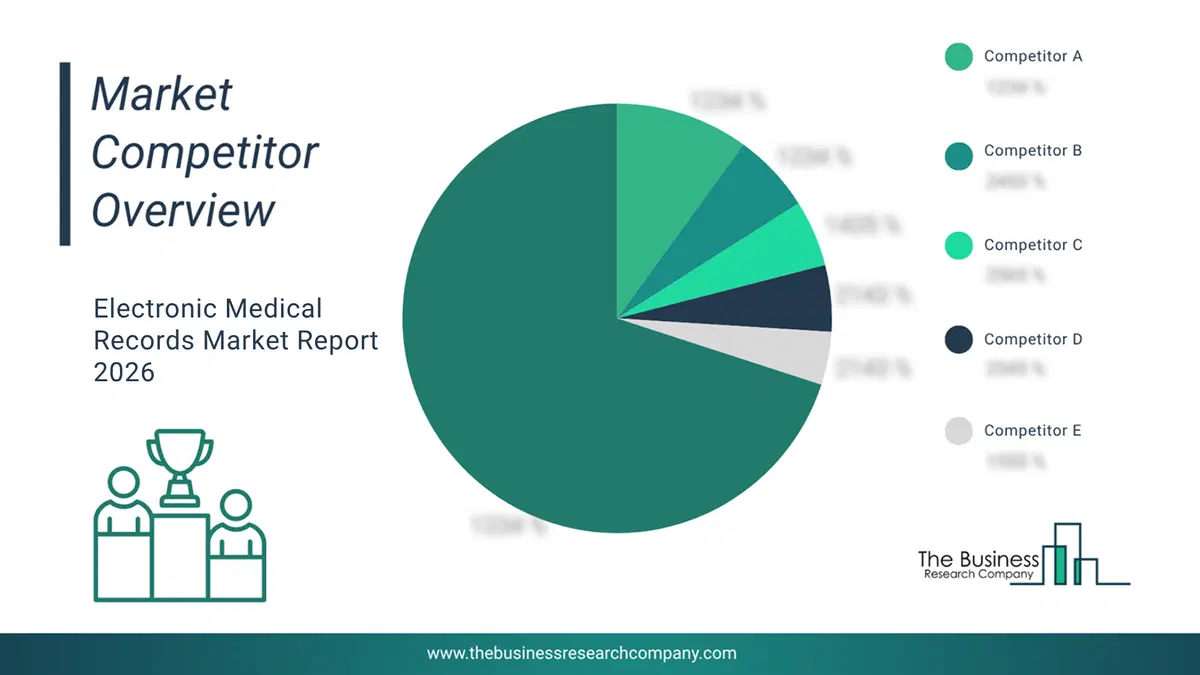
This chart is for illustrative purposes; the full report includes a detailed competitor analysis and comprehensive overview of the top 10 companies in the market.
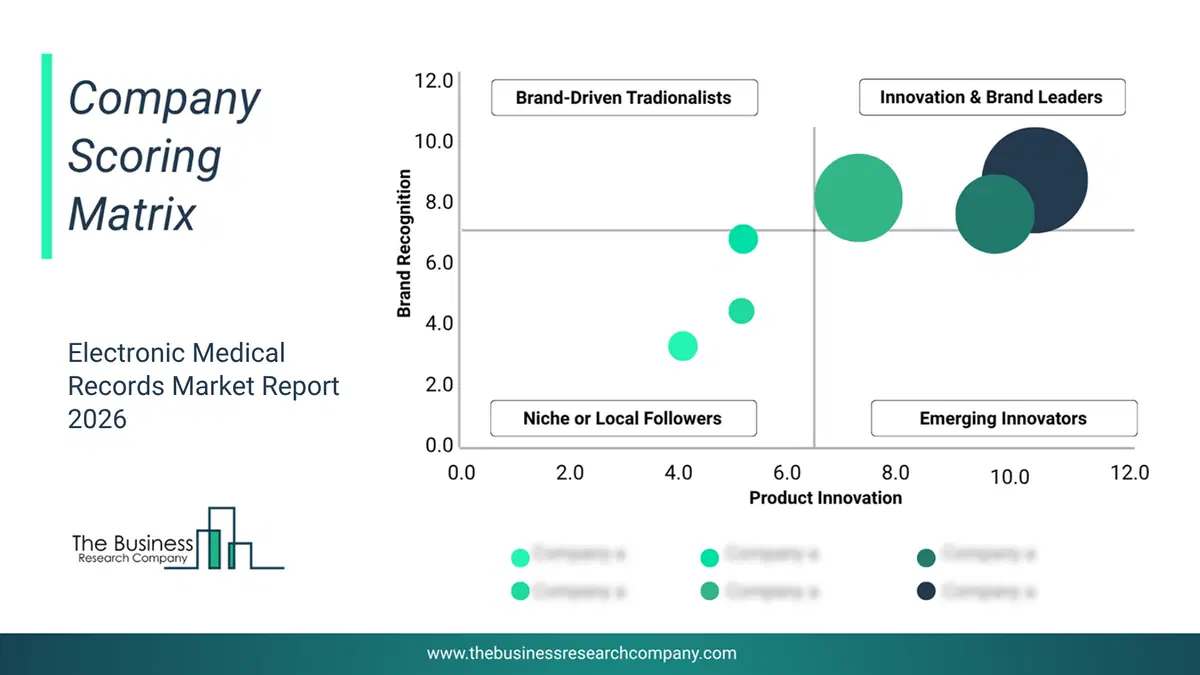
This chart maps companies by product innovation and brand strength, with bubble size indicating relative revenue, helping identify market leaders, challengers, and niche players. This is an illustrative chart; the full report provides a complete and accurate competitive analysis.
Global Electronic Medical Records Market Trends and Insights
Major companies operating in the electronic medical records (EMR) market are focusing on advancements in interoperability and data analytics such as Patient Risk Identification to enhance patient care, streamline clinical workflows, and support healthcare providers in delivering more efficient and coordinated services. Patient Risk Identification refers to the process of identifying individuals who are at higher risk of experiencing adverse health outcomes based on various clinical, demographic, and behavioral data. For instance, in February 2024, KAID Health, a US-based Software company, launched its Patient Risk Identification & Data Extraction (PRIDE) application and formed its new Coding Services Group. This new technology and the medical coding services organization help providers code more accurately and entirely while improving care. It analyses each new medical note, integrates its content with past EMR information, and suggests beneficial, patient-level clinical and coding interventions.What Are Latest Mergers And Acquisitions In The Electronic Medical Records Market?
In September 2024, Thoma Bravo LLC., a US-based private equity firm, acquired NextGen Healthcare Inc. for $1.6 billion. Through this acquisition, Thoma Bravo aims to expand its presence in the health IT sector by enhancing its portfolio of clinical, financial, and administrative healthcare technologies. NextGen Healthcare Inc. is a US-based company that provides electronic health record (EHR) and practice management solutions.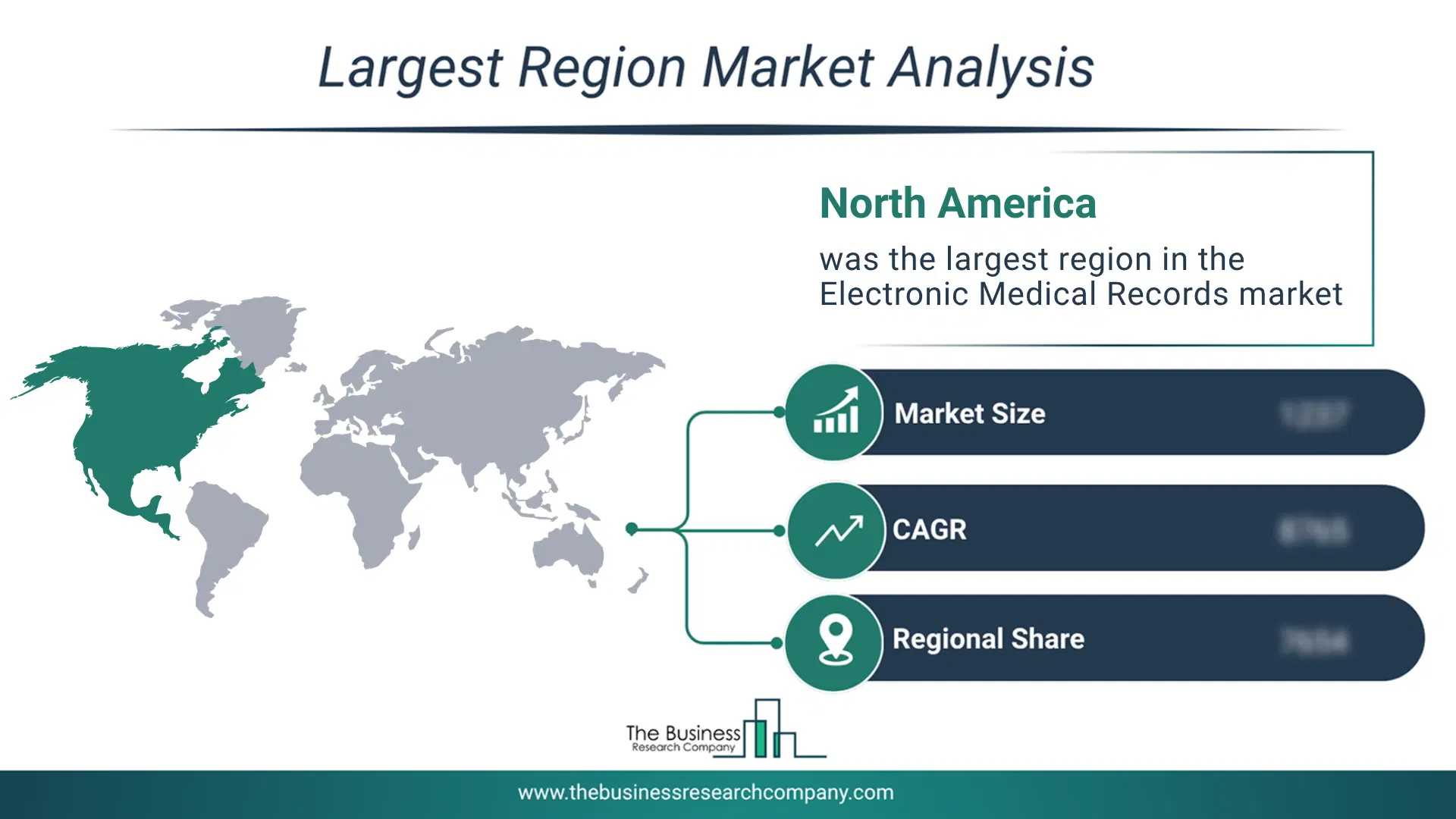
Regional Outlook
North America was the largest region in the electronic medical records market in 2025. The Asia-Pacific is expected to be the fastest-growing region in the forecast period. The regions covered in this market report are Asia-Pacific, South East Asia, Western Europe, Eastern Europe, North America, South America, Middle East, Africa. The countries covered in this market report are Australia, Brazil, China, France, Germany, India, Indonesia, Japan, Taiwan, Russia, South Korea, UK, USA, Canada, Italy, Spain.What Defines the Electronic Medical Records Market?
The electronic medical records market includes revenues earned by Mac EMR software, ONC-certified EMR software, behavioral/mental health EMR software, and medical billing software. The market value includes the value of related goods sold by the service provider or included within the service offering. Only goods and services traded between entities or sold to end consumers are included.How is Market Value Defined and Measured?
The market value is defined as the revenues that enterprises gain from the sale of goods and/or services within the specified market and geography through sales, grants, or donations in terms of the currency (in USD unless otherwise specified). The revenues for a specified geography are consumption values that are revenues generated by organizations in the specified geography within the market, irrespective of where they are produced. It does not include revenues from resales along the supply chain, either further along the supply chain or as part of other products.
This chart presents market attractiveness based on a quantitative evaluation of growth, competition, strategic alignment, and risk, offering a clear view of opportunity areas for decision-making. This chart is for illustrative purposes; the full report contains the complete analysis.

This chart highlights the Total Addressable Market (TAM) by estimating the maximum revenue opportunity using an assumption-driven approach, supporting strategic planning and opportunity sizing across markets. The chart is illustrative; the full report provides a more comprehensive analysis.
What Key Data and Analysis Are Included in the Electronic Medical Records Market Report 2026?
The electronic medical records market research report is one of a series of new reports from The Business Research Company that provides market statistics, including industry global market size, regional shares, competitors with the market share, detailed market segments, market trends and opportunities, and any further data you may need to thrive in the electronic medical records industry. The market research report delivers a complete perspective of everything you need, with an in-depth analysis of the current and future state of the industry.Electronic Medical Records Market Report Forecast Analysis
| Report Attribute | Details |
|---|---|
| Market Size Value In 2026 | $43.2 billion |
| Revenue Forecast In 2030 | $55.02 billion |
| Growth Rate | CAGR of 6.3% from 2026 to 2030 |
| Base Year For Estimation | 2025 |
| Actual Estimates/Historical Data | 2020-2025 |
| Forecast Period | 2026 - 2030 |
| Market Representation | Revenue in USD Billion and CAGR from 2026 to 2030 |
| Segments Covered | Care Setting, Product, Mode of Delivery, Business Models, Application |
| Regional Scope | Asia-Pacific, Western Europe, Eastern Europe, North America, South America, Middle East, Africa |
| Country Scope | The countries covered in the report are Australia, Brazil, China, France, Germany, India, Indonesia, Japan, Taiwan, Russia, South Korea, UK, USA, Canada, Italy, Spain. |
| Key Companies Profiled | Cerner Corporation, Allscripts Healthcare Solutions Inc, General Electric Company GE Healthcare, Athenahealth, Epic Systems Corp, NextGen Healthcare Inc, eClinicalWorks, CPSI, Intersystems Corporation, AdvancedMD Inc, Philips Healthcare, Medical Information Technology Inc MEDITECH, CureMD Healthcare, Greenway Health LLC, OSCARwest, MV Sistemas, Philips‑Tasy, Siemens Healthineers, WebPT, Ava Industries, HealthPlix Technologies, ModMed, Netsmart, DrChrono |
| Customization Scope | Request for Customization |
| Pricing And Purchase Options | Explore Purchase Options |