
Electronic Waste Market Report 2026
Global Outlook – By Type Of Electronic Waste ( Consumer Electronics, Industrial Electronics, Information Technology Equipment, Home Appliances, Telecommunication Equipment), By Recycling Process ( Pre-Processing, Material Recovery, Refining, Re-Manufacturing, Repair And Refurbishment), By Type Of Material ( Metals, Plastics, Circuit boards, Glass), By Source Of E-Waste ( Households, Businesses And Corporations, Government And Public Institutions, Educational Institutions, Retailers And distributors) – Market Size, Trends, Strategies, and Forecast to 2030
Electronic Waste Market Overview
• Electronic Waste market size has reached to $58.1 billion in 2025 • Expected to grow to $85.9 billion in 2030 at a compound annual growth rate (CAGR) of 8.1% • Growth Driver: Increasing Consumption Of Electronic Products Fueling The Growth Of The Market Due To Urbanization, Rising Incomes, And Rapid Technology Upgrades • Market Trend: Consumer-Friendly E-Waste Take-Back Platforms Drive Convenient And Sustainable Recycling • North America was the largest region in 2025.What Is Covered Under Electronic Waste Market?
Electronic waste (e-waste) refers to discarded electrical or electronic devices, such as computers, smartphones, TVs, and appliances, that are no longer in use or have reached the end of their life cycle. It often contains valuable materials such as gold, silver, copper, and rare earth metals, which can be recovered through recycling. Proper management and recycling of e-waste are essential to recover valuable materials, reduce environmental pollution, and minimize health risks associated with improper disposal. The main types of electronic waste include consumer electronics, industrial electronics, information technology equipment, home appliances, and telecommunication equipment. Consumer electronics are electronic devices intended for everyday use by individuals, typically for entertainment, communication, and home or office productivity. It involves various recycling processes such as pre-processing, material recovery, refining, re-manufacturing, and repair and refurbishment and is categorized by material type into metals, plastics, circuit boards, and glass. It is further classified by source of e-waste, which includes households, businesses and corporations, government and public institutions, educational institutions, and retailers and distributors.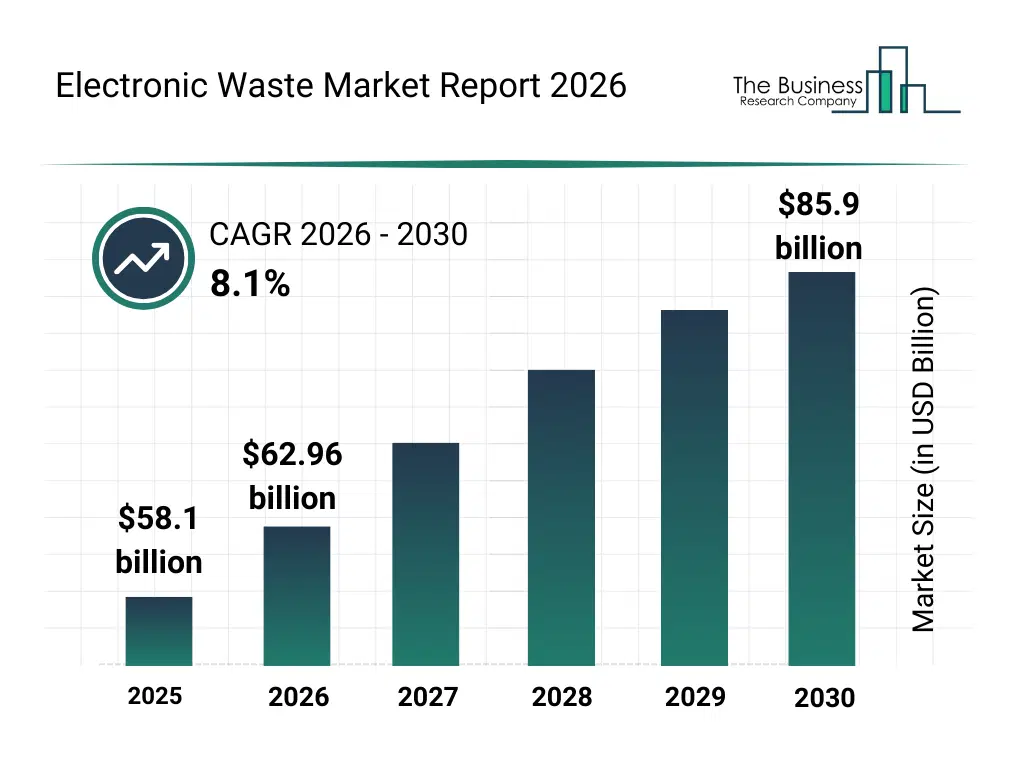
What Is The Electronic Waste Market Size 2026 And Growth Rate?
The electronic waste market size has grown strongly in recent years. It will grow from $58.1 billion in 2025 to $62.96 billion in 2026 at a compound annual growth rate (CAGR) of 8.4%. The growth in the historic period can be attributed to rising volume of discarded consumer electronics, lack of formal recycling infrastructure, increasing awareness of environmental pollution, growing demand for precious metals recovery, rapid technological obsolescence.What Is The Electronic Waste Market Growth Forecast?
The electronic waste market size is expected to see strong growth in the next few years. It will grow to $85.9 billion in 2030 at a compound annual growth rate (CAGR) of 8.1%. The growth in the forecast period can be attributed to implementation of stringent e-waste regulations, advancements in recycling technologies, integration of AI and robotics in e-waste processing, expansion of corporate take-back programs, growing demand for sustainable electronics manufacturing. Major trends in the forecast period include circular economy adoption, ai-enabled E-Waste Management, smart recycling automation, iot-enabled tracking of e-waste, sustainable e-waste collection systems.
Global Electronic Waste Market Segmentation
1) By Type Of Electronic Waste: Consumer Electronics, Industrial Electronics, Information Technology Equipment, Home Appliances, Telecommunication Equipment 2) By Recycling Process: Pre-Processing, Material Recovery, Refining, Re-Manufacturing, Repair And Refurbishment 3) By Type Of Material: Metals, Plastics, Circuit boards, Glass 4) By Source Of E-Waste: Households, Businesses And Corporations, Government And Public Institutions, Educational Institutions, Retailers And distributors Subsegments: 1) By Consumer Electronics: Televisions, Radios, Cameras, Audio Equipment, Personal Gaming Devices 2) By Industrial Electronics: Measurement Instruments, Control Systems, Power Electronics, Automation Equipment, Testing Devices 3) By Information Technology Equipment: Computers And Laptops, Servers, Printers And Scanners, Keyboards And Mice, Networking Devices 4) By Home Appliances: Refrigerators, Washing Machines, Microwaves, Air Conditioners, Vacuum Cleaners 5) By Telecommunication Equipment: Mobile Phones, Landline Phones, Routers And Modems, Signal Transmitters, SwitchboardsWhat Is The Driver Of The Electronic Waste Market?
The increasing consumption of electronic products is expected to propel the growth of the electronic waste market going forward. Electronic products refer to devices or equipment that operate using electrical power, including computers, smartphones, TVs, appliances, and other gadgets. The growing consumption of electronic products is due to increasing urbanization and rising disposable incomes, which enable more people to afford and use a variety of electronic devices. The increasing consumption of electronic products leads to increased electronic waste with advancing technology and frequent product upgrades, leading to shorter device lifespans. They increase disposal rates and contribute to growing e-waste volumes, highlighting the need for effective recycling and waste management solutions. For instance, in October 2023, according to the GSM Association, a UK-based non-profit organization, approximately 80% of mobile internet users are now using 4G or 5G smartphones, reflecting an increase of 330 million people from 2022 to 2023. Therefore, the increasing consumption of electronic products is driving the growth of the electronic waste industry.Key Players In The Global Electronic Waste Market
Major companies operating in the electronic waste market are Veolia Environnement S.A., Umicore SA, Waste Management Inc., Aurubis AG, Republic Services Inc., Boliden AB, Clean Harbors Inc., Sims Lifecycle Services Inc., Quantum Lifecycle Partners LP, Gazelle Inc., Stena Recycling AB, Enviro-Hub Holdings Ltd., Kuusakoski Recycling Oy, Call2Recycle Inc., Fortum Waste Solutions Oy, Nth Cycle Inc., All Green Electronics Recycling LLC, TechWaste Recycling LLC, HyProMag Limited, Surplus Service Inc.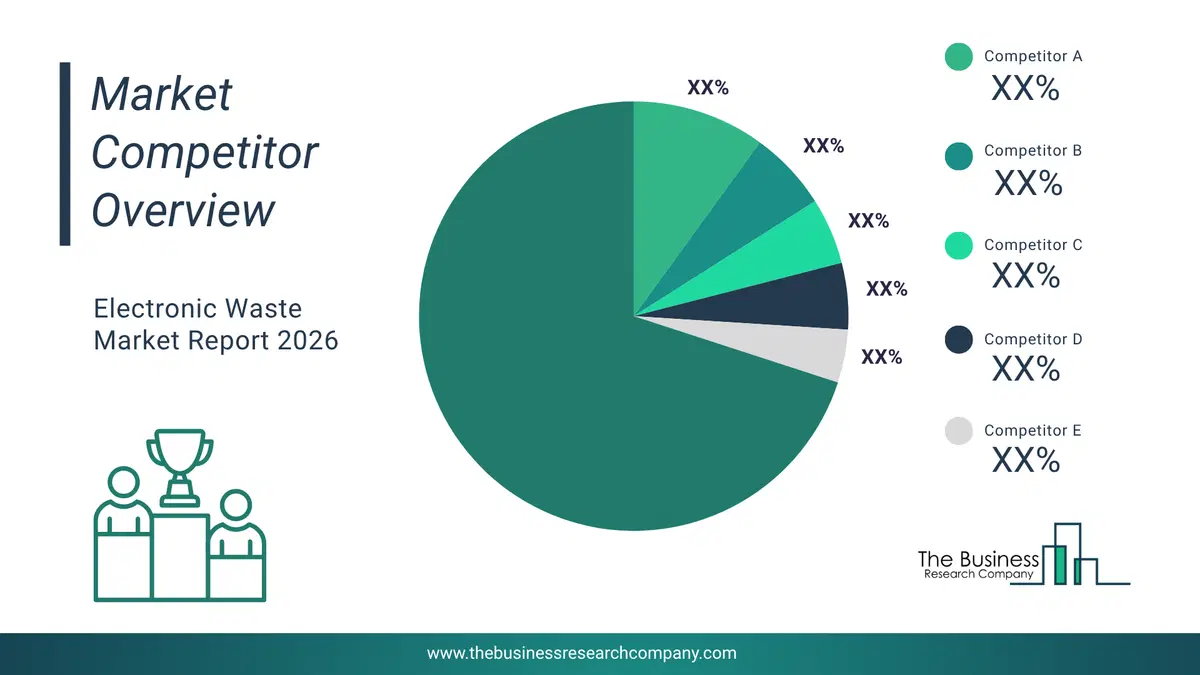
This chart is for illustrative purposes; the full report includes a detailed competitor analysis and comprehensive overview of the top 10 companies in the market.
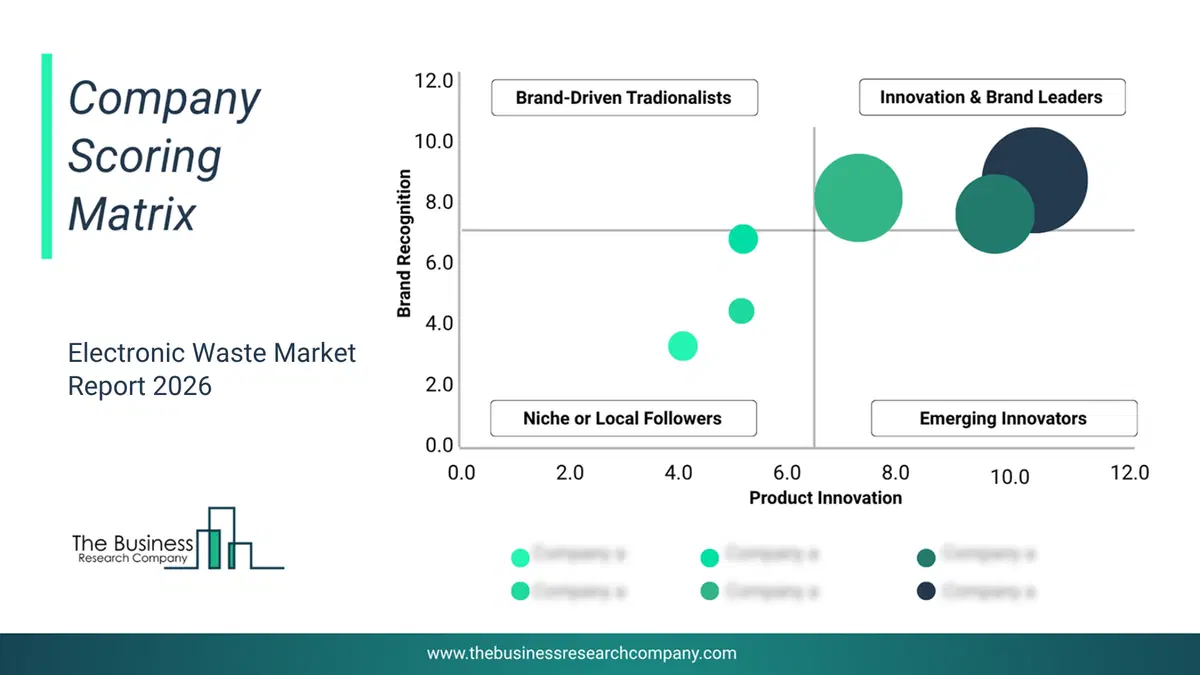
This chart maps companies by product innovation and brand strength, with bubble size indicating relative revenue, helping identify market leaders, challengers, and niche players. This is an illustrative chart; the full report provides a complete and accurate competitive analysis.
Global Electronic Waste Market Trends and Insights
Major companies operating in the electronic waste market are focusing on developing innovative solutions, such as consumer e-waste take-back platforms, to simplify recycling and ensure environmentally responsible disposal. A consumer e-waste take-back platform is a service that allows individuals to return old or unused electronic devices for secure recycling, proper disposal, or refurbishment, helping provide convenience, ensure data security, reduce environmental pollution, and promote circular economy practices. For instance, in July 2024, Attero Recycling Private Limited, an India-based e-waste recycling company, launched Selsmart, an integrated consumer take-back platform designed to simplify e-waste recycling across India. The platform allows consumers to schedule doorstep pickups of old electronics, ensures secure data destruction, and provides fair market value for returned devices. Collected e-waste is processed through Attero’s patented recycling technology to recover valuable metals and components, supporting a circular economy. Combining convenience, security, and sustainability, Selsmart offers a modern alternative to traditional e-waste disposal methods and aims to expand from ten metro cities to nationwide coverage.What Are Latest Mergers And Acquisitions In The Electronic Waste Market?
In March 2024, Greenbox Group Pty Limited, an Australia-based IT recycling company, acquired Remark-IT Solutions Limited for an undisclosed amount. With this acquisition, GreenBox Group aims to expand its presence in New Zealand by leveraging RemarkIT’s established operations and expertise in sustainable technology asset lifecycle management, strengthening its electronic waste handling capabilities. Remark-IT Solutions Limited is a New Zealand-based company specializing in the sustainable management of electronic waste assets.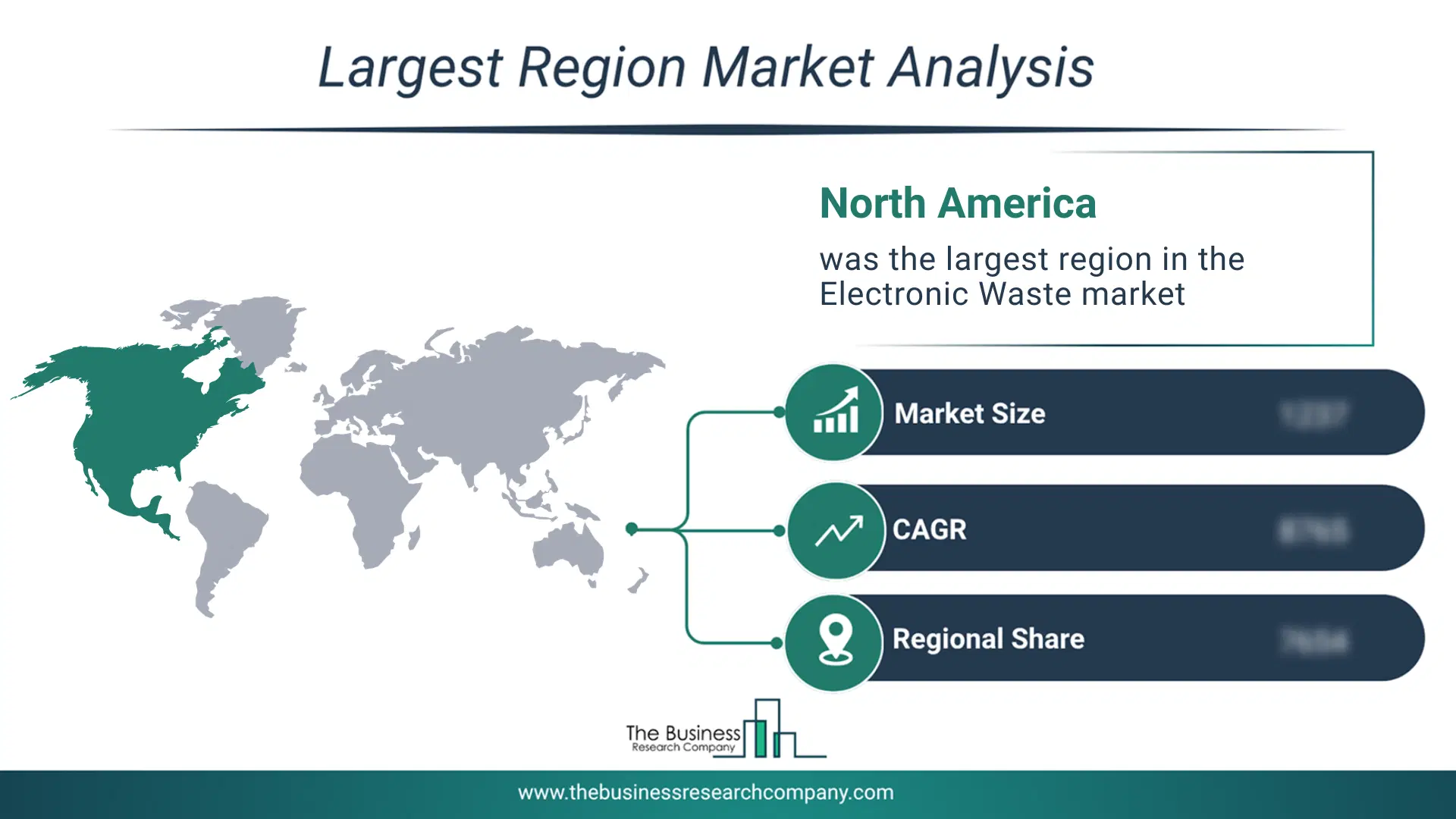
Regional Outlook
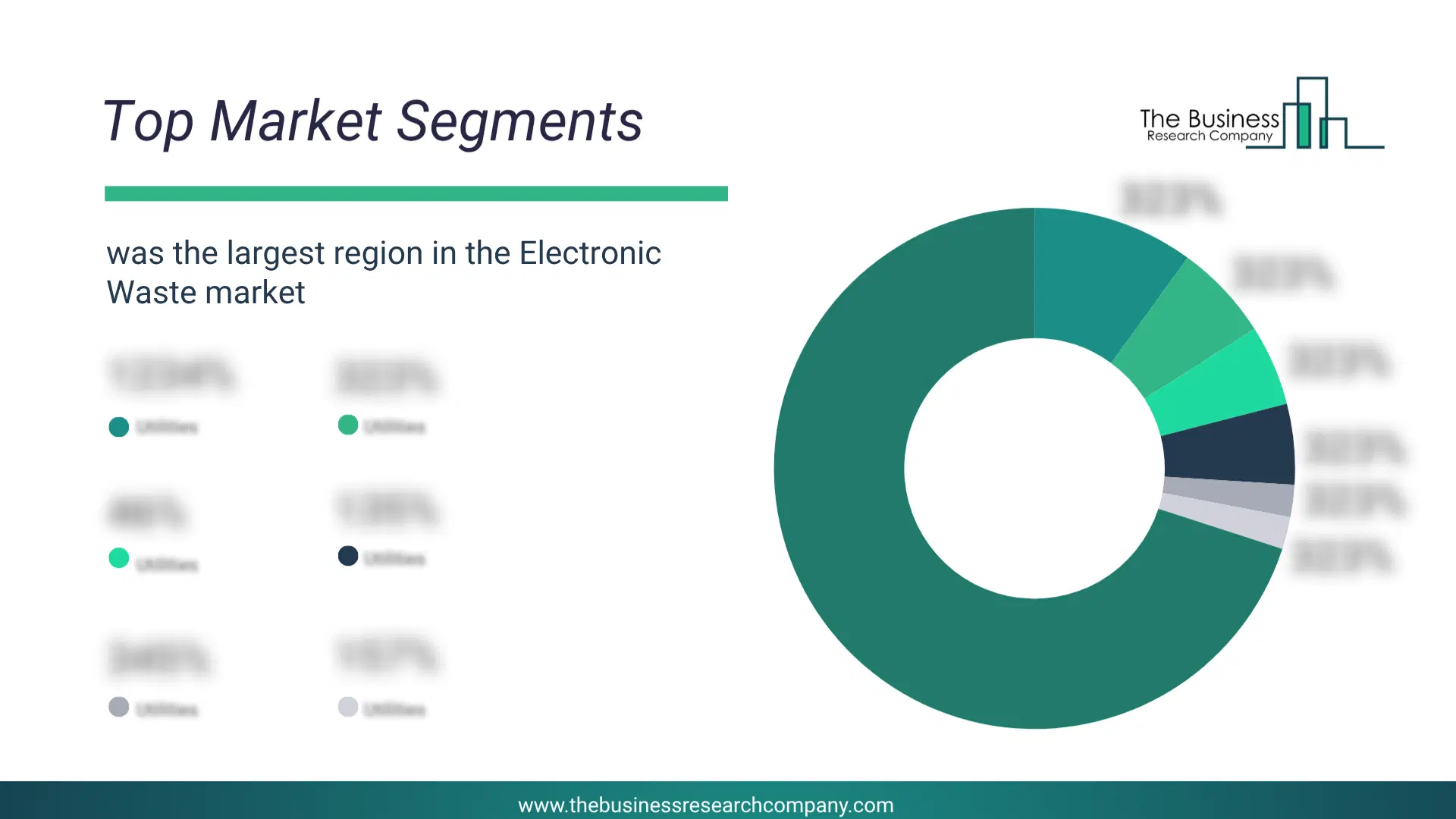
North America was the largest region in the electronic waste market in 2025. The regions covered in this market report are Asia-Pacific, South East Asia, Western Europe, Eastern Europe, North America, South America, Middle East, Africa. The countries covered in this market report are Australia, Brazil, China, France, Germany, India, Indonesia, Japan, Taiwan, Russia, South Korea, UK, USA, Canada, Italy, Spain.What Defines the Electronic Waste Market?
The electronic waste market consists of revenues earned by entities by providing services such as collection, transportation, sorting, dismantling, recycling, refurbishment, data destruction, and safe disposal of electronic and electrical equipment. The market value includes the value of related goods sold by the service provider or included within the service offering. The electronic waste market also includes sales of refurbished electronics, recovered raw materials such as metals, plastics, and reusable electronic components. Values in this market are ‘factory gate’ values, that is the value of goods sold by the manufacturers or creators of the goods, whether to other entities (including downstream manufacturers, wholesalers, distributors and retailers) or directly to end customers. The value of goods in this market includes related services sold by the creators of the goods.How is Market Value Defined and Measured?
The market value is defined as the revenues that enterprises gain from the sale of goods and/or services within the specified market and geography through sales, grants, or donations in terms of the currency (in USD unless otherwise specified). The revenues for a specified geography are consumption values that are revenues generated by organizations in the specified geography within the market, irrespective of where they are produced. It does not include revenues from resales along the supply chain, either further along the supply chain or as part of other products.
This chart presents market attractiveness based on a quantitative evaluation of growth, competition, strategic alignment, and risk, offering a clear view of opportunity areas for decision-making. This chart is for illustrative purposes; the full report contains the complete analysis.

This chart highlights the Total Addressable Market (TAM) by estimating the maximum revenue opportunity using an assumption-driven approach, supporting strategic planning and opportunity sizing across markets. The chart is illustrative; the full report provides a more comprehensive analysis.
What Key Data and Analysis Are Included in the Electronic Waste Market Report 2026?
The electronic waste market research report is one of a series of new reports from The Business Research Company that provides market statistics, including industry global market size, regional shares, competitors with the market share, detailed market segments, market trends and opportunities, and any further data you may need to thrive in the electronic waste industry. The market research report delivers a complete perspective of everything you need, with an in-depth analysis of the current and future state of the industry.Electronic Waste Market Report Forecast Analysis
| Report Attribute | Details |
|---|---|
| Market Size Value In 2026 | $62.96 billion |
| Revenue Forecast In 2030 | $85.9 billion |
| Growth Rate | CAGR of 8.1% from 2026 to 2030 |
| Base Year For Estimation | 2025 |
| Actual Estimates/Historical Data | 2020-2025 |
| Forecast Period | 2026 - 2030 |
| Market Representation | Revenue in USD Billion and CAGR from 2026 to 2030 |
| Segments Covered | Type Of Electronic Waste, Recycling Process, Type Of Material, Source Of E-Waste |
| Regional Scope | Asia-Pacific, Western Europe, Eastern Europe, North America, South America, Middle East, Africa |
| Country Scope | The countries covered in the report are Australia, Brazil, China, France, Germany, India, Indonesia, Japan, Taiwan, Russia, South Korea, UK, USA, Canada, Italy, Spain. |
| Key Companies Profiled | Veolia Environnement S.A., Umicore SA, Waste Management Inc., Aurubis AG, Republic Services Inc., Boliden AB, Clean Harbors Inc., Sims Lifecycle Services Inc., Quantum Lifecycle Partners LP, Gazelle Inc., Stena Recycling AB, Enviro-Hub Holdings Ltd., Kuusakoski Recycling Oy, Call2Recycle Inc., Fortum Waste Solutions Oy, Nth Cycle Inc., All Green Electronics Recycling LLC, TechWaste Recycling LLC, HyProMag Limited, Surplus Service Inc. |
| Customization Scope | Request for Customization |
| Pricing And Purchase Options | Explore Purchase Options |